Western Australia’s Kimberley region spans thousands of square kilometres of ancient landscape – a remote frontier of unspoilt wilderness, rugged sandstone mountain ranges, waterfalls and sprawling rivers, of crocodiles and barramundi, and iconic bottle-shaped boab trees. It is, without a doubt, one of Australia’s most spectacular regions. We spent ten days in the east of this vast territory – visiting Lake Argyle, exploring the breathtaking Bungle Bungle Range, swimming at magical waterfalls at El Questro, and indulging in some remote luxury at Berkeley River Lodge. It was just enough time for a taste of the Kimberley, but I can’t wait to get back to explore the rest!
Here’s our 10-day East Kimberley itinerary – combining self-drive and luxury:
Day 1:Lake Argyleand Kununurra
The Kimberley is remote. No direct flights from Brisbane, so we fly to Darwin, overnight there, and then head to the East Kimberley’s main town – Kunanurra. We’ve only got one night, so we drop our bags at the Kimberley Grande Hotel (not too grand but pleasant enough) and head straight out to Lake Argyle in our rented 4WD. Lake Argyle, formed by the Ord River dam, is one of the largest manmade lakes in the southern hemisphere. It’s home to thousands of freshwater crocs, but apparently the salties (the dangerous ones) can’t get up the dam wall! The lake is an easy one-hour drive from Kununurra, which gives us time for a fantastic burger for lunch at the holiday park, a swim in the infinity pool ($10 for visitors), before our afternoon cruise on the Kimberley Explorer Durack. The highlight of the 3.5 hours cruise: jumping off the top of the boat into the refreshing water, then being passed a glass of sparkling wine and a noodle float, and bobbing around in the water at sunset. An experience not to be missed!
Lake Argyle holiday resort and afternoon cruise. Sunset at Lake Argyle. Image: John FisonMoon rising over Lake Argyle. Image: John Fison
Day 2:Kununurra to Bungle Bungles
The 350 million-year-old sandstone domes of the Bungle Bungle Range lie in the Purnululu National Park – 300km south west of Kununurra. The World Heritage listed site is a surreal landscape of beehive-like outcrops, deep red gorges, slot canyons and vibrant green Livistona palms. It’s one of Australia’s most remarkable geological formations, and an absolute must if you’re in the Kimberley, but like everything else in this part of the world, it is very remote.
Echidna Chasm, Purnululu National Park. Image: John FisonPiccaninny Gorge. Image John Fison
Many visitors choose to fly in from Kunanurra and stay at Savannah Lodge which is inside the national park, but we’ve opted to drive. We grab a few essential in Kununurra and then head 250 km down the Great Northern Highway. The road cuts through flat red landscape, dotted with boab trees, and eventually gives way to rugged ranges and the unmistakable domes of the Bunge Bungles.
Julie Fison catapults readers into the murky and contested waters of love, morality and justice from the first page of One Punch and holds them, transfixed, right till the end. It’s a story that exposes the consequences of unconditional love; the cost and burden this delivers parents, their children and anyone caught in its more nefarious orbit. One Punch is a raw, urgent and chilling portrait of family loyalty and the frightening repercussions of being blind to the faults in those we love. Read this book and your conviction about what is right and wrong will be changed forever.
Sally Piper, Bone Memories
After stopping for petrol at the Warmun Roadhouse (don’t miss that one), we take the Purnululu turnoff. We’re staying two nights at the Bungle Bungle caravan park, just off the highway. It’s a great set-up with plenty of space for camping, as well as cabins for visitors who, like us, don’t have camping gear. The caravan park does a great BBQ and communal campfire in the evenings. There’s also a super cute caravan bar, a small shop and helpful staff. From here you can book a helicopter ride over the Bungle Bungles or a 4WD tour. You are still 53km outside the national park here, which doesn’t sound like a lot, but the road to the Bungles is more of a rough dirt track, interspersed with creek crossings. The drive can take up to 2 hours. A 4WD is a must.
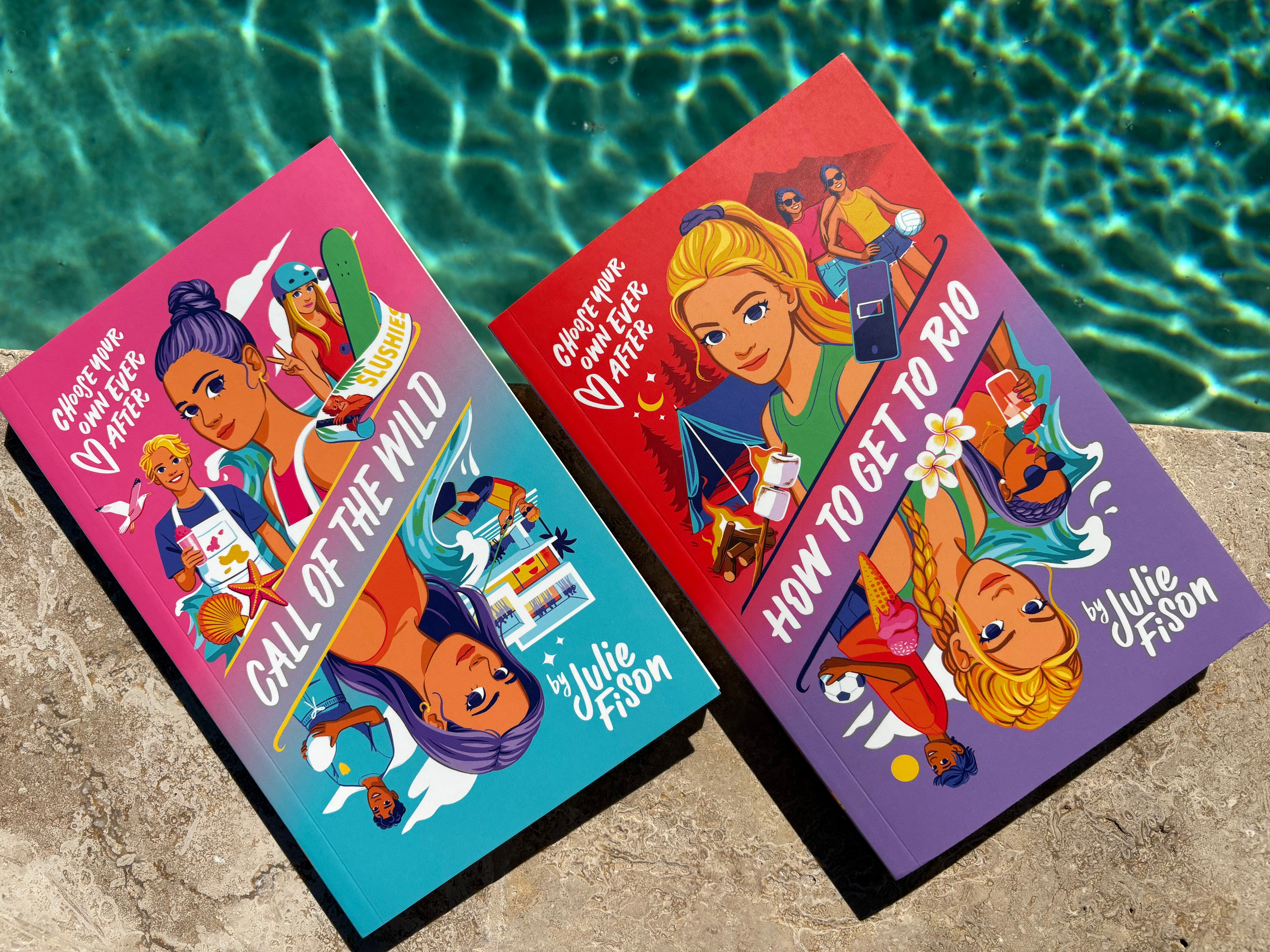
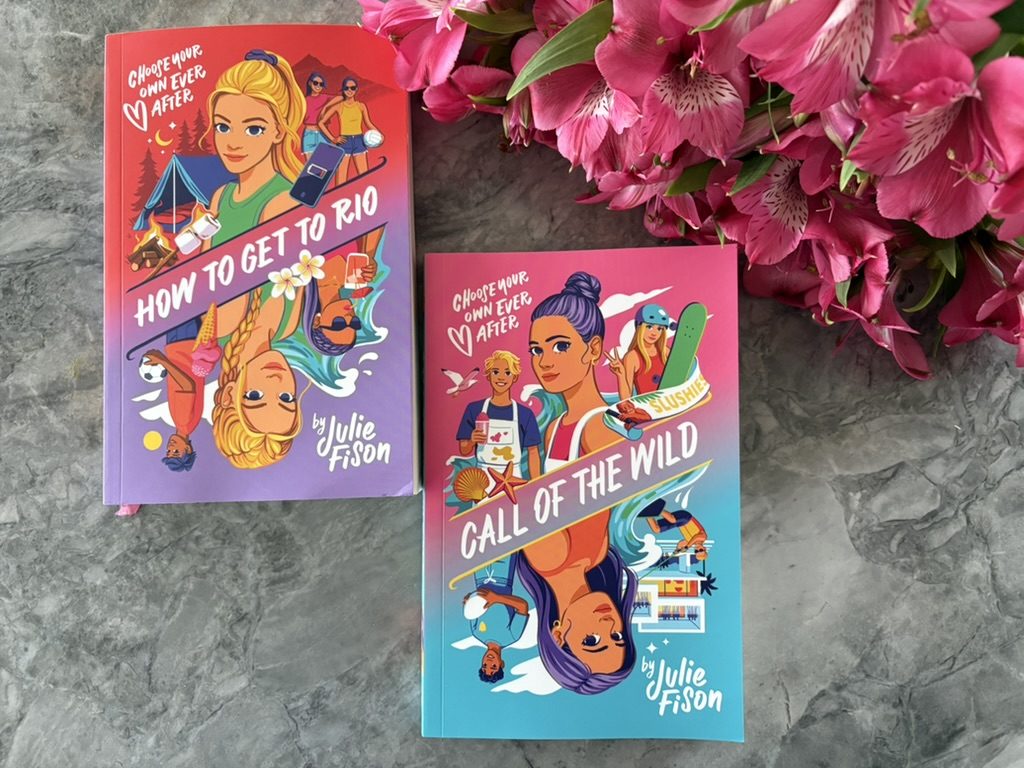
Choose Your Own Ever After is a contemporary pick-a-path series about first crushes and friendship that lets the reader decide how the goes. Perfect for young readers who like to call the shots!
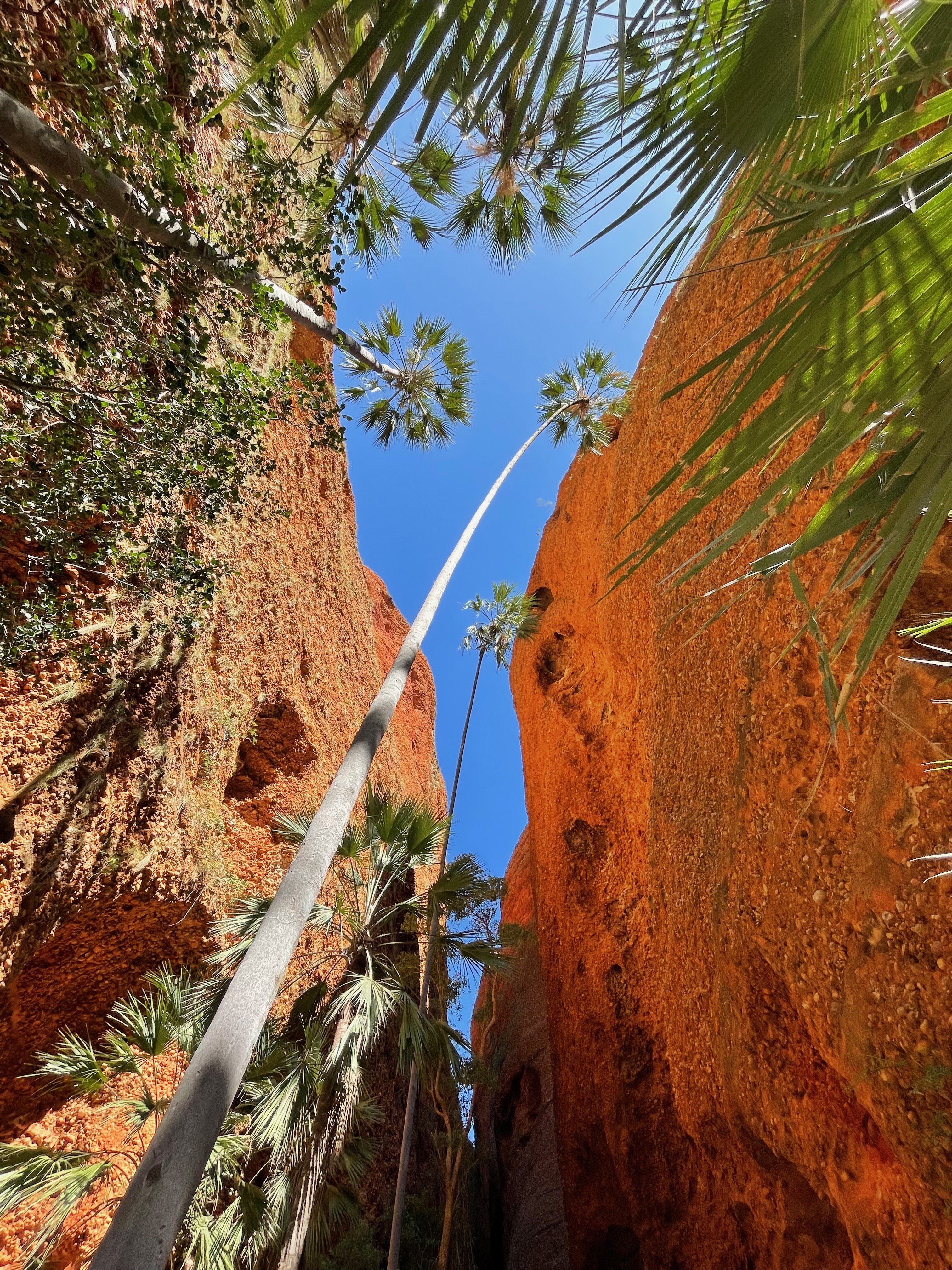
It’s mid-afternoon by the time we get into the Purnululu National Park ($15 entry fee per vehicle) – not enough time to see everything, so we head north to Echidna Chasm – a spectacular slot canyon, surrounded by Livistona palms. We have the cool, eerie chasm almost to ourselves, and get to enjoy the afternoon light on the red walls of the gorge before driving back for a BBQ dinner under the full moon. The following day we head off before dawn, and are among the first to get to the more famous south section of the Bungle Bungles. In the early morning light the domes are absolutely breathtaking. No picture prepares you for the scale of the domes, that rise up to 300 metres above the sparse grassland. There are several options for walks here. Allow plenty of time for Cathedral Gorge and Piccaninny Creek and pack lots of water and snacks. It might be cool at first light, but the gorge heats up very quickly!
Camping at Bungle Bungle Caravan Park. Setting off early to see the sites.
Day 4:El Questro Station
El Questro is a massive wilderness park at the eastern end of the famous Gibb River Road. It’s a three-hour drive from the Bungle Bungle caravan park – back up the Great Northern Highway (83km west of Kununurra). We’re only staying for one night, but the area warrants a lot more time to explore the many waterfalls and rivers. If you’re on a tight schedule – don’t miss Emma Gorge. The rockpool is an hour walk from the car park area, over boulders and uneven ground, but definitely worth the hike. It’s a welcome green oasis. The water is chilly but incredibly refreshing, and who wouldn’t want to swim in a rockpool fed by a 65 metre-high waterfall!
Enjoy a refreshing dip at Emma Gorge, El Questro. Image: Julie Fison
You can stay at Emma Gorge, and get a great lunch at the bistro near the car park, but we’re spending the night further down the track at El Questro station. Lots of accommodations options to choose from here – ranging from camping, to permanent tents, or a luxury stay at the Homestead. The Station, which is the camping hub, has a lively bar and good pub-style food. It gets very busy. We shared the site with more than 400 cyclists who’d just finished the Gibb River challenge. Quite a celebration!
Zebedee Springs. Image: John Fison. Camping at El Questro. Image: Julie Fison
The other place not to miss while you’re at El Questro is Zebedee Springs. The thermal pools are open from 7am-12pm. It’s worth getting here just before gates open to secure a rock pool. Relaxing in a thermal pool on a chilly morning, surrounded by towering Livistona palms, is magical. It’s not quite the same when the crowds arrive!
Livistona palms at Zebedee Springs. Image: John Fison
Day 5: Berkeley River Lodge
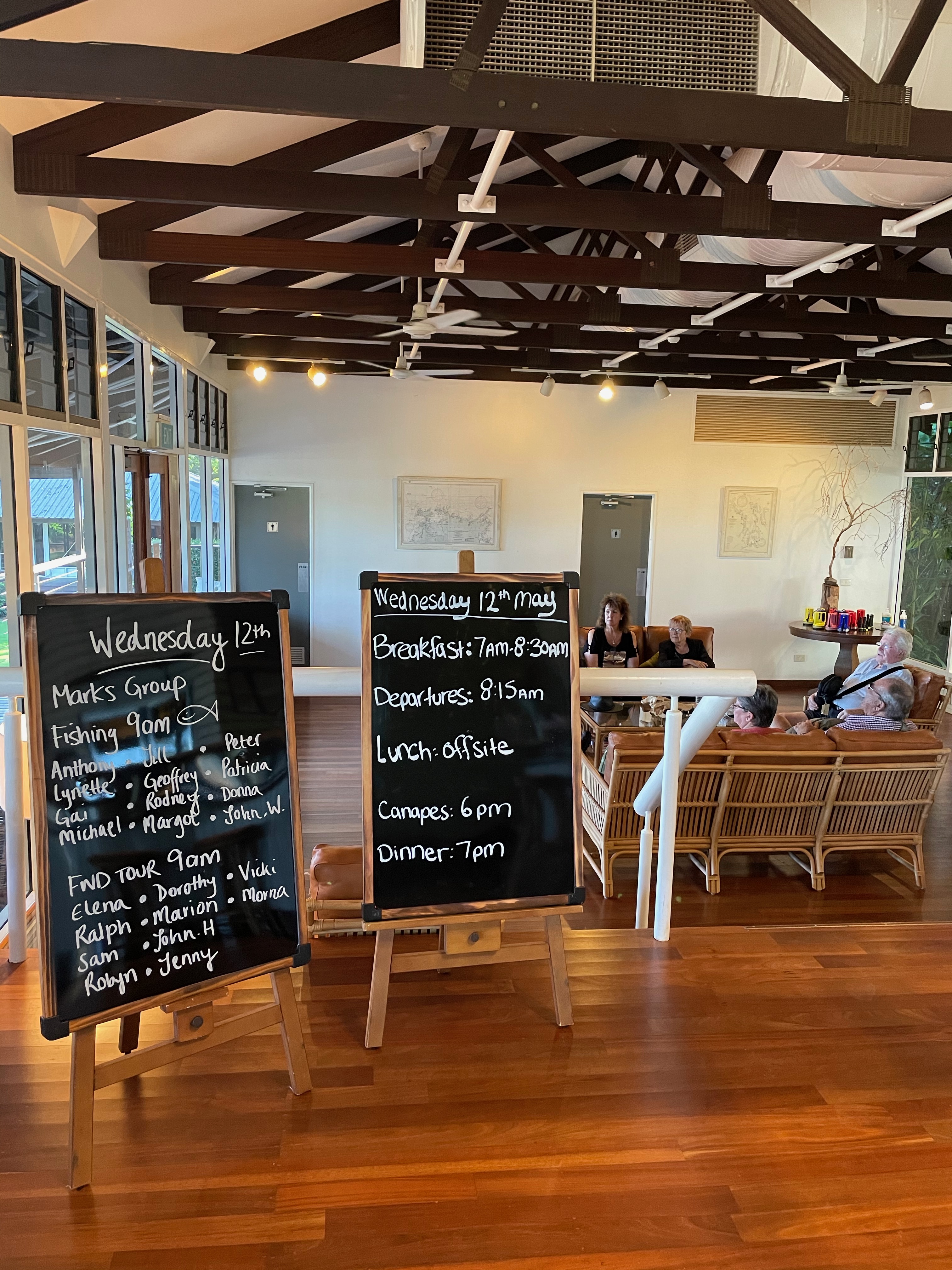
Berkeley River Lodge is a remote piece of paradise on the Kimberley coast – only accessible by air from Kununurra. No need to worry about maps, petrol stations, or flat tyres here. Everything is organised for you – including fishing trips on the Berkeley River, hikes to rockpools, boat excursions, beach drives, spectacular sundowners and beautiful meals overlooking the Timor Sea. The lodge accommodates guests in 20 chic bush villas perched on a hilltop, boasting views of the ocean one way, and the vast Kimberley interior in the other direction. Villas have a private terrace for relaxing, and an outdoor bathtub for making the most of the incredible night sky. If you have the time, and don’t mind dipping into your wallet for an extra adventure, don’t miss the helicopter safari for a swim at an incredibly beautiful waterhole, the chance to see outstanding indigenous rock art and, of course, an unforgettable sunset.
Berkeley River Lodge and surrounds. Images: John Fison
Day 10: Darwin
It’s not easy to drag ourselves away from the remote luxury of Berkeley River Lodge. Civilisation always seems so uncivil after a few days off the grid. At least we have a night in Darwin to ease the transition. Love this city – especially if it involves dinner at Little Miss Korea!
Darwin – Bicentennial Park, Street art, Little Miss Korea. Images: John Fison
Think of Australia’s Top End and you’re likely to imagine crocodile-infested waterways, wild buffalo grazing among the melaleuca, white-bellied sea eagles riding the thermals, huge barramundi just waiting to be caught. Few people would expect brick chimney stacks standing defiantly in the blazing sun and tufts of grass sprouting through the mortar. Yet, on the remote Cobourg Peninsula – at the northern end of the Northern Territory – are the remains of a colonial settlement, optimistically established in 1838 and abandoned eleven years later. A haunting testament to the British government’s determination to claim this part of Australia for the Crown, and the naivety of their mission.
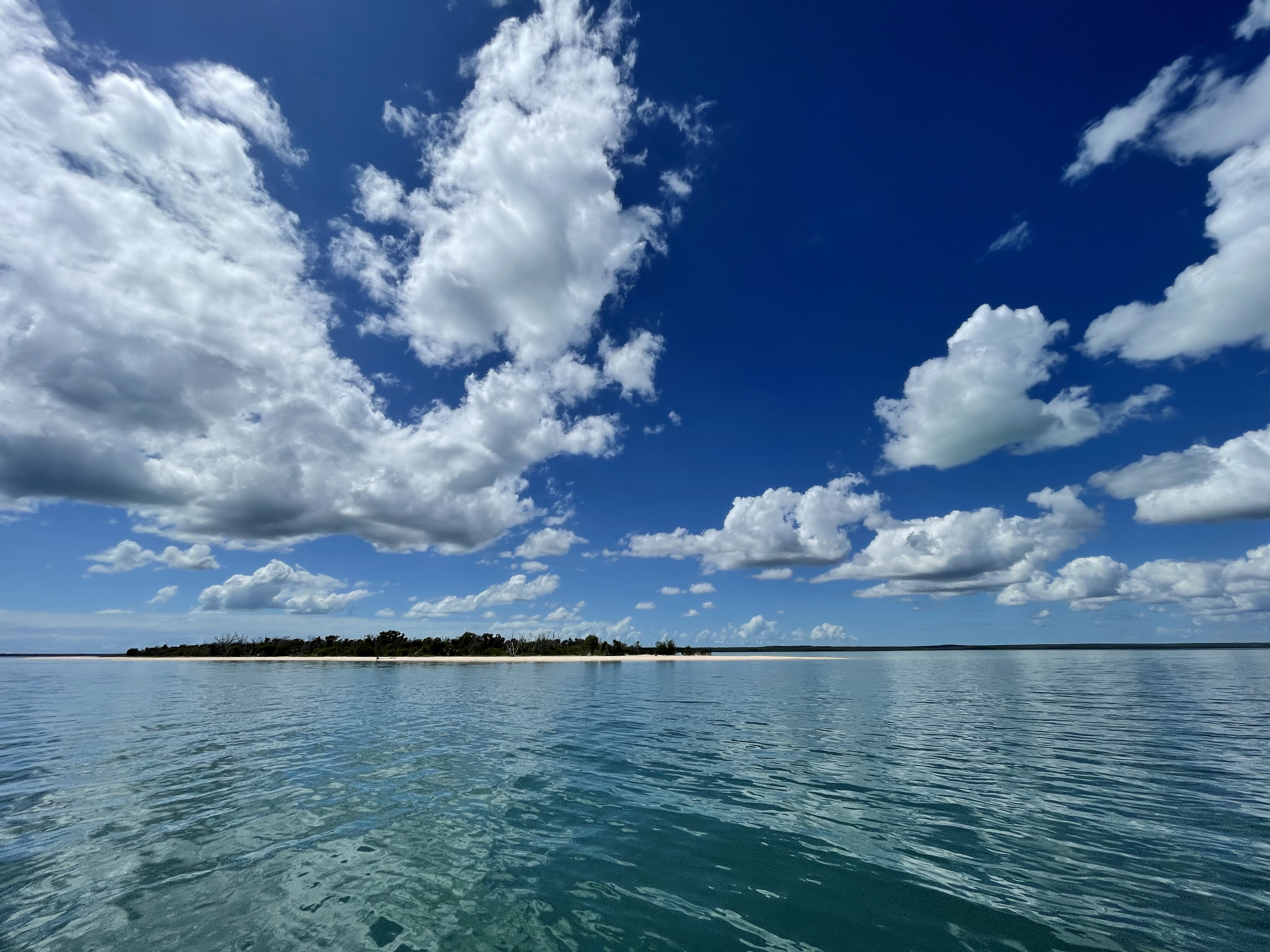
The remains of Victoria Settlement at Port Essington, lie on the traditional lands of the Madjunbalmi clan, some 300 km north east of Darwin, in the rugged wilderness of the Garig Gunak Barlu National Park. Practically unreachable by road, but a very manageable one-hour boat ride from Seven Spirit Bay wilderness lodge.
Seven Spirit Bay
We come ashore on a white sandy beach, just as the settlers would have done, but I’m in shorts and a breathable cotton shirt, plenty of water in my backpack, a picnic lunch waiting for me back in the boat. The first 36 marines to set foot here would have been in woollen uniforms, their wives and children – some of them fresh from England – more suitably attired for a stroll along the Thames than the hostile tropical bushland. They were ill-prepared for the extreme hardships that lay ahead in this alien landscape.
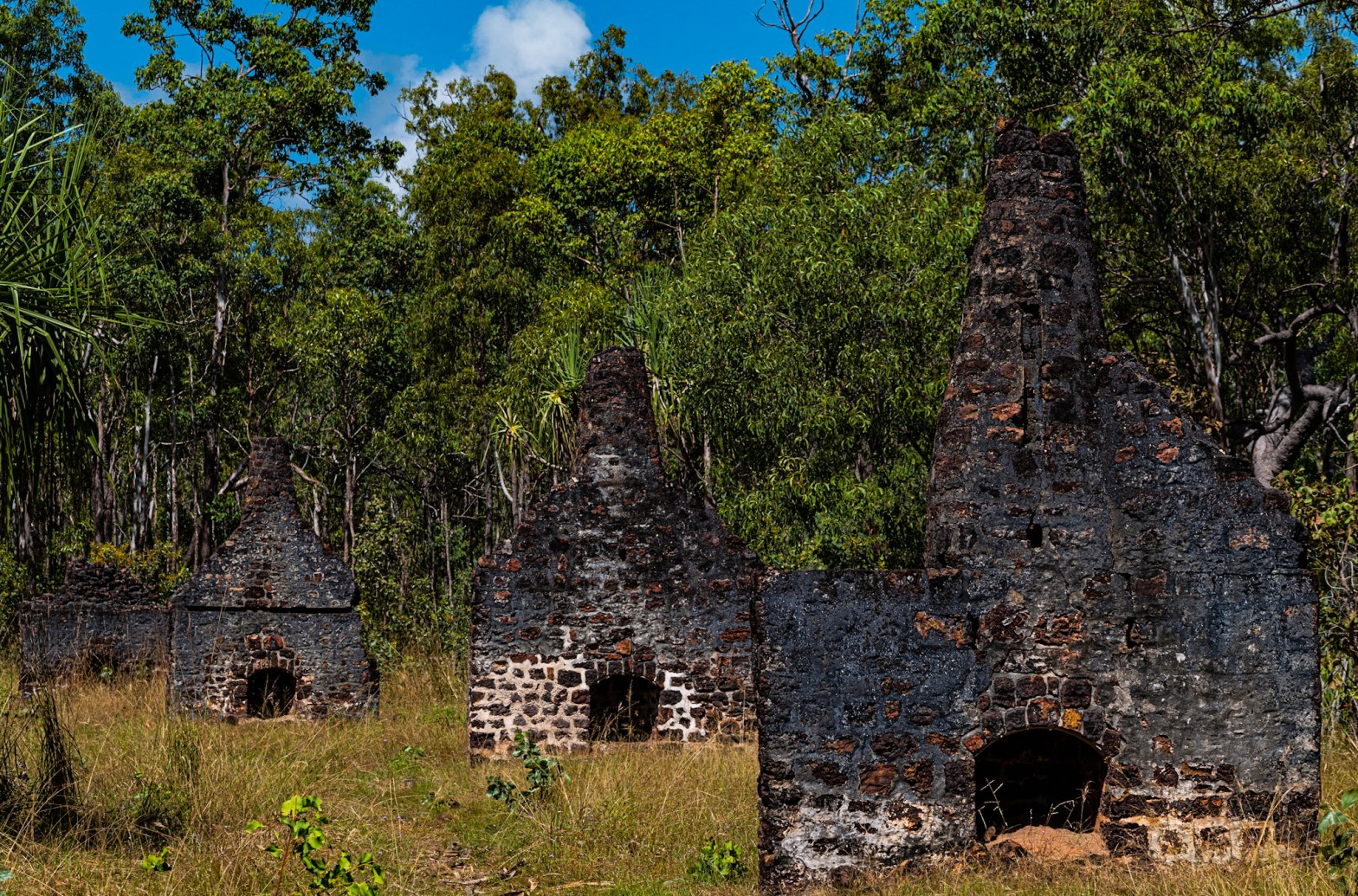
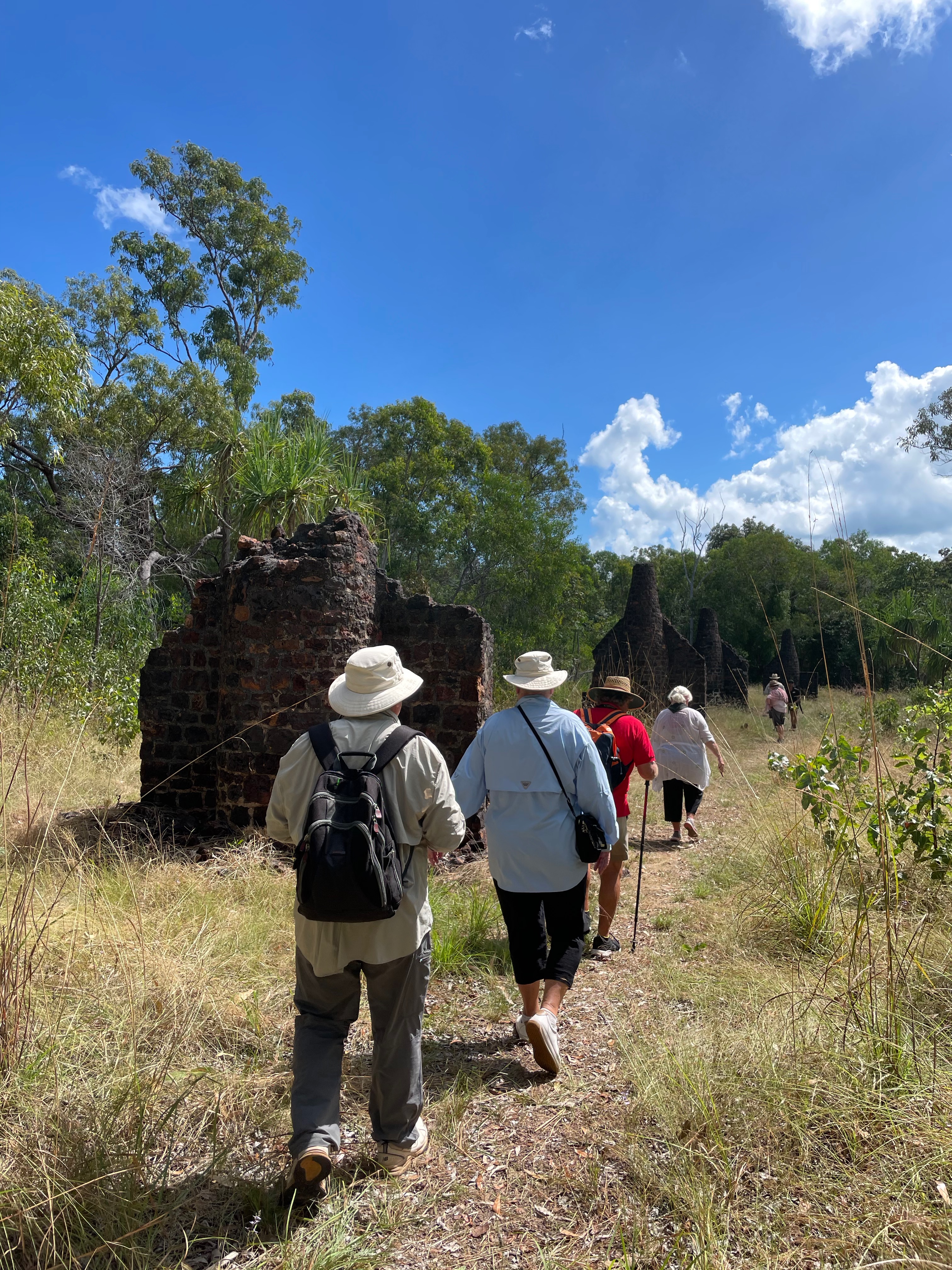
Victoria Settlement remains. Image: John Fison
Victoria as the settlement was stoically named, was the British government’s third attempt to get a foothold on the northern coast of Australia. Two previous endeavours at nearby Raffles Bay and Melville Island had failed, but the government was eager to establish a garrison to thwart the colonial ambitions of their European rivals: the Dutch and the French. There were also hopes the settlement at Port Essington, would develop into a trading hub – akin to Singapore.
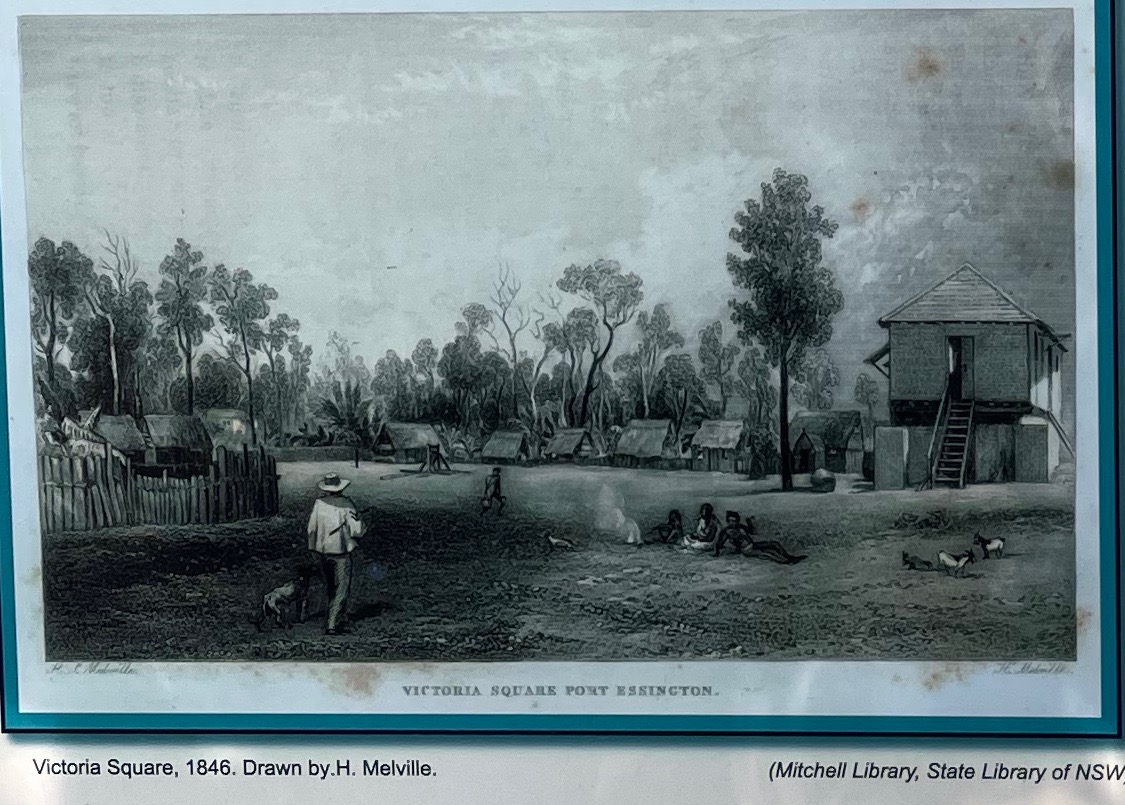
The reality was very different. The colonial contingent arrived in the dry season, and the fresh water streams, promised on the survey maps, were nowhere to be found. It was only with the help of the local clan that the settlement got off the ground at all. But the industrious settlers managed to transform the harsh landscape into a tiny English village within a year – building a church, a Governor’s house, cottages with shingled rooves. Cricket matches were played and sailing regattas were held. Then came the cyclone. The settlement was completely devastated, ships were wrecked and eight people drowned. Victoria was eventually rebuilt, but far from prospering, the lonely settlement stagnated. An entire year would pass without a single sail being sighted in the harbour. Disease, food shortages and isolation proved too much. World’s End as the remote enclave had been dubbed was finally abandoned in 1849. By then the graves apparently outnumbered the survivors, and the burnt-out buildings were left to the buffalo hunters and sea cucumber traders.
Magazine, Victoria Settlement. Image: John Fison
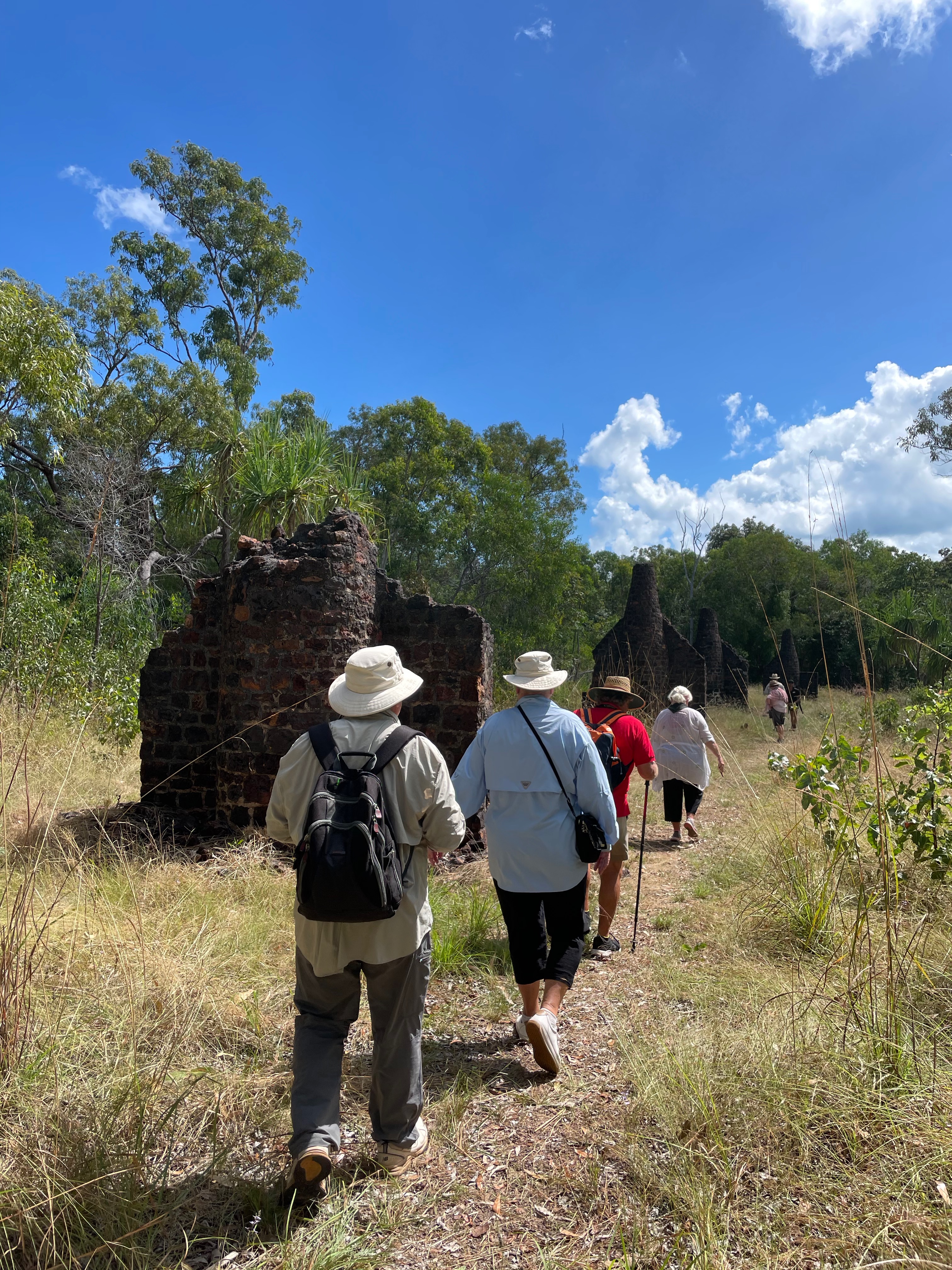
The 3.7 km walk through the remains of Victoria offers an eerie glimpse into the life of the settlement, with many of the buildings in surprisingly good condition. The magazine where munitions were stored, hunkers into a hillside overlooking Port Essington, and could almost be mistaken for a modern holiday home with commanding views of the bay. Further along the track is a row of Cornish style chimneys. The remains of the married men’s quarters might appear incongruous – out here among the acacia trees and eucalypts – but the brickwork remains sound. The grass is making inroads into the old hospital and a wild pig has taken up residence in the kiln, but the locally quarried ironstone and mortar – made from fired shells and coral – have stood the test of time, even if the colony itself didn’t.
Cemetery at Victoria Settlement
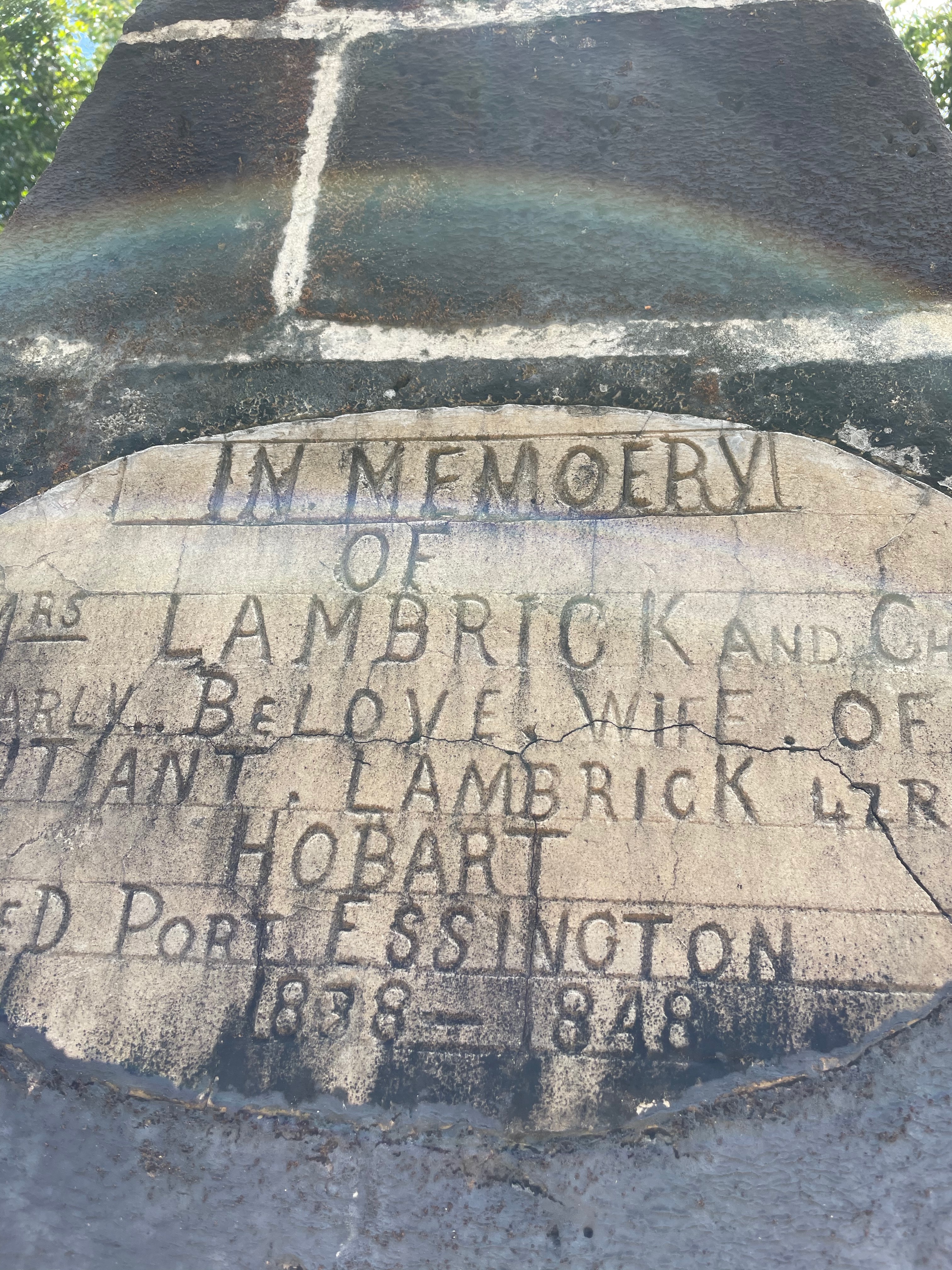
A solitary monument in the old cemetery is perhaps the most poignant sight on the walk. Set against a backdrop of tangled vines, the structure marks the graves of an officer’s wife and her child. Emma Lambrick sailed from Dublin to the far-flung settlement in 1844, where her lieutenant husband was appointed second in command and quartermaster, but tragedy soon struck. A son, born on the sea voyage, died not long after they arrived. Emma succumbed to fever the following year, while another infant son met the same fate just a month later. Malaria went on to claim a quarter of Victoria’s population – grave-digging becoming the settlement’s biggest occupation. English biologist Thomas Huxley who visited Port Essington just before its final demise, described the settlement as ‘most wretched… the human beings the most uncomfortable and houses in a condition most decayed and rotten.’
Cemetery, Victoria Settlement. Image: Julie Fison
German explorer, Ludwig Leichhardt, had a very different view of the isolated outpost. He led an overland expedition from the colony of Moreton Bay, in South East Queensland, some 4800 km away. Despite being given up for dead, his starving band of explorers finally staggered through the heat haze and into Victoria settlement in 1845, over a year after setting out to map a route to the north. Leichhardt broke down in tears at the sight of the thatched rooves. After spending a month at the settlement to regain his strength, he returned to a hero’s welcome in Sydney.
Party remains
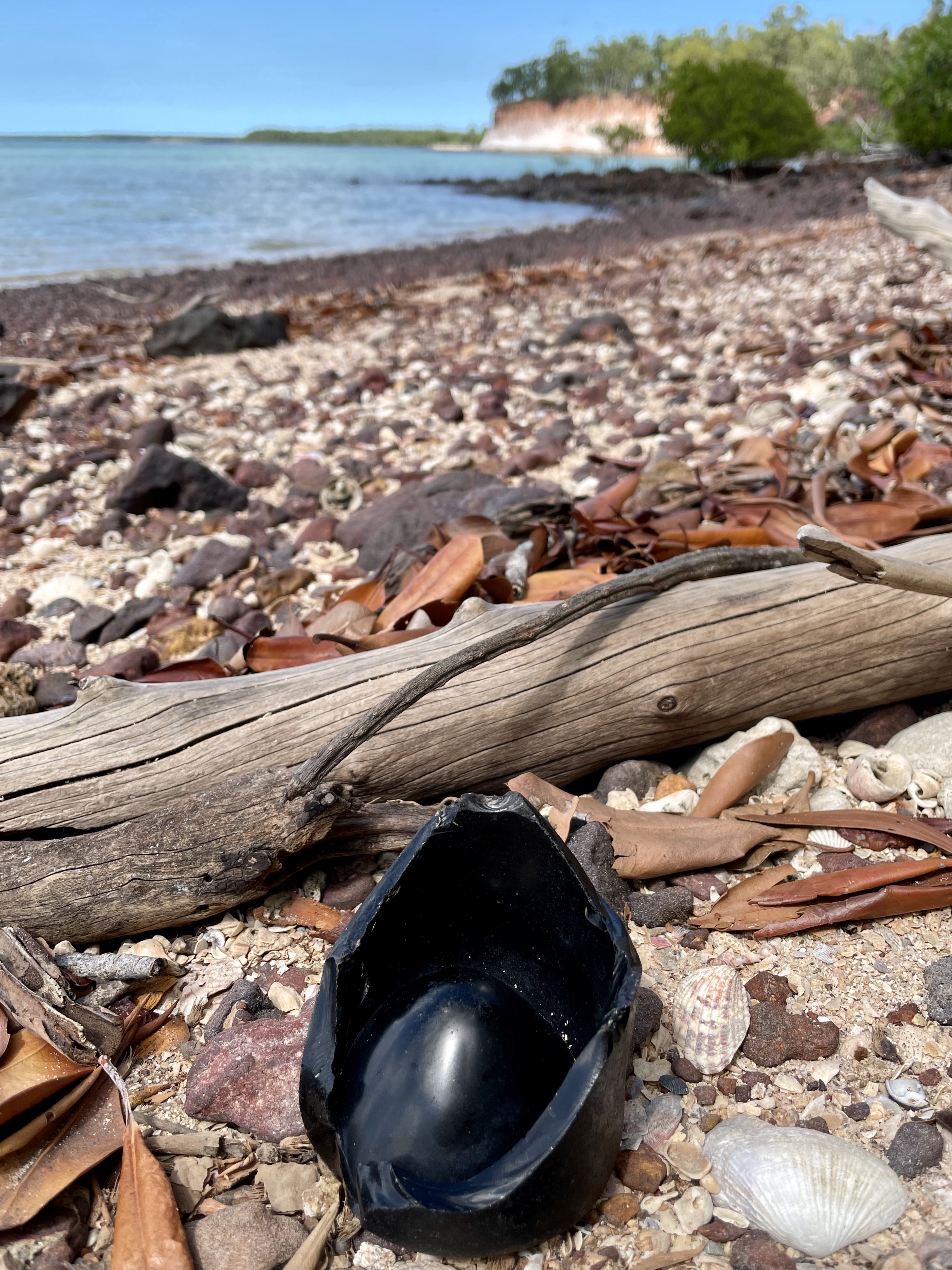
There were other bright spots in the history of Port Essington. Our guide Lachlan shows us a chunk of heavy glass on the beach near the garrison’s ruined pier. The base of a champagne bottle, he explains. According to journals from the time, two French research ships appeared in the bay not long after the settlement was established. Instead of loading the cannons, the marines invited their imperial rivals ashore. Bottles of champagne and fancy wine were drunk late into the night before the French bid adieu. The chunks of glass on the beach, according to our guide, are evidence of the 19thcentury knees-up.
The relationship between the settlers and the local clans adds another intriguing layer to the story of Port Essington. In contrast to frontier wars that dominate much of Australia’s colonial history, relations here were reportedly harmonious. Five clans lived on the Cobourg Peninsula at the time, trading with the settlers. The marines developed a deep respect for the people who clearly understood their environment. One officer noting in his journal the extraordinary precision indigenous people found their way through the bush. ‘Far better than we could have done with the best compasses ever made.’
When the government finally called time on Victoria settlement and the last of the ships set sail, the departing marines apparently performed a kangaroo dance. A celebration that their misery was finally at an end, and a tribute, perhaps, to the people who had helped them survive in this unforgiving landscape.
One Punch takes a simple premise and turns it into a tight study of class and human nature – what we believe to be true about ourselves, and those we love, and who we really are. A crime is the pivot point for a sharp observation of human nature and blends compassion and humour in equal measure.
Meredith Jaffe, Author of The Tricky Art of Forgiveness
If you see me on social media after today, tell me to get back to work. I have a deadline looming! I’m working on another gripping family drama. This time the protagonist is a mother of three young children, so I’ve had to dig into the dusty recesses of my brain for memories of parenting little kids. Some experiences are still vivid, but much of it feels like a separate life entirely. To help with the process, I’ve been trawling through old photos and done a deep dive into the world of mummy bloggers. I’m taking more notice of young kids around me, and eavesdropping on parents at the supermarket with demanding little ones in tow. So glad I’m past that stage!
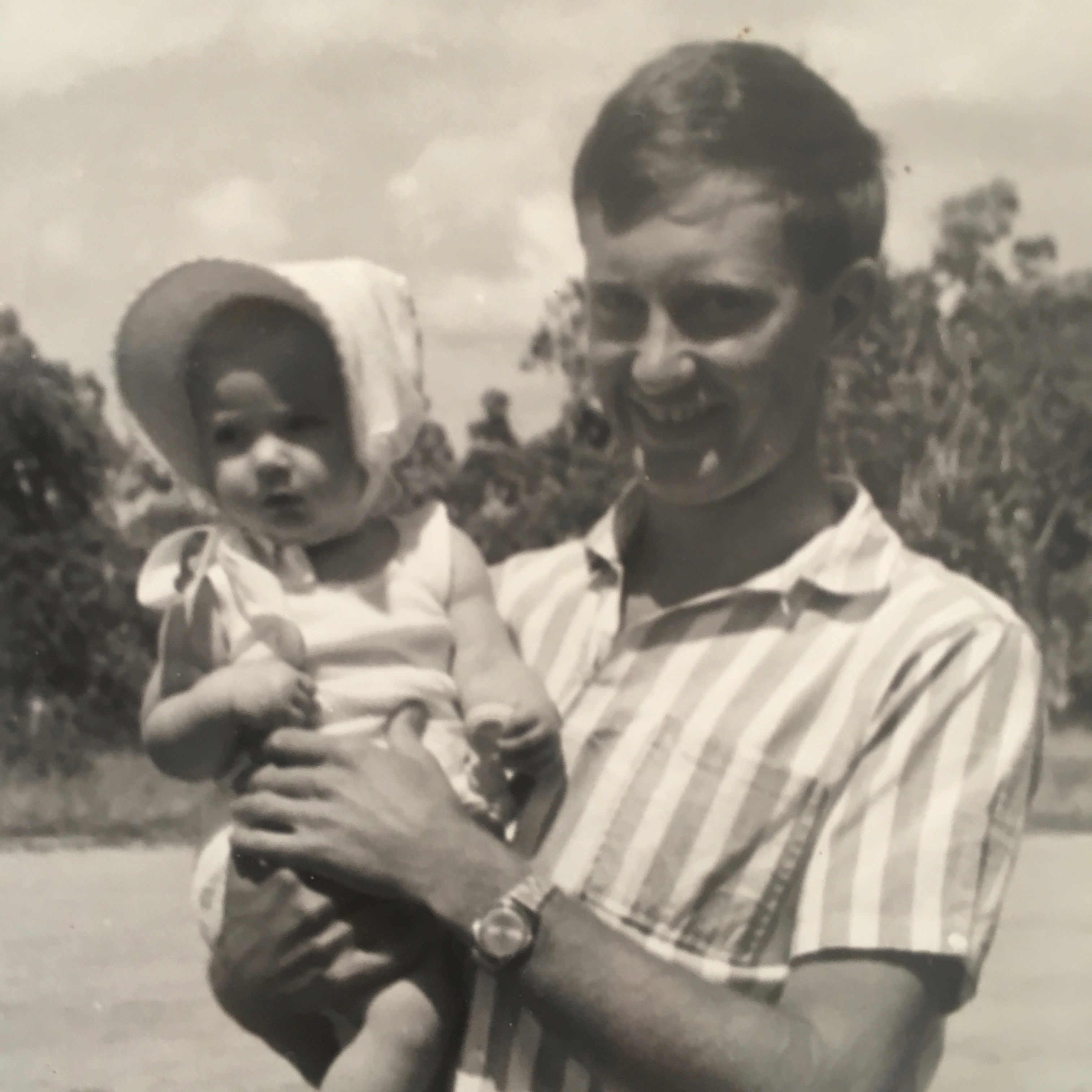
That’s me in the bonnet: little Julie Mapleston, with my father – David. Magnetic Island. 1966
Writing a second book has been very different from working on One Punch. I know what’s ahead, so that’s good, but I don’t have the luxury of time. No chance to mull over the story for a few years. I can’t give myself a few weeks off when I hit a snag in the storyline. I’ve had to get better at compartmentalising tasks. I’m still marketing One Punch, and it’s easy to dither about on social media all morning, instead of getting on with my new story.
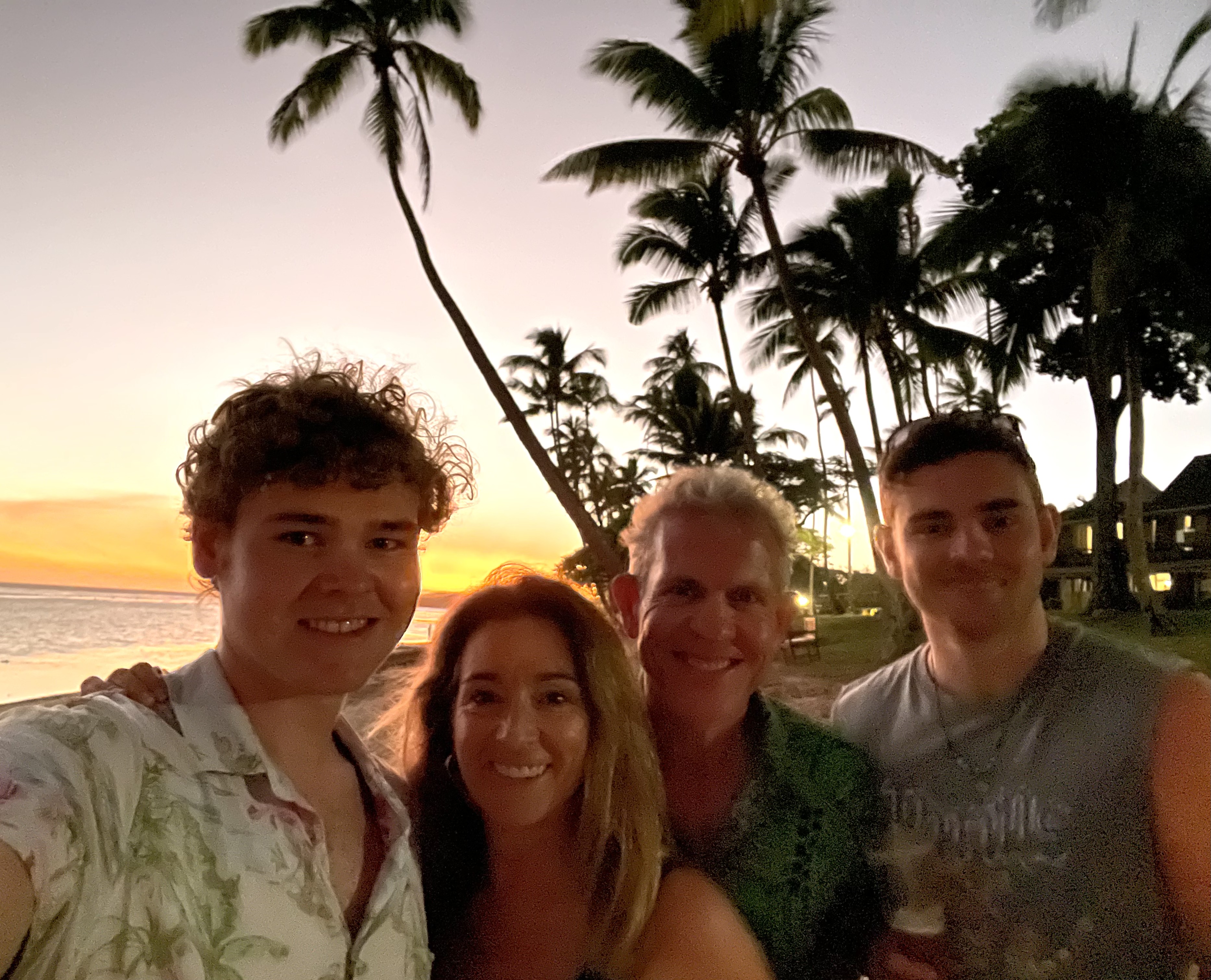
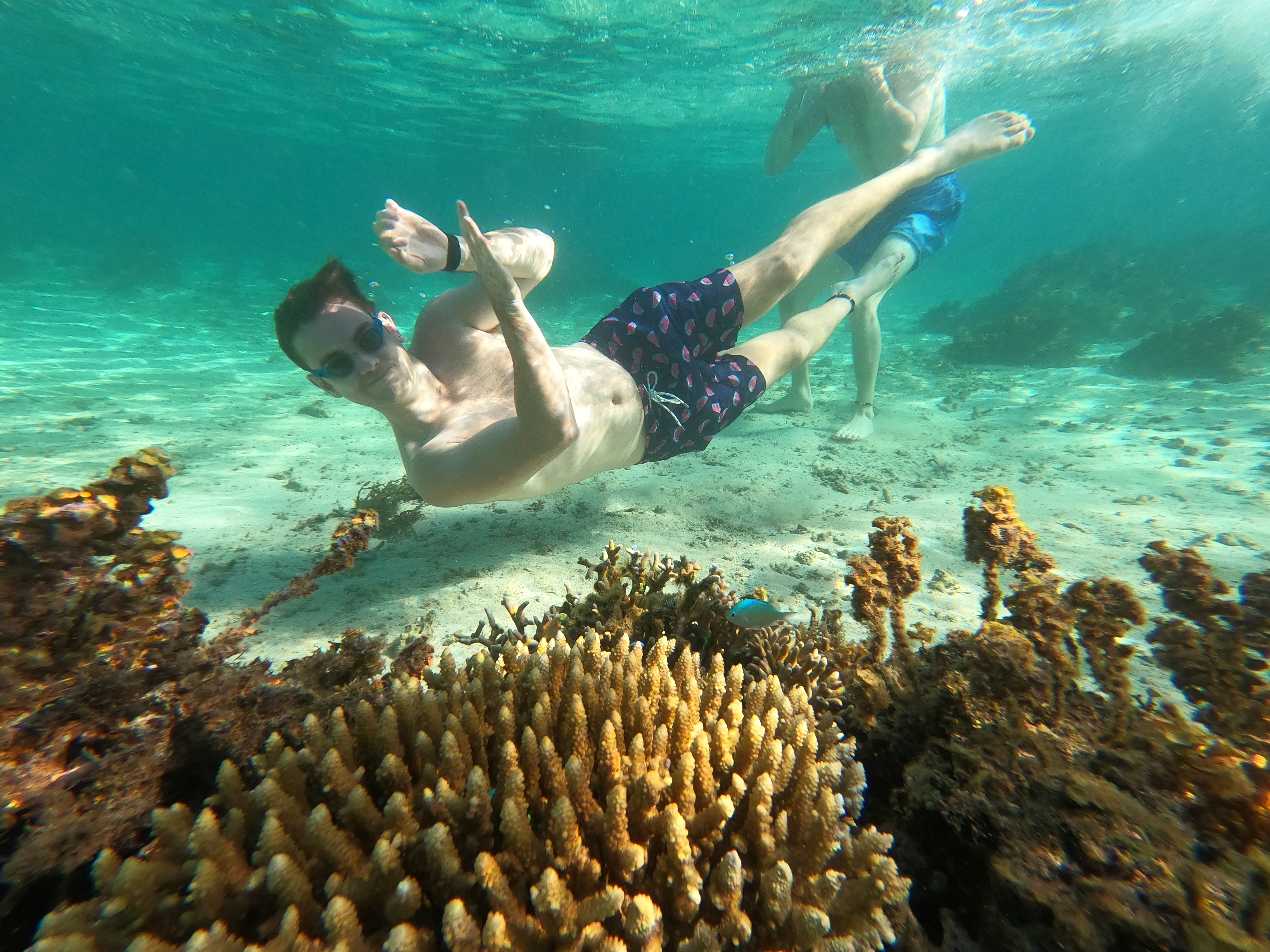
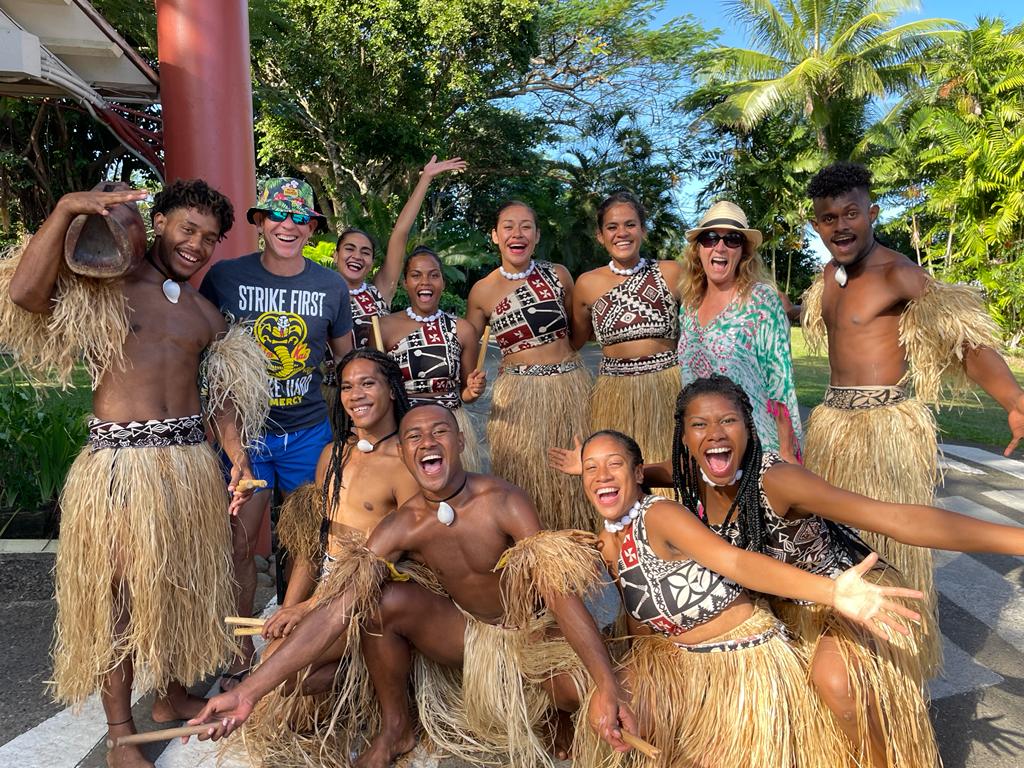
I did manage to escape to Fiji with the family between drafts. It was an incredible break, and really boosted my creative energy – leaving me ready to tackle the final section.
Fison family enjoying the sunsetDCIM100GOPROGOPR1001.JPGIsland vibes
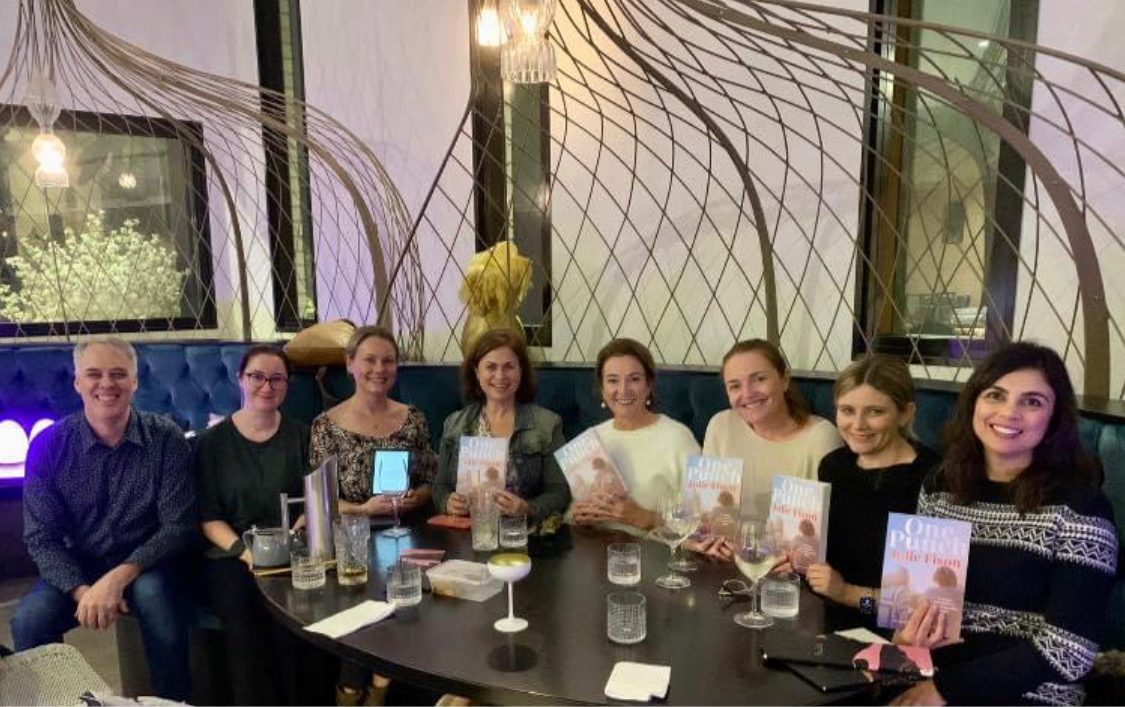
Meanwhile, I’m loving seeing your pics of One Punch and reading your feedback on social media. I’ve also enjoyed visiting book clubs – sharing my writing journey and finding out what clubbers think of the moral dilemma faced by Yasmin and Evie – the two mothers at the centre of the tragedy. It’s so interesting to get everyone’s take on how far parents would go to protect their children!
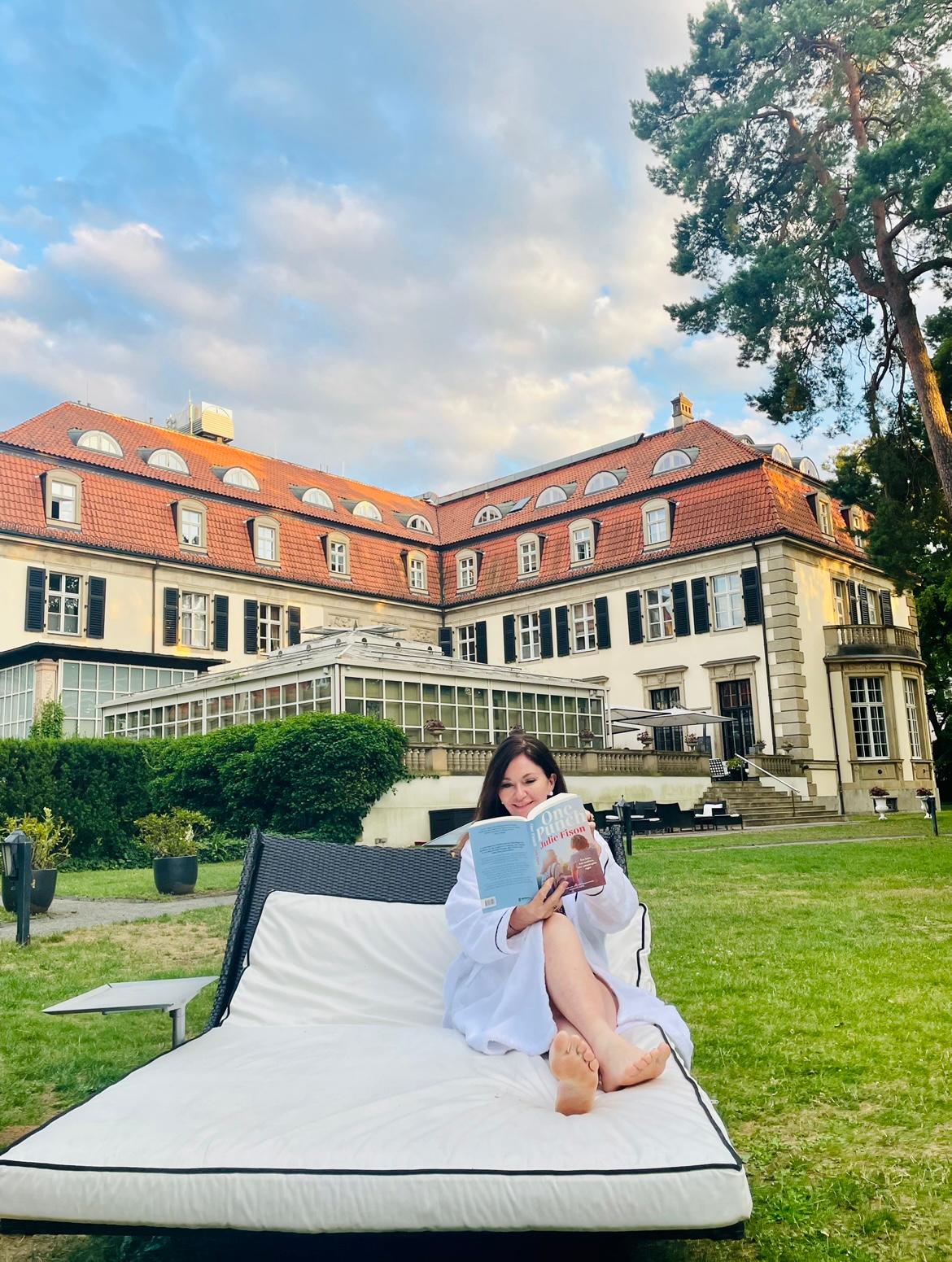
Visiting Bright and Early Books in Brisbane. One Punch in Cambodia and Germany
Since launching One Punch, I’ve also done several podcasts and interviews about my writing process. As an aspiring author I always looked for nuggets in writer’s interviews – so here’s a few tips if you’re working on your manuscript.
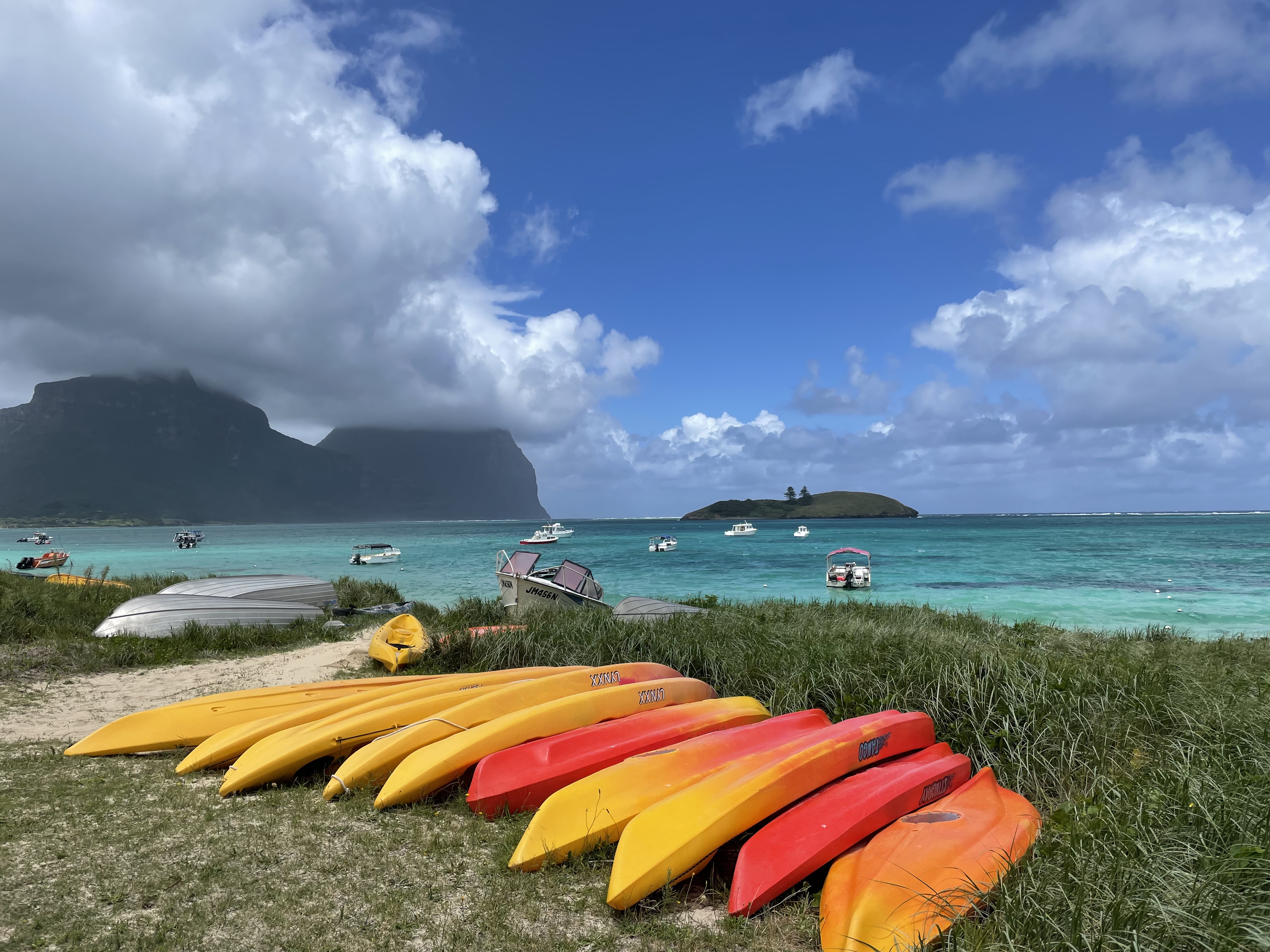
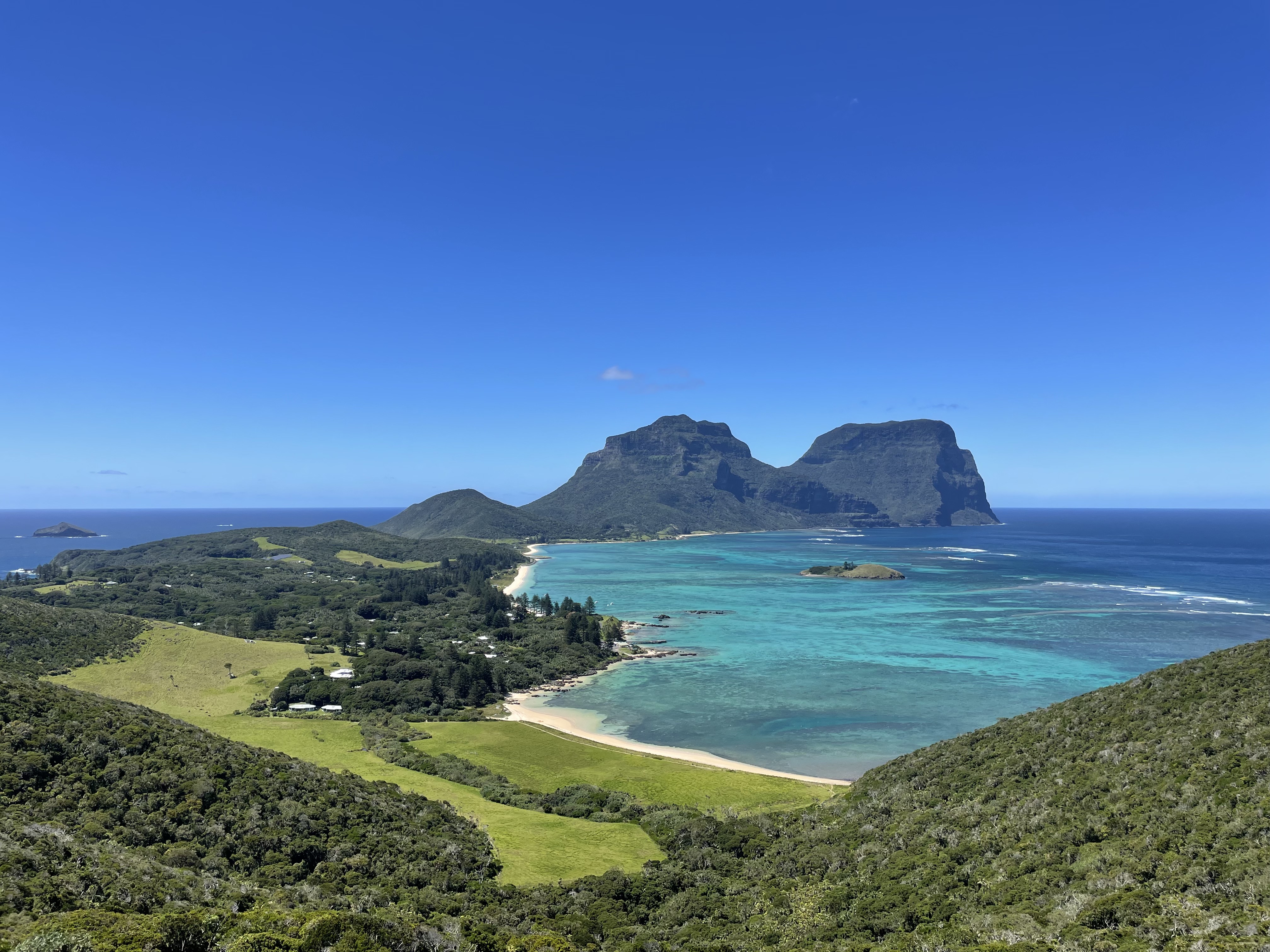
With its spectacular mountain scenery, coral reefs, migratory birdlife and native species found nowhere else on earth, Lord Howe Island – a two-hour flight from Sydney – could well be the ultimate holiday destination for outdoor enthusiasts. It’s the type of island where you’ll get more wear out of your hiking boots than your sequin Camilla, and you’re more likely to spot a rare seabird than an Instainfluencer. It’s a laid-back island that feels undamaged by the modern world – where a push bike is the main mode of transport, and tourist numbers are limited to 400 people at any one time. If you love walking, snorkelling and exploring nature, you’ll probably love Lord Howe Island as much as I do!
Lord Howe Island – the ultimate destination for outdoor enthusiasts
Hike Malabar Ridge
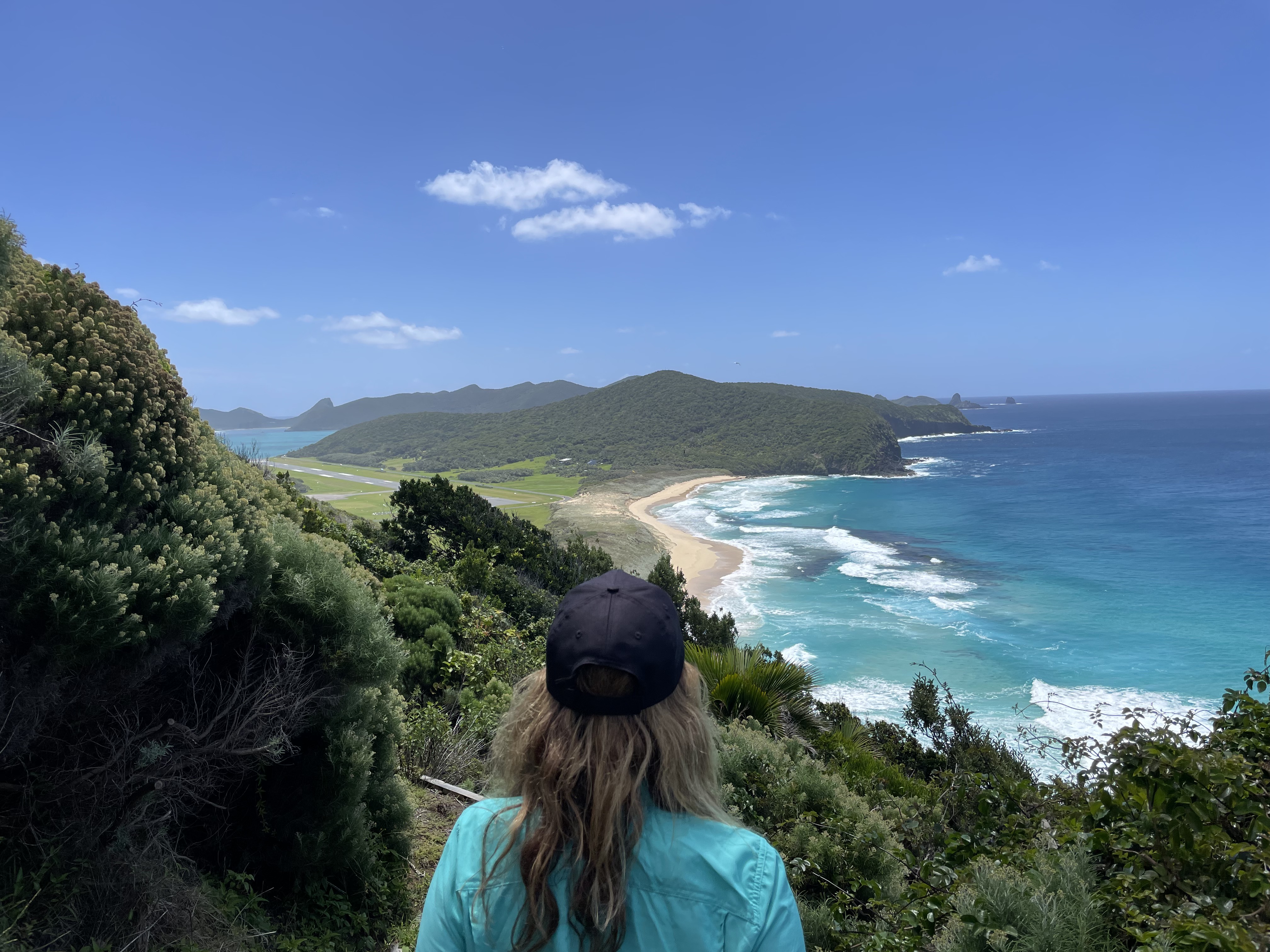
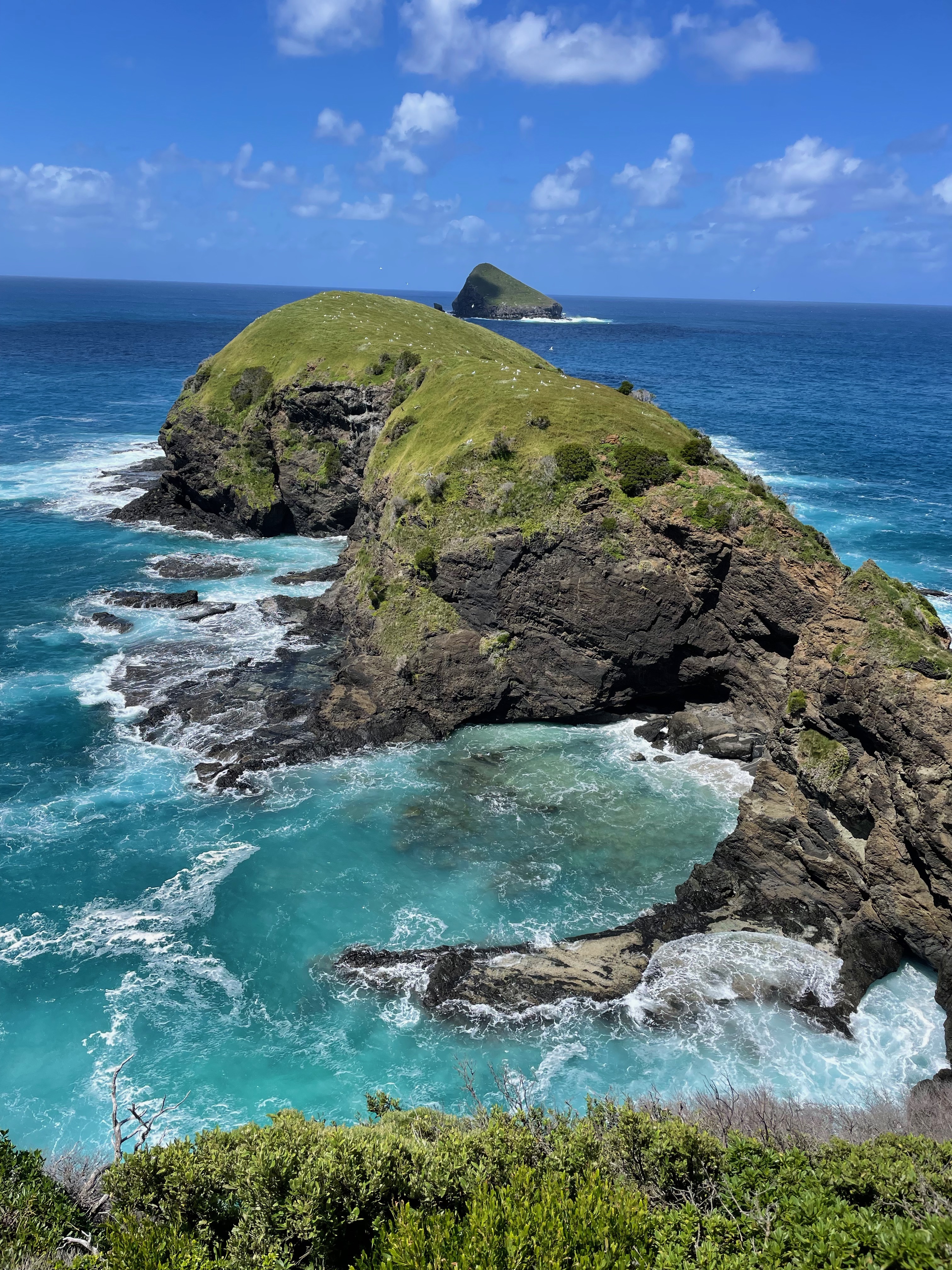
Lord Howe Island is just a tiny dot in the Tasman Sea – 11km long and 2km wide – but it is crisscrossed with fantastic walking trails that make it a paradise for hikers. Trails range from easy foreshore strolls to cliff-top scrambles, but wherever you go, you are assured of breath-taking scenery. It’s difficult to pick a favourite, but for an incredible view of the island, the Malabar Ridge trail is hard to beat. The 1.5km track starts just before you hit Ned’s Beach. It then climbs up the hill, along the wooded ridge and finishes on the cliff edge. You’ll want to take a moment to watch the seabirds wheeling around their nests, before continuing along the ridge to Kim’s Point, which was named after Kim Morris who died in a plane crash in 1967. From here you can follow the trail down the steep Memorial Track to Old Settlement Beach.
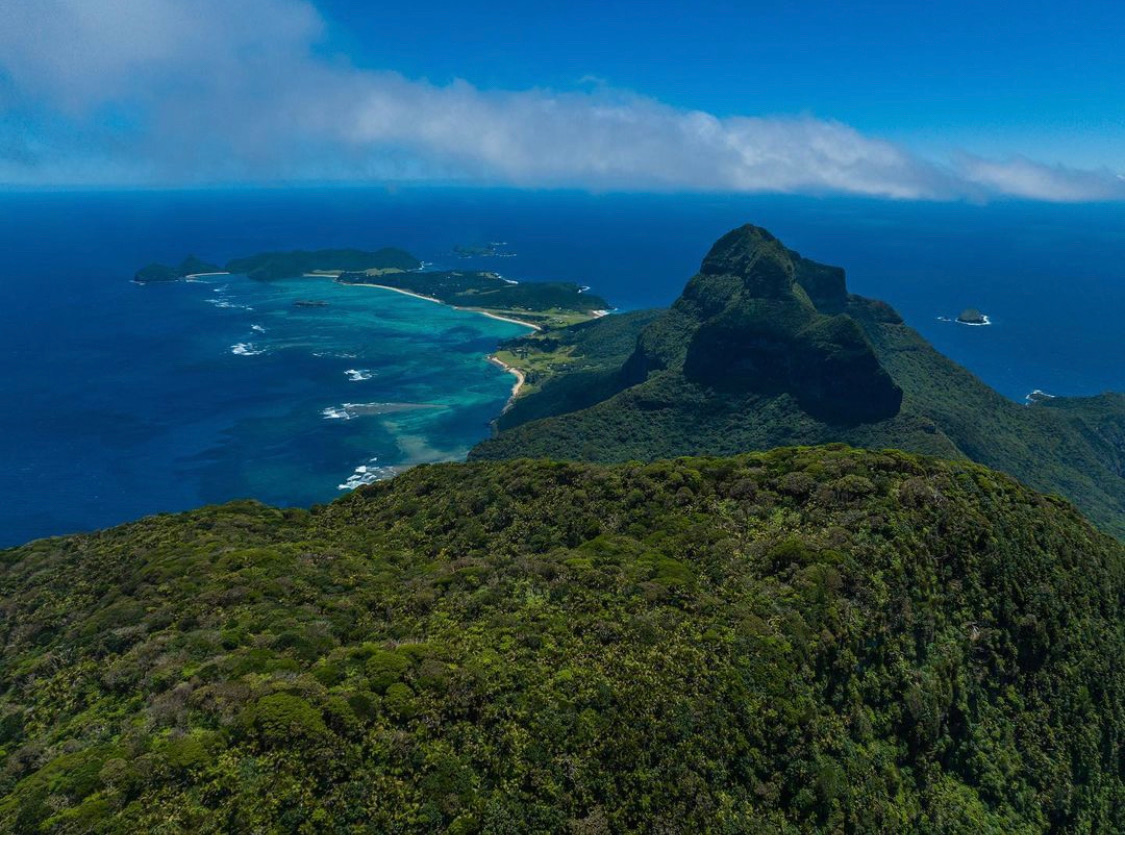
View from Malabar Ridge. Image: Julie Fison
Visit Old Gulch and the Herring Pools
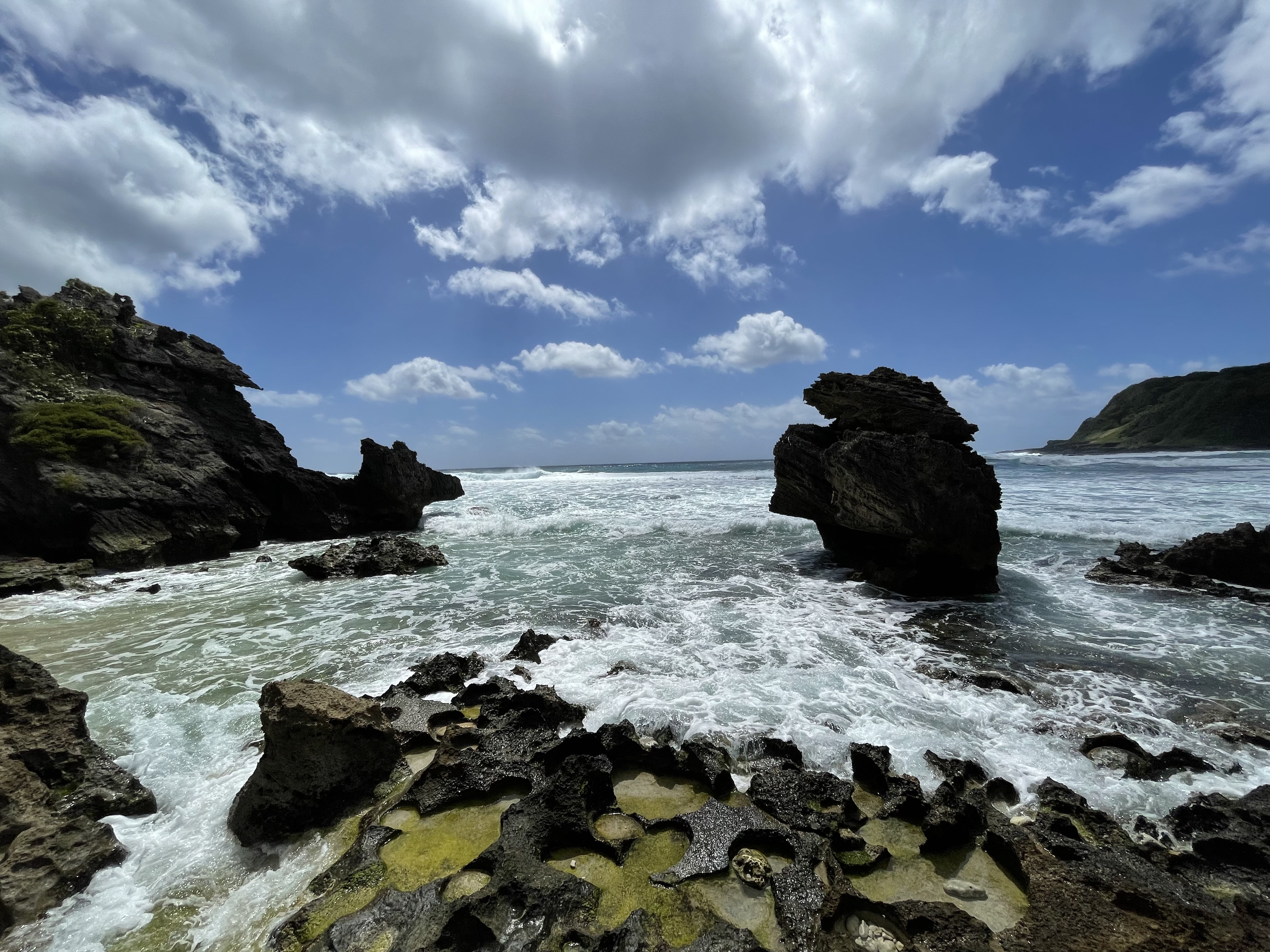
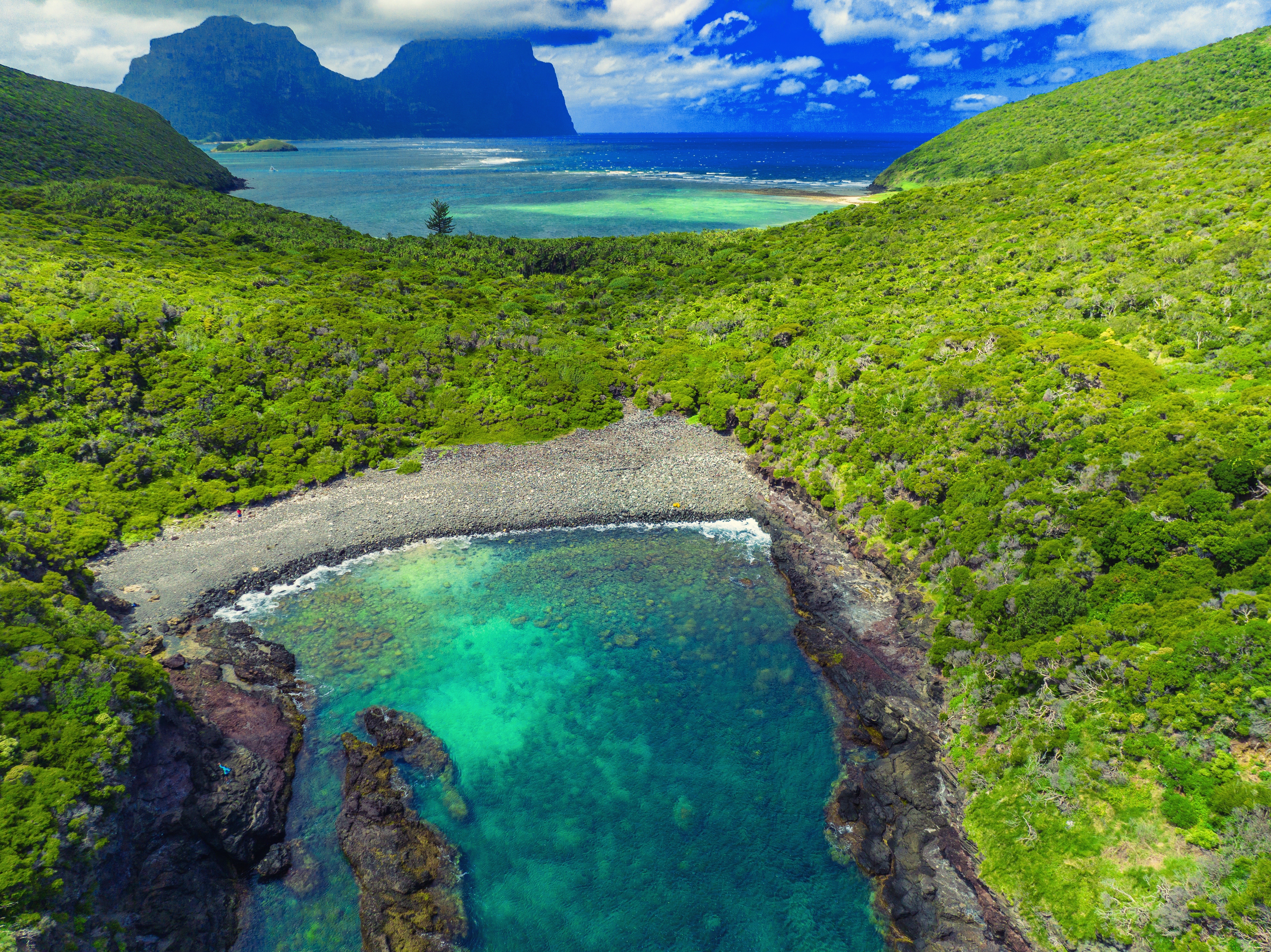
Old Gulch is a ridiculously pretty inlet on the very northern end of the island. It is just a 300m amble along the boardwalk from North Bay. The catch – the trail to North Bay is ridiculously steep! Starting at Old Settlement Beach, take the path up (up, up, up) Memorial Track, then down 600 steps through the palms to North Bay. You’ll find toilets, a picnic shelter, and a wide beach – the perfect spot to stop for lunch. From here, it’s an easy walk to Old Gulch. The little cove itself is tucked in behind Mount Eliza and popular for snorkelling if the weather is calm. At low tide, follow the rocks around to the tidal pools, known as the Herring Pools, on the eastern side of the inlet. When the sun is out the colours of the coral and fish are dazzling. Allow a minimum of three hours to enjoy the beach, and save some energy for those 600 steps that will still be there on the way home!
Old Gulch and Mount Gower. Image: John Fison
Snorkel at Ned’s Beach
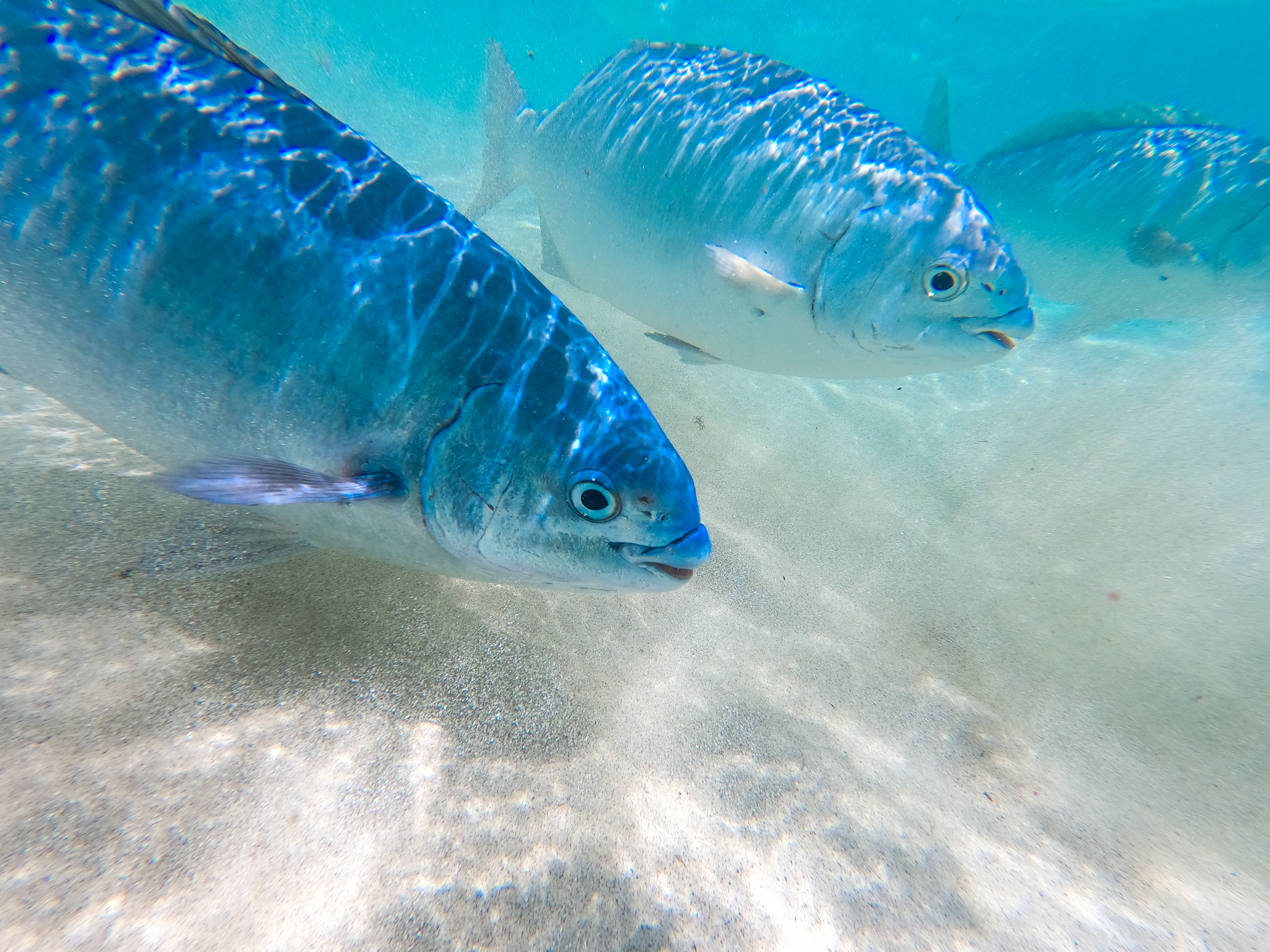
Ned’s Beach is a long sandy stretch of beach on the north side of the island. When the southerly wind picks up (as it often does), it is definitely the place to be. Make use of the BBQ facilities, chill on the grassy slope, or rent a mask and snorkel and check out the marine life. With coral just metres from the shore, the fish are in plentiful supply. Grab a bag of fish food and you will instantly make friends with the local silver drummers, kingfish and wrasse. Sorry, no fishing. We’re in a marine park here.
Fish at Ned’s Beach
Get to know the history
In 1778, the commander of the First Fleet supply ship Henry Lidgbird Ball came upon an uninhabited island while sailing between Sydney Cove and the penal colony of Norfolk Island. Lord Howe Island, as he named it, was later settled by three couples from New Zealand who provisioned supply vessels as well as whaling ships. Islanders supplemented their income by exporting Kentia Palm seeds to the European market. Tourism began at the turn of the 20th century and grew after flying boats began operating from Rose Bay in Sydney. Information signs at Old Settlement Cove offer a glimpse into the past, but for the full story, head to the museum on Lagoon Road. Here you’ll find scientific specimens, books, coffee, snacks and WIFI!
One Punch takes a simple premise and turns it into a tight study of class and human nature – what we believe to be true about ourselves, and those we love, and who we really are. A crime is the pivot point for a sharp observation of human nature and blends compassion and humour in equal measure.
Meredith Jaffe, The Tricky Art of Forgiveness
Visit Balls Pyramid
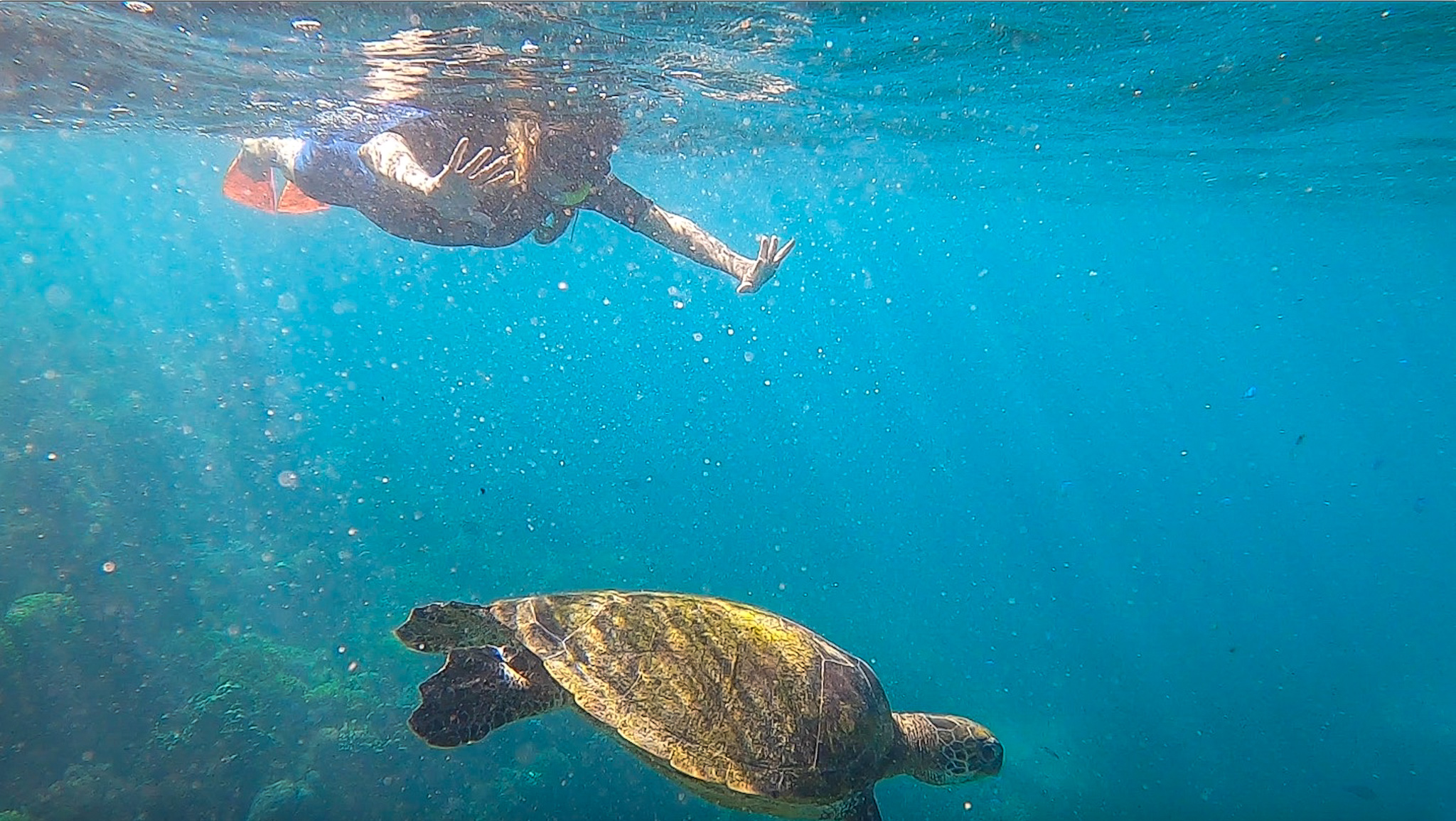
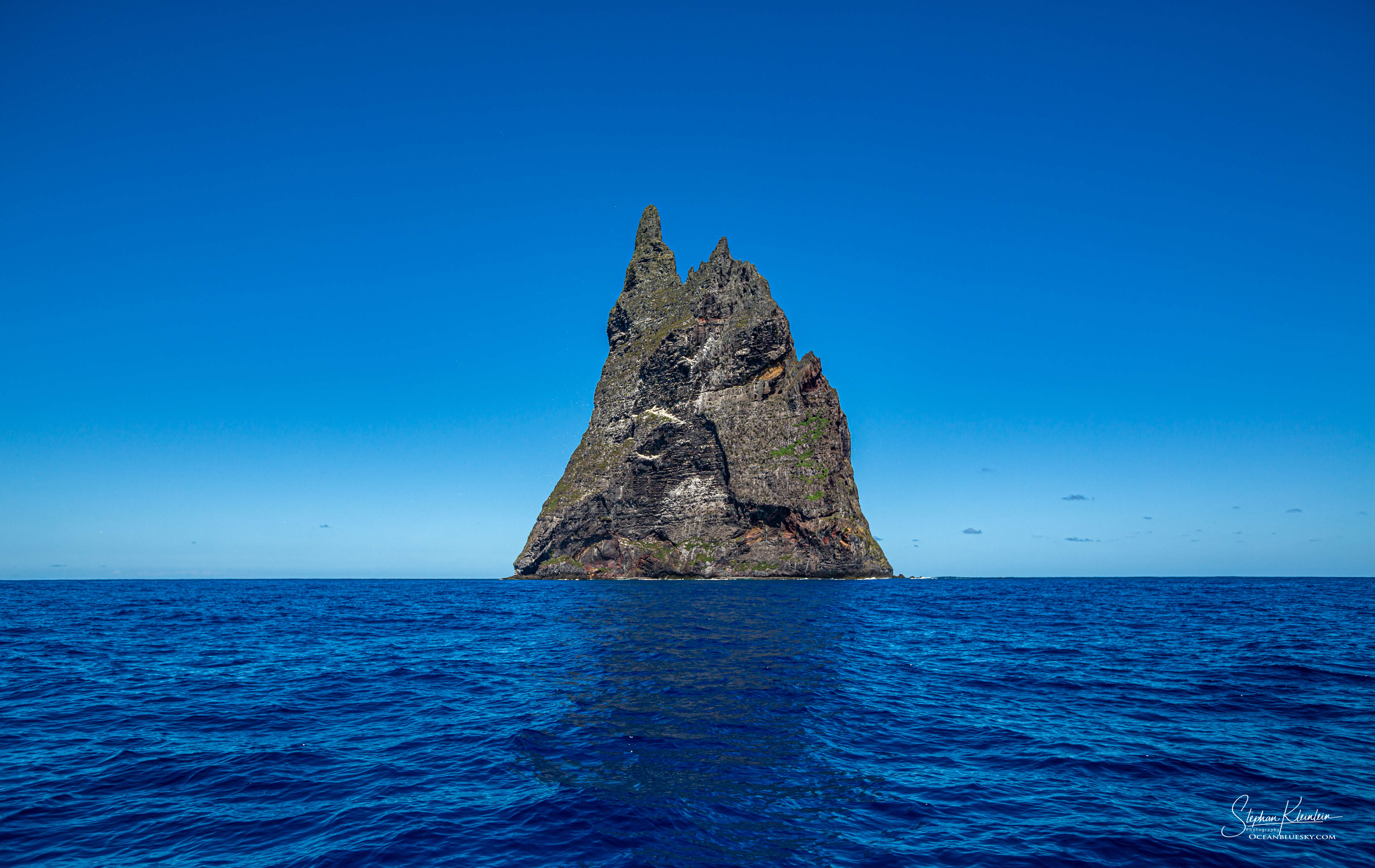
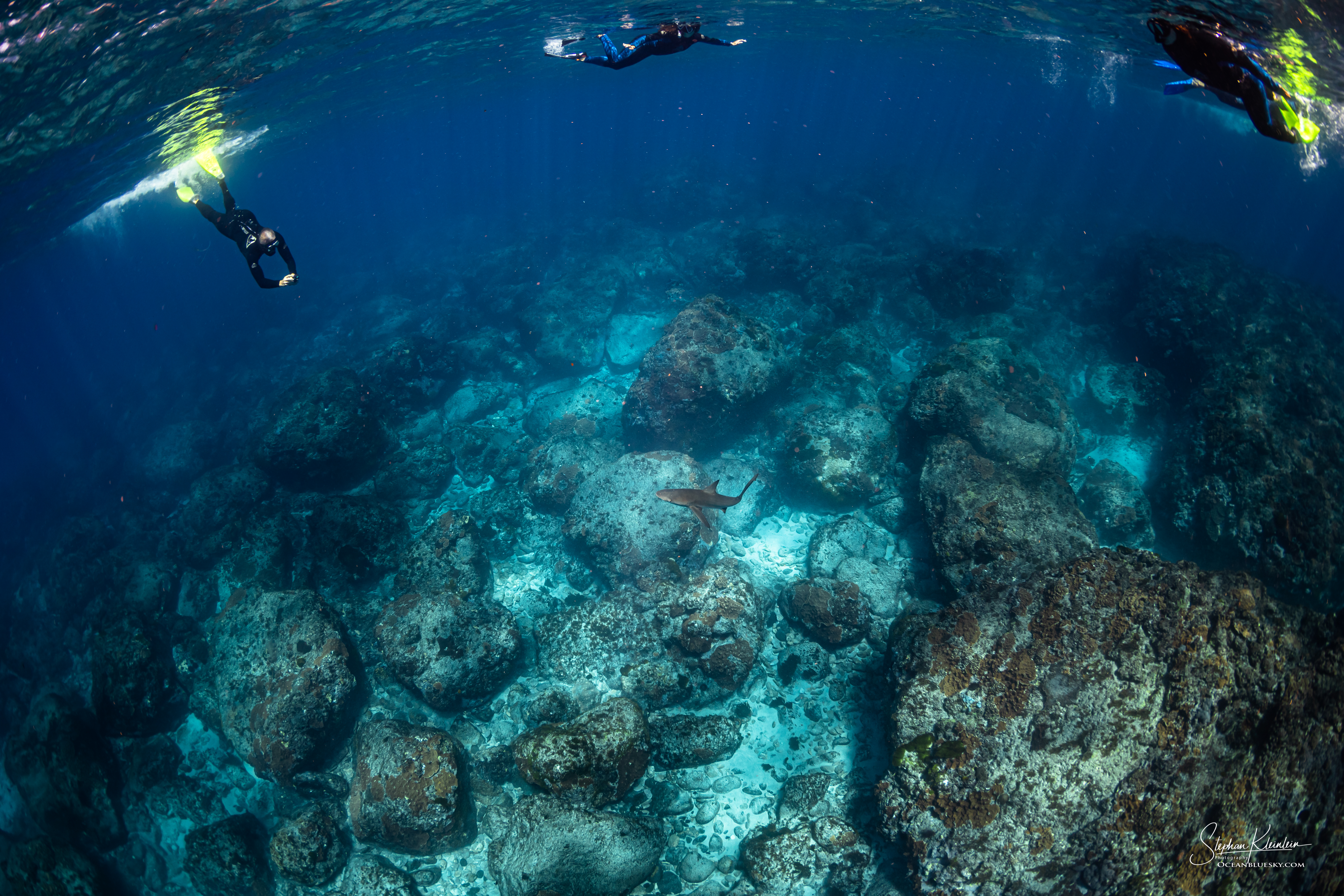
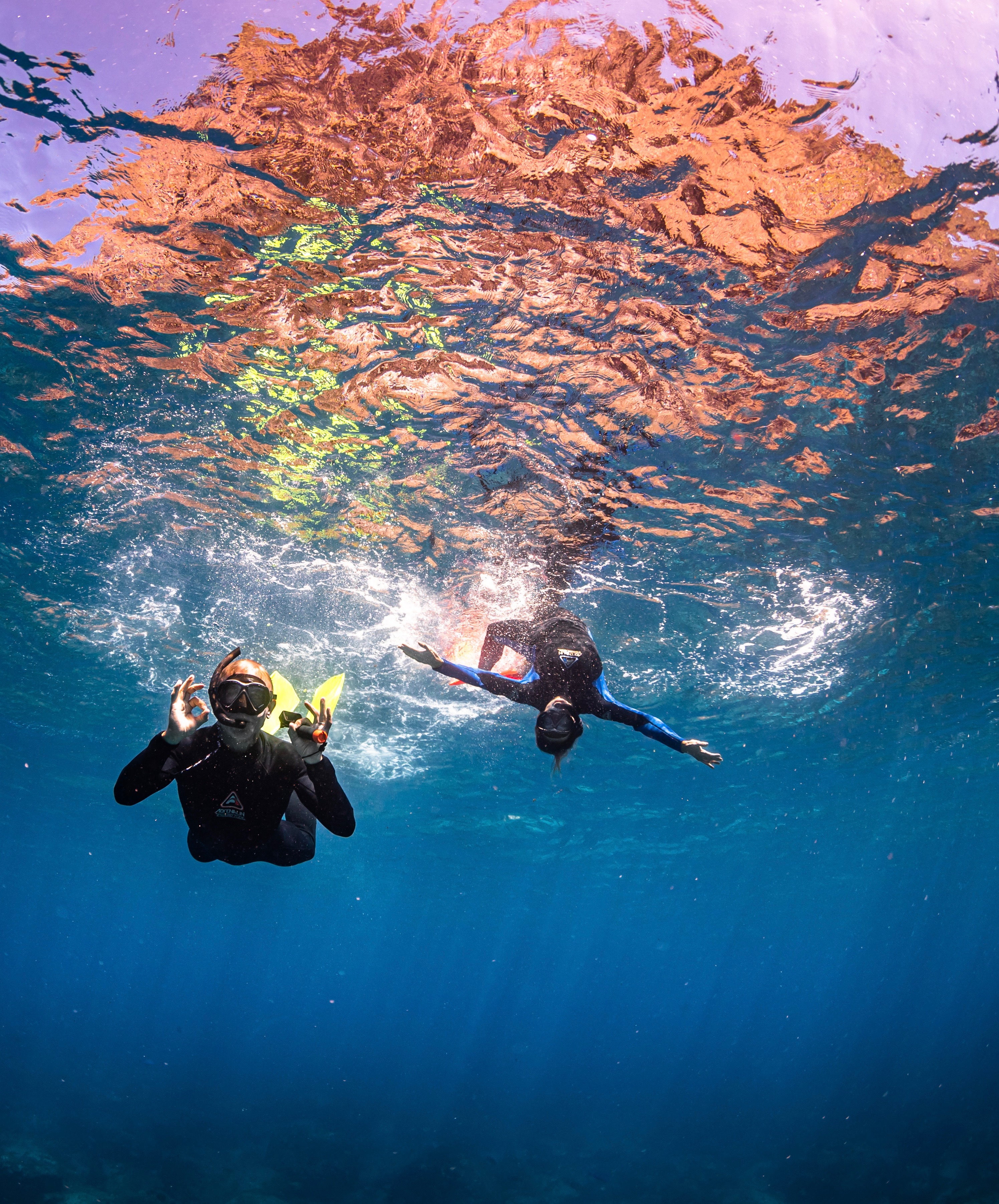
Balls Pyramid is a 551m sea stack that rises out of the ocean, some 23 km off Lord Howe Island. It is, in fact, the world’s tallest sea stack, but shrouded in mist, it looks like a mythical monolith, or the lair of some evil genius from a James Bond movie. On a clear day you can spot the basalt spearhead from Lord Howe, but to really appreciate this dramatic sight, take a one-hour boat trip out to the pyramid. You can’t climb the sea stack, but you can snorkel in its shadow. The deep water is home to an incredible array of marine life, including vibrant violet sweep and Galapagos sharks. Contact Reef N Beyond.
Snorkelling at Balls Pyramid. Images: Stephan Kleinlein
Cycle everywhere
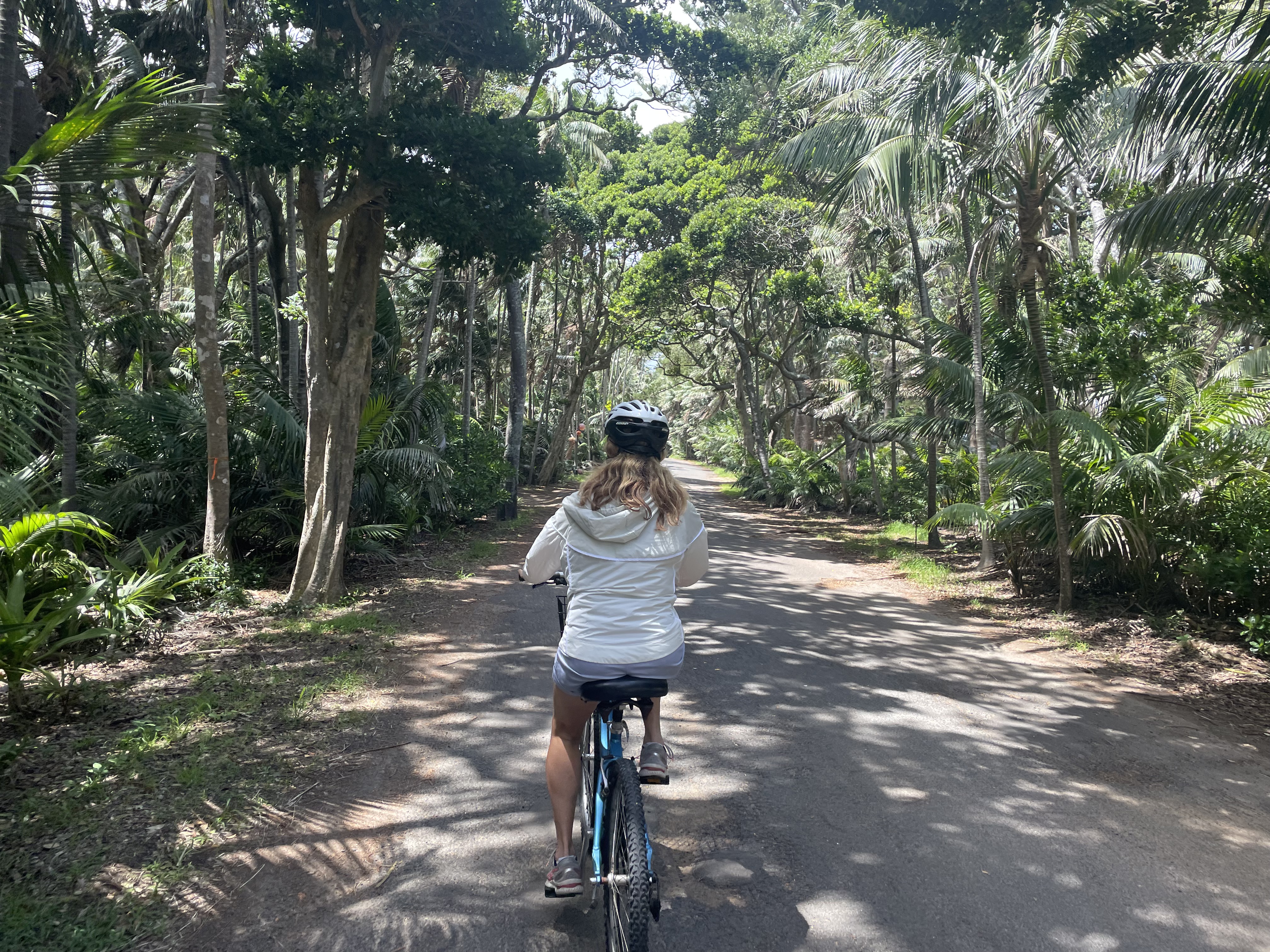
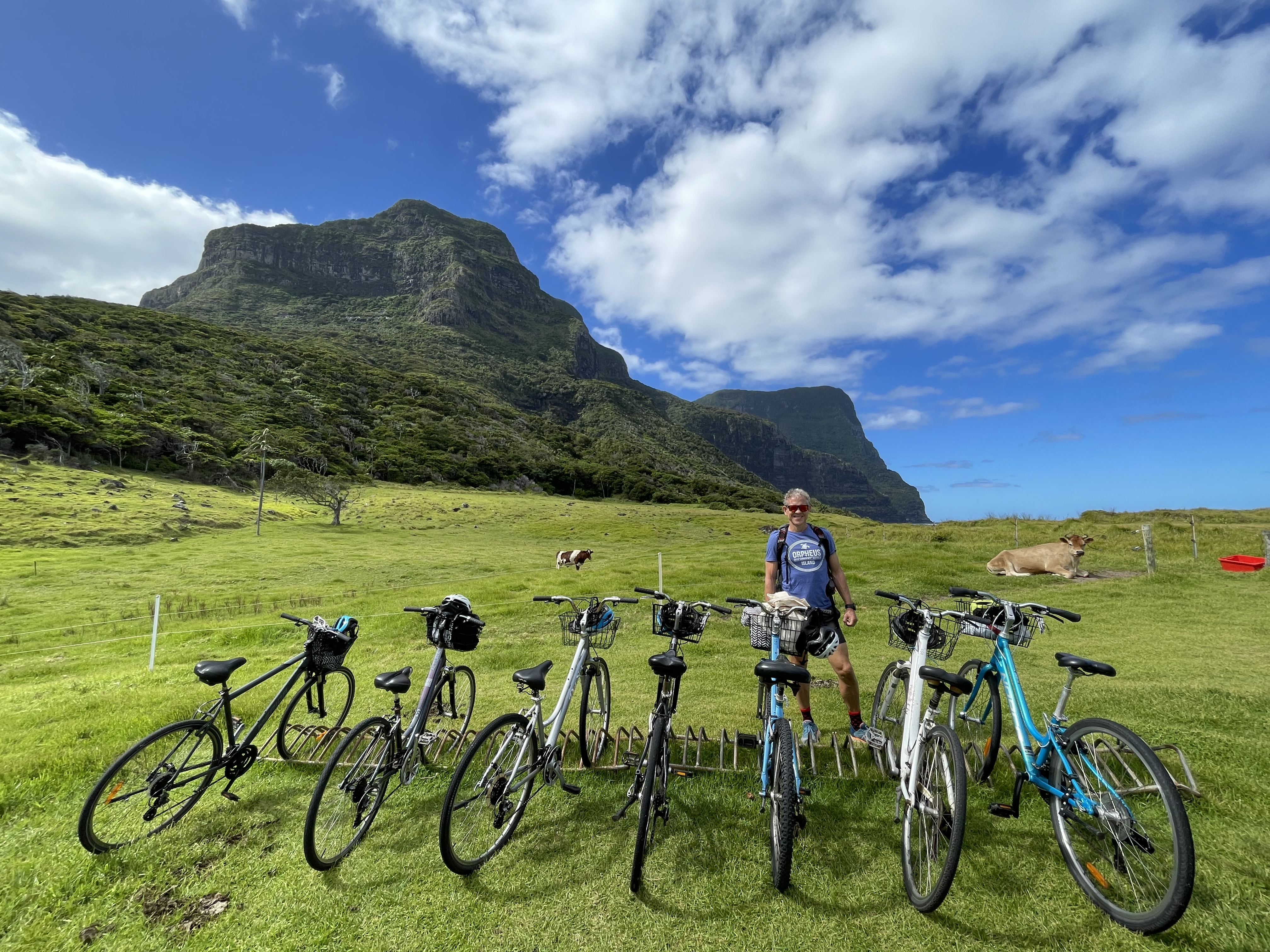
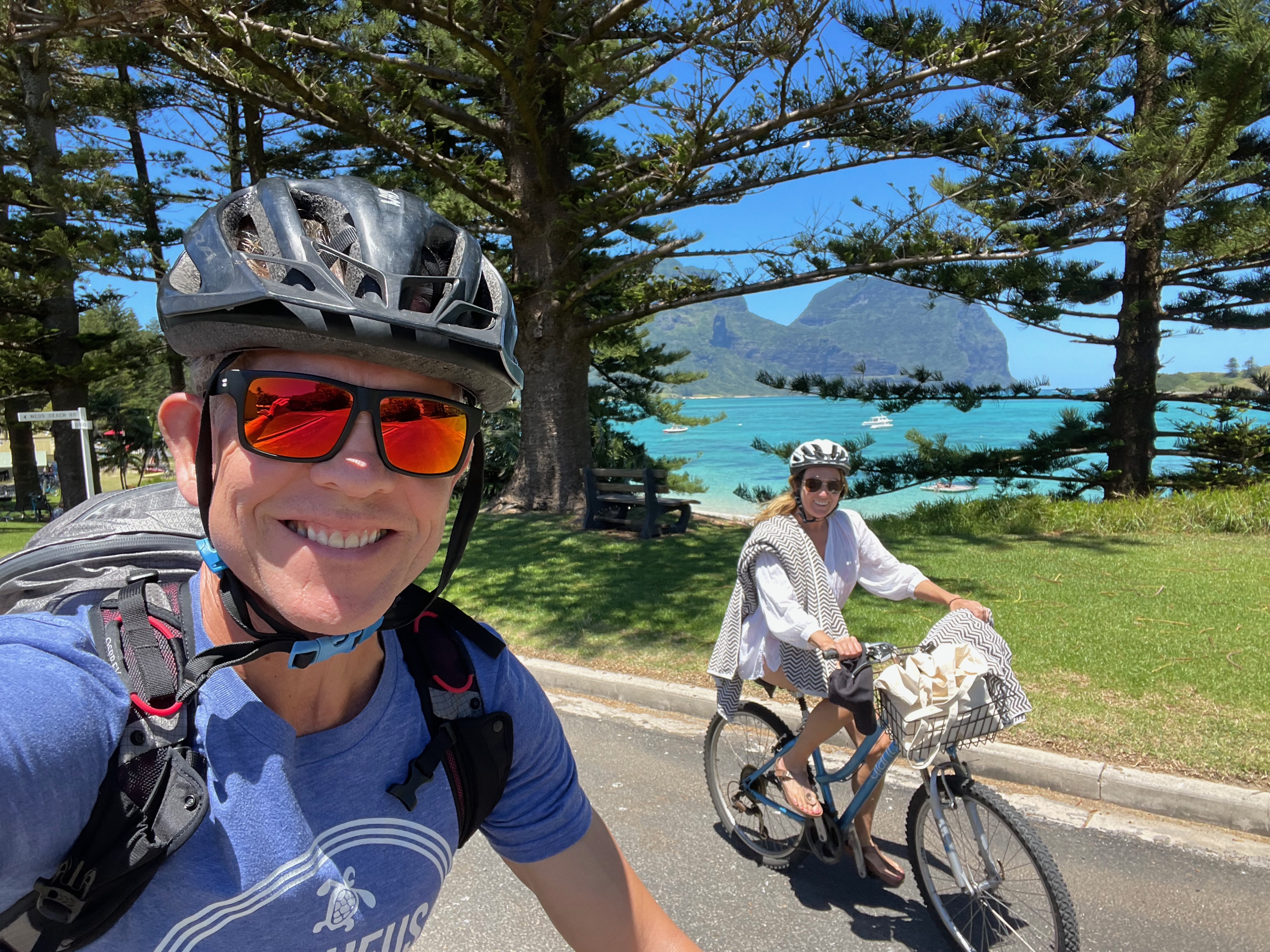
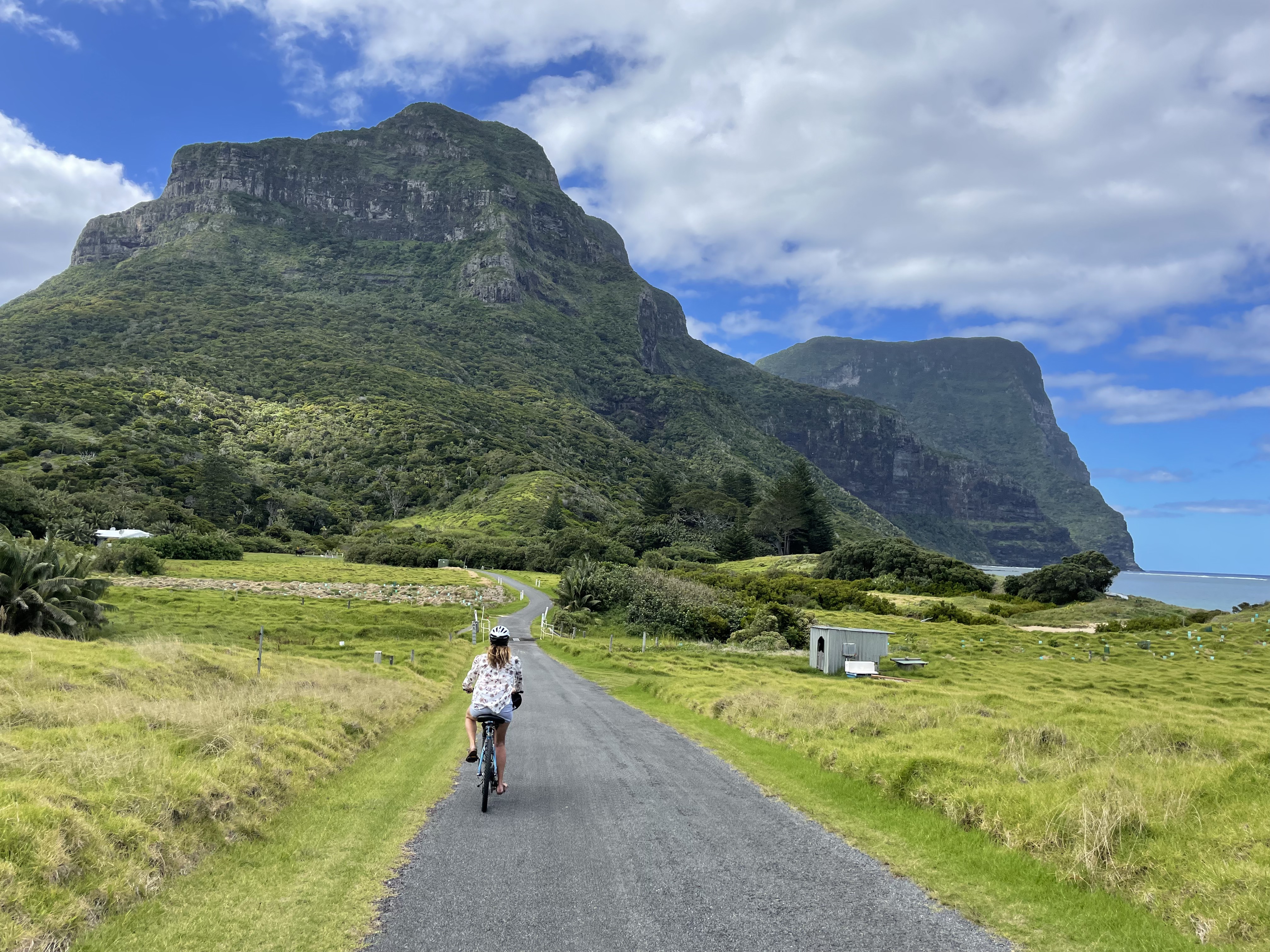
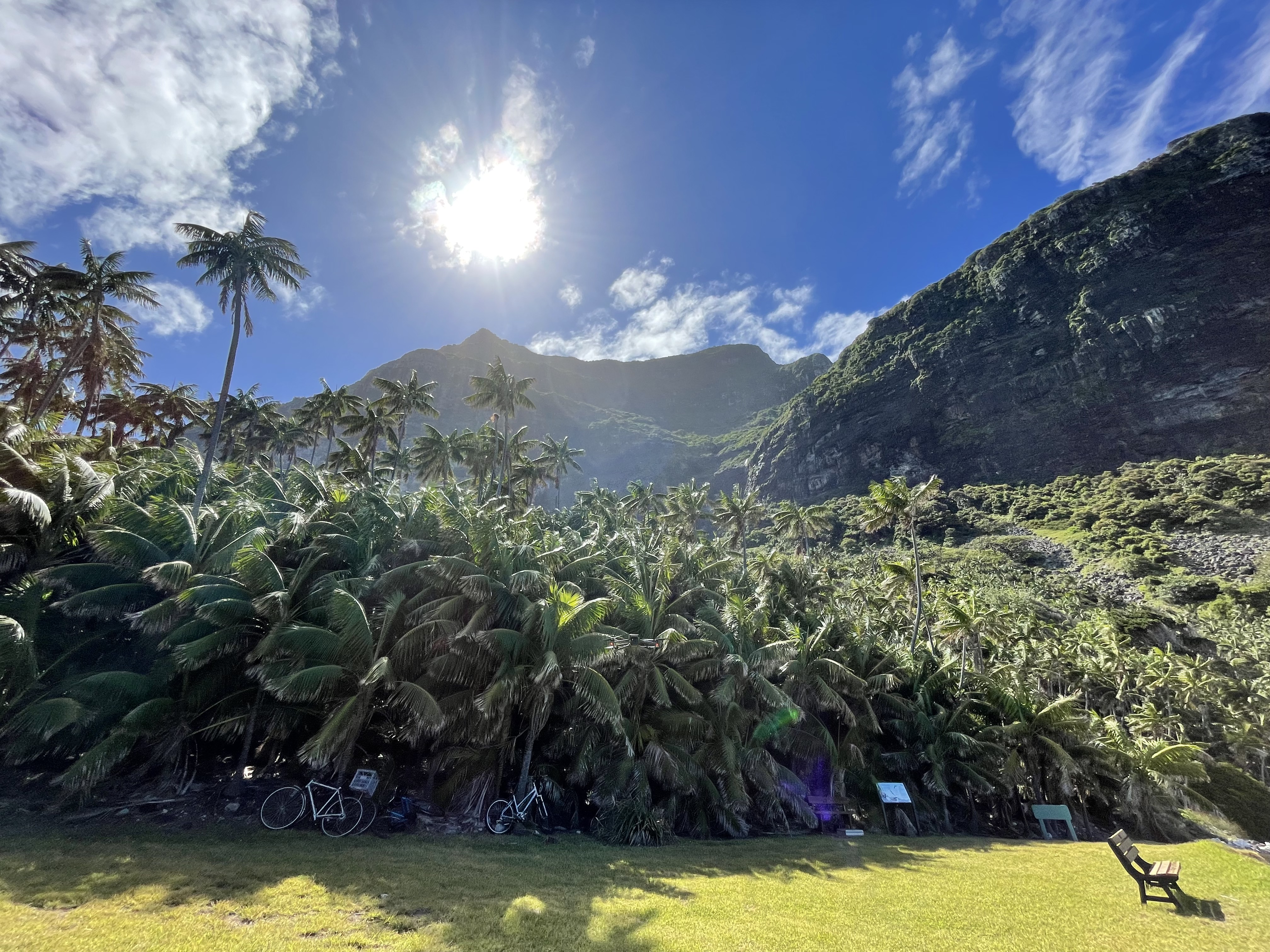
One of the best things about visiting Lord Howe is being able to ride everywhere. Car use is strictly limited, so your first port of call will be the bike hire shop on Lagoon Road. The main road runs from Old Settlement Beach in the north, past the airport and finishes just beyond Capella Lodge. Riding from one end to the other takes around 30 minutes if you’re in a hurry. But what’s the hurry when you’re on Lord Howe! If you are anything like me, you’ll be off the bike every hundred metres to take another photo of the stunning scenery. Once you get to the southern end of the road, you can leave your bike by the fence, and walk through the Kentia palm forests to the beach at Little Island. Just stunning!
Little Island and Mount Gower. Image: John Fison
Get twitching at Mutton Bird Point
Lord Howe Island is rated one of Australia’s best places for bird watching. It is home, or at least a home-away-from-home, for 130 species of birds. Red-tailed tropicbirds, shearwaters, terns, petrels and many other seabirds migrate here in their hundreds of thousands, to breed on the island – taking over the cliffs, the beaches and practically every tree. For a really special experience, head to Mutton Bird Point. Here, enormous masked boobies nest on the grassy slopes. Don’t forget to pack your binoculars!
Mutton Bird Point
Watch the sunset over the Lagoon
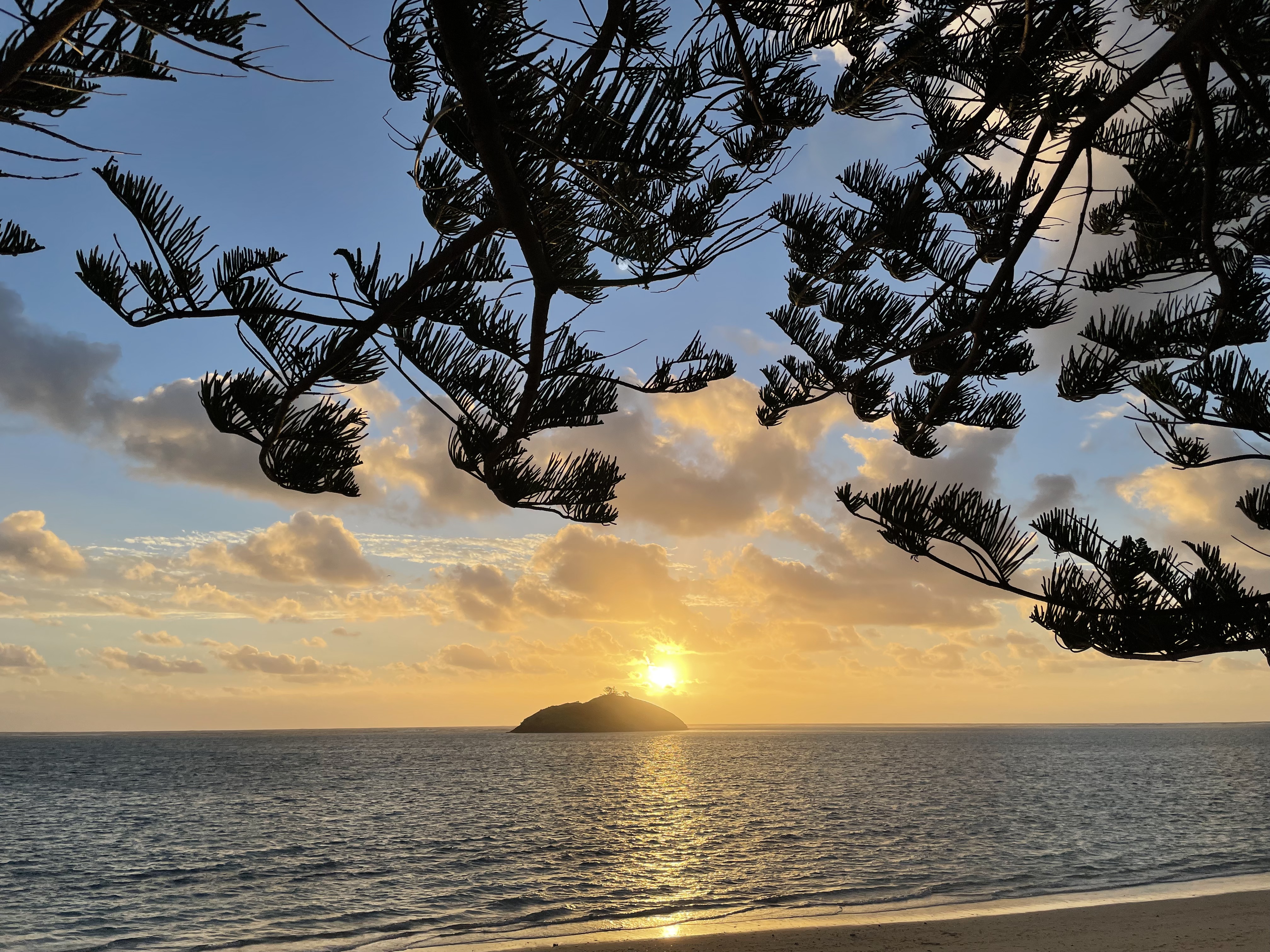
After a hard day on the trails, what could be more perfect than watching the sunset with a cold drink in hand and Mt Gower in the distance. The wide lagoon on the western side of the island is perfectly positioned for beachfront sundowners – a real treat for east coast Australians! Make sure you pack a warm top – even in summer. It gets chilly in the evenings.
A contemporary pick-a-path series about life, first crushes and friendship, that lets the reader choose how the story goes!
Dealing with real world issues, How to Get to Rio gives the reader a delicious amount of power over the story they read – what will your Ever After be?
The Little Bookshop
Sunset on the Lagoon. Lord Howe Island
Hike Mount Gower
The basalt peak of Mt Gower rises 875m from sea level – a brooding form at the southern end of the island, and one of the few remains of the shield volcano that erupted here 6.4 million years ago. The 8hr hike to the top is said to be one of the best day walks in the world! The commanding views of the island and beyond, plus unique biodiversity, put it firmly at the top of the hardcore hikers’ bucket list. But it’s a tough and unrelenting trail. Sections of ropes, sheer drops, narrow pathways, patches of mist and cloud, mean it is not for the faint-hearted, and can only be done with a guide. But it’s virtually a right-of-passage on a visit to Lord Howe Island, and everyone will ask if you are planning to do it! If you’ve got what it takes, book well in advance. Walks are cancelled if it is wet or windy.
Mr Gower trek. Images: John Fison View from Mt Gower. Image: John Fison
Stay at Pinetrees Lodge
With a laid back vibe that is perfectly in keeping with the island itself, food that you’d be lucky to get in a restaurant in the city, and staff who’ll pack a picnic or drop off ingredients for a barbeque at your favourite beach, Pinetrees Lodge is my pick of the places to stay on Lord Howe. Just make sure you book your accommodation well ahead!
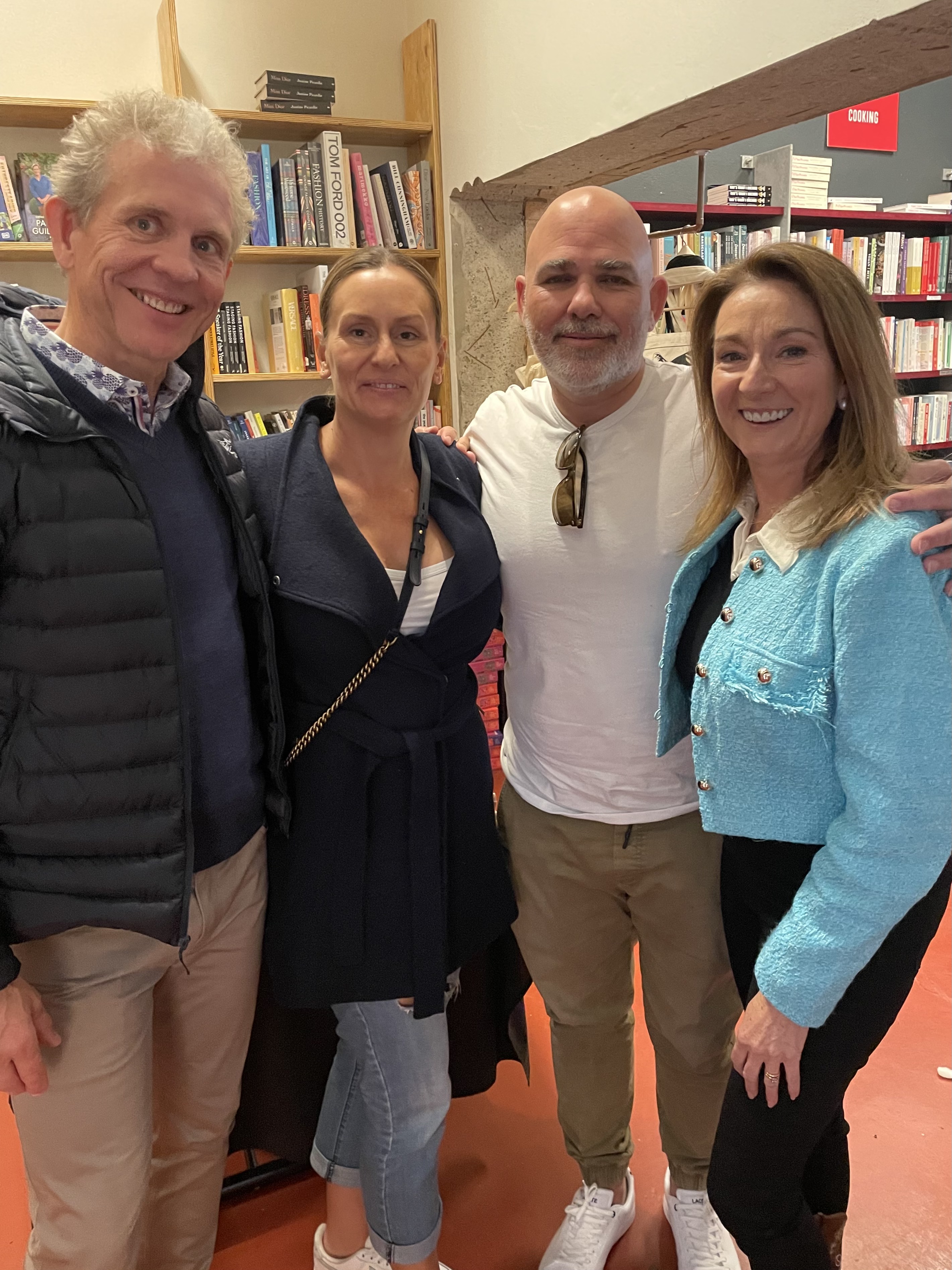
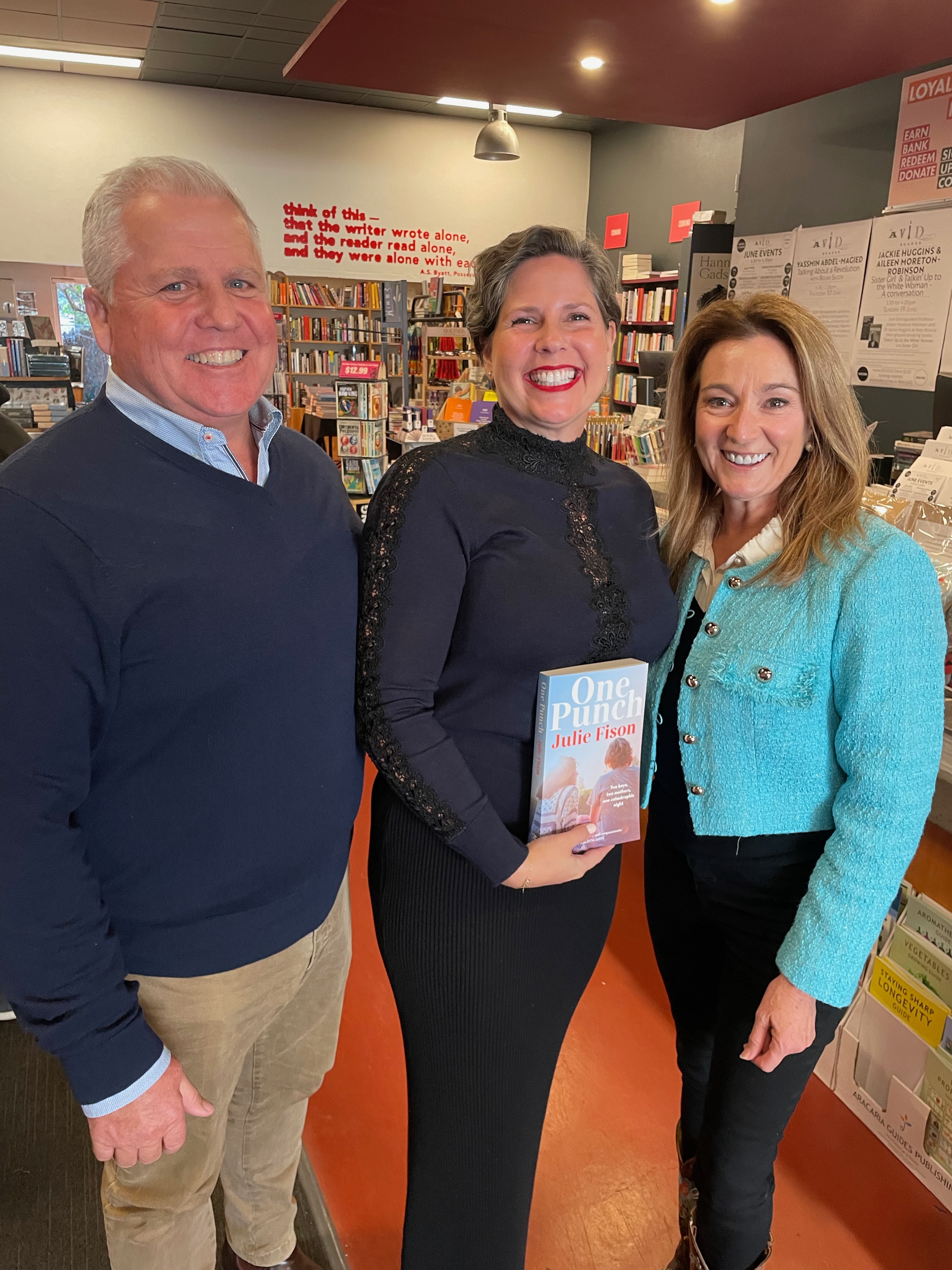
Writing is generally a solitary activity, but the past fortnight has been the exact opposite. I’m still buzzing from the procession of launch events and interviews for my debut novel for adults – One Punch. I’m also incredibly humbled by the generous support I’ve received from family, friends, booksellers, book clubs and my amazing publisher – Affirm Press. A special thankyou goes author Samantha Wheeler for being the best conversation partner ever at my Avid Reader bookshop events. Sharing One Punch has has been such a blast!
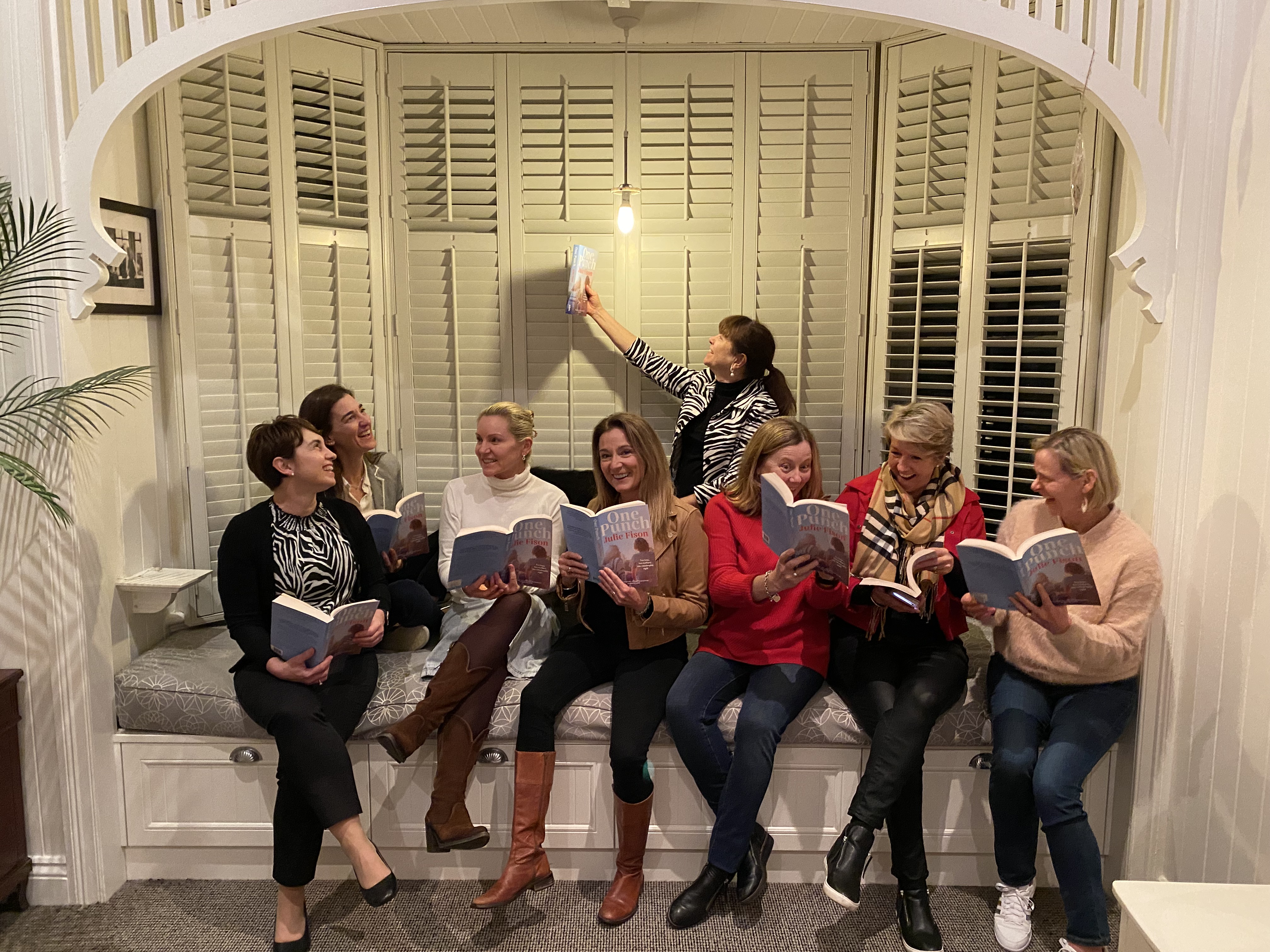
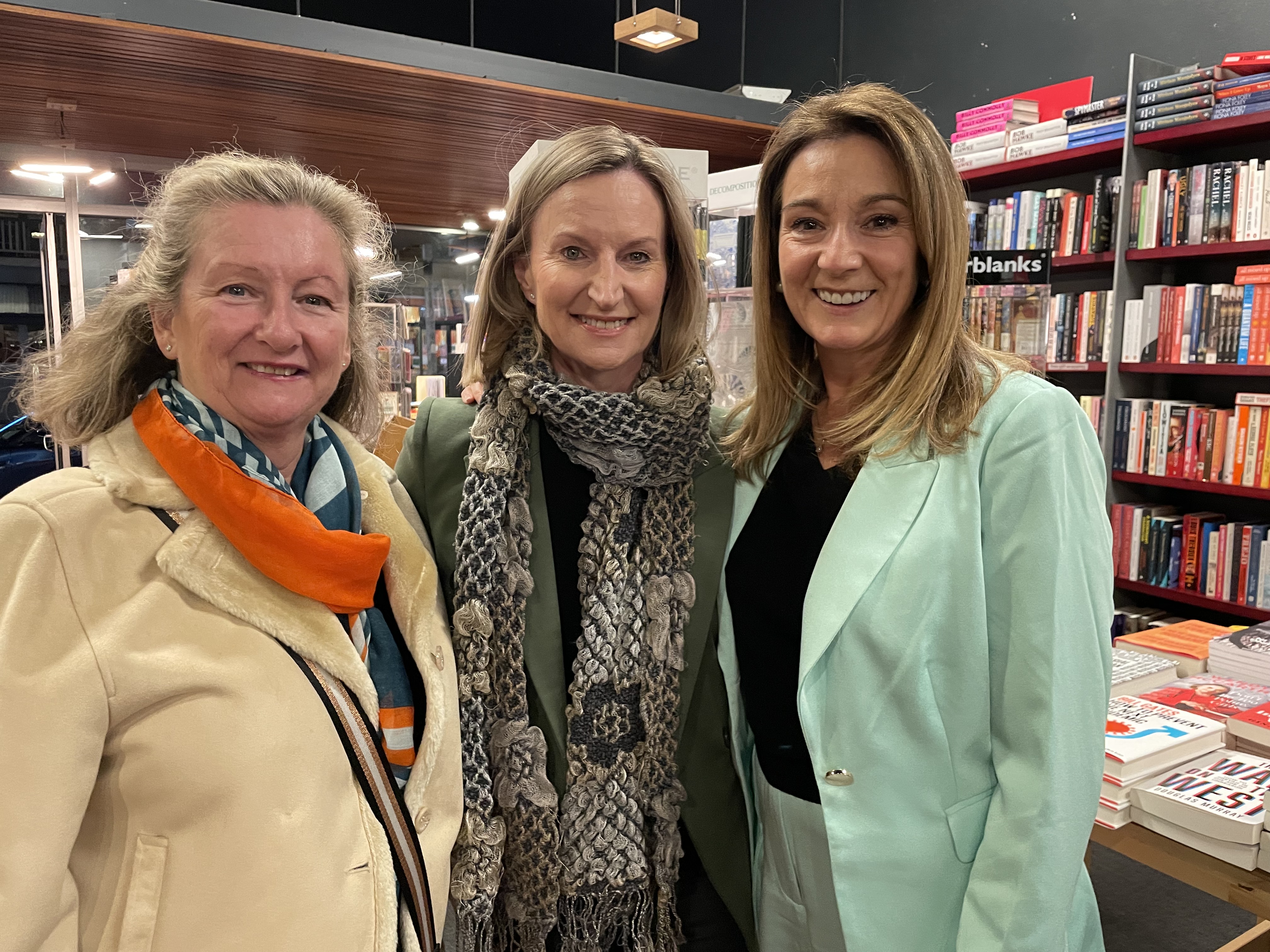
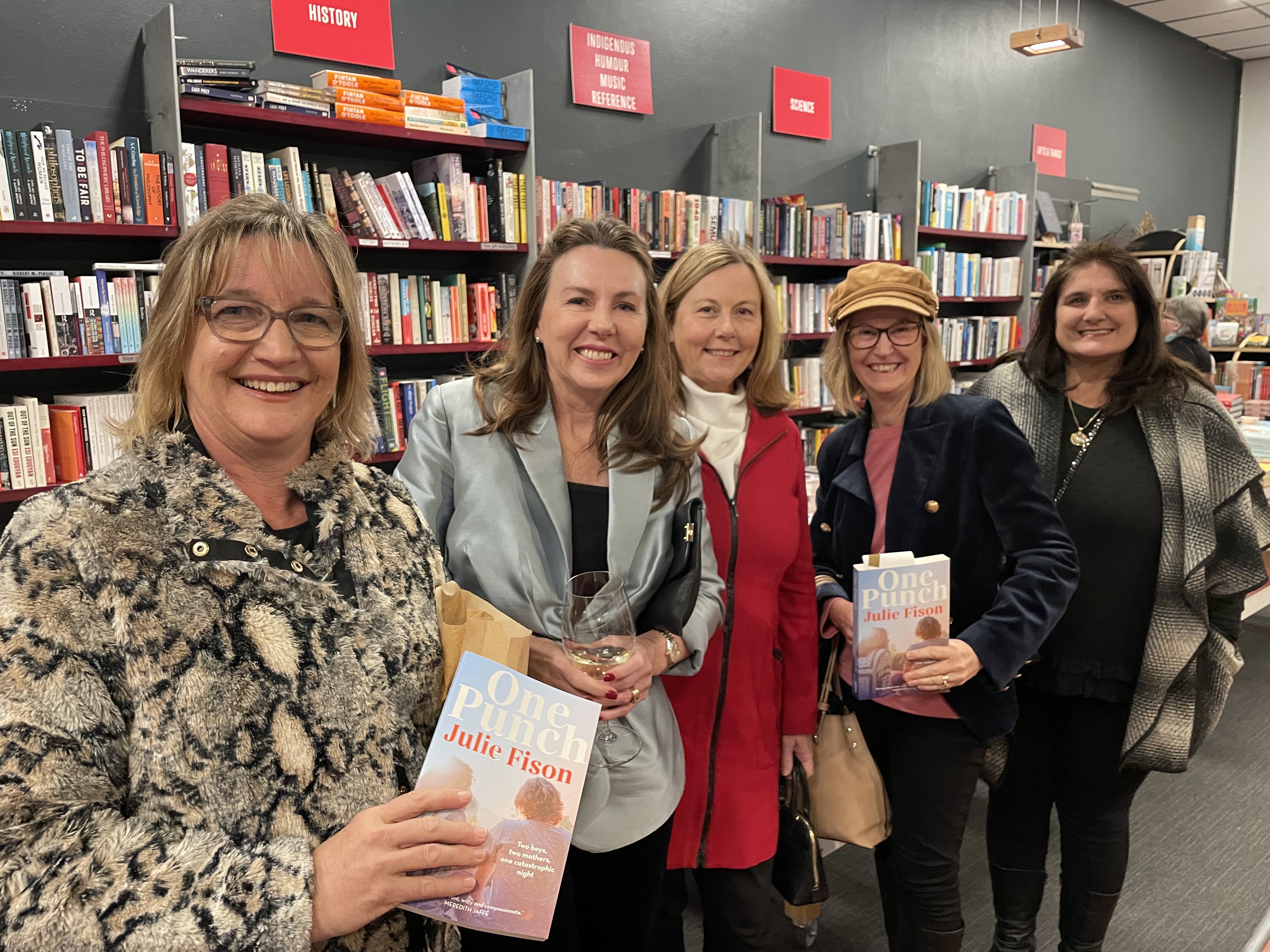
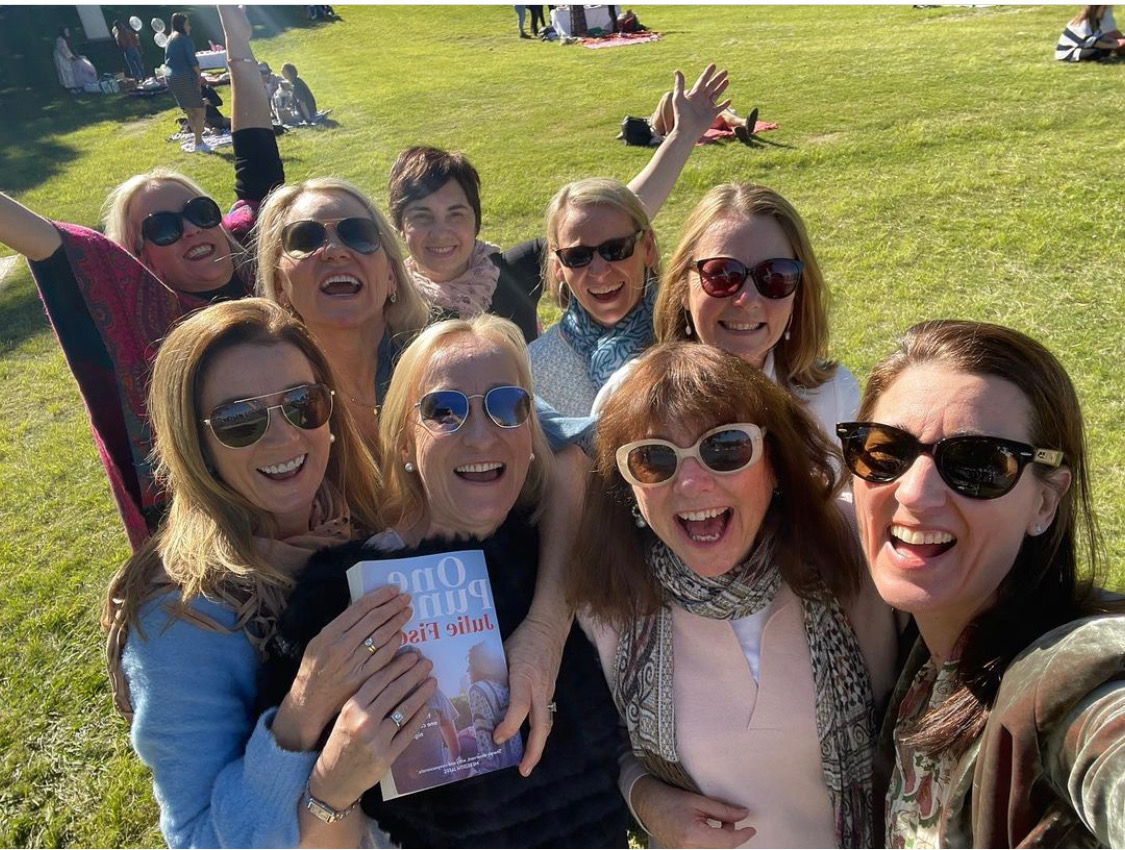
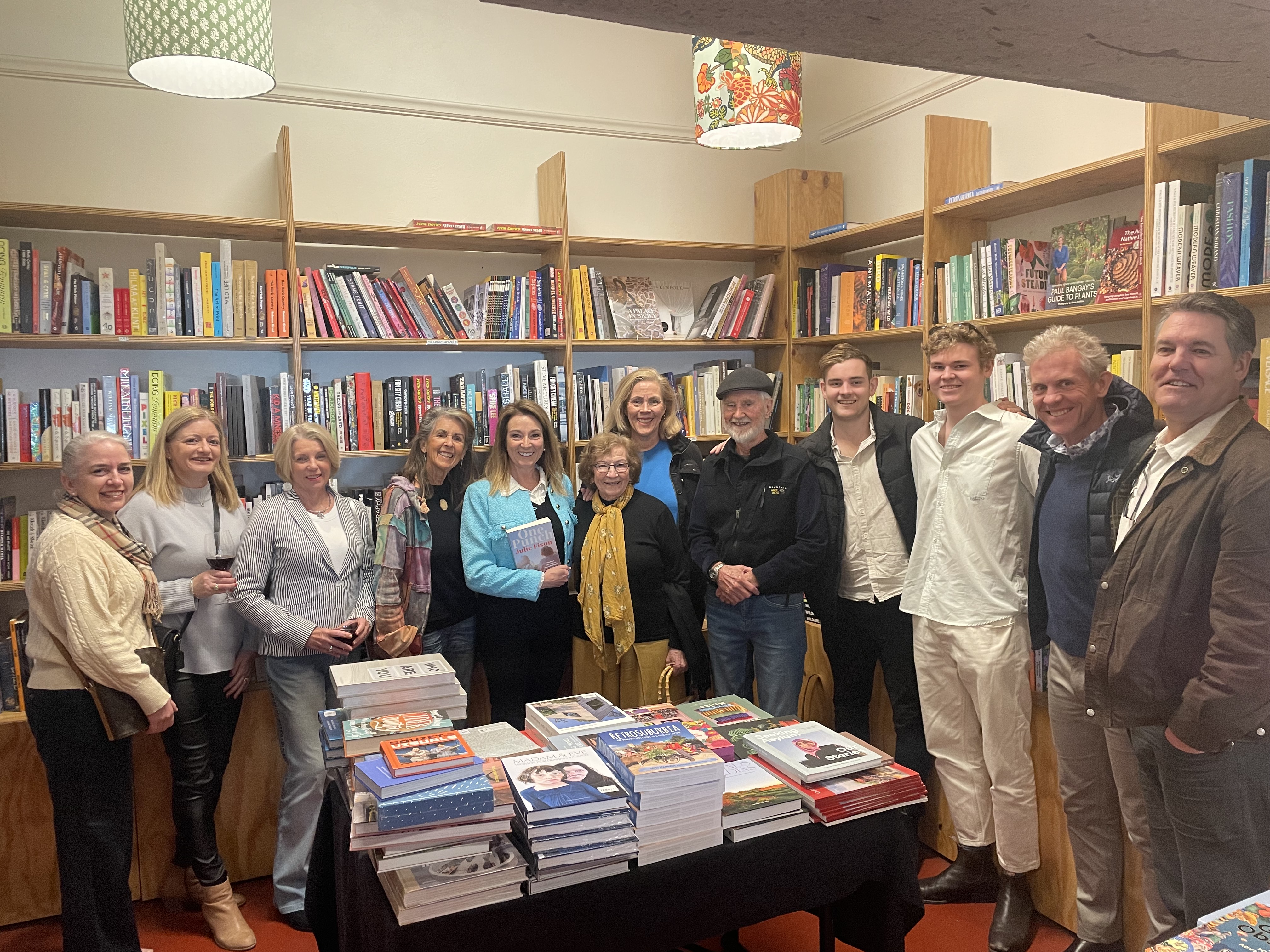
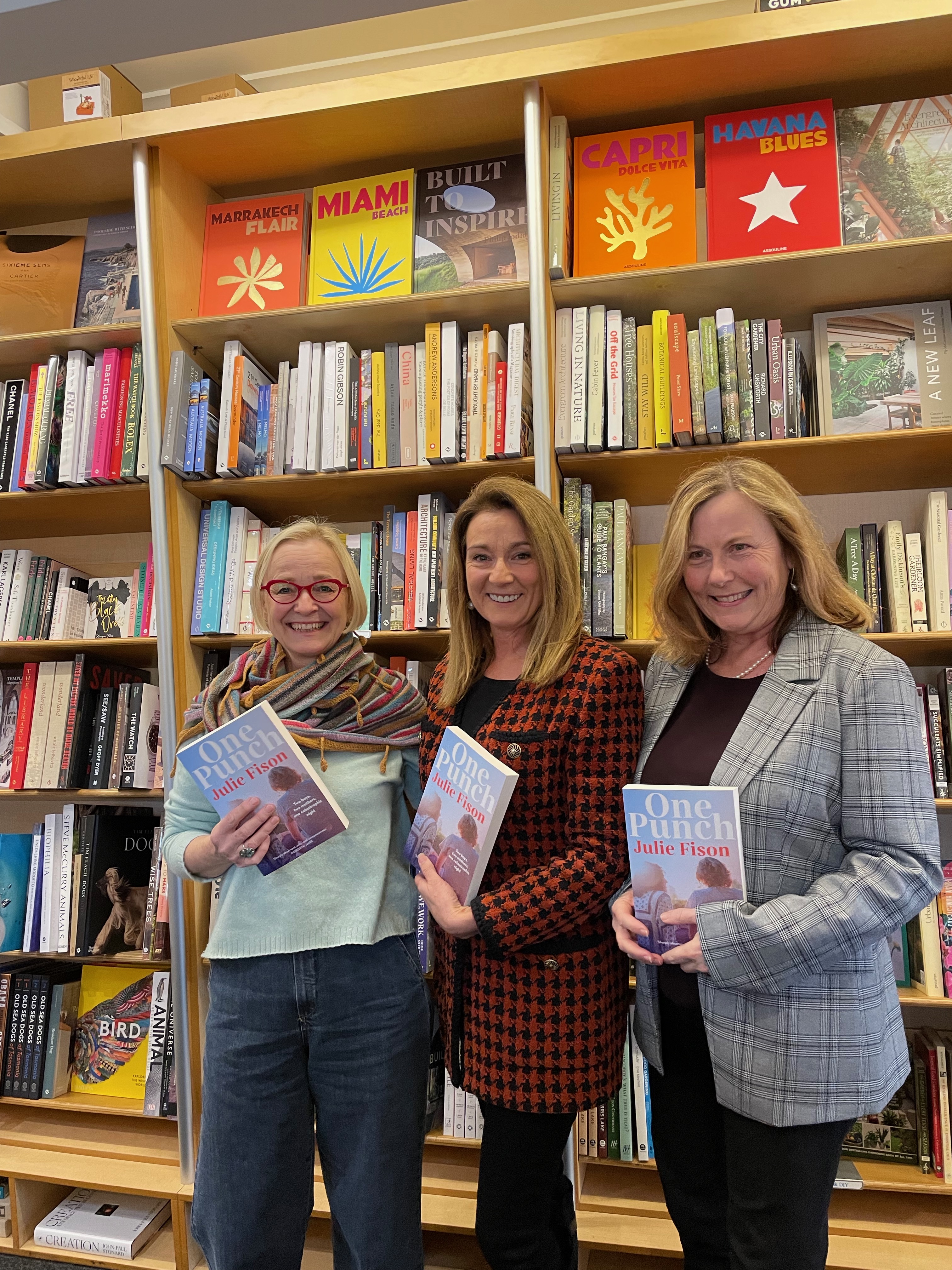
Bookclub gals at the launch of One Punch. Image: John Fison
One Punch launch at Avid Reader bookshop. Images: John Fison
Julie Fison catapults readers into the murky and contested waters of love, morality and justice from the first page of One Punch and holds them, transfixed, right till the end. It’s a story that exposes the consequences of unconditional love; the cost and burden this delivers parents, their children and anyone caught in its more nefarious orbit. One Punch is a raw, urgent and chilling portrait of family loyalty and the frightening repercussions of being blind to the faults in those we love. Read this book and your conviction about what is right and wrong will be changed forever.
Sally Piper, Author of Bone Memories
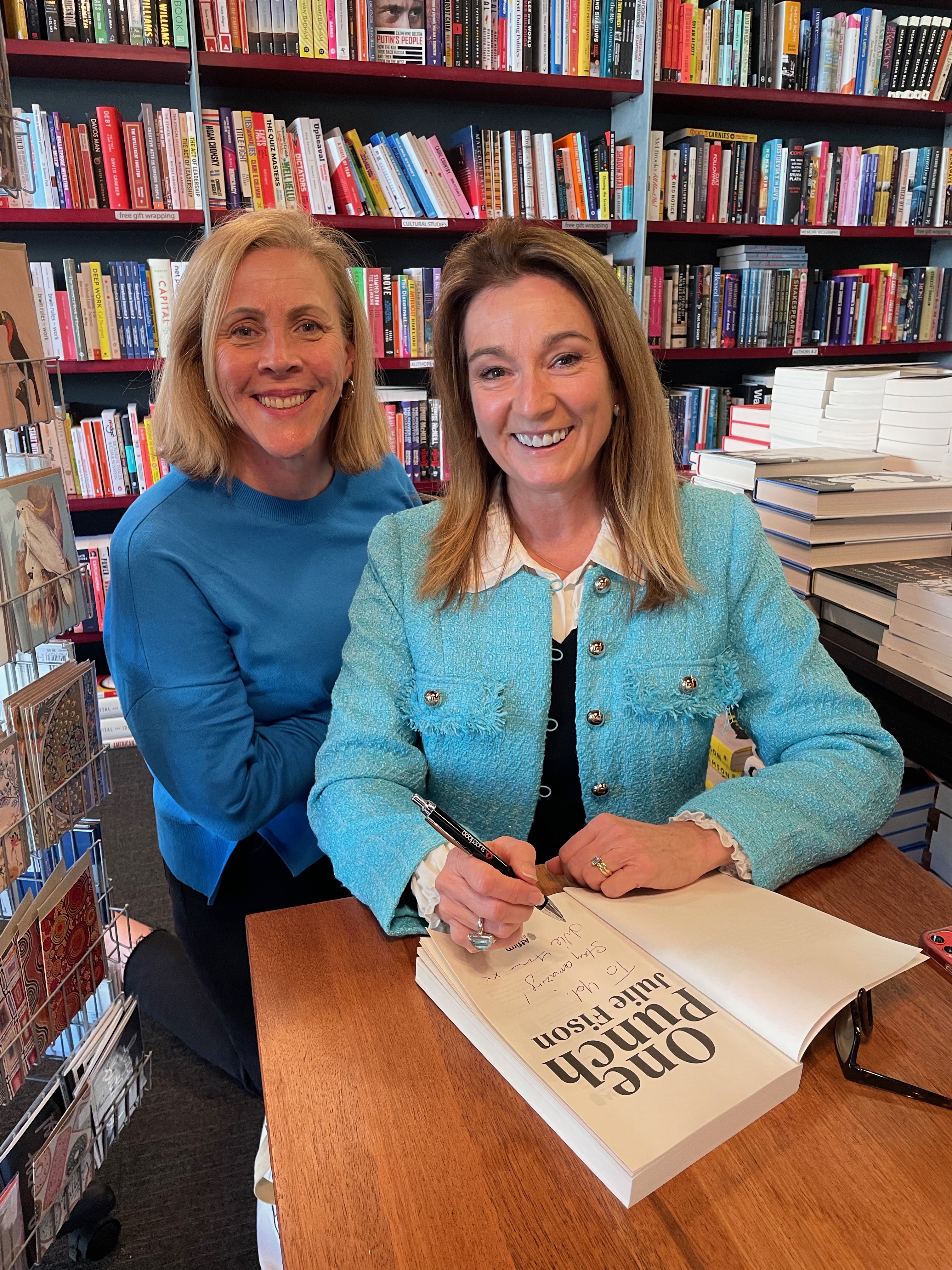
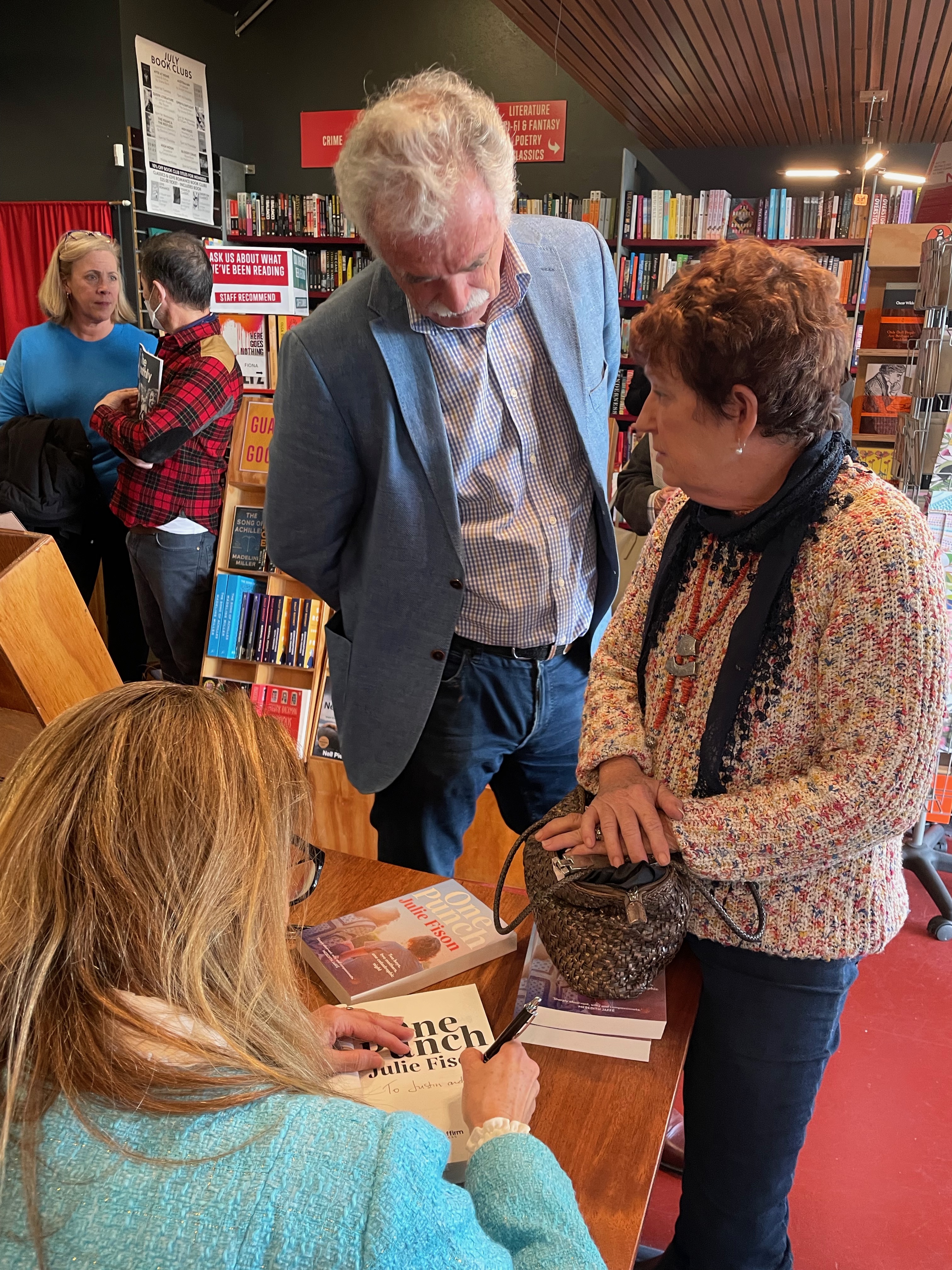
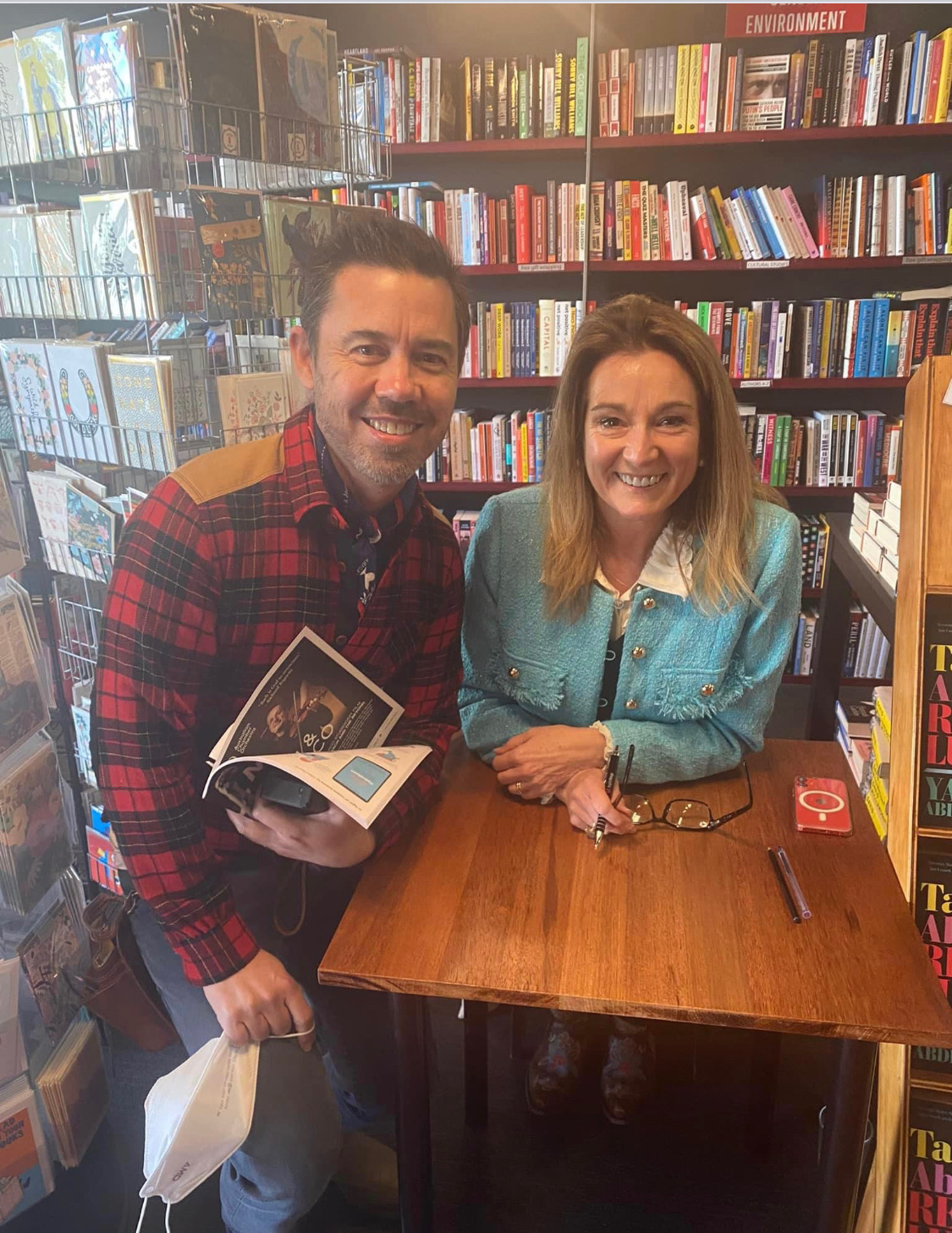
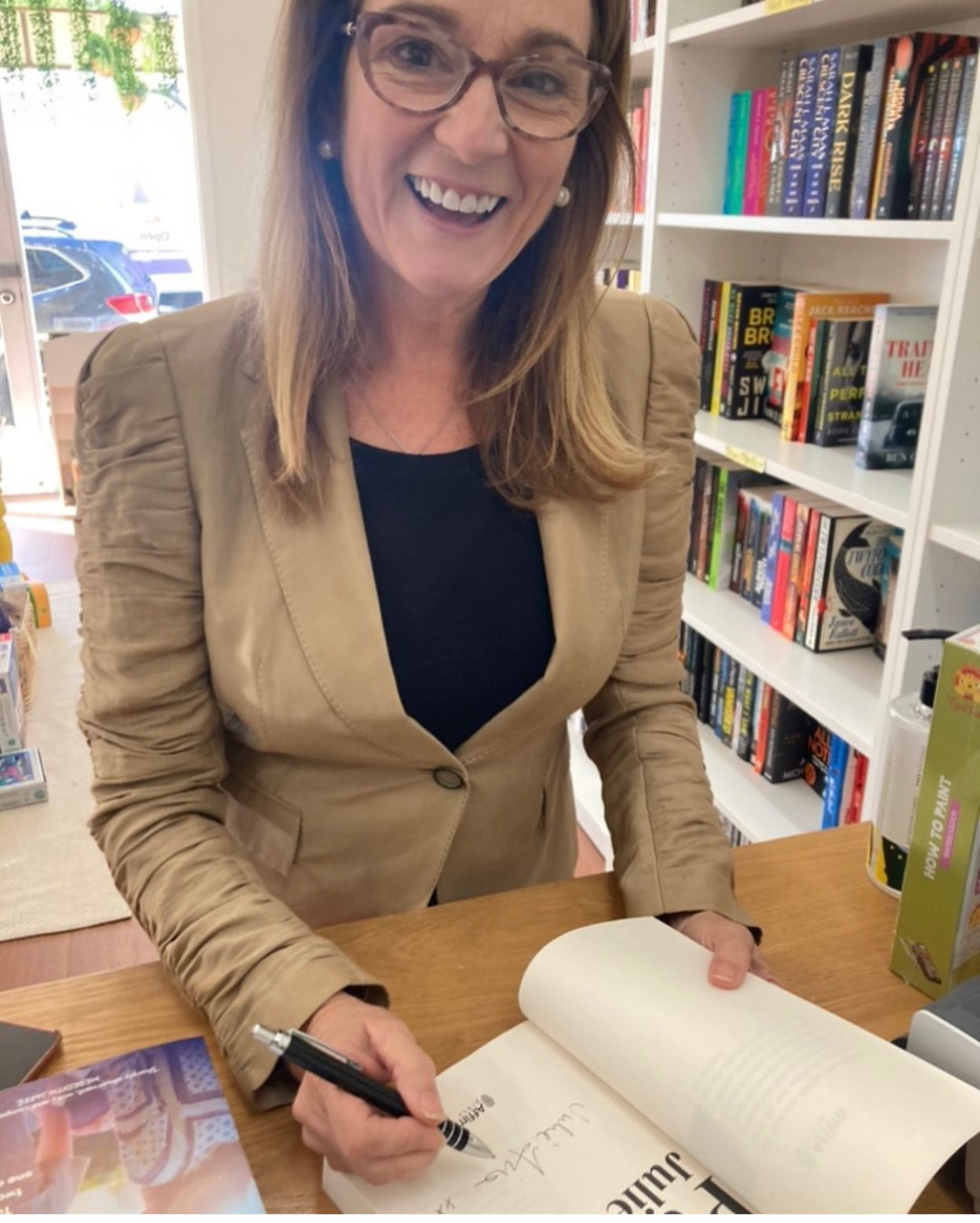
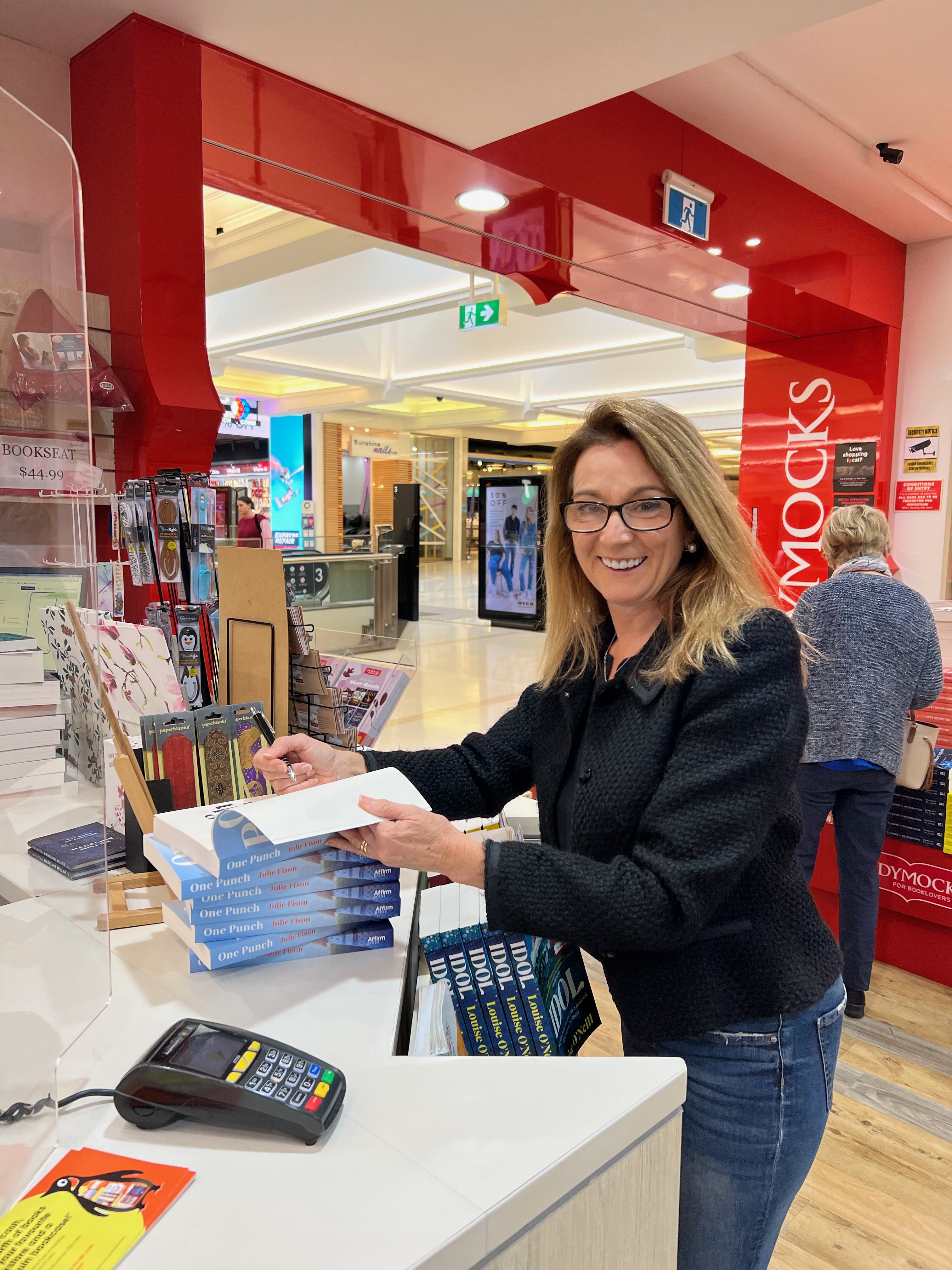
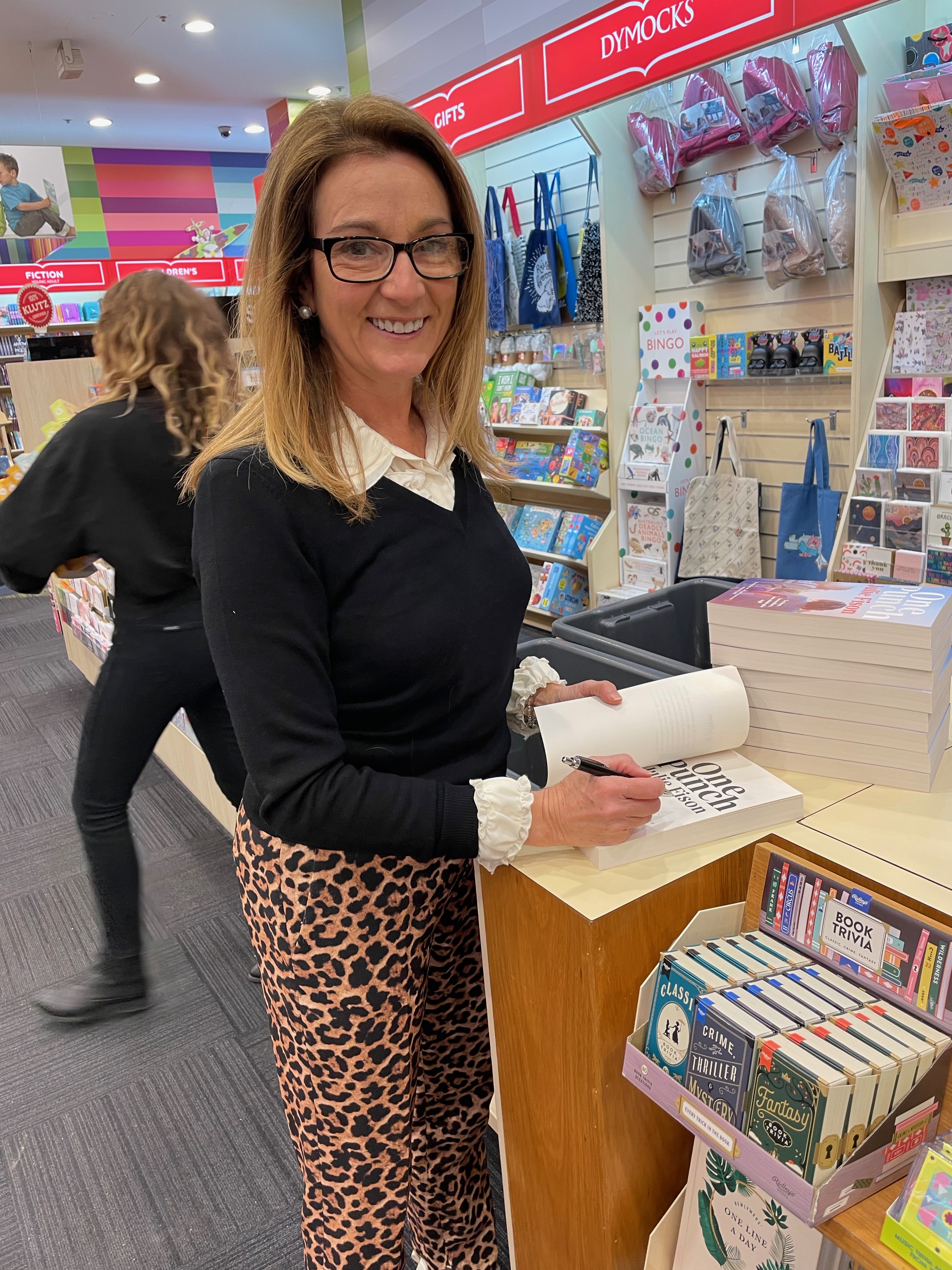
Signing copies of One Punch. Image: Steve MinonNew Farm park celebrations. Samantha Wheeler and Julie Fison. Image: Steve Minon
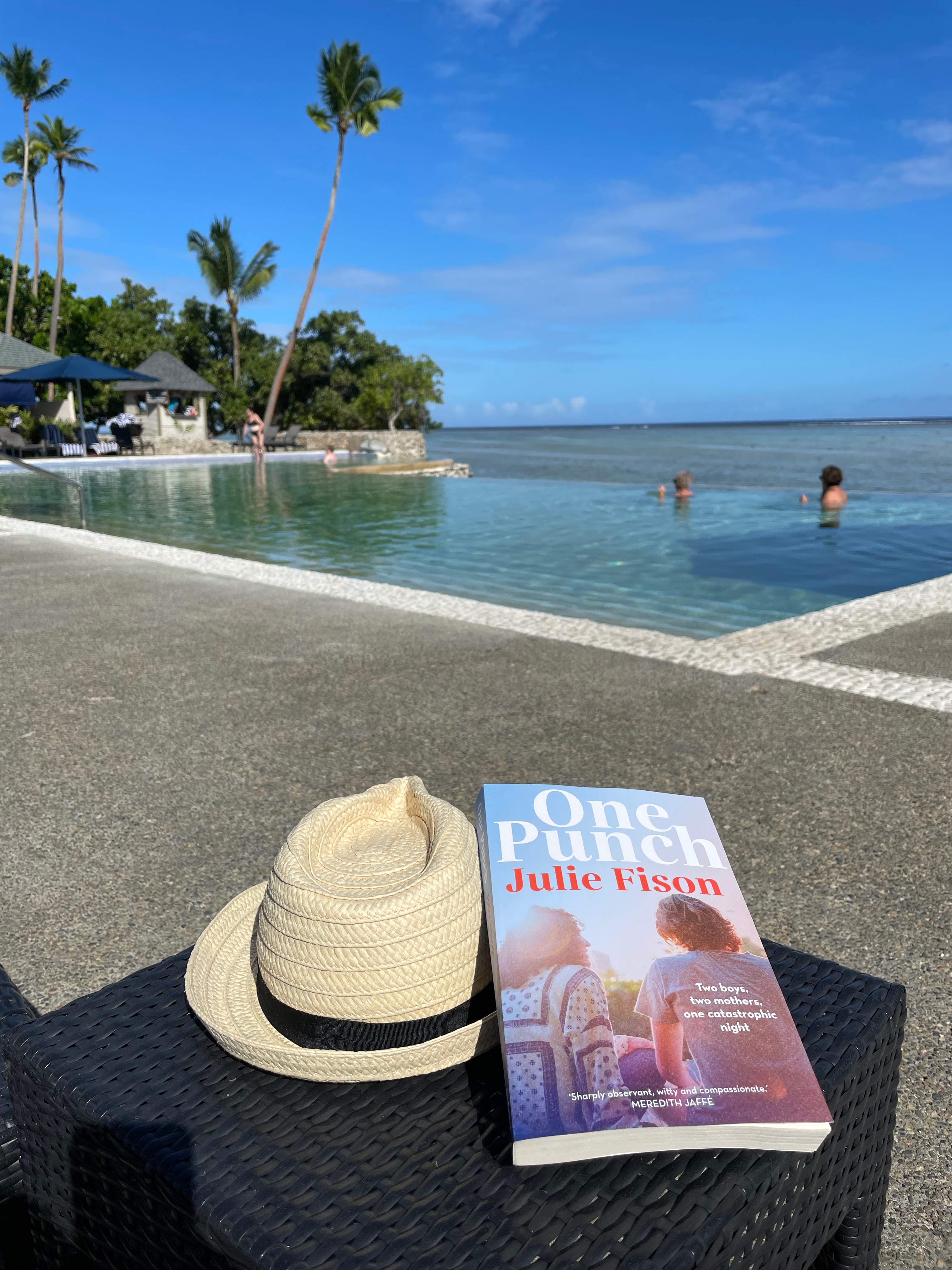
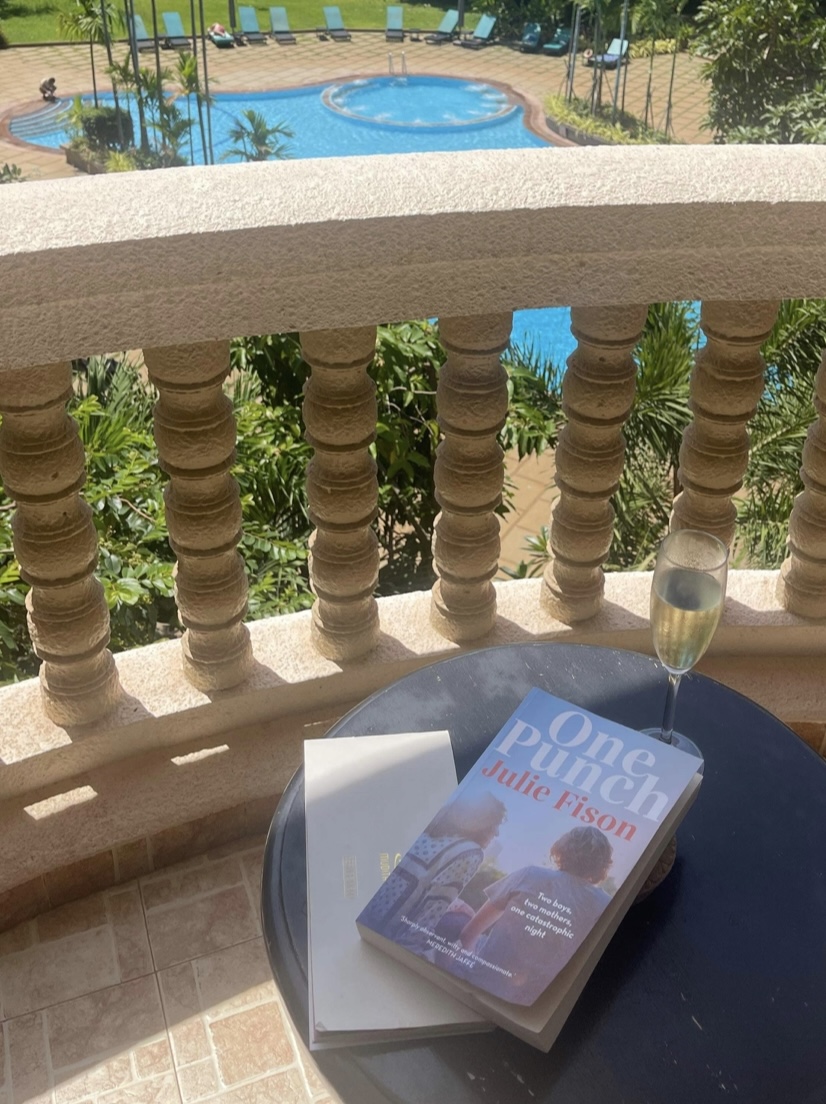
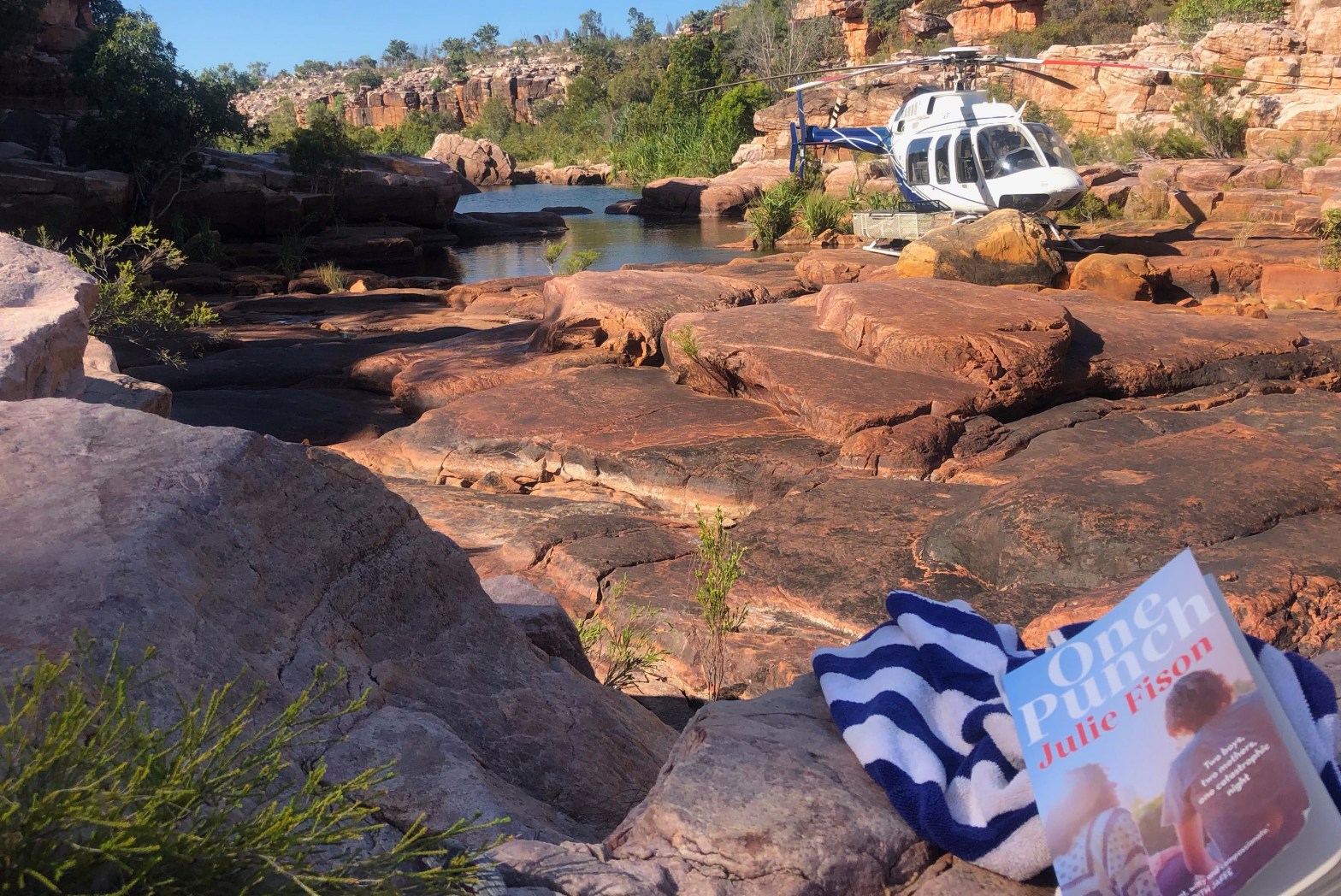
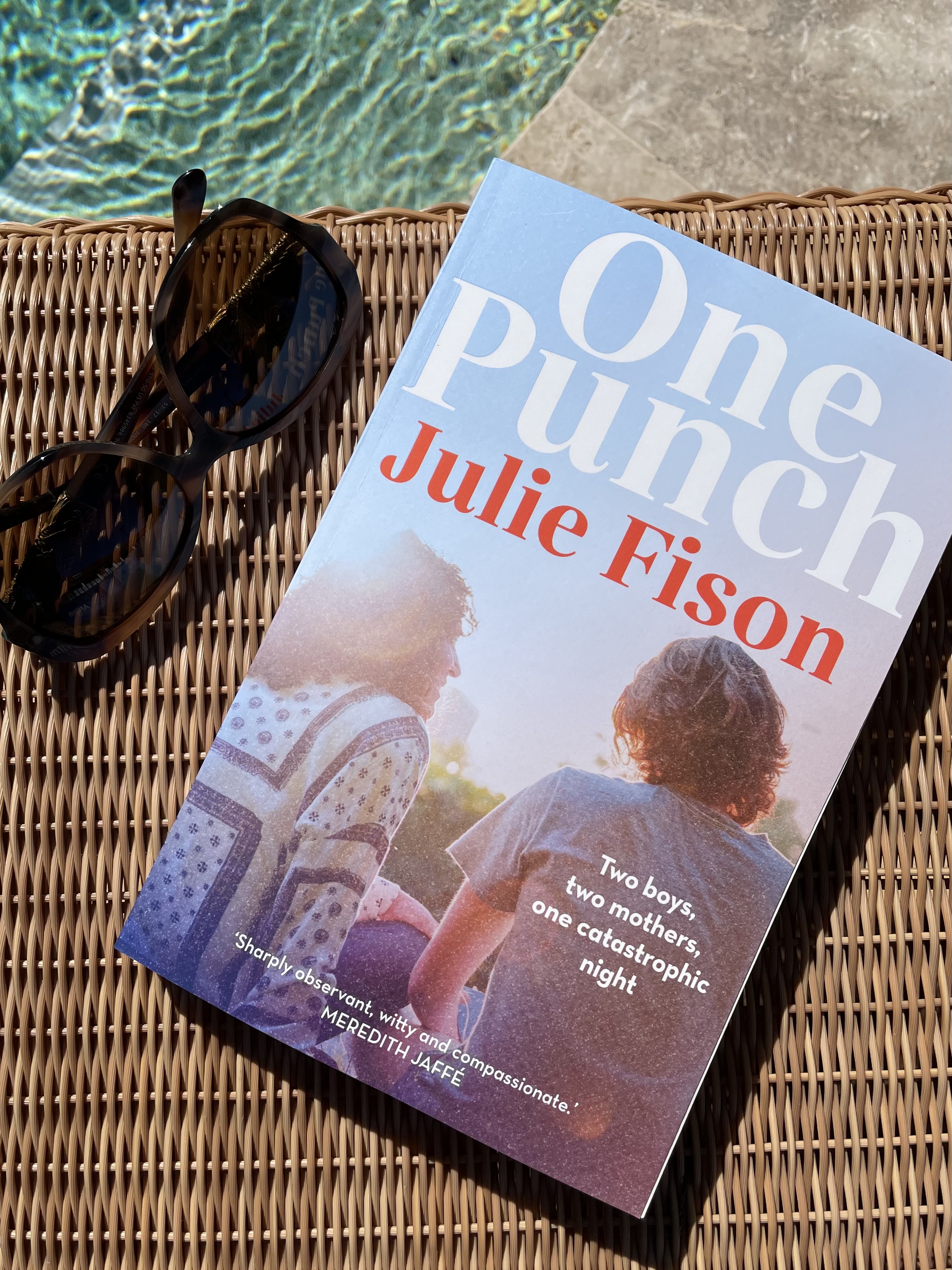
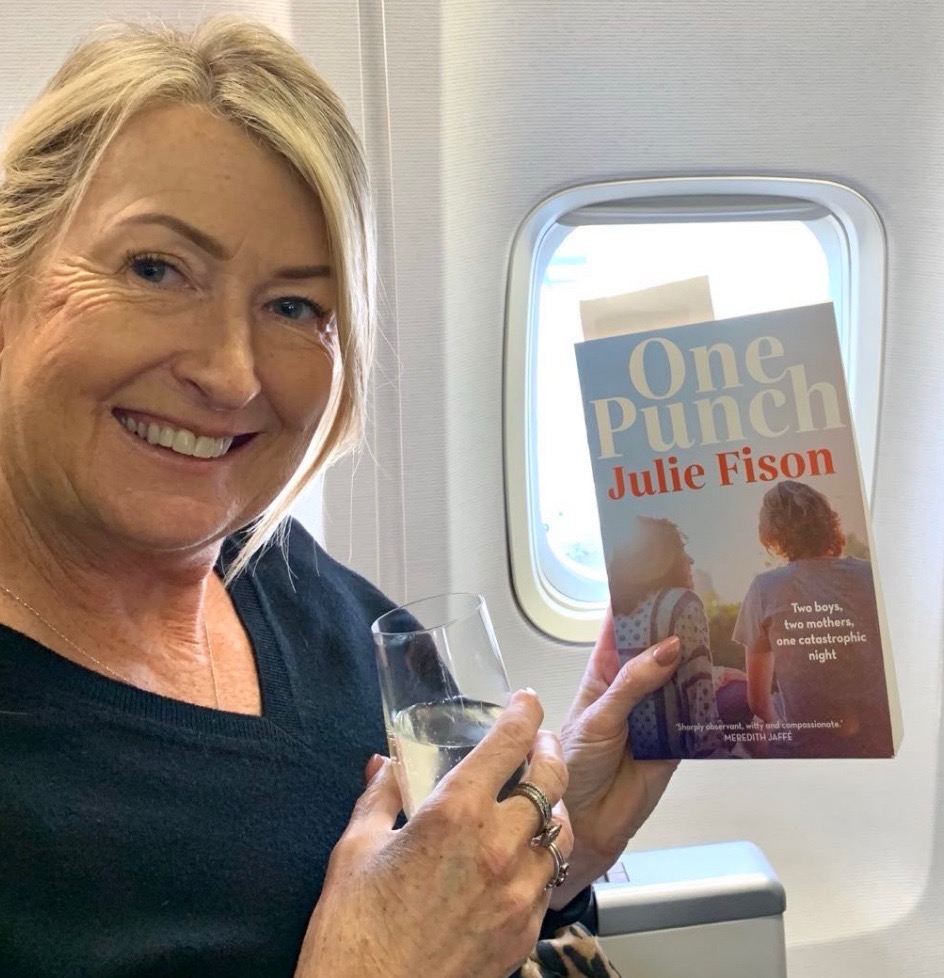
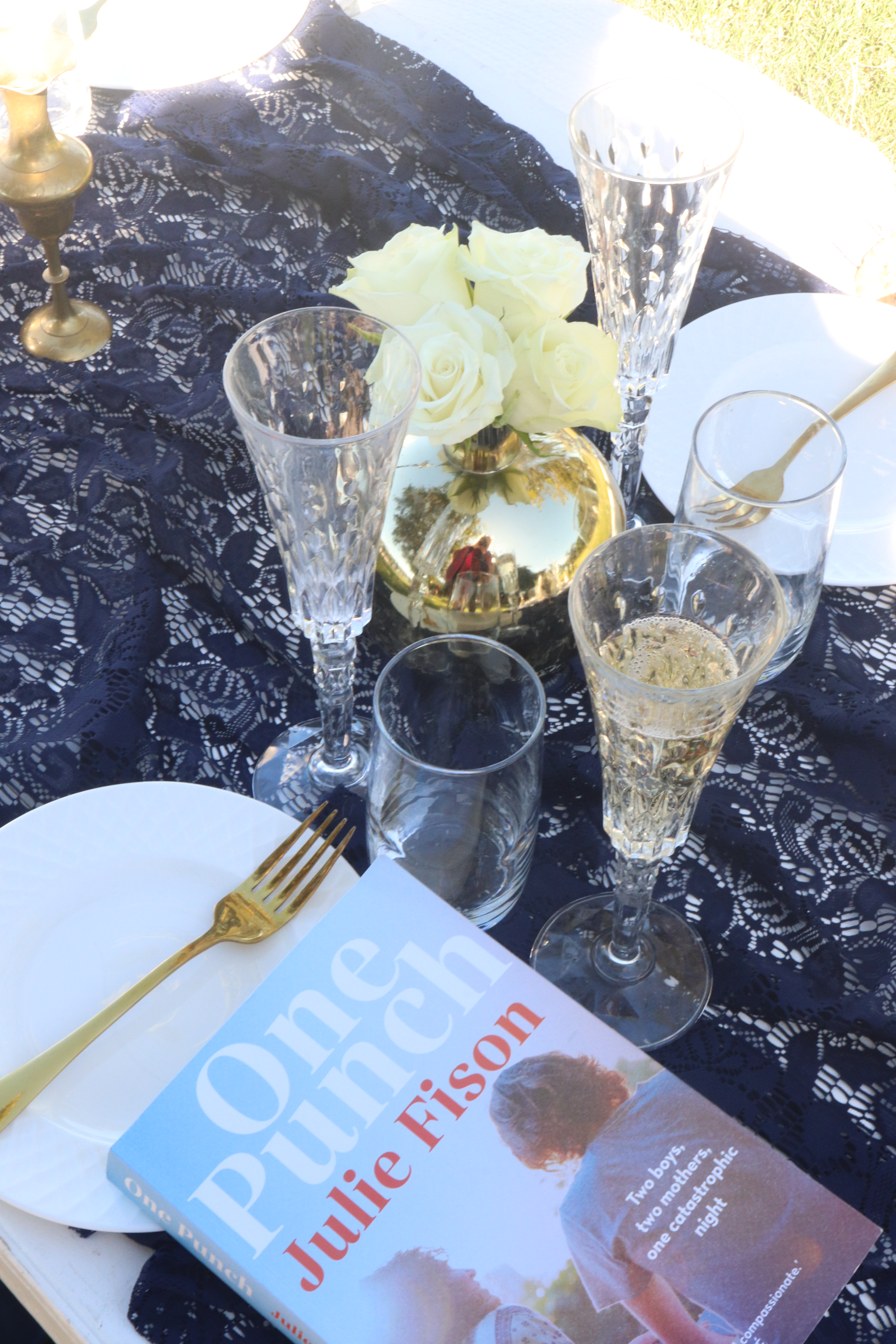
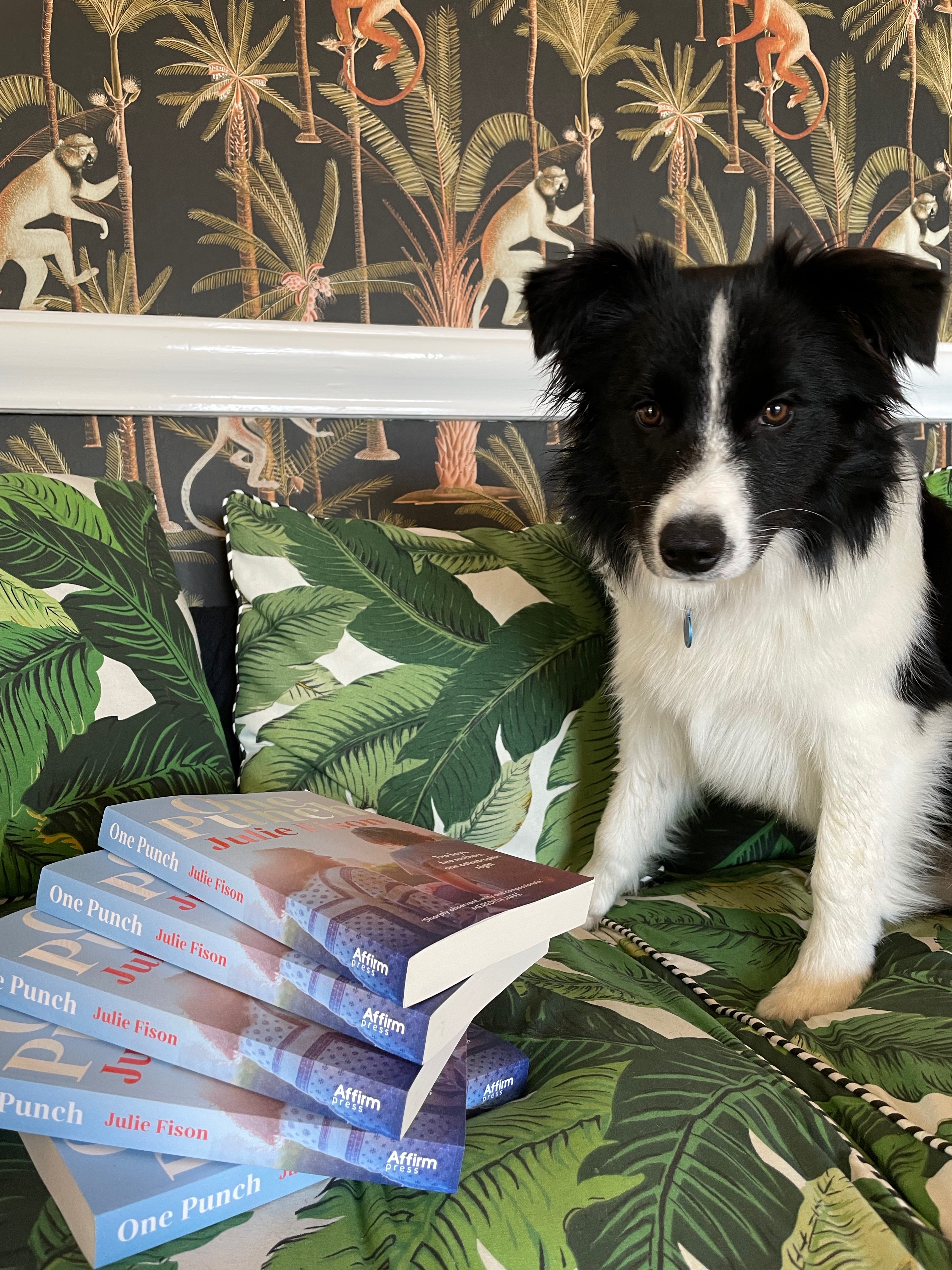
One Punch on holiday in the Kimberley without me! Image: Kerri BodimeadeHoliday reading
Many of you know that One Punch is a story close to my heart. As a mother of young adult sons, I’ve seen the tragic consequences of violence. It’s a story that was heart-breaking to research, and difficult, at times, to write. But telling the story from the point of view of two ordinary mother facing incredibly painful circumstances was eye-opening for me as a writer, and a parent. I haven’t attempted to explain violence in this book. It’s a story about choices, family dynamics and parenting – as well as all of the sadness, joy and craziness that comes with it.
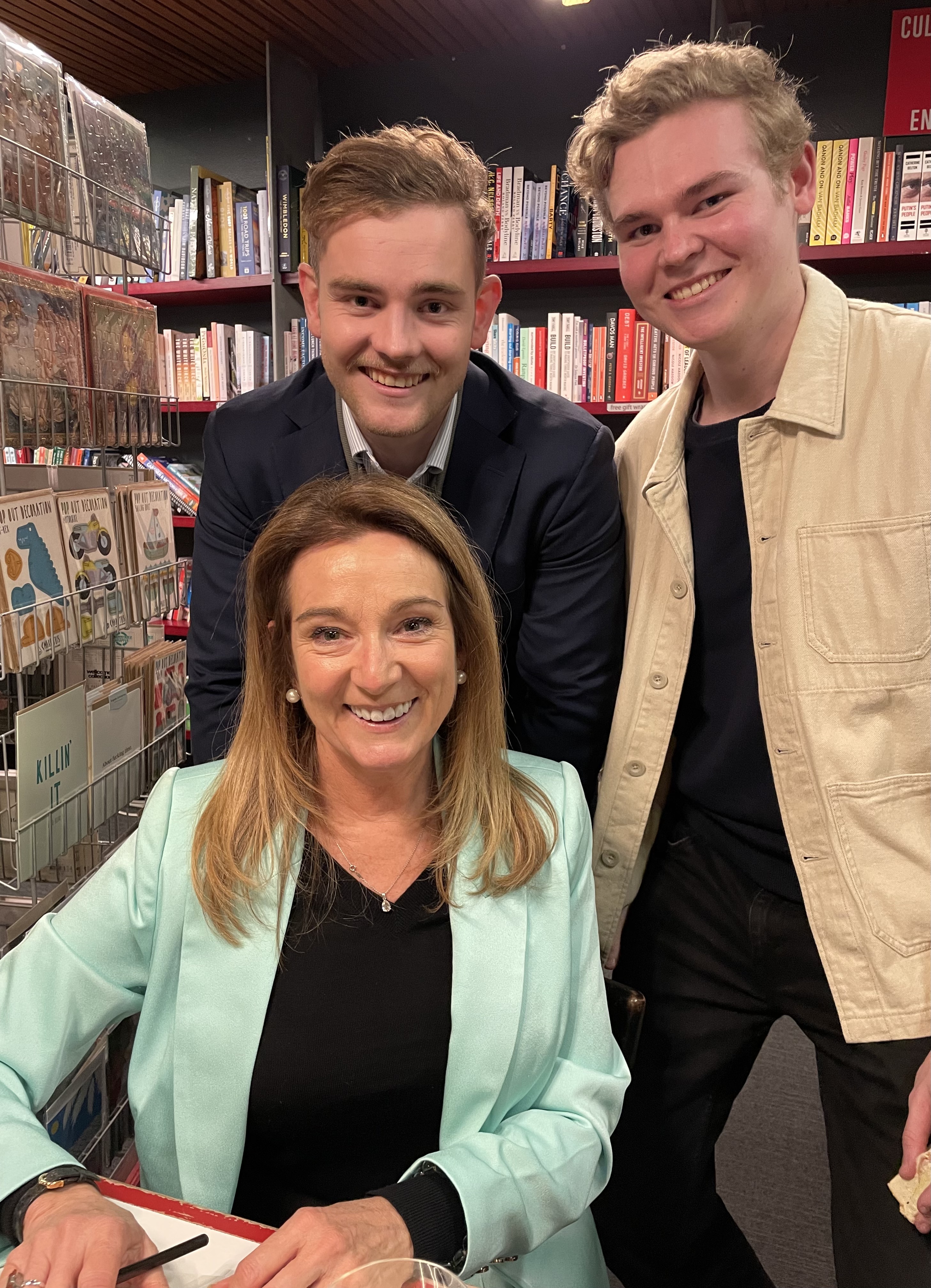
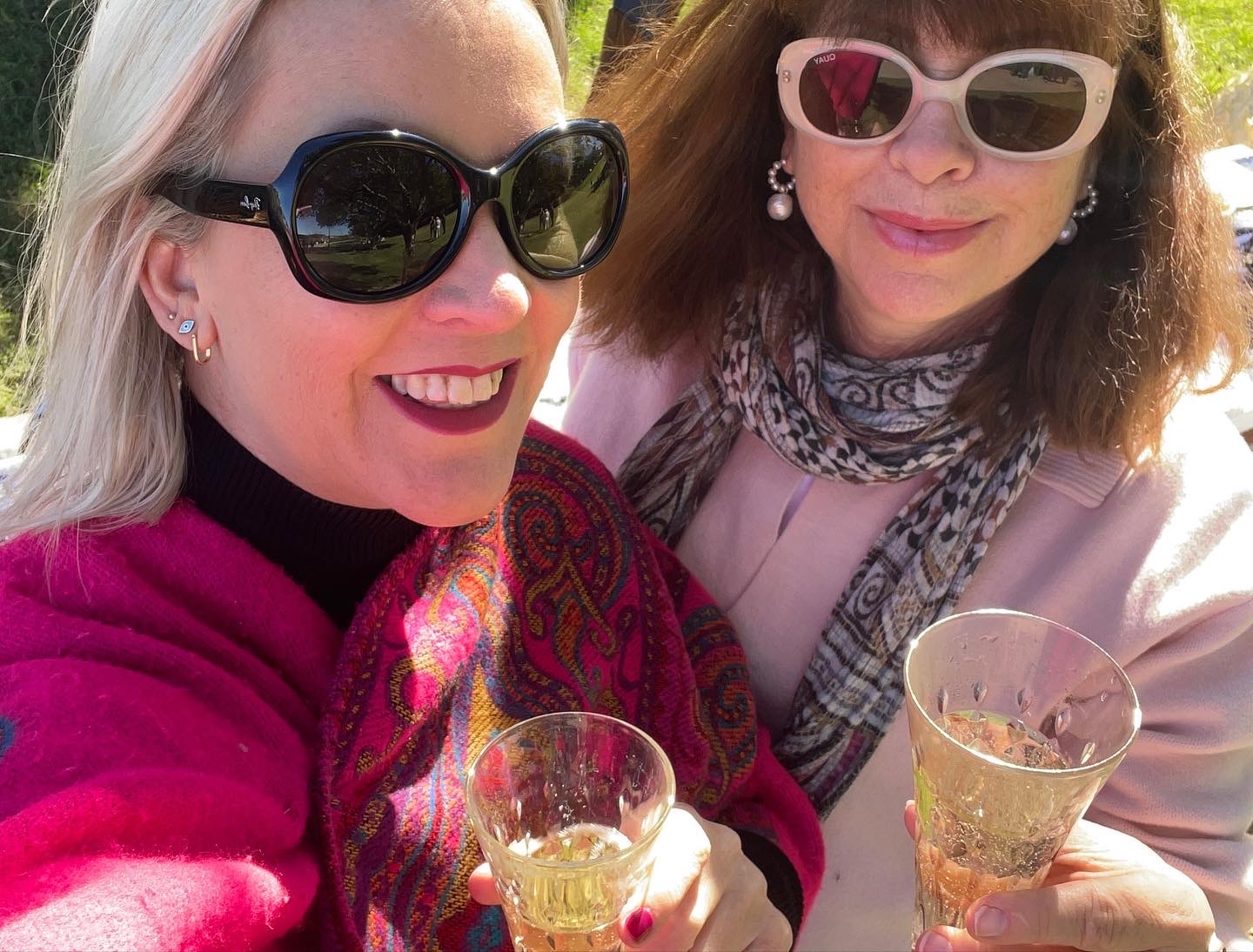
Julie Fison (right) with Samantha Wheeler, Oliver Fison and Max FisonAvid Reader bookshop launch. Images: John FisonAvid Bookshop launch event with family and friends
A massive thank you to those who shared their medical expertise, their stories and their feedback. You all helped to make One Punch the best it could be. I’m also grateful to author of Bone Memories, Sally Piper and author of The Tricky Art of Forgiveness, Meredith Jaffe for their endorsements of One Punch.
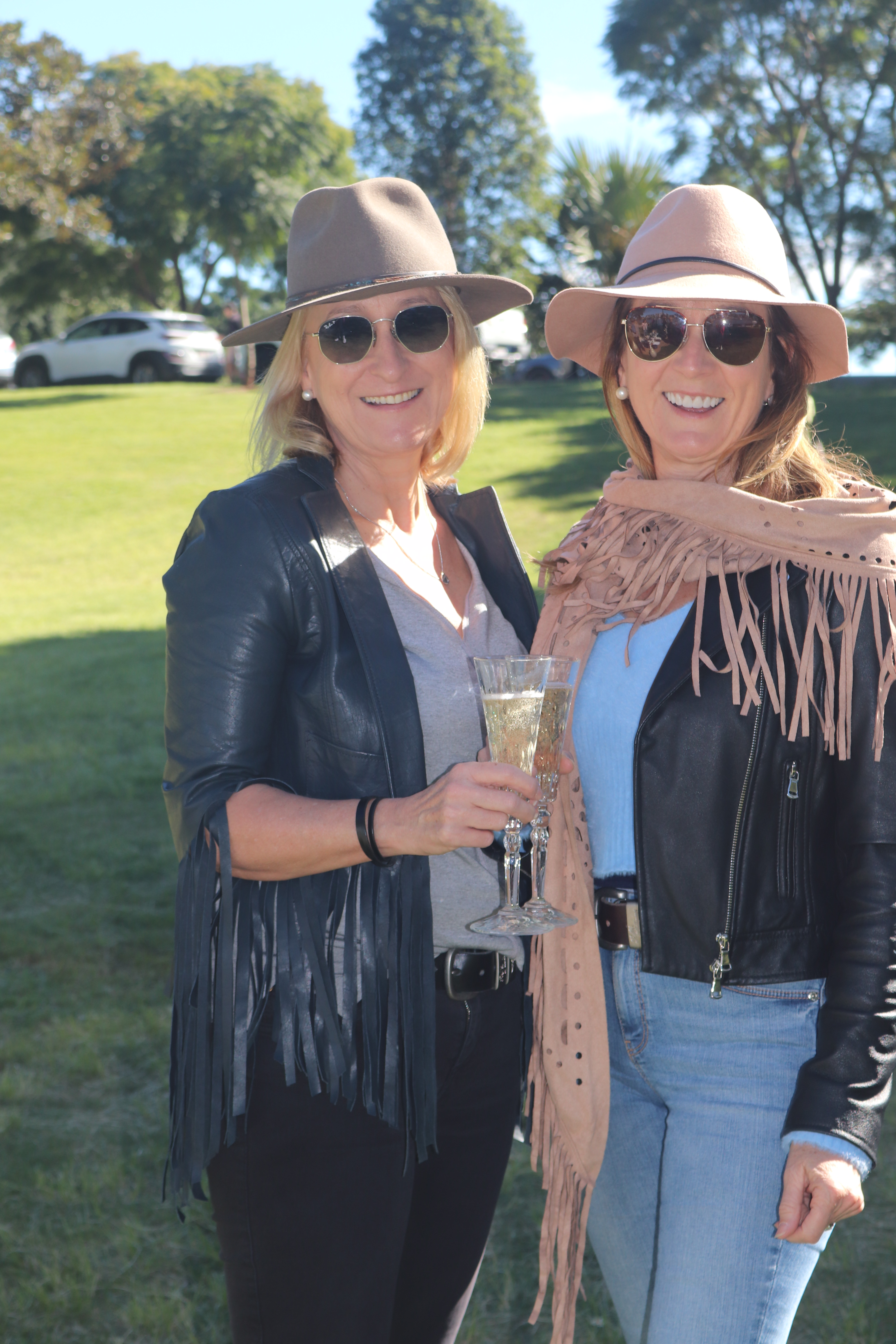
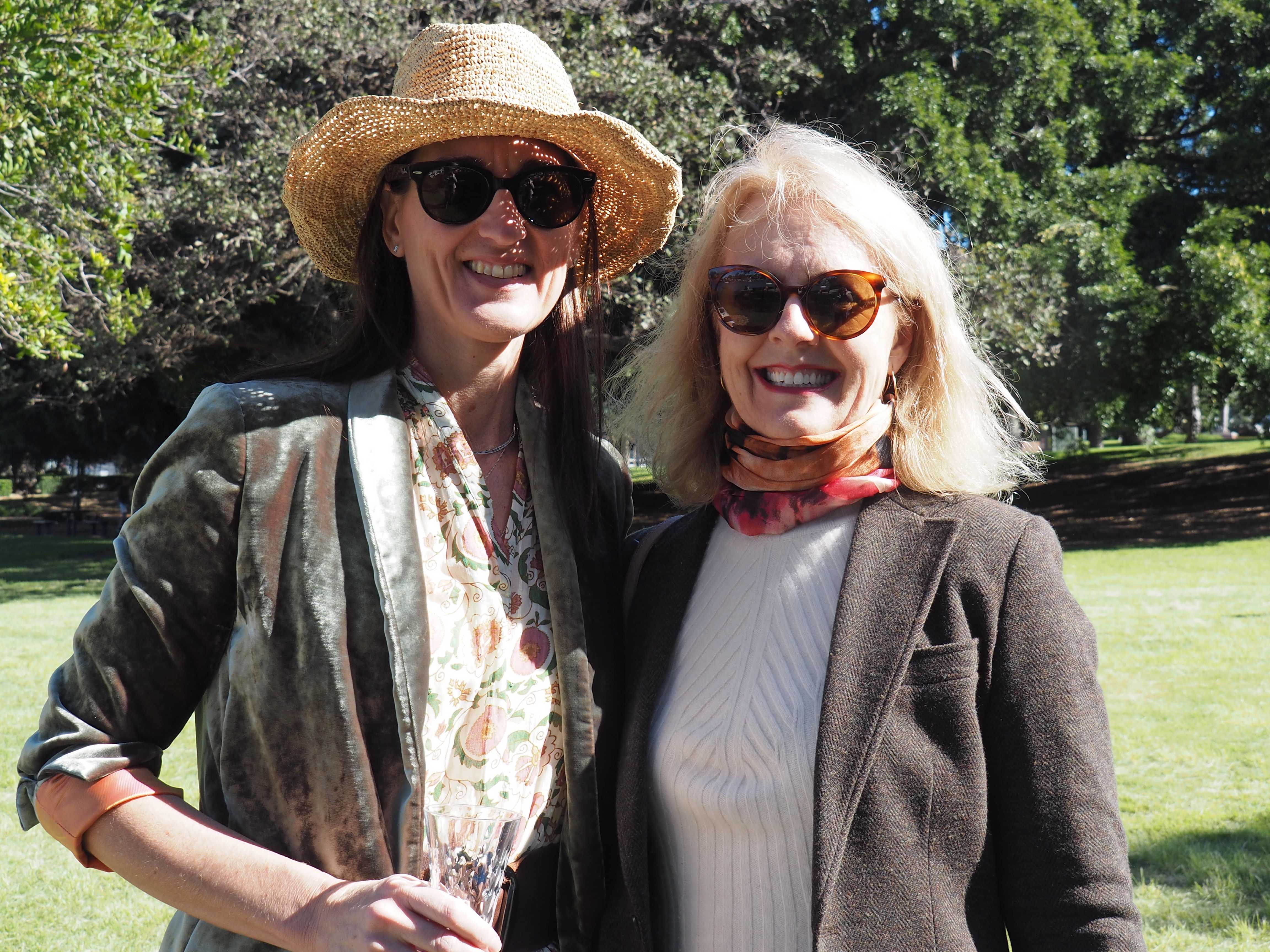
Celebrations in New Farm park. Images: Tanya Neilsen, Julie Cichero
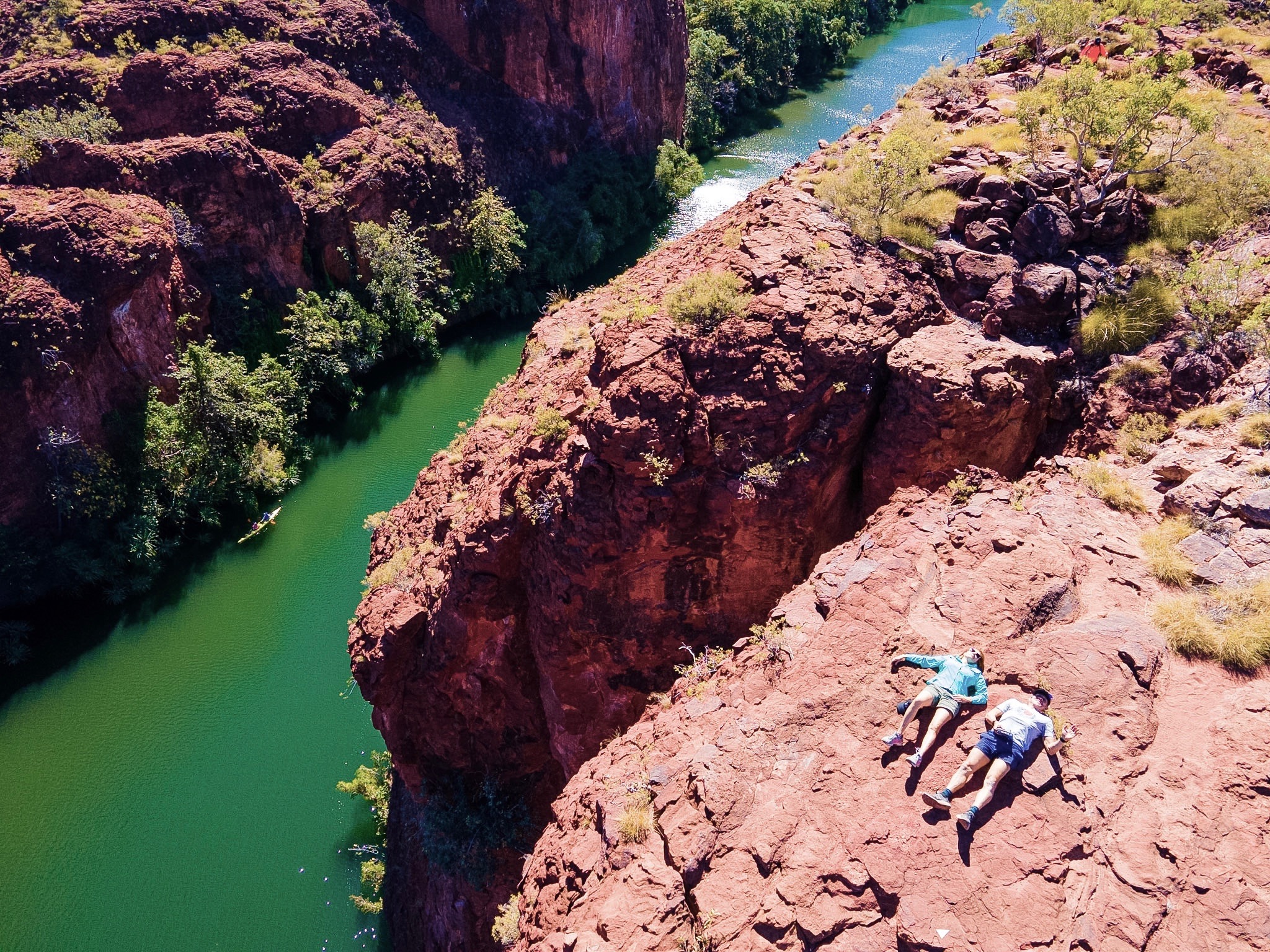
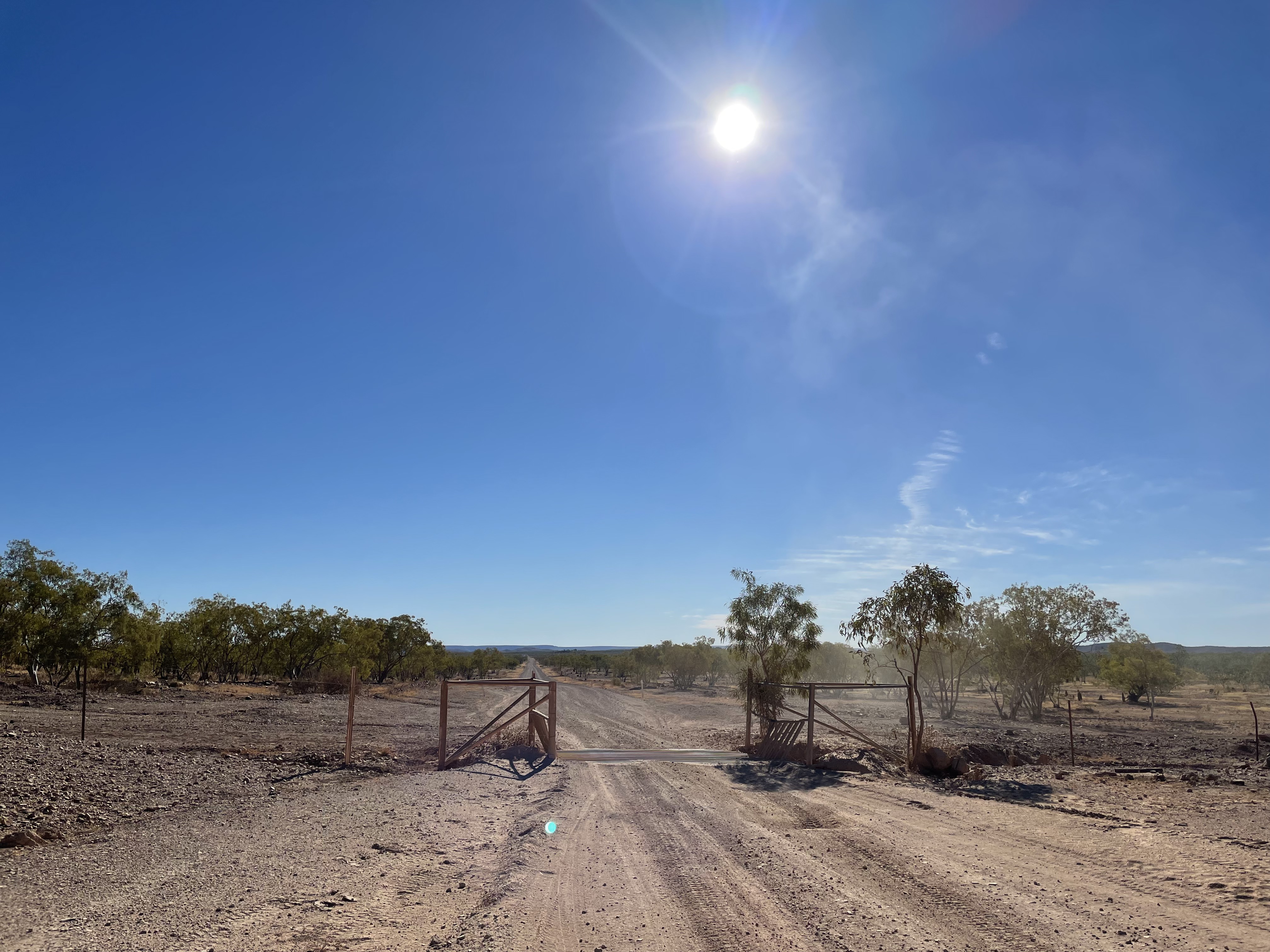
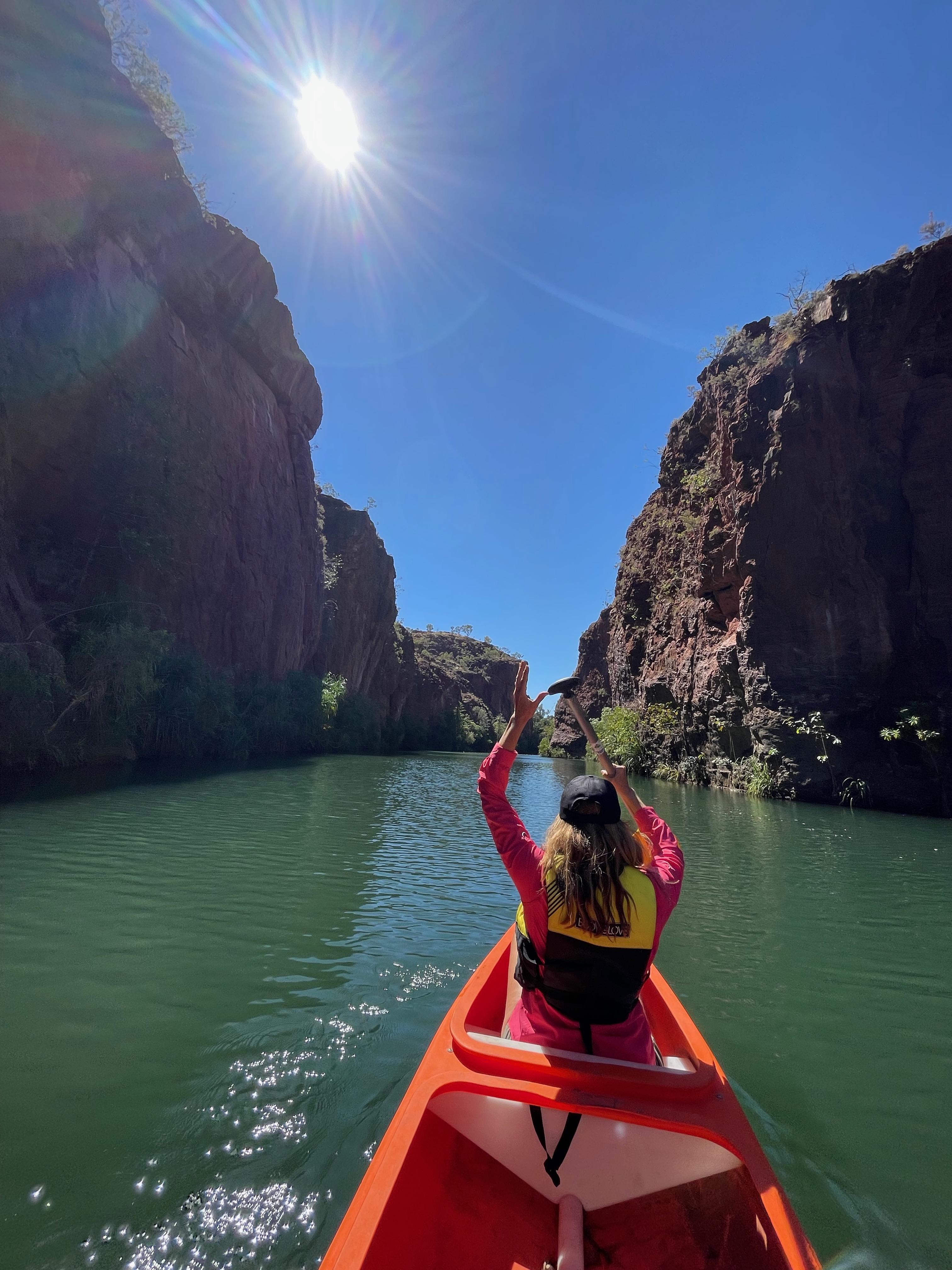
I’m now back at my desk working on my next novel for adults – another gripping suburban drama – and I’m very excited to be here. But I’m slightly envious of my novel. It appears to be enjoying an international holiday, while I’m working! Luckily, I had an incredible trip to the Kimberley region of Western Australia before my book was launched. I’ve included a couple of snaps at the end of the post. I’m hoping to write a more comprehensive story soon!
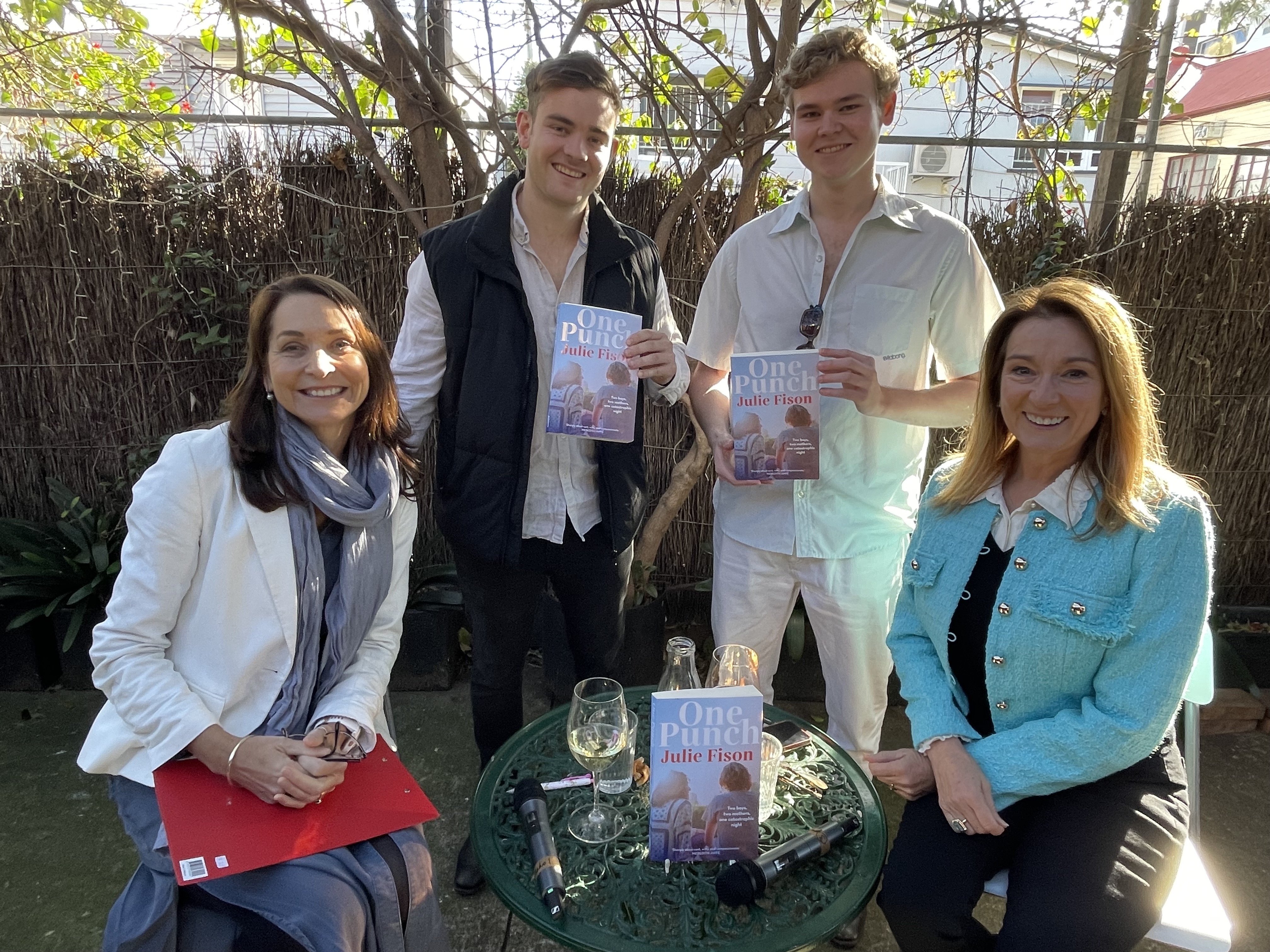
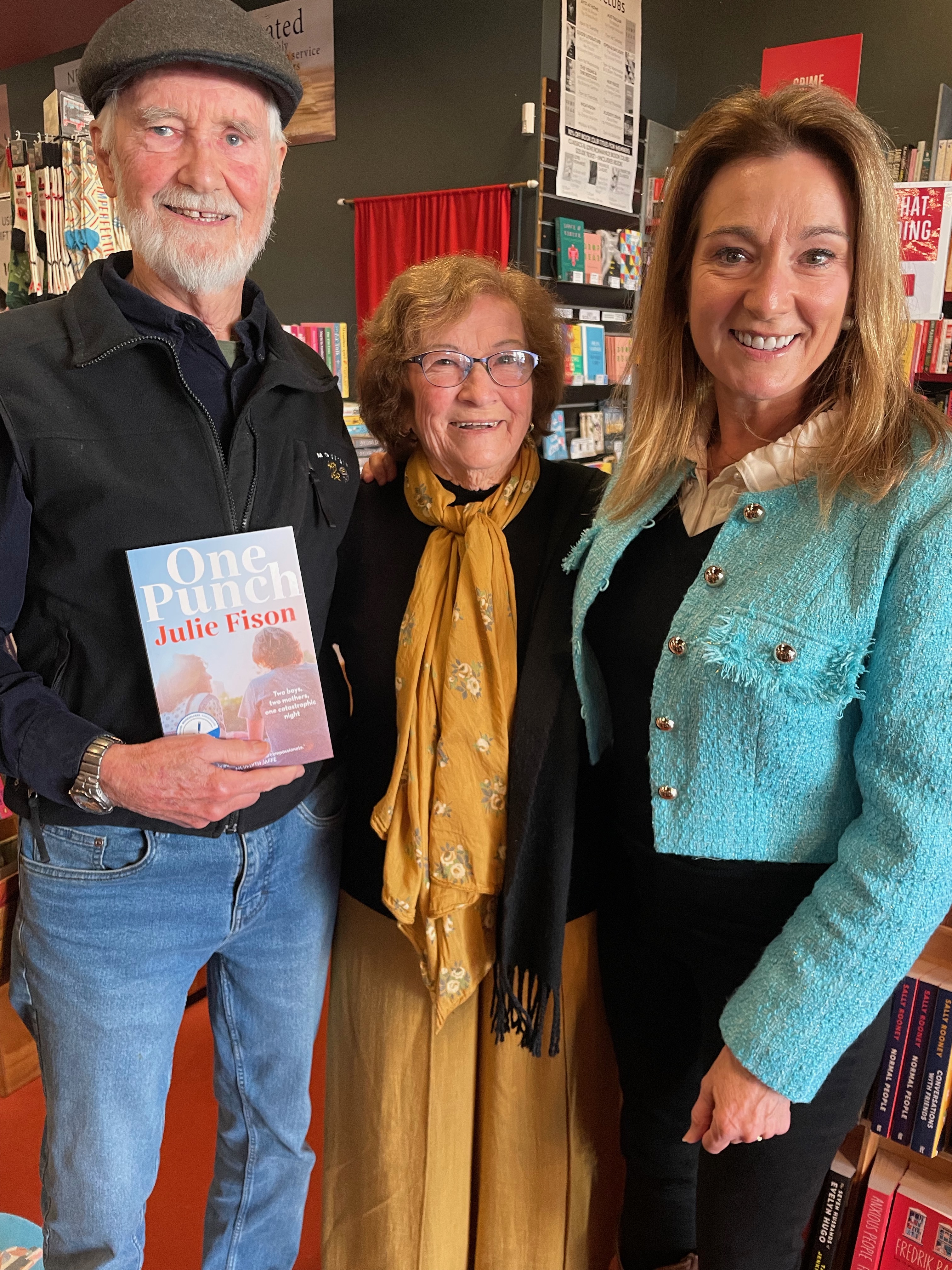
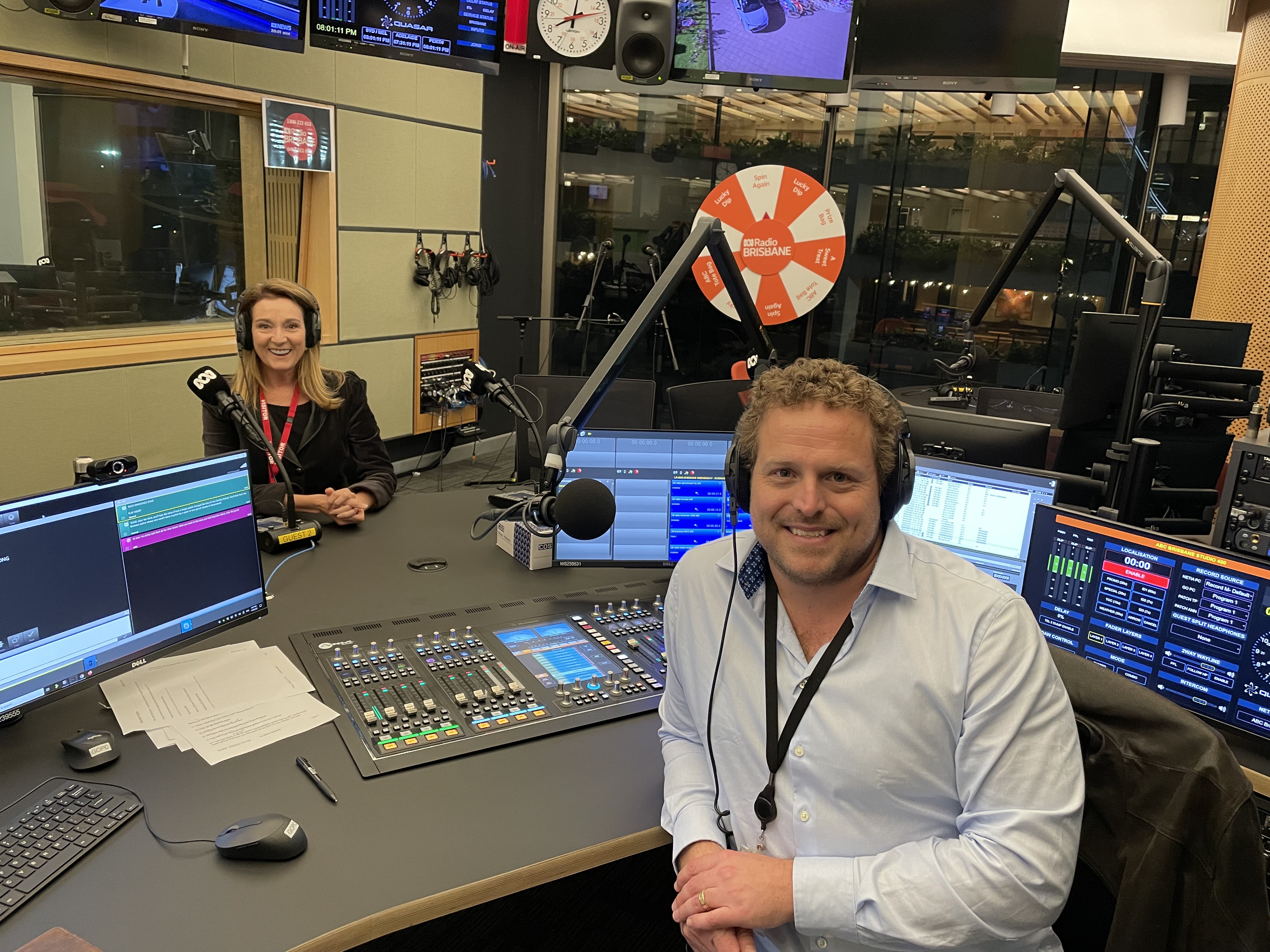
Visits to Dymocks, Riverbend, Bright and Early Books and interview with ABC Brisbane radio’s Joel Spreadborough
Julie Fison’s One Punch takes a simple premise and turns it into a tight study of class and human nature–what we believe to be true about ourselves, and those we love, and who we really are. A crime is the pivot point for a sharp observation of human nature and blends compassion and humour in equal measure.
Meredith Jaffe, The Tricky Art of Forgiveness
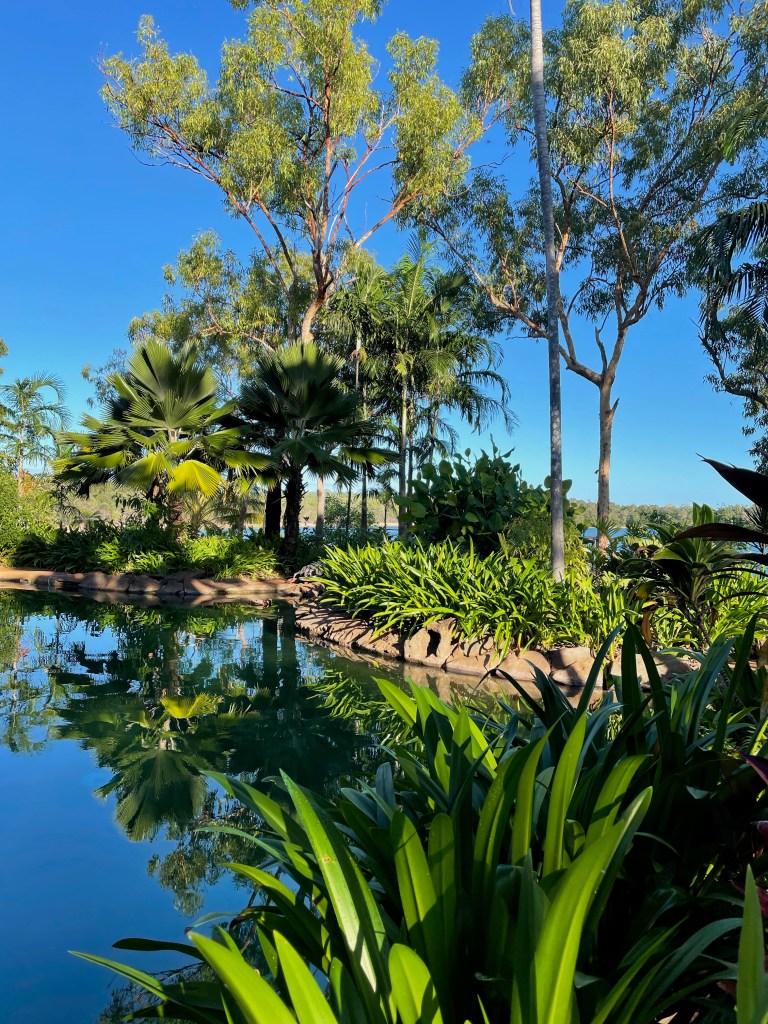
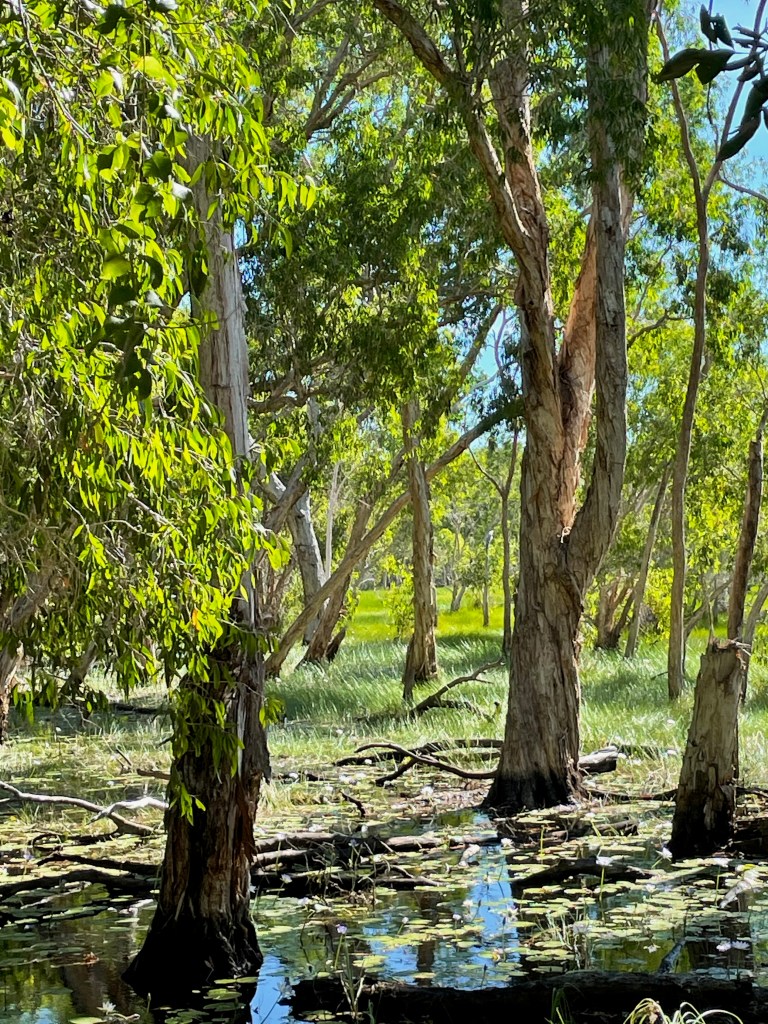
A taste of the Kimberley …
A remote spot somewhere in the Kimberley. Image: John Fison
Echidna Chasm, Purnululu National Park
Keeping a safe distance at Berkeley River. Image: John Fison
Thank you for sharing the journey with me – for your support, your comments and thoughtful reviews, for reaching out with your own stories, for your photos, and for texting me late at night with random quotes from my book! If you enjoy One Punch I’d love you to leave a review on Goodreads or any other online bookstore. It really helps! And for more stories on writing, travel and other useful trivia, please subscribe to my monthly newsletter.
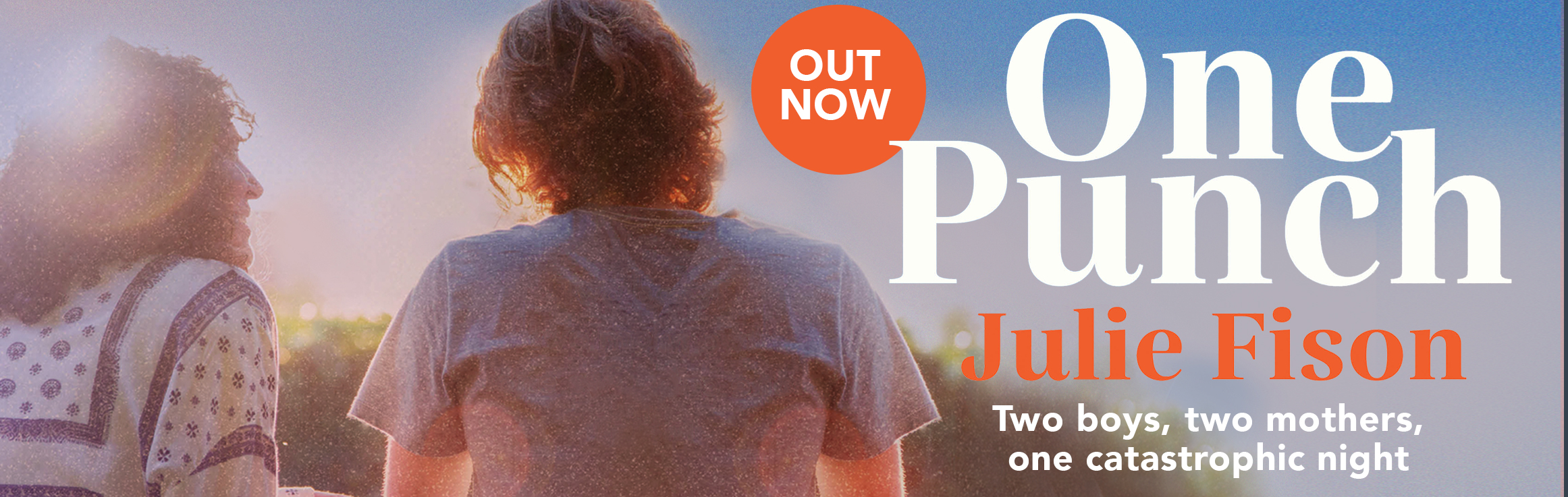
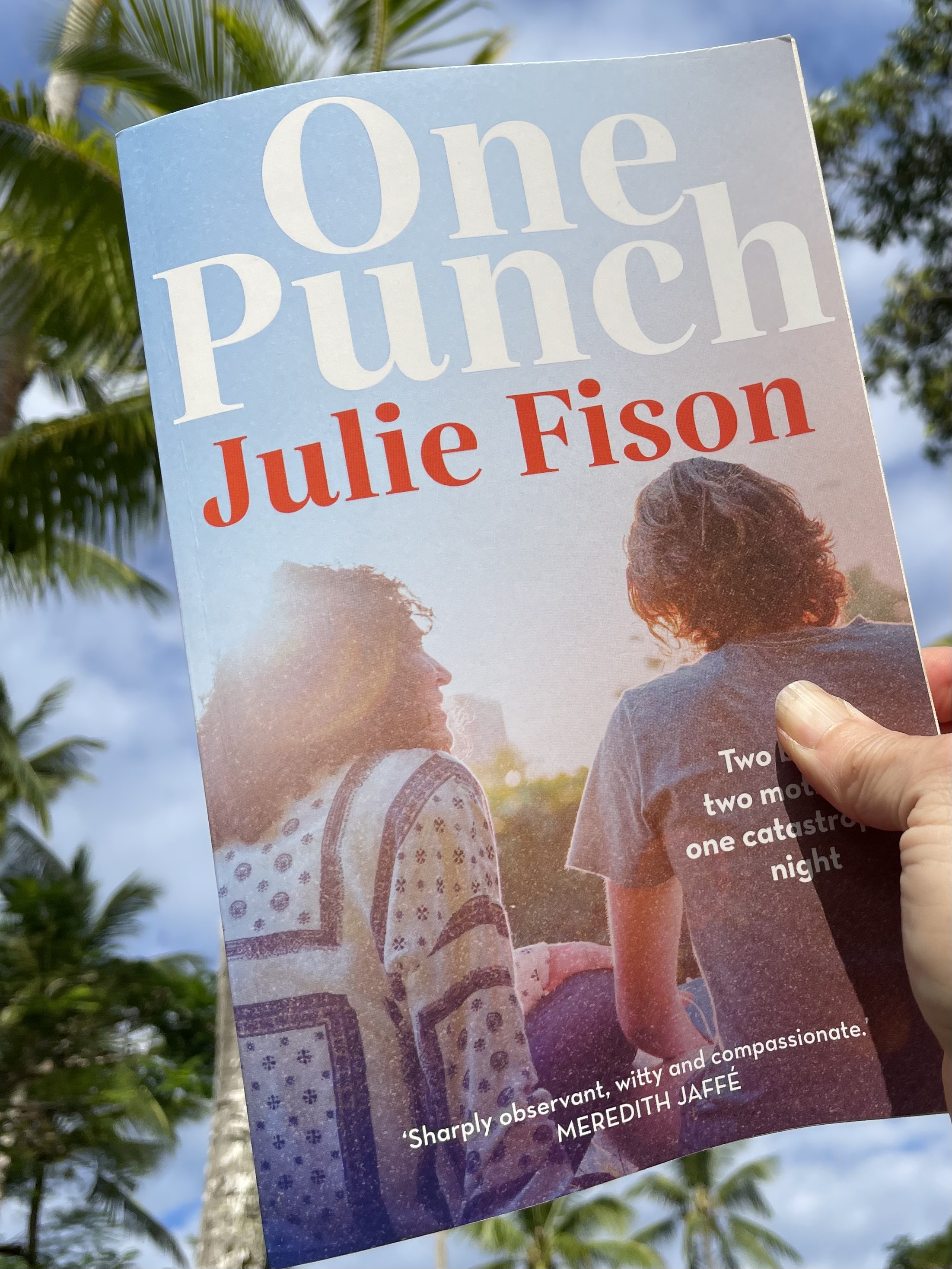
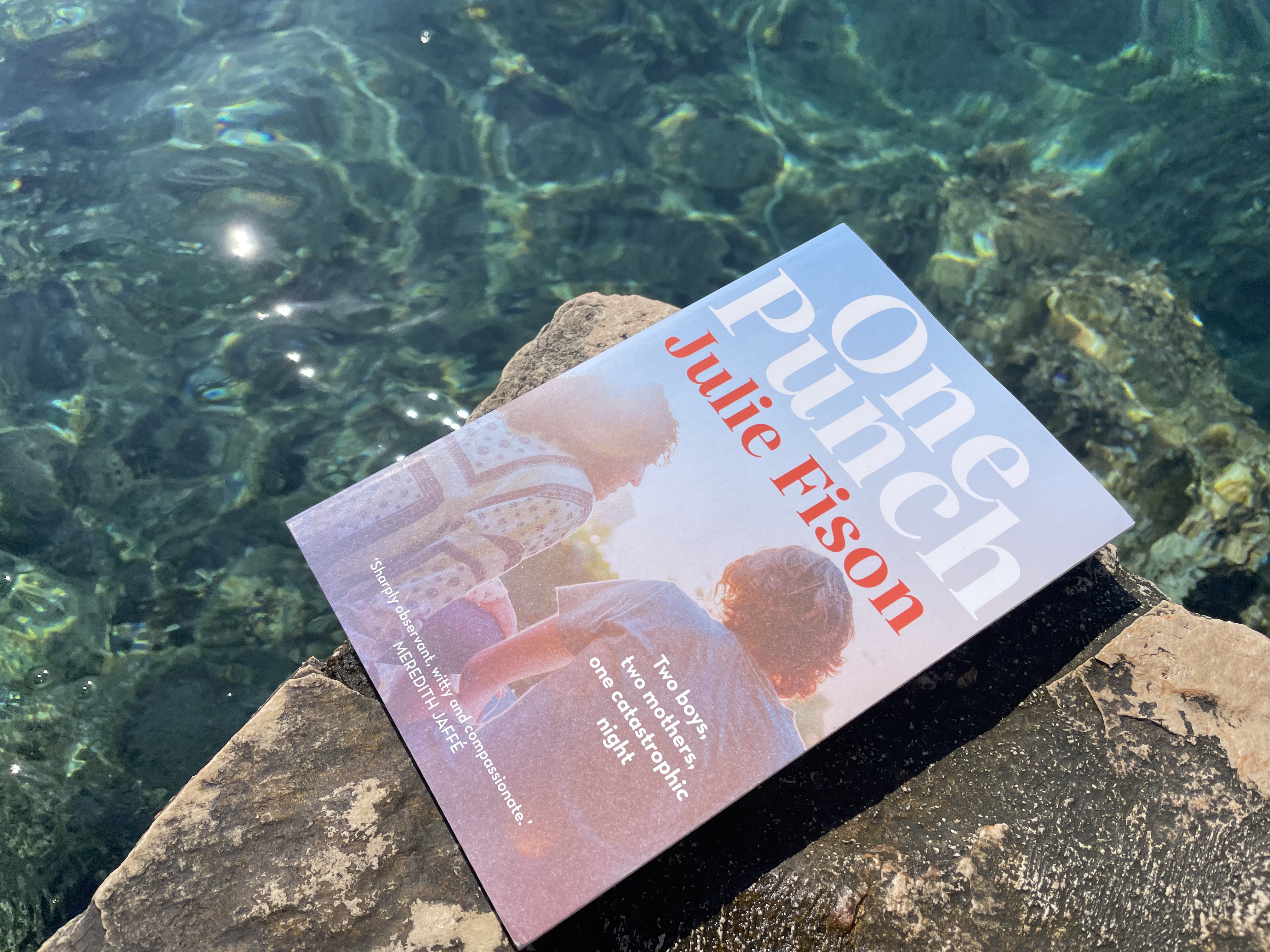
It’s just two weeks until my debut novel for adults – One Punch – hits bookstores in Australia. I can’t wait to share it with you! You can pre-order the book online right now.
A contemporary family drama following two mothers at the centre of a tragedy, One Punch is for fans of Jodi Picoult and Celeste Ng’s Little Fires Everywhere.
Yasmin Weston is on holiday when she learns that her son Daniel has been assaulted at home in Australia, leaving him with a debilitating brain injury. She vows to hunt down her son’s attacker.
Evie MacIntyre knows the Westons from school. She’s never had much time for Yasmin, and she dislikes Daniel because he bullied her son, Brody. When Evie discovers evidence that Brody was involved in the attack, she is torn but decides there is no way she will let her only son go to jail.
As two mothers wrestle with the consequences of their actions, two families suffer the shockwaves of one catastrophic night and a punch that changes everything.
Published by Affirm Press.
One Punch: Available 31 May 2022
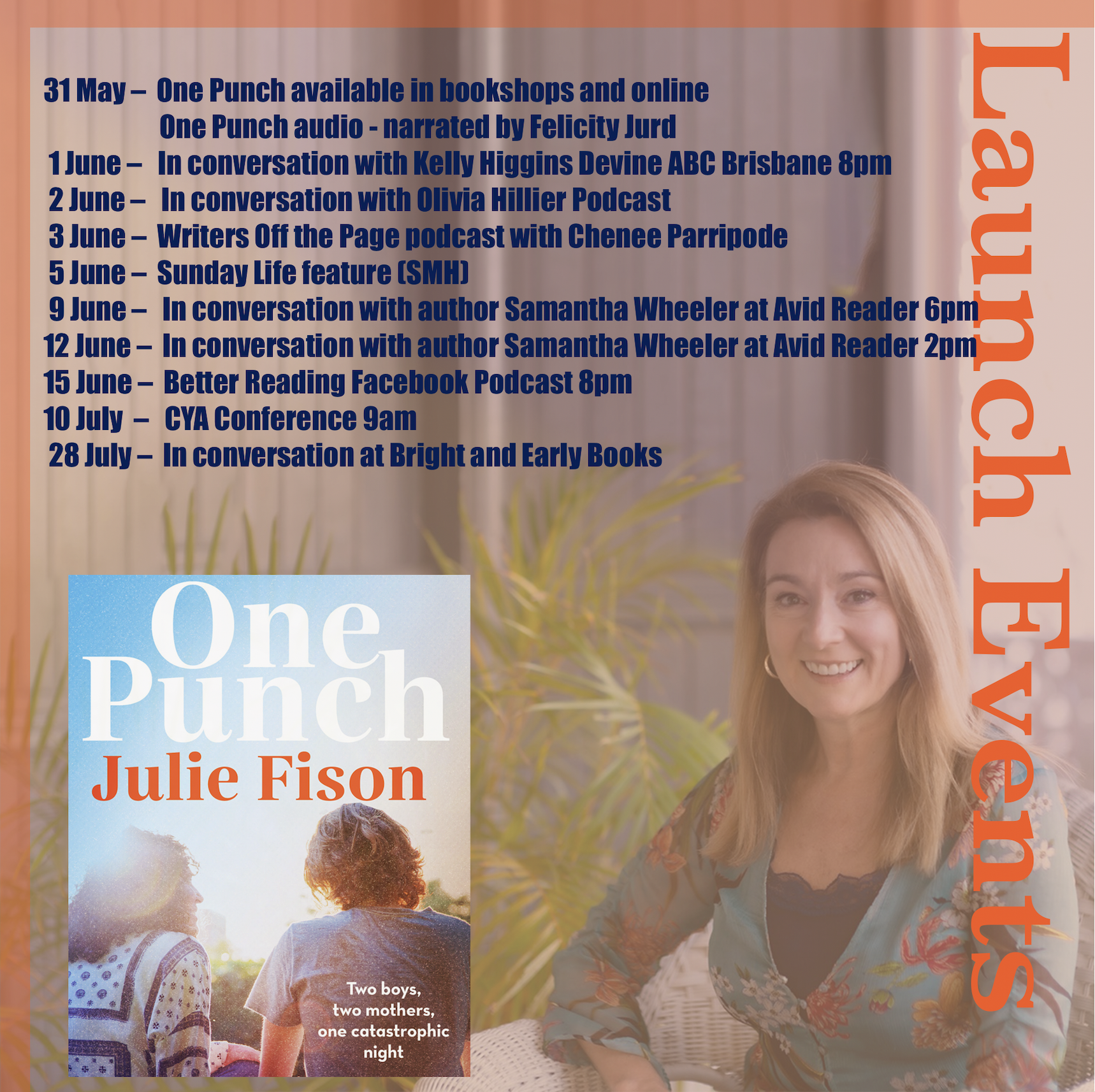
Join me online or in person at one of these events.
Join me online or in person at one of these events.
Julie Fison catapults readers into the murky and contested waters of love, morality and justice from the first page of One Punch and holds them, transfixed, right till the end. It’s a story that exposes the consequences of unconditional love; the cost and burden this delivers parents, their children and anyone caught in its more nefarious orbit. One Punch is a raw, urgent and chilling portrait of family loyalty and the frightening repercussions of being blind to the faults in those we love. Read this book and your conviction about what is right and wrong will be changed forever.
Sally Piper, Author of Bone Memories
Julie Fison’s One Punch takes a simple premise and turns it into a tight study of class and human nature–what we believe to be true about ourselves, and those we love, and who we really are. A crime is the pivot point for a sharp observation of human nature and blends compassion and humour in equal measure.
Meredith Jaffe, Author of The Tricky Art of Forgiveness
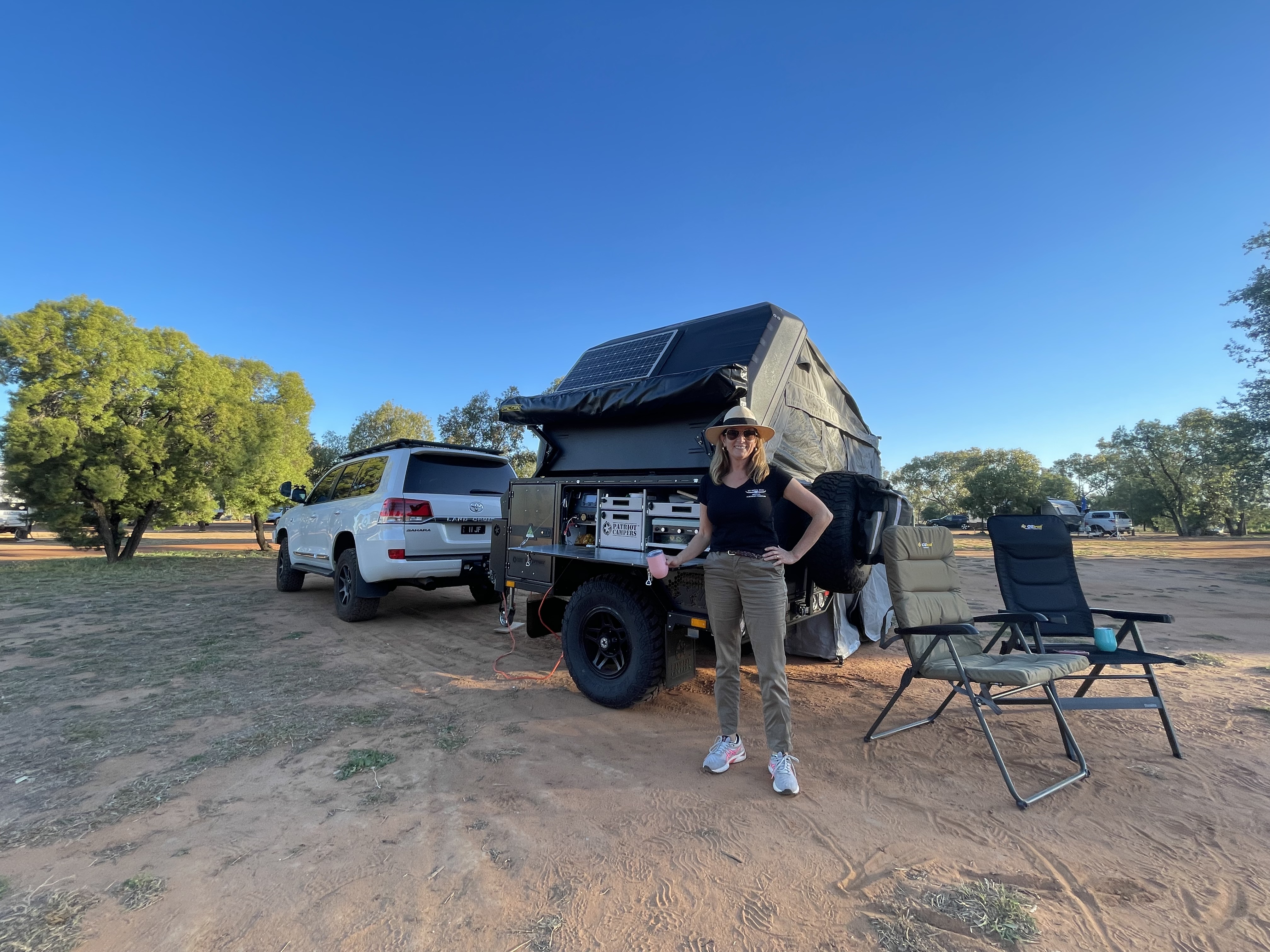
The road from Brisbane to the Gulf of Carpentaria takes you through the heart of Queensland – to iconic rivers, mystical gorges, historic pubs, drought-affected farmland and sites of frontier wars. There are places to gaze at the stars, to watch raptors riding the thermal currents, to hear the stories of the bush and to see the remains of dinosaurs that once roamed this terrain. We hitched up our Patriot camper trailer for an unforgettable 5,500km outback journey. A big shout out to the great pals who joined us, the generous friends who shared their homes with us and to my partner in life’s travels – Mr F. You are all legends!
First stop – Charleville Bush Caravan Park. Image: John Fison
Brisbane to Charleville – 744km
Staying: 2 nights Charleville Bush Caravan Park
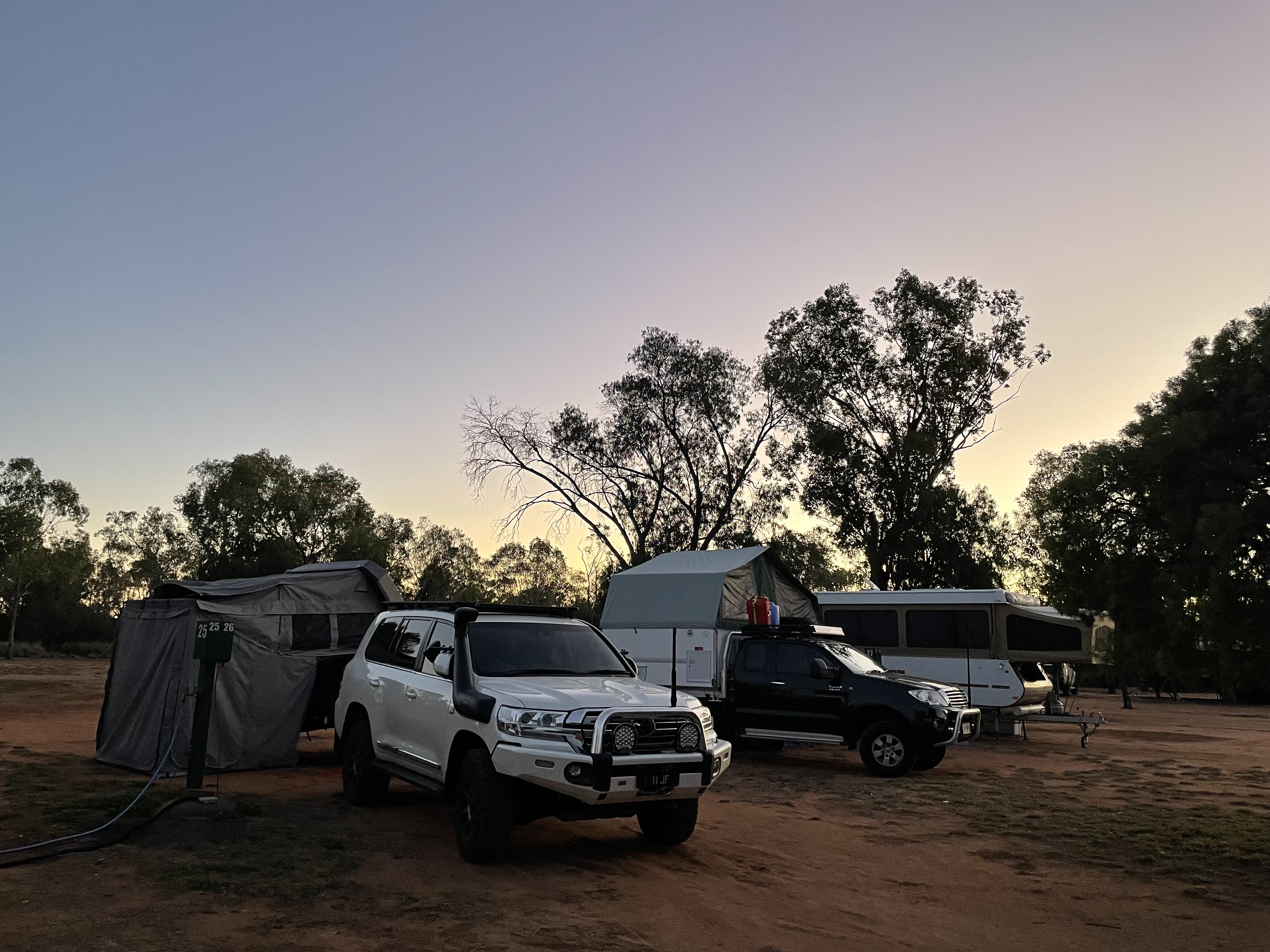
Day 1 and it’s a big one. With an eight hour drive ahead, we get away at 6am. It feels good to be leaving the city especially with a lockdown looming! We make a quick stop at Dalby for a piece of home-made date loaf and a thermos of tea. We don’t stop again until we hit Roma, where we grab a wrap from Bakearoma (corner of McDowall and Arthur Sts) and sit by Roma’s biggest bottle tree to eat lunch. Refreshed from our break we find a good podcast and settle in for the last stretch to Charleville. It’s a pretty drive but the roadkill is staggering. A dead roo every hundred metres. We’re very relieved when we finally pull into the Charleville Bush Caravan Park (2km past Charleville) with plenty of daylight to get the camper trailer set up. We’ve done a few practice runs in the back yard, but can we remember everything? As it turns out, we can. We’re set up in an idyllic bush setting with enough time to have a wander around the property and then get settled for sundowners. Bliss! But the real magic happens when the sun sets and the stars come out. The night sky is out of the world!
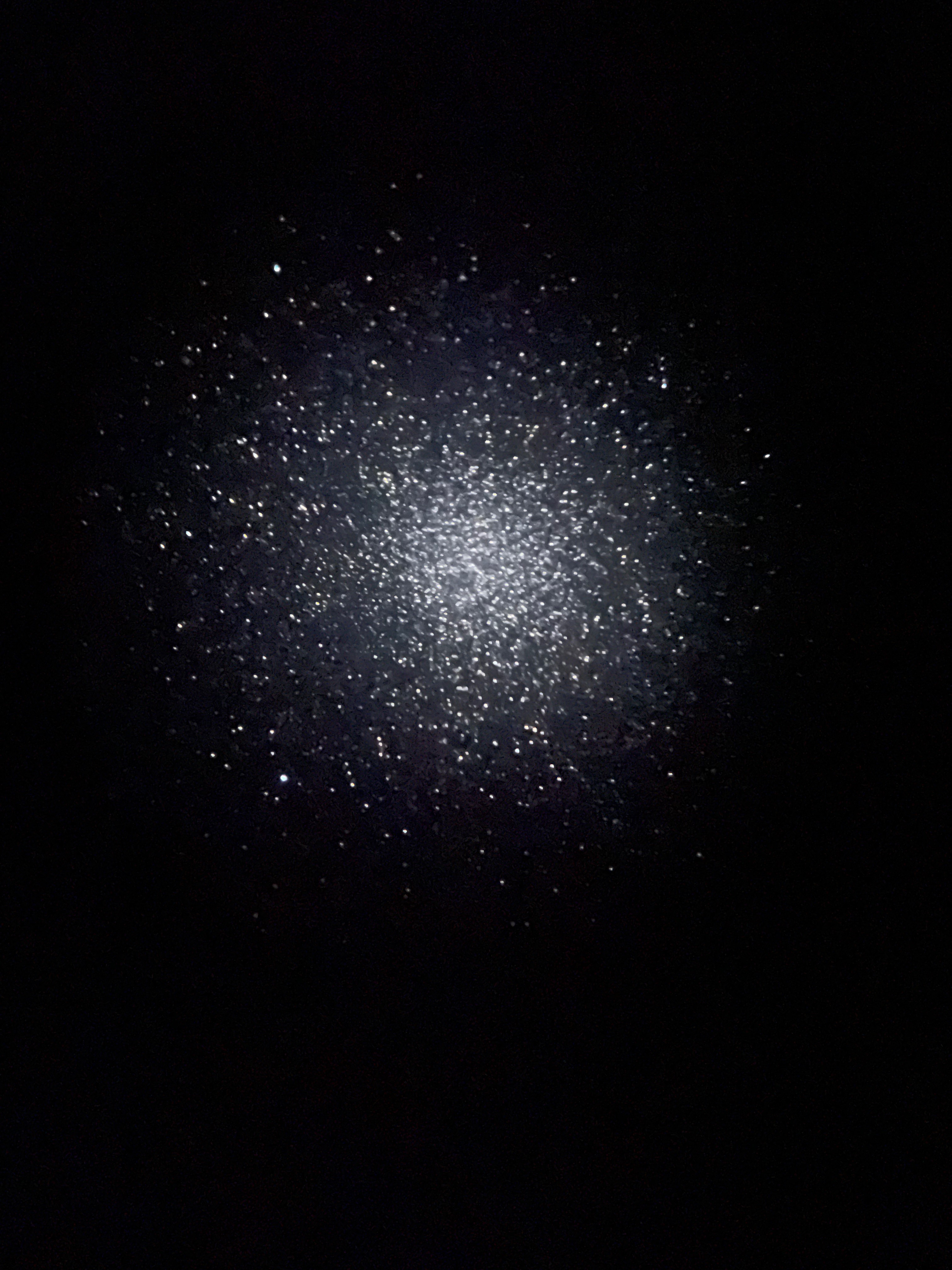
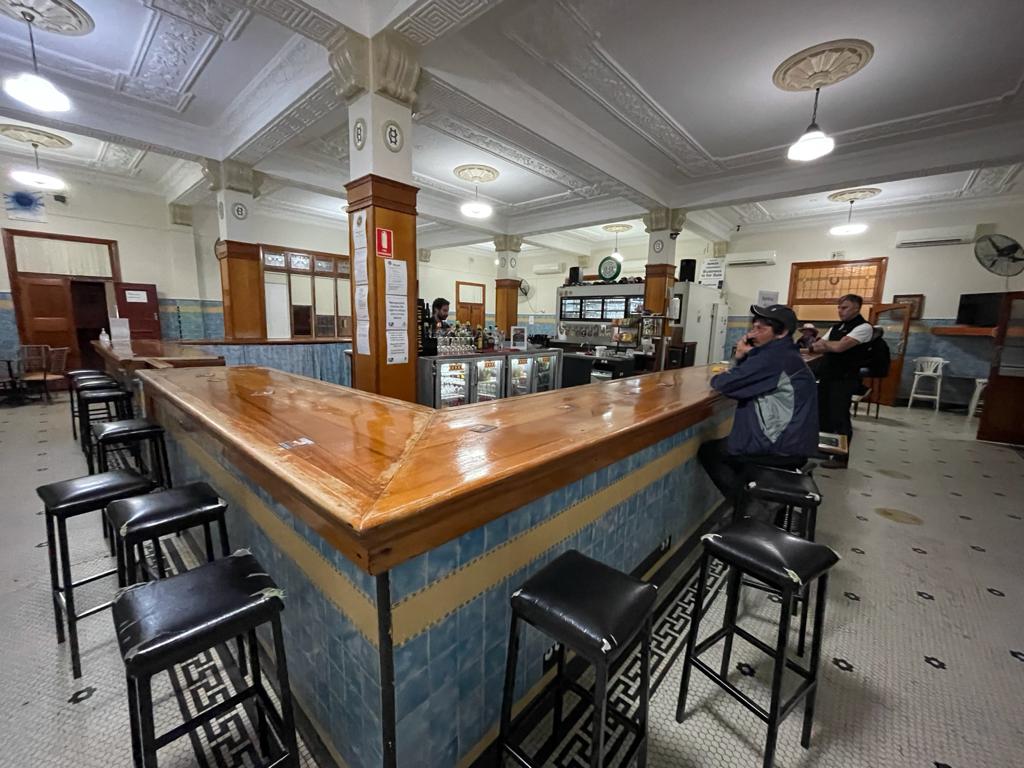
Top: Roma’s largest bottle tree, Downtown Charleville, Hotel Corones – Charleville. Middle: Omega Centauri from the Cosmos Centre, Hotel Corones, Australia’s longest bar at Hotel Corones. Bottom: Charleville Bush Caravan Park. Images: John Fison/ Julie Fison
Day 2 It’s a chilly start to the day – 8 degrees when the sun finally gets up at 7am. Very glad I have Ugg boots, a beanie and gloves! Breakfast with the local kangaroos is a treat, as is dinner in town at the Hotel Corones – a beautifully restored old pub, which had the longest bar in the Southern hemisphere when it was built in 1924. We follow that up with a private tour at the CharlevilleCosmos Centre. So worth it! Viewing the stars through their 30 inch telescope opens a whole new world. My favourite – the globular cluster of Omega Centauri – what a sight.
One Punch takes a simple premise and turns it into a tight study of class and human nature – what we believe to be true about ourselves, and those we love, and who we really are. A crime is the pivot point for a sharp observation of human nature and blends compassion and humour in equal measure.
Meredith Jaffe, The Tricky Art of Forgiveness
Charleville to Tambo – 200km
Staying: 2 nights Macfarlane Station – Tambo
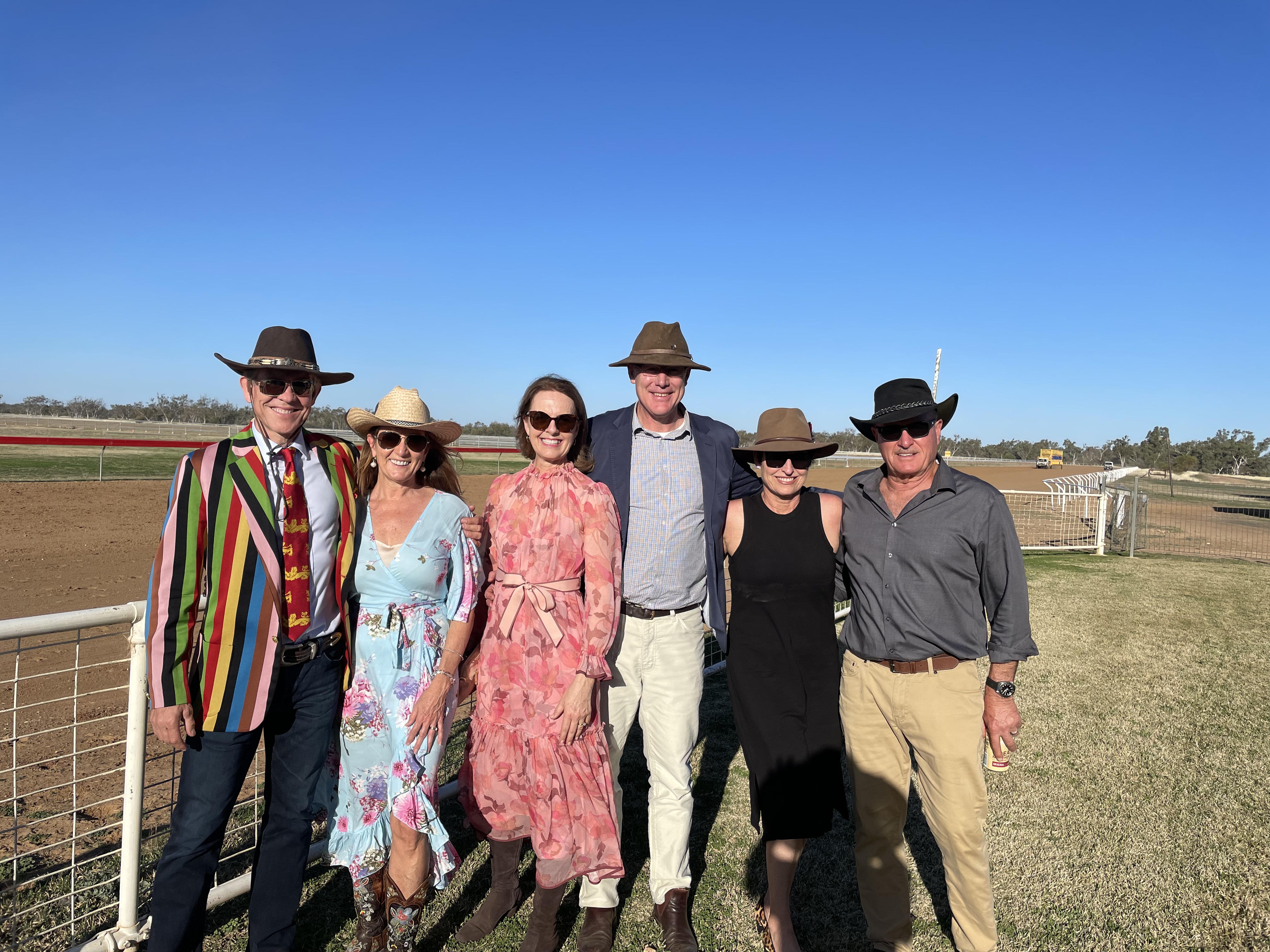
Stepping out in our Sunday best for the Tambo Races.
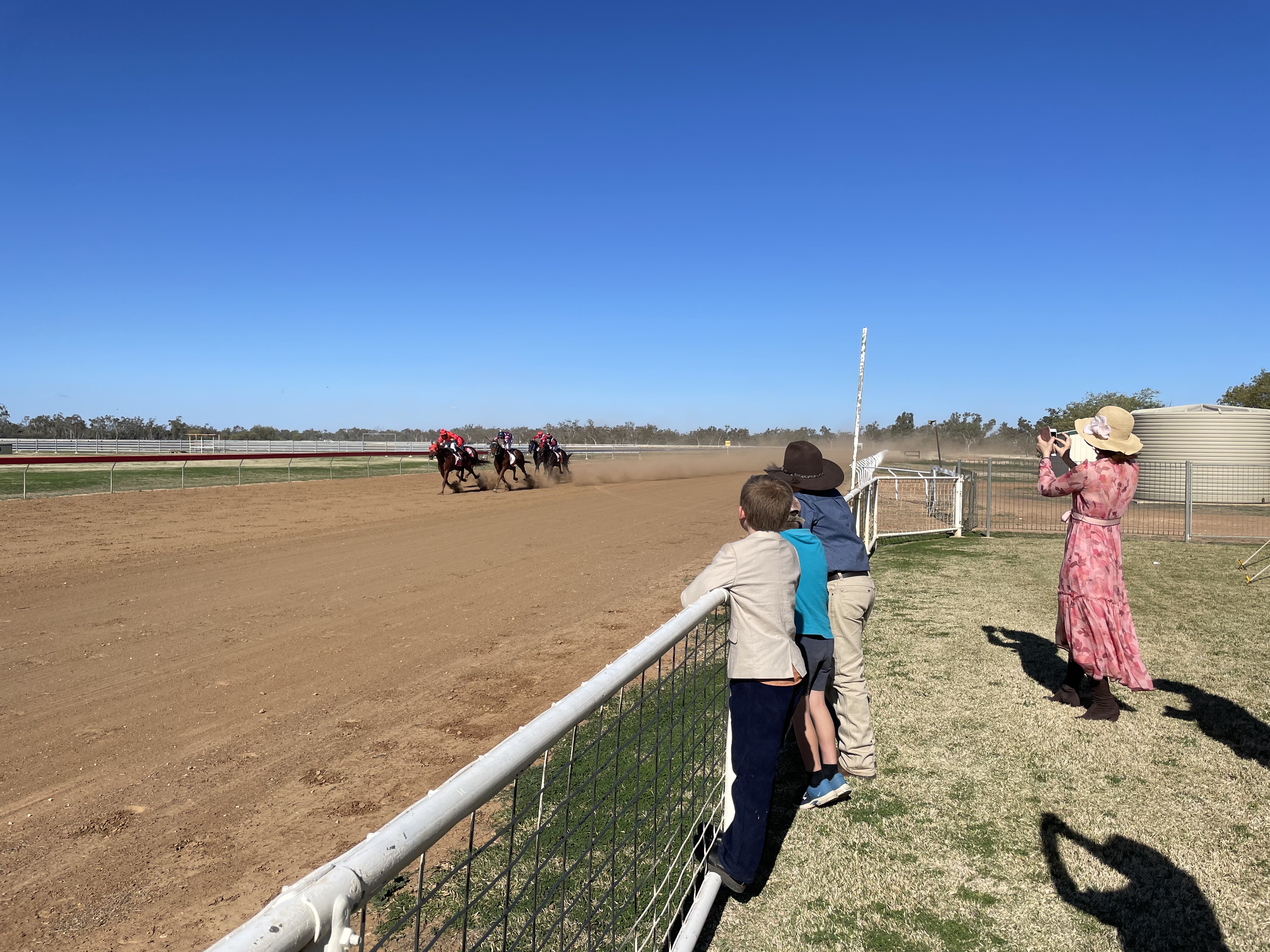
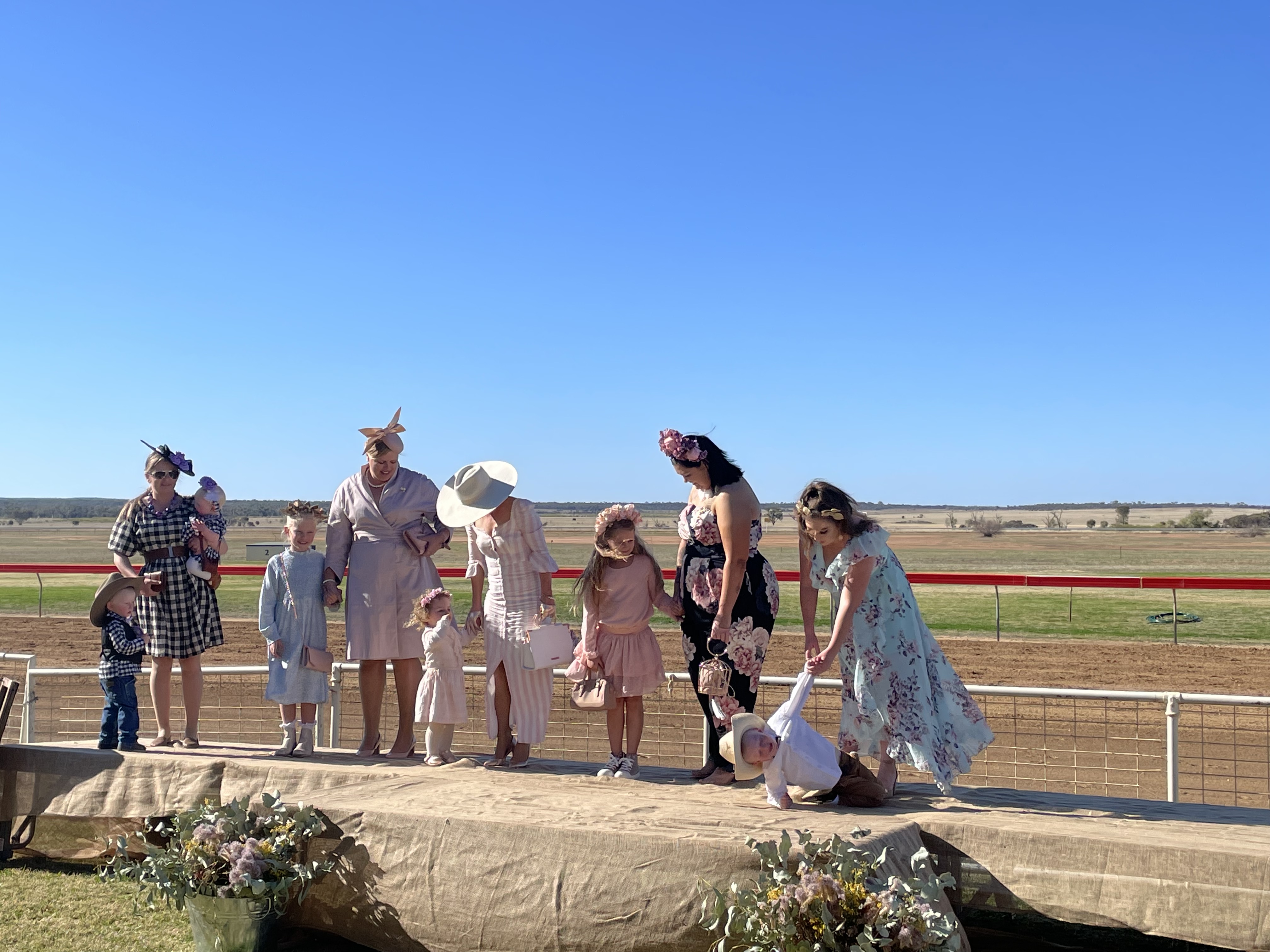
Day 3 and we are heading for Tambo, about 2 hours up the highway, for a day at the races. This is really special – a chance to put on our best gear, have a punt on the horses and be part of a vibrant local community. What a day! Thoroughly recommend getting along to any of the country race days. They are big social events in outback towns. The colours, the kids, the fashions on the field – all adding to the excitement of the race meet. No wins for us, but the day perfectly capped off with dinner under the stars at Macfarlane sheep station, where we’re staying with very generous friends for the next two nights.
Tambo races. Images: Julie FisonSunset at Macfarlane. Image: Julie Fison
Tambo to Longreach – 315km
Staying: 2 nights Longreach Tourist Park
Sunrise at Longreach. Image: Julie Fison
Day 5 We have a three hour drive ahead today, so we take it easy, stopping at Blackall for a steak sanga at the Barcoo Hotel and a coffee at the Jolly Swagman Cafe. We are definitely in Banjo Patterson territory here. The area is also home to Australia’s workers’ movement. The Tree of Knowledge in nearby Barcaldine was a key meeting place during the Great Shearers’ Strike of 1891 and commemorates the birthplace of the Australian Labour Party.
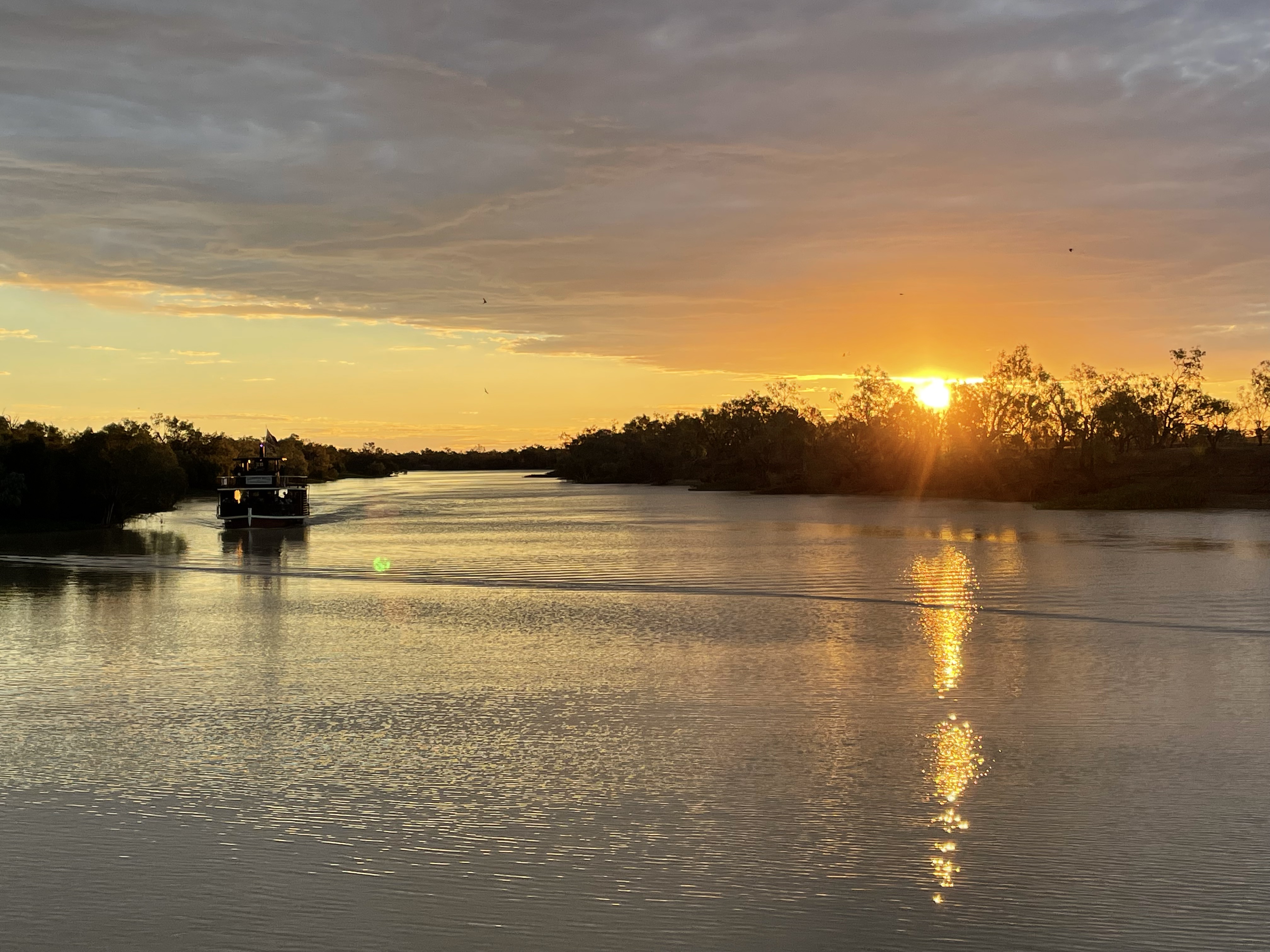
From here, it’s an easy drive to Longreach. We’re staying two nights at the Longreach Tourist Park – a colossal home- away-from-home for grey nomads. I’m a little shocked by the size, but I do appreciate the ensuite bathrooms and the many brolgas. It’s also an easy walk from here to Longreach’s main attractions – the Stockman’s Hall of Fame and the Qantas Museum. The Drover’s Sunset Cruise on the Thomson River (Outback Aussie Tours) is another must while you’re here. It includes a cruise, camp-oven dinner under the stars plus entertainment. Transport to and from your accommodation is included. The town of Longreach is also worth exploring. Great shops, grand old buildings, plus a very chic little cafe in an old bank building – The Branch. The iconic Wellshot Hotel in Ilfracombe, about 20 minutes outside Longreach is also worth a visit. Love the food, the stories and the bar stools! A wall of headwear is a who’s who of visitors, and includes former Governor General Quentin Byrce’s straw hat.
Top: Wellshot Pub at Ilfracombe, Brolgas at Longreach Caravan Park. Middle: The Branch cafe in Longreach, Entertainment at Smithy’s. Bottom: Sunset on the Thomson River, Blackall. Images: Julie Fison/ John Fison
Longreach to Winton – 179km
1 night Tattersalls Hotel Caravan Park
Getting touch with our inner paleontologist at the Australian Age of Dinosaurs, Winton
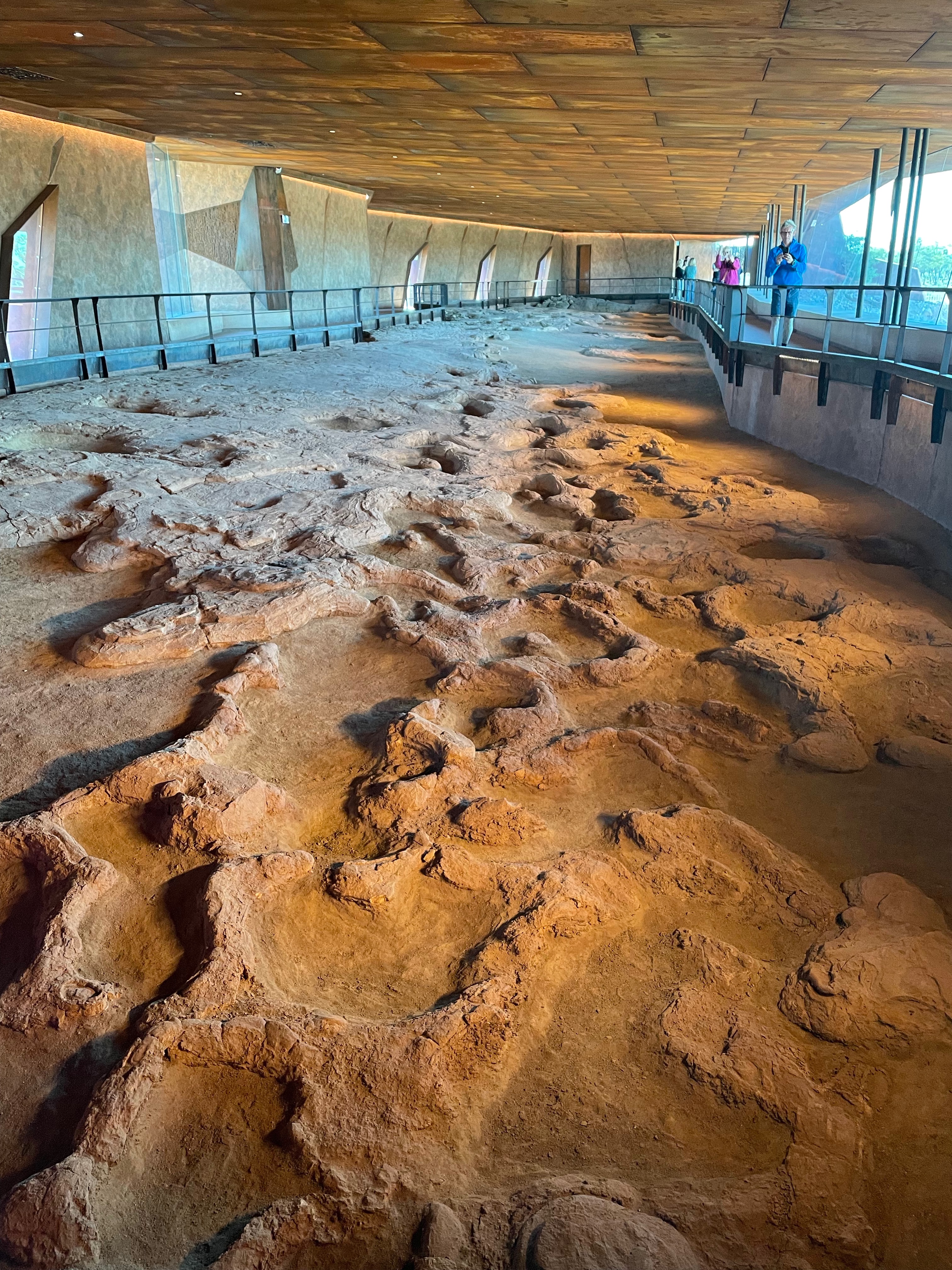
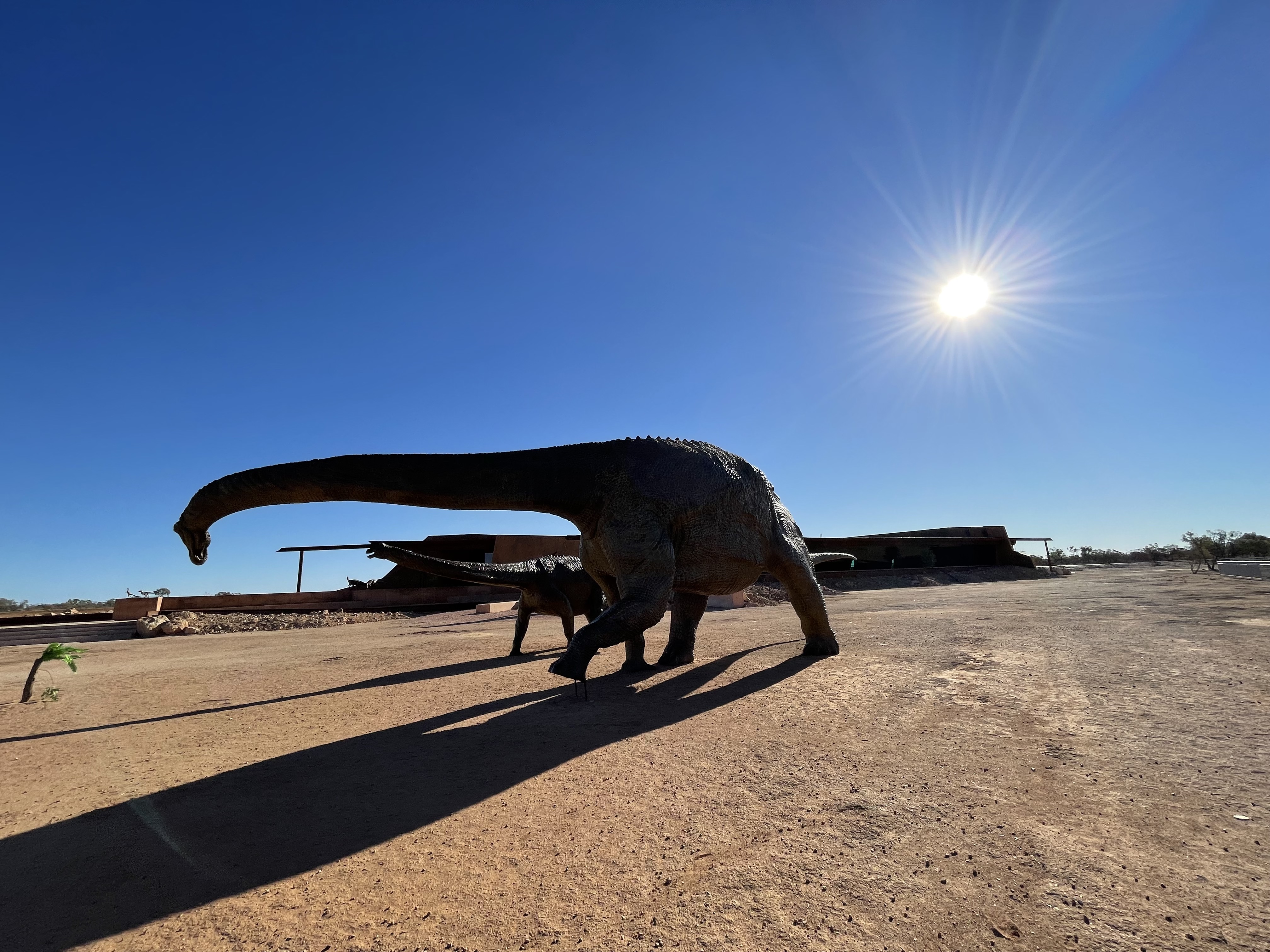
Day 7 The big story if you’re heading for Winton is dinosaurs. And the best place to get in touch with your inner palaeontologist is at the Australian Age of Dinosaurs about 20 km south of Winton. The museum is 11km off the main road, up a steep, sealed road to what’s locally known as the Jump-up. It’s a spectacular setting for this impressive experience. Allow three hours for the full tour of the laboratory, where fossils are prepped (you can even volunteer here), the museum, which houses the largest collection of Australian dinosaur fossils, and the trackways. It’s hard to image that this dry landscape was once a coastal wetland teaming with dinosaurs.
We spend the night at the Tattersalls Hotel Caravan Park. The facilities here are pretty ordinary, but the food at Tattersalls Hotel is outstanding. Highly recommended!
The Australian Age of Dinosaurs, on a spectacular jump-up, 20 km outside Winton. Images: Julie Fison
Winton to Julia Creek – 273km
Staying: 1 night Julia Creek Caravan Park
Day 8 We start the day exploring Bladensburg National Park just outside Winton – 85,000 hectares of Mitchell Grass and Channel Country. The stark landscape is intersected by creeks and water holes, hidden in the rocks. Skull Hole, a verdant oasis tucked out of sight, is believed to be the site of an Aboriginal massacre in the late 1800s. Up to 200 people were reportedly killed after an attack on a bullock wagon.
Skull Hole, Blandensburg National Park Image: Julie Fison
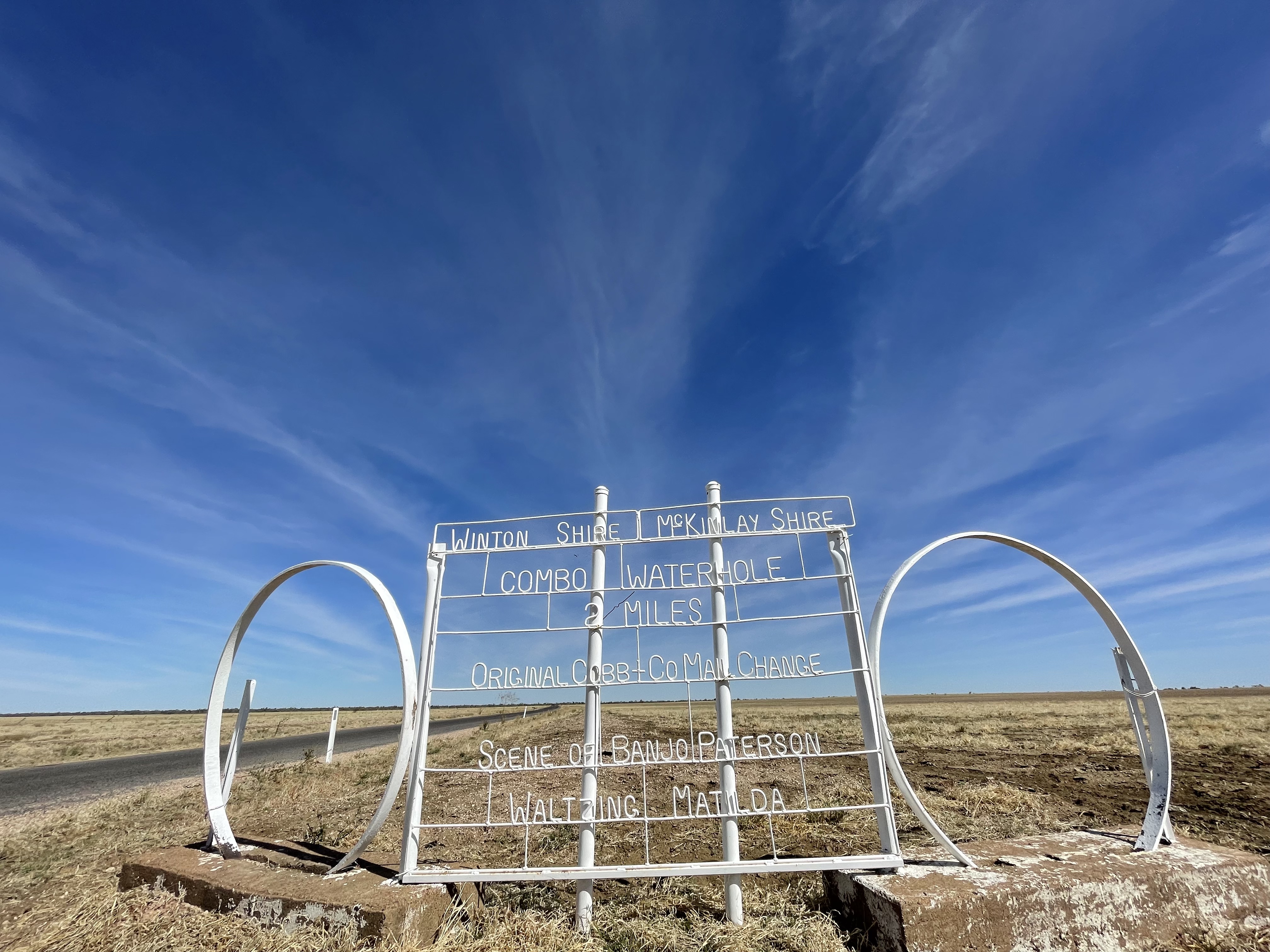
From there we head north west towards Kynuna, stopping at the Combo Waterhole, on the Diamantina River – the inspiration for Banjo Paterson’s Waltzing Matilda. The turnoff from the Landsborough Highway is 16km east of Kynuna. A 2.6km walk from the entrance of the park will take you across flagstone overshots which were built by Chinese labourers to allow the Cobb & Co stagecoaches to pass through.
Top: Galahs in Winton, Tattersalls Pub Winton, Skull Hole – Bladensburg National Park (Image: John Fison). Bottom: Corfield (Image: John Fison), Combo Waterhole, Julia Creek Images: Julie Fison
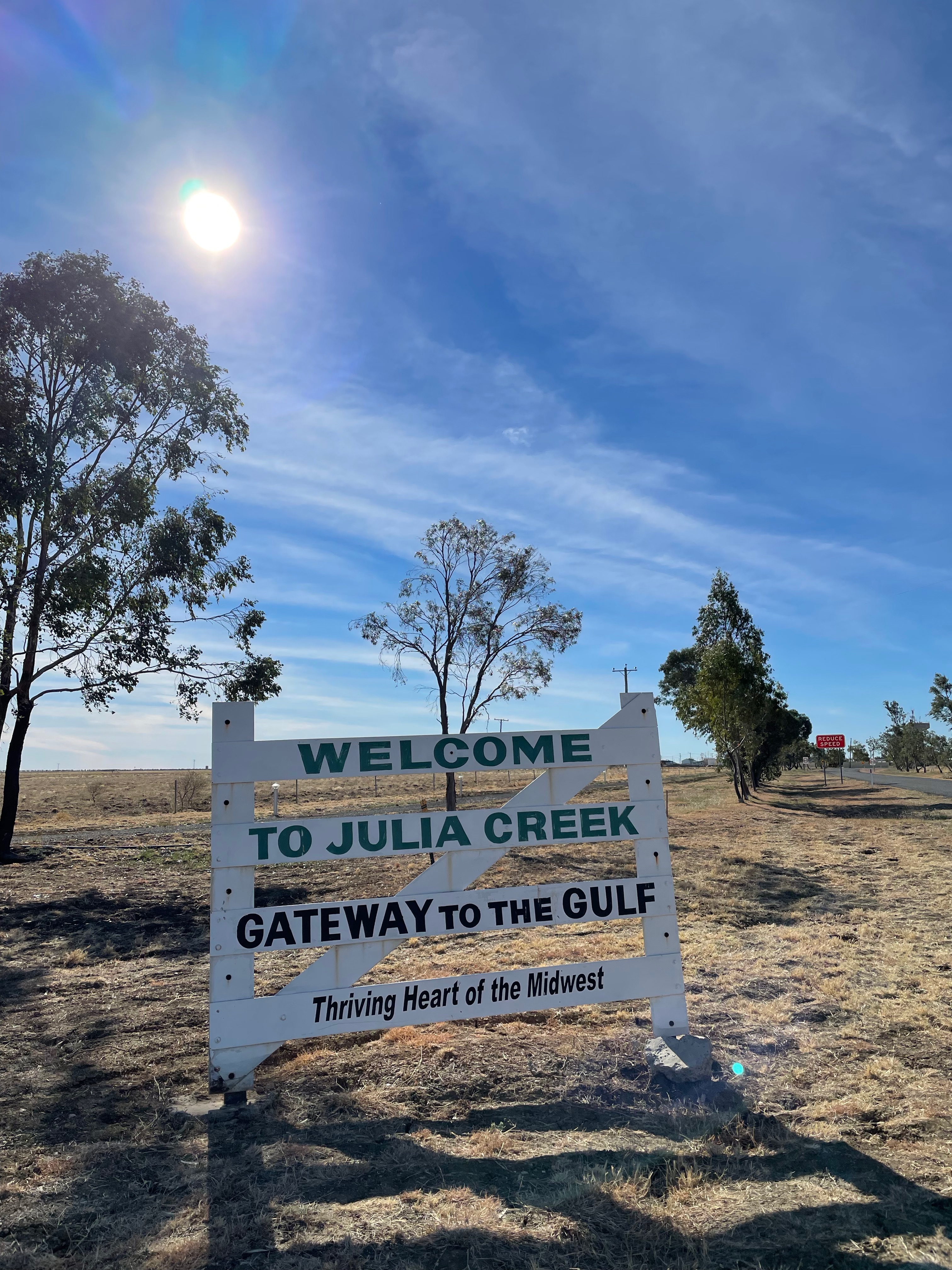
We spend the night at the well-maintained Julia Creek Caravan Park, which boasts six artesian bathtubs. I meet several very excited guests waiting for their chance to tuck into a glass of bubbles and a cheese platter and watch the sunset from their bath house, but there’s no time for us to join the afternoon bathers. We’re out for dinner tonight at the Top Pub (as the Julia Creek Hotel is known) to catch up with one of my cousins. JC might be known as the gateway to the Gulf but in our family it’s Godier country. My mother grew up here. My cousins work here and my grandmother and uncle are buried in the local cemetery. So glad I had the chance to visit again.
The grave of my grandmother, Ellen Godier at Julia Creek cemetery. Image: John Fison
Julia Creek to Adels Grove – 473km
Staying: 3 nights Adels Grove (Lawn Hill)
Taking a well-earned break on the Upper Gorge track, Boodjamulla National Park. Image: John Fison
Day 9 and we’re heading deep into the outback. We stop at the Burke and Wills Roadhouse for lunch and diesel, then it’s on to Gregory and the final stretch of unsealed road to Boodjamulla National Park. After 2000 kilometres of treeless downs, dry creek beds and dusty roads, the park is a surreal site. An oasis of palms, red sandstone cliffs and waterfalls, home to the Waanyi Aboriginal people. Even more beautiful than I expected!
Lawn Hill Gorge, Boodjamulla National Park
Lawn Hill Gorge, Boodjamulla National Park – a magical oasis on the Qld-NT border. Images: John Fison/ Julie Fison
Camping at Adels Grove
Camping at Adels Gove, a short drive from Lawn Hill Gorge. Images: John Fison/ Julie Fison
There is a camping ground at the entrance to Boodjamulla National Park, but for me, Adels Groveabout 10 km up the road is a winner. There is no power or running water in the grove camping area, but the setting more than makes up for that. The campsite on the banks of Lawn Hill Creek is a former botanical garden, providing a shady, picturesque spot to spend a few days. Many of our fellow campers have arrived with their own paddle boards and floatation devices to enjoy the creek. But if you haven’t thought to bring those, you can rent kayaks at Lawn Hill Gorge – a magical way to explore the waterway. For the best views, take the Upper Gorge walk, which winds its way between cliff-top vantage points and the creek. Allow a few hours to complete the walk and don’t forgot your togs so you can swim under the waterfalls. An absolute must. Small fires are permitted at Adels Grove, so you can cook your own snags after a day exploring the gorge, or head up to the licensed bistro for dinner. The barramundi we had was really good.
For a very different perspective, check out my story on Judy Watson‘s work. Her vibrant art is inspired by the tragic stories from this beautiful region.
Boodjamulla National Park, Upper gorge track. Image: John Fison
Adels Grove to Karumba via Burketown – 503km
Staying: 1 night End of the Road Motel
Sunset over the Gulf of Carpentaria. Image: John Fison
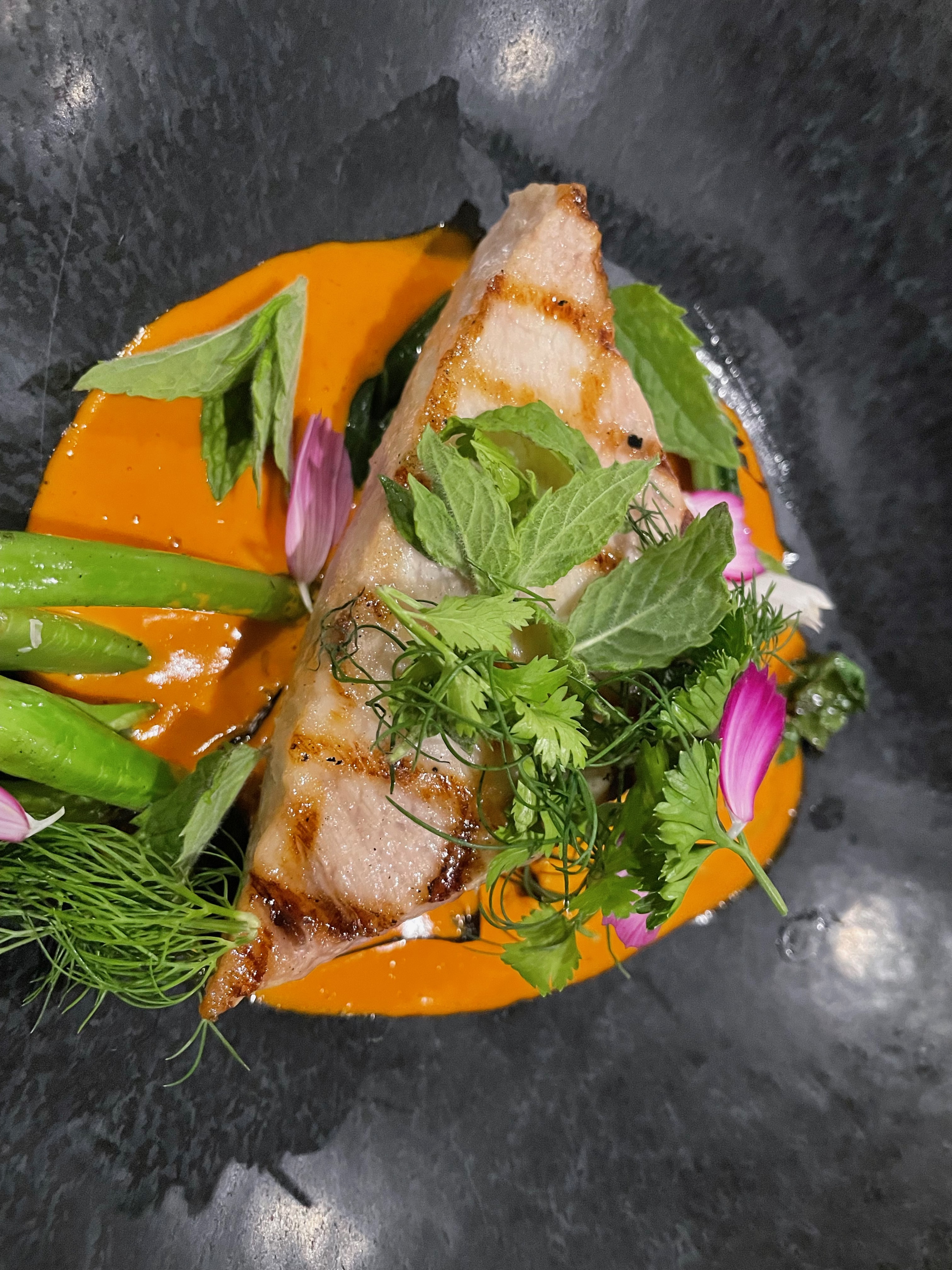
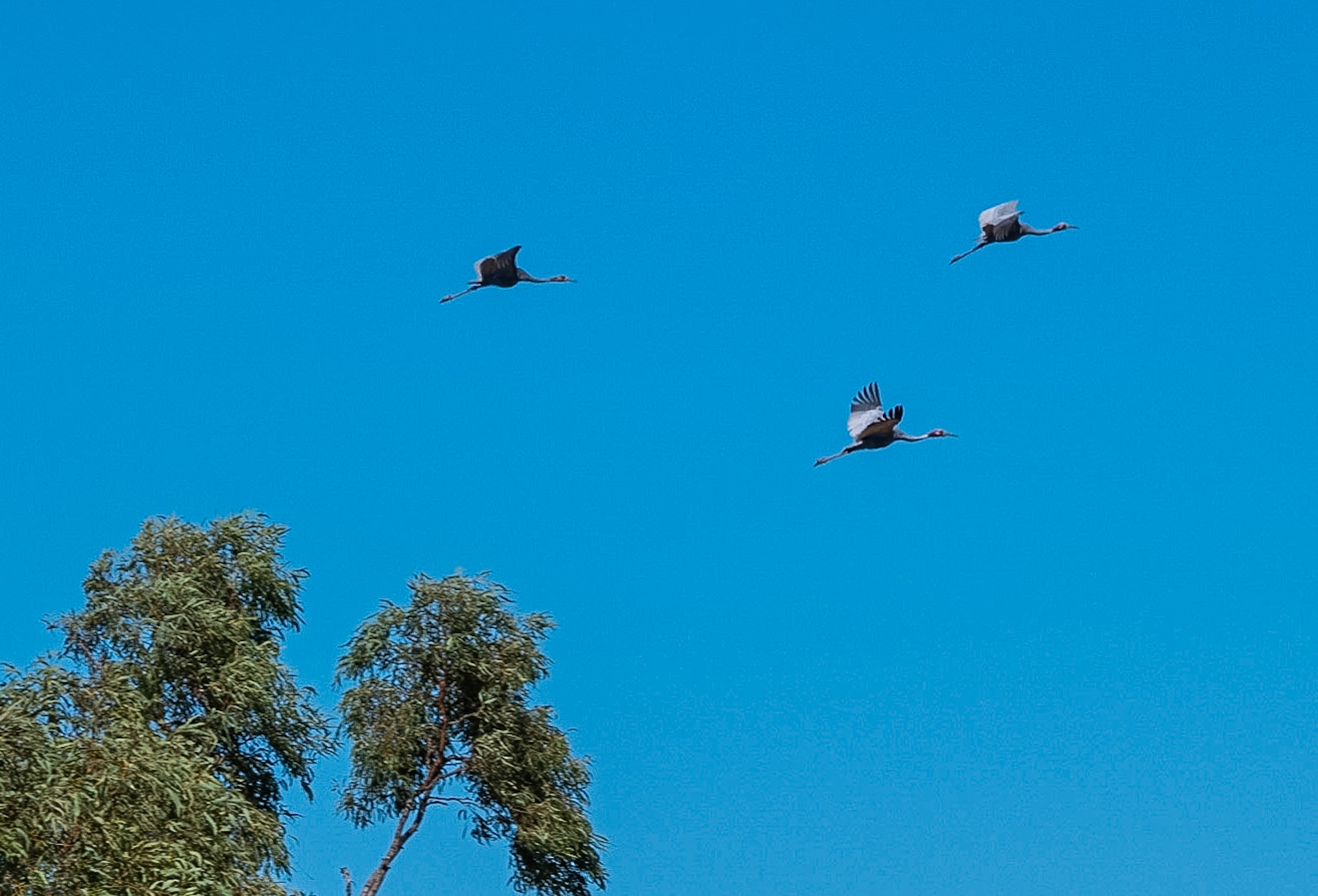
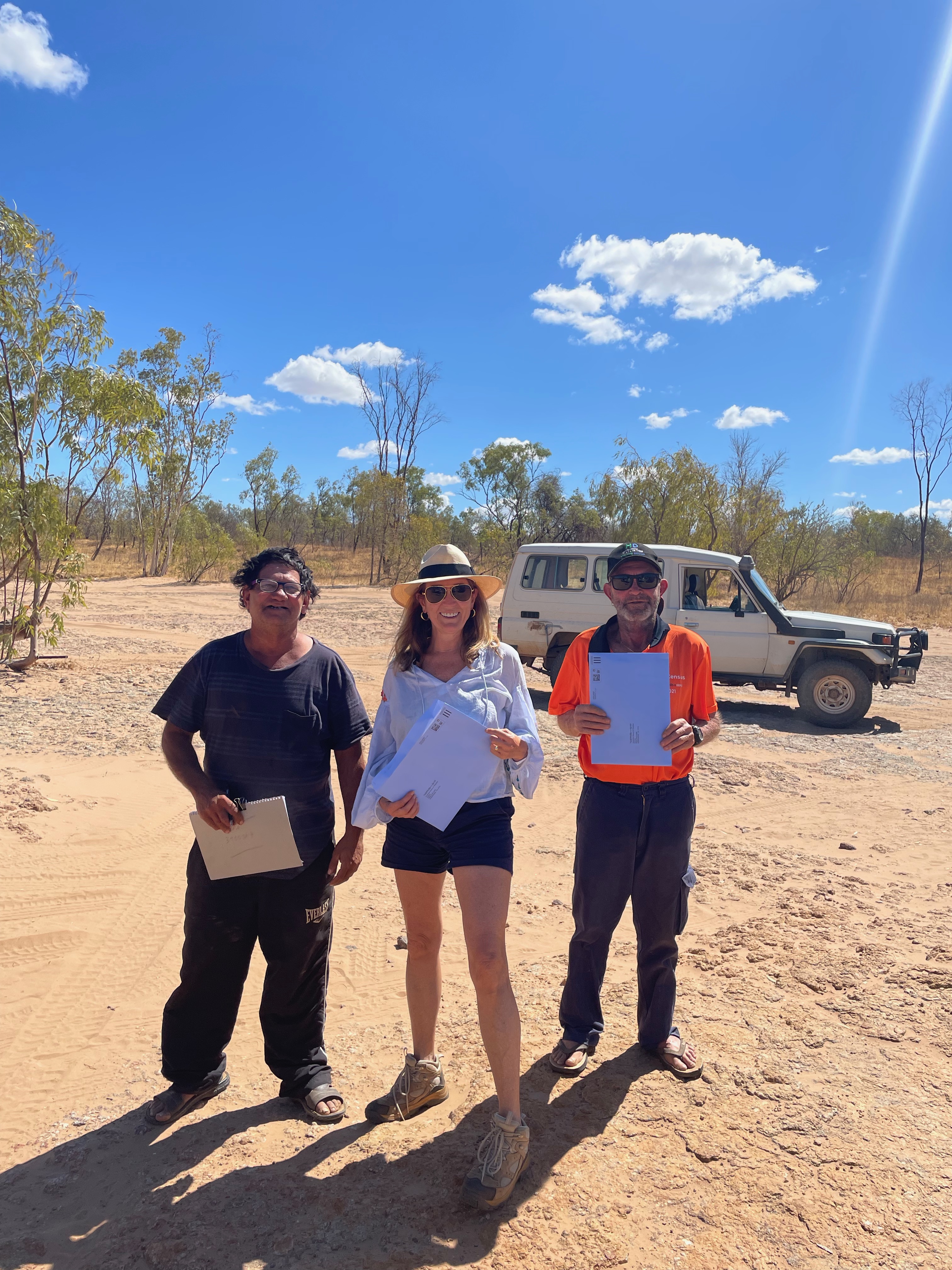
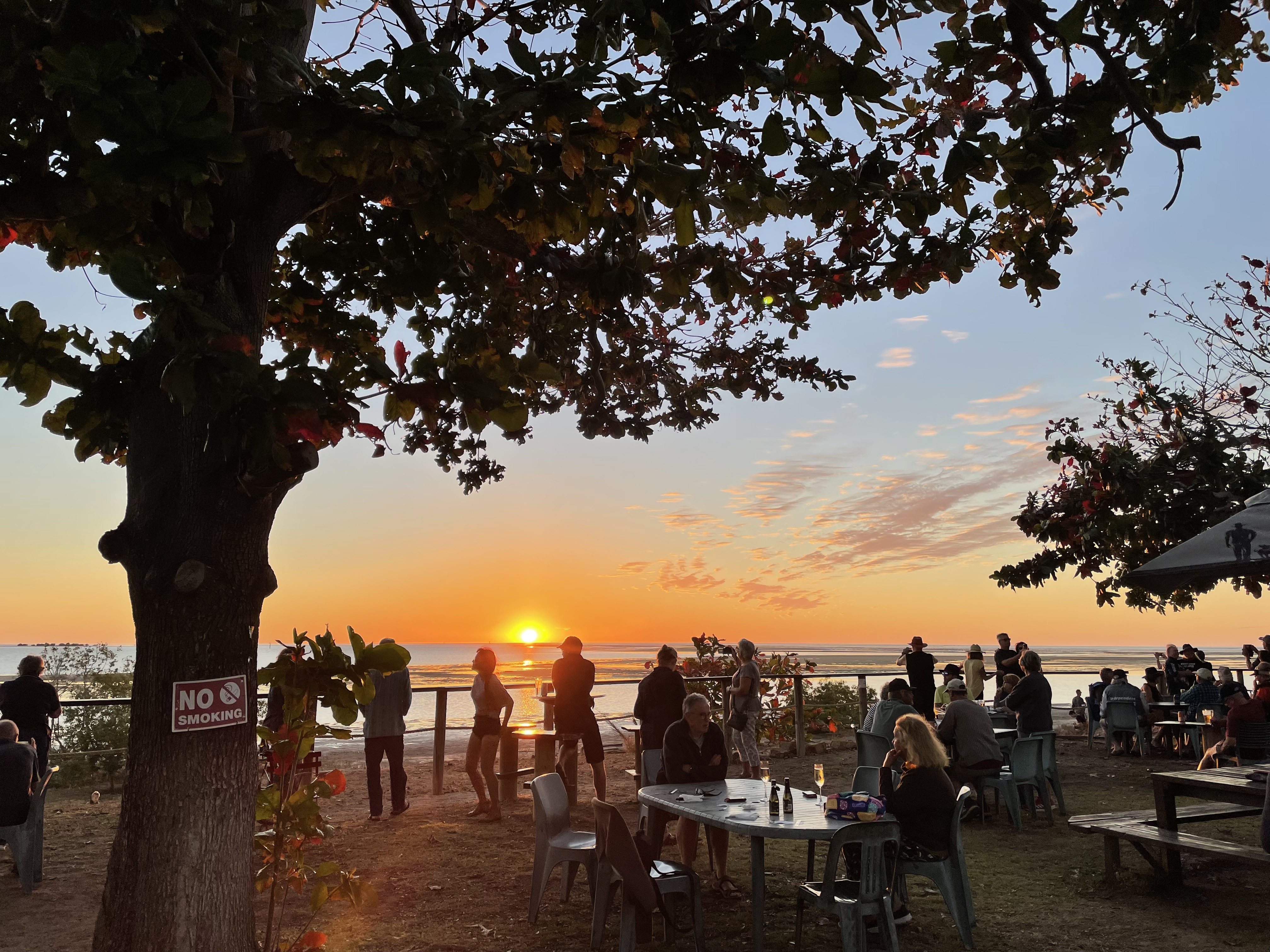
Day 10 This is our last day heading north – a 500 km drive from Adels Grove to Karumba. To avoid retracing our route back to Burke and Wills Roadhouse, we decide to go via Burketown. It’ll add an hour to our journey, because much of the road from Burketown to Normanton is unsealed, but it feels like a small price to pay to see a new stretch of Queensland. We’re rewarded, spotting countless wedge tail eagles and brolgas in flight. The other surprise – we’re tracked down by a pair of census officers at Leichhardt Falls, who are rather excited to add us to the Burke Shire statistics. When we finally make it to Karumba, we are too late to get into a caravan park. It’s a motel for us tonight. Oh, well. Needs must. The End of the World Motel commands a prime position on the water’s edge, and the waterfront bar and restaurant look great, but we are only here for one night so we pop next door to the iconic Sunset Hotel to watch the sun disappear into the Gulf of Carpentaria and celebrate the end of a very long drive. The herb-crusted barra is the best I’ve ever had. And the sunset? Totally worth the drive!
Top: The road from Burketown to Normanton, Brolgas overhead, Leichhardt Falls. Images: John Fison. Middle: Burketown, Normanton, Census monitors at Leichhardt Falls. Images: Julie Fison/John Fison. Bottom: Sundowners at Sunset Tavern, Karumba. Images: John Fison/Julie FisonIt’s a big state!
Heading south – Karumba to Greenvale – 503km
1 night Greenvale Caravan Park
Brolgas outside Karumba. Image: Julie Fison
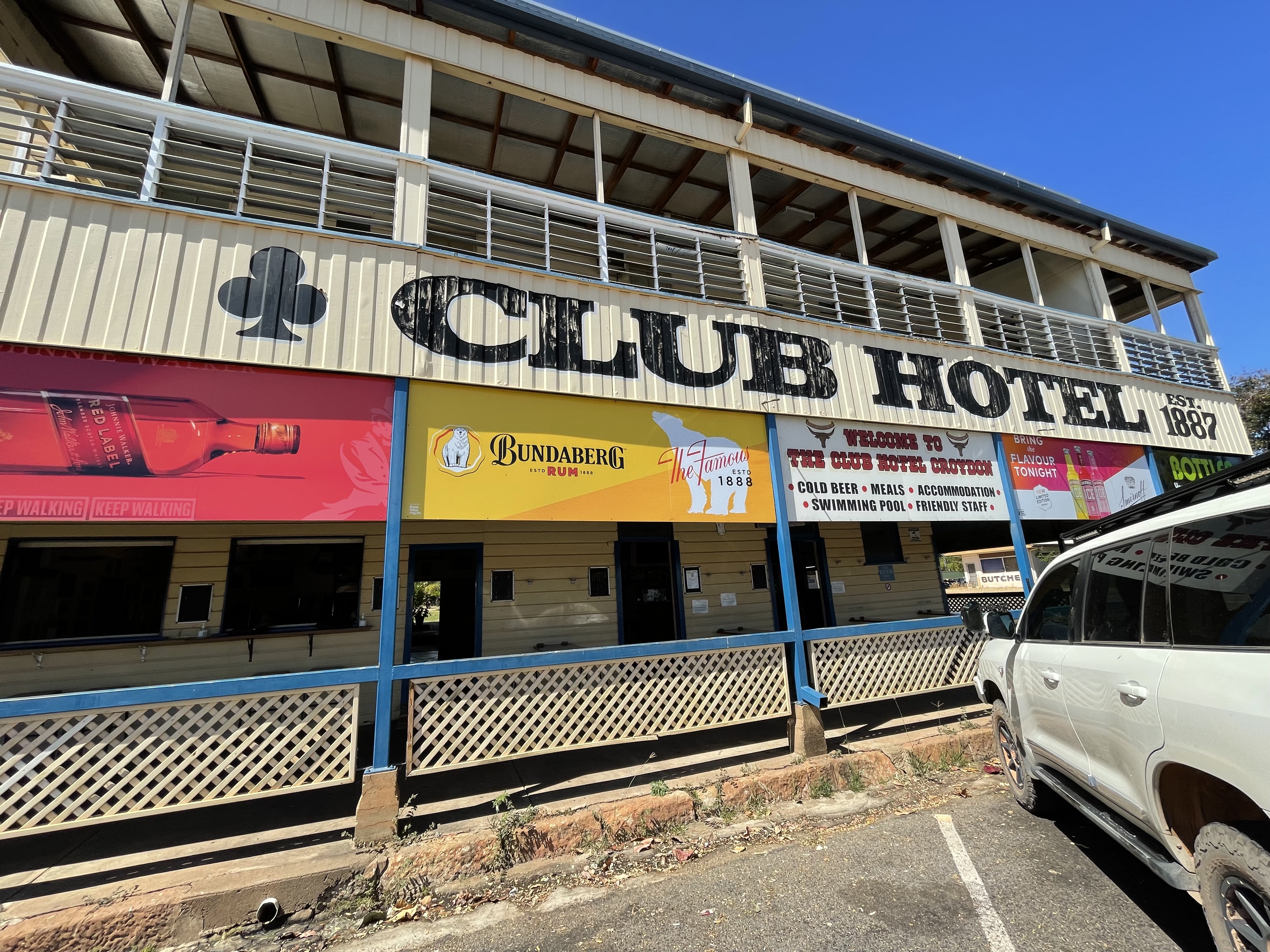
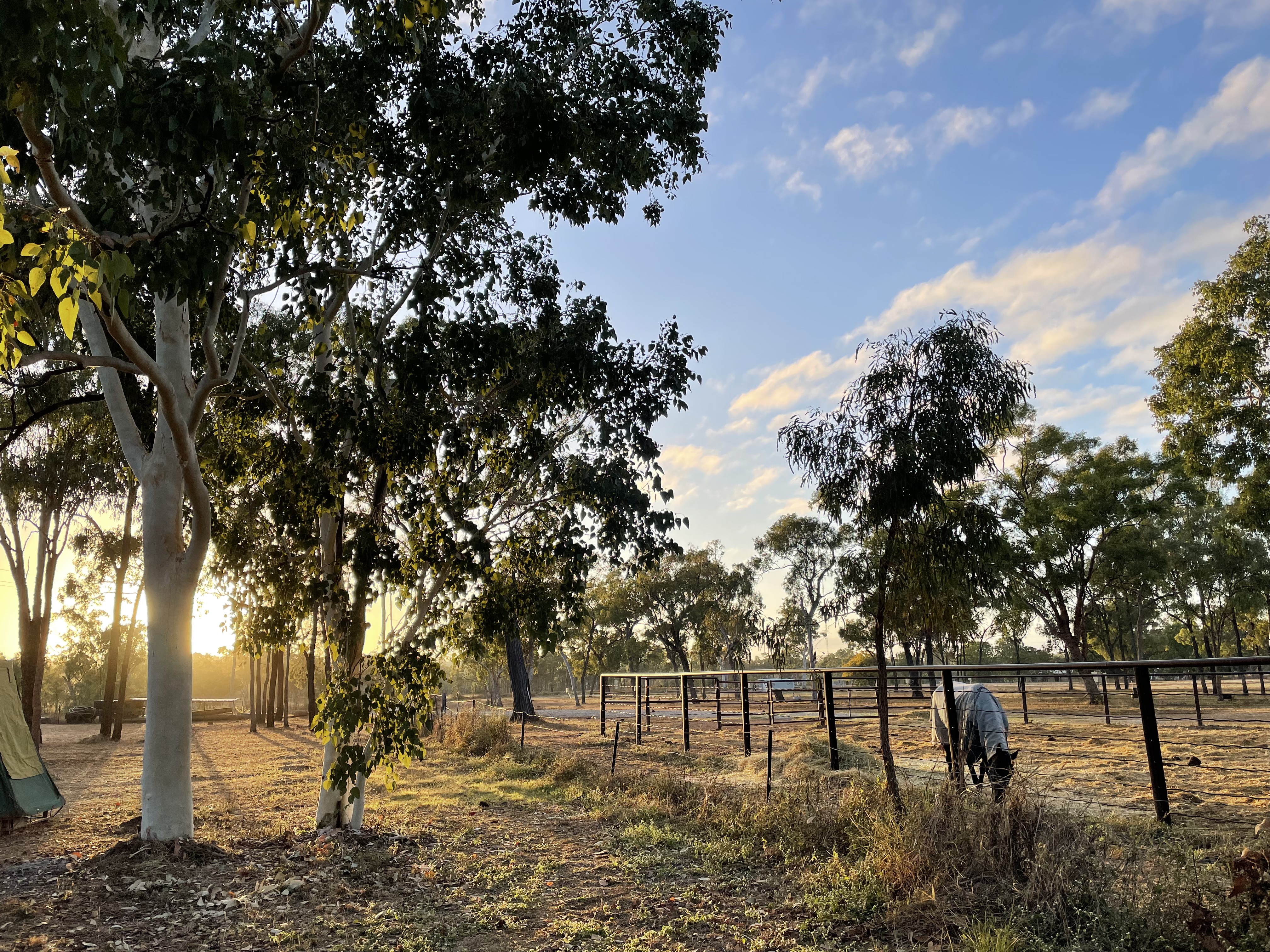
Day 11 It’s a bit crazy to be heading south after just one night in the gulf but we’re on a tight schedule from here. A quick wander around Karumba Point (the tourist bit), a drive through Karumba (the commercial fishing hub) and a stop in Normanton for diesel and we’re on the Savannah Way, heading for the east coast. At lunchtime, the Club Hotel, in Croydon, proves impossible to drive past. The pub is a classic Queensland watering hole – murals on the awnings, the walls plastered with fishing photos and indigenous weapons and great pub food. Ten out of ten for the steak burger! We spend the night at Greenvale Caravan Park because we’ve run out of options by the time it gets dark. It’s a pleasant enough spot and we wake up to the snorts of horses in the neighbouring paddock as well as a chorus of galahs who appear to be taunting the caged turkeys. Lucky we’re early risers!
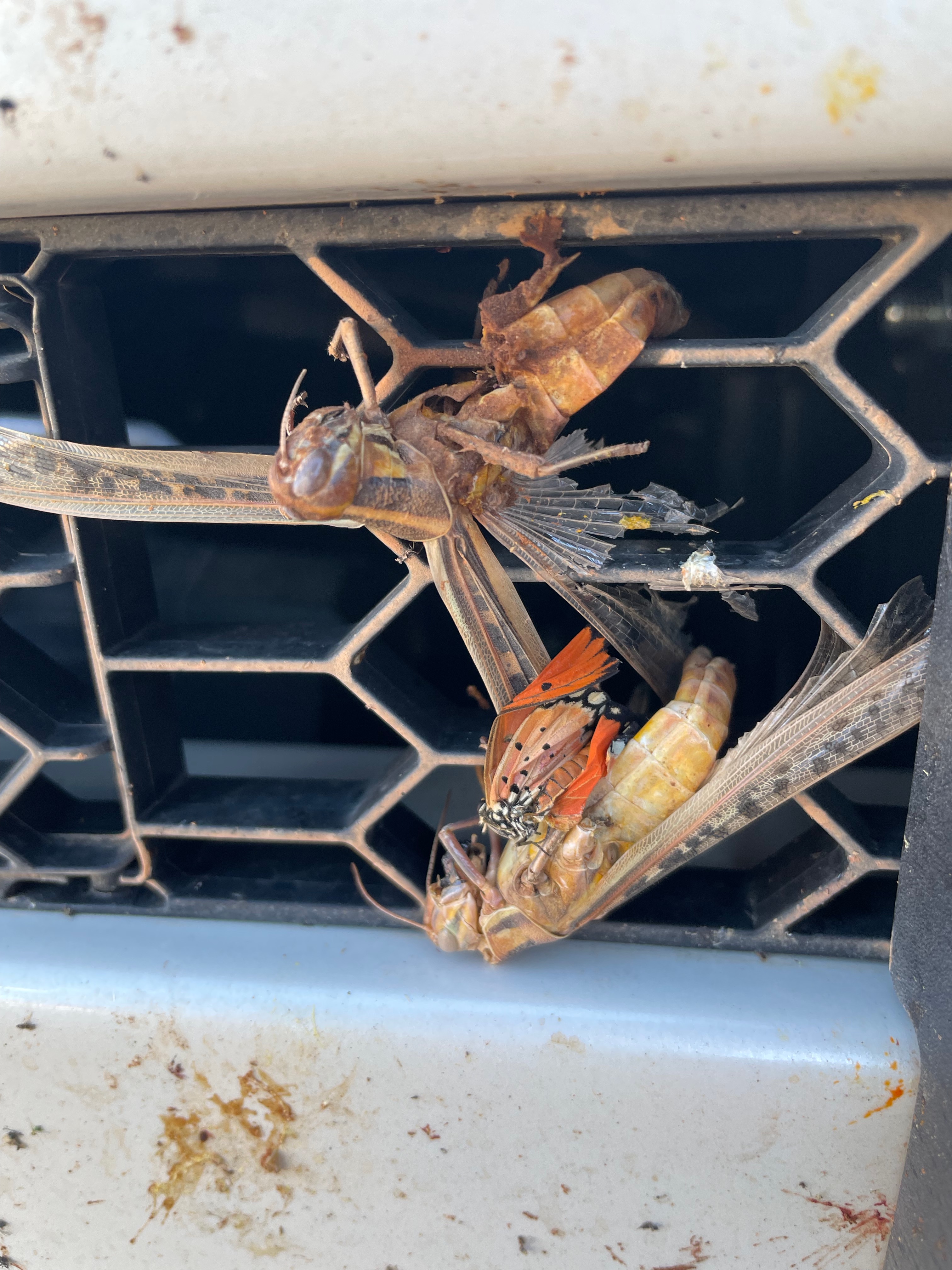
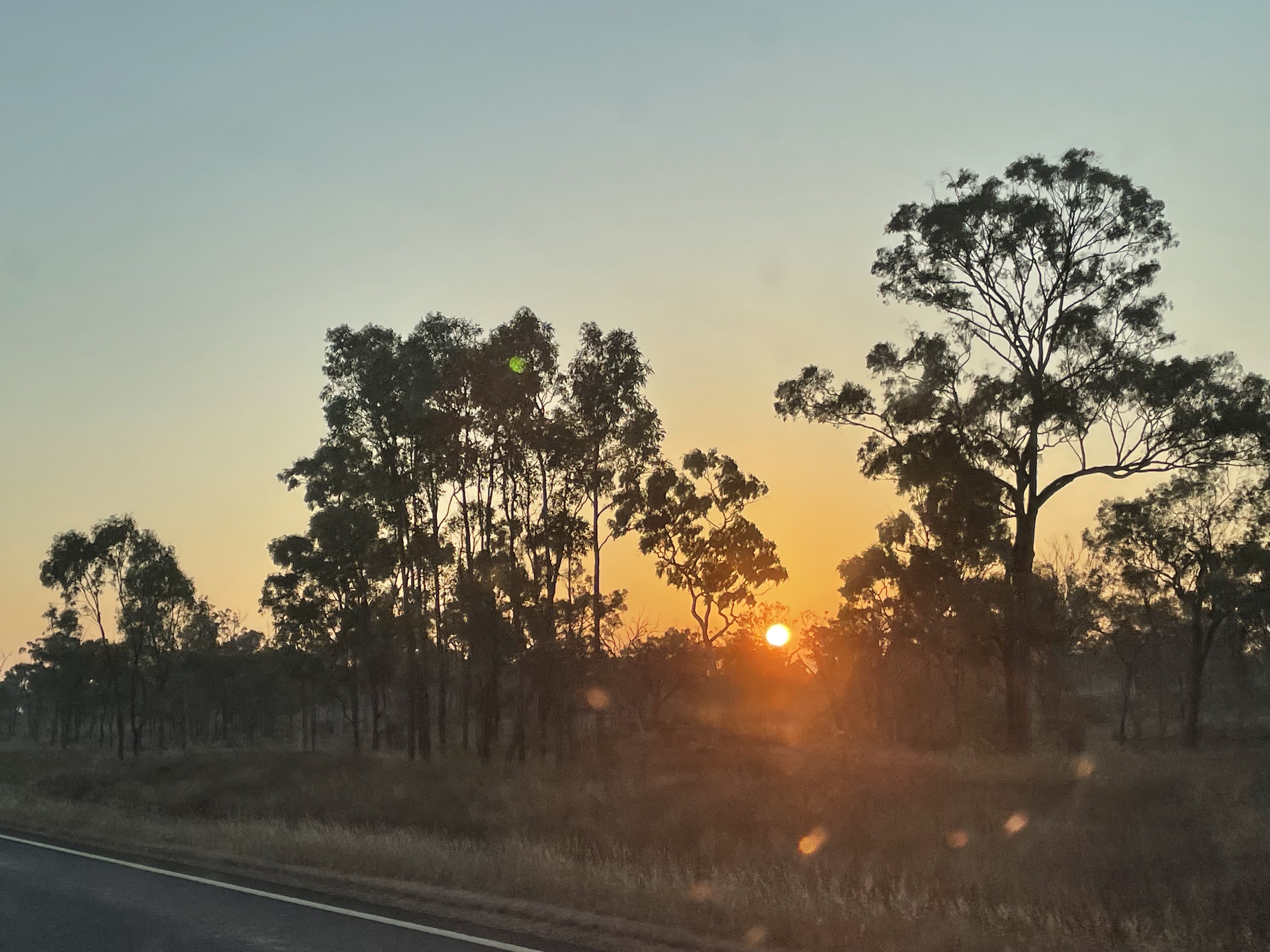
Top: Camping at Greenvale, Mutton hole at Normanton, Club Hotel at Croydon. Middle: Club Hotel at Croydon, Bugs in the grille, Drone pilot, Bottom: Sunset on the road, Club Hotel at Croydon, Pelicans at Normanton. Images: Julie Fison/John Fison.
Greenvale to the Burdekin – 367km
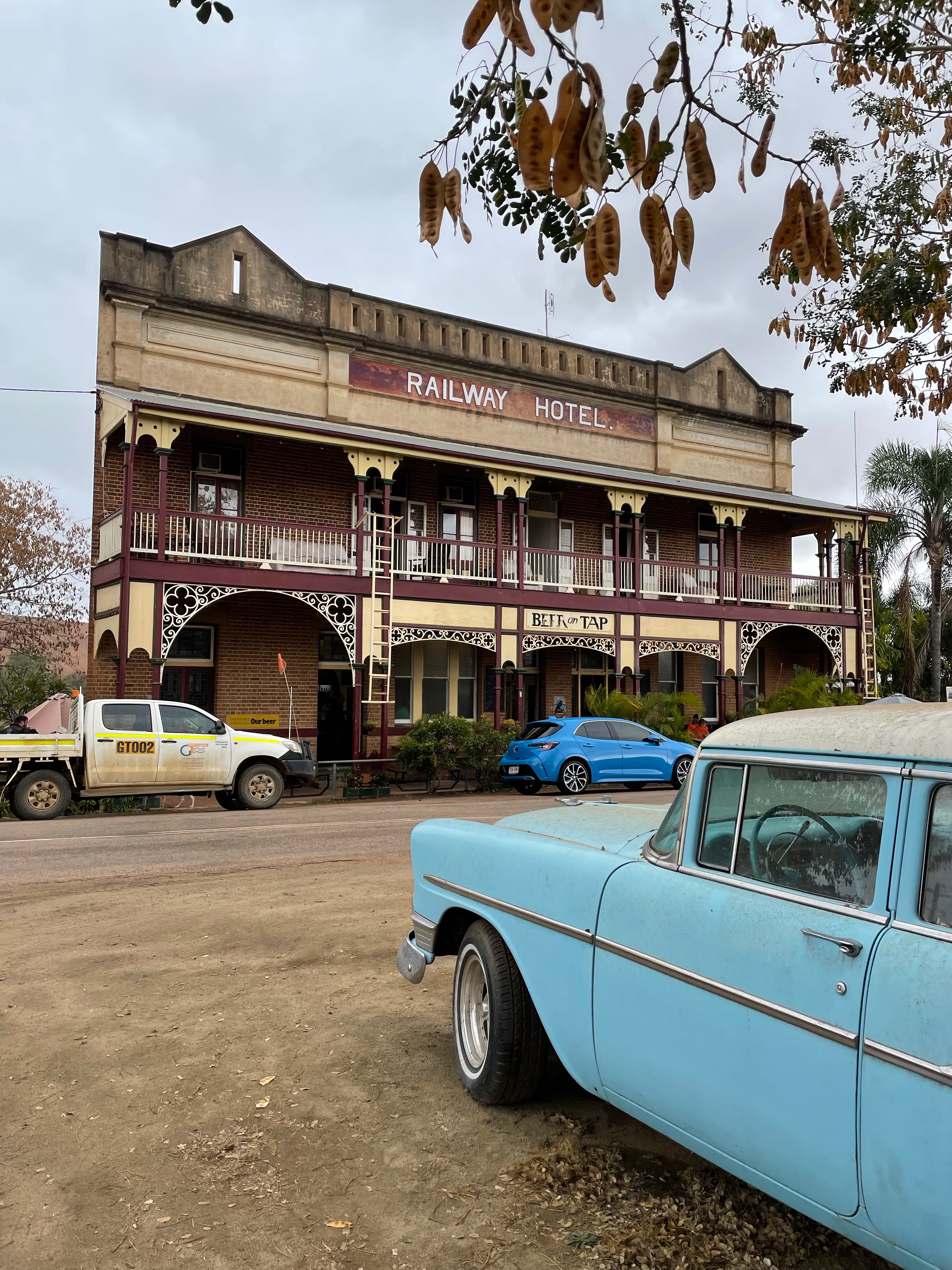
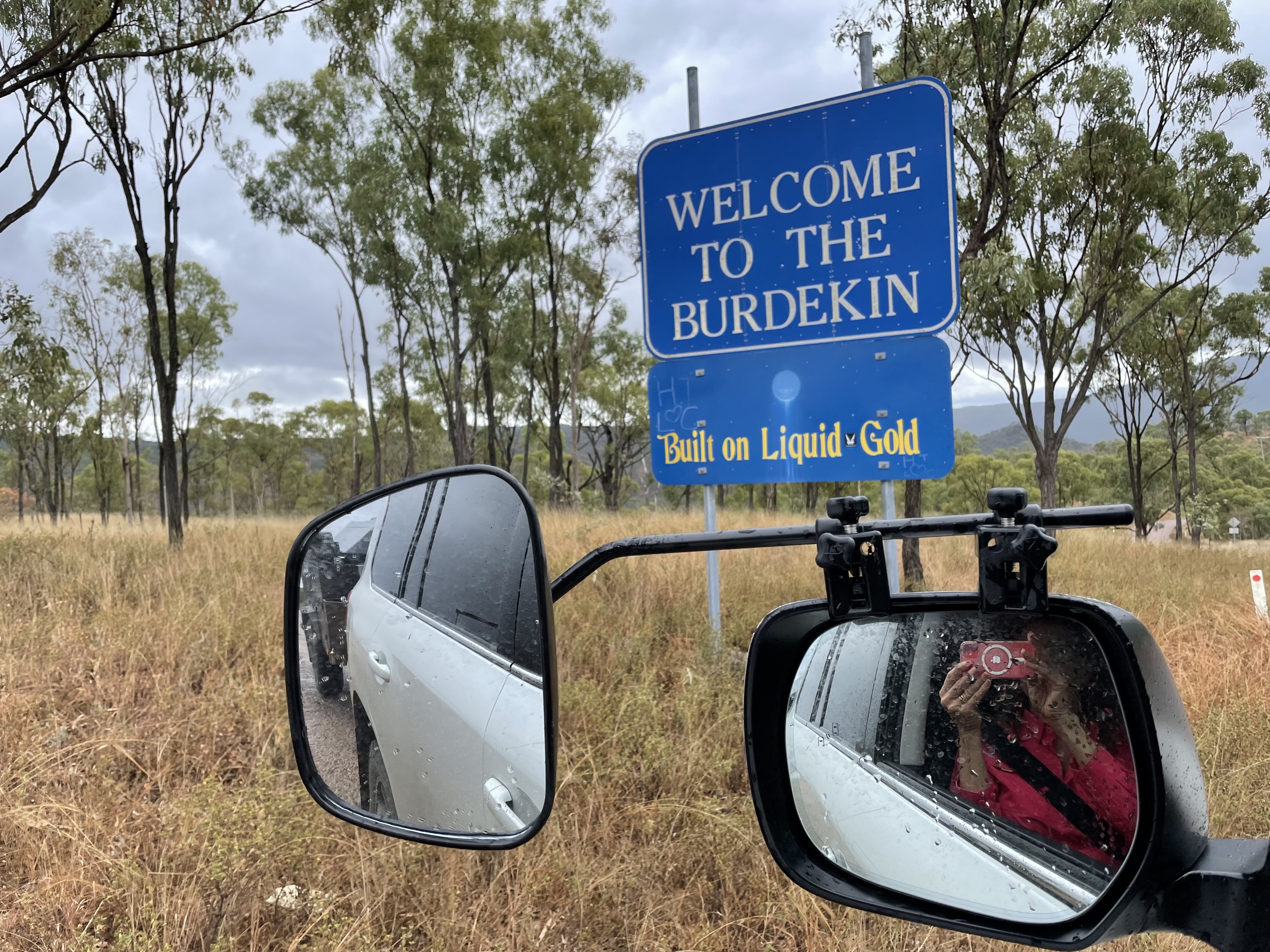
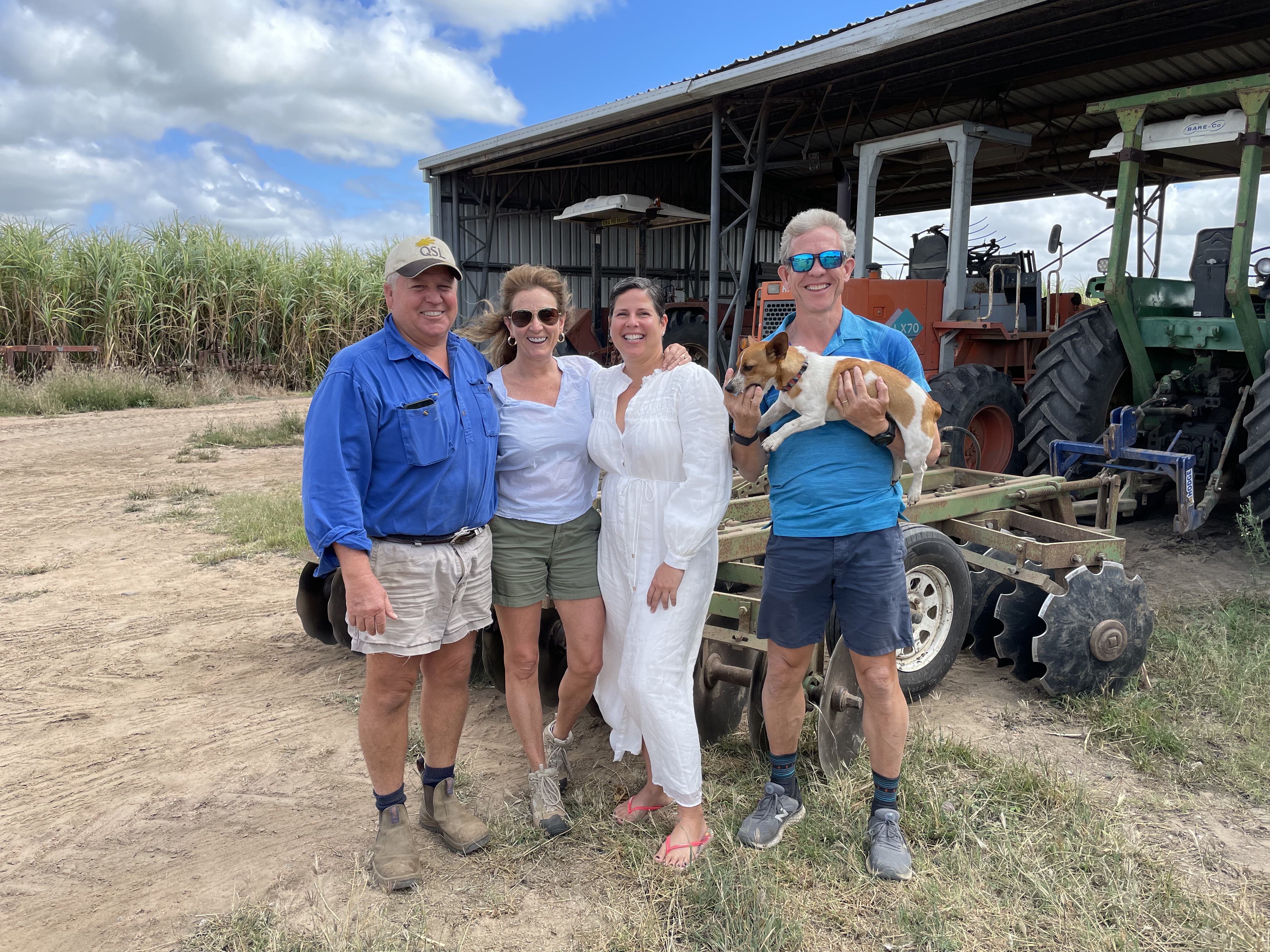
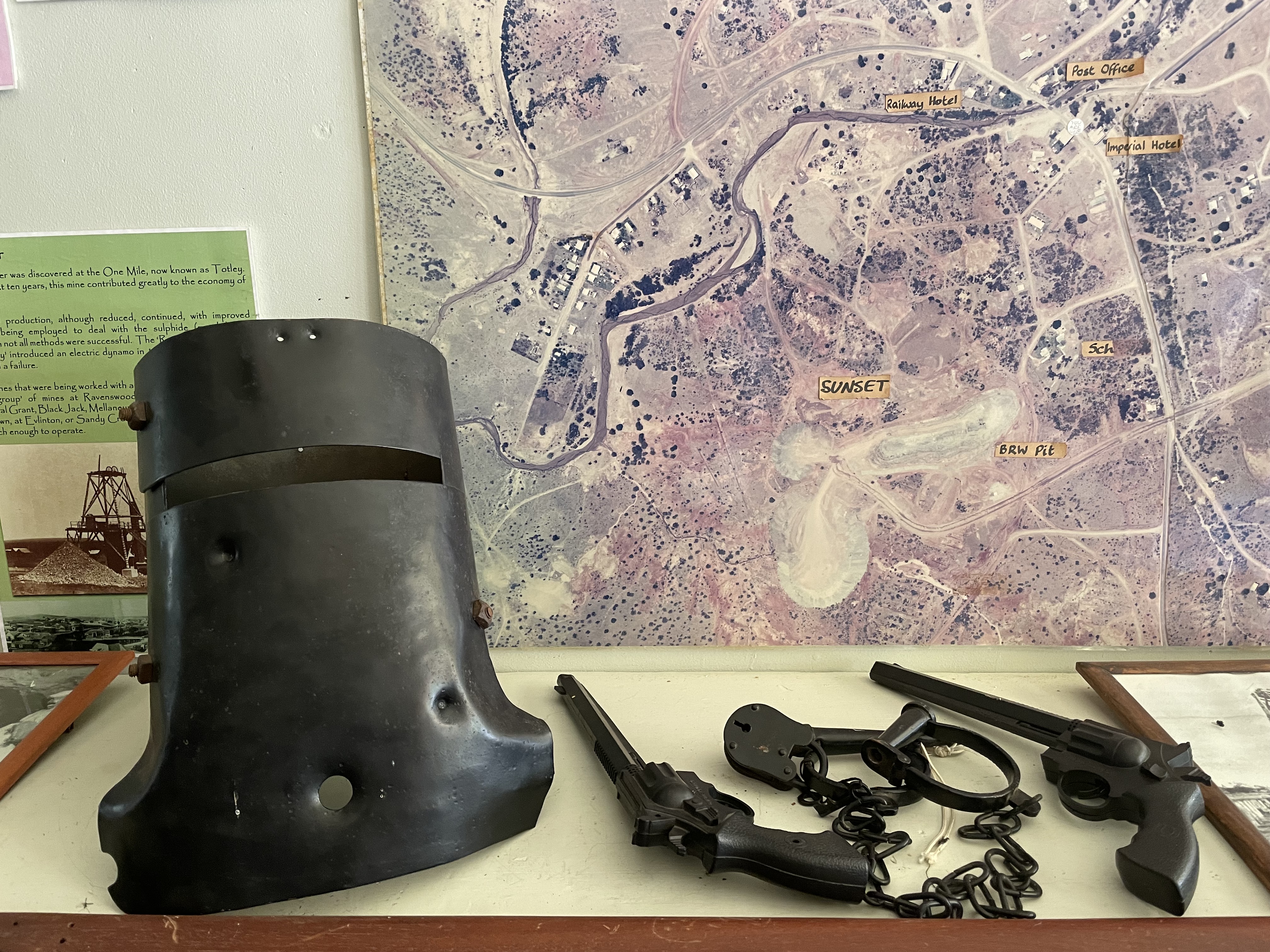
Day 12 It’s a relatively short drive from Greenvale to the Burdekin, where we are visiting friends on a cane farm, so we take the scenic route via Ravenswood. The town – 89km east of Charters Towers, is heritage-listed. Once a thriving gold mining community, it is now largely a tourist attraction. The two remaining pubs and other original buildings make Ravenswood an interesting detour off the main road to Townsville. Definitely worth a visit!
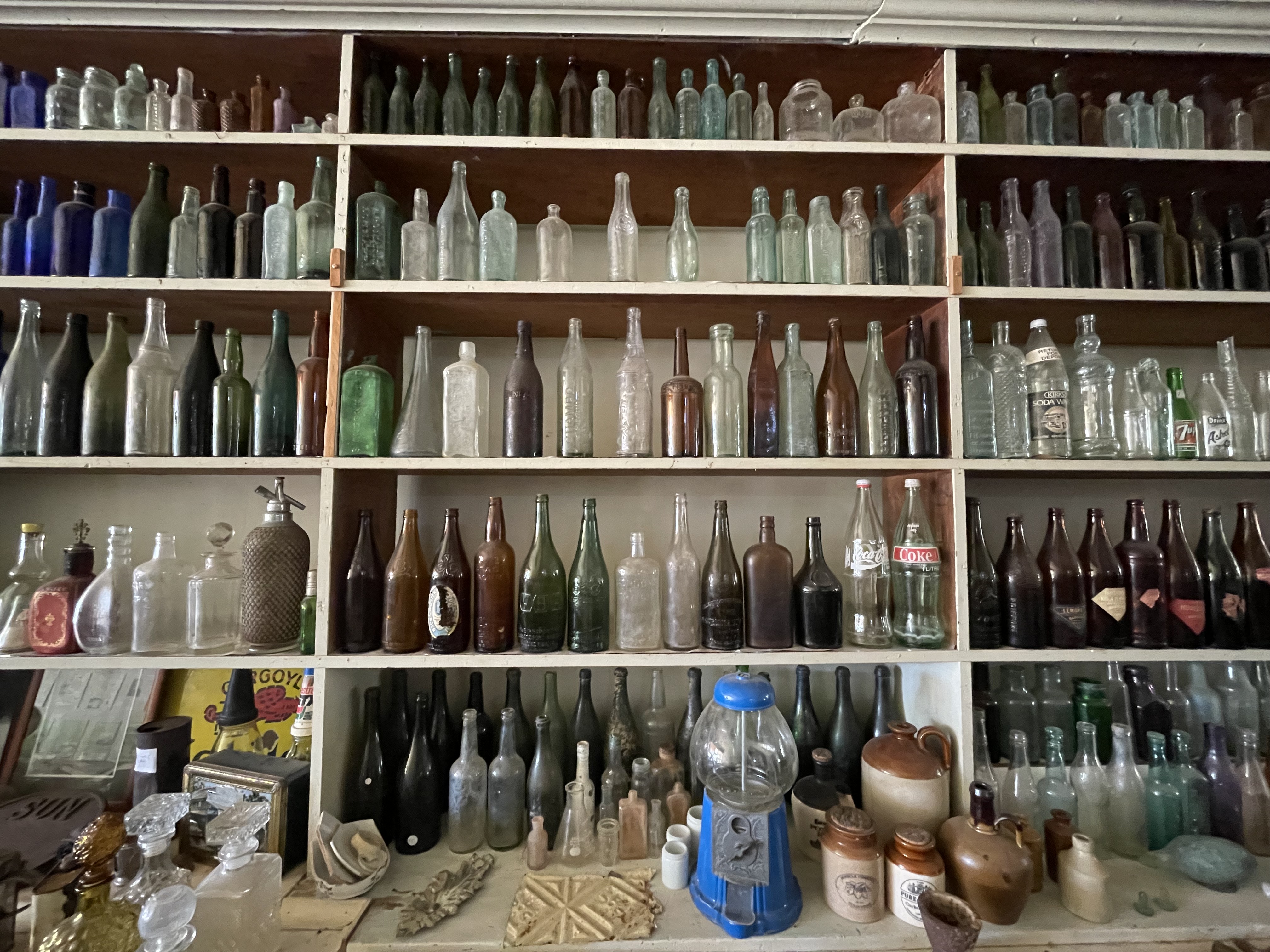
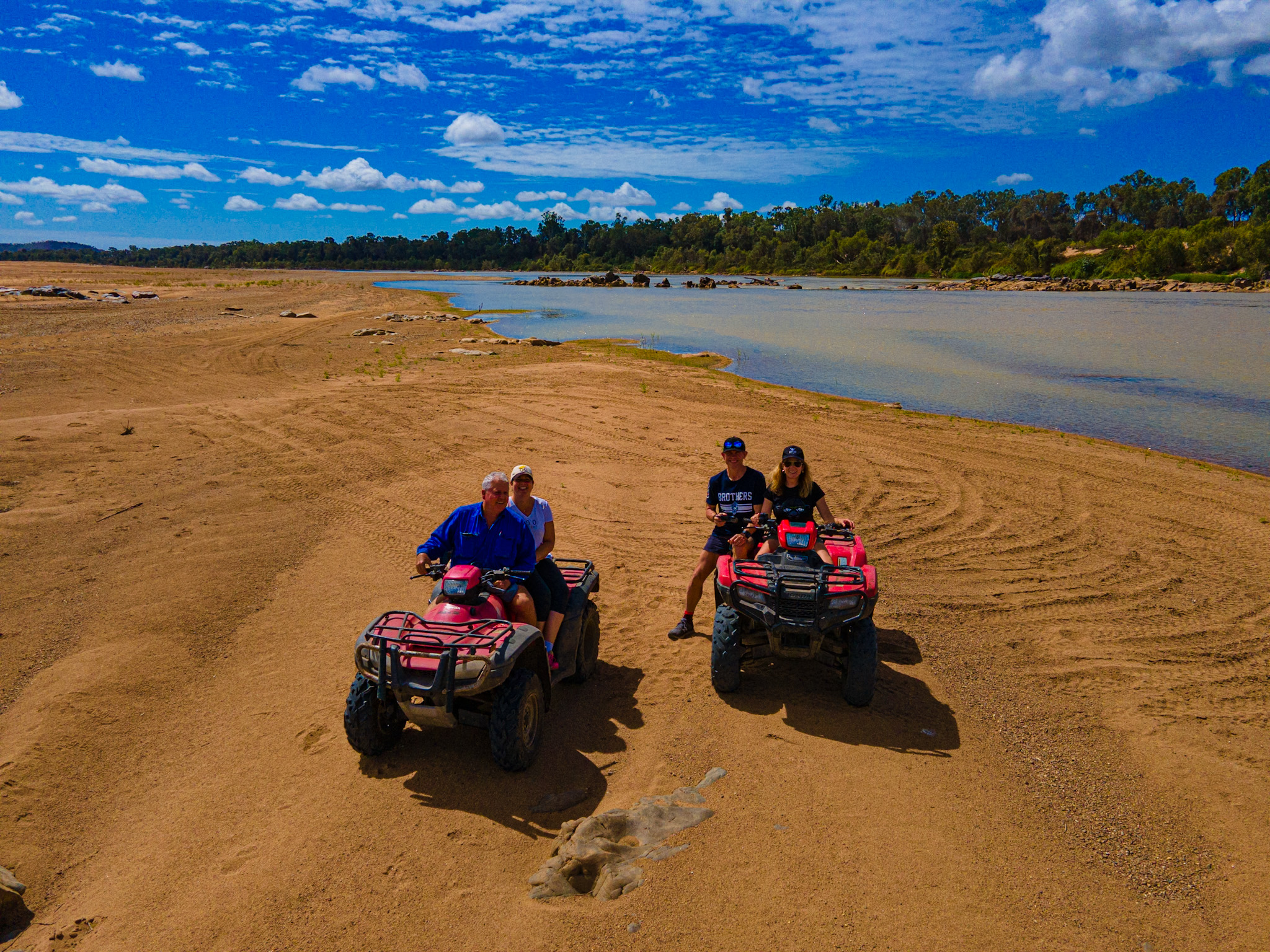
Top: Greenvale, Charters Towers, Ravenswood. Middle: Burdekin, Davies farm, Achilles. Bottom: Cane Crew and Apollo, Ravenswood Cafe museum pieces. Images: Julie FisonExploring the Burdekin River. Image: John Fison
Burdekin to Kimberley Station via Burdekin Falls Dam – 400km
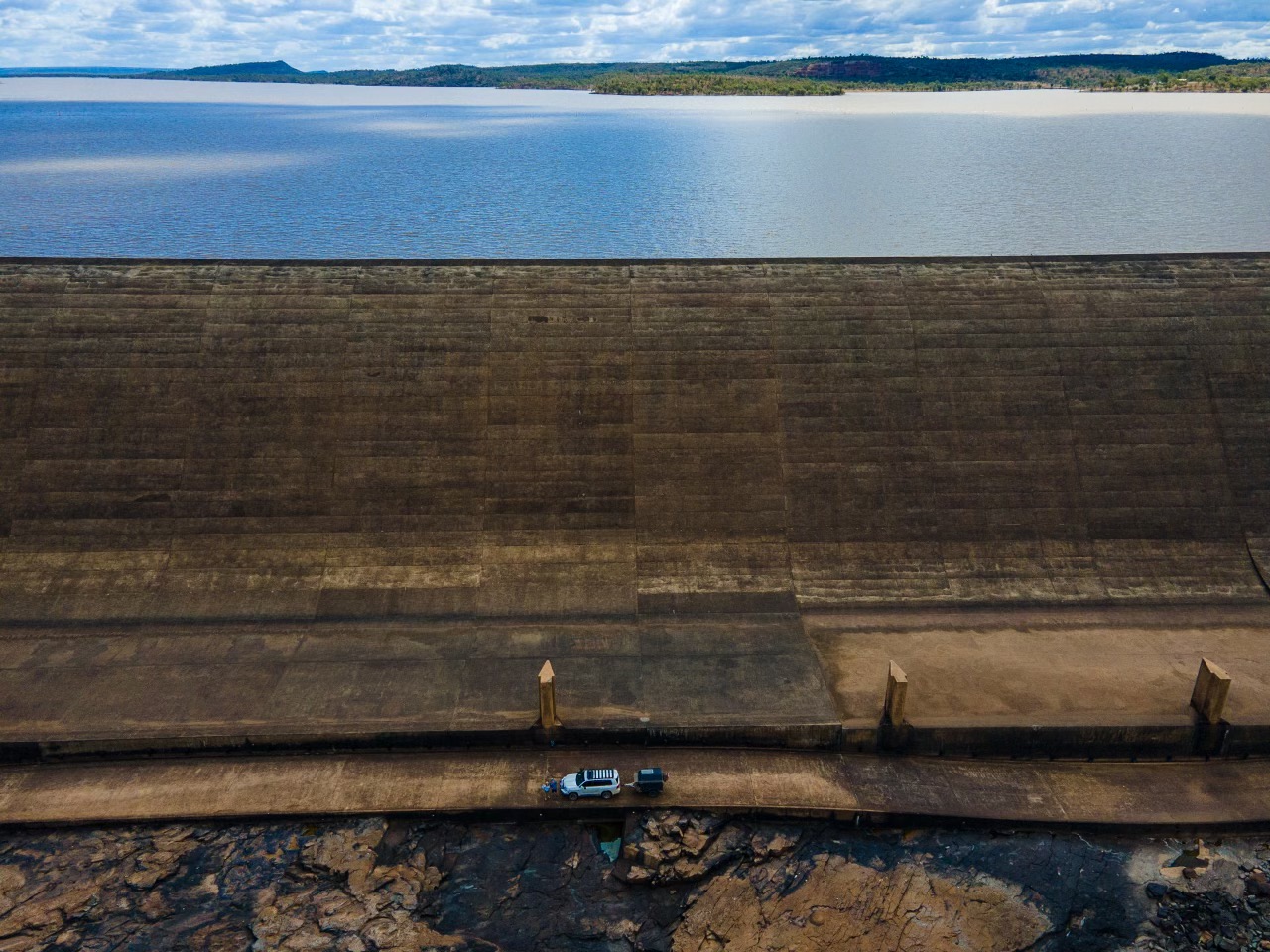
Burdekin Dam road only passable when the dam is not flooding! Image: John Fison
Day 14 After two days of Burdekin hospitality (luxurious beds, fresh seafood and Natasha’s dreamy creme caramel), we’re on the road again. This time heading to visit friends on a cattle station north of Morenbah, taking another scenic route – via the Burdekin Falls Dam Road. I’m a little sceptical. After so much driving, I’m happy to take the convention bitumen road, but the back route turns out to be quite a spectacle, especially if you have a drone on hand to see exactly where you are. That’s us, on the road below the dam. I feel like I’m in a James Bond movie!
Feeling a bit vulnerable down here. Image: John Fison
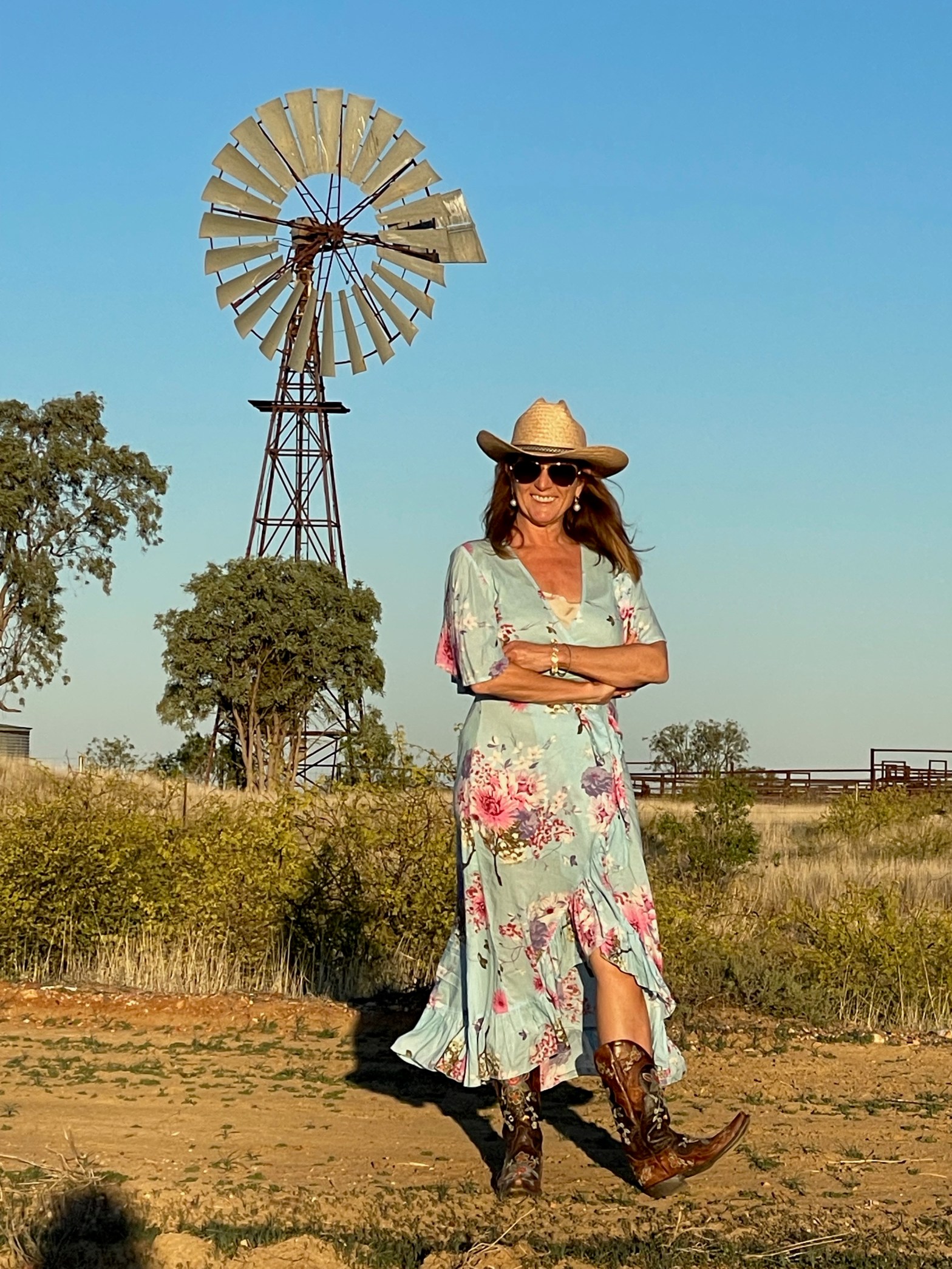
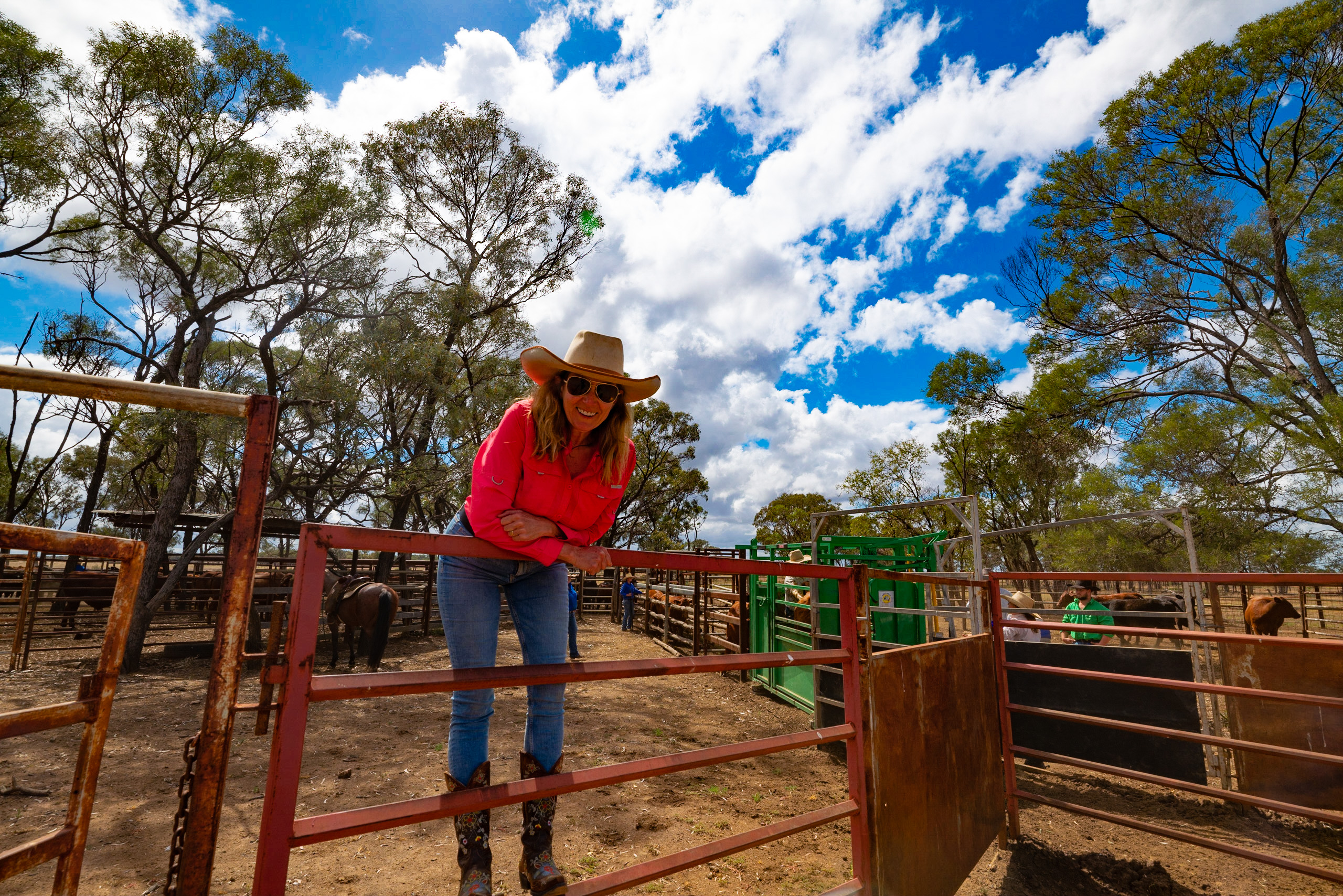
For the next three days we’re staying at Kimberley Station. This is the real deal. The home of fifth generation beef producers who are passionate about their cattle. We are lucky enough to get involved in the mustering, which means I get to wear my cowboy boots, a proper ‘fat’ hat and ride a horse, something I haven’t done since I was about 14! It’s an unforgettable weekend.
Finally getting a chance to put my cowboy boots to proper use at the home of Bespoke Beef, Kimberley Station (that’s me in the red). Image: John Fison
There’s beef on the menu three times a day at Kimberley Station, and after trying every type of cut, I can report that it’s all next level. If you’re a meat-lover, do yourself a favour and get hold of their beef. You can have it delivered to your door in the Brisbane area, through Bespoke Beef and elsewhere through Signature Beef. Highly recommended!
Mustering at Kimberley Station. Images: John Fison
The long road home – 1031km
McLeod’s Daughters moment at Kimberley. Image: John Fison
Day 17 After three amazing days at Kimberley, it’s time to head home. And we’ve got a long day ahead. The longest drive so far, and not something we planned, or one I would recommend. The day disappears in a blur of highway service stations, cattle road trains and country towns – Dysart, Middlemount, Dingo, Biloela, Monto, Gayndah and Gympie. Then its masks, traffic and the Bruce highway. Twelve hours after setting off from Kimberley we pull into our driveway in Brisbane. Travel is life-changing but it’s also good to be home!
Air guitars at sunset. Image: John Fison
Notes: We towed a Patriot Camper Trailer, which I thoroughly recommend. The trailer was easy to set up and pack up. It was also simple to lock up and leave when we were going out to a local pub for dinner. It handled the unsealed roads without any trouble and being super compact, was exceptionally easy to tow.
The mobile coverage is very patchy in outback Queensland, and it’s pretty much non existent unless you are with Telstra. Suggest a Testra dongle if you use a different service and download your podcasts, audio books etc before you leave home!
We took very little food with us, preferring to eat at local pubs and cafes, and stocking up where we needed to at the local butchers and independent stores.
One Punch takes a simple premise and turns it into a tight study of class and human nature – what we believe to be true about ourselves, and those we love, and who we really are. A crime is the pivot point for a sharp observation of human nature and blends compassion and humour in equal measure.
Meredith Jaffe – Author of The Tricky Art of Forgiveness
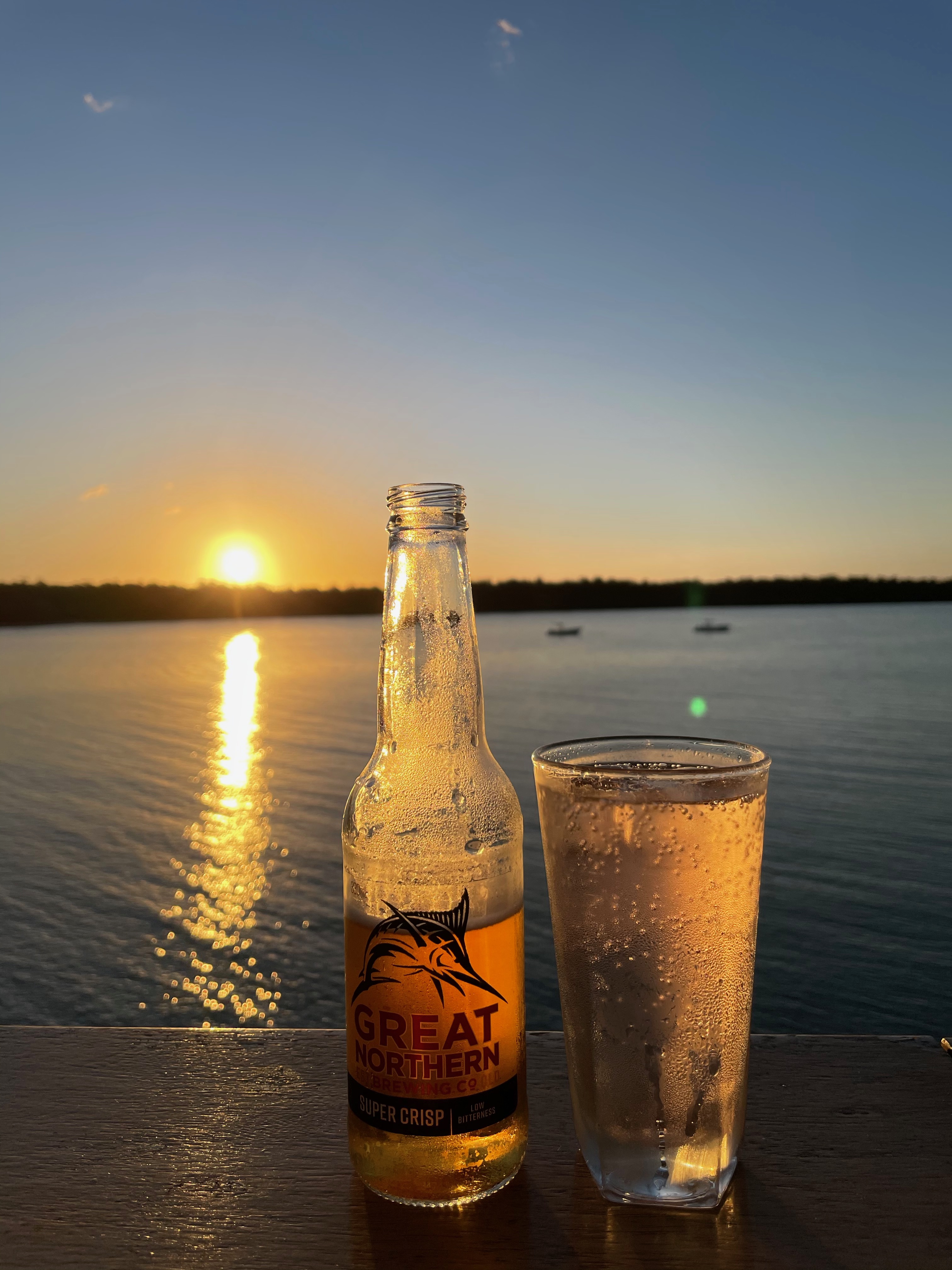
The sun is setting on another glorious day in the Northern Territory’s remote Cobourg Peninsula. I’m sipping a Green Ant gin and tonic, watching a flock of black cockatoos drifting gracefully across the sky, while Mr F quenches his thirst with a bottle of Great Northern. Guests are comparing notes on their latest adventures as we taste freshly-caught queenie, done sashimi style, when a ripple of excitement breaks the gentle patter of the afternoon. Out on the picture-perfect bay, a large crocodile is silently cruising towards the mangroves – distinctive nostrils and eyes visible above the waterline. Welcome to Seven Spirit Bay. An oasis of luxury in this remote corner of Australia, where the real NT is never far away.
Getting there
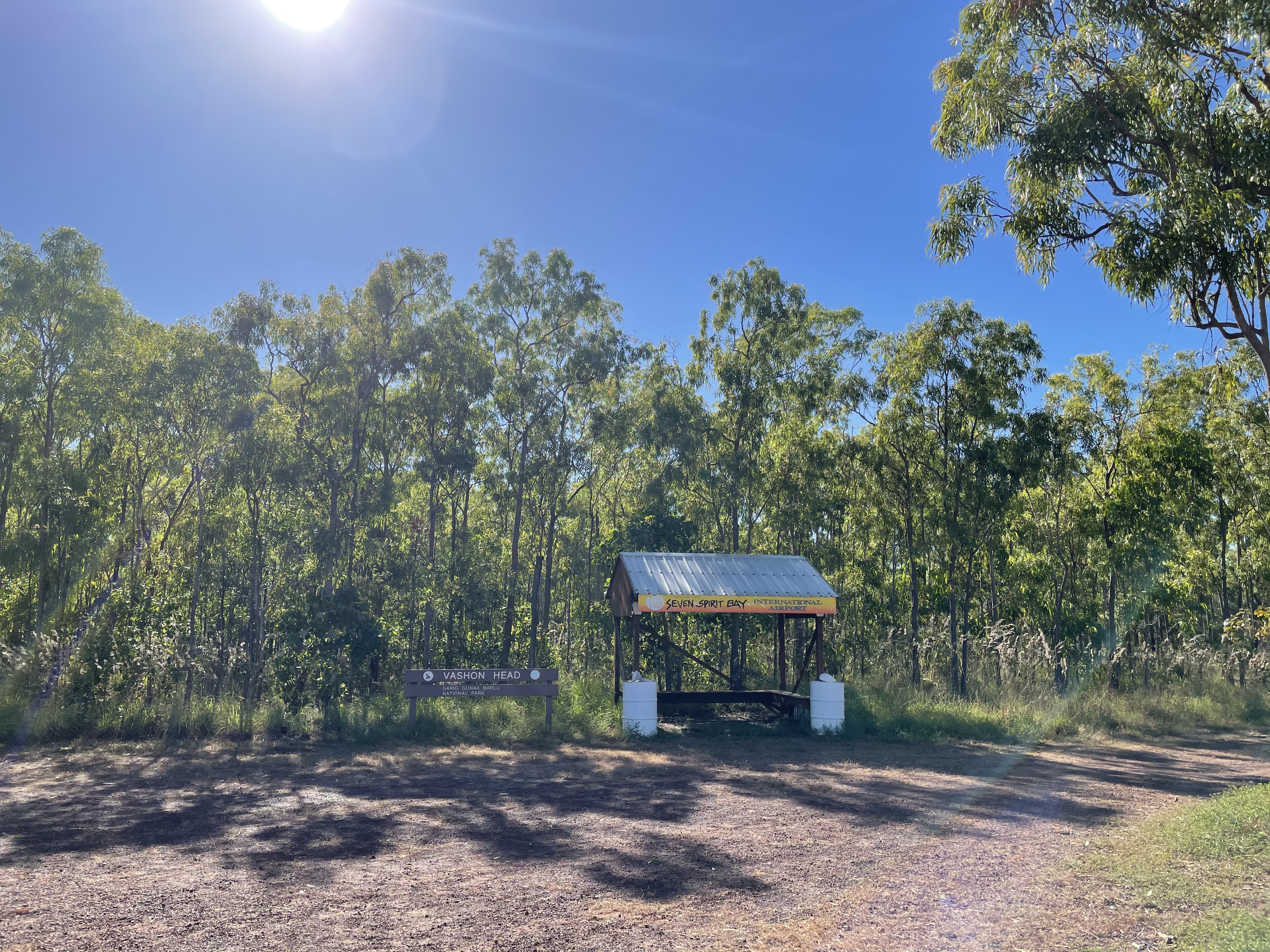
Seven Spirit Bay International Airport
The resort is 200 kilometres north east of Darwin in the Garig Gunak Barlu National Park, accessible only by air. We arrive in an eight-seater plane from Darwin (our luggage paired down to the mandatory 15 kg). Other guests have made their way in by private plane or helicopter. As one does.
First impressions
Above: Gourmet lunch, Seven Spirit Bay pool, wetlands. Images: Julie Fison. Below: Seven Spirit Bay from above. Image: John Fison
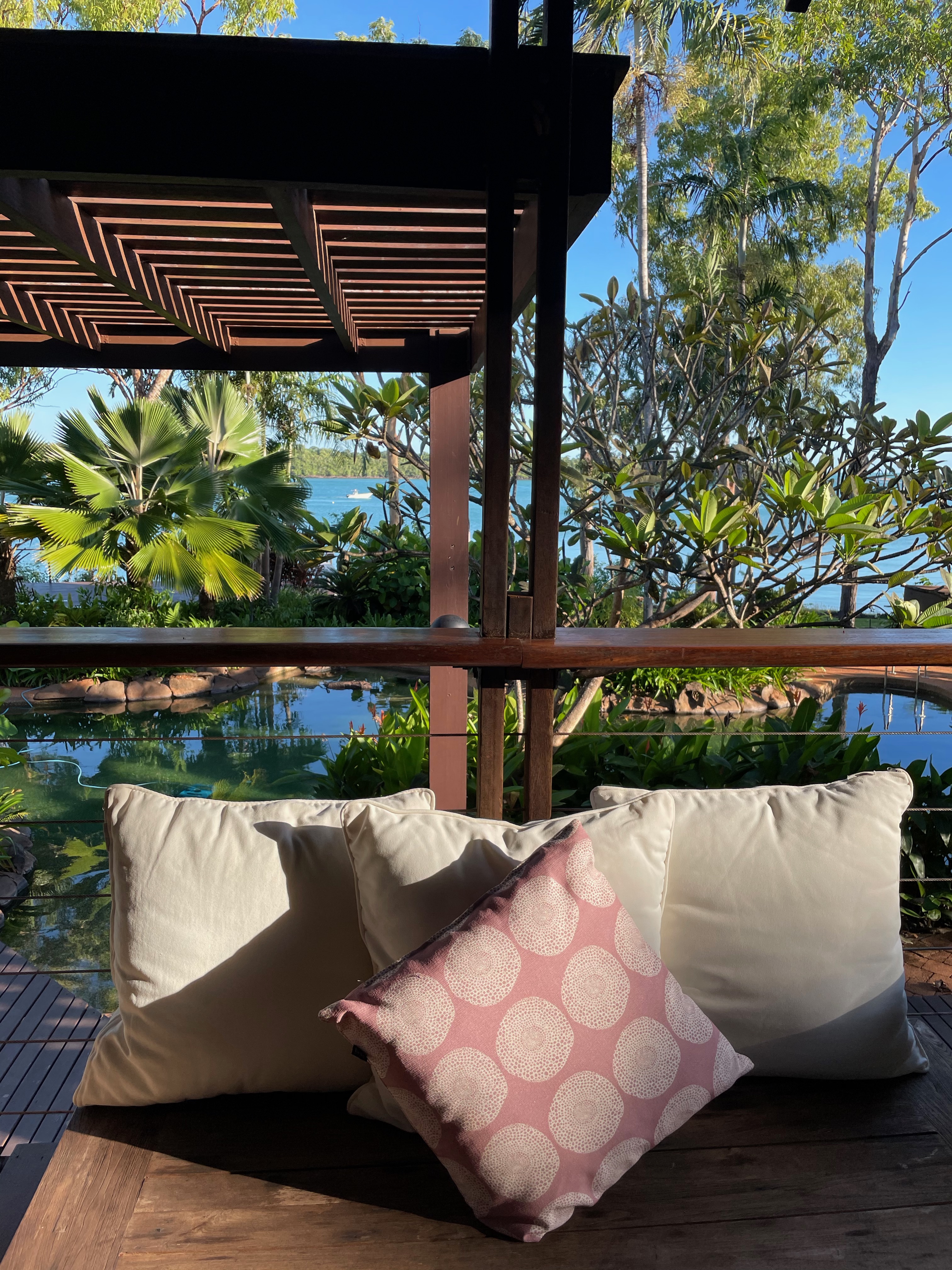
Wow! The lodge is set on an embankment, overlooking the still blue waters of Coral Bay (Seven Spirit Bay refers to the seasons of the indigenous calendar) and is surrounded by well-tended tropical gardens. Beyond that – it’s dense bushland. It really is remote!
Julie Fison’s One Punch takes a simple premise and turns it into a tight study of class and human nature – what we believe to be true about ourselves, and those we love, and who we really are. A crime is the pivot point for a sharp observation of human nature and blends compassion and humour in equal measure.
Meredith Jaffe, The Tricky Art of Forgiveness
In his welcome briefing, the resort manager asks us to be wary of snakes when walking to and from our villas. We’re also asked to stay away from the beach because there are crocodiles. Obviously, there’s no swimming, except in the pool. This is the Northern Territory, people. There are dangerous critters out there. The water is sooo blue and it’s sooo hot, but that’s just too bad. Safety first.
Accommodation
The villas are dotted through the bushland around the central lodge – stylishly rustic with air conditioning and mozzie screens. Ours overlooks Coral Bay, an ideal spot for enjoying sunset. It’s a short stroll to the lodge for meals, but we still encounter plenty of wildlife en route. One evening, there’s a Night Tiger, otherwise known as a brown tree snake, on the path outside our villa (we were warned). Another evening, it’s a Children’s python (named after the British zoologist, John Children). Neither of these snakes are terribly venomous, but I didn’t know that at the time! They certainly gave me a nasty fright and ensured that I carried at torch every night on the way home from dinner.
Stuff to do
Barra fishing with Alex. Image: Julie Fison
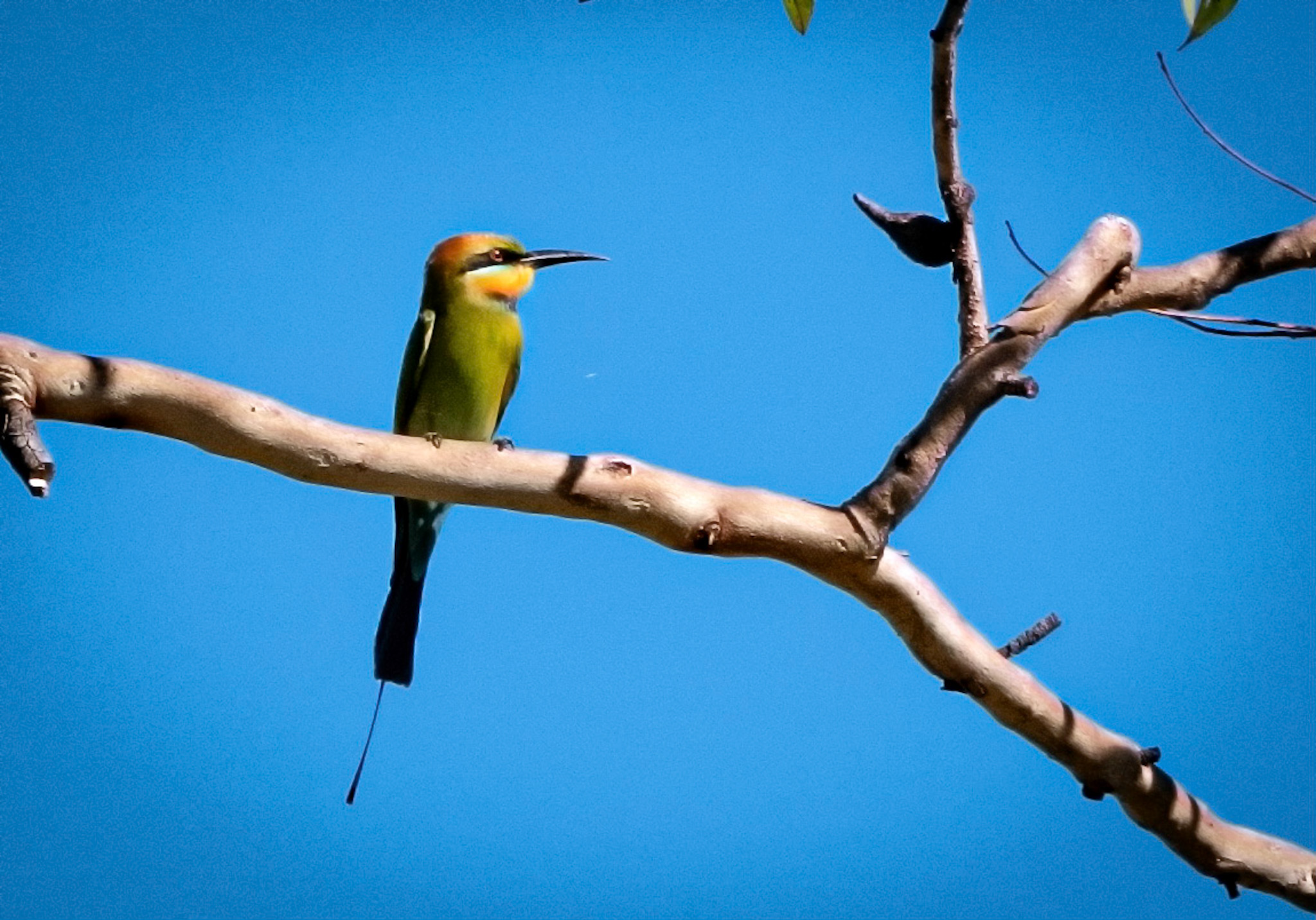
The lodge offers a program of activities including safari drives into the bushland, where you might spot a beaded bee-eater, buffalo or banteng (wild Indonesian cattle). There’s also an excursion to the nearby colonial settlement of Victoria, which was built as a military outpost in 1838 to check the aspirations of rival imperialists. There were also hopes the tiny village would become a Singapore-style trading hub, but the miserable conditions and isolation led to the settlement being abandonned to the sea cucumber fishermen and the buffalo hunters, 11 years later.
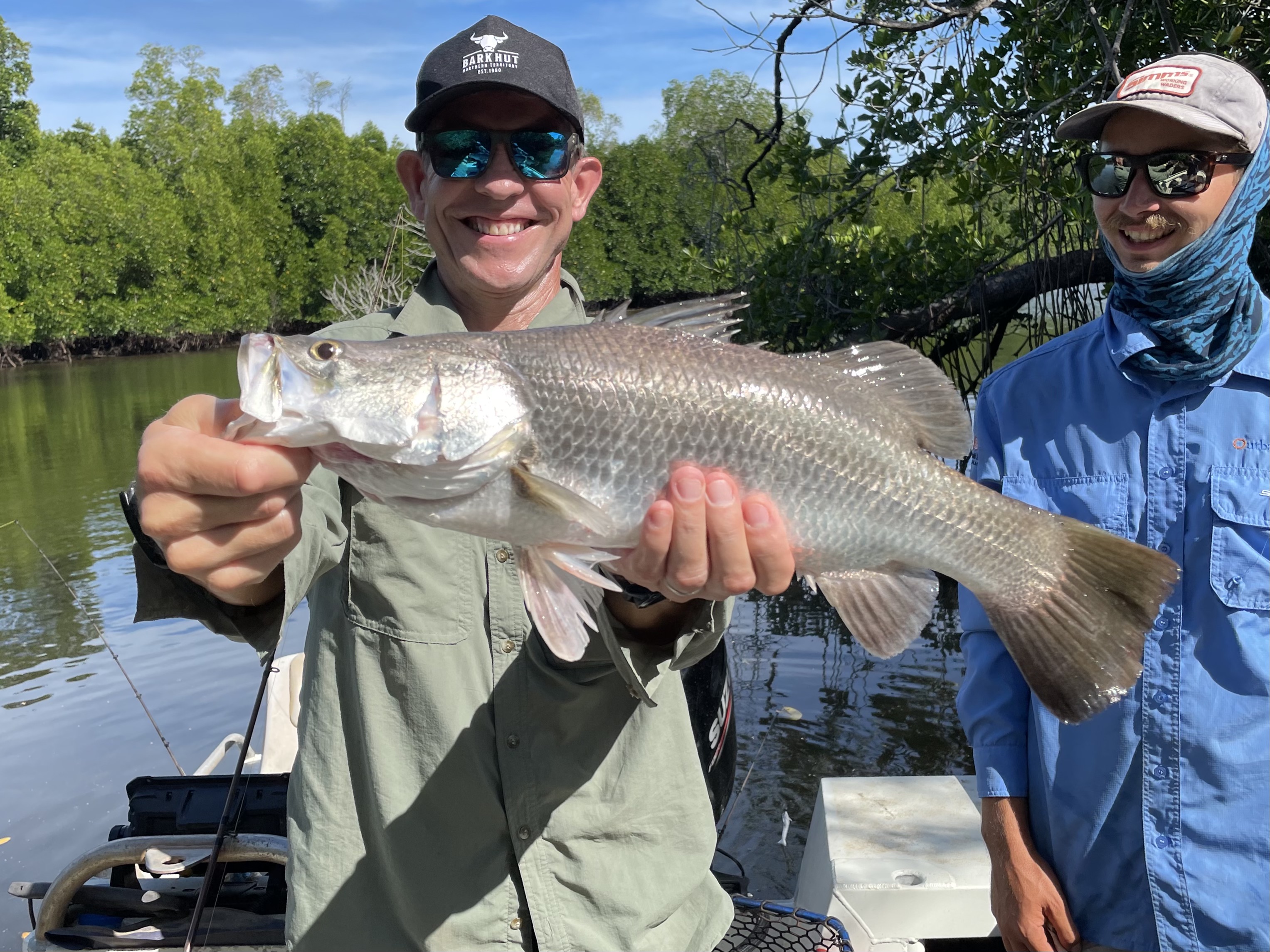
Fishing is probably the most popular pursuit in this part of Australia. The waters here teem with giant jewfish, king fish and queenies, while the estuaries are full of much-sought after barramundi. Chances are, you’ll catch more than a snag if you drop your line in. Even better – going out on a guided fishing trip means you’ve got someone who actually knows where the fish are lurking and can do all the fussing around with lines, lures and other tricky stuff. Everyone manages to land a fish on the afternoon that we go ocean fishing, but nothing impressive enough to keep for the chef. Looks like it will be duck confit for dinner.
Looking across Coral Bay. Image: John Fison
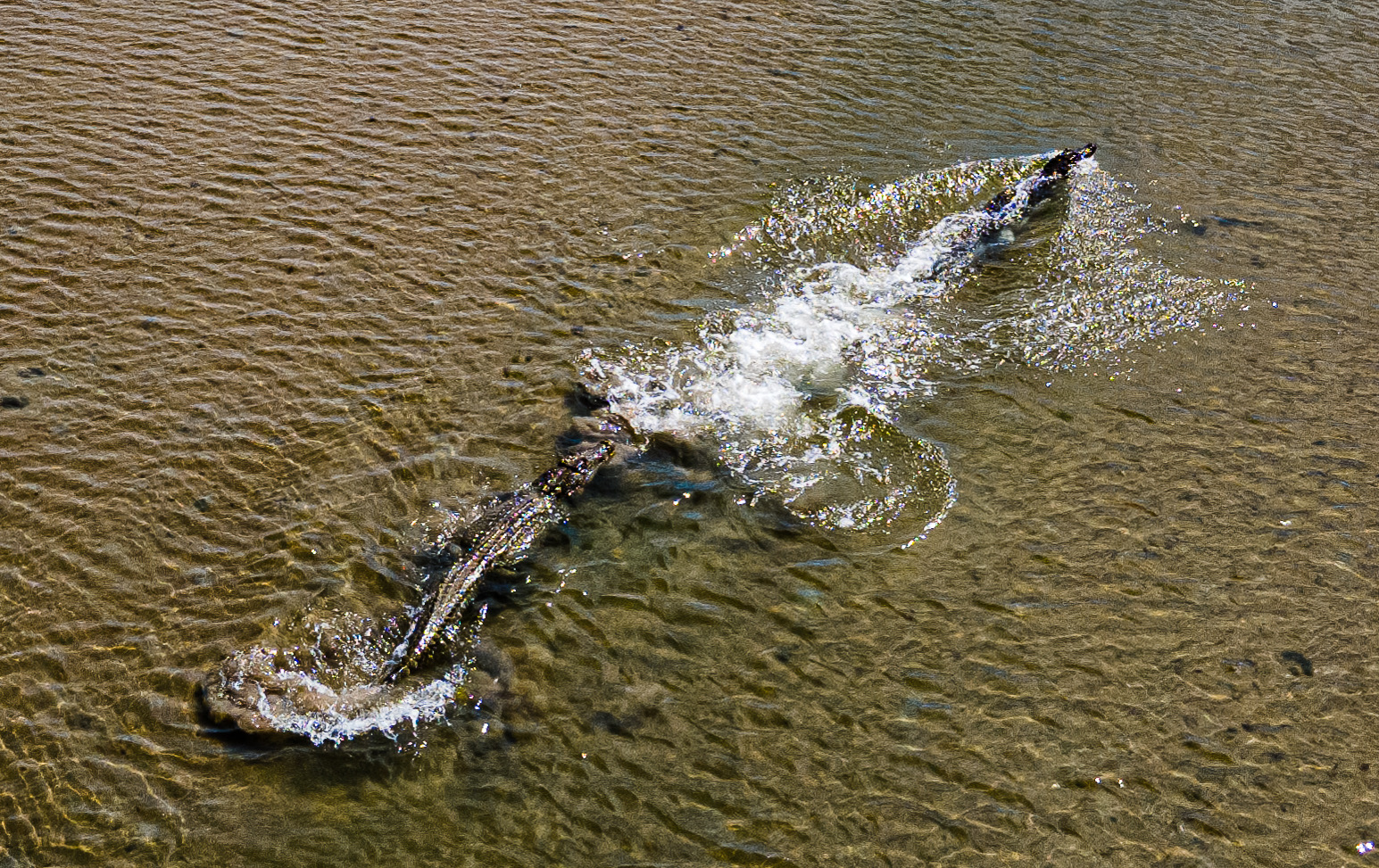
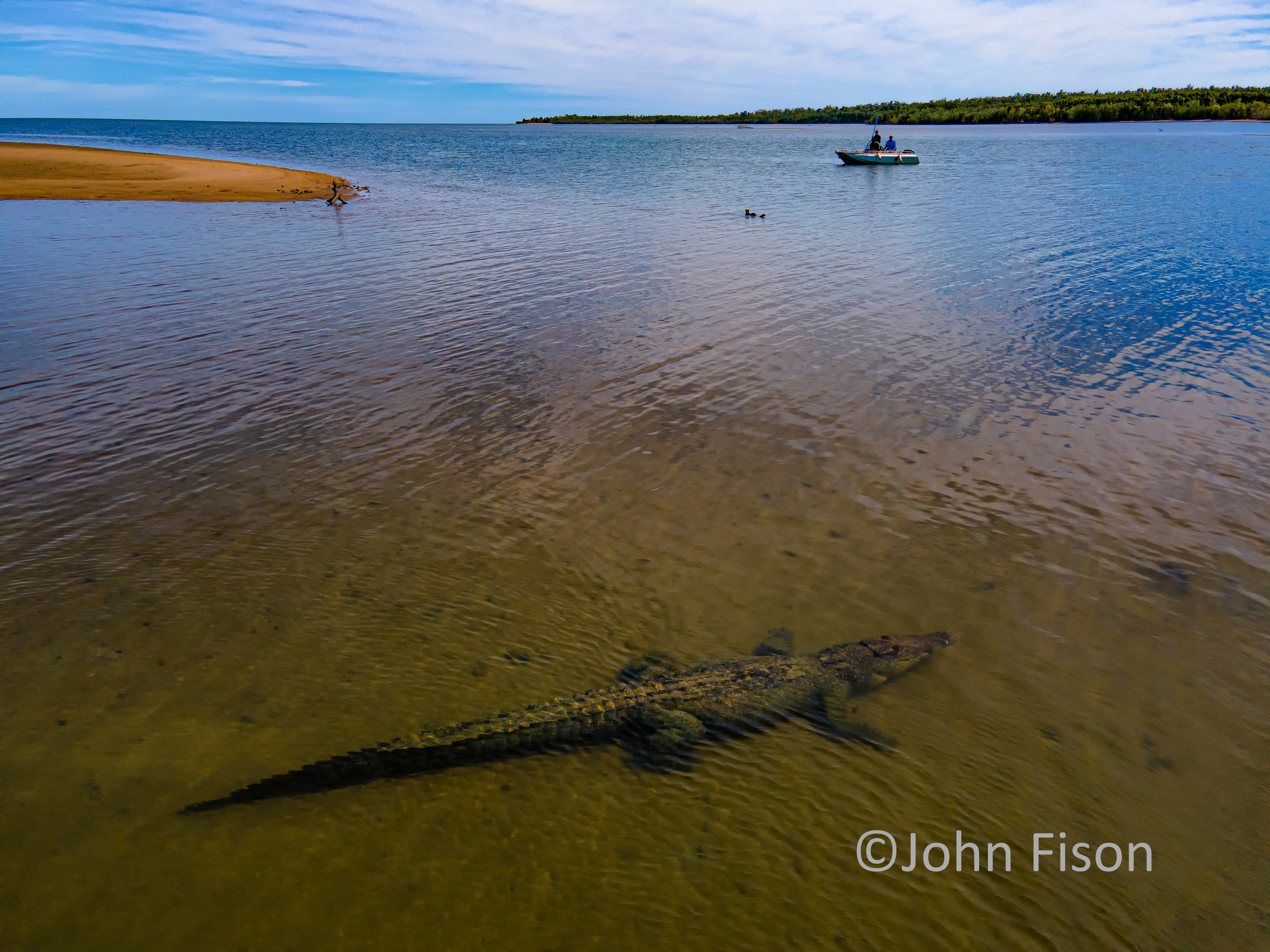
We also try our hand at estuary fishing in nearby Trepang Creek. Once again, I enjoy the luxury of having a guide to sort out lines and lures, and a radar to find fish. Under Alex’s expert tutelage I pull in three mangrove jacks as we potter towards the mouth of the creek – a world record as far as I’m concerned. Mr F lands a barra – that looks enormous, but is deemed undersized and returned to the creek. Enough fish caught, we motor to the mouth of the creek, where our guide has previously spotted a four metre croc. Sure enough, it’s lazing in the shallow water. But the big surprise – it’s not alone. Another croc, possibly twice the size, is nearby. While the boat idles at a safe distance Mr F scrambles the drone for a better look. He’s just got the device into position when the bigger croc launches itself out of the water, driving the younger croc towards us.
Croc scuffle in Trepang Creek. Image: John FisonA croc keeps an eye on us. Image: John Fison
We make a hasty retreat, and soon enough we’re back in the sanctuary of the lodge, tucking into a smoked chicken salad with quinoa and toasted wattle seed, sharing tales of our croc encounter with fellow guests, but my heart is still racing. We might be staying in a stylish resort, but we are most definitely in the real NT here!
Surprises
Seven Spirit Bay Wilderness Lodge
Oh, did I mention there’s no WIFI or mobile phone coverage. It says so on the website, but I must have missed that page. My fingers twitched when the manager revealed we’d be completely off the grid for four days. Mr F went very quiet when he realised there was no way to watch the rugby final. No WIFI at all? A digital detox.It’s what we’re all here for, right? No, but OK.
I hadn’t told the kids we were going to be off the grid. They probably didn’t even know where we were. Something might happen! As it turned out nothing happened. I was allowed to use the satellite phone to call my Mum for mothers’ day, and when we did contact the kids, they hadn’t even noticed we were missing. And I have to admit it was liberating to be incommunicado for a few days.
Lasting impressions
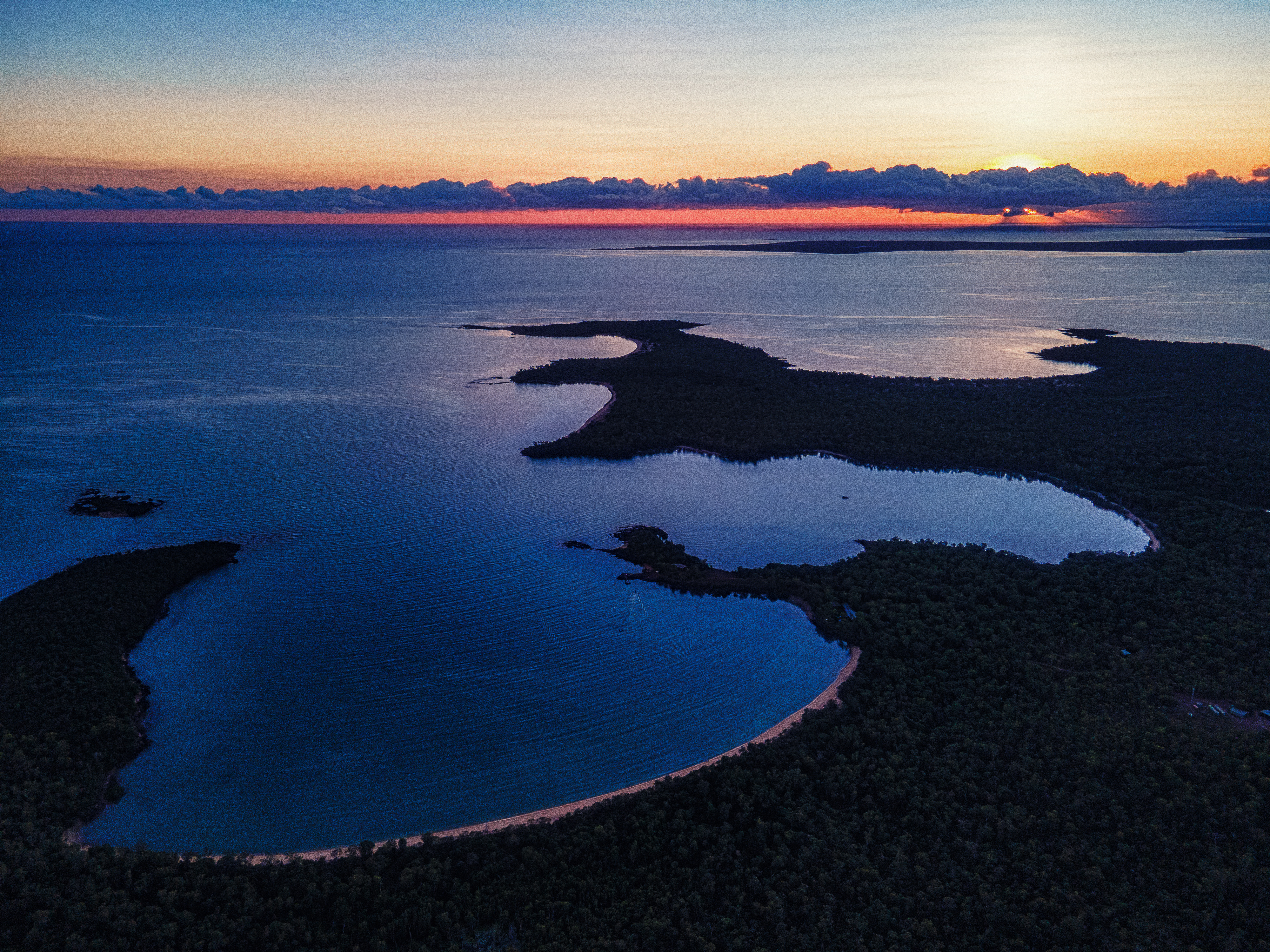
Coral Bay and beyond. Image: John Fison
The beautiful tranquillity, the stagging night sky, the crocodiles, the enthusiastic staff (I’m tucking their stories away for a future novel) and the friendly guests that we shared this moment in time with.
Finally
Pack sturdy walking shoes and long pants for bush walks – everything spikes or bites around here. Long sleeves and a good hat are essential for fishing.
It’s pretty clear when your chef can name the fisherman who has caught your dinner on the outer reef, that you’re in for a superb meal. And it’s obvious when your experienced snorkelling guide promises to take you to her favourite coral garden, it’s going to be pretty magical. In fact, you know as soon as the helicopter touches down on Orpheus Island, that you’re in for a very special experience. Whether you’re exploring by kayak, taking a picnic and heading out in a dinghy, or relaxing by the infinity pool with a glass of bubbles in hand, this tiny piece of paradise off the north Queensland coast will make you want to stay forever.
Getting there
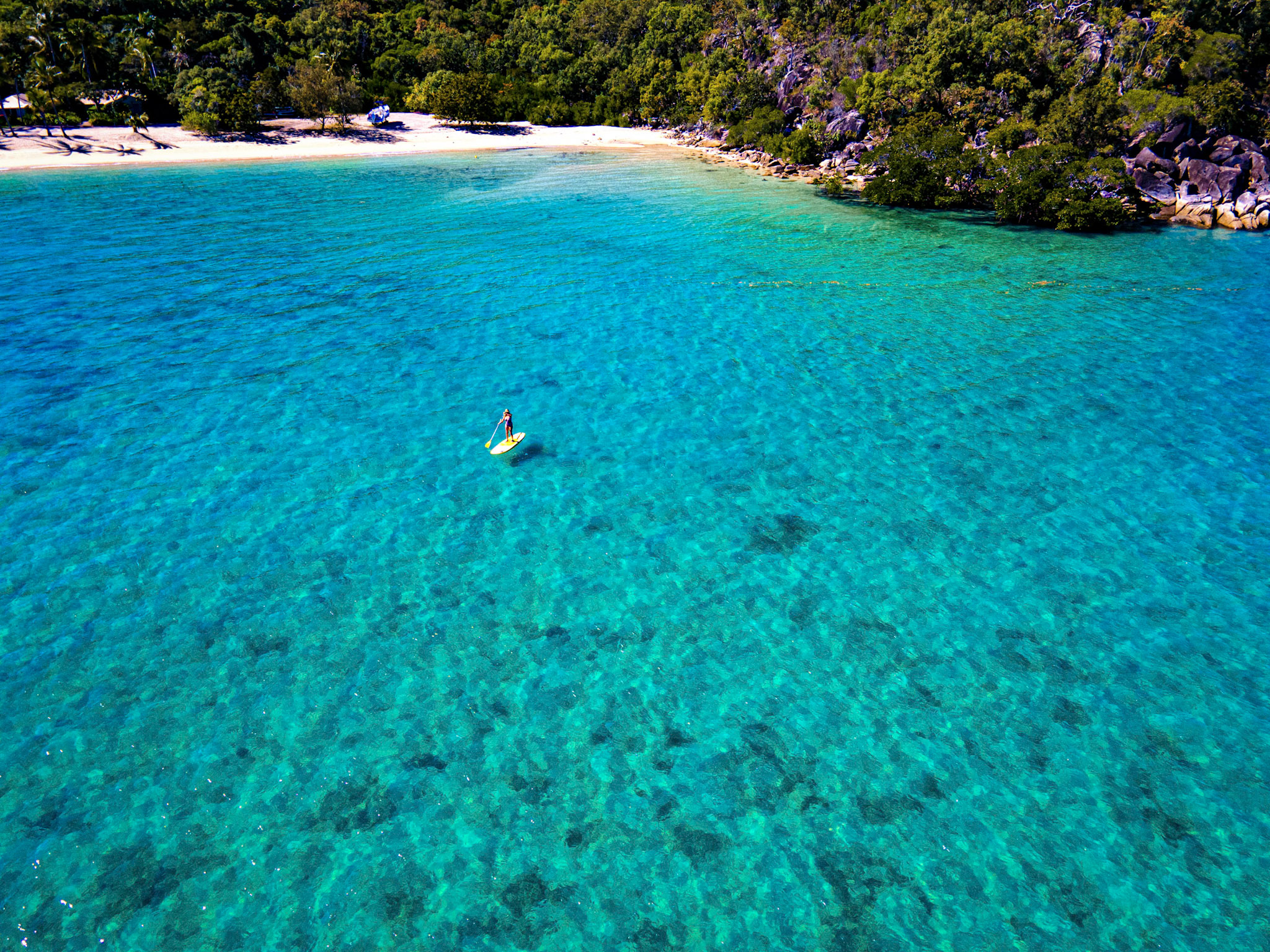
Paddle boarding on Orpheus Island. Image: John Fison
Orpheus Island is off the coast of North Queensland, accessible only by helicopter or private boat. The helicopter from Townsville will set you back $700 per person.
First impressions
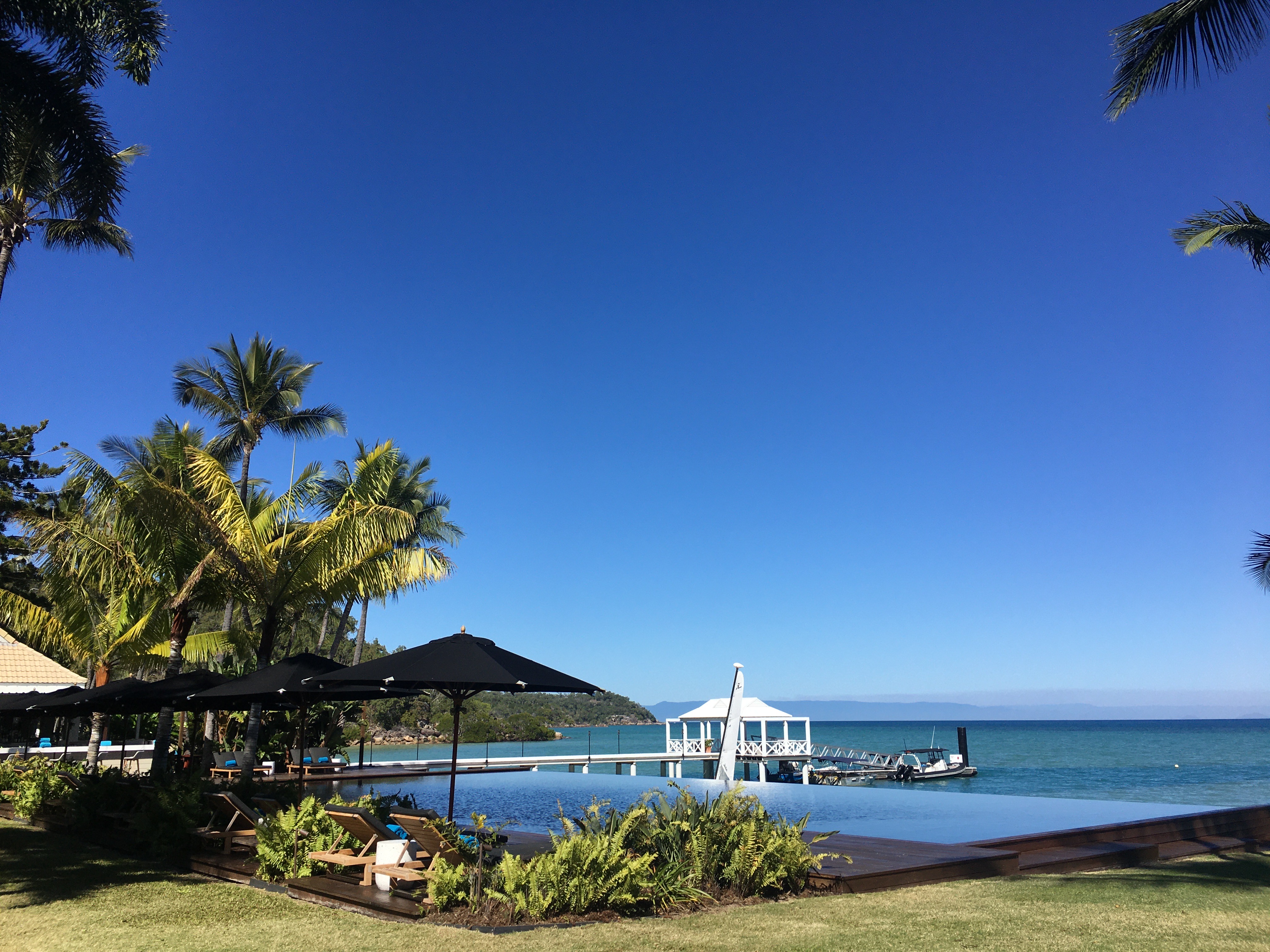
Orpheus infinity pool and bar. Image: Julie Fison
The wow factor starts from the moment you board the helicopter in Townsville and glide over the Palm group, looking out for manta ray among the coral-fringed islands. The resort itself, discreetly tucked into the coastline of Orpheus Island is Instaworthy from every angle. It loses its gloss a little when the tide goes out, but it more than makes up for it when the bay is glistening and green, a haven for turtles and lemon sharks.
Accommodation
View from our villa. Image: Julie Fison
The Island accommodates just 28 guests, in laid-back costal luxe rooms and villas, spread out along the palm-fringed beach. The mini bar is packed with complimentary drinks and healthy snacks.
Stuff to do
Exploring the Clam Gardens. Orpheus Island. Image: John Fison
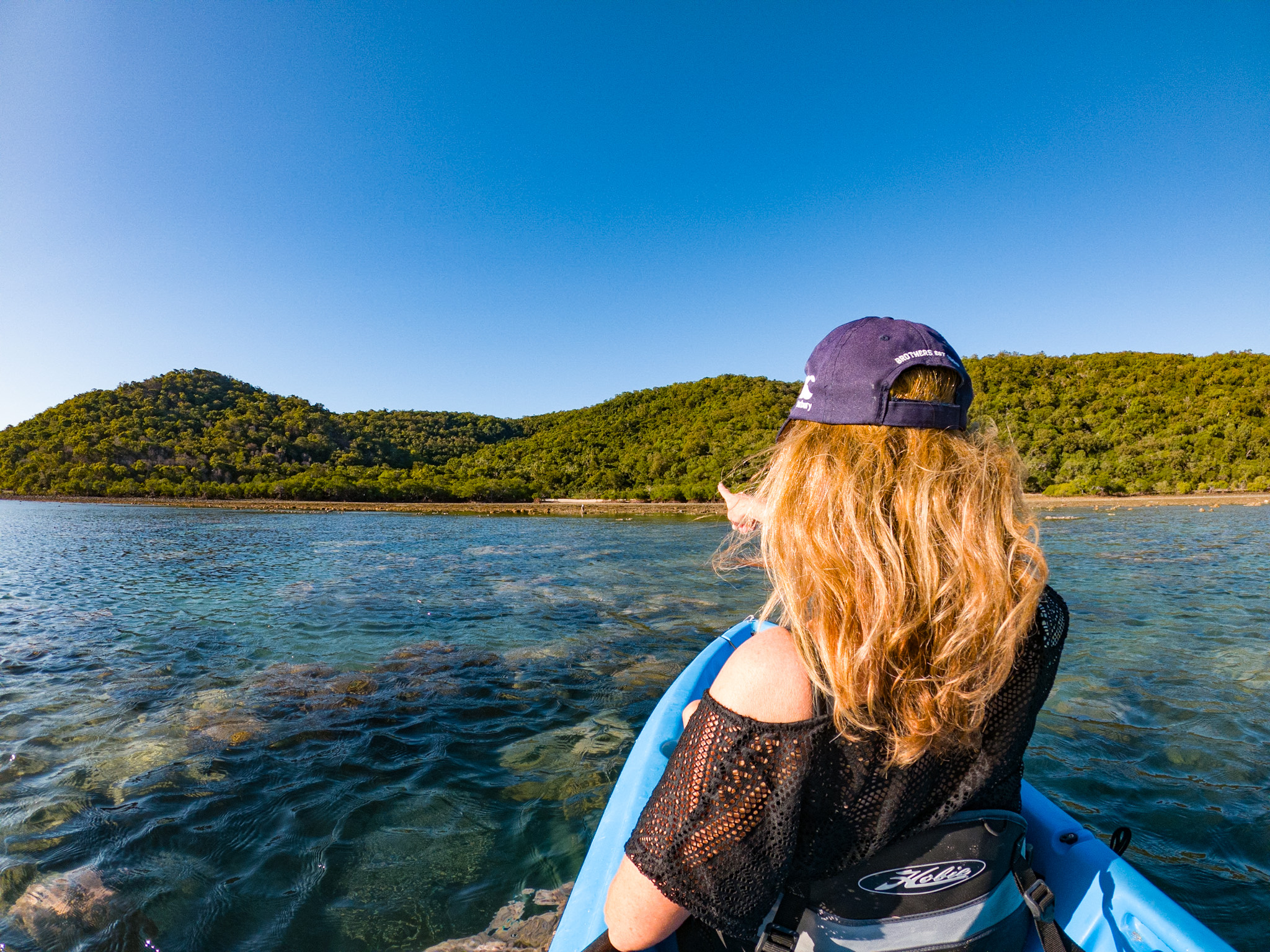
Each day several different activities are offered to guests, ranging from snorkelling at one of the spectacular local reefs, to yoga and beer tasting. If it’s not too windy, there’s also the option to take a picnic and a dinghy, and explore on your own. If you want to stay closer to the resort, you can take out a paddle board and look for turtles, or kayak to the giant clam garden in the neighbouring bay. You could also just sit around the infinity pool and enjoy the all-inclusive hospitality!
The highlight for me is a snorkelling trip to Curacao Island, a 20- minute boat ride away. We’re on the Barrier Reef here, so stunning coral gardens are never far away, but these really are special. Huge plate and staghorn coral, parrot fish, turtles and schools of brightly coloured tropical fish. The resort fits you for a mask, fins and wetsuit before you go out. This might be the tropics but it can get chilly in the water when you’re snorkelling for 45 minutes.
Surprises
Sunset cruise. Orpheus Island. Image: John Fison
Everything is first class – the meals, the rooms, the excursions. This really is an amazing place to visit. Three days is not enough!
Lasting impressions
Orpheus Island at sunset: Image: John Fison
Flying back to Townsville over the reef, I’m reminded just how lucky I am to live in Queensland, and to have all of this on our doorstep.
Mission Beach, two hours south of Cairns, is the paradise you thought you’d lost. An epic stretch of palm-fringed coastline, beach-front cottages, a handful of laid-back cafés and restaurants, rainforest walks, mesmerising sunsets and the chance to spot a cassowary. Pure tropical bliss.
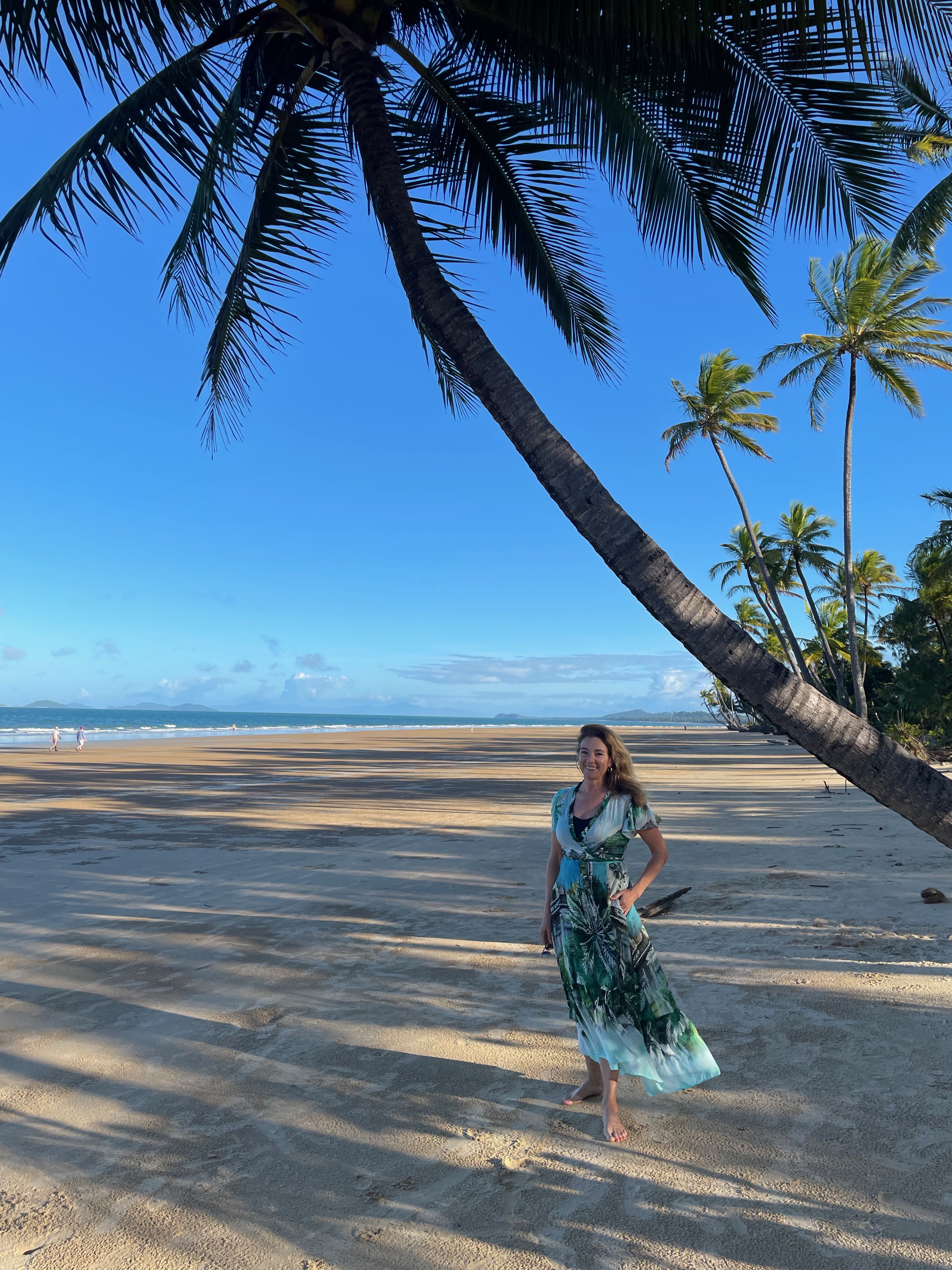
Just casually standing under a palm tree on Mission Beach. Image: John Fison
Mission Beach is made up of four villages – South Mission, Wongaling Beach, Mission Beach and Bingal Bay. Porter Promenade in the heart of Mission Beach is the hub for restaurants, cafés and a handful of shops. You’ll find a Woolworths at Wongaling Beach and accommodation spread along the length of the unspoilt coastline.
Walk the beach at sunriseor try yoga
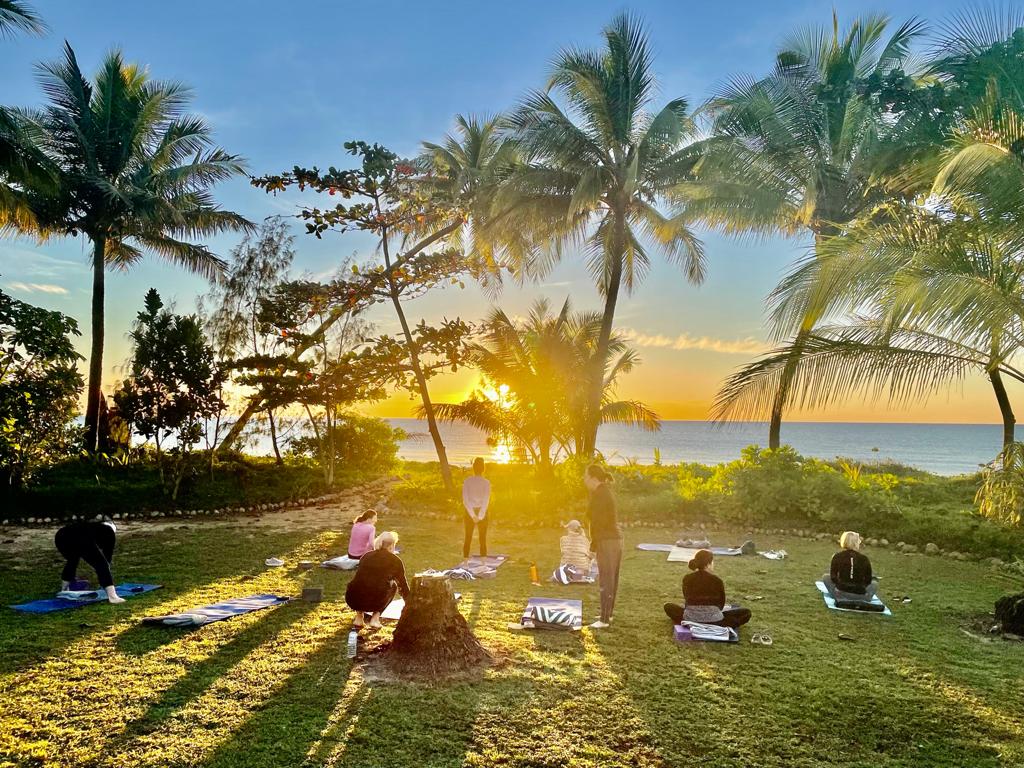
Do yourself a favour and get out of bed for sunrise. Strolling along the beach as the sun breaks through the horizon – the sky all kinds of colours and the islands just silhouettes in the distance – is absolutely magical. Add a yoga session, and you’ll be set for the day. Try Viv’s relaxing yoga or check out one of the Mission Beach studios.
Viv’s yoga session at Wongalinga Apartments. Image: Melinda Russell
Tuck into an all-day breakfast
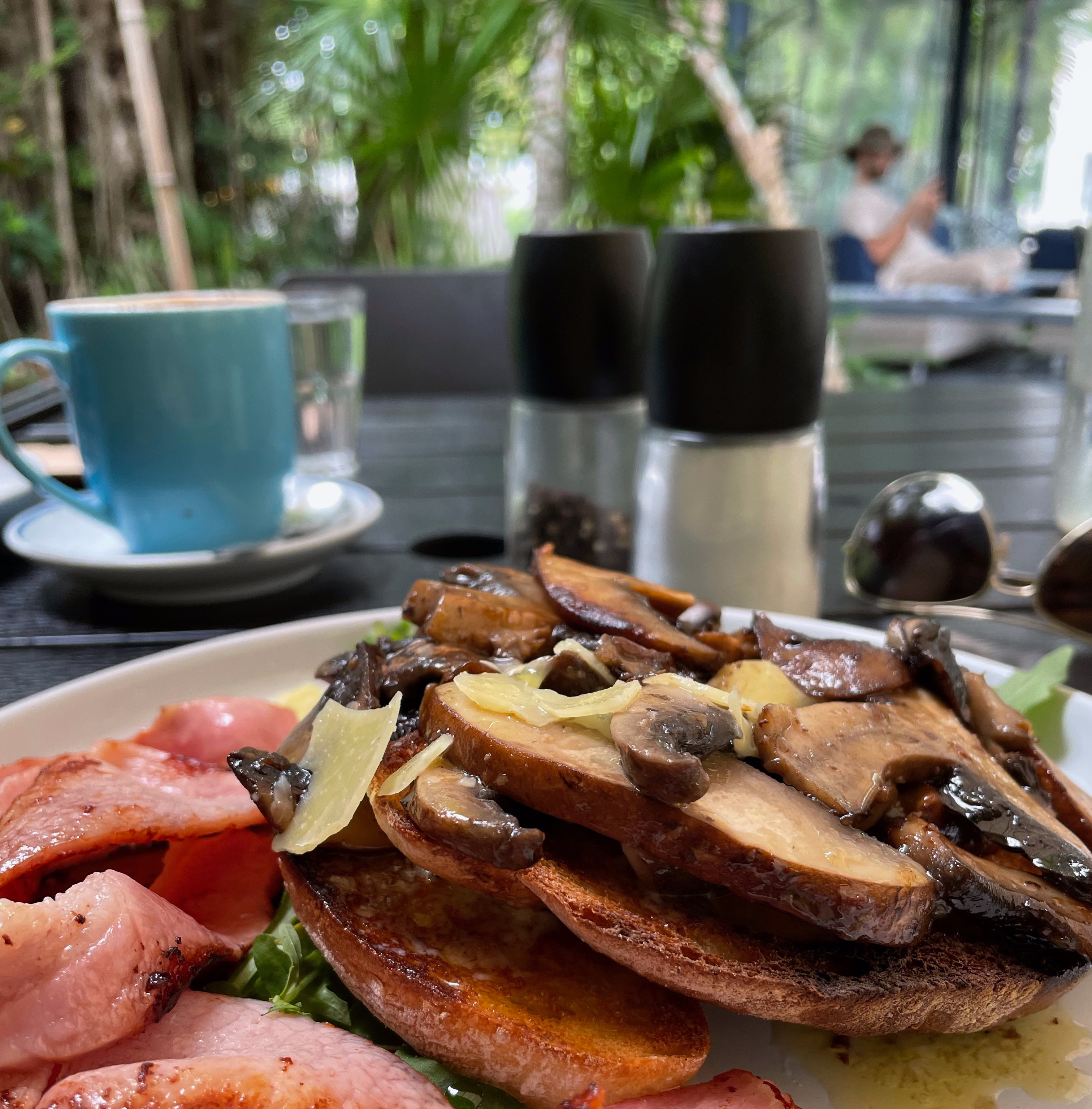
Head to Mission Beach village for a delicious breakfast – any time of day. The Three Tony’s (Open til 3pm. Closed Tuesdays) on the main street is a great option for coffee and tasty food. Shanti Café (Open til 2pm. Closed Mondays) is another favourite for breakfast on the deck, takeaway wraps and veggie options.
Breakfast at Shanti. Image: Julie Fison
For the perfect DIY breakfast, stop at one of the roadside stalls and pick up some farm-fresh fruit. Keep some change in the car for purchases as the stalls operate on an honesty system. Leny’s in Mission Beach village stocks yoghurt and milk from the Atherton Tablelands as well as a great range of locally sourced fruit. So good!
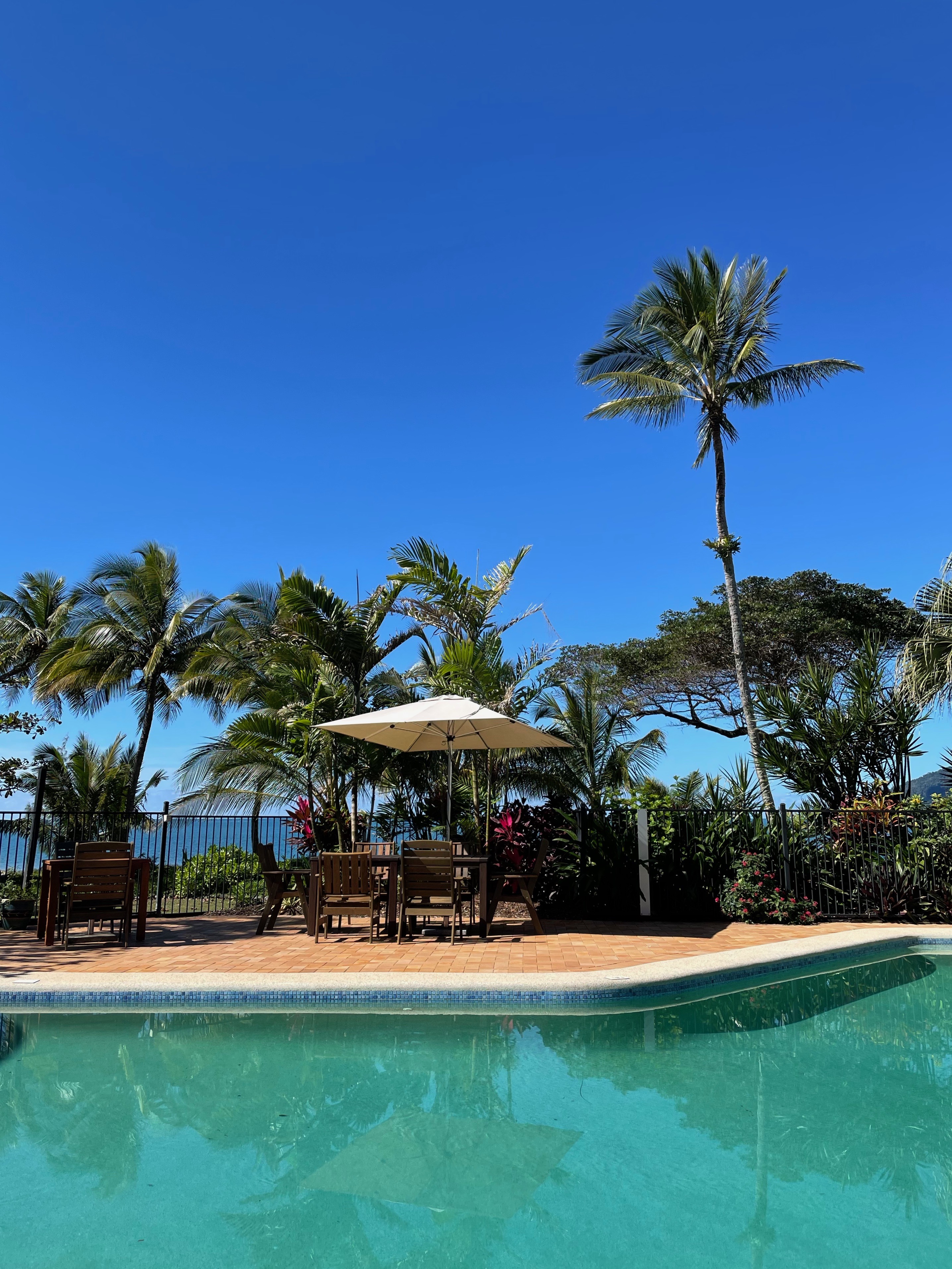
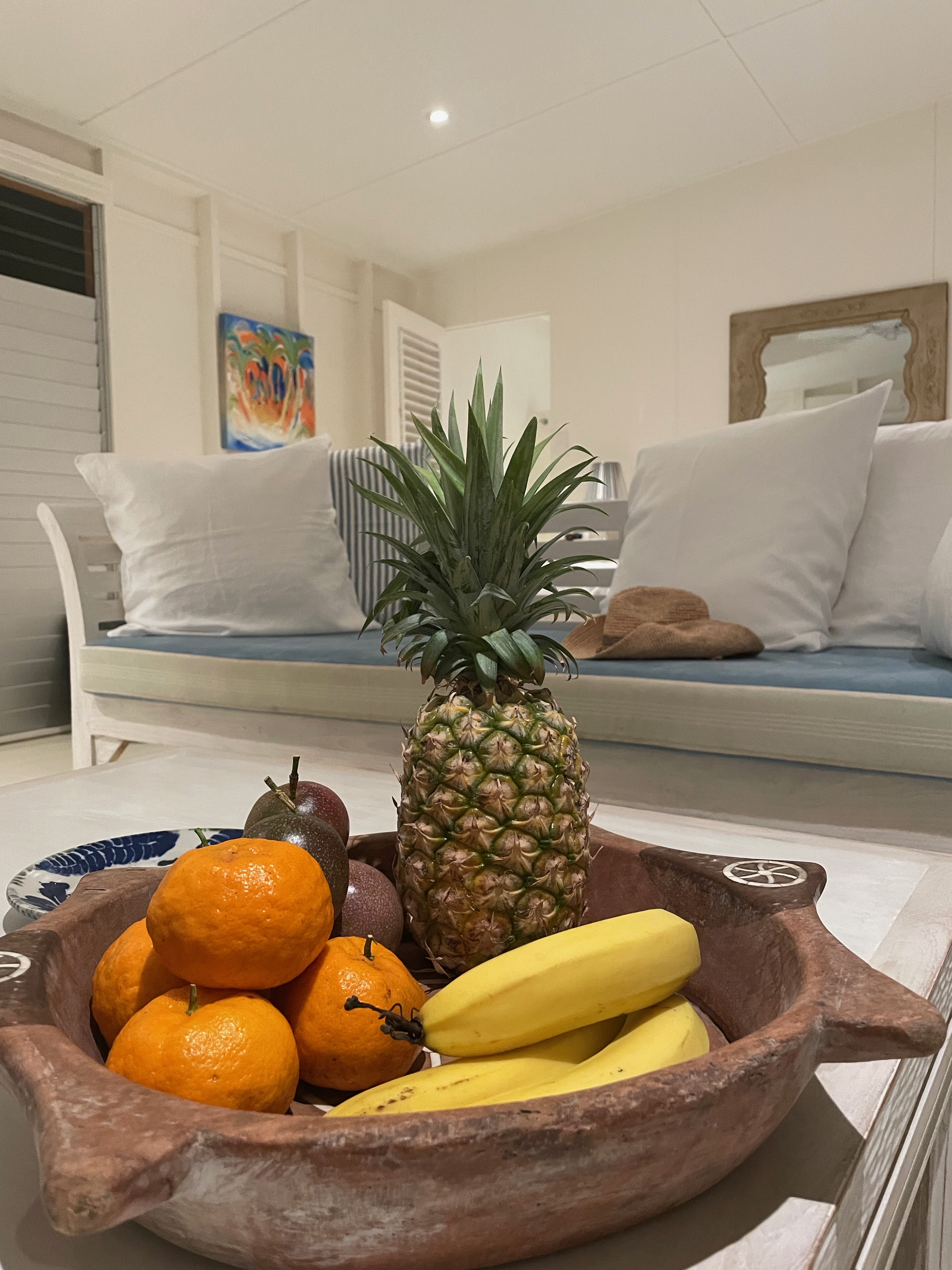
Breakfast on the veranda at our Sejala beach hut, featuring fresh fruit from Leny’s. Image: Julie Fison
Hire a bike
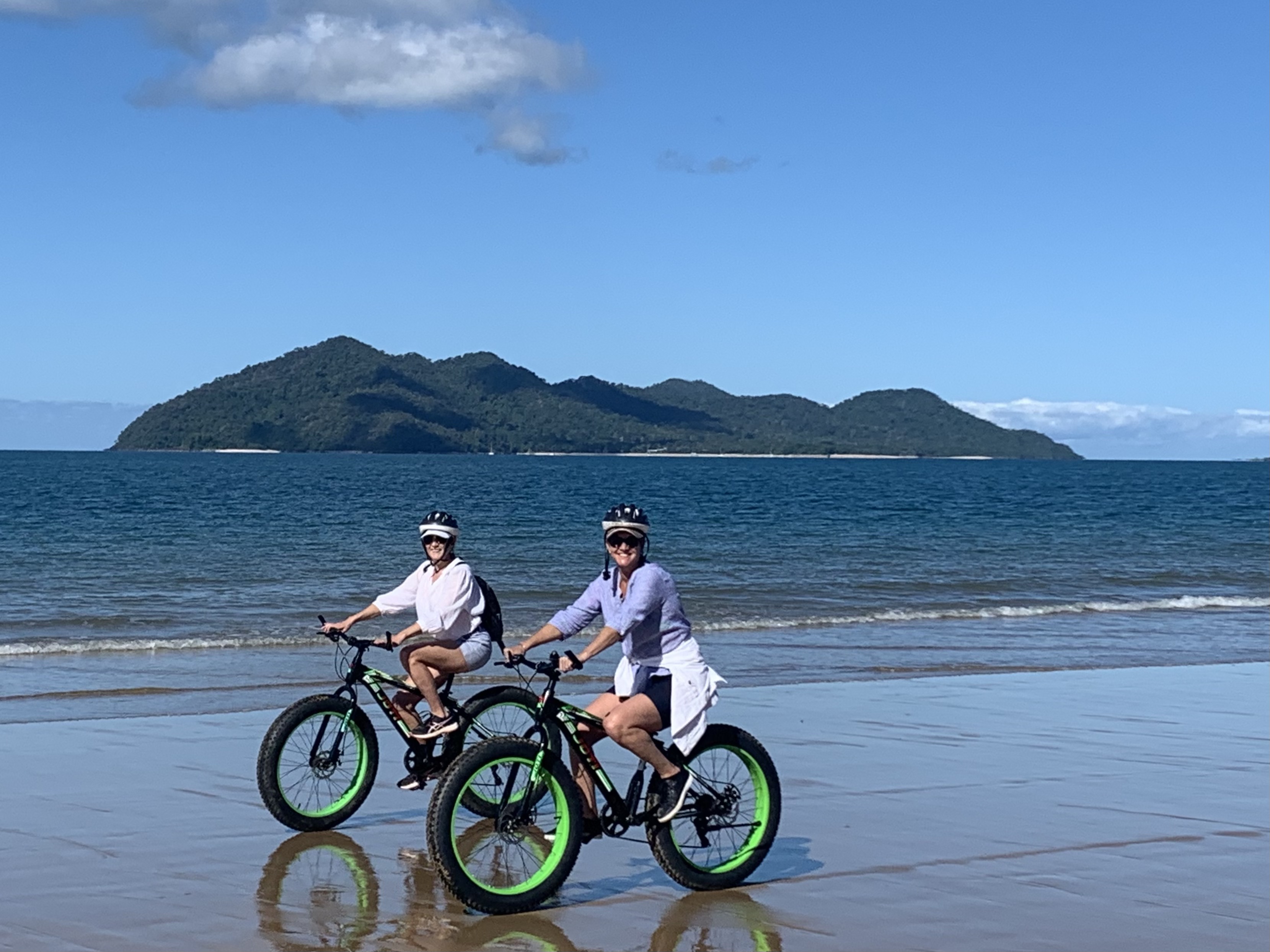
A network of walking tracks and bike trails connects the townships that make up Mission Beach, offering a great opportunity to explore the rainforest. But for the most Insta-worthy pics, you need to get a fat-tire bike and hit the beach. At low tide you can ride all the way from Clump Point to South Mission. Bring a backpack for drinks and snacks and a pair of bike pants for extra padding if you’re planning a long ride! Mission Beach bike hire is at 26 Porter Promenade. Call 0407785505
Fat tires on Mission Beach. Image: Maree Patane
Hike the Kennedy Trail
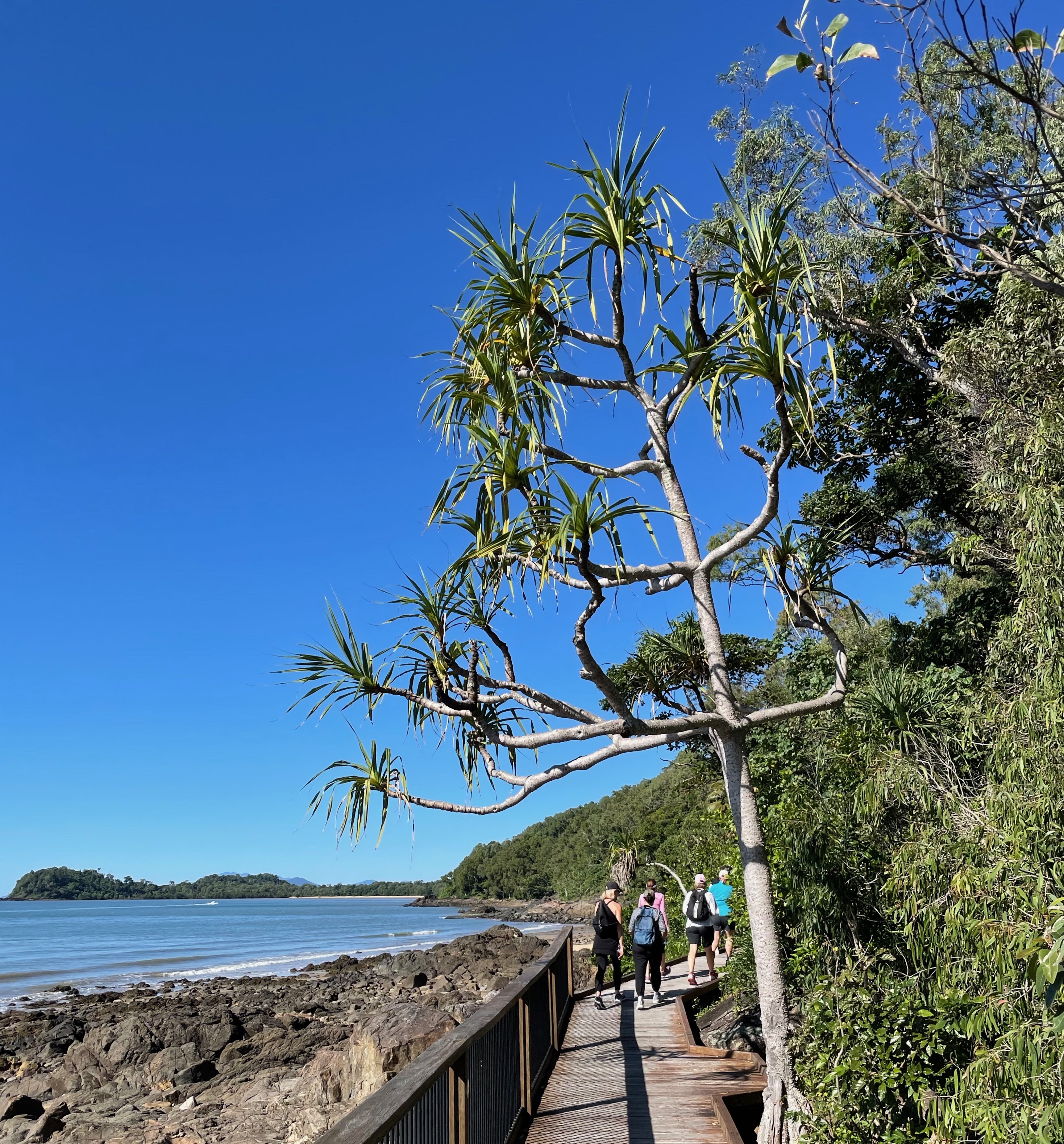
This 3.9 km walk starts just beyond the boat ramp at South Mission Beach (parking is past the no through road sign on Kennedy Esplanade) and offers spectacular views of Dunk and the Family Islands, diverse scenery, as well as the chance to spot turtles, dugongs and maybe even a whale.
Kennedy Trail. Image: Julie Fison
The trail hugs the coastline, crossing creeks and beaches, finally ending at Kennedy Bay, where explorer Edmund Kennedy came ashore in 1848 with his crew, 27 horses and 100 sheep, to start an overland expedition to Cape York. The croc warning in Kennedy Bay puts me off doing any exploring of my own, but there is an information sign for history buffs that’s worth checking out. Allow at least two hours to get to Kennedy Bay and back. Pack plenty of water and mozzie repellent.
One Punch takes a simple premise and turns it into a tight study of class and human nature – what we believe to be true about ourselves, and those we love, and who we really are. A crime is the pivot point for a sharp observation of human nature and blends compassion and humour in equal measure.
Meredith Jaffe, The Tricky Art of Forgiveness
Take a fishing trip
There are several options for a deep-sea fishing trip out of Mission Beach. We went with Alistair at Hooked Up Fishing who has been taking tours for nearly 30 years. It was a breezy day and the swell was surprisingly steep when we left the Clump Point harbour. That meant a chilly and exciting trip out to the Mackerel Patch and very lumpy fishing conditions. Luckily we landed some decent-sized mackerel to take home for dinner. A successful day out!
Success! Image: Julie Skerman
Not interested in fishing? Try the snorkelling trip to the outer reef with Mission Beach Dive or grab a picnic and take a water taxi to Dunk Island. Beware: construction work is currently underway at the jetty and picnic area. Check on developments with a friendly local.
Spot the elusive cassowary
Habitat destruction, cars and dogs have all taken their toll on the cassowary population. The birds are listed as endangered and even though this area is called the Cassowary Coast, you have to be lucky to spot them. We tried the Licuala Fan Palm Walking Track – which is reportedly the best place to see cassowaries, and came across plenty of evidence that they’d been through, but no actual birds.
Licuala Fan Palm Walk, Mission Beach. Image: Julie Fison
Your best option is to head to Etty Bay, just south of Innisfail. We encountered one on the roadside and another one strolling around the campsite. Take it easy on the roads through the rainforest to avoid hitting one!
Cassowary at Etty Bay campsite. Image: John Fison
Discover Tropical Art Deco at Innisfail
Art Deco? In a country town? You got it. This regional centre, midway between Cairns and Mission Beach, is probably most famous for cyclones and sugar cane, but it’s also the home of Australia’s most impressive collection of Tropical Art Deco buildings. On practically every street, you’ll find brightly painted 1930s treasures, built after the town was practically annihilated by a cyclone. The architecture is a mixture of European styles, as a result of the many nationalities who had a hand in their design and construction.
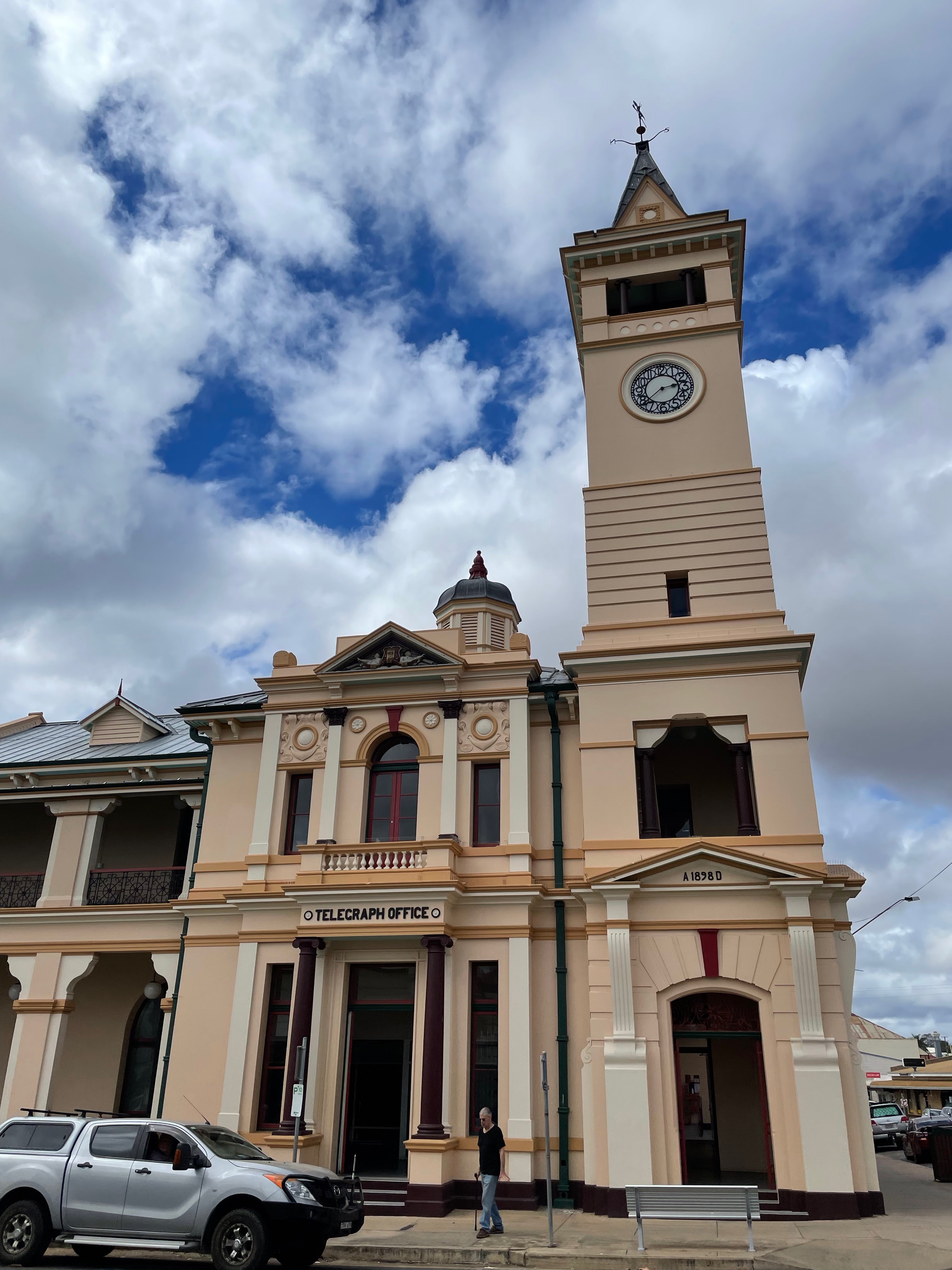
White Horse Hotel, Innisfail. Image: John Fison
Many of the buildings have been re-purposed – just brightly coloured facades, housing chemists, gift shops and healing centres. But others, including the Innisfail Shire Hall, remain grand tributes to a previous era of prosperity. Check the Cassowary Coast Regional Council for walking tours or download the app for a self-guided wander through this surprising town. Read more about Innisfail here.
Step back in time at Paronella Park
A 45 minute drive from Mission Beach, past the historic towns of El Arish and Silkwood, you’ll find this surreal attraction. The remains of a huge 1930s amusement park, built by Spanish migrant José Paronella, to fulfil a dream of one day living in a castle. Decorative concrete structures and walkways overlook the Mena Creek Falls where visitors once played tennis, picnicked on the river bank and danced in the ballroom.
Paronella Park at night. Image: Julie Fison
Paronella Park fell on hard times after a cyclone tore through, but the current owners have spent the past three decades working to restore the incredible structures and revive José’s dream. The $50 entry fee gives you access for two years, plus free camping in the neighbouring site. Pop across the road for a chicken parmie at the Mena Creek pub and return for the evening light show, for a full experience.
Enjoy a sunset cocktail and dinner
After a day of exploring Mission Beach and surrounds, what could be better than watching the palm trees turning gold and the sky glowing pink. Take a stroll on the beach with the locals or grab a drink and enjoy the sunset. There’s a BWS on the main road next to Woolworths if you want to organise your own beverages, or head to Noori Beachside Bar in Mission Beach for a cocktail. The dragon fruit daiquiri is a winner!
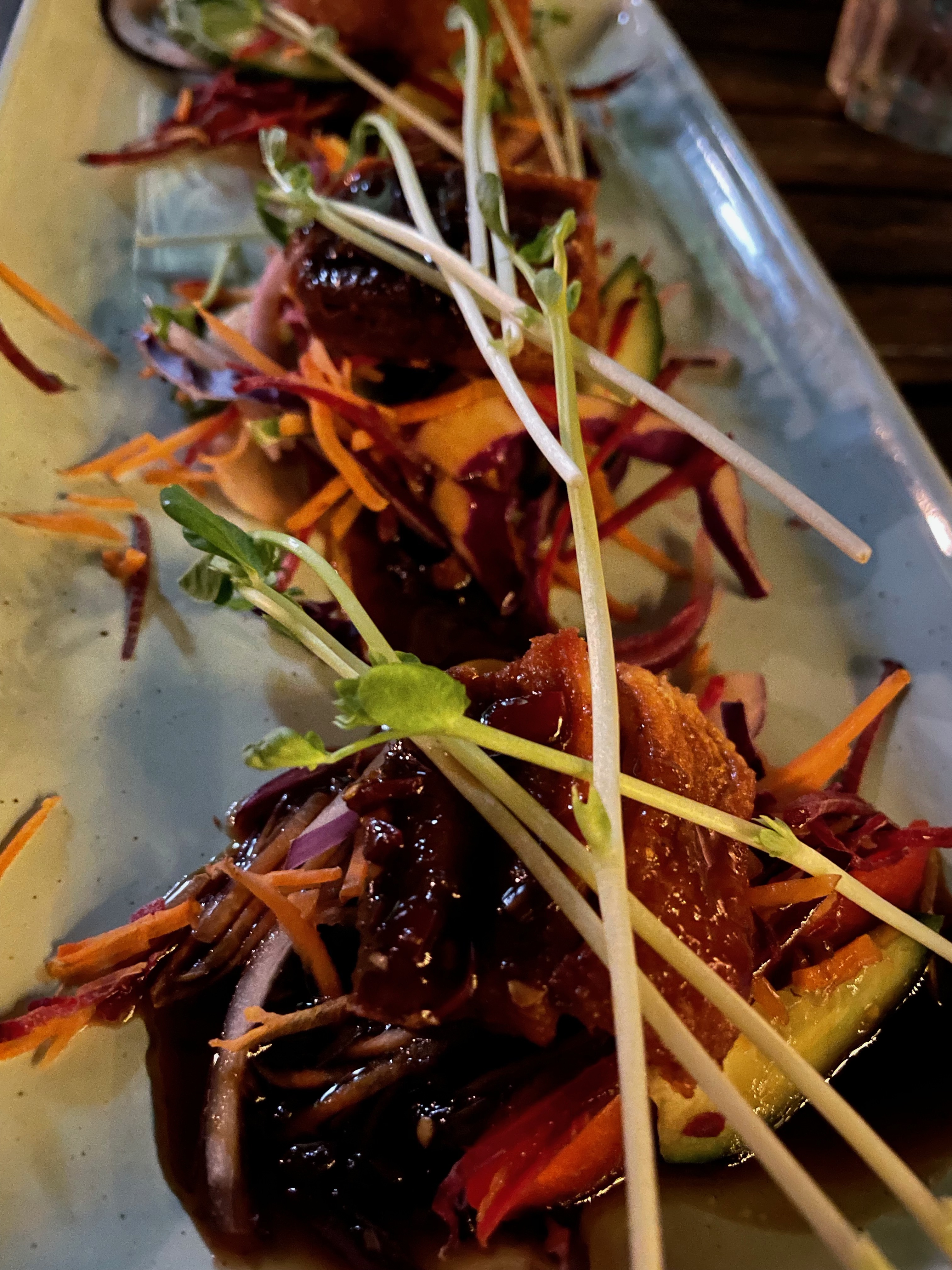
Buko Restaurant at Castaways is another beautiful setting for drinks and dinner. It’s pricier than Noori, but the food is mouth-watering. I can definitely recommend the seafood linguini.
Make your friends envious with lunch at Nu Nu
OK, this restaurant is well outside the things-to-do in Mission Beach brief. Nu Nu is two and a half hours north, in beautiful Palm Cove. But I’m including it here, as an added bonus, because it’s a very doable option if you’re heading back to Cairns for a late flight. And because Nu Nu is Tropical North Queensland deliciousness at its very best. Think spanner crab brioche, salmon with coconut, line and papaya and choc cream banana crunch in a stylish beach-front restaurant. Perfection!
Spanner crab brioche at Nu Nu Palm Cove. Image: Julie Fison
Visit a waterfall and grab a pie
If Palm Cove feels too far away, you could visit Josephine Falls on the way back to Cairns. The car park for the tiered cascade is just five minutes off the main road at Mirriwinni. From there, it’s a 700 metre easy walk along a bitumen path to the falls. Wear your togs and have a dip in the rockpool. But follow the warning signs. The Falls are dangerous when flooded.
Babinda Bakery and Josephine Falls. Images: Julie Fison
While you’re in the neighbourhood, make like a local, and visit the Babinda Bakery for the best pies in the region. Be prepared to queue pretty much any day of the day. Yes, it’s that popular!
Stay
You are spoilt for choice when it comes to beach-front accommodation at Mission Beach. Best to decide which village you want to be in, and then work from there. Here are a couple of suggestions for places I’ve loved.
Greetings from Mission Beach. Image: John Fison
Wongalinga Beach Apartments
I stayed here with a tribe of gals on a bookclub escape. The spacious three-bedroom apartments worked really well for a group. Plenty of space for lounging around, a great pool area and the view across the bay to Dunk Island is stunning. Local restaurant options are limited. Nana’s Thai is the closest and serves a good range of curries. A big shout out to the owner for squeezing us in on a busy Friday night. The supermarket is a five minute drive to stock up on groceries.
Wongalinga Apartments. Image: Julie Fison
Sejala
The beach huts, just metres from the sand at Mission Beach are discreetly tucked amongst the foliage. Our one bedroom cottage was stylishly decorated and thoughtfully stocked with breakfast supplies and two mini bottles of champers to get us going. Thank you! The location was superb – easy access to the beach and a short walk to the village for meals and supplies.
Sejala beach hut. Image: Julie Fison
A little reminder: This is North Queensland. You need to swim inside the stinger nets between October and May, and follow the croc warning signs at the creeks.
























































































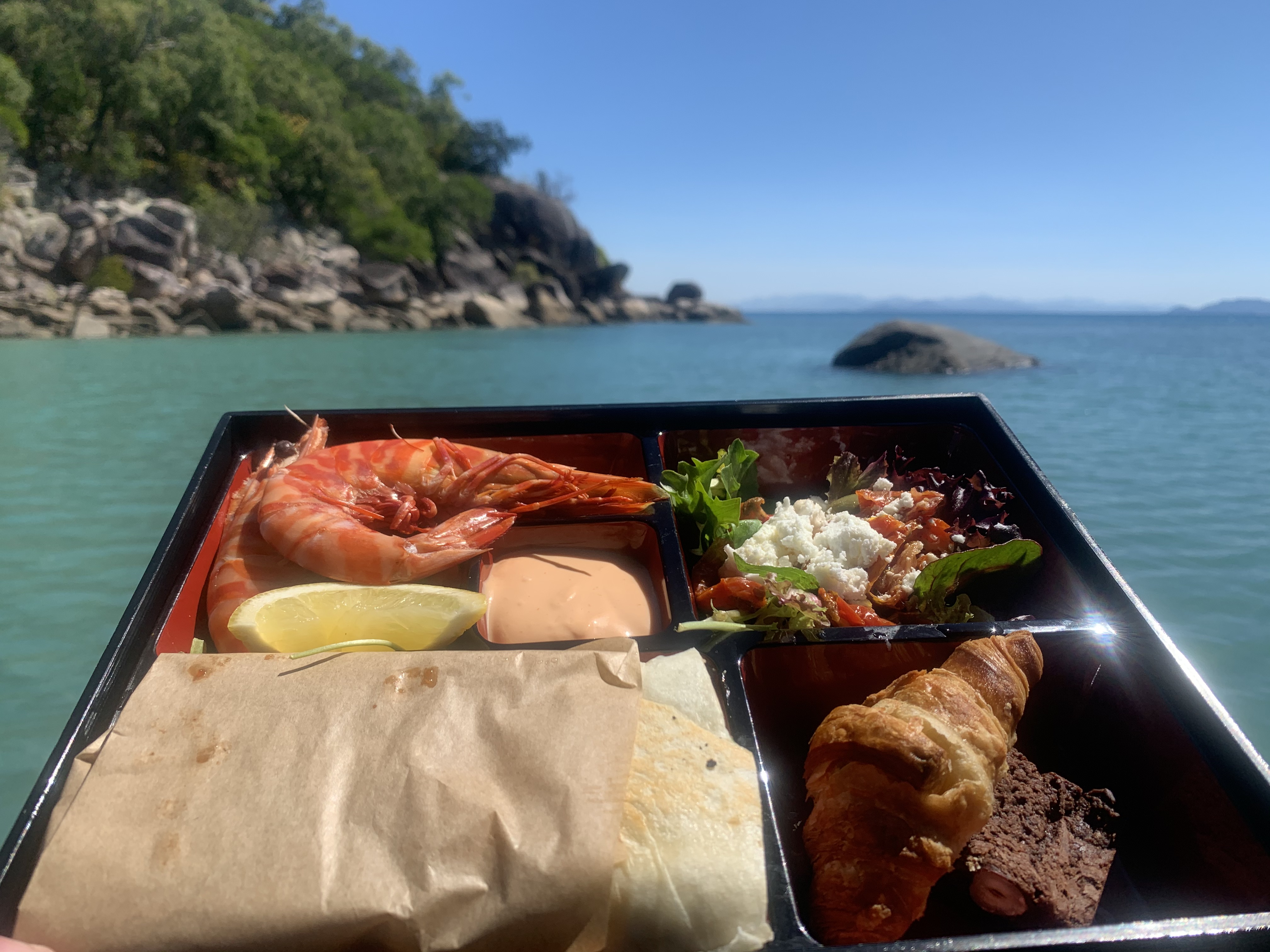


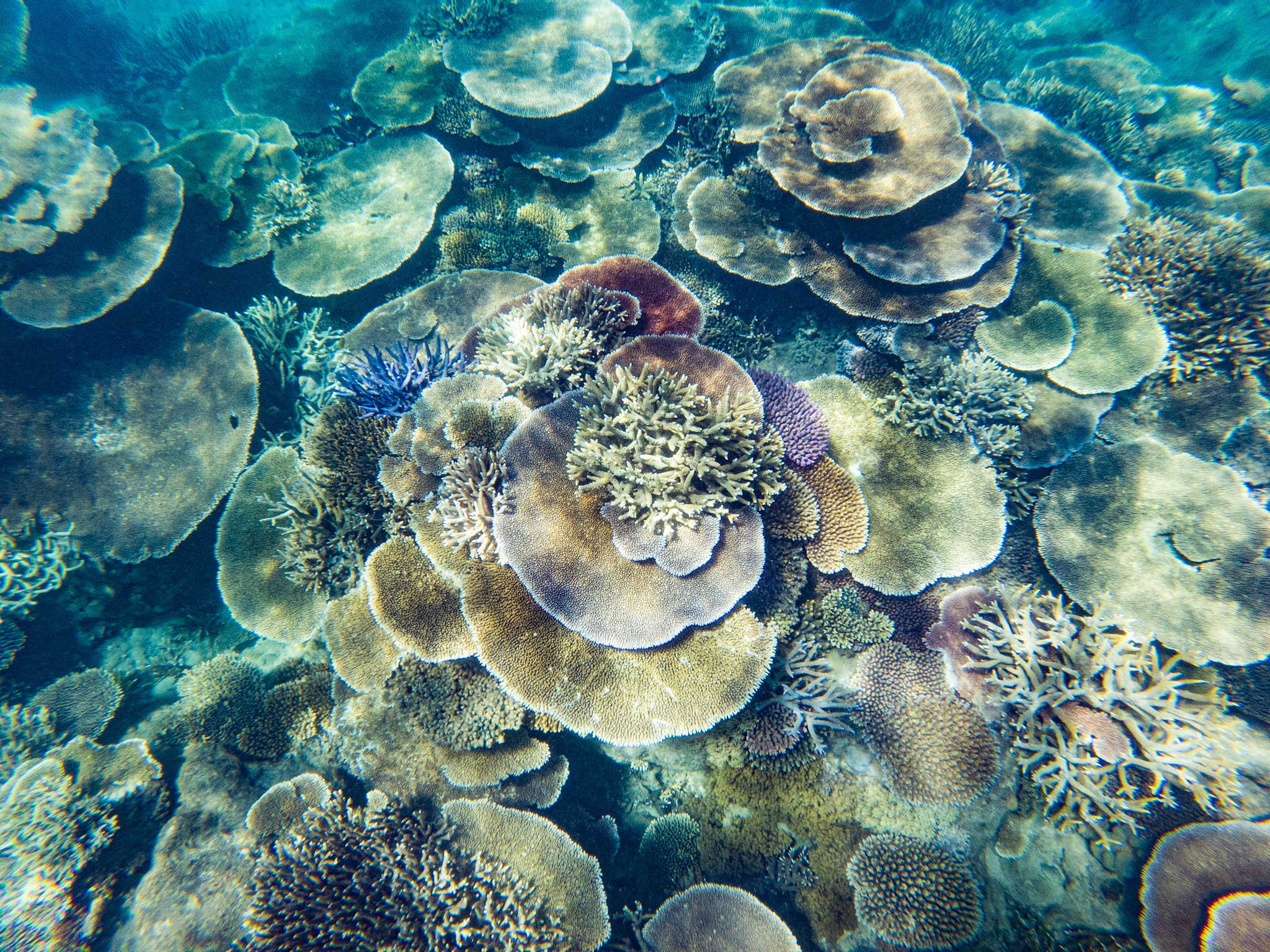







 Julie Fison