How to spend a long weekend at Nitmiluk (Katherine) Gorge

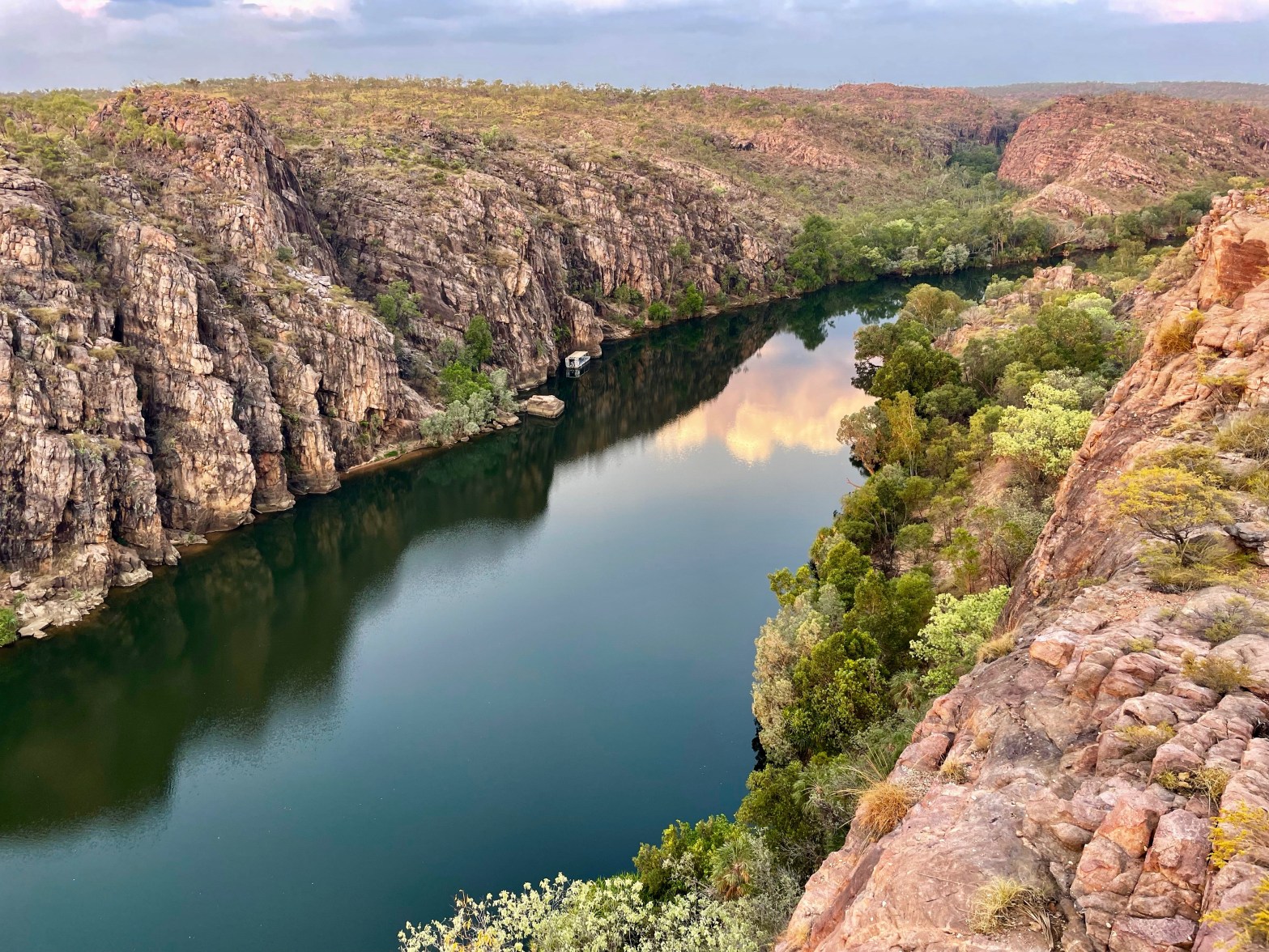
Nitmiluk Gorge is considered one of Australia’s most impressive natural wonders, and a must-see on any visit to the Northern Territory. It lies 350km south of Darwin on the Arnhem Plateau, and is actually a chain of 13 gorges carved from ancient sandstone. To explore the dramatic cliffs and green waterways you can join a local guide on a river cruise, rent a canoe, take a scenic flight, or if the weather permits, hike along one of many trails. The one thing you won’t want to miss is watching the sun sink beyond the horizon from the Baruwei Lookout. It has to be said, there is nothing like a Northern Territory sunset!
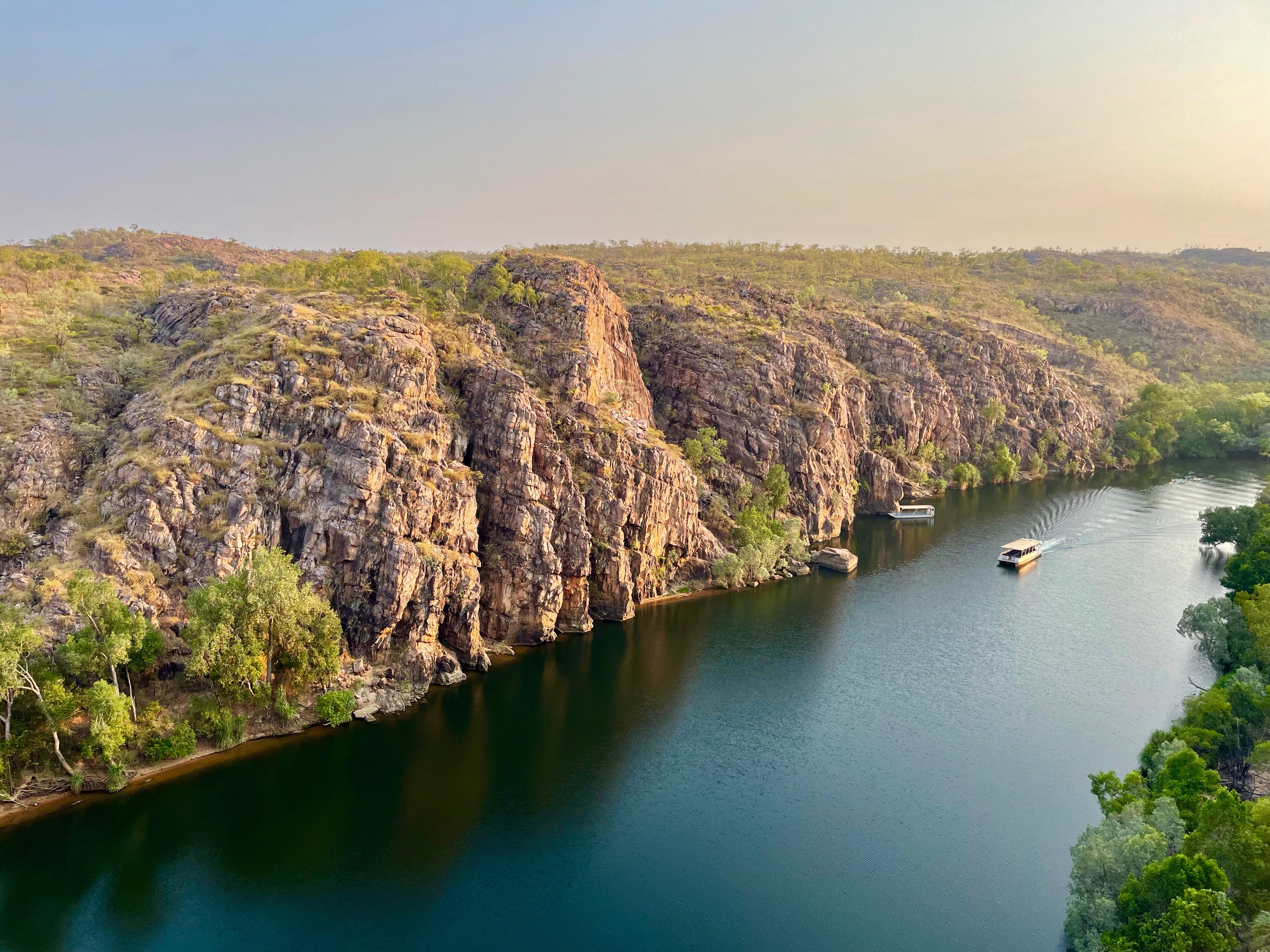
Nitmiluk. Image: John Fison

Day 1: Darwin

Darwin is the gateway to the Northern Territory, but it’s also a vibrant destination in its own right – a tropical blend of First Nations cultures, Asian enterprise and Aussie frontier resilience. With lively markets, street art, great restaurants, bars and a spectacular harbour, there is plenty to keep you busy. If you are interested in military history, check out the Darwin Military Museum and the WWII oil tunnels. Darwin was a key Allied base during World War II and was the target of Japanese raids in 1942. More bombs were dropped on Darwin than on Pearl Harbour!

Day 2: Adelaide River, Leliyn Falls, Nitmiluk

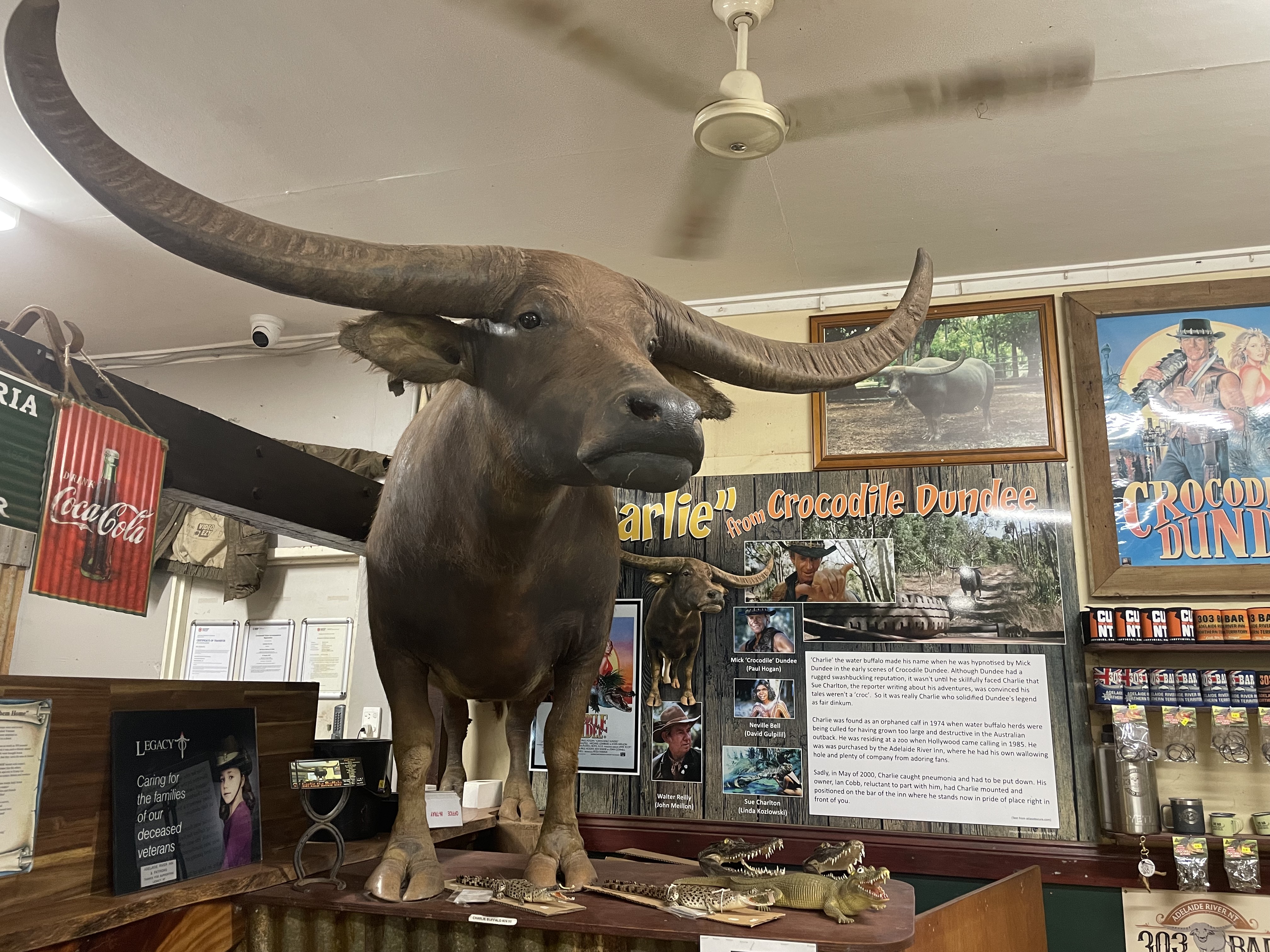
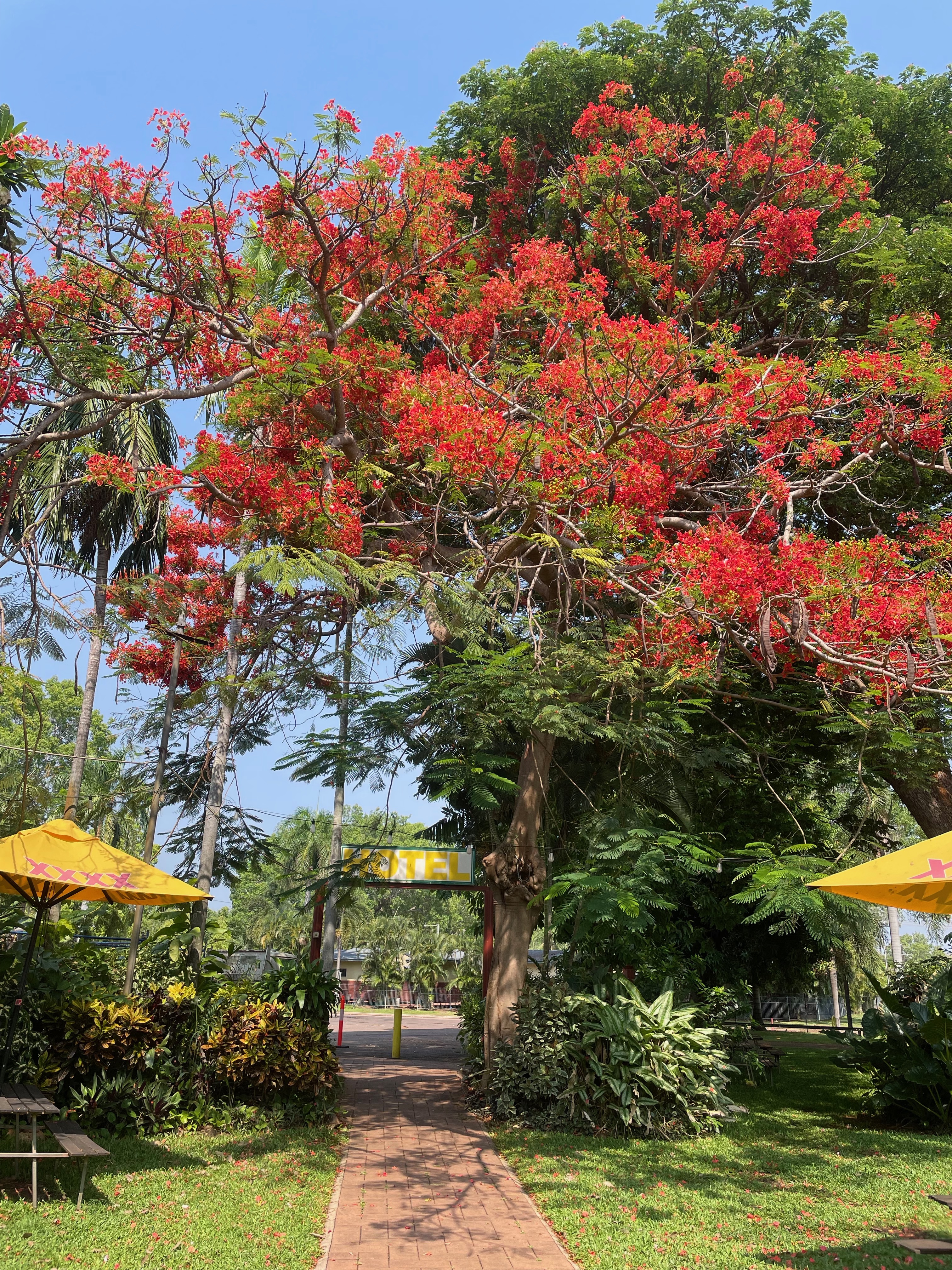
It’s November, well outside peak tourist season in the NT when we visit, so we’re up early and on the road to Nitmiluk National Park before the temperature starts to soar. First stop is Adelaide River – a pretty town, a little over an hour outside Darwin. Just 250 people live here now, but the town played a crucial role during WWII. A rest camp and farm were initially set up here, then Darwin came under attack, and Adelaide River became the base for communications, transport and ammunition storage. These days, the iconic Adelaide River Inn is the main attraction. Set among palms and poincianas, it is crammed with memorabilia, including a stuffed water buffalo (that featured in the Crocodile Dundee movie) as well as a five-metre crocodile. If I ever needed a reason to stay out of the water around here, Jock the Croc is a very good one.  
Around 180km further down the Stuart Highway we come to the Leliyn (Edith) Falls. The area is part of the Nitmiluk National Park and offers camping facilities, picnic tables and a kiosk that operates May to October. The lower falls are easily accessed from the car park but we take the trail to the upper falls for a dip in the tranquil waterfall-fed pools. Definitely worth the extra effort. But I have to admit, I’m still freaked out by Jock the Croc, and don’t venture too far from the rocky shore, even though I have been assured crocs don’t get up here.

Leliyn (Edith) Falls. Image: John Fison

A short drive down the highway is Katherine, the Northern Territory’s fourth largest town. Here, there is a good range of accommodation, along with pubs, art galleries and supermarkets. The town is 30km from the Nitmiluk visitor centre – the hub for gorge cruises and hikes – making it a good base for exploring the region. We are keen to stay closer to the gorge, so we opt for Cicada Lodge, a stylish bush sanctuary, just a five-minute walk from the visitor centre. With 18 air-conditioned rooms set around a swimming pool, it is a welcome sight after a hot day in the park! After checking into our room, we head to the visitor centre to get the lay of the land, book a river cruise, and tuck into a huge salad at the cafe. The centre also houses a small museum dedicated to the Jawoyn people – the traditional owners of region. They, along with the Northern Territory Parks and Wildlife Commission, manage Nitmiluk National Park, which covers almost 300,000 hectares of gorges, waterfalls and rock art. The museum is a great starting point for understanding the Jawoyn’s land rights battle, their dreaming stories and their calendar. The Jawoyn recognise five seasons: Jiyowk – when heavy rains arrive, Bangkarrang marks the rain easing, Malapparr is the dry, cool season, Jungalk is the hot, dry build-up, when cicadas sing for the rain. Then comes Guran, the hot, humid period as the wet season begins. 
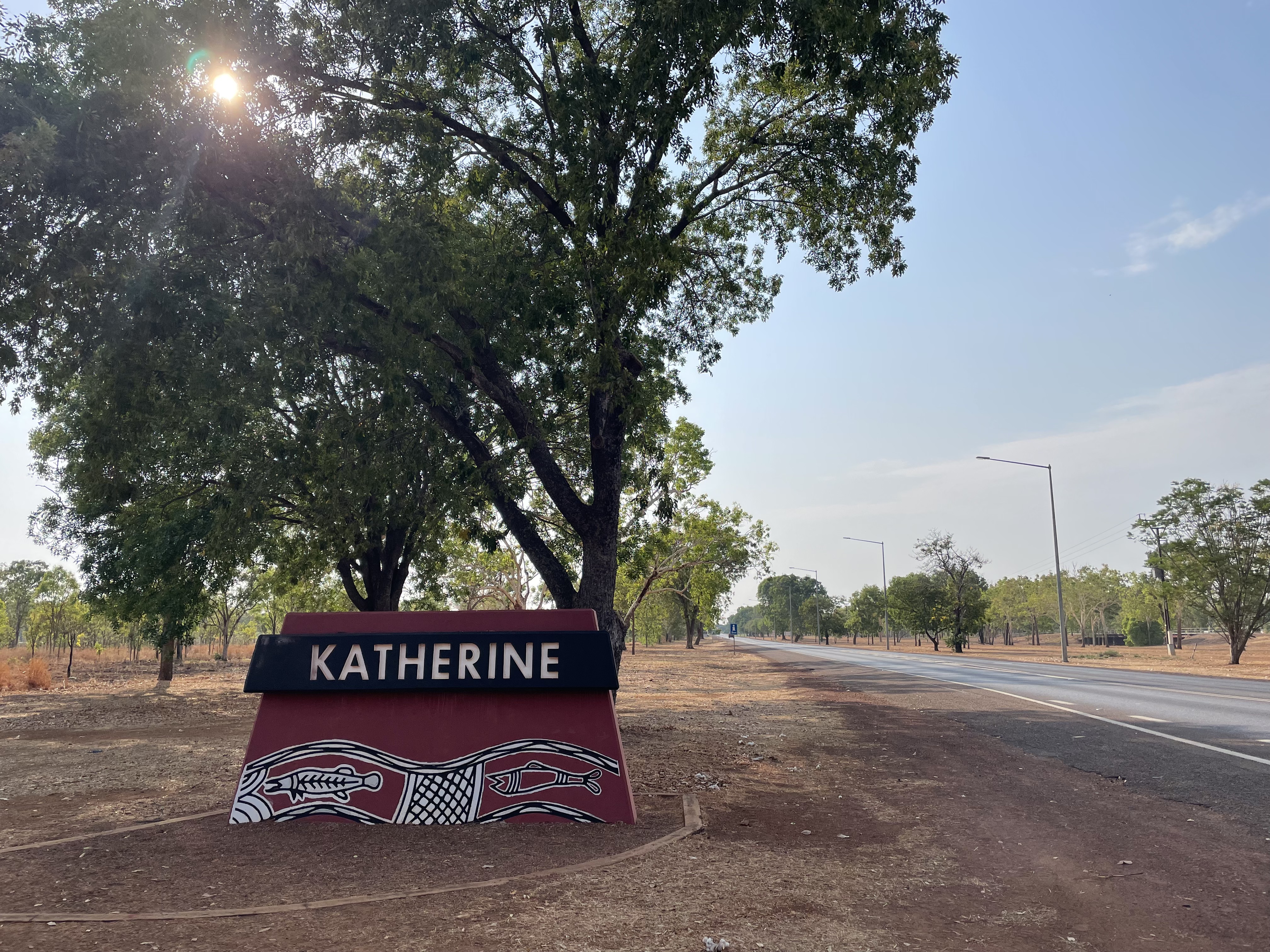
Katherine, Cicada Lodge. Images: Julie Fison

Later that afternoon we are back at the lodge, enjoying pre-dinner canapes on the outdoor deck, watching the light turn gold, and listening to the song of the cicadas. It’s the build-up – the bush is dry, storm clouds are high in the pink sky, and it feels like the entire gorge is anxiously waiting for the rains to begin. 
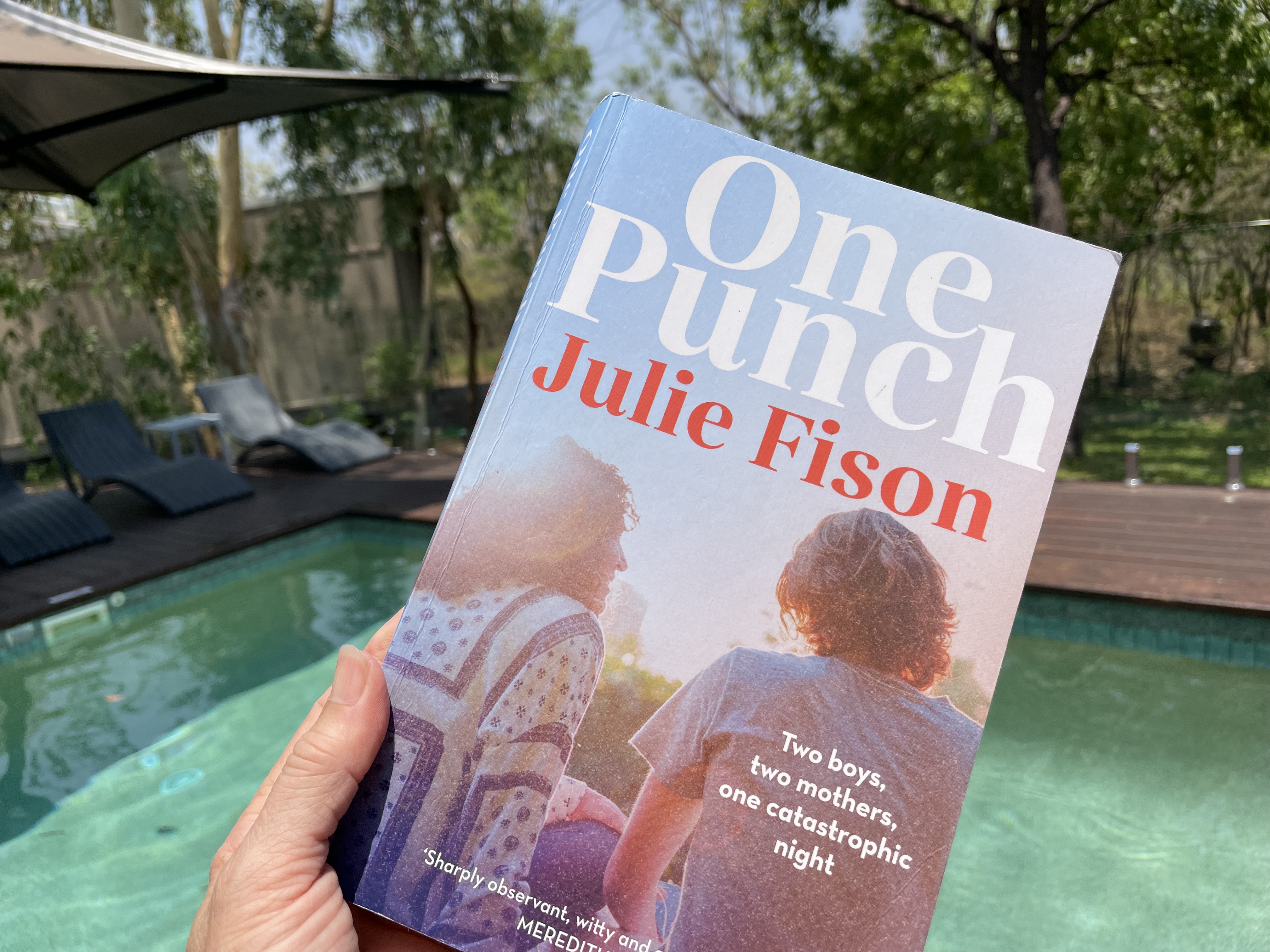
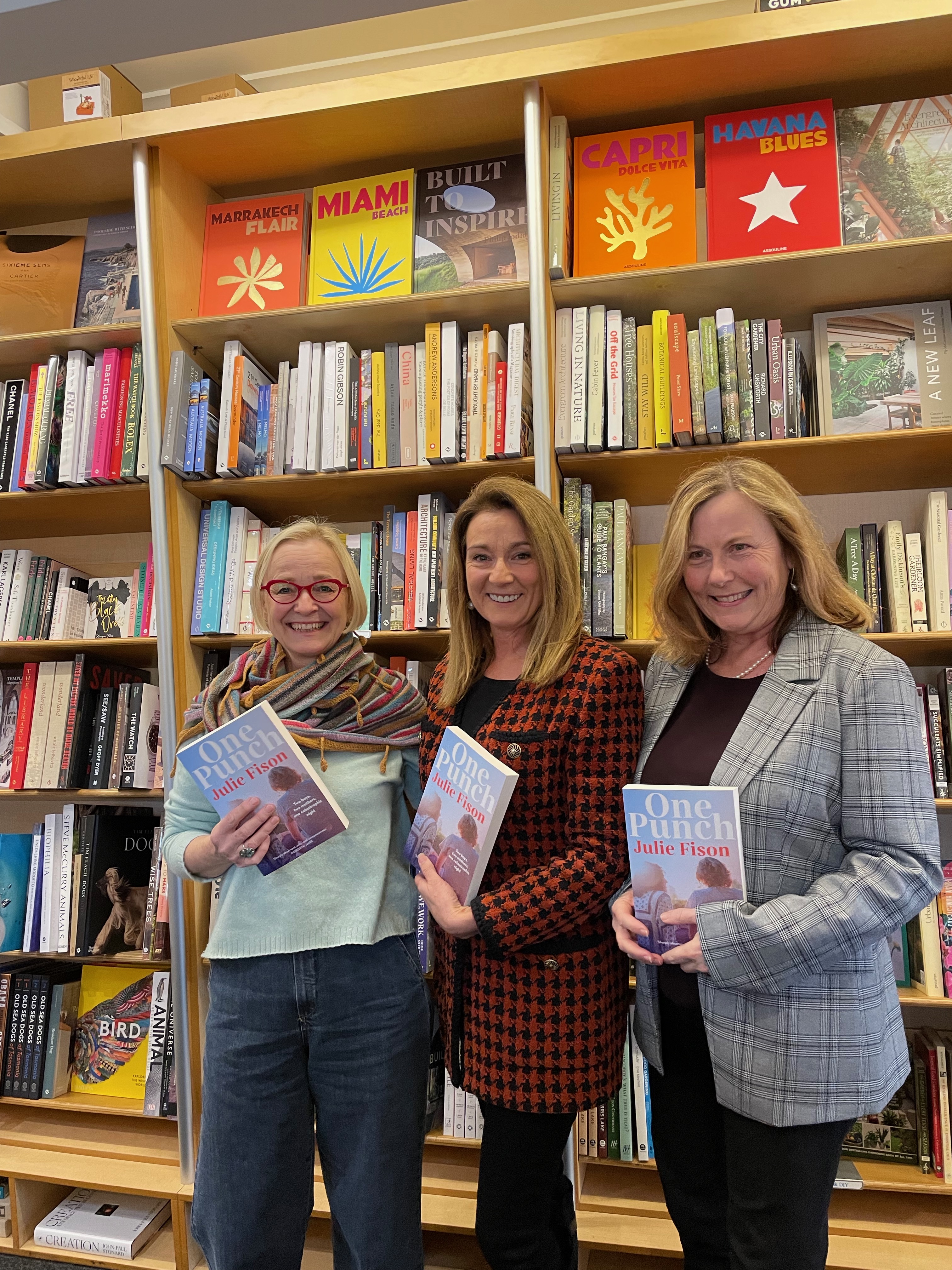
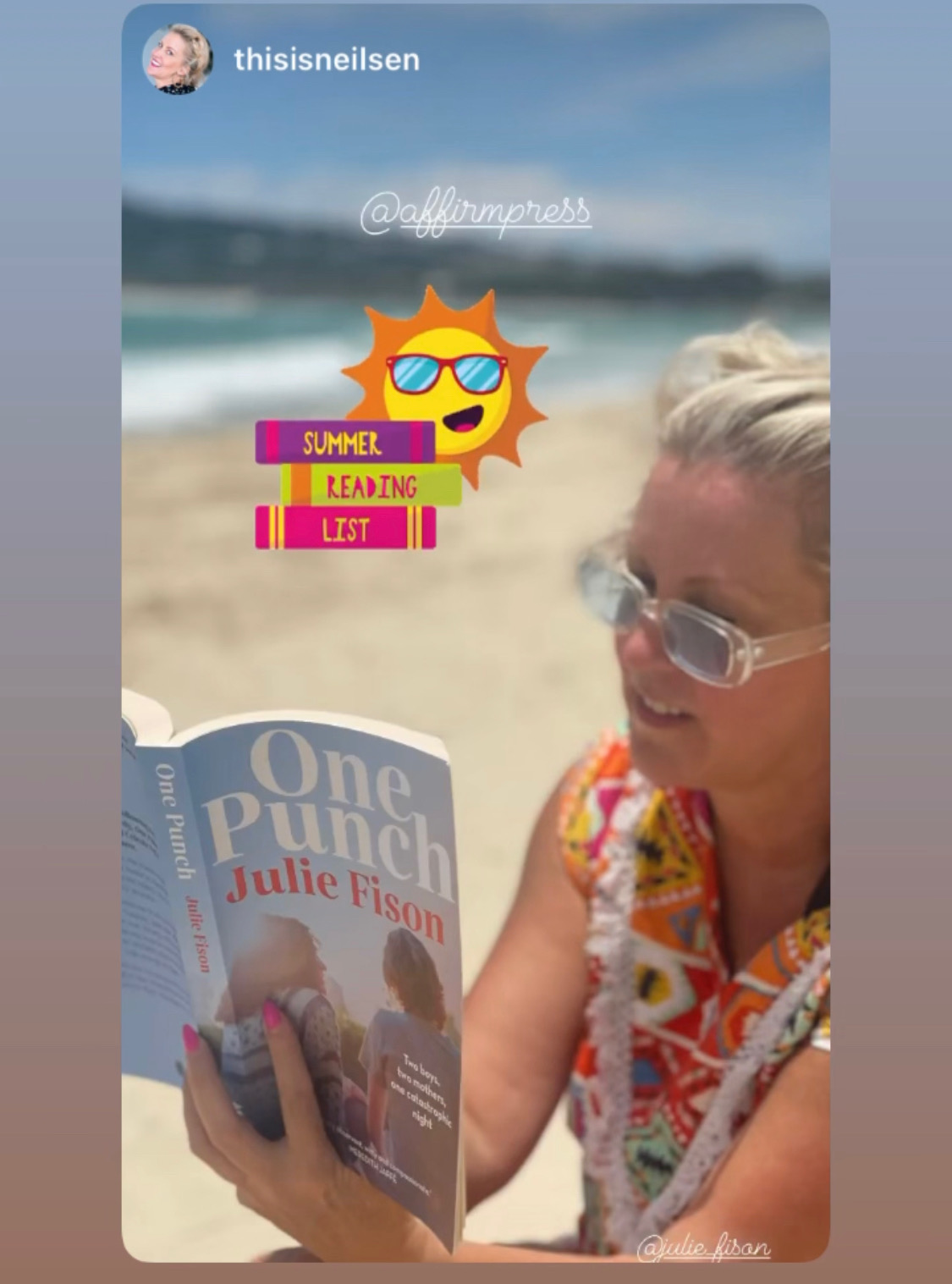
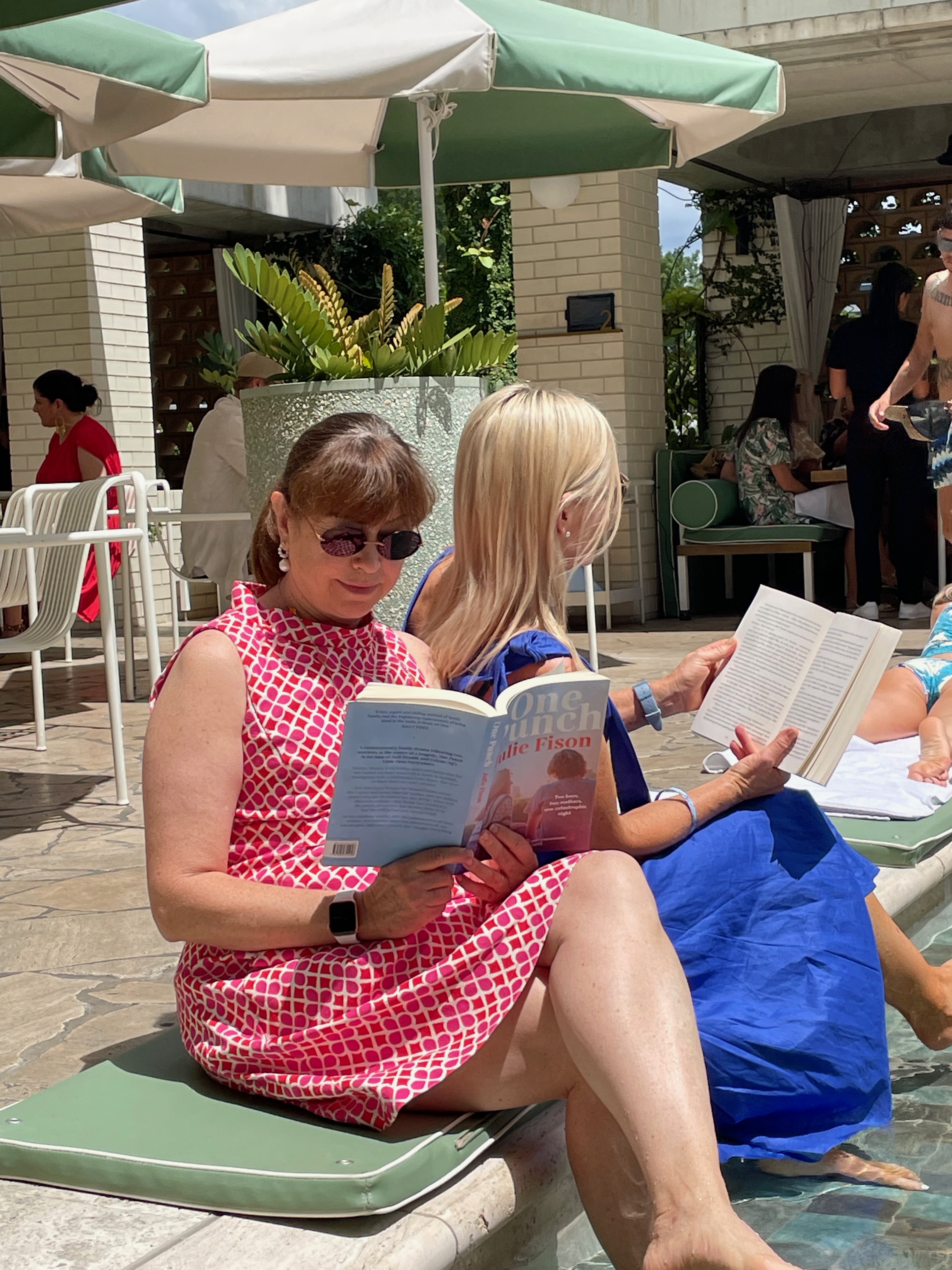
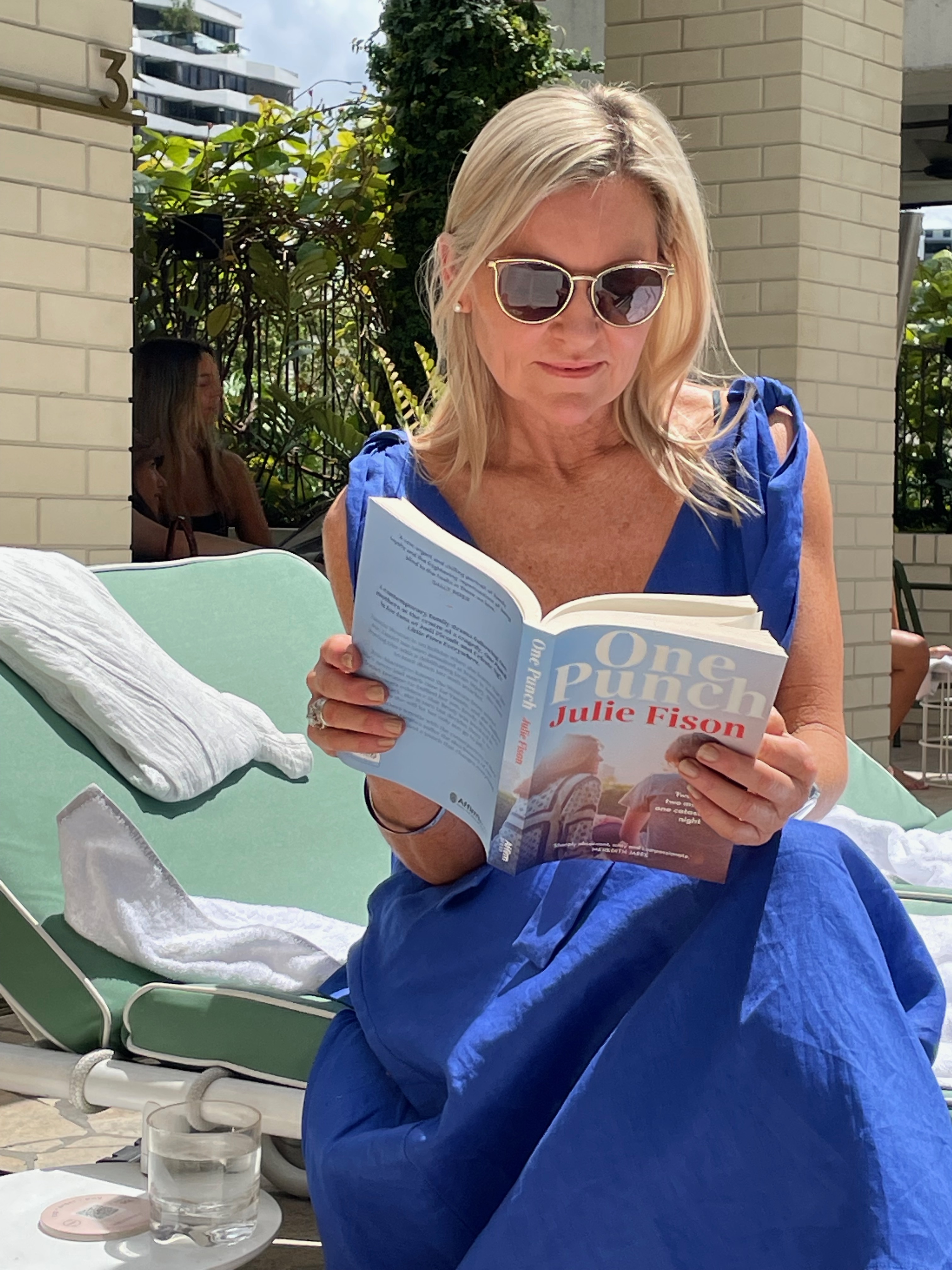
Julie Fison catapults readers into the murky and contested waters of love, morality and justice from the first page of One Punch and holds them, transfixed, right till the end. It’s a story that exposes the consequences of unconditional love; the cost and burden this delivers parents, their children and anyone caught in its more nefarious orbit. One Punch is a raw, urgent and chilling portrait of family loyalty and the frightening repercussions of being blind to the faults in those we love. Read this book and your conviction about what is right and wrong will be changed forever.

Sally Piper, Bone Memories

Day 3: Nitmiluk National Park

We are up before daybreak to climb to the Baruwei Lookout. The walk is just 900 metres, steep in places and includes sections of steps, but worth the small amount of suffering to get to the top because the view over the gorge and the Arnhem Plateau is spectacular. We soak in the cool morning light as the sun peeks through the palm trees and cockatoos screech in the treetops. It’s a stunning way to start the day.  
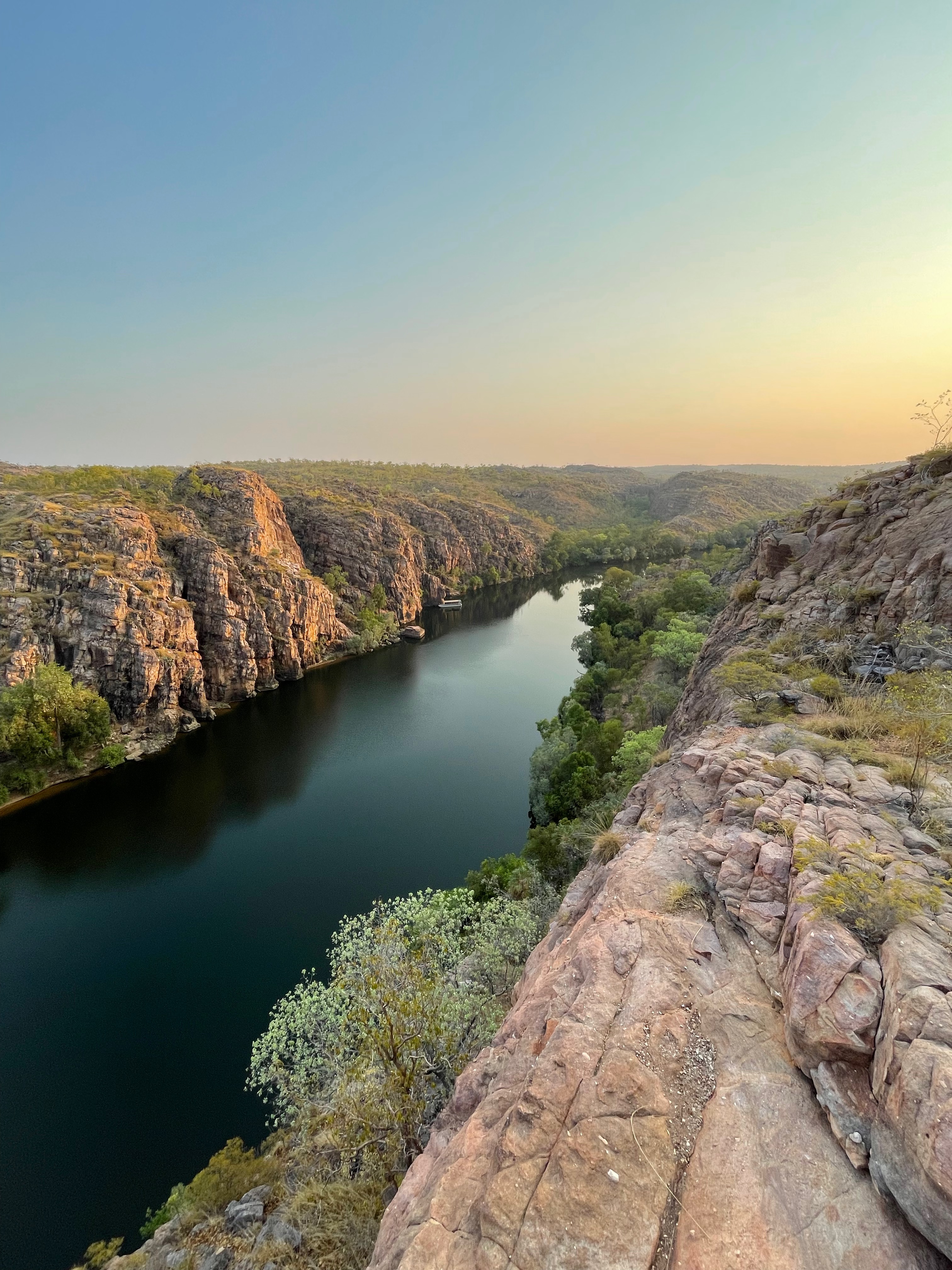
Nitmiluk Gorge. Image: John Fison

Back at the lodge, we enjoy a tropical breakfast, then make our way to the nearby jetty for a two-hour river cruise – one of the many offered by Nitmiluk Tours throughout the year. Our guide shares stories of the Jawoyn people’s connection to the gorge as we pass between towering sandstone escarpments that rise 100 metres above the water in places. The gorge was formed between one and 25 million years ago as the Katherine River forged a path through the cracks and faults in the sandstone. The waterway is spring fed, which means it never dries out, and provides a haven for wildlife. The layered cliffs and surrounding bush are home to more than 200 species of birds, including migrating fairy martins, herons and kingfishers, as well as wallabies and freshwater crocs. The walls of the gorge also tell the stories of the Jawoyn people. Rock art can be seen on the huge cliffs as we walk the short distance between the gorges. Other sites can be visited along the Jatbula Trail that leads to Leliyn Falls, or can be accessed via helicopter. 
Choose Your Own Ever After is a contemporary pick-a-path series about friendship and first crushes that lets the reader decide how the story goes. Perfect for young readers who like to call the shots!
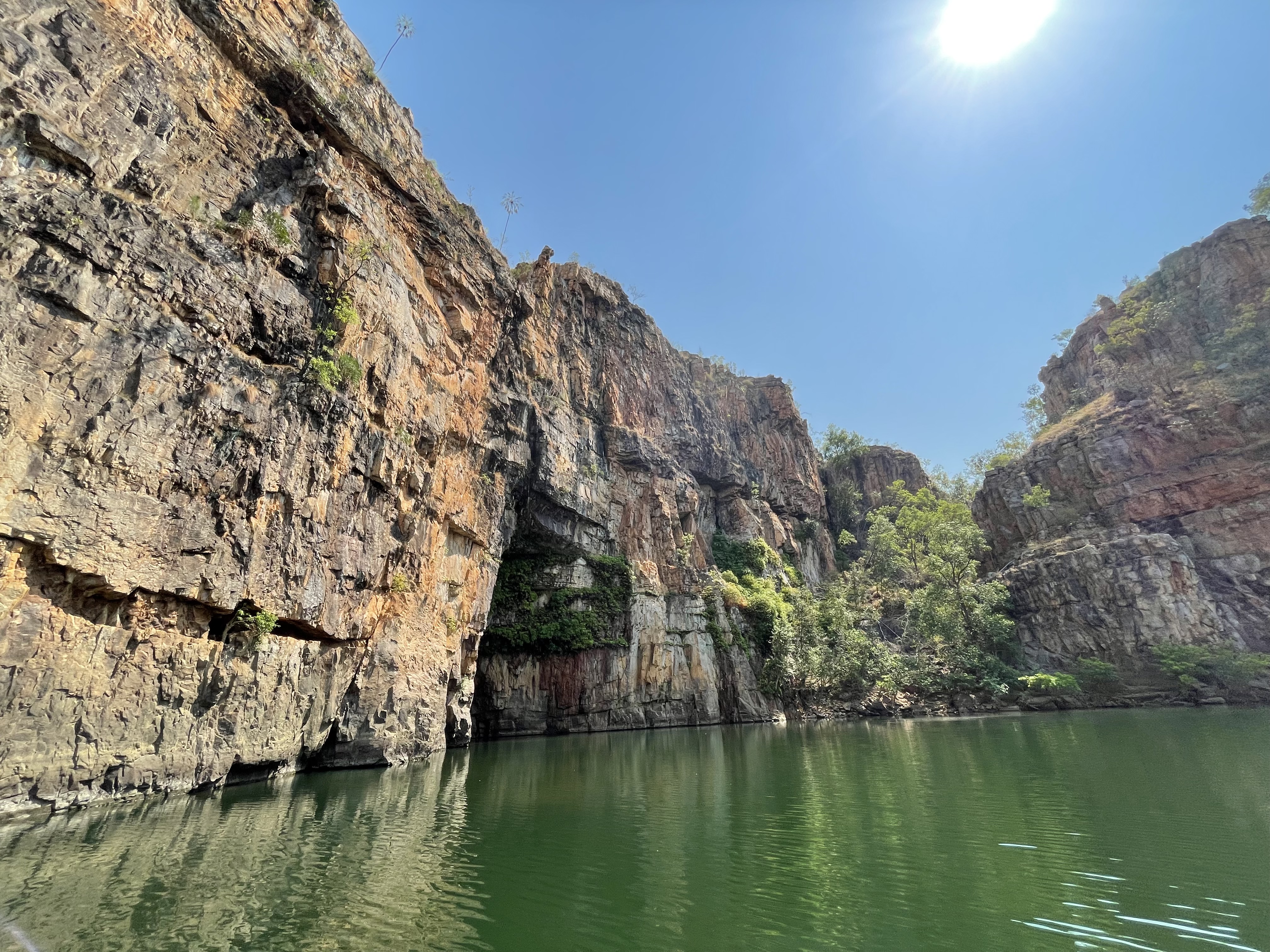
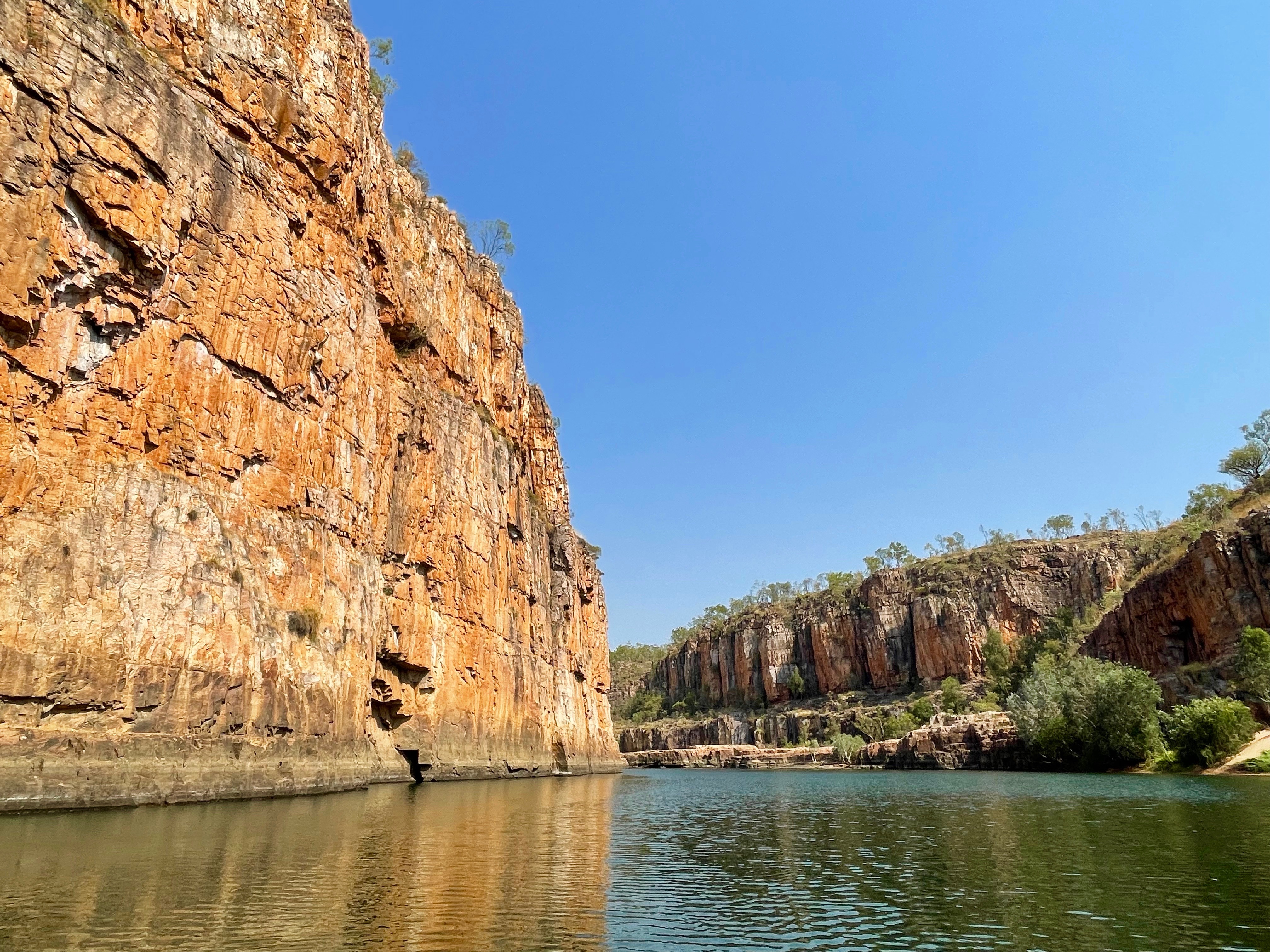
We finish the day where we began: at the Baruwei Lookout – gazing out over the vast landscape, and making the most of our last magical Northern Territory sunset. 

Day 4: Nitmiluk to Darwin

By the time we return to Darwin for our midday flight, it feels like we’ve been away for weeks, not days. Spending time in the bush has a way of extending time as well as refreshing the spirit. And while three days is long enough for a taste of Nitmiluk, it’s not nearly enough to explore the Northern Territory. I can’t wait to get back.  

Happy travels!

Local crime writers give their recommendations for holiday reads

With Christmas and the summer holidays just a few short weeks away, the promise of some delicious uninterrupted reading time is beckoning. But how does anyone choose from the hundreds of amazing books that have just hit the shelves? I asked some local crime writer friends for their recommendations. As you will discover, not everyone is looking for a light beach read. There is a good mix of genres to add to your Christmas wish list. 

Poppy Gee

Author of Tasmanian-noir crime stories Bay of Fires and Vanishing Falls, Poppy Gee, recommends Michelle Upton’s brand-new book Emergency Exit Only – an uplifting and heart-warming story about a woman who has played it safe all of her life. When a minor accident lands her in hospital, she decides to quit her boring job and sets out to find her dream career. The perfect book for those looking for a fun holiday read. 

Allie Reynolds

Author of international best-selling thrillers Shiver and The Bay, Allie Reynolds, recommends former law academic Claire Baylis’s gripping courtroom drama Dice. The story, set in New Zealand, is told from the point of view of the jurors in a sexual assault case. Four teenage boys invent a sex game based on the toss of a dice and are later charged with sexual offences. How will twelve women and men of different ages, backgrounds and beliefs decide whether consent was given or crimes were committed? An important and thought-provoking novel, perfect for fans of Kia Abdullah.

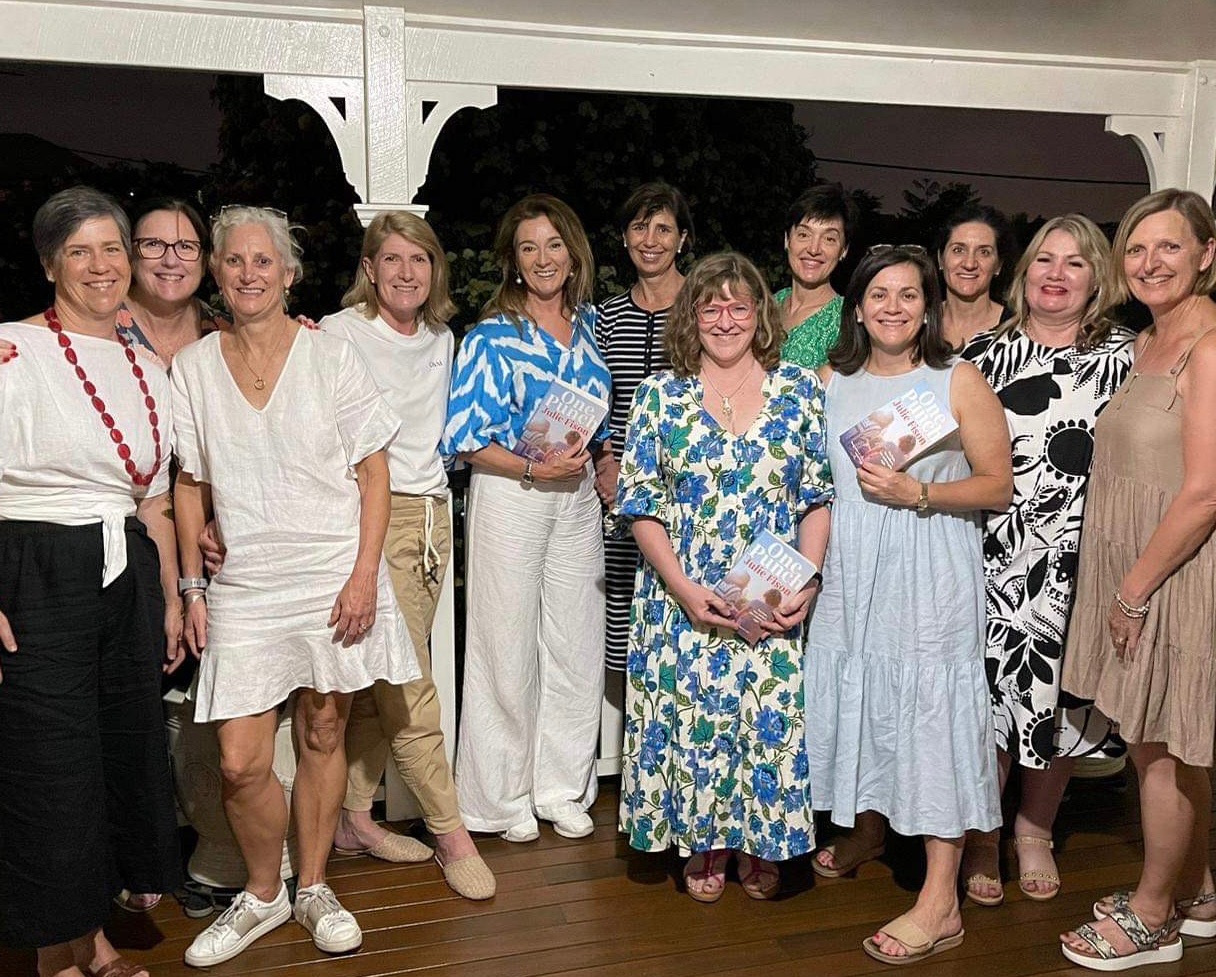
Just a few of Queensland’s crime writers: Amanda O’Callaghan, Sara Bragg, Poppy Gee, Julie Fison, Allie Reynolds

Joanna Jenkins

Author of legal thriller How to Kill a Client, Joanna Jenkins, recommends Madeleine Gray’s beautifully writer debut novel Green Dot, which tells the story of a young Sydney-sider whose friends seem to have slipped effortlessly into adulthood, while she has so far accrued an ex-girlfriend, several hundred hangovers and a dog-eared novel collection.  It explores the ennui of twenty-somethings, the allure of chasing something that promises nothing and the tortuous journey to find who we are.

Crime sisterhood: Al Campbell, Christina Lee, Rahnia Collins, Amanada O’Callaghan, Allie Renolds, Poppy Gee, Julie Fison, Tina Clark, Tess merlin, Nicole Melanson, Alyssa Mackay, Carla Salmon, Harrie Blake, Megan Norris

Sara Bragg

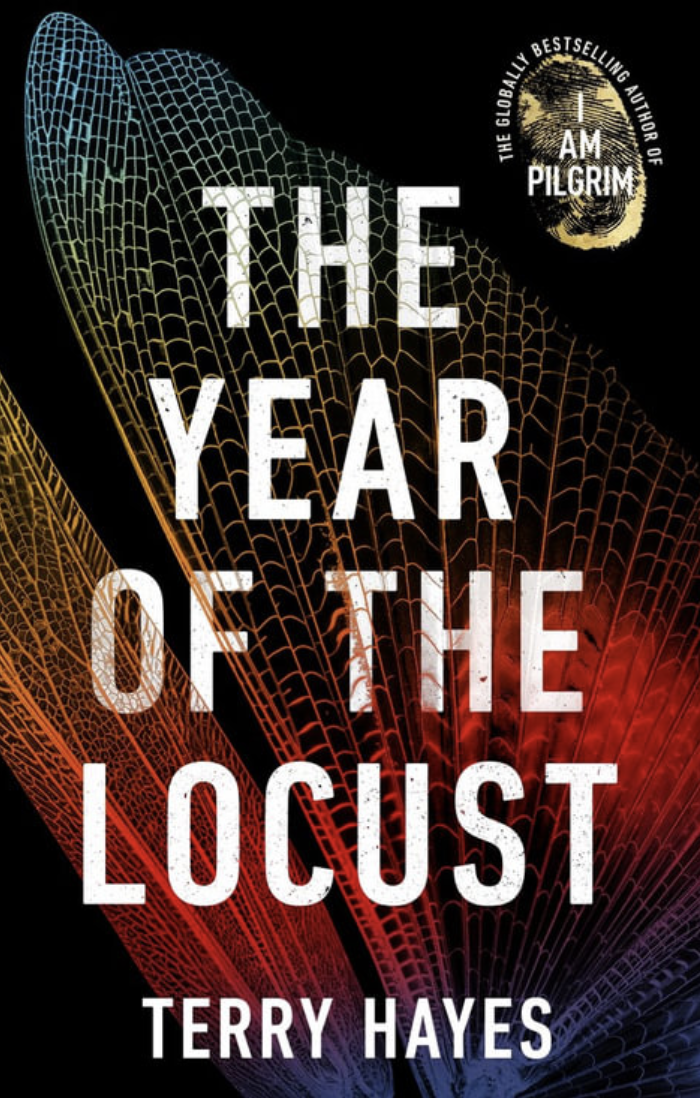
Writer, editor and authors’ website designer, Sara Bragg, can’t wait to get stuck into Terry Hayes new geopolitical thriller The Year of the Locust – the long-awaited follow up to international bestseller I am Pilgrim. The book promises an action-packed spy story as CIA agent Ridley Kane is sent to Iran to prevent a global terrorist plot and comes up against an adversary prepared to take the world to the brink of extinction. Strap in for a high-octane ride with this one!

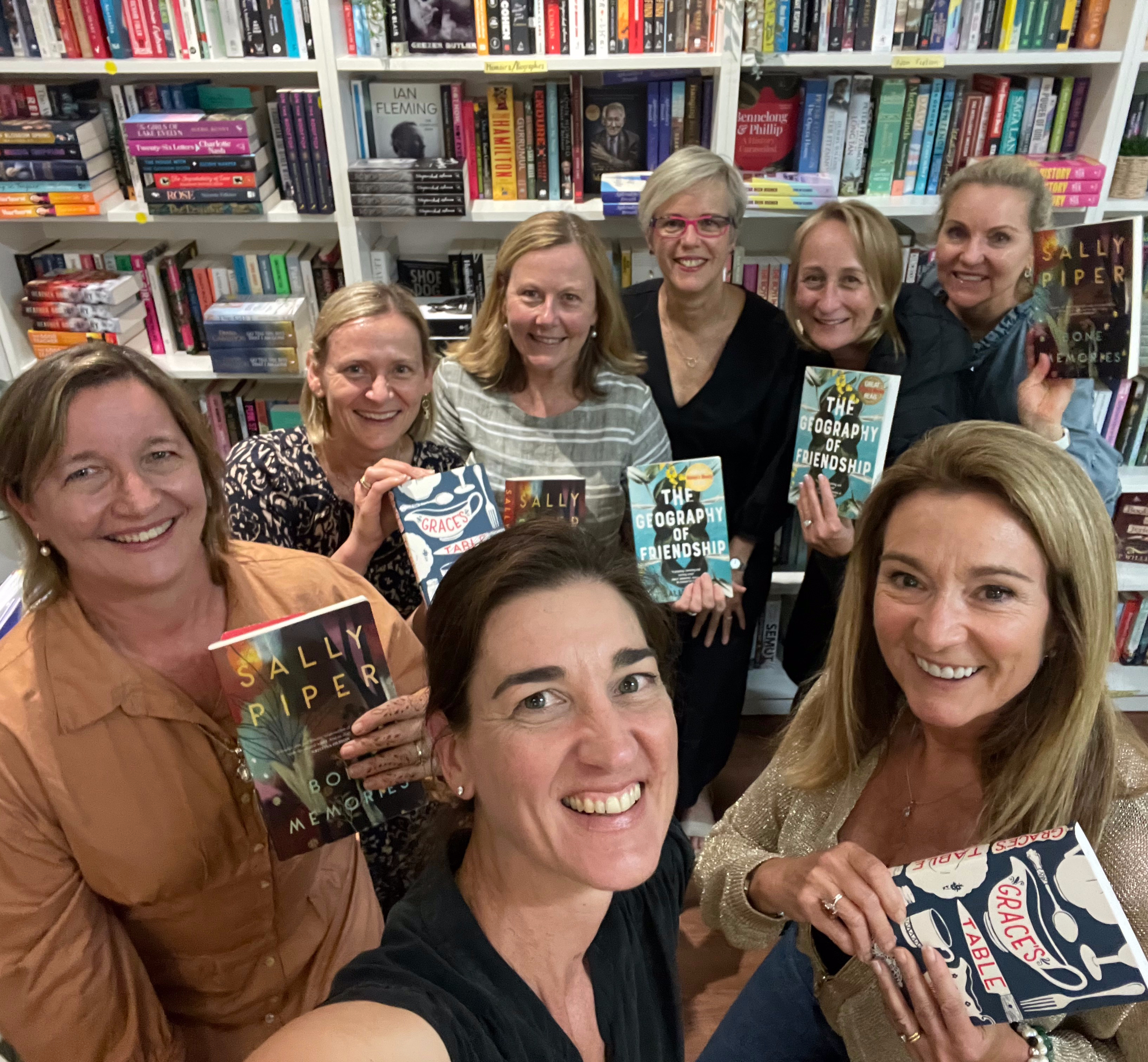
Sally Piper sharing Bone Memories with my bookclub at Bright and Early Books

Sally Piper

Award winning author of Grace’s Table, The Geography of Friendship and Bone Memories, Sally Piper, recommends Lucy Treloar’s latest novel, Days of Wonder and Innocence. The book tells of a young woman who has lived in the shadow of the abduction of a childhood friend. It is a moving study of the long tail of grief, guilt and shame. In true Lucy Treloar style, place is strongly and beautifully represented in the work, while her characters (and it’s quite a sizable cast) are meticulously crafted with insight and authenticity. The novel is a cracking read – fast-paced but also a tender exploration of things that can break the human spirit and the forces of good which can restore it.

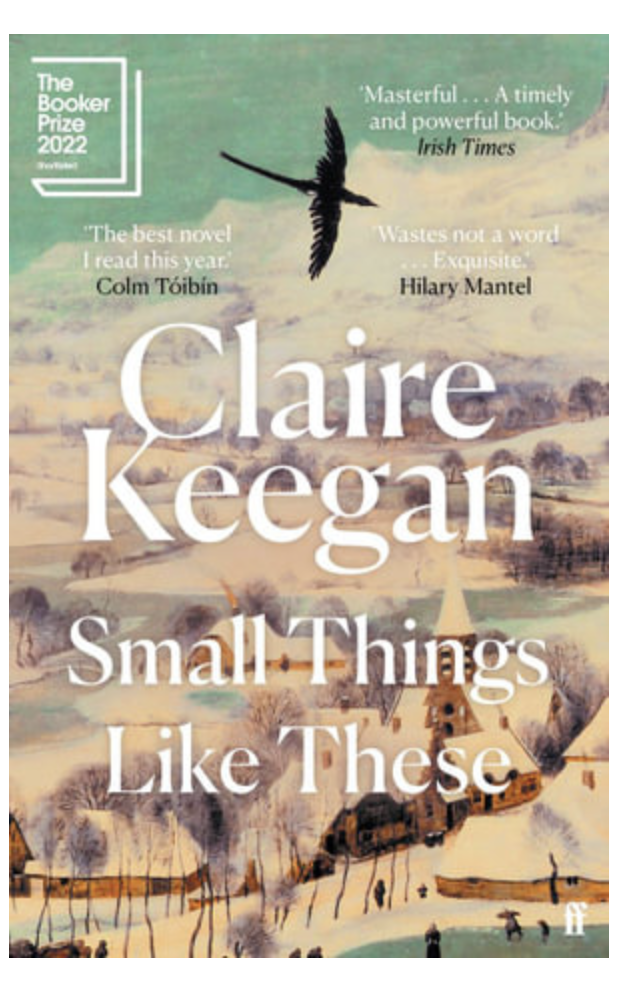
Sally also recommends Irish novelist Claire Keegan, whose writing is restrained yet still harbours a rich and complex subtext. Her latest work So Late in the Day is a very quick read, but an insightful study of relationships and the importance of generosity. Her previous novel – Small Things Like These, which was short-listed for the 2022 Booker Prize, is a tale of courage, and its costs, in Catholic Ireland. I am also a massive fan of Claire Keegan’s books. And this one is an absolute gem. Short, quiet, but incredibly powerful.

Julie Fison

And my suggestion for the holidays: Miles Franklin award winner Melissa Lucashenko’s latest novel Edenglassie. (A book that Sally Piper also recommends.) The novel weaves a tale between current times and 1850s Brisbane when First Nations people outnumbered colonists. The novel tells two love stories, set five generations apart, and delivers a fresh perspective on Goorie resistance – all told with Melissa Lucashenko’s trademark straight-talking wit. The title of the book comes from the name given to the early Brisbane settlement – a blend of Edinburgh and Glasgow, which reflects the origin of the early colonists. If you’re looking for something weighty, but highly entertaining, make sure you put this one on your wish list!

A big thank you to Poppy Gee, Allie Reynolds, Joanna Jenkins, Sara Bragg and Sally Piper for their recommendations. If you are still looking for inspiration, rush to your local book shop and grab one of their novels. These authors deal with crime in very different ways – some write suspenseful thrillers, other explore the consequences of crime – but they are all exceptionally talented writers! 

Happy reading!

How to spend 24 Hours in the Spanish city of Segovia

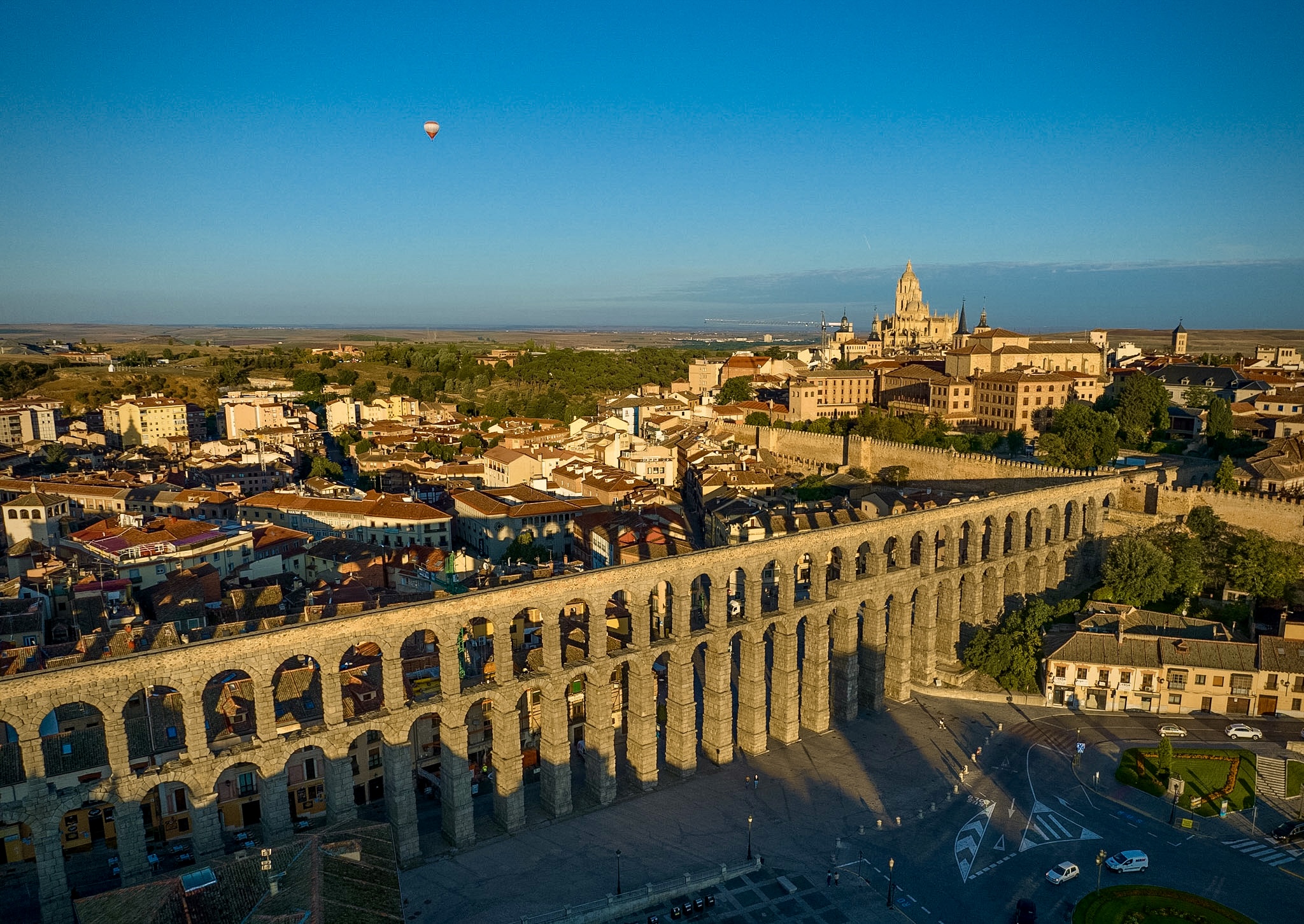
The historic Spanish city of Segovia boasts a grand Gothic cathedral, a medieval castle that looks to be lifted straight from the pages of a fairy tale, and a Roman aqueduct that is considered one of the best preserved in Europe. Perched on a hilltop, just an hour outside Madrid, it is an ideal destination for day trippers, but to get a complete picture of this charming walled city, book into a hotel in the old town and enjoy the ever-changing light on the sandstone architecture as well as an unforgettable meal in one of the city’s iconic restaurants. You won’t be disappointed!

Segovia Aqueduct. Image: John Fison

Dawn at the Segovia Aqueduct

Legend has it that the Roman Aqueduct of Segovia is the result of a girl promising her soul to the devil in exchange for water reaching her house before day break. So it is fitting that we visit the spectacular two-tiered structure at dawn. The Aqueduct stands 28.5 metres high, with 128 pillars spanning more than 800metres, a grand feat of engineering that is held together without mortar. It was built in 50 BC to transport water from the La Acebeda to the Alcazar fortress and is considered one of the most impressive legacies of Roman times left in Spain. With golden sunlight rays of peeking through the pillars, the Aqueduct is an unforgettable sight. 

Morning at the Alcazar

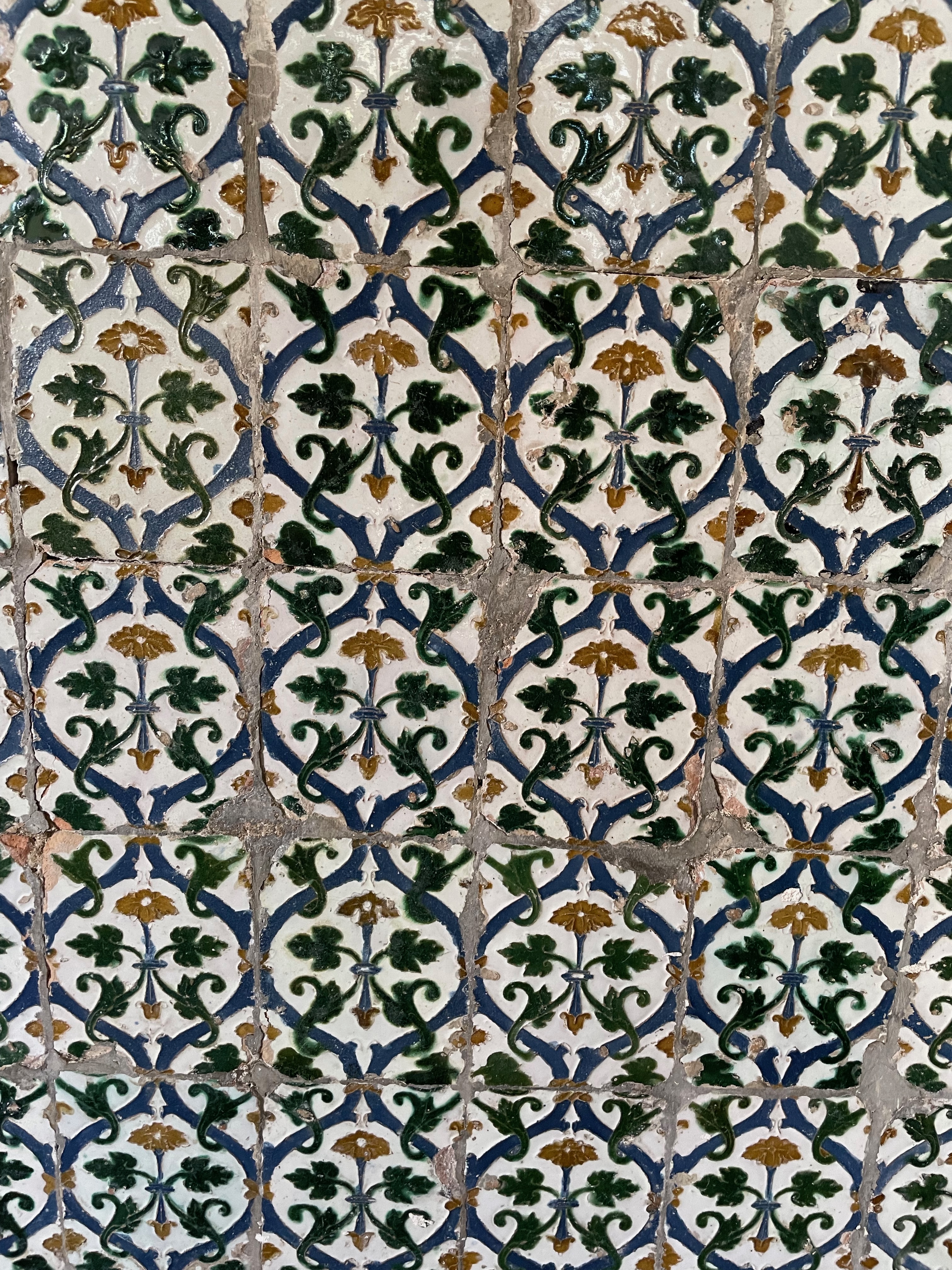
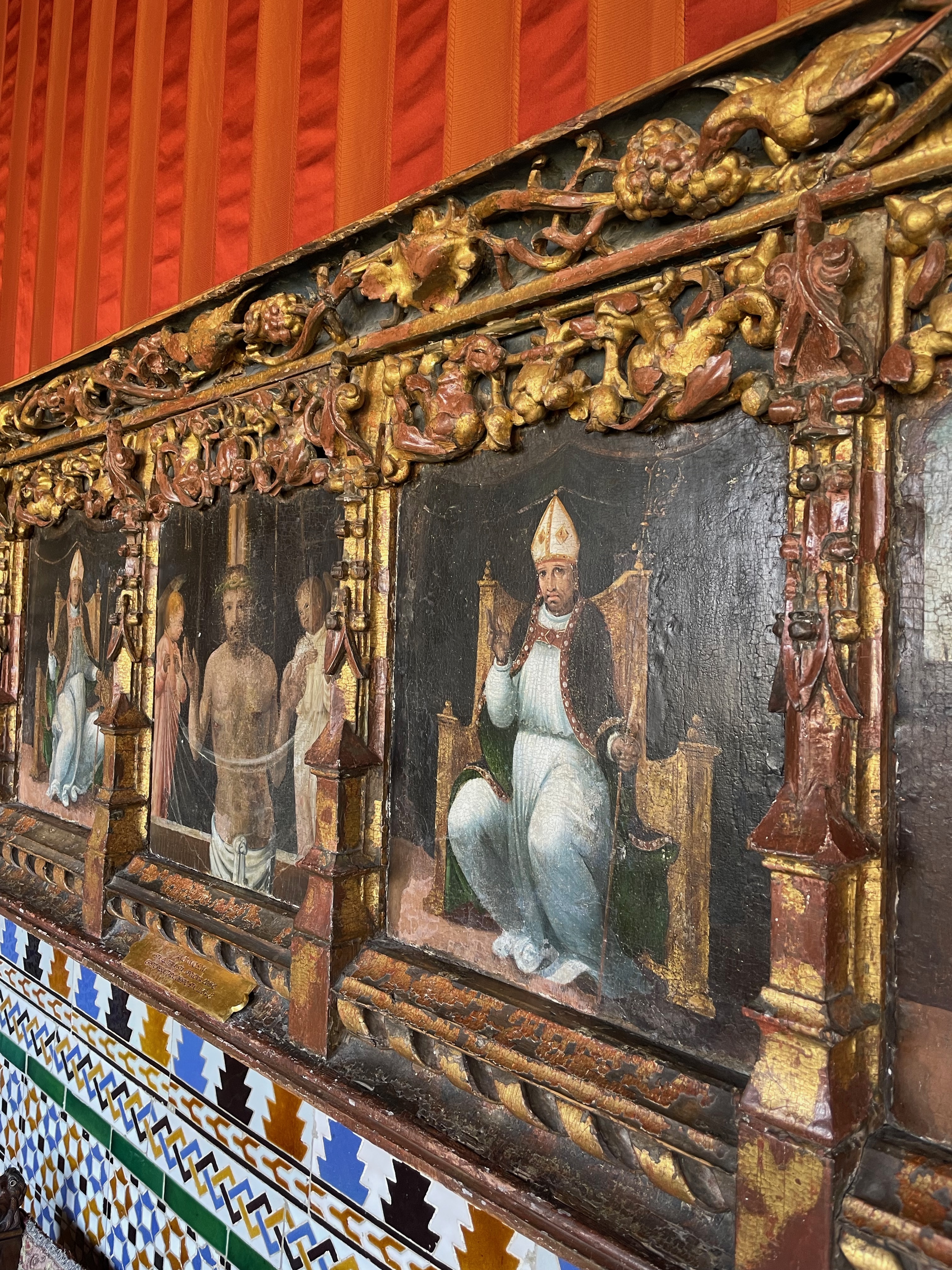
After a traditional breakfast of jamon, queso and huevos, (ham, cheese and eggs) at the Hotel Real Segovia, we make our way through the pedestrianized streets of the old town to the Alcazar. This medieval fortress is an eclectic blend of Romanesque, Moorish, Gothic and Renaissance architecture. Built high on a rocky outcrop to protect the city, it became a royal residence, then a prison, a military academy, and is now one of Spain’s most famous castles. Rooms are lavishly decorated, with carved archways, elaborate ceilings and beautiful tiles  revealing the Moorish origins of the Alcazar, while the Christian influence can be seen in the stained glass, sculptures, icons and paintings. Don’t miss a visit to the tower. It involves a steep climb, but the view is totally worth the effort.

Alcazar. Images: Julie Fison

Julie Fison catapults readers into the murky and contested waters of love, morality and justice from the first page of One Punch and holds them, transfixed, right till the end. It’s a story that exposes the consequences of unconditional love; the cost and burden this delivers parents, their children and anyone caught in its more nefarious orbit. One Punch is a raw, urgent and chilling portrait of family loyalty and the frightening repercussions of being blind to the faults in those we love. Read this book and your conviction about what is right and wrong will be changed forever.

Sally Piper, Bone Memories

Lunch at Plaza del Socorro

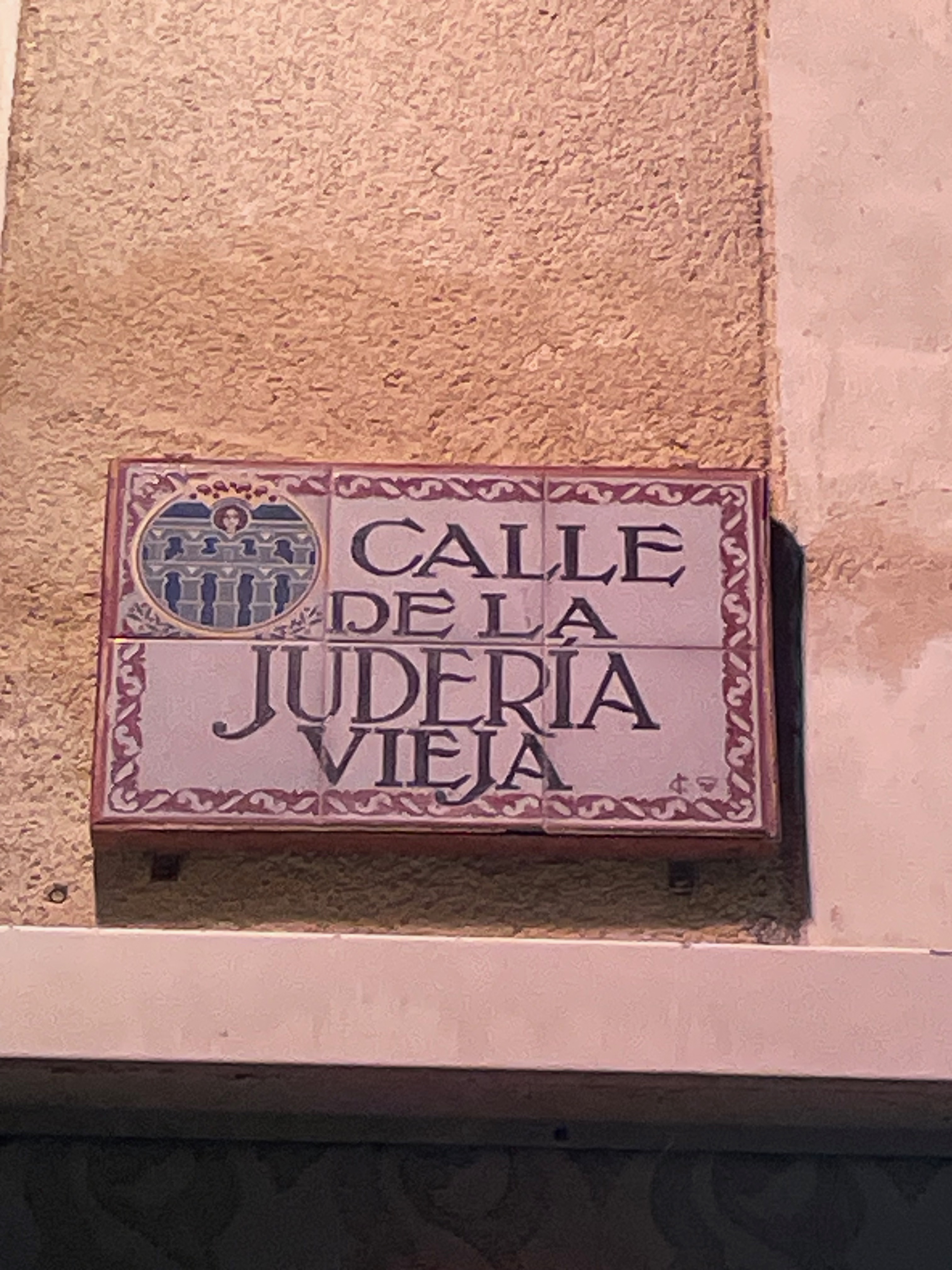
After exploring the beautiful Alcazar, we follow the southern side of the city wall (Muralla), admiring the castle from the many viewing points along the way, and stopping at the Puerta de San Andres – one of the three remaining city gates. This gate was once the entrance to the Jewish Quarter, home to a vibrant Hebrew community for several centuries, until a royal edict expelled Jews from Spain in 1492. Plaza del Socorro is an ideal place to grab a bite to eat and ponder the turbulent history behind the serene streets and beautiful facades.

Afternoon at Segovia Cathedral

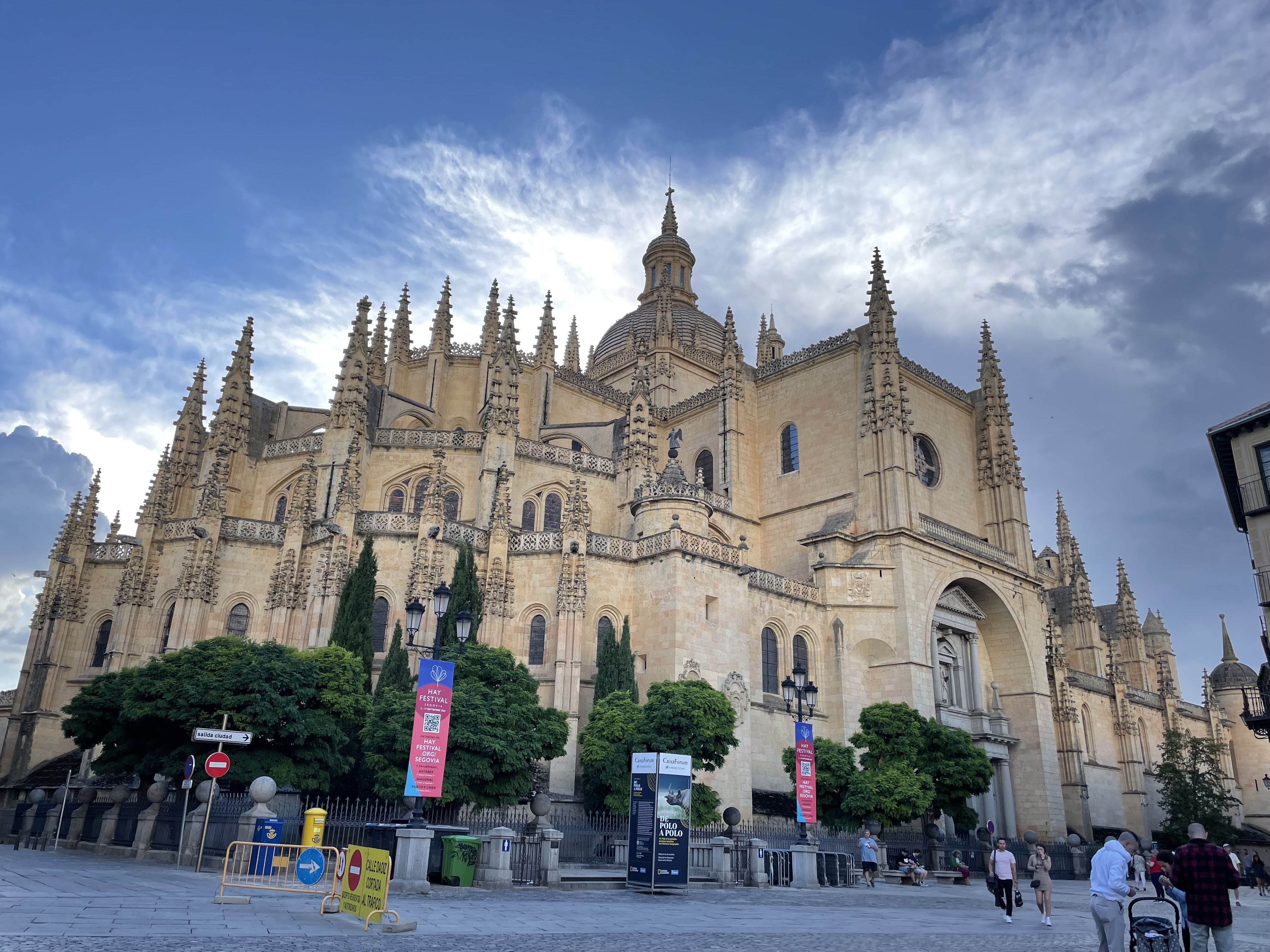
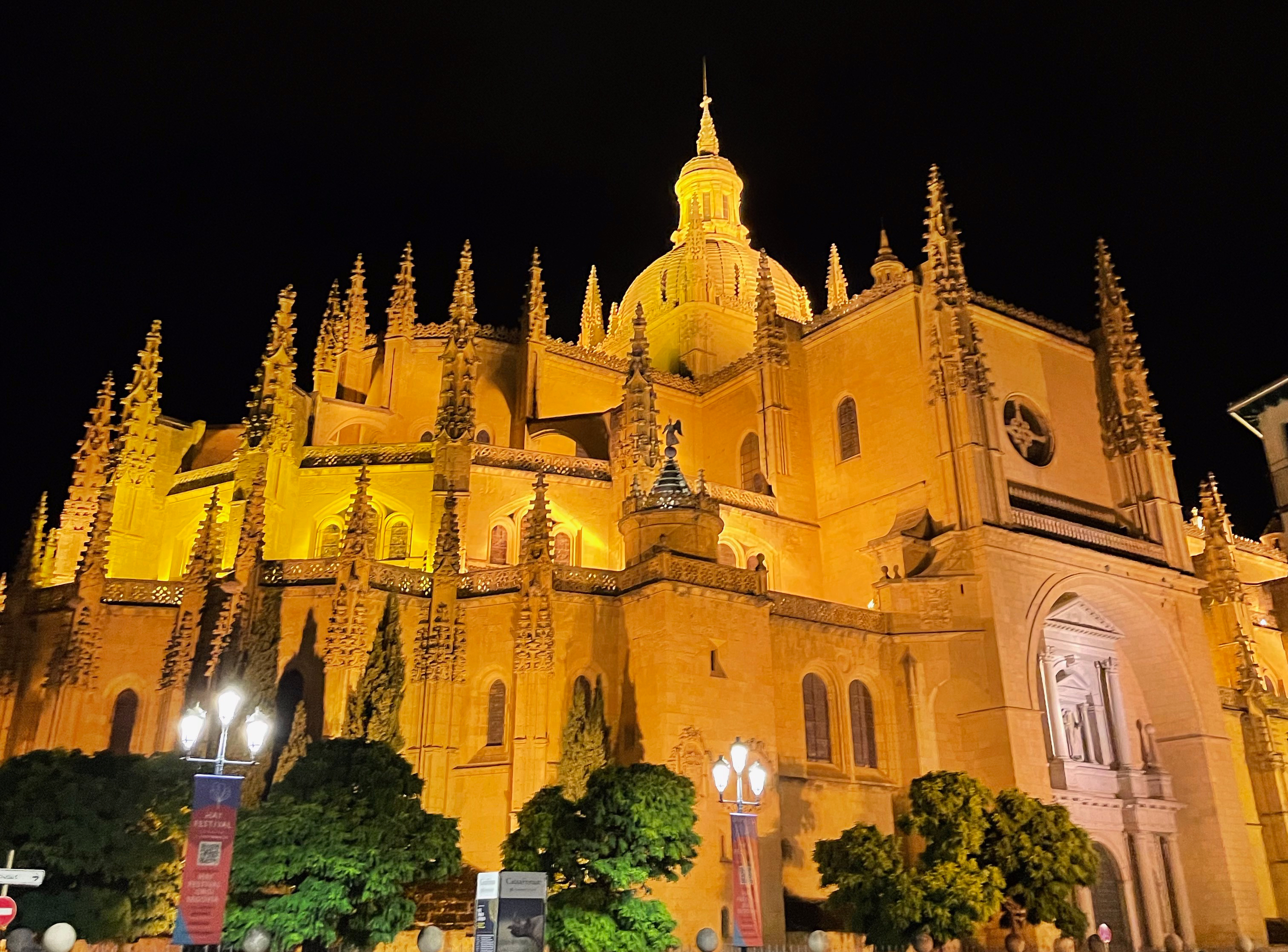
From here it is a short walk to the grand centrepiece of the city’s Christian heritage – Segovia Cathedral. Built on the highest point of the city in the 16th century, the Gothic cathedral towers over Segovia, with three naves and massive domes decorated with stained glass. Take a tour inside, and then choose a table at one of the many restaurants lining the nearby Plaza Mayor and watch the afternoon light turn the whole city gold. Tapas is served with wine, making this the perfect spot to enjoy a sundowner and a pre-dinner snack. 

Segovia Cathedral. Image: Julie Fison
Segovia Cathedral. Image: John Fison

Dinner at Jose Maria

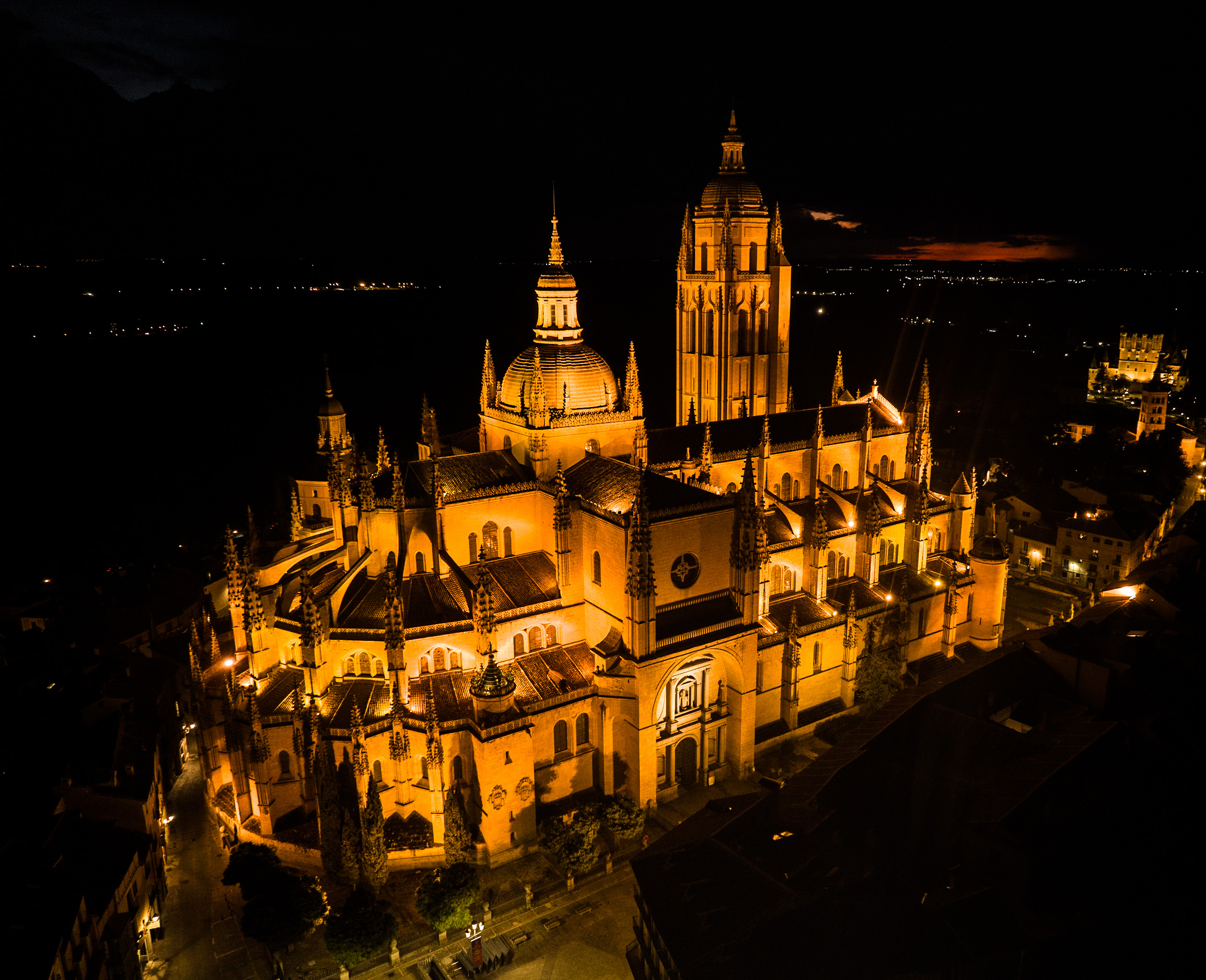
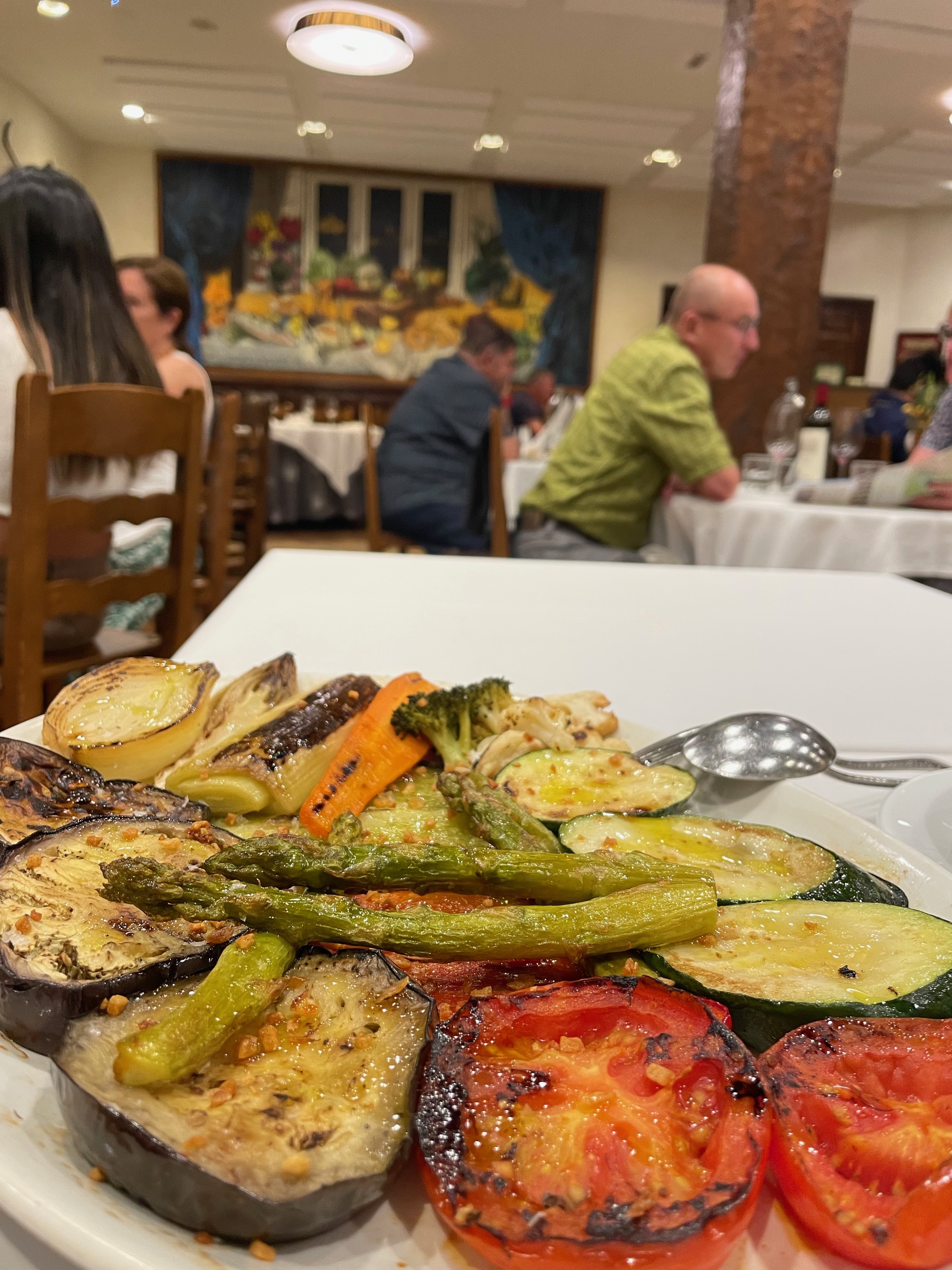
Segovia is famous for its Cochinillo (roast suckling pig), and we have been informed by our taxi driver that Restaurant Jose Maria is the place to enjoy this regional speciality. The restaurant, located just off the Plaza Mayor, is popular with tourists and locals, so booking is definitely recommended. It is not, however, the place for vegetarians. The Cochinillo is presented whole, with meat so tender it is cut into pieces with a plate. I’m too squeamish to watch, but the spectacle is all part of the dining experience. Order a side of grilled vegetables and a bottle of Ribera del Duero (the local red wine) for the perfect Segovia style meal. Follow dinner with a stroll around the old town. Segovia Cathedral is even more spectacular at night!

Segovia by night. Images: John Fison/ Julie Fison

Useful info

Segovia is an hour from Madrid by car or train. You probably won’t need a car once you are here as much of the old town is pedestrianised and most of the sites are within easy walking distance of each other.  Just be aware that the train station is 20km out of town. We stayed at the Hotel Real Segovia which had helpful staff, a great location and pleasant rooms. 

A bit more time up your sleeve…

The Spanish university town of Salamanca is another honey-coloured treasure. The streets are lined with Gothic cathedrals, convents, and of course endless places to eat and drink. Salamanca is the perfect destination for a weekend break.

Enjoy!

5 Reasons to Love Hvar

The Croatian island of Hvar is one of the hottest destinations in the Mediterranean right now. Up there with the likes of Sicily, Sardinia and Mykonos.  It has a reputation as the place to party when visiting the Dalmatian coast, with celebs charting a course for its picture-perfect harbours, and the Instacrowd snapping pics of themselves on pricey sun lounges. But the island has so much more to offer than superyachts, beach clubs and Negroni cocktails. In many ways, it is the ultimate holiday destination.  With hilltop forts, medieval towns, great seafood and endless opportunities to swim in absurdly picturesque coves, Hvar has something for everyone. We spent a week on the island, exploring by car, boat and by foot. Here are just a few reasons to put Hvar on the top of your Euro-summer bucket list.

Gorgeous Beaches

Zarace. Image: John Fison

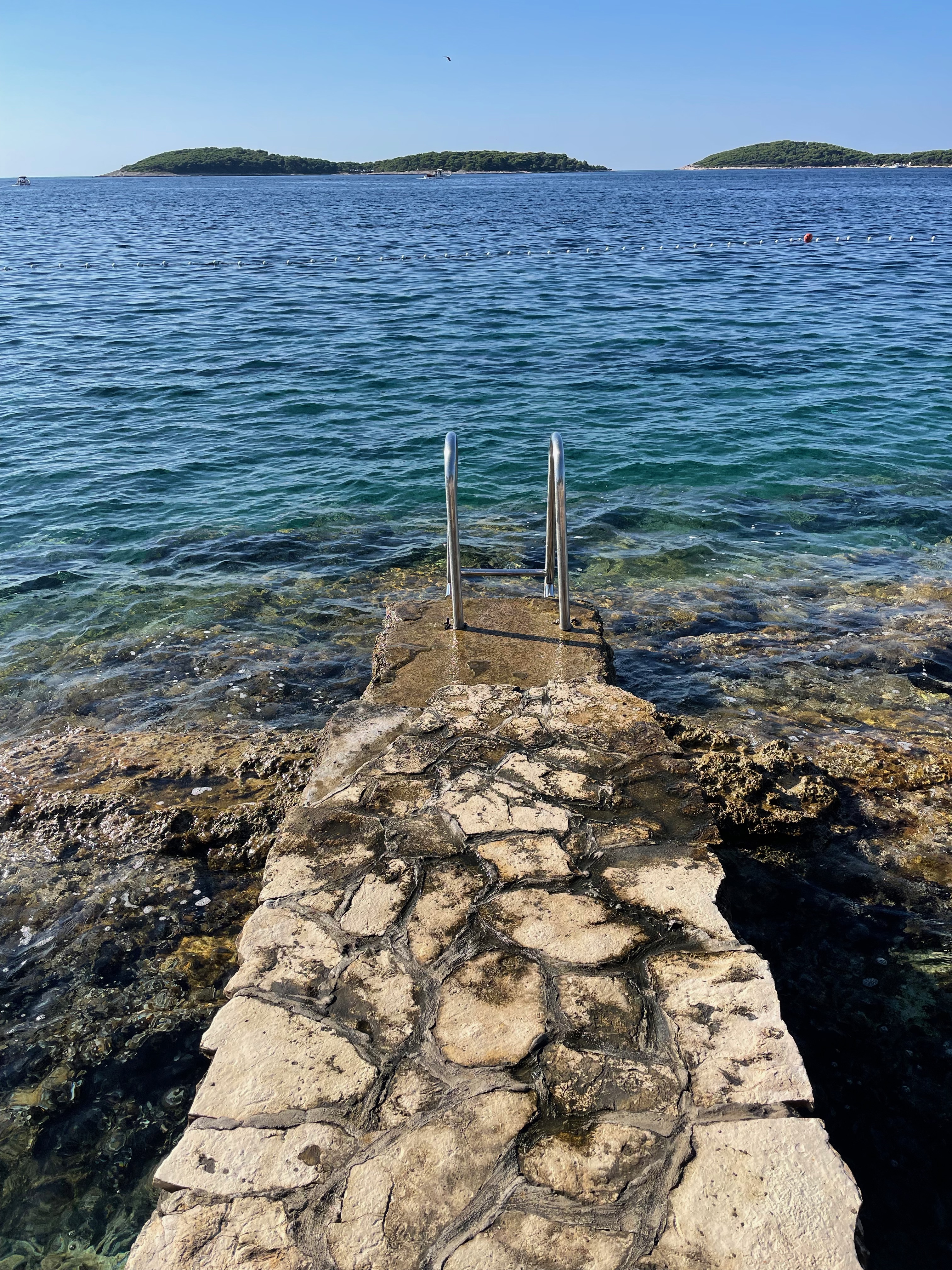
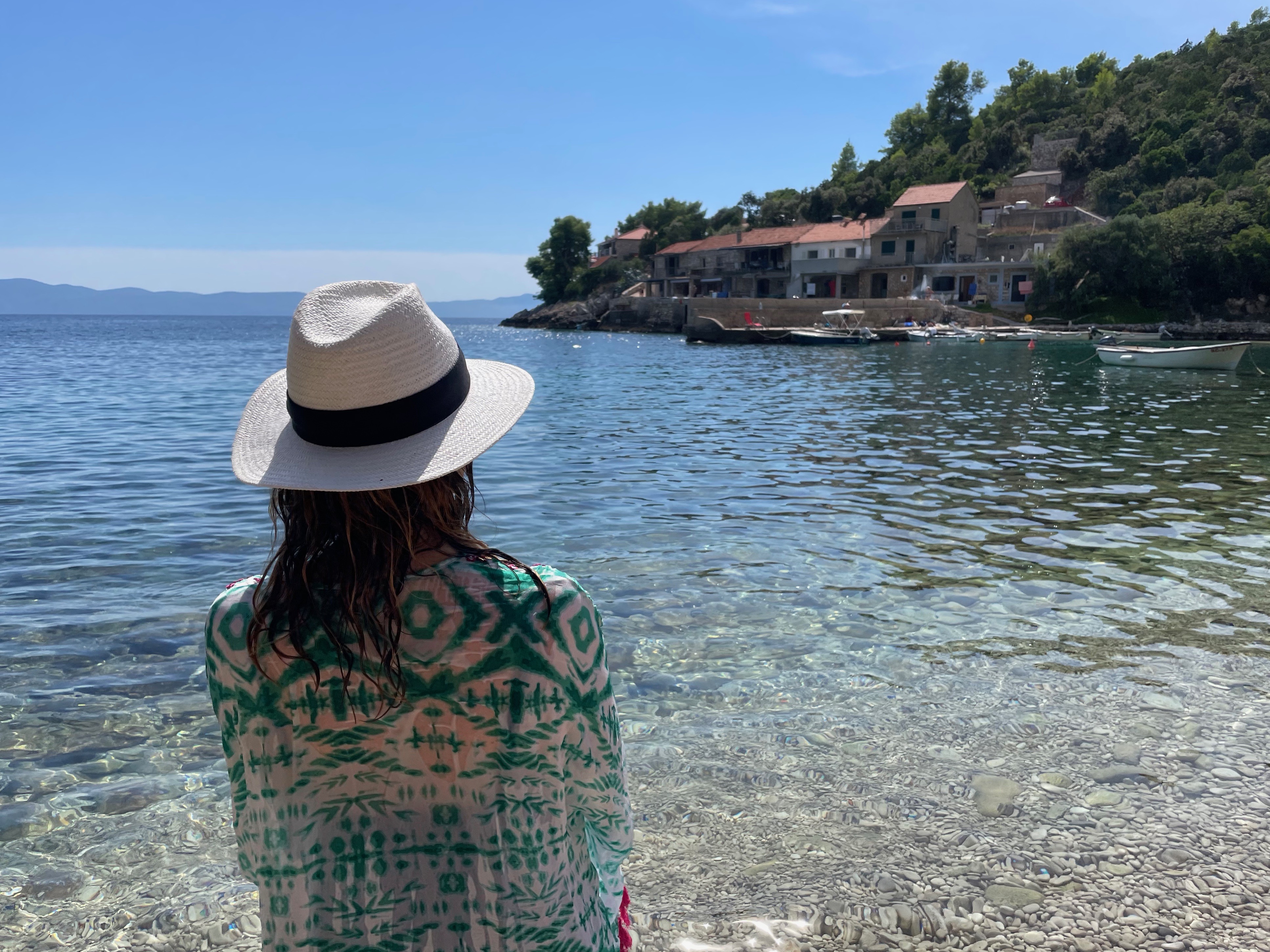
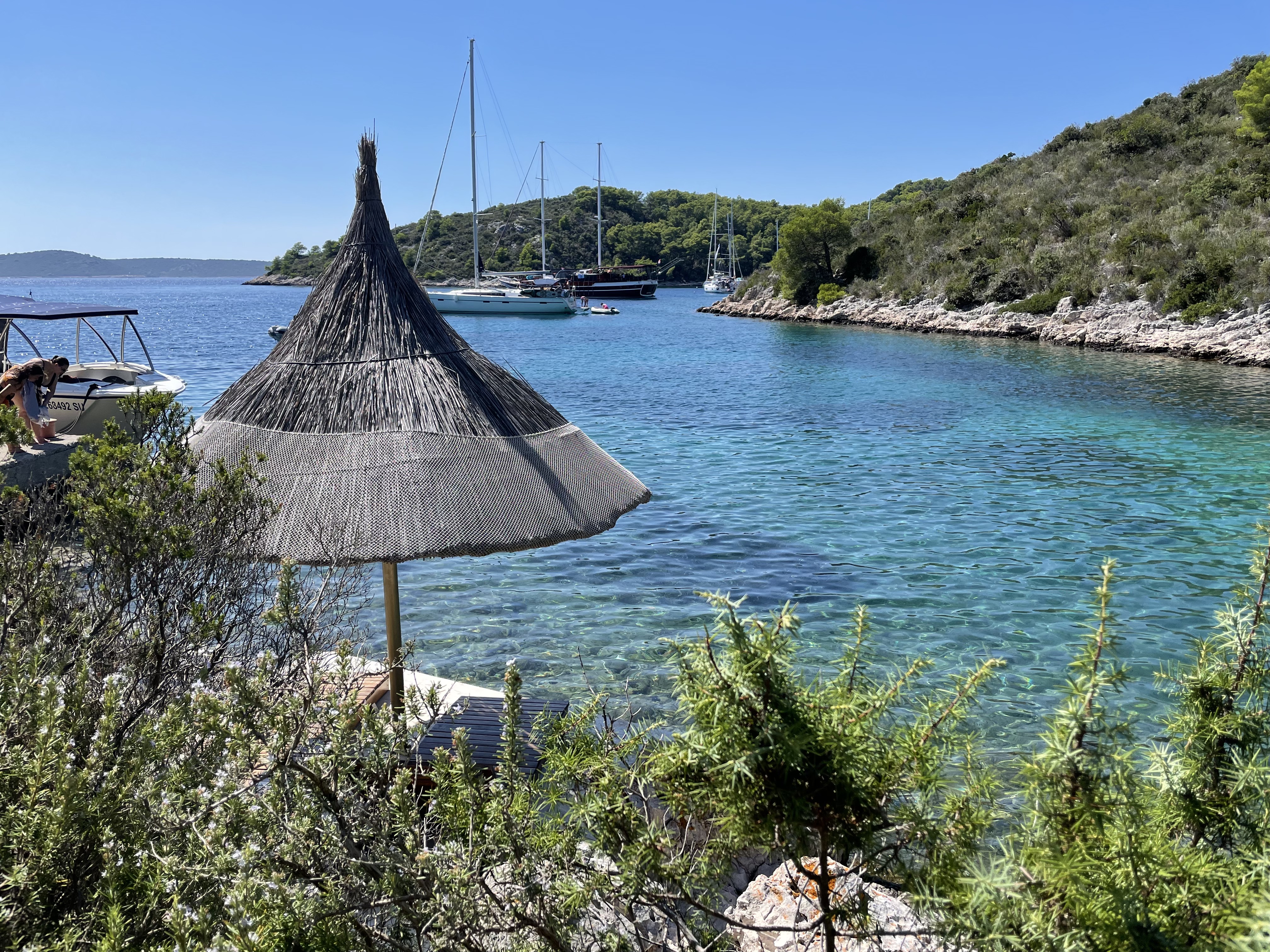
The beaches on Hvar, and other islands along the coast of Croatia, tend to be pebbly. They require tough feet or reef shoes to negotiate. Sometimes a steel ladder affixed to a rocky outcrop is the best place to enter the water. But what they lack in fine white sand, they make up for in other ways. Hvar’s best swimming spots are framed by cypress-covered mountains, stone villas and historic towns. They feature quaint konobas serving traditional meals, or little beach bars for afternoon refreshments. Then, there’s the sea – delicious turquoise water with nothing more than the occasional sea urchin to be wary of. Picture-perfect, and so, so inviting, you’ll want to dive right in.  

Dubovica. Image: John Fison

Hvar Town and Bonj

The shoreline just to the west of Hvar Town offers countless places to cool off, all accessible from the lovely promenade. Bonj has a pebbly beach and a beach club, other areas are dotted with pay-to-use sunlounges, or you can plonk your towel on a rock for free. Dive into the crystal-clear water and enjoy a view of historic Hvar as you bob along.

Hvar. Image: Julie Fison

Zarace

My family’s favourite beach lies just outside Hvar town on the road to Stari Grad. It’s actually two spectacular coves, set either side of the T-shaped rock formation. On one side is a pebbly beach with the cutest little restaurant overlooking the water. Gego serves great seafood, grilled meat and vegetables, has two cute cats, and a car park. Peel off the main road, head down a steep street, and you’ll find it on the left. If you go to the right, you’ll reach another rocky bay. Access to the beach is via a set of metal steps. Absolutely worth the effort! 

Zarace. Image: Julie Fison

Dubovica

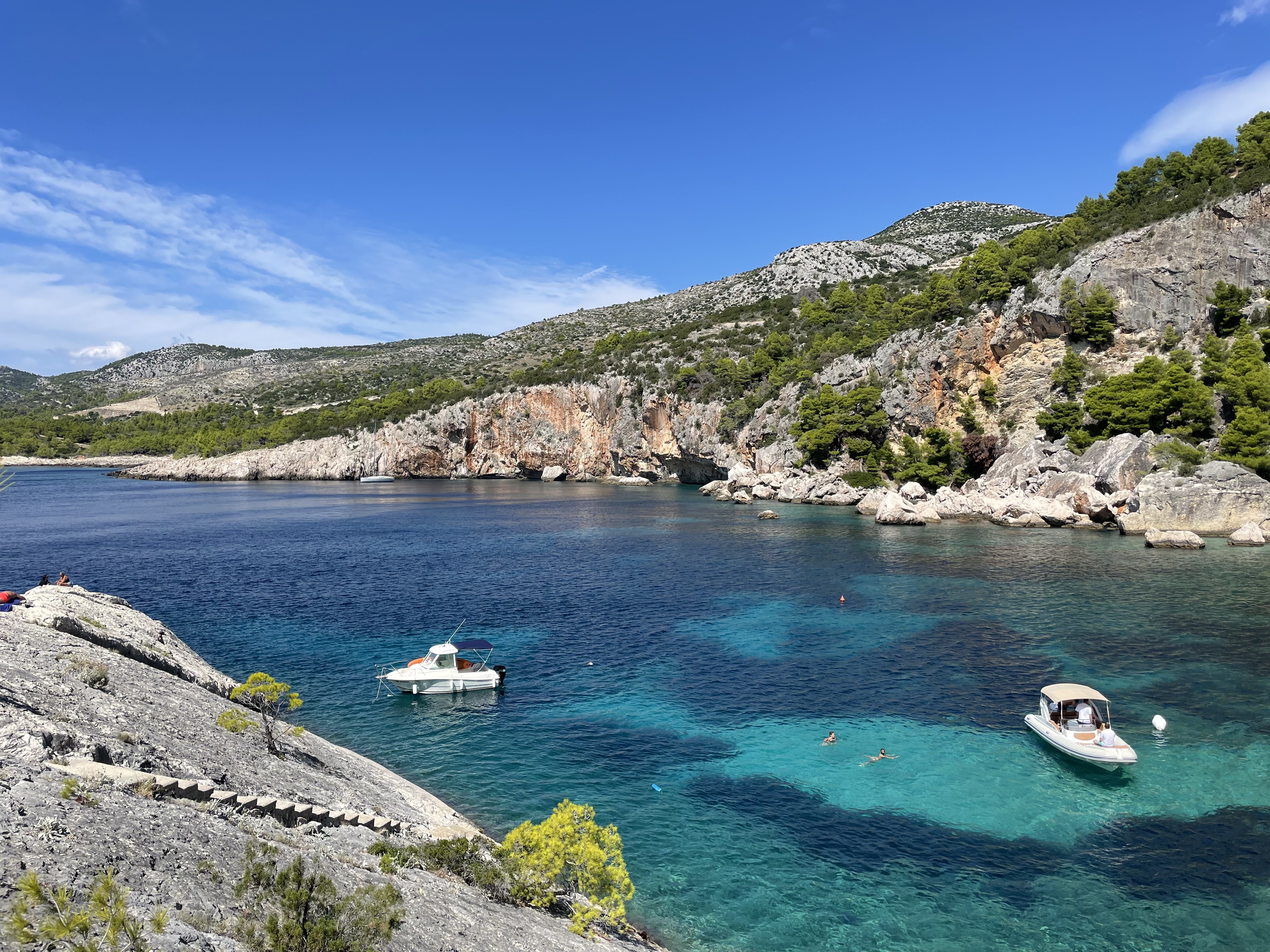
For pure jaw-dropping beauty, Dubovica probably takes the award. A stone villa at one end of the cove, a small restaurant tucked away behind a passionfruit vine, and gentle waves lapping on the stones complete the dreamy picture. The downside: it gets very busy and there’s no parking here. You need to find a spot on the main road (not easy after 11am) and walk down a rough dirt track. But that makes the water so much more amazing when you finally jump in!

Dubovica. Image: John Fison

Srhov Dolac

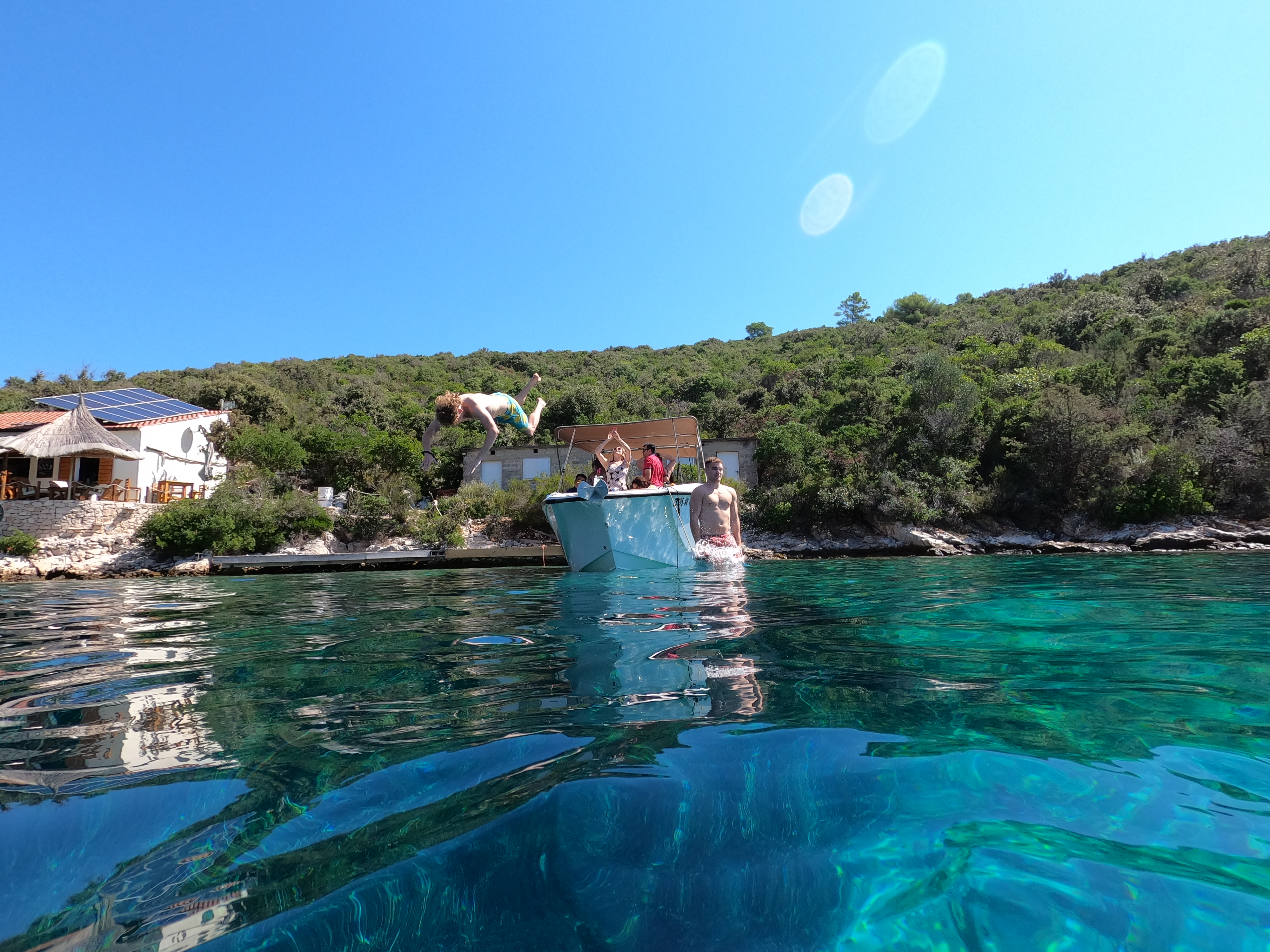
If you’re feeling adventurous, and need a break from the crowds, Srhov Dolac is a great option. Head out along the main road, towards the eastern end of the island, and turn off at the town of Gdinj. You’ll find yourself on a steep dirt road, certain you’ve misunderstood the directions. Eventually you’ll reach the bottom of the mountain and get to a cluster of holiday cottages around a tiny turquoise harbour. The swimming is superb. When you are well and truly water logged, head back to Gdinj, and make for Jelovnik kastell grill. Great pizzas in an authentic atmosphere.

Srhov Dolac. Image: John Fison

Perfect Boating Conditions

Many people come to Croatia to cruise its beautiful waters, but even if you haven’t secured an invite for a super yacht, or a berth on a catamaran, you can still get a taste of boating life. There are countless operators in Hvar town who can take you to the nearby Pakleni islands, or one of the beaches on Hvar Island. We pre-booked a day tour to the Blue caves and Pakleni islands. Weather conditions were against us, and we were unable to get to the caves, but we did visit a dozen incredibly picturesque coves, many of them packed with yachts, and lined with beach bars – much more crowded than I had expected. Palmizana was the prettiest bay, but also the busiest. Prices at beach bars and restaurants frequented by the yachting crowd are generally much pricier than elsewhere on Hvar, but the setting is incredible.

Boating life. Image: John Fison
Image: Julie Fison

Historic Towns

Hvar’s strategic position in the eastern Adriatic Sea has seen it occupied by all of the Mediterranean heavy weights over the centuries, and each one has left a mark on the architecture and the culture of the island.

Ionian Greeks had the run of the island from the 4th century BC, founding the city of Pharos, where Stari Grad now stands. You can see the remains of Pharos at a UNESCO heritage site in the old town and on the agricultural plain that is still in use today. The Greeks were overthrown by the Romans in 219BC and ruled the island for several centuries. Remnants of luxury villas, mosaics and pottery have been uncovered by archaeologists in Stari Grad and Jelsa. 

Jelsa. Image: John Fison

“A raw, urgent and chilling portrait of family loyalty and the frightening repercussions of being blind to the faults in those we love.” Sally Piper

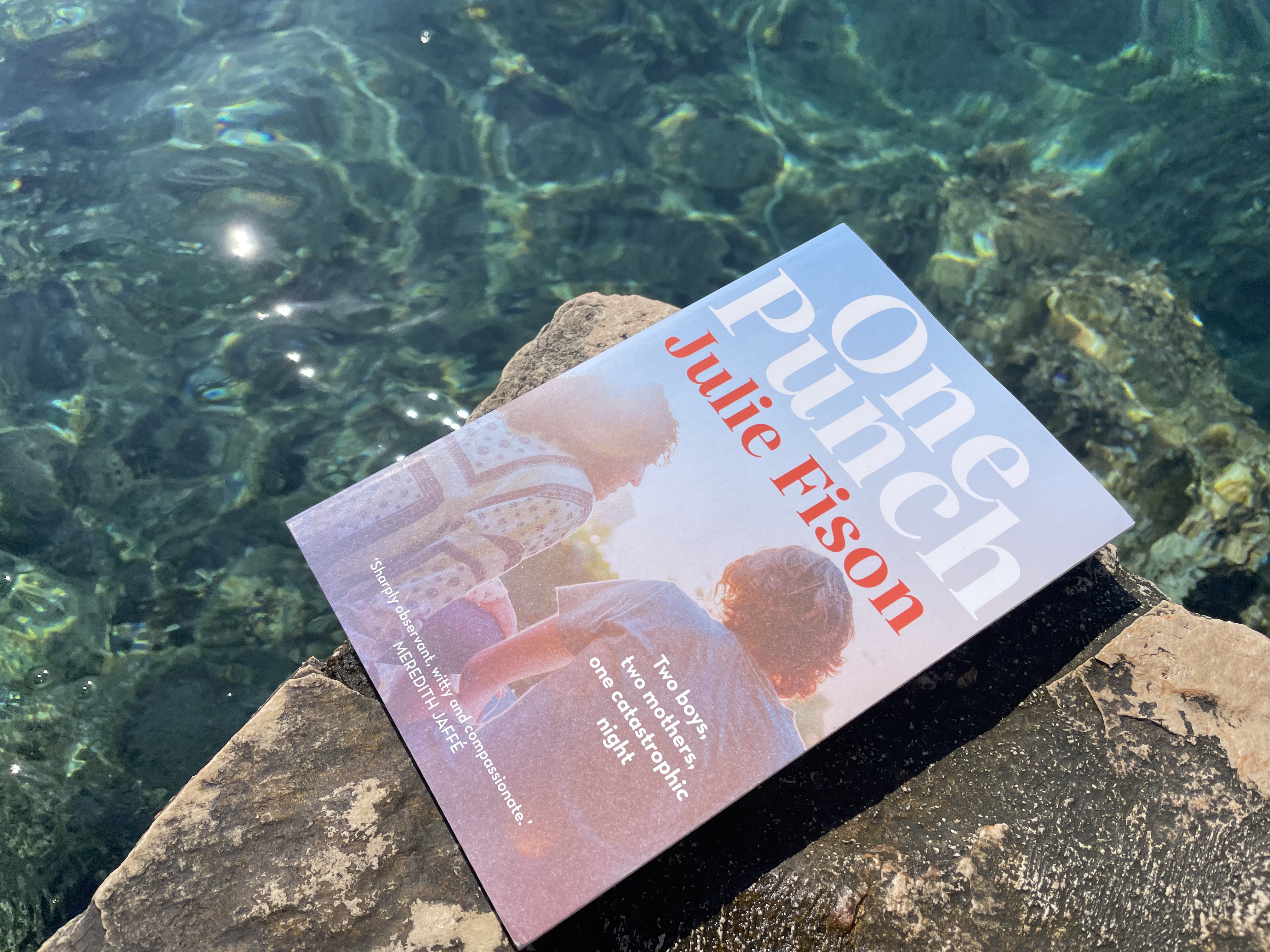
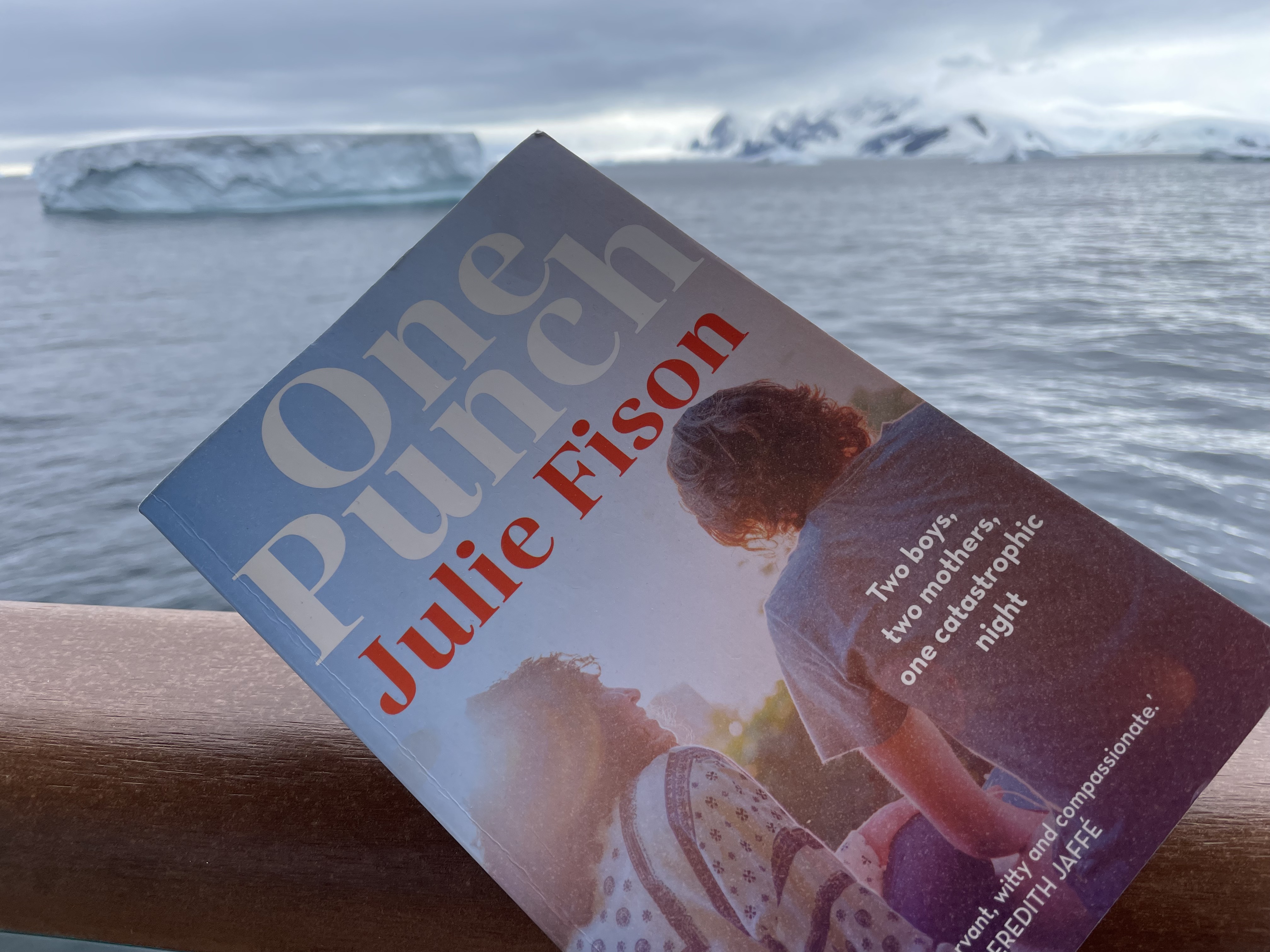
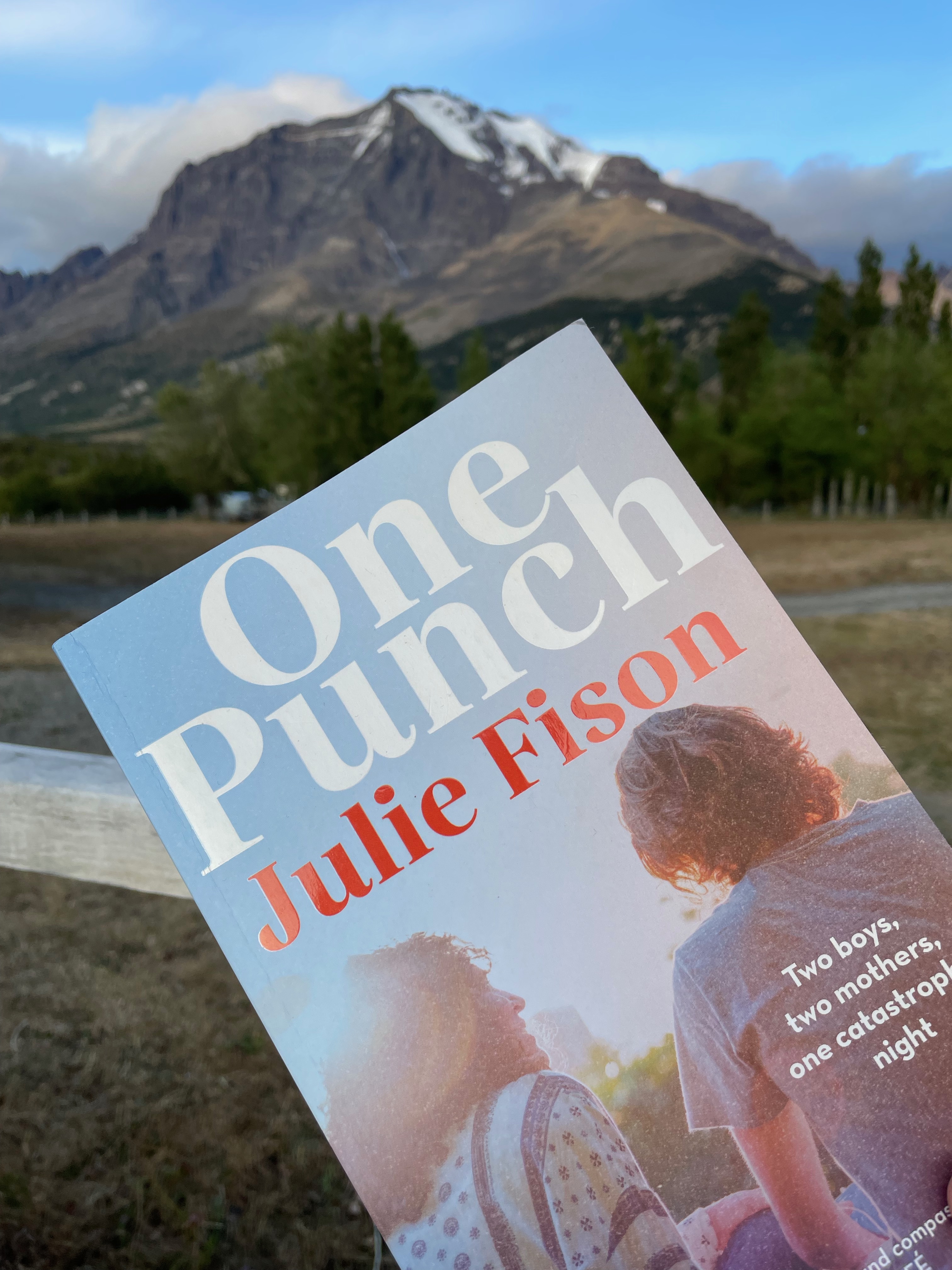
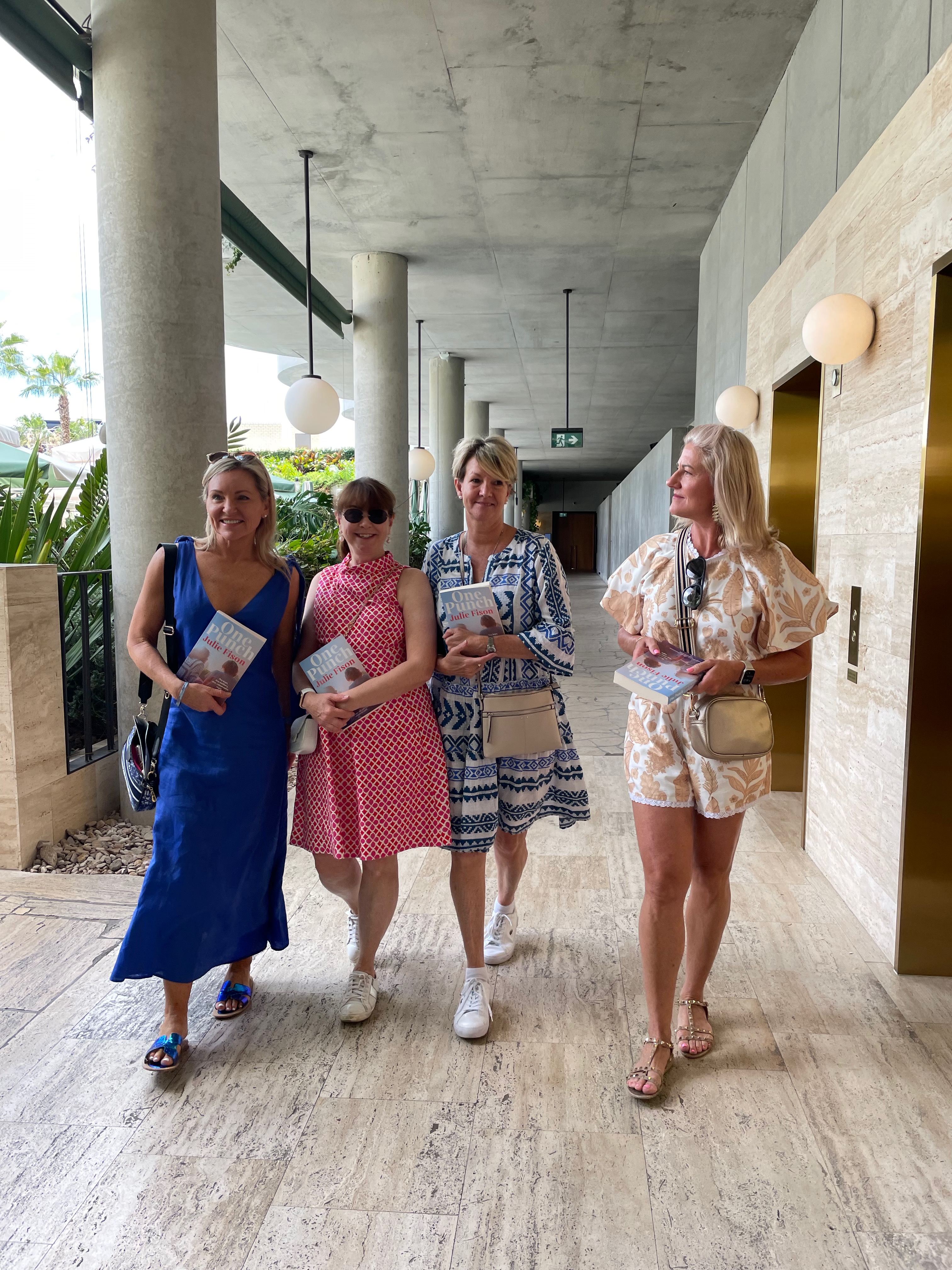
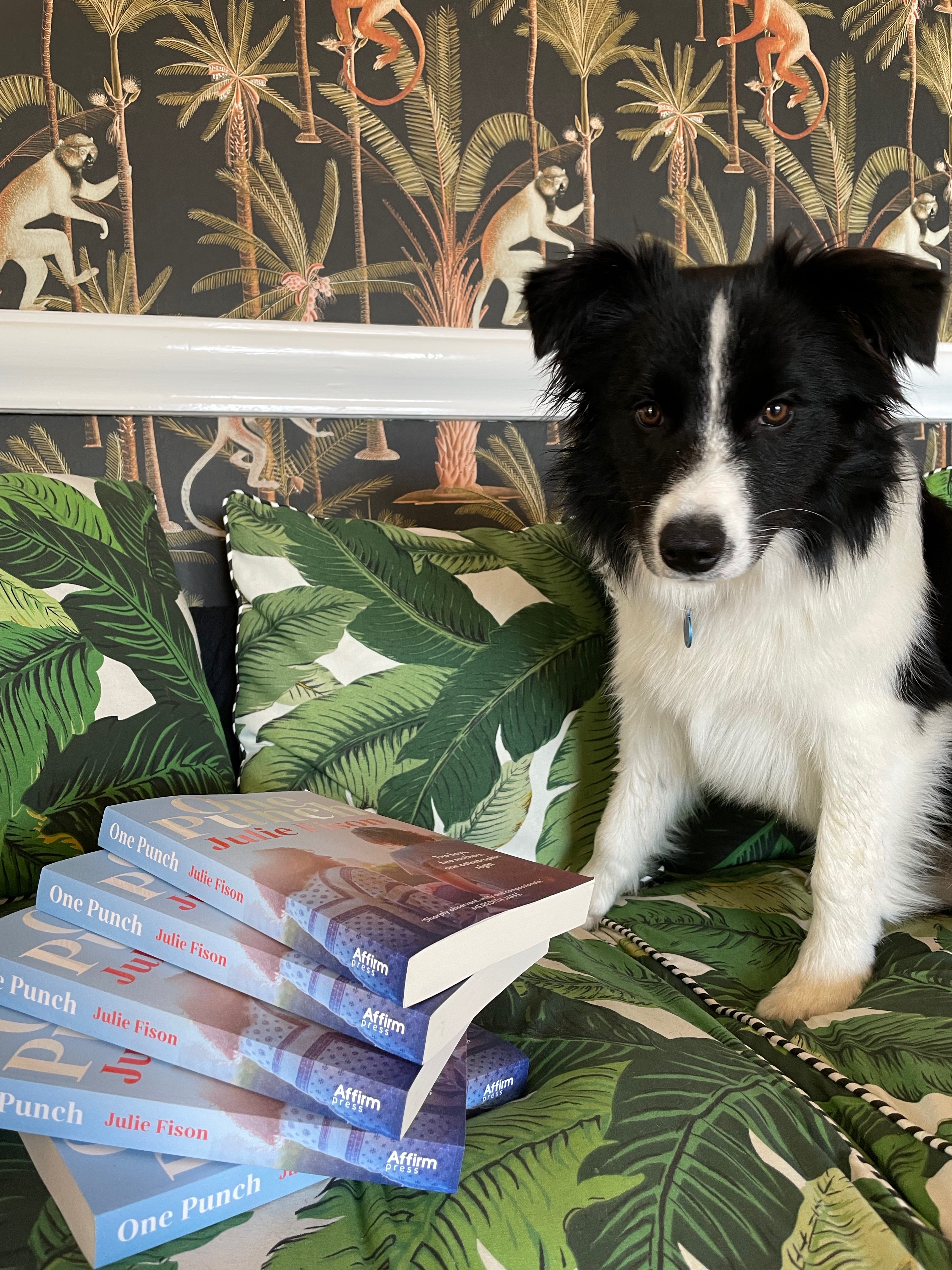
“Sharply observant, witty and compassionate.” Meredith Jaffe

It was the Venetians who really made a mark on the island. Taking control in the 15th century, they moved the main port to the south side of the island, built fortifications, churches and a grand piazza in Hvar Town which is the biggest on the Dalmatian coast. The Turks did their best to destroy the place, but the three centuries of Venetian rule were mostly a prosperous time on the island. Wine, lavender, olive and fishing industries all thrived. 

Tourism was officially launched in Hvar in 1868 after the island came under Austrian rule. The island was successfully marketed as a wellness retreat for affluent Europeans – eager to escape the cold, and enjoy sunny days and sparkling seas. Two World Wars plus Croatia’s fierce battle for independence from Yugoslavia in the early nineties put an end to that, but over the past two decades, Hvar has well and truly bounced back – now a favourite with the mega wealthy, the twenty-somethings and everyone in between.

Hvar Town. Image: Julie Fison

Hvar Town

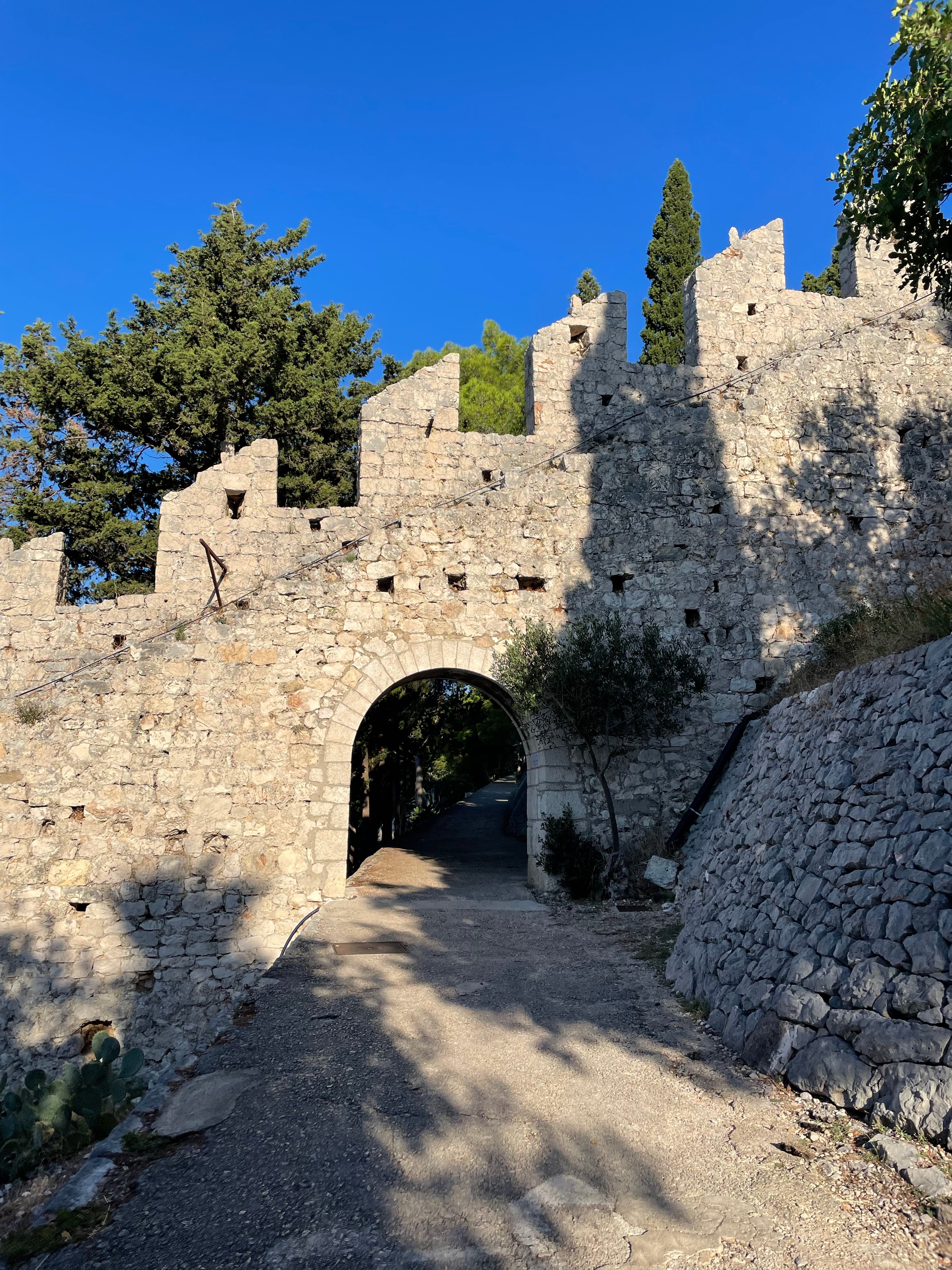
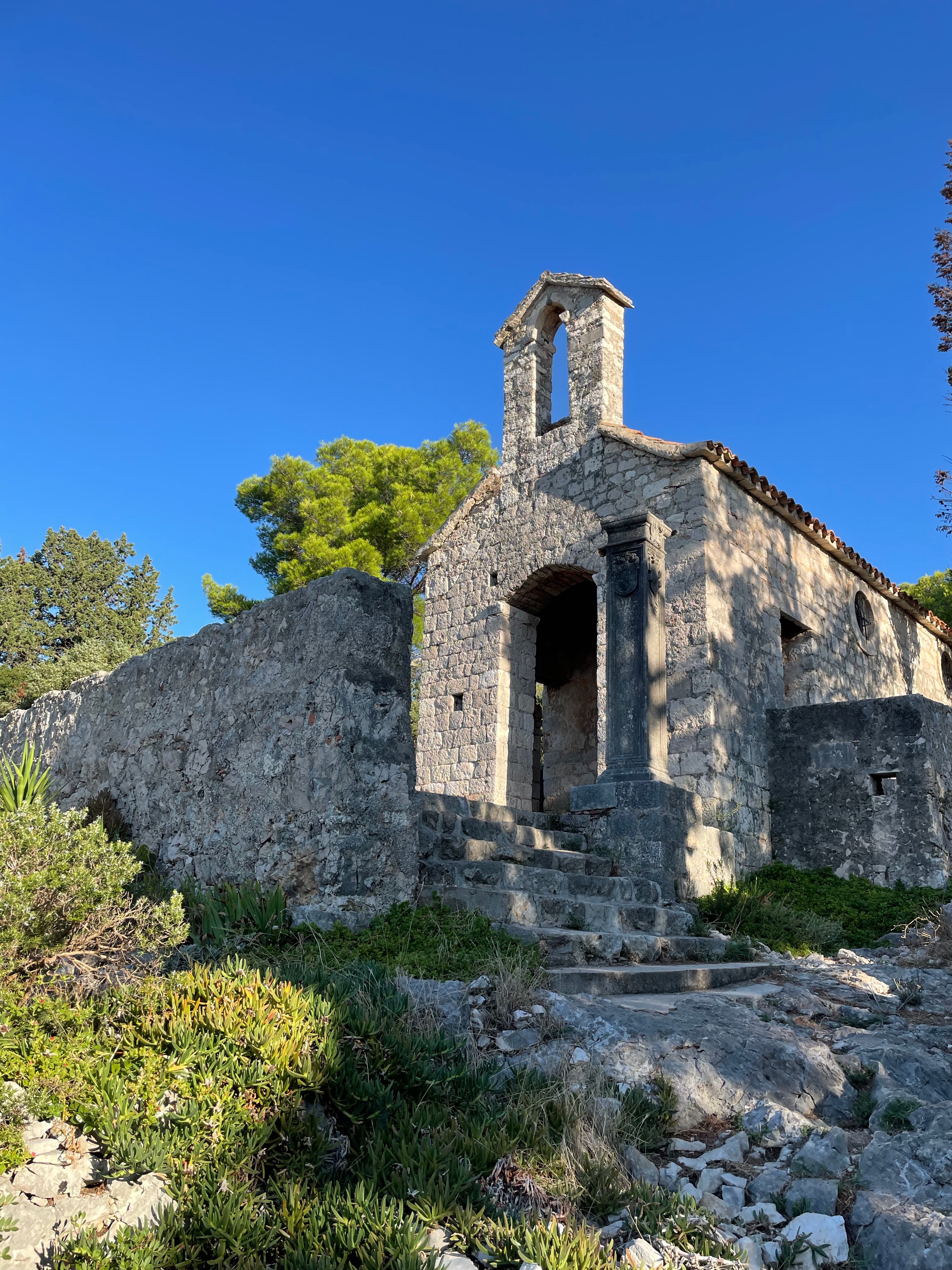
In summer, crowds pack the main square, warfront bars and restaurants, while yachts raft up in the harbour, but Hvar Town still manages to retain an old-world charm. It’s picturesque, rather than ritzy, and isn’t nearly as busy as nearby Dubrovnik, which gets completely swamped by tourists in the summer months. To see Hvar at its magical best, get up early, and head for the medieval Fortica, perched on a hilltop above the town. The walk starts at the main gate, just off the pjaca (central square), with a long set of steps that takes  you through the old town – past a Gothic palace and a Benedictine nunnery. From the top of the steps, the path winds through cypress trees, gardens and city walls to the Venetian fort. The fort opens at 9am, but the magnificent views of the town and the nearby Pakleni islands are available all day, and are especially good at dawn and dusk. 

After an early morning hike to the Fortica, nothing beats sitting at a café on the main square, ordering a coffee and watching the town come to life. Forget your takeaway flat white. You are in the Mediterranean, and a morning coffee is a ritual, not something to rush. The square is still the hub of life, (well, tourist life) centuries after it was first built by the Venetians. A great spot to people watch. No sign of celebs while we were visiting. I guess they stick to the safety of their yachts, but I loved seeing the mix of backpackers and boaties enjoying breakfast on the pjaca.

Stari Grad

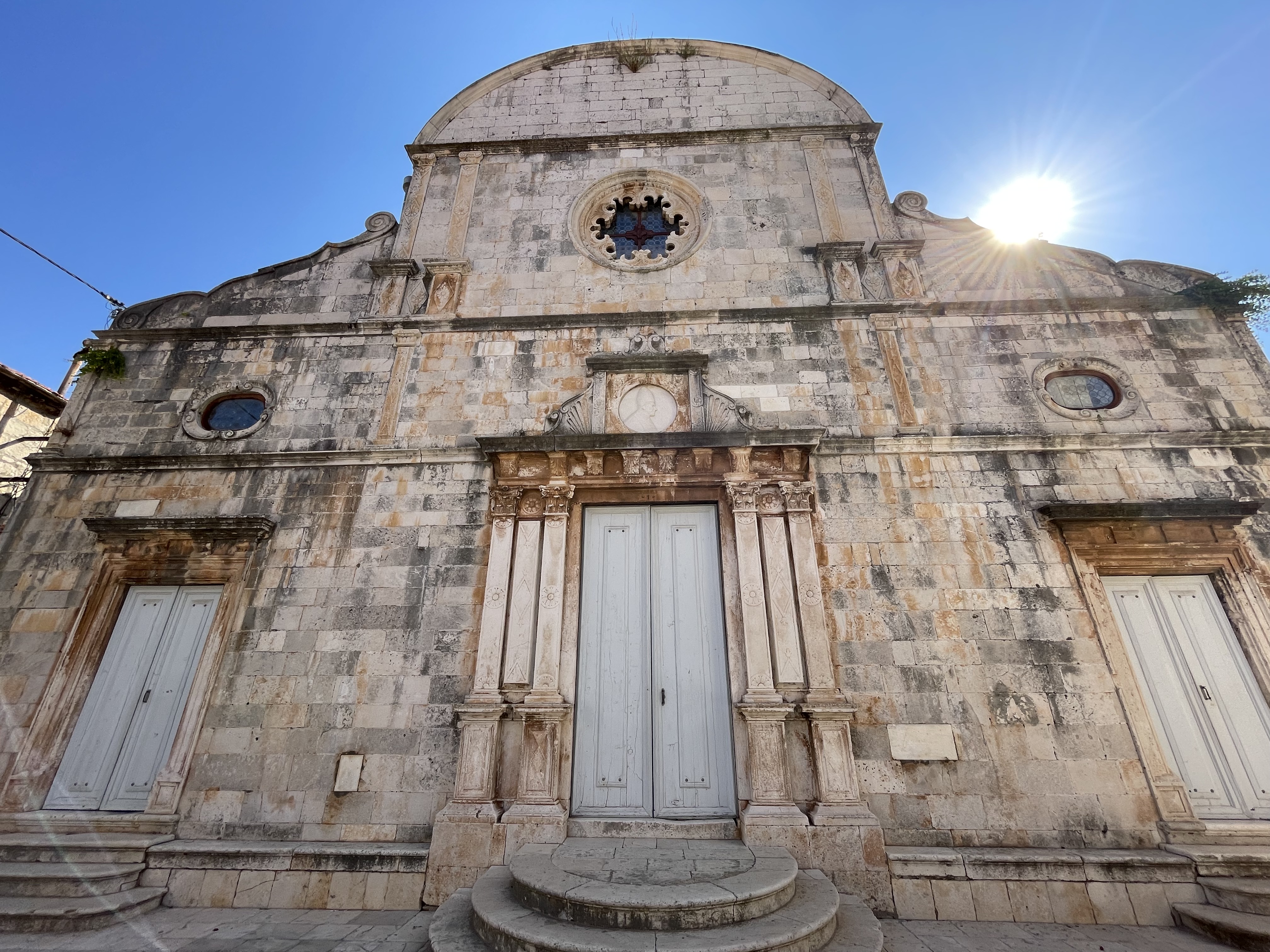
Beautiful Stari Grad is also a gem for anyone interested in history. With its history of Greek and Roman settlement, it is considered one of the oldest towns in Europe. It offers a more relaxed alternative to staying in Hvar Town, with a mix of grand buildings, winding medieval streets, ancient churches, monasteries, and a beautiful harbour. Don’t miss the 15thcentury Dominican monastery, the bell tower of St Stephens, and the church of St John which was erected on the site of an ancient Greek temple. 

Jelsa

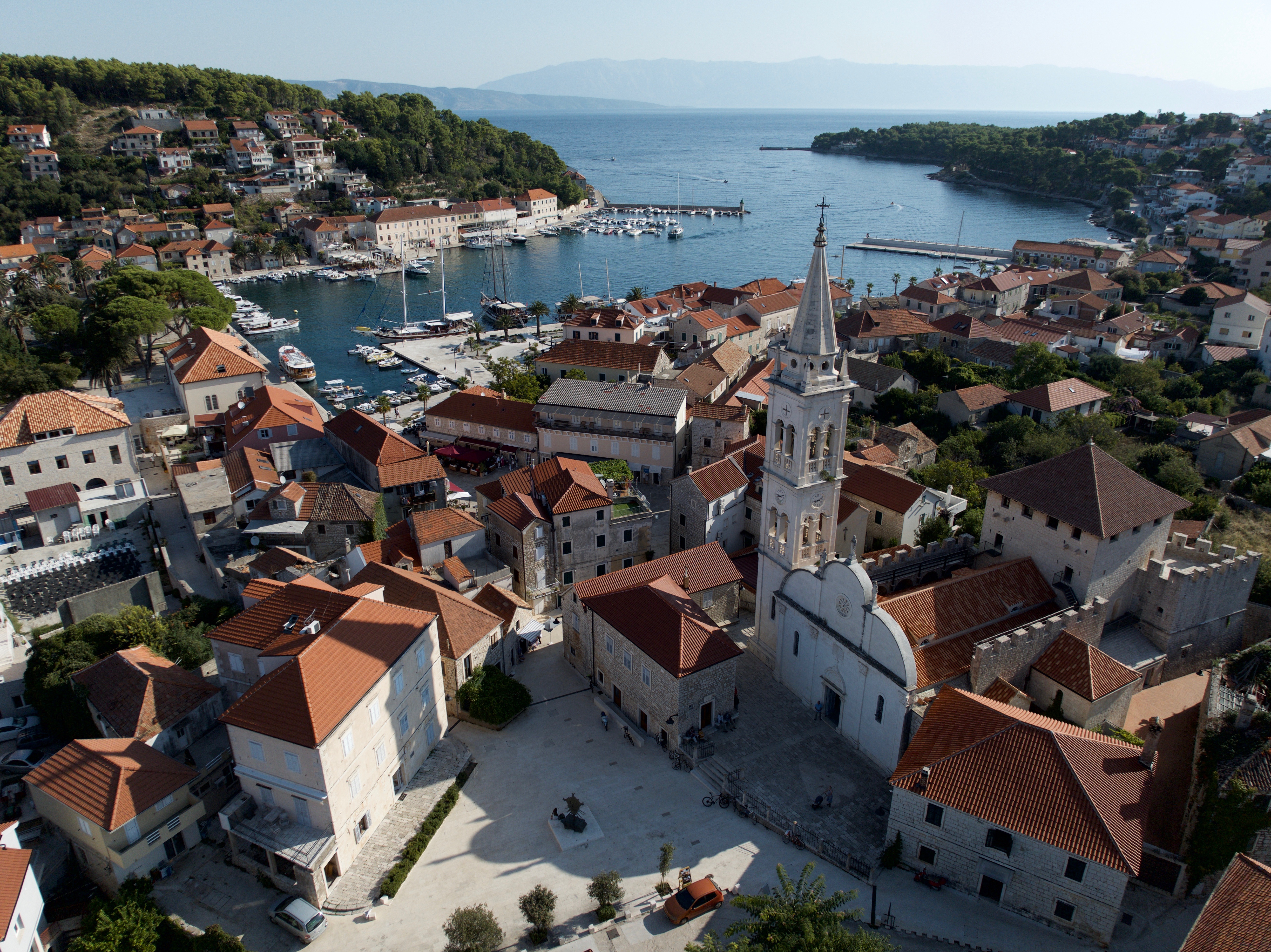
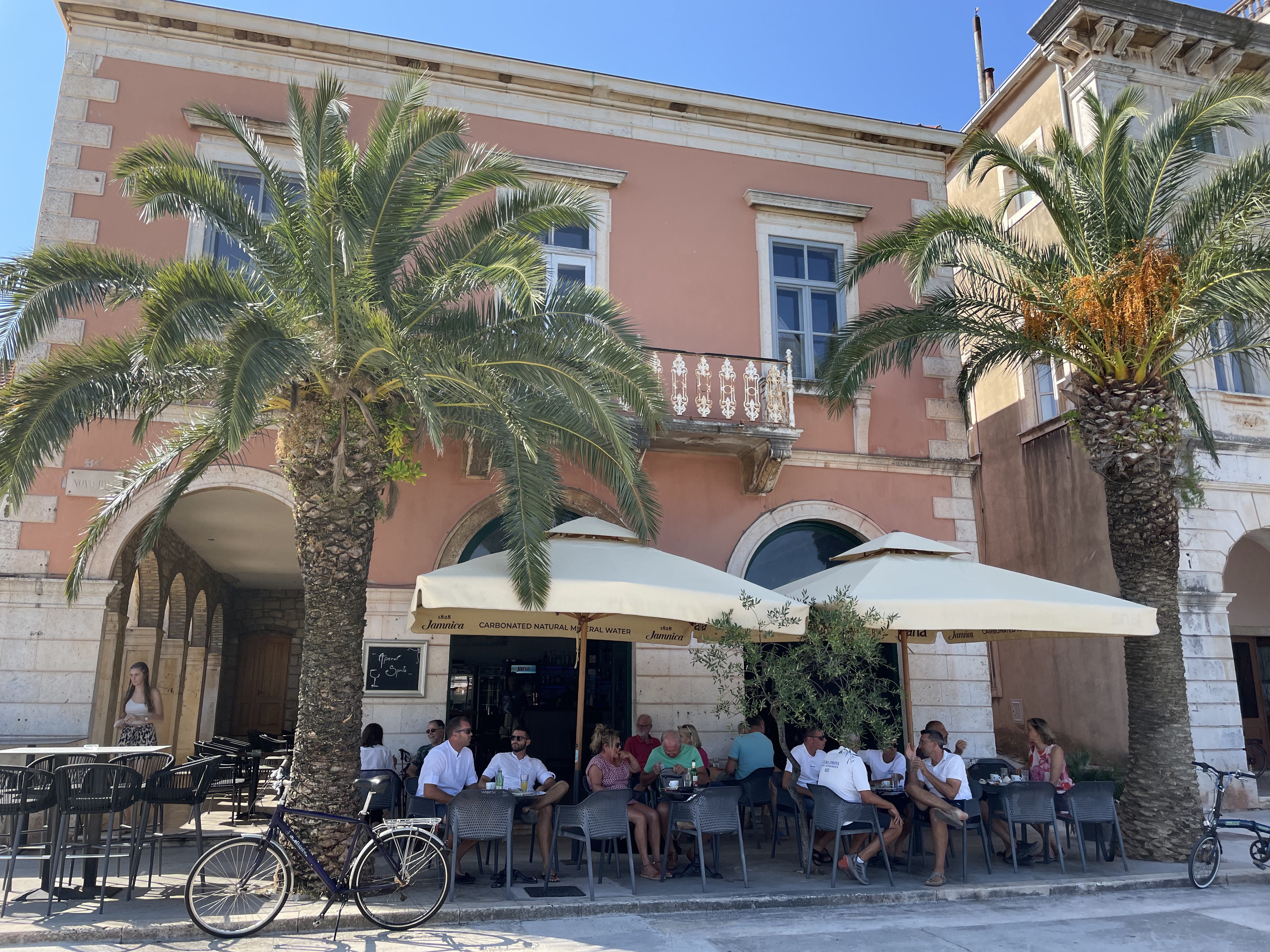
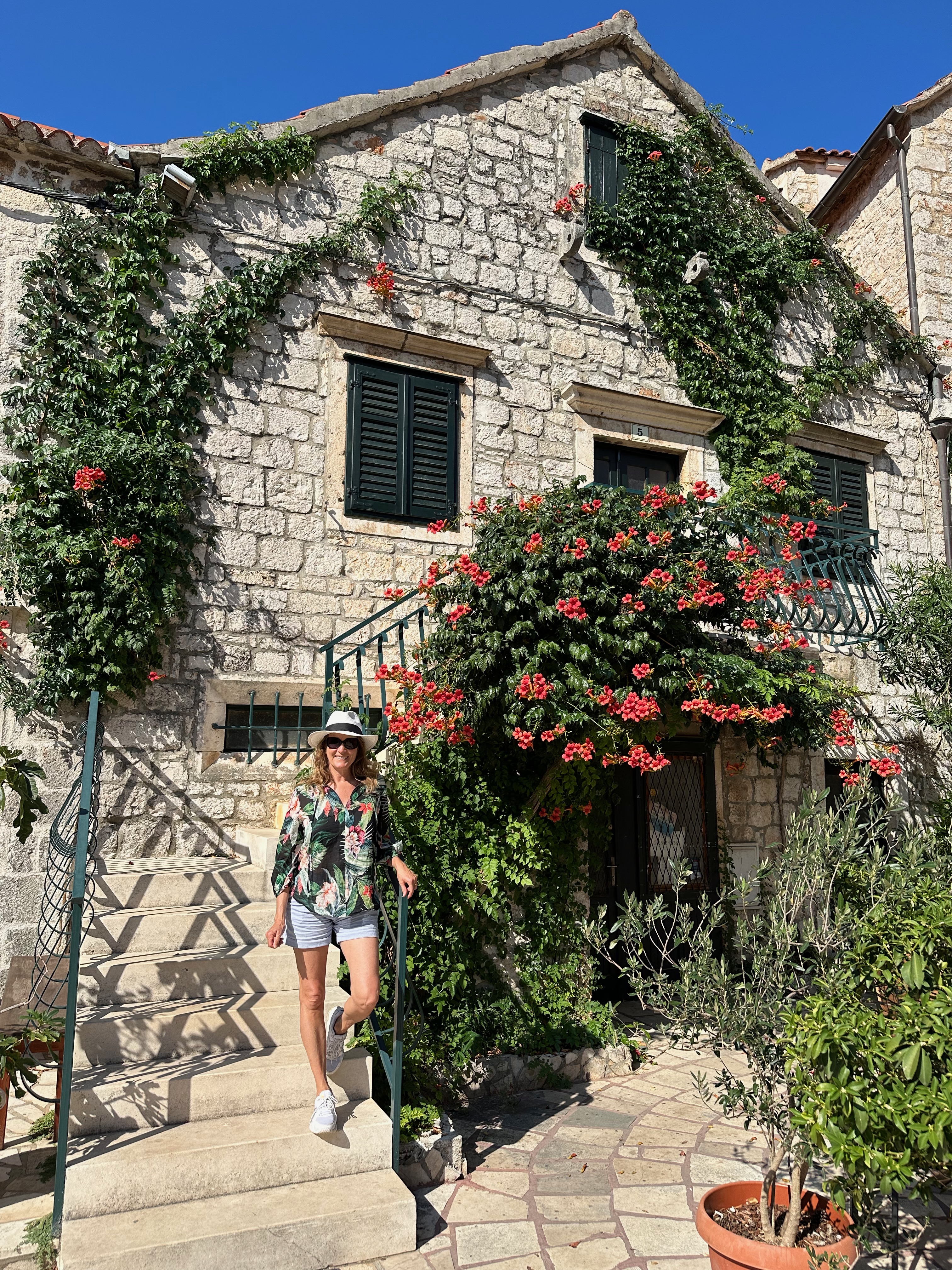
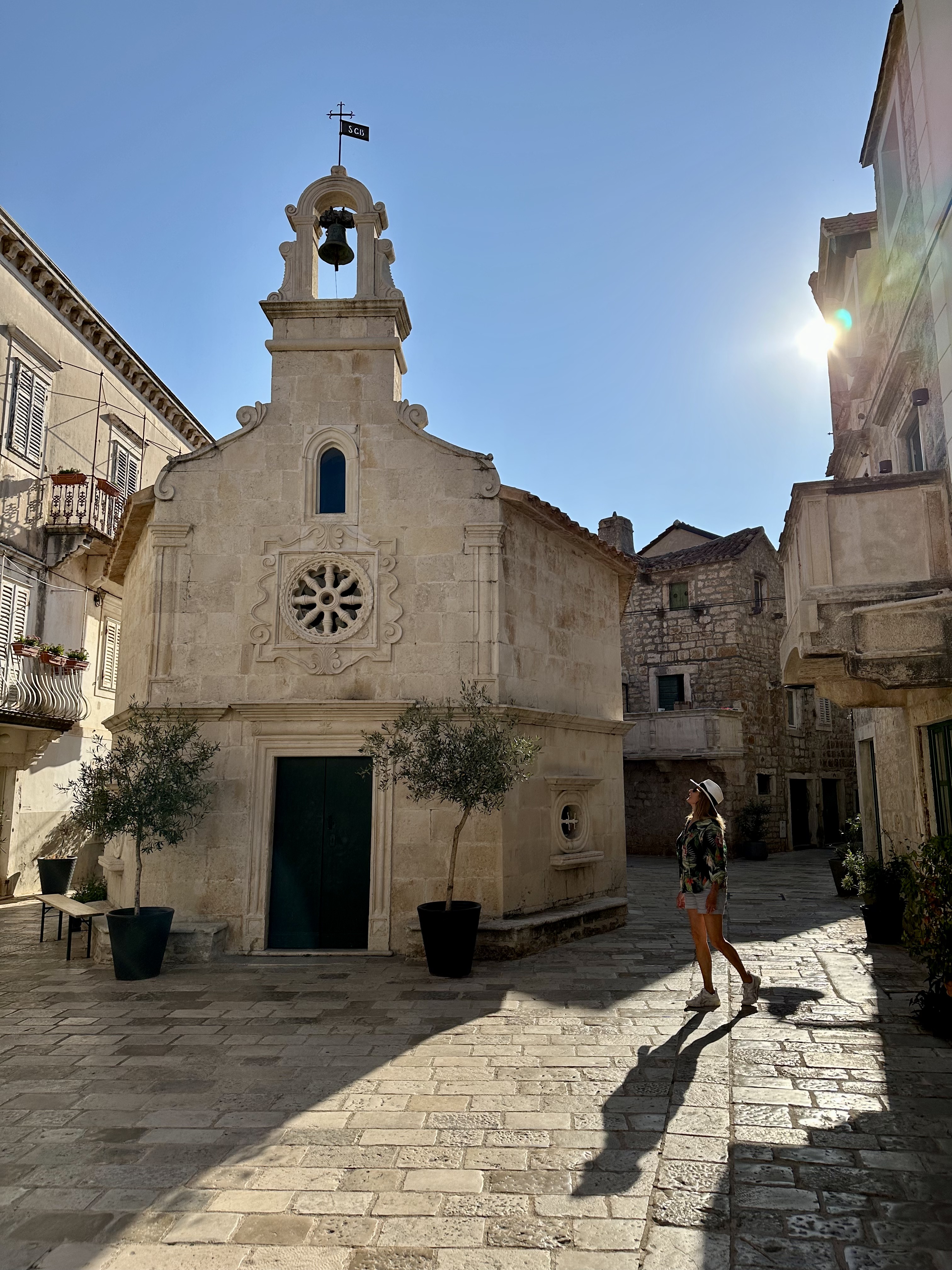
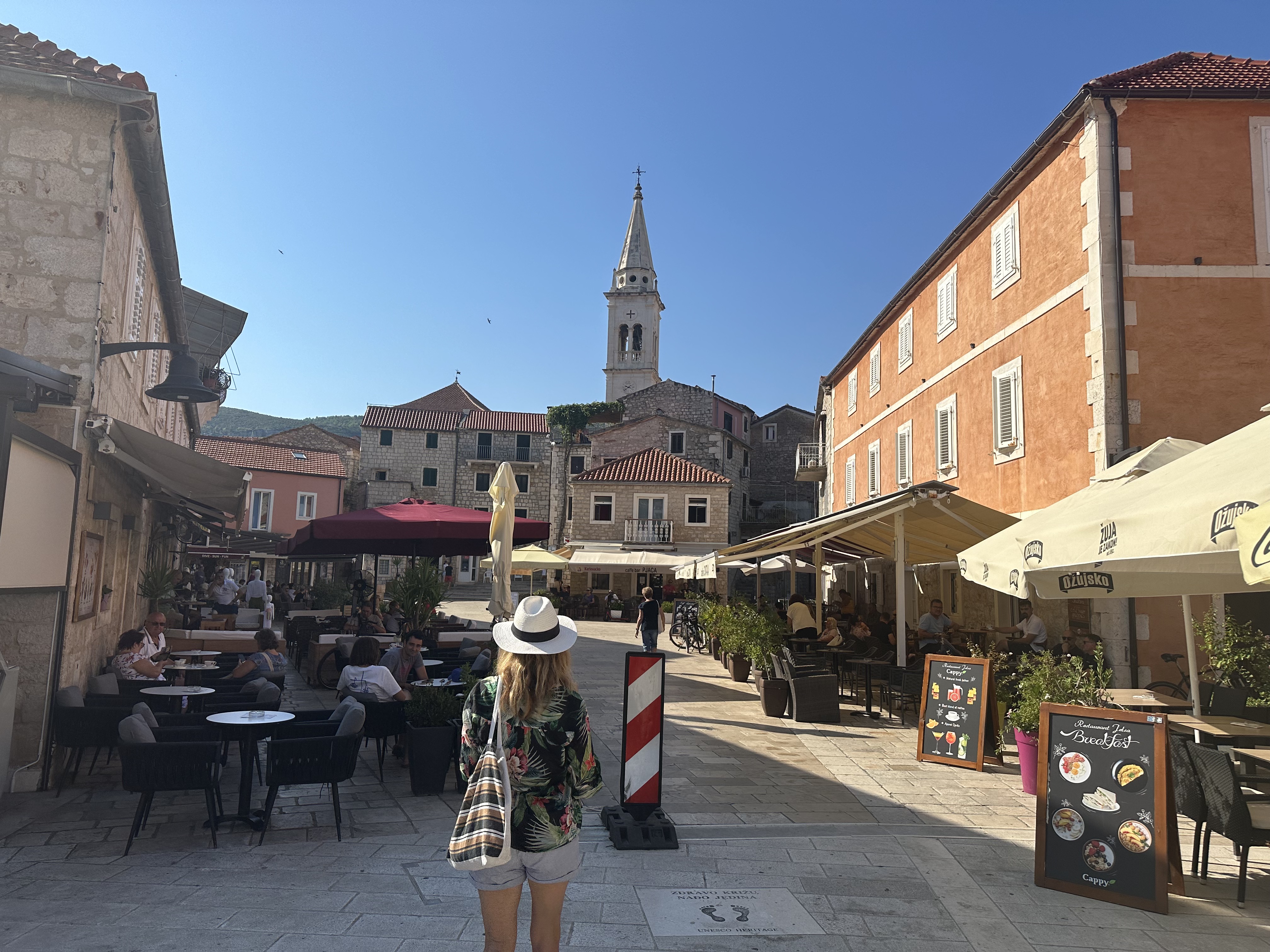
The pretty town of Jelsa, just a short drive away, is another charming and relaxed port town. Stroll through the cobblestone streets of the old town to see pretty baroque churches, bougainvillea covered stone walls and lavender-themed souvenir shops. Stop on the harbour front at Eiss Café for an ice cream or the best fresh orange juice on the island.  

Great Restaurants

There are endless options for eating out on Hvar island with restaurants crammed around waterfront promenades, main squares and side streets. The emphasis is on seafood, with meals reflecting a heavy Italian influence.  Expect risotto, pasta and wood-fired pizzas, along with grilled fish, meat and vegetables, plus a smattering of Hvar speciality dishes like gregada (fish stew) and pasticada (braised beef). Restaurants tend to be small, and get very busy, so it is definitely worth booking a table for dinner. My pick for great food, a lively atmosphere, a fab view of the harbour, and reasonable prices is Dva Ribara in Hvar Town. You’ll find it on the western side of the harbour. Look for the fishing kitsch and the queue of hopeful tourists waiting for a table. The octopus is outstanding. After dinner, head to aROMA for a gelati, then stroll along the promenade enjoying the view. With the Fortica  twinkling at the top of the hill, and yachts festooned with party lights bobbing in the harbour, Hvar is a pretty special sight. 

If you are young enough to carry on late into the night, Hula Hula beach club is the place to be. From sunset until 11pm, the Instacrowd abandon their sunlounges to groove to the DJ sounds. As Hvar closes down for the night, the party heads off-shore to Carpe Diem, a ten-minute ferry ride from town, on one of the Pakleni islands.  Drinks are overpriced, but I am reliably informed that the music is good.

Sailing Hvar. Image: Julie Fison

Anti-Social Behaviour is Banned

Hvar town has strict laws to stamp out inappropriate behaviour. Walk around town wearing just your speedos or bikini and you are likely to get slapped with a E600 fine. It might seem harsh, but this isn’t a beach resort, it’s a town with important religious and historic monuments. A bit of modesty is respectful, and isn’t a lot to ask. Also banned: picnicking, partying and sleeping in the piazza. Tough, maybe, but the laws mean there’s a lot less rubbish left lying around, as well as fewer obnoxious drunken tourists. And that has to be a good thing! Authorities across Europe are cracking down on anti-social behaviour. It’s worth checking out local laws to avoid hefty fines.

Stari Grad. Image: John Fison

Getting there

Hvar town is a one hour ferry ride from the Croatian port city of Split, and three hours from Dubrovnik. 

Stay

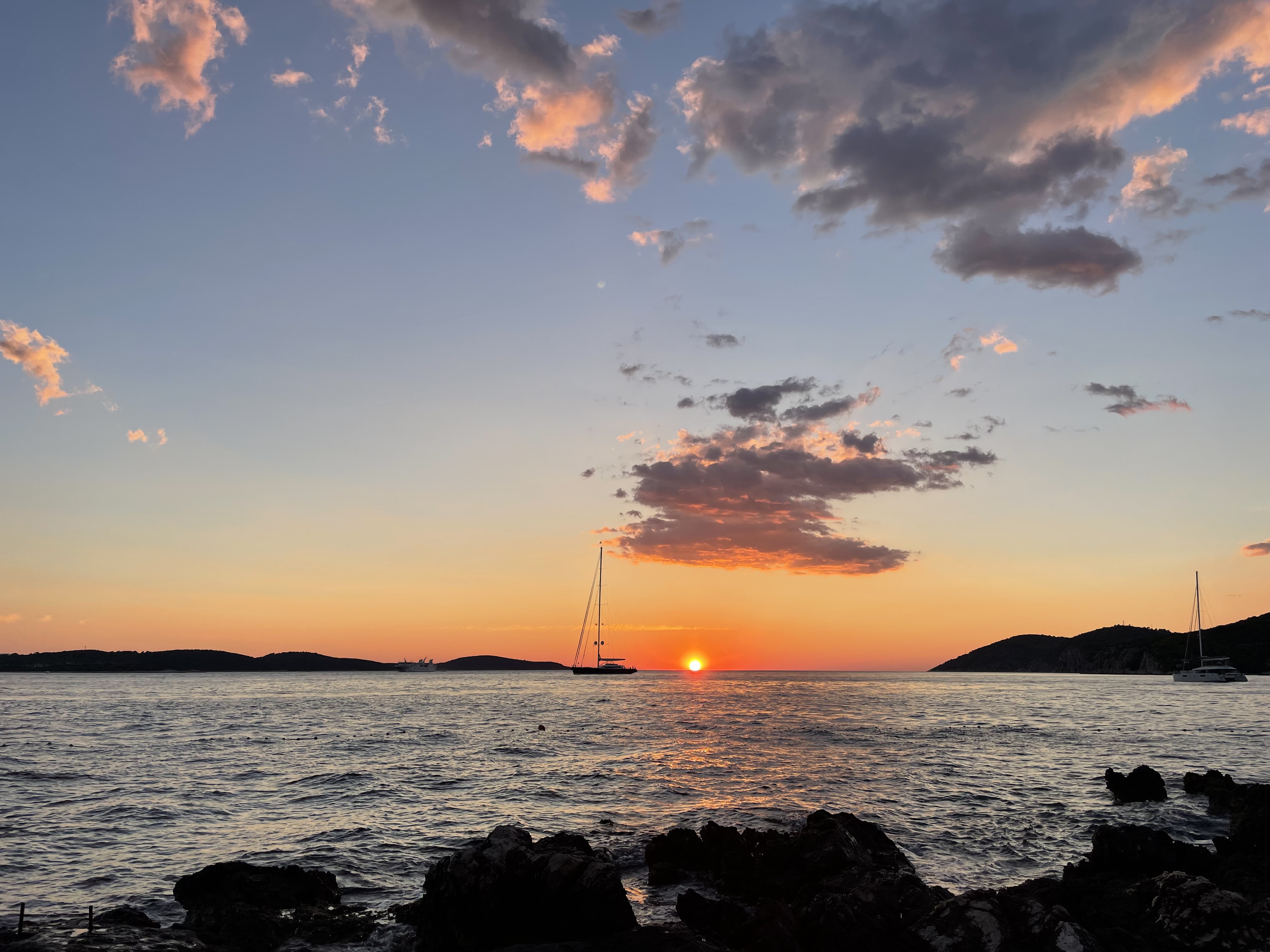
We rented a villa with Orvas. Our spacious accommodation was a twenty-minute walk into Hvar town: close enough to enjoy access to restaurants, but far enough away to avoid the crowds. We had filtered views of the sea, and a very short walk to a pebbly beach for swimming, plus a beautiful rocky shore to soak in the famous Croatian sunsets.

Enjoy!

Five tips for launching your debut novel

It’s a year since my debut novel for adults was published by Affirm Press. Happy birthday One Punch! A massive thankyou to everyone who has read or listened to the book, written a review, posted a pic, or shared the book with friends. It’s been an incredible year!

As first birthdays are a big deal, I thought I’d look back at the past year and see what I’ve learned since the book was published. If you’ve got a book about to be launched, here are a few tips that might help!

There’s hard work ahead

So, you landed your first publishing contract. Congratulations! You cracked the Bollinger. Or opened a bottle of alcohol-free bubbles – whatever brought you joy. You survived the structural edit, the line edits, the sensitivity edits, the front cover challenges, and finally you are almost ready to launch your debut novel. Buckle up, there’s still hard work to be done, but make sure you give yourself a moment to enjoy this incredible occasion. And celebrate everything that you have already achieved.

Get on board the publicity train

Publicity for a new book tends to be concentrated around the first month after publication. Hopefully your publisher will organise interviews for you, book signings, guest blog posts and newspaper stories. You might also have the chance to visit a writer’s festival. As a debut novelist, this is your best chance for publicity. Everyone loves to hear from a fresh voice.  Do what you can to reach out to your own contacts for interviews and reviews. And make sure you’re around in the month before the book comes out in case you’re needed for book signings. I disappeared off the grid to the remote Kimberley region of Western Australia on a Covid-delayed trip. Not ideal timing, but I was fresh, and ready to work when I returned for the launch of One Punch. Try to visit libraries and friends’ bookclubs to share the journey behind your novel. Word of mouth is so important!

One Punch launch at Avid Reader. Image: John Fison

Get to know other authors

Networking with other authors is a big part of being a writer – for support and also to promote each other’s work. Writing is a solitary pursuit, but it’s great to have a sounding board for your ideas, someone to read your work, and like-minded people to share your highs and lows. You’ll also want a couple of friendly authors to write glowing endorsements for your debut novel. Your publisher might arrange this, but it’s helpful if you can round up an author or two to review your book. I’m very grateful to Meredith Jaffe and Sally Piper for their endorsements of One Punch. They both gave such eloquent reviews! You can support other authors by attending launches, reviewing their books and promoting them on social media. 

Build a following

A publisher will generally be looking at your work before they check your profile, but a strong social media presence is definitely an advantage when it comes to sharing news about your new book. Concentrate on one platform, make sure your website is up to date, and consider a newsletter or a regular blog. If you are not mega famous, you might want to give readers something extra in your newsletter. I like to share holiday tips for midlife adventurers.

Writing a second novel

Second books are notoriously difficult. I started writing One Punch in January 2020 – two and a half years before it was published. But I’d been mulling over the idea for years before that. When I sat down to write the book, the concept was clear, and I was able to knock out the first draft very quickly. Covid lockdowns also worked in my favour! Sitting down to write a second novel was very different. I had only been working on the idea for a short time before I began writing, and I was still busy editing, then promoting One Punch. My head was all over the place! I know some authors can produce a book a year , or even two. But I’m going to need a bit longer!

One Punch takes a simple premise and turns it into a tight study of class and human nature – what we believe to be true about ourselves, and those we love, and who we really are. A crime is the pivot point for a sharp observation of human nature and blends compassion and humour in equal measure.

Meredith Jaffe, The Tricky Art of Forgiveness

Finally

If you’re about to launch your first book – good luck! Enjoy the celebration! You deserve it!

In other news …

It’s been a busy year so far – a trip to Antarctica and Patagonia, a visit to Canada and the Brisbane Writers Festival! That might explain why my second novel is still languishing on my computer! You can see my travel tips at Welcome to My World!

Books, audio and other cool stuff

Here are a few suggestions for books, audio and events that I’ve enjoyed recently.

Alfred Lansing’s Endurance is the story of polar explorer Ernest Shackleton’s ill-fated expedition to the South Pole – first published in 1959. I was expecting a jolly-hockey-sticks version of this incredible survival saga, but I was surprised to find a riveting story. Listen to the audio book for the full experience.

Shehan Karunatilaka’s Booker Prize winner The Seven Moons of Maali Almeida is an absolute cracker. It’s a murder mystery, ghost story and a confronting exploration of Sri Lanka’s brutal civil war, all told with a unique style and a strong sense of the absurd. Highly recommended.

Claire Keegan’s Booker shortlisted novel Small Things Like These is brilliant in a very different way. It’s an understated story of an Irish town’s wilful ignorance of church-related abuse and one man’s quiet heroism. Highly recommended.

Sydney

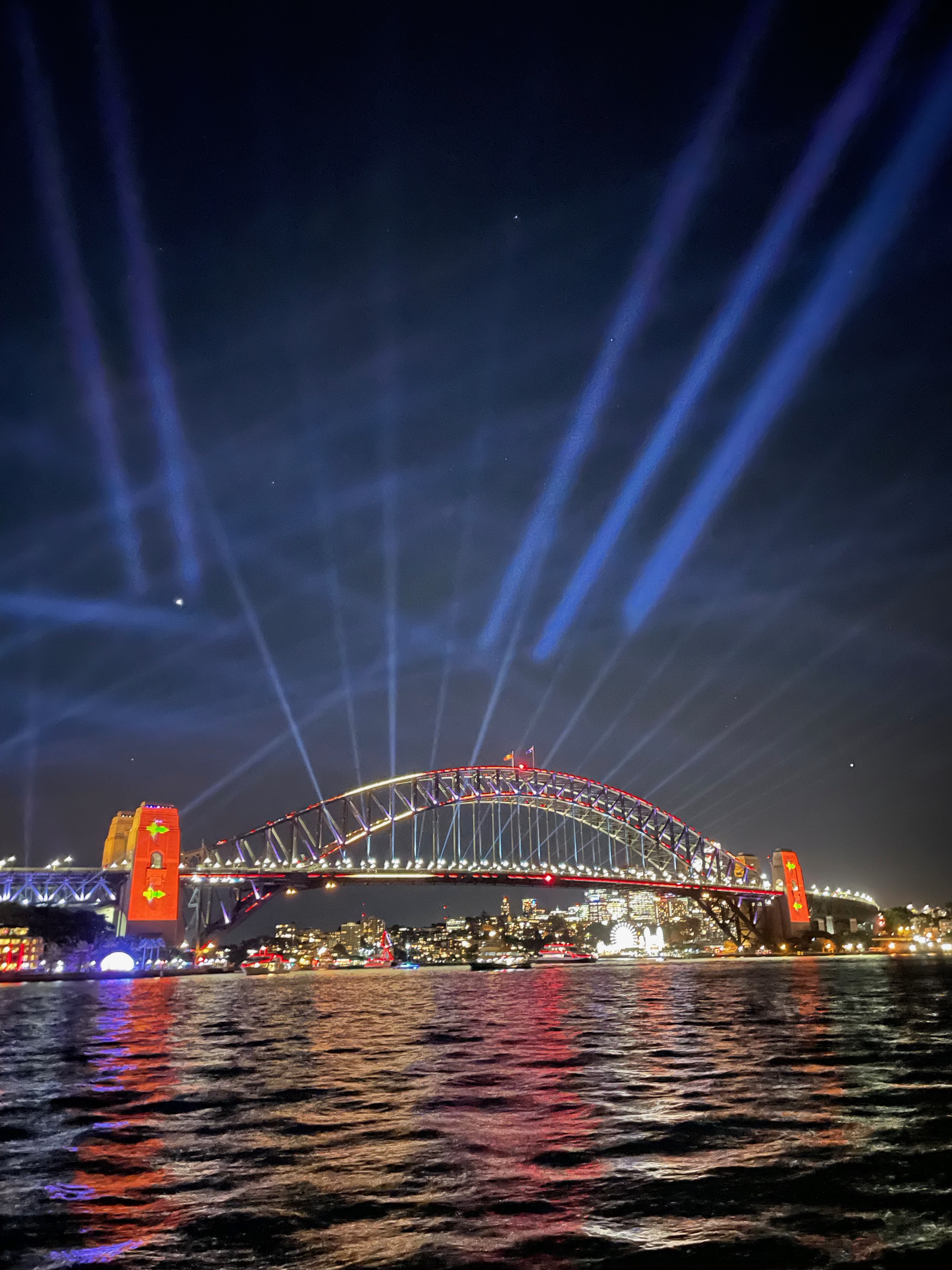
Heading to Sydney? Don’t miss the lights of Vivid (on until June 17) and the Archibald, Wynne and Sulman Prize at the Art Gallery NSW. That one runs until 3 September before touring regional galleries in NSW.

Enjoy!

Driving the Icefields Parkway – from Jasper to Lake Louise

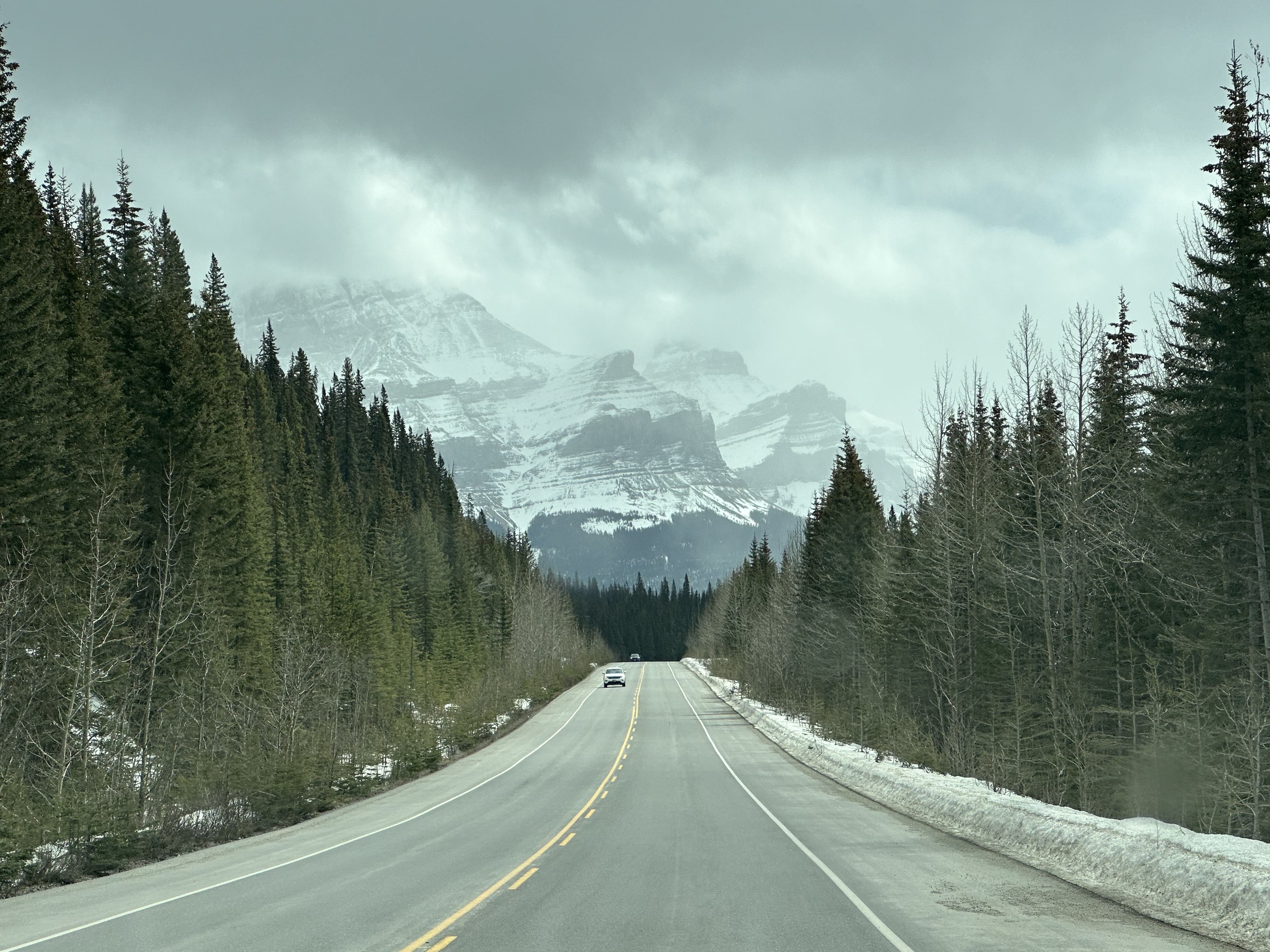
The Icefields Parkway – a 232 km stretch of road that connects Jasper and Banff National Parks – is rated one of the world’s most spectacular drives. Highway 93 cuts through the Canadian Rocky Mountains – beneath towering peaks, past deep gorges, glaciers and waterfalls. Even if you’ve never been here, you might have seen pictures: turquoise lakes and blue rivers shimmering in the sun. But the Icefields Parkway is a whole different story outside the summer months. We drove this incredible route in April. Officially, spring, but the Canadian Rockies take their time to shake off winter.

Icefields Parkway. Image: Julie Fison

Long, long ago …

The Front Ranges of the Rockies are thrust-fault mountains, formed millions of years ago when immense pressure forced layers of rock to buckle. Glaciers then covered the area, even burying summits. About 15,000 years ago the ice began to retreat, and rivers started to flow down the glacial valleys. Plant and animal life flourished, allowing people to use the area. Archaeologists have discovered campsites dating back 13,000 years near the town of Banff.

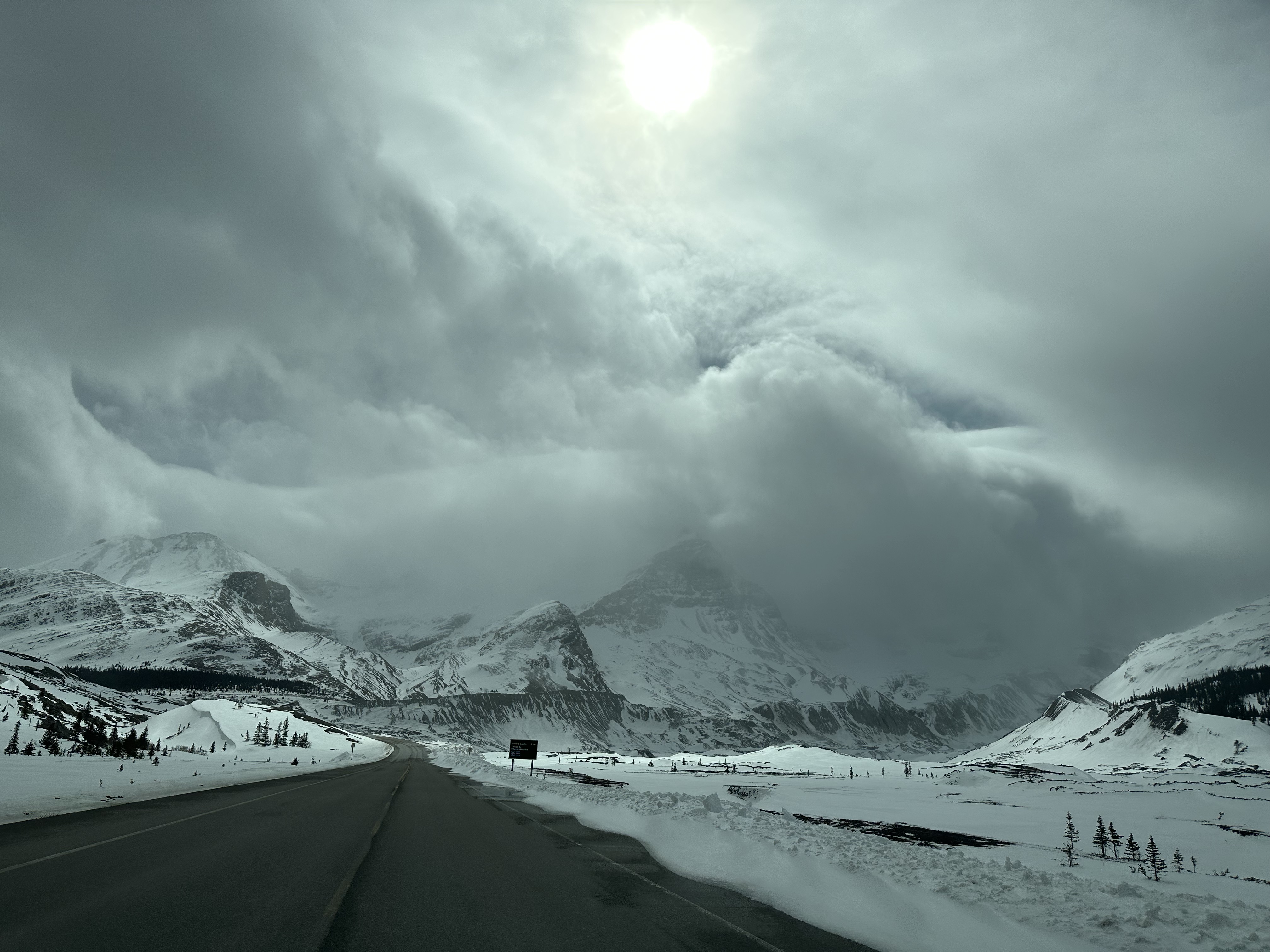
Columbia Icefields. Image: Julie Fison

Stops

The Icefields Parkway is a popular route. It attracts around 200,000 vehicles in July and August, but we had the road virtually to ourselves in April. No fighting for a park at the many viewing points at this time of year!

Icefields viewing point: John and Julie Fison

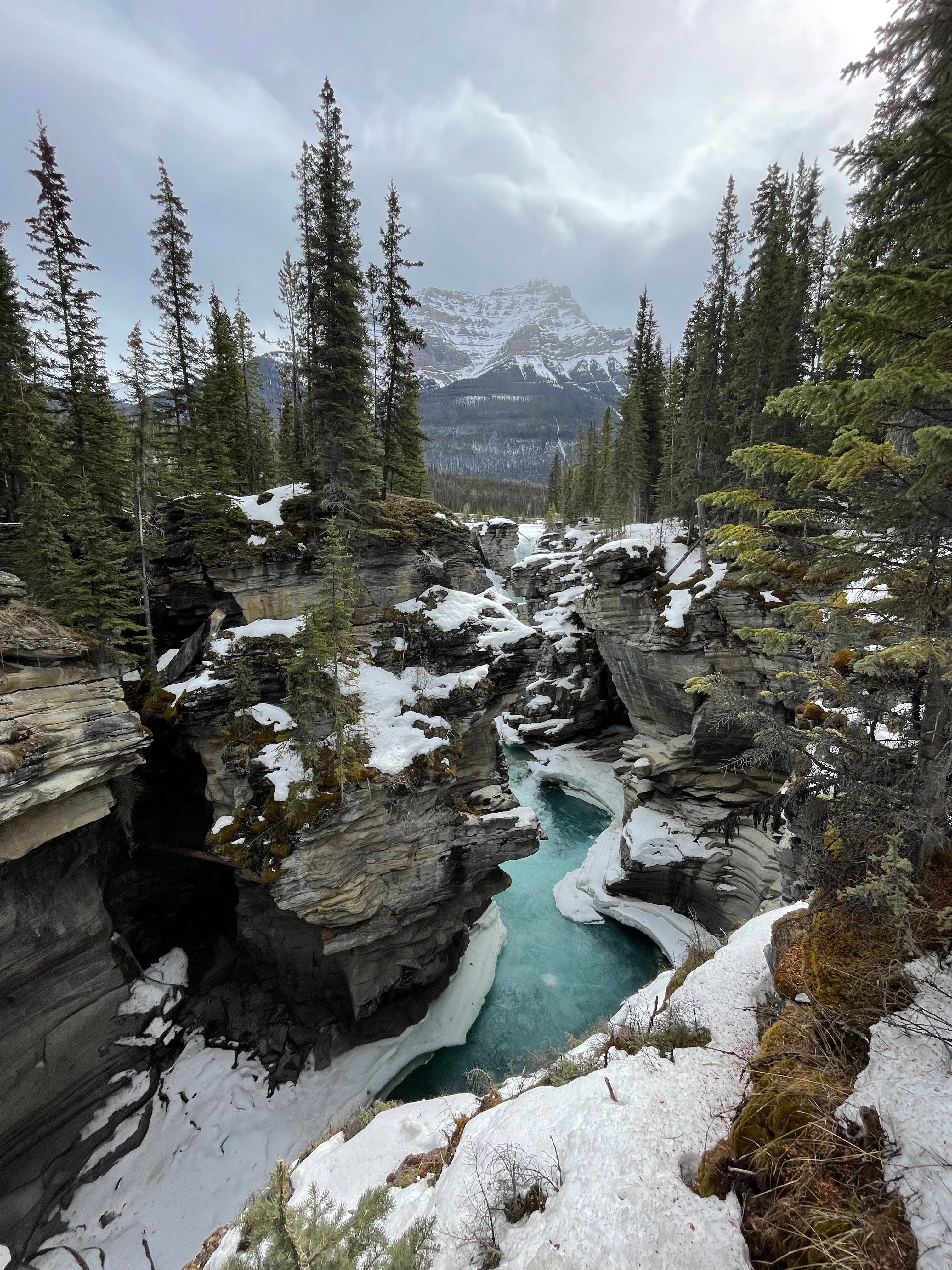
Allow plenty of time for the sights along the route. You’ll be treated to jaw-dropping scenery from the comfort of your vehicle, but it’s worth pulling over at the roadside lookouts to enjoy the magnificent scenery. Many sites (including the Glacial Skyway) are closed outside the summer season, but there are still places to get out and stretch your legs. Don’t miss the Athabasca Falls, just outside Jasper.

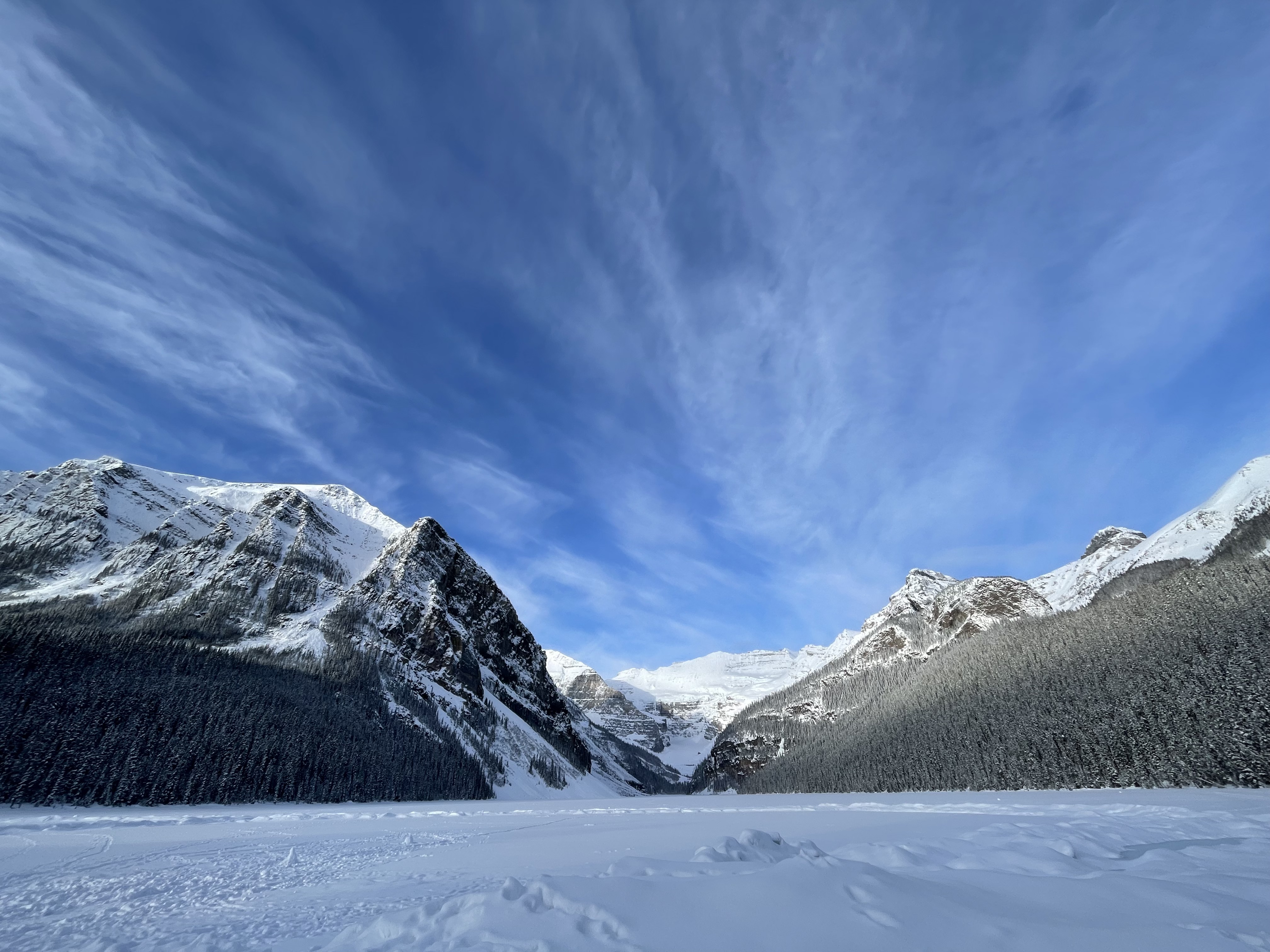
Lake Louise. Image: Julie Fison

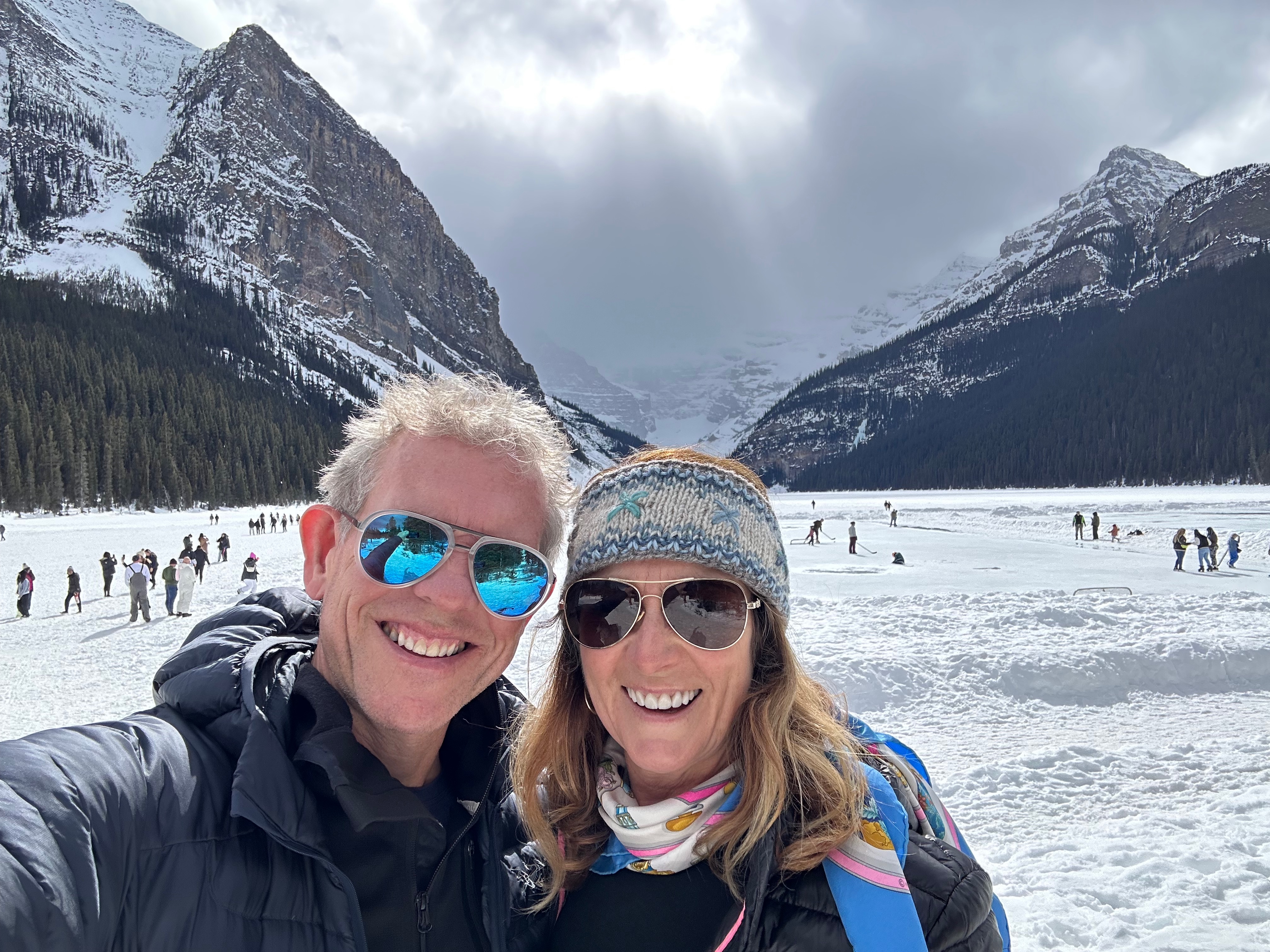
The Parkway ends at Lake Louise – one of Canada’s most Instaworthy lakes. Visit in summer and you’ll be kayaking across a blue lake, or taking a dip – if you’re really brave. But for much of the year the glacial lake is blanketed in white. You can walk the 2km to the far end of the lake, or rent skates from the Fairmont hotel and give iceskating a go. Can’t say I showed a lot of skill in that area, but it was fun to give it a try!

Check conditions

The Icefields Parkway is open all year, but it does close for avalanches, and avalanche prevention work. This is most likely to take place in spring when the weather begins to warm up and the snow becomes unstable. We almost missed this iconic drive due to a road closure. While in Jasper we discovered the road would be closing that day at 3pm due to avalanche risk. We decided to cut our trip to Jasper short and hit the highway. So glad we did. I would have been pretty disappointed to meet a boom gate along Highway 93, get sent on a five-hour detour, and miss the Icefields completely!

You’ll be charged a daily fee ($10.50/adult/day) to visit Banff and Jasper National Parks, as well as other Canadian national parks, but it is money well spent!

April sun at Lake Louise, Alberta. Image: Julie Fison

Bow Valley Parkway

The Bow Valley Parkway is a scenic route that connects Lake Louise and Banff – a must-see addition to the Icefields Parkway. The area is popular with cyclists and hikers in summer, but even if you visit during the icy months you should make the trek to Johnston Canyon and shuffle (very carefully) through the cave to the spectacular lower falls.

Banff. Image: John Fison

Stay

We stayed at the Fairmont Jasper Park Lodge and the Fairmont Chateau Lake Louise – both excellent hotels, but beware, Lake Louise can get crowded even in the off season. Don’t expect to have the lake to yourself!

Happy travels,

Julie

How to make the most of Antarctica – 10 things you should know before you go

So, Antarctica has hit the top of your bucket list, but you’re not really sure what to do next. I hear you. There are so many things to consider – from whether to sail or fly across the dreaded Drake Passage, what camera gear to take, and whether to buy a new faux fur hat for your Insta stories. You might even be asking yourself if Antarctica is really worth the big bucks. The answer to that is: yes, absolutely. Antarctica is like nowhere else I’ve been. Pictures of penguins and icebergs only tell you part of the story. They can’t convey the scale of this pristine white wilderness, the fragility of the ecosystem, and the power of Antarctica to make you forget the outside world. Sailing through this unique environment is an extremely rare privilege, but careful planning is needed to get it right. Here are some tips for helping to make your trip to Antarctica the holiday of a lifetime.

Small ships are the way to go

Only 100 people are allowed ashore in Antarctica from a single vessel at any one time. So if you’re looking to maximise your time ashore, you are best to go with a smaller ship. That way you’re not waiting around for groups to be rotated. Ships that carry more than 500 passengers are barred from shore excursions altogether.

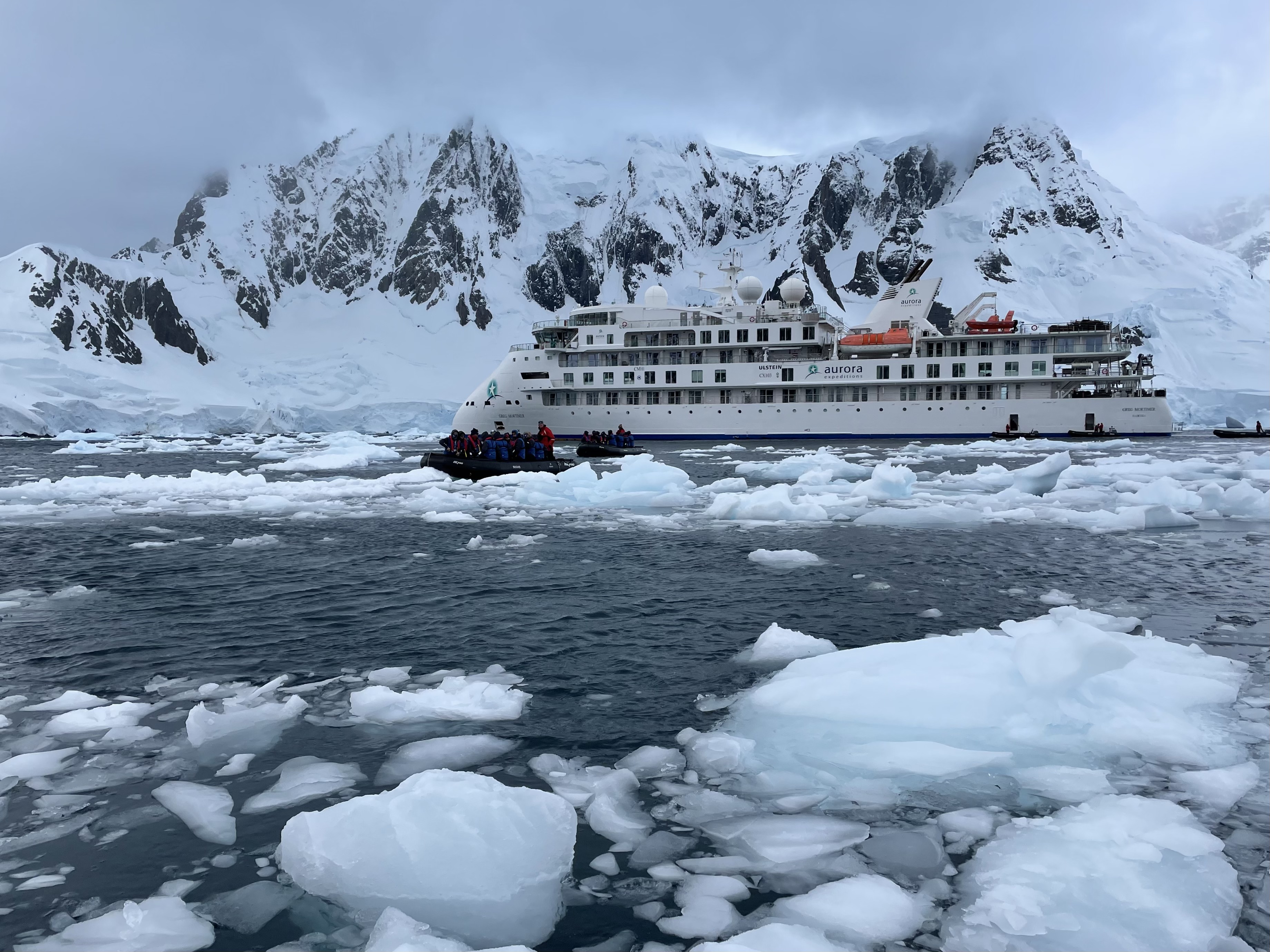
We chose to go with Aurora Expeditions, aboard the Greg Mortimer, which I highly recommend. The staff were passionate, the food was excellent, the ship handled the conditions superbly and, most importantly, we had the maximum possible time exploring the Antarctic Peninsula.


Zodiac excursion. Image: Julie Fison


Embrace the Drake Passage

The second you start talking about visiting Antartica, everyone wants to tell you their horror story about the Drake Passage – the 12 metre swells, passengers being strapped into their bunks, days of sea sickness. The stretch of ocean between the southern tip of South America and the Antarctic Peninsula is notoriously rough. That’s why luxury expedition cruises offer the chance to fly across the Drake. You board a charter flight in Punta Arenas, Chile, and fly to King George Island, at the northern end of the Antarctic Peninsula and meet the ship there. No seasickness. No hassles. Perfect, right? Well, just one problem. Low cloud on King George Island prevents planes from landing, and if you are unlucky, your flight could be delayed, or even cancelled. We had three days of delays. We packed up, checked in at Punta Arenas airport, played Scrabble in the departure lounge, then returned to our hotel again when the flight was cancelled. It was all incredibly frustrating! When we finally made it to King George Island, and onto our ship, our crew did everything possible to make sure we had the most amazing time in Antarctica. But if I had my time again I’d be braving the Drake on the way to Antarctica. Flights returning from King George Island can also be delayed, but you’re not going to miss out on precious days of your expedition. If you choose to fly back, I suggest building in a couple of extra days in Chile, just in case you get waylaid. 

Celebrating the end of the Drake Passage and the start of the Beagle Channel. Image: John Fison

Pack for extreme conditions

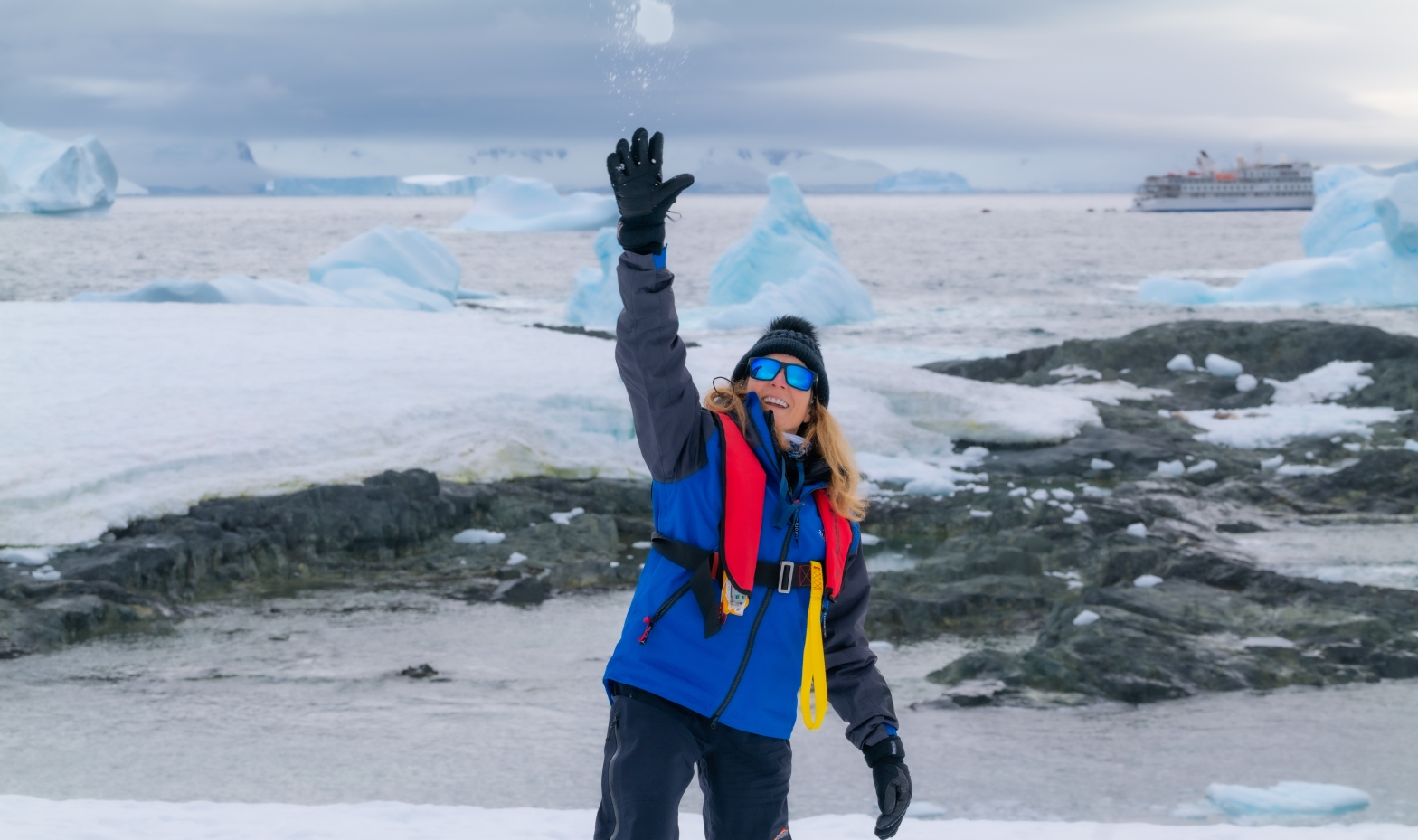
Sure the cruise brochures might give the impression that exploring the Antarctic Peninsula is all blue skies, plain sailing and cute penguins, but summer can still be bitterly cold (especially if you’re a soft Queenslander). Cruise companies generally provide you with a polar jacket and boots, but you’ll need to bring thermals, waterproof gloves – preferably with a finger pad for taking pics – as well as waterproof pants. These are an absolute must. You will get wet in the zodiac. If the swell is high you’ll get completely soaked. Be prepared!

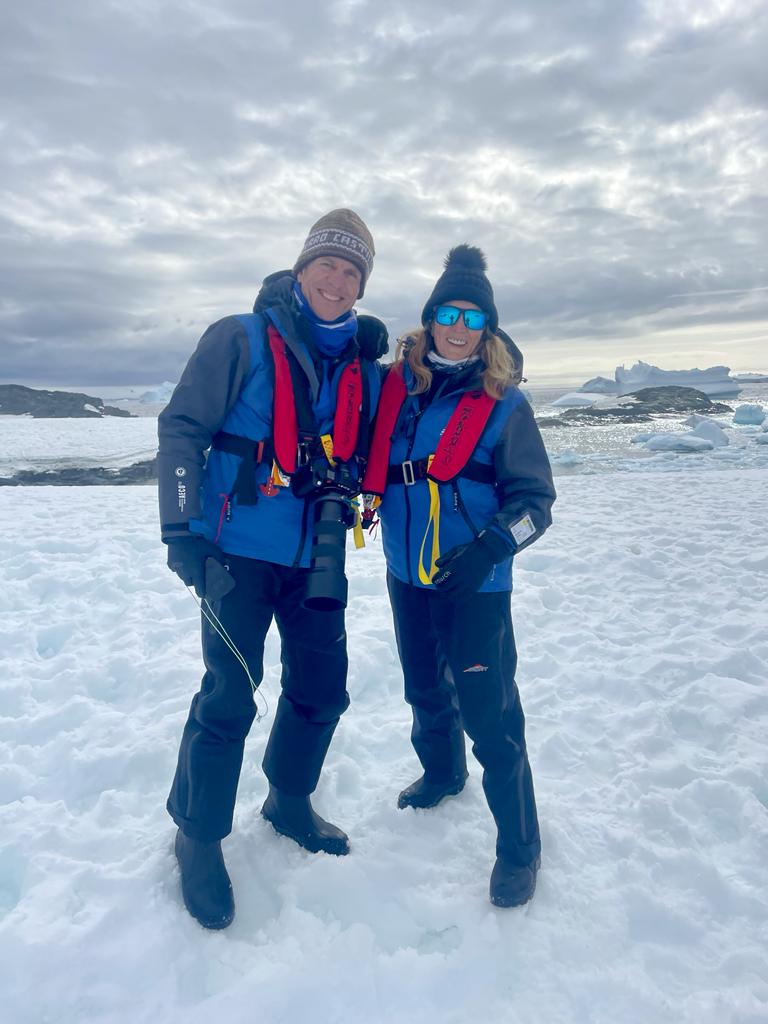
Images: John Fison
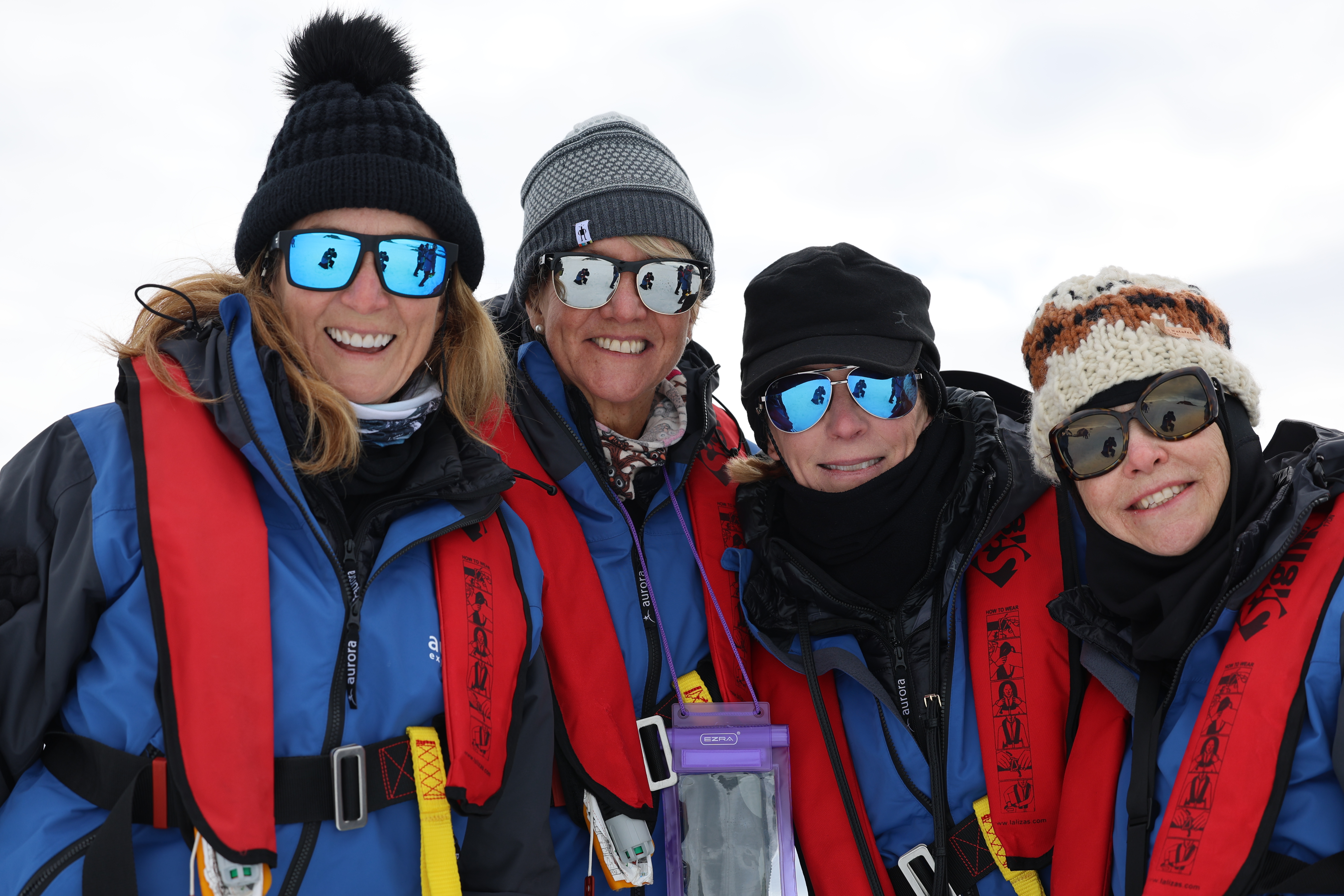
Julie, Mel, Margot, Karen. Image: John Fison

Have the right head and neck gear

Hardier guests than me went for fluffy ear muffs so as not to ruin their hair, but to be honest, once you’re outside, your hair is done for anyway. Go for a simple, warm beanie that covers your ears (your lobes will thank you) and won’t blow off in the wind. Unless you’ve got an Insta following of 20 million (Hello Nina Dobrev), I’d leave the fur hat at home. A friend who did bring one got it out only once. When she returned to the ship after a Zodiac tour, her hat looked like a drowned cat. It could not be revived. I invested in a woollen head band at the onboard shop to deal with bad hair days – which were, in fact, every single day.

One Punch takes a simple premise and turns it into a tight study of class and human nature – what we believe to be true about ourselves, and those we love, and who we really are. A crime is the pivot point for a sharp observation of human nature and blends compassion and humour in equal measure.

Meredith Jaffe, The Tricky Art of Forgiveness

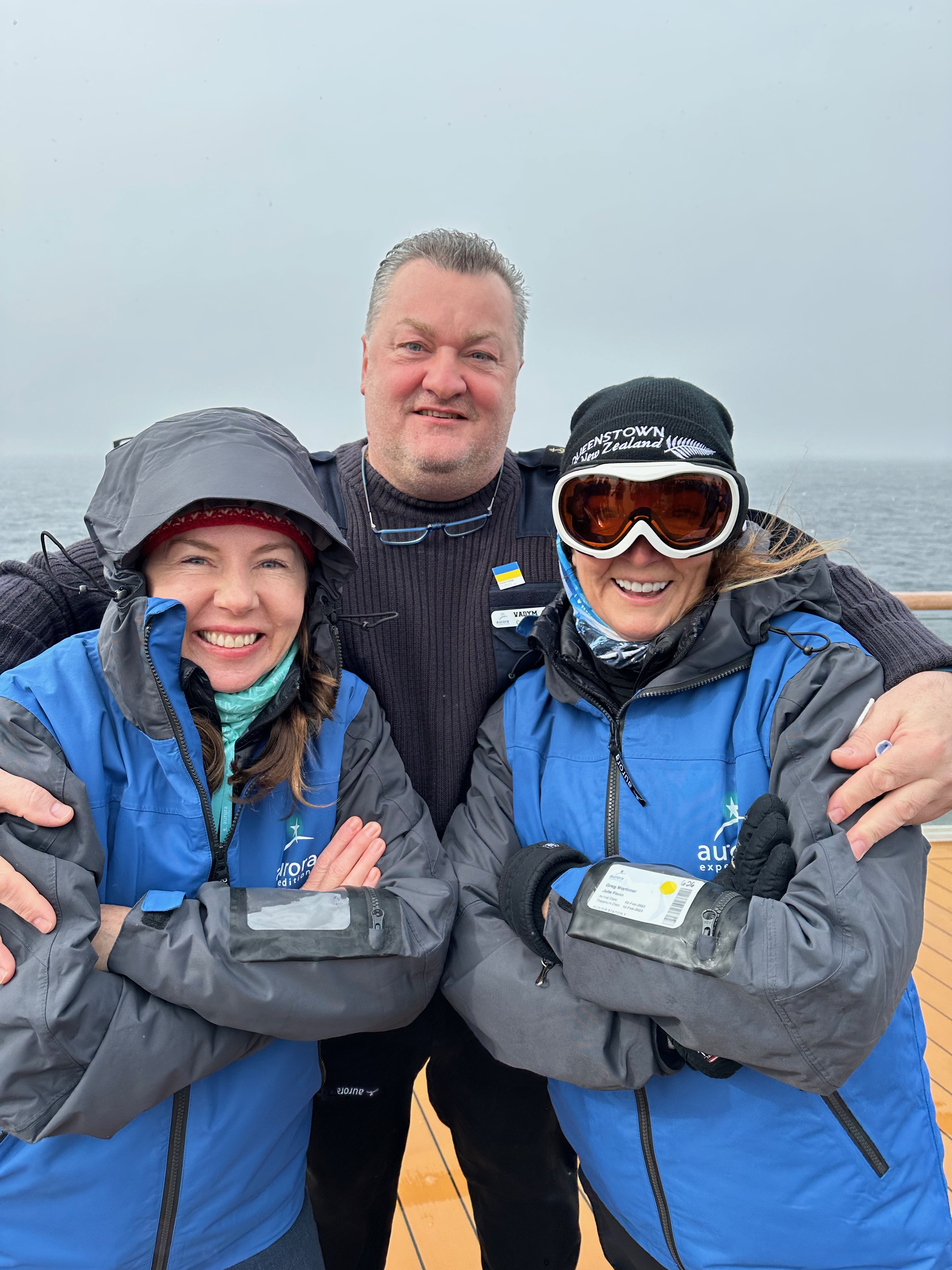
A neck gaiter (also known as a turtle/flexi chute/neck warmer) is another essential. I wouldn’t have survived without my Buff. In fact, most days I was just a Buff with sunglasses – except for the day that we crossed the Antarctic circle. Then, I was a Buff with ski goggles. I might have been the only passenger in ski goggles, but every single guide wore goggles on the zodiacs to protect their eyes from the wind and waves. So, as far as I’m concerned ski goggles are another must, along with polarised sunglasses. Bring an extra pair of sunnies and reading glasses in case you lose a pair over the side.

Invest in a lanyard or similar for your iPhone and sunnies and make sure you pack your essentials in your hand luggage, so even if you arrive in South America with no suitcase, you’ll still have the important stuff.

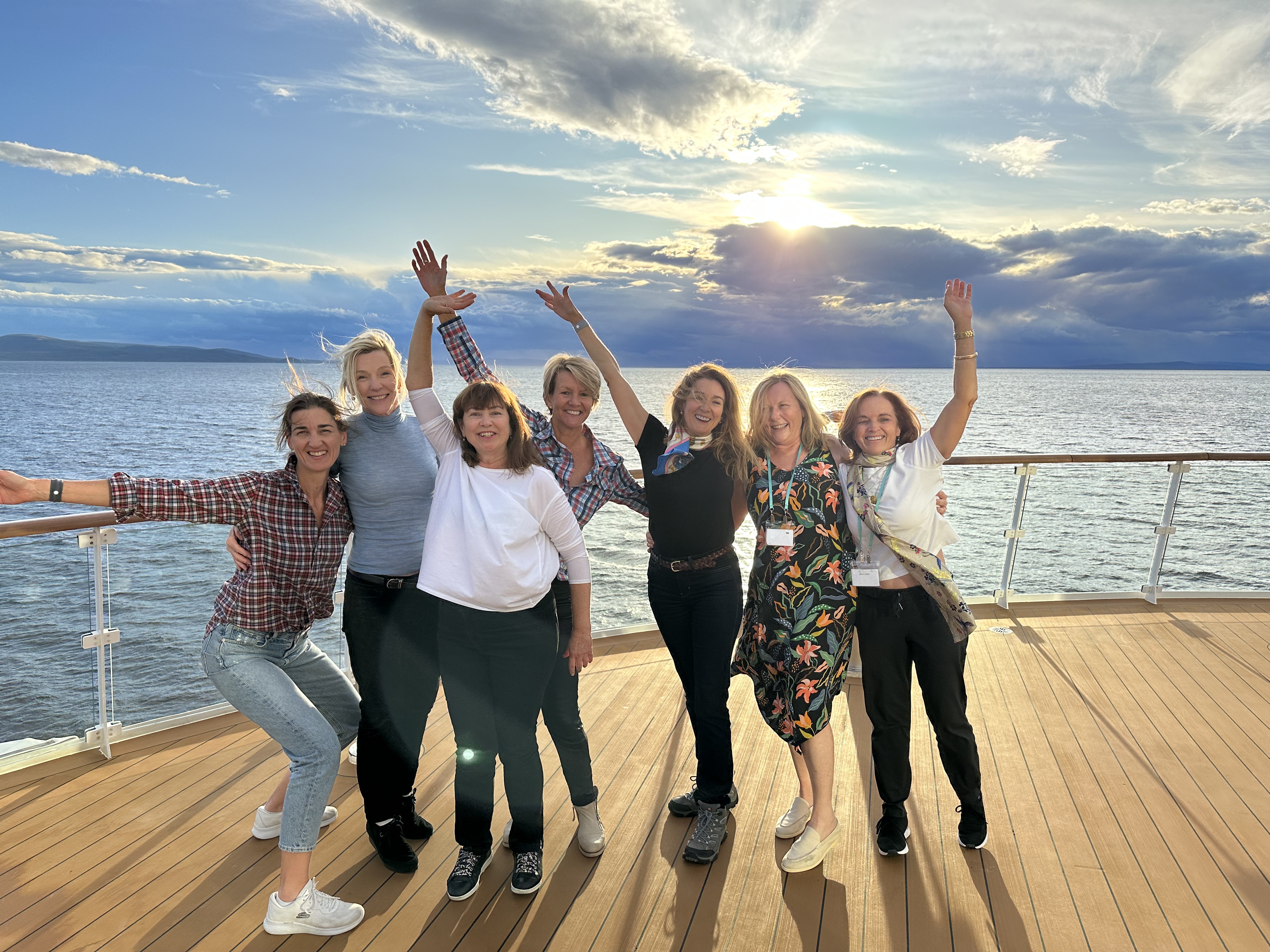
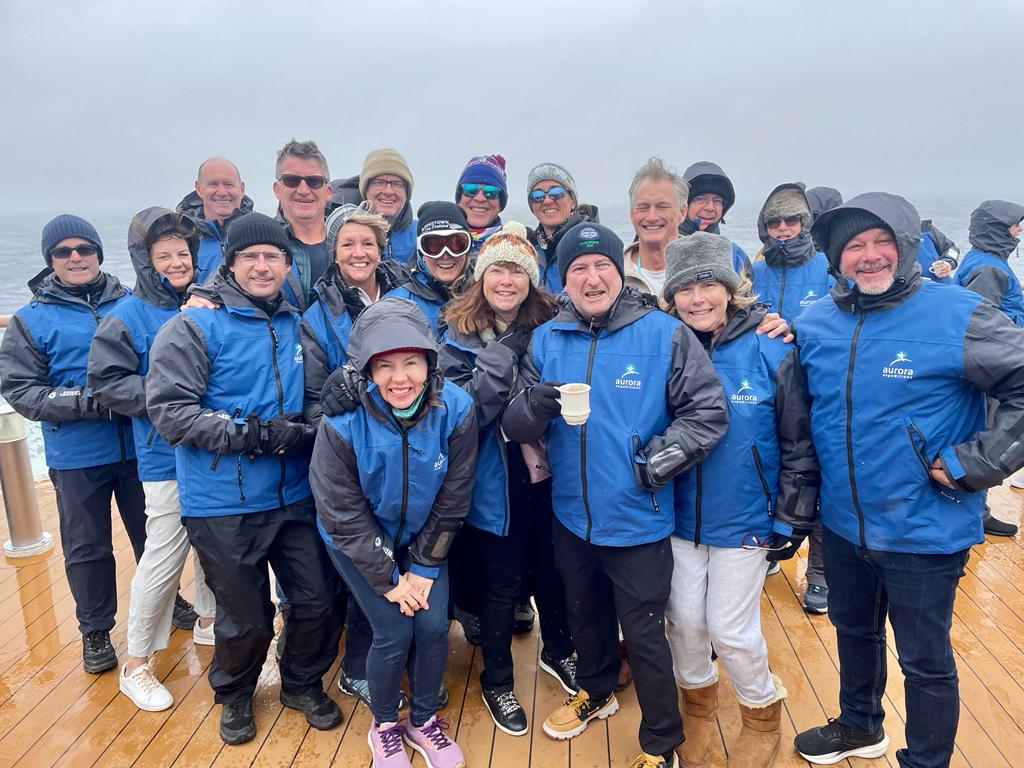
The gang poses as we cross the Antarctic circle.

Go for comfort inside the ship

It might be sub-zero outside, but it’s likely to be warm inside the ship – so jeans and a t-shirt are fine (unless you’re on a fancy-pants ship). As far as footwear goes – trainers work well, but I opted for hiking boots to keep my feet warm when I went out on deck to watch the wildlife. I did see a Canadian outside in her sandals, but I wouldn’t recommend it, unless you come from a very cold part of the world. Ugg boots are also really handy because they are easy to get on and off when you’re changing into excursion boots.

Get outside on deck even if it’s cold

While you’re sailing, the bow of the ship is the best place to be if you want to spot wildlife. On our first morning on the Greg Mortimer, we braved the elements as we cruised through the Gerlache Strait – a designated whale zone. The wind was howling, sleet was slashing our face, but we persevered and were rewarded – whales surfaced right beside the hull of the ship. We spotted plumes from blow holes and caught a glimpse of flukes and fins, as we passed perhaps a hundred humpback whales. Because it was so cold, only a handful of people were on deck to witness the spectacle. By the time the weather brightened, the whales were gone. 

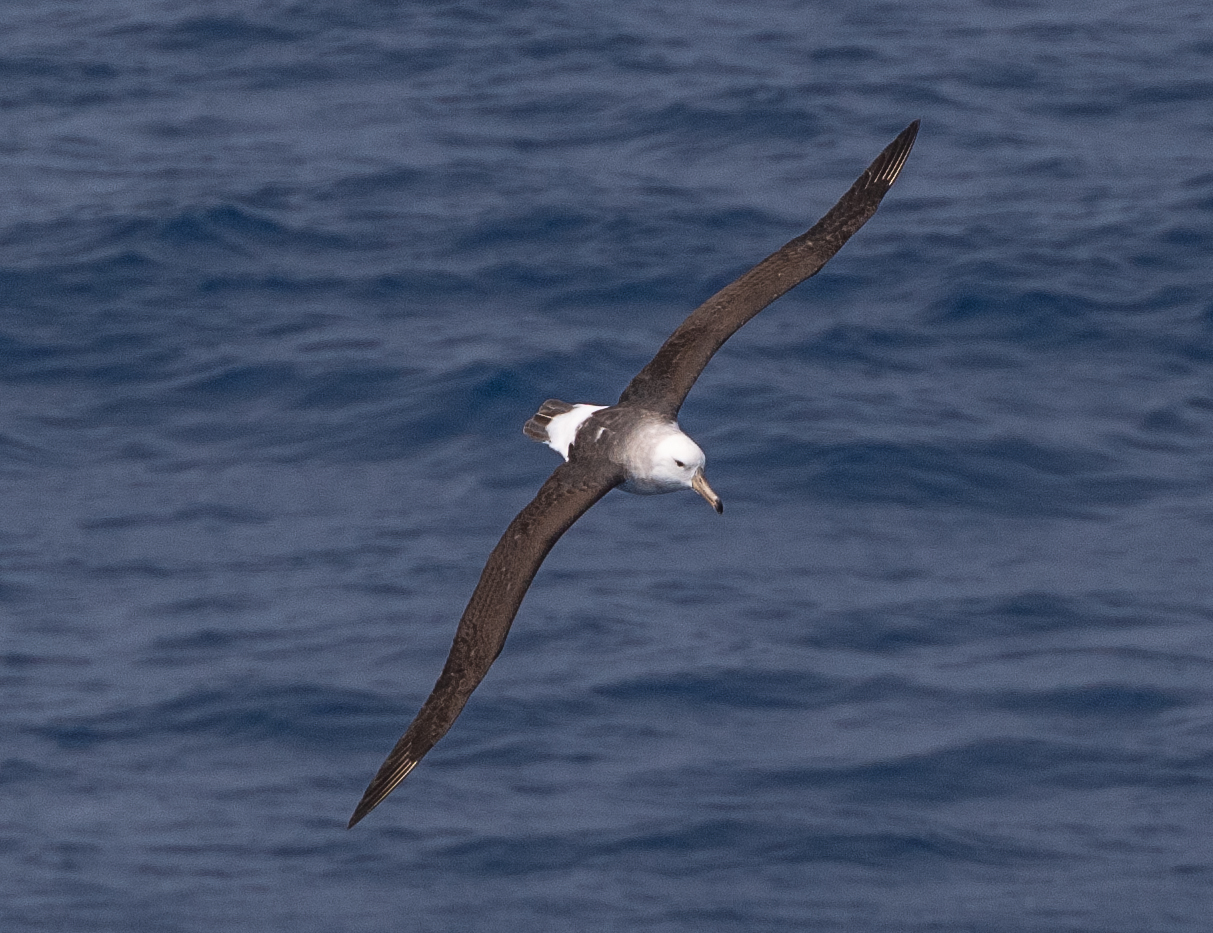
If you’re not fighting 10-metre swells, the Drake Passage is another great opportunity to spot wildlife. Albatross follow the cruise ships – soaring in the thermals and scouring the wake for food. These amazing birds can spend years at sea, sleep on the wing, and glide for hours without flapping their enormous wings. (Wandering albatross have a wingspan of 3.5metres!) Dolphins are also regular visitors on the Drake. I spotted a pod of hourglass dolphins riding the bow waves one afternoon, and had them all to myself – briefly, anyway. 

An Albatross following us across the Drake Passage. Image: John Fison

Citizen science is another important part of ship life. I had a chance to complete my first cloud survey on the Drake. Who knew there were so many different types of clouds? Things have certainly changed since I went to school. But if you need to know the difference between cumulonimbus and cirrocumulus – I’m your gal. 

Have your binoculars with you at all times, so you never miss a thing!

Make the most of every opportunity

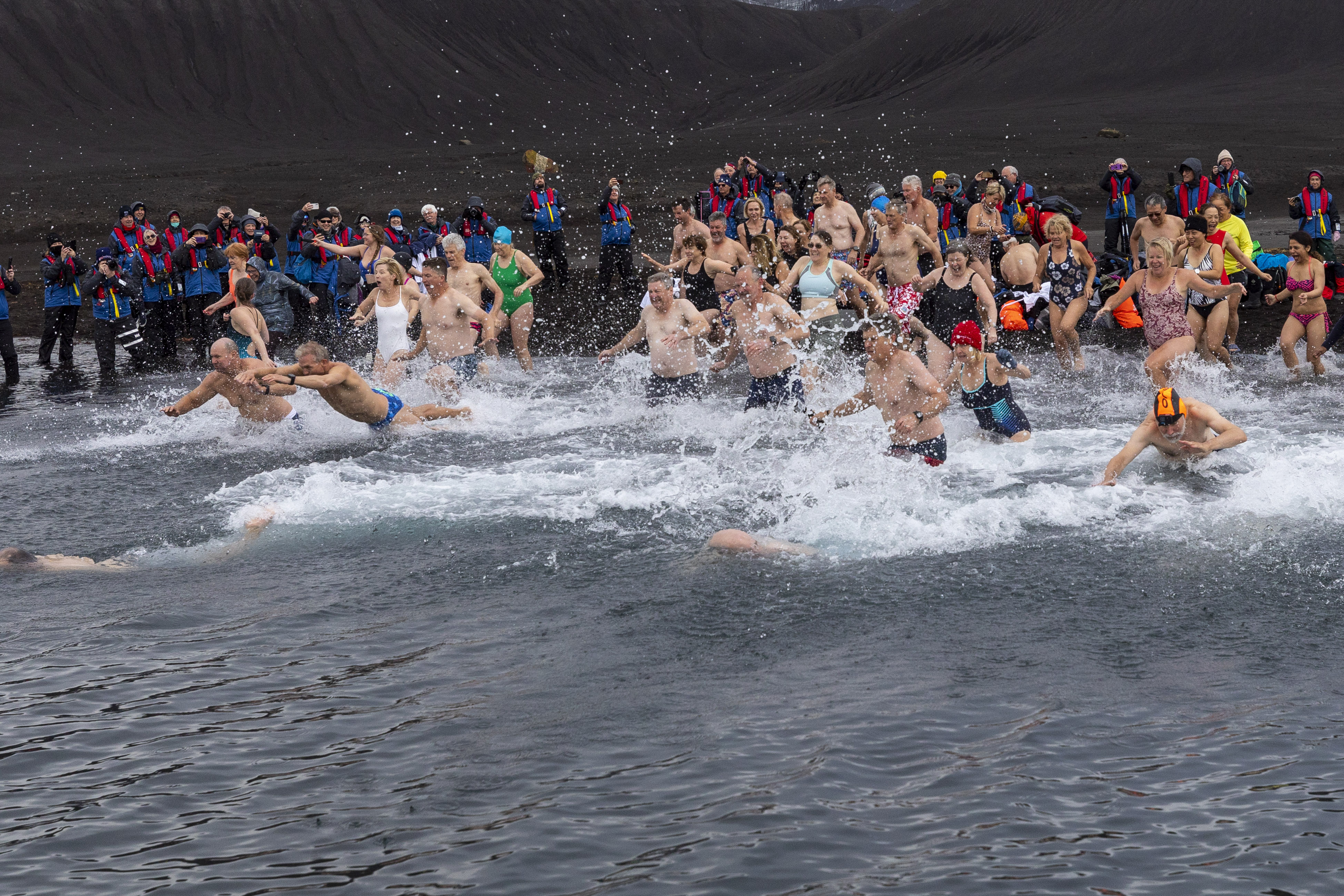
Conditions in Antarctica are extreme, so cruising schedules aren’t hard and fast. Plans change. It pays to roll with the changes and make the most of every opportunity. Our polar plunge turned into a mass polar wade from the beach at Deception Island due to rough seas, which might have been disappointing to purists, but it turned out to be quite a spectacle. I can’t say I enjoyed it at the time, but I was very glad I did it, and have the t-shirt to prove it!

Brrr. Polar plunge. Image: Adrian Wlodarczyk, Aurora Expeditions

Pack the right camera gear

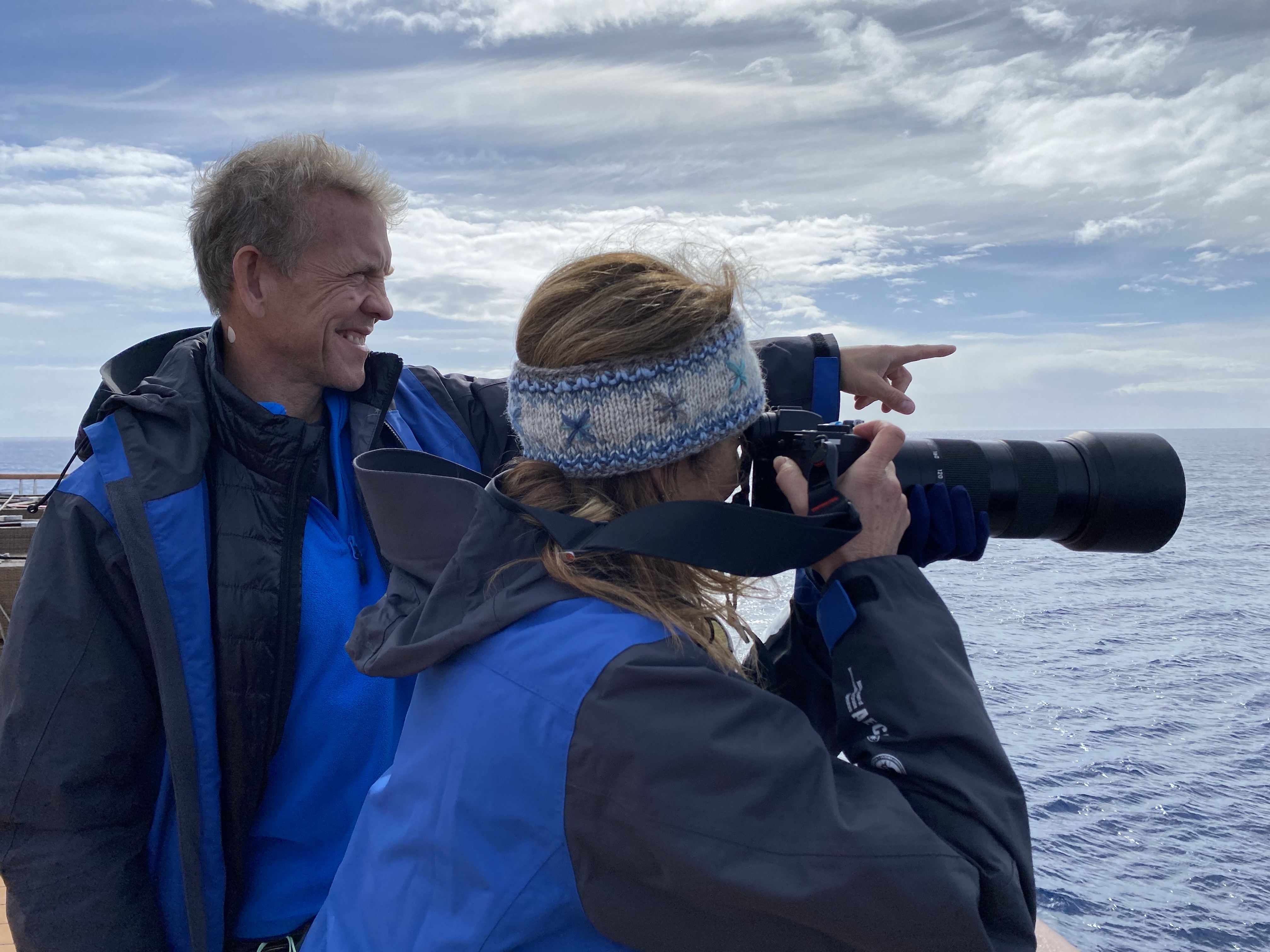
If you’re serious about getting great wildlife shots in Antartica, you’ll need a decent zoom lens – at least 200mm. Often, you’ll be shooting from a Zodiac, so a weather-proof camera is a bonus. To compensate for the extreme conditions, here’s Mr F’s list of must-haves:

Tips from the expert. Image: Karen Campbell
  • At least one spare battery, ideally two. Batteries will run down faster in the cold and you can find yourself taking photos for a few hours non-stop on some of the trips.
  • A comfortable shoulder strap.
  • A waterproof bag. This is essential for the zodiacs. Ideally one that is easy to carry when you get on and off the zodiac with the swell throwing you around.
  • Lens cleaning wipes and cloths. The lens will need cleaning after every outing.
  • Take a spare lens cap as well, just in case!
  • Sensor cleaner. If you have removable lenses definitely take a sensor cleaner, but seek professional advice on how to use these.
  • Large silica gel bag. This is for drying out the camera when back on the ship. Put it in a separate sealable bag and let it do its work. Bunnings sell 500 gm bags.
  • Thin gloves under waterproof gloves. Find ones with the touch friendly finger tips. In the zodiac on a cold day, you will need to wear both sets at all times,  so get used to using them with the camera.
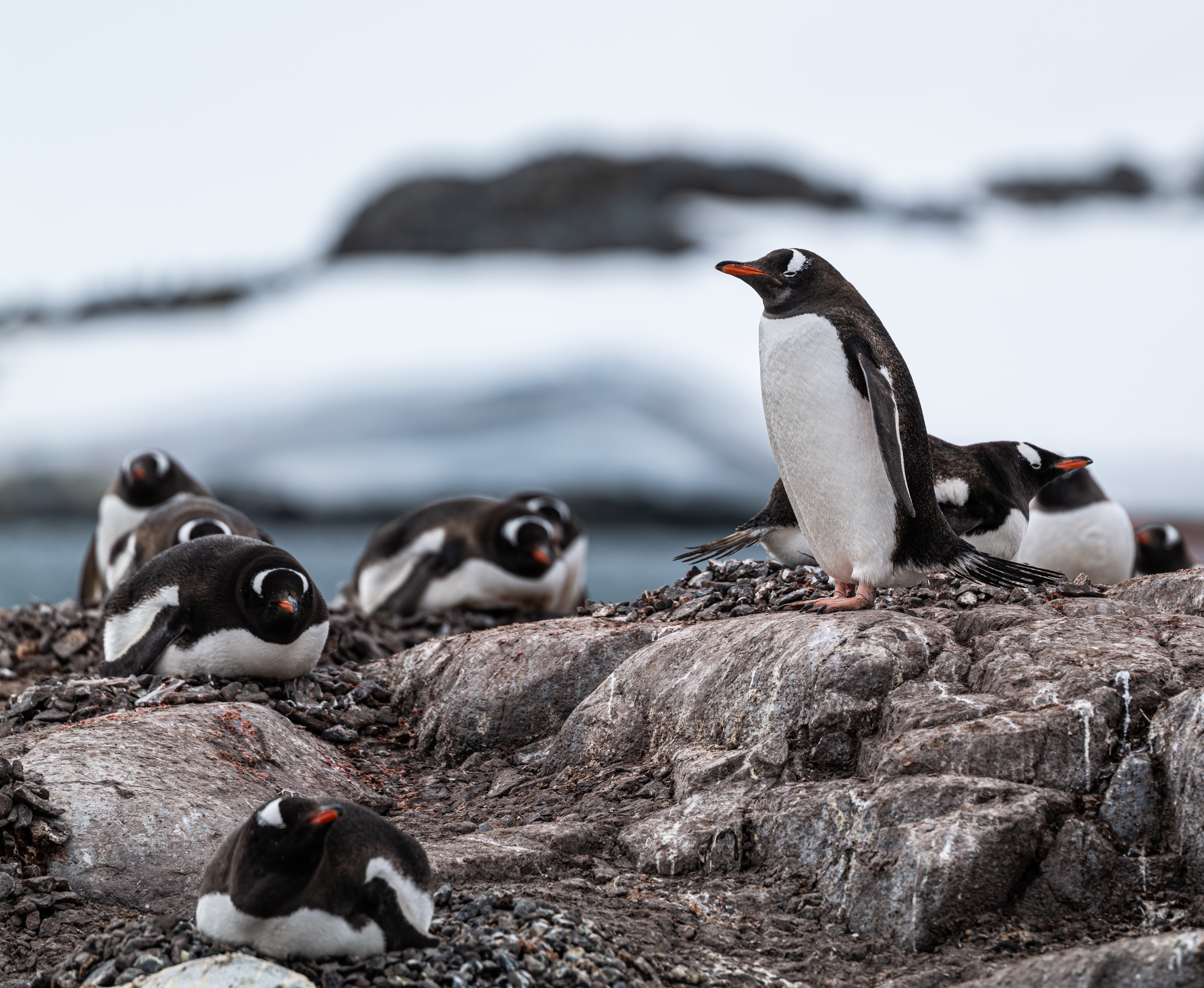
Gentoo penguins. Port Lockroy, Image: John Fison

Other tips:

  • Have your camera with you at all times and ready to go.
  • For any wildlife photos use manual mode. Aim for 1/2000 sec, F5.6 or lower and keep the ISO to a maximum of 400 if you can, depending on quality of camera, light, etc.
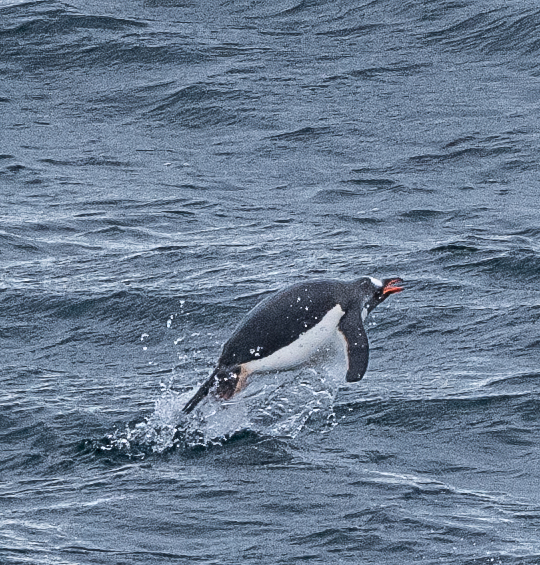
  • If you are looking to get a photo of penguins porpoising in the water, or similar fast-moving wildlife, use burst mode.
  • Use spot focus for all wildlife.
  • Don’t bother taking an additional lens on any zodiac trip – you cannot change lenses on these boats.
  • Use exposure compensation actively. And don’t bother with polarising or ND filters.
  • Clean the camera every day to prevent salt water corrosion.
  • Antarctica is a no-drone zone, so leave your drone at home.
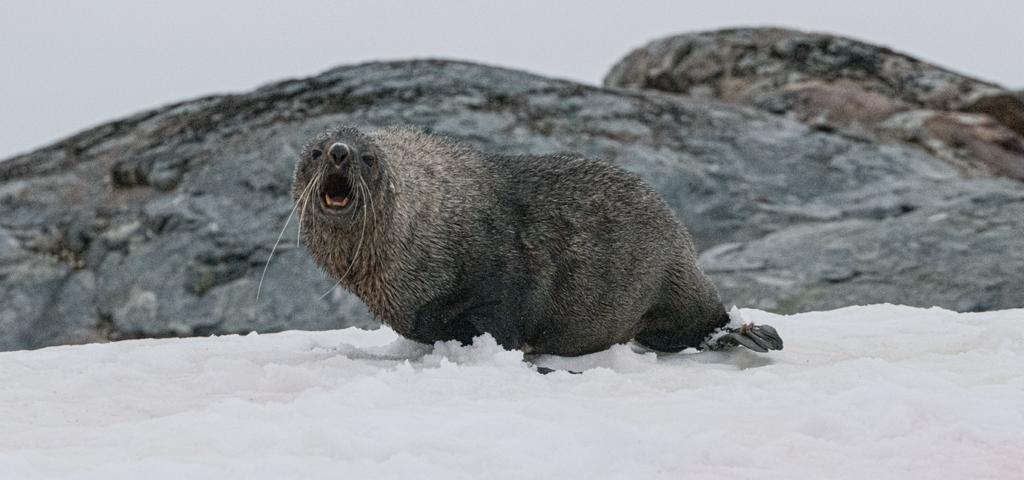
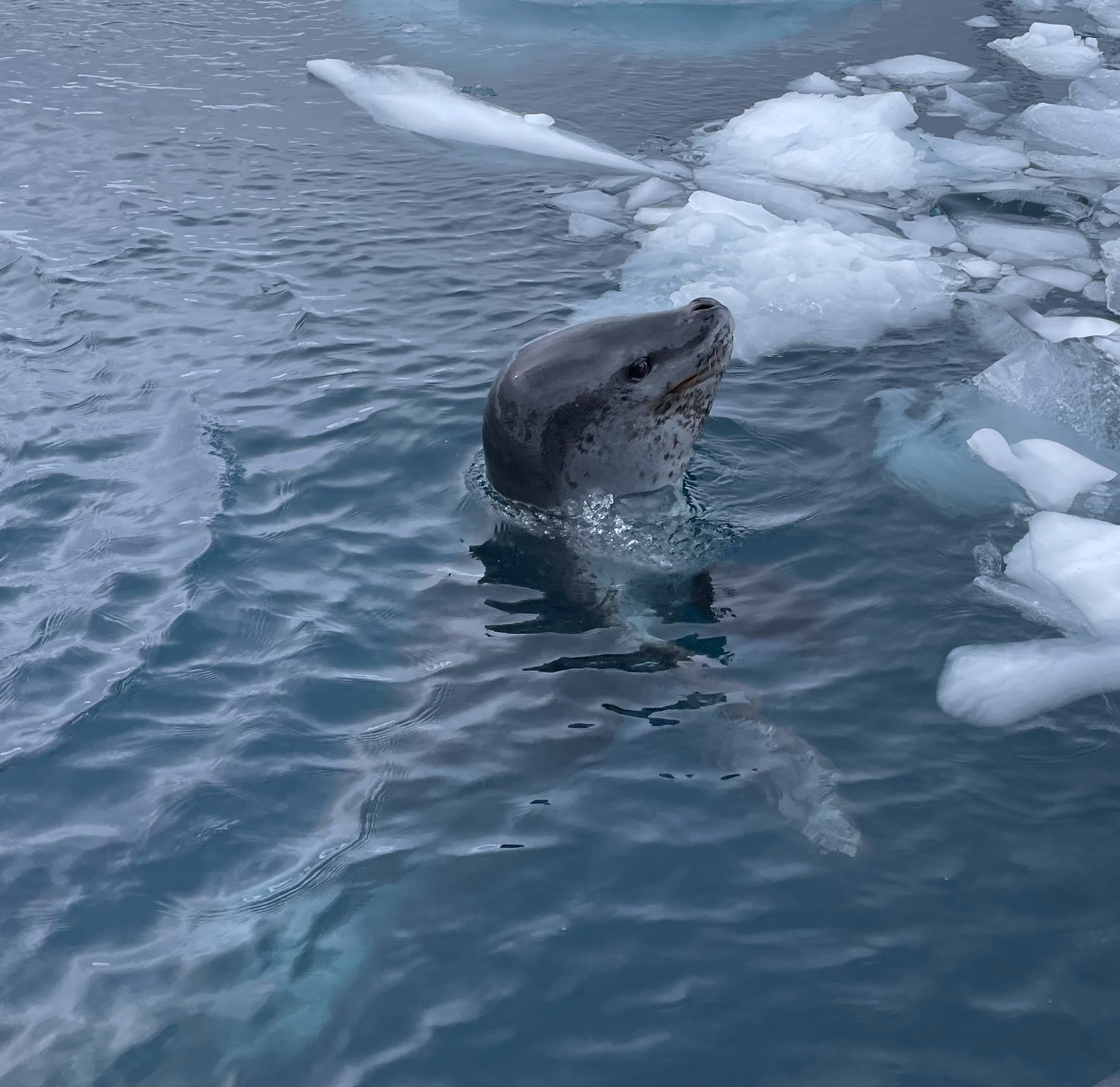
Leopard seal. Image: John Fison

Getting to and from Antarctica

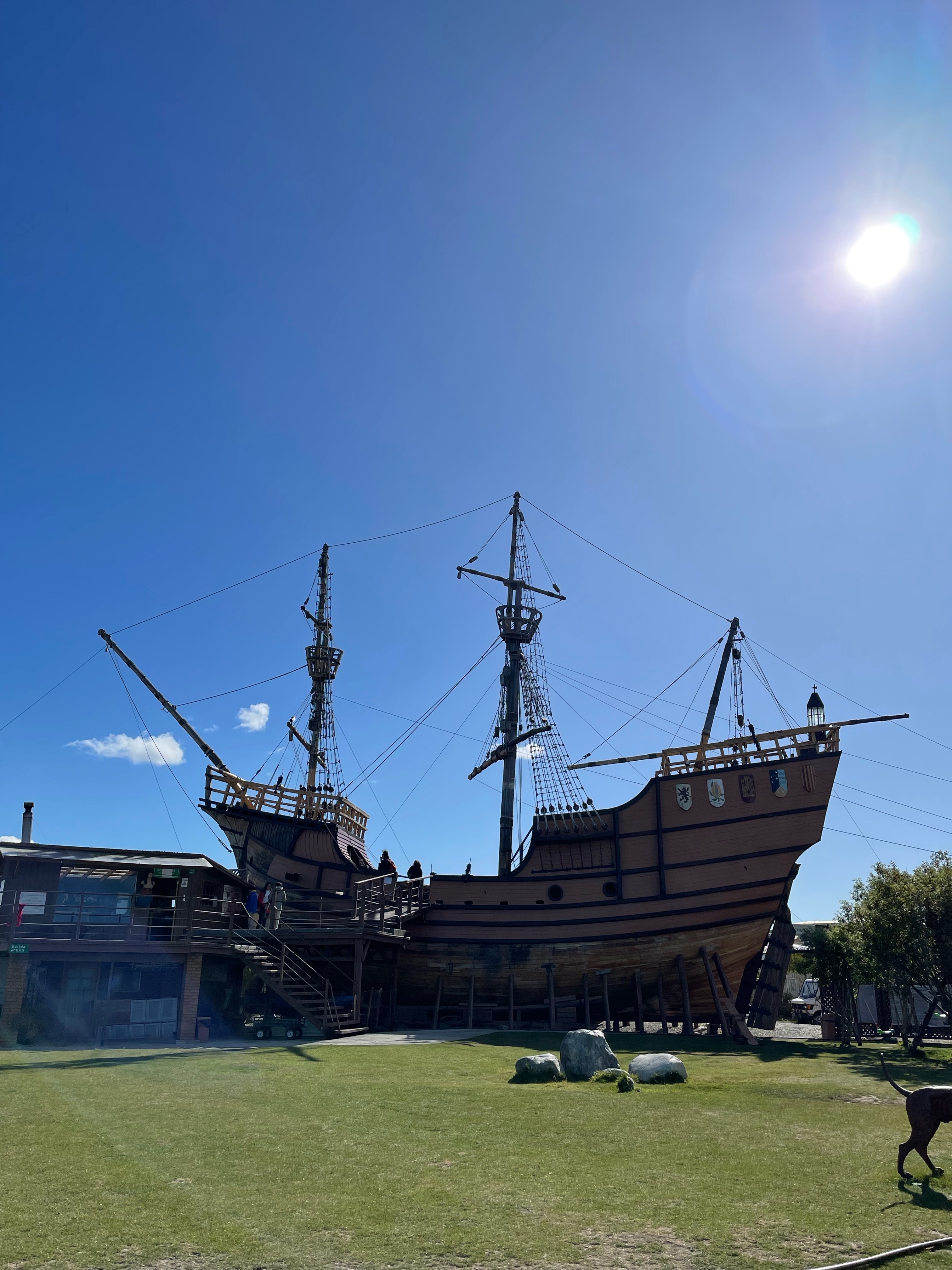
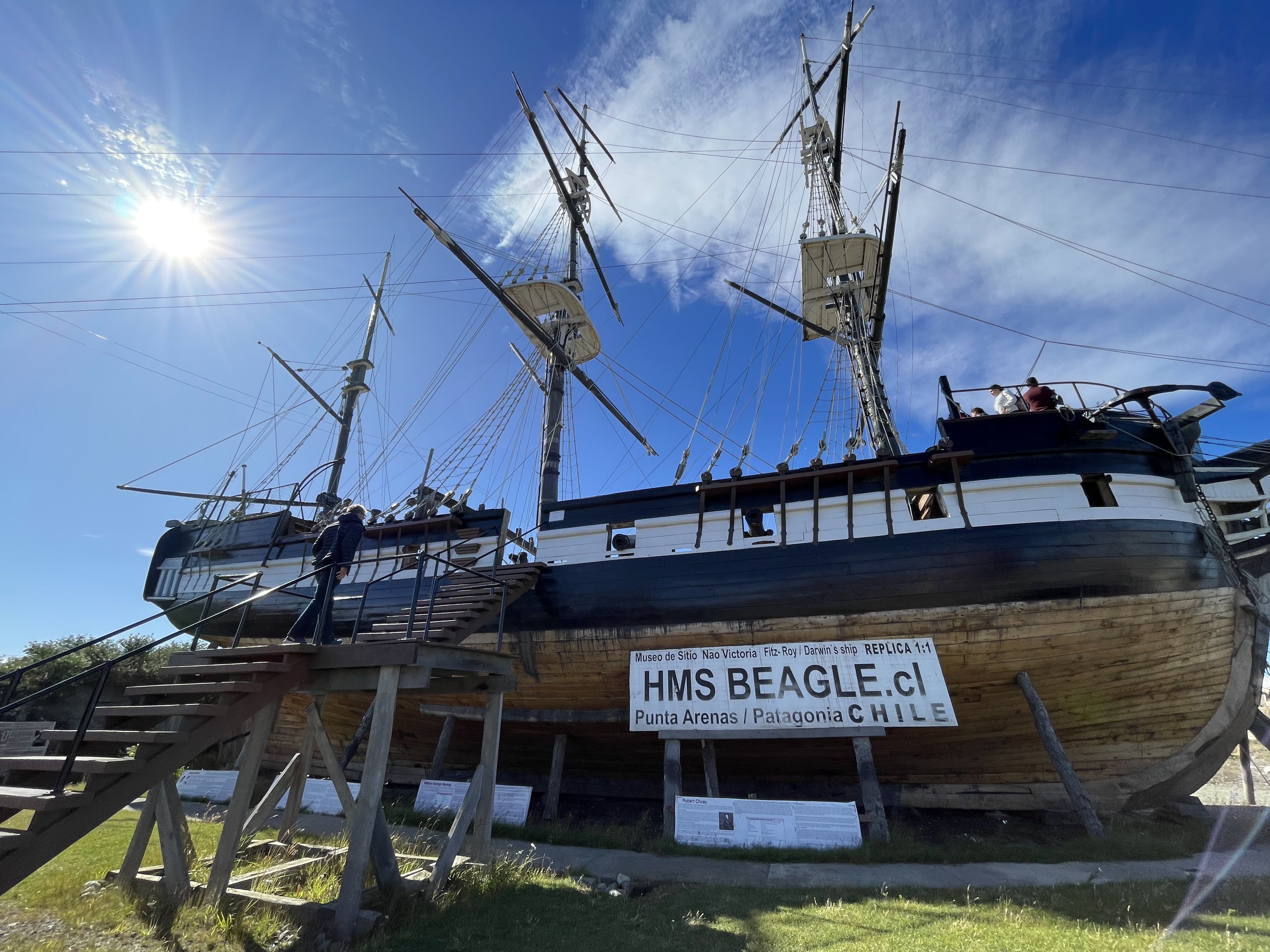
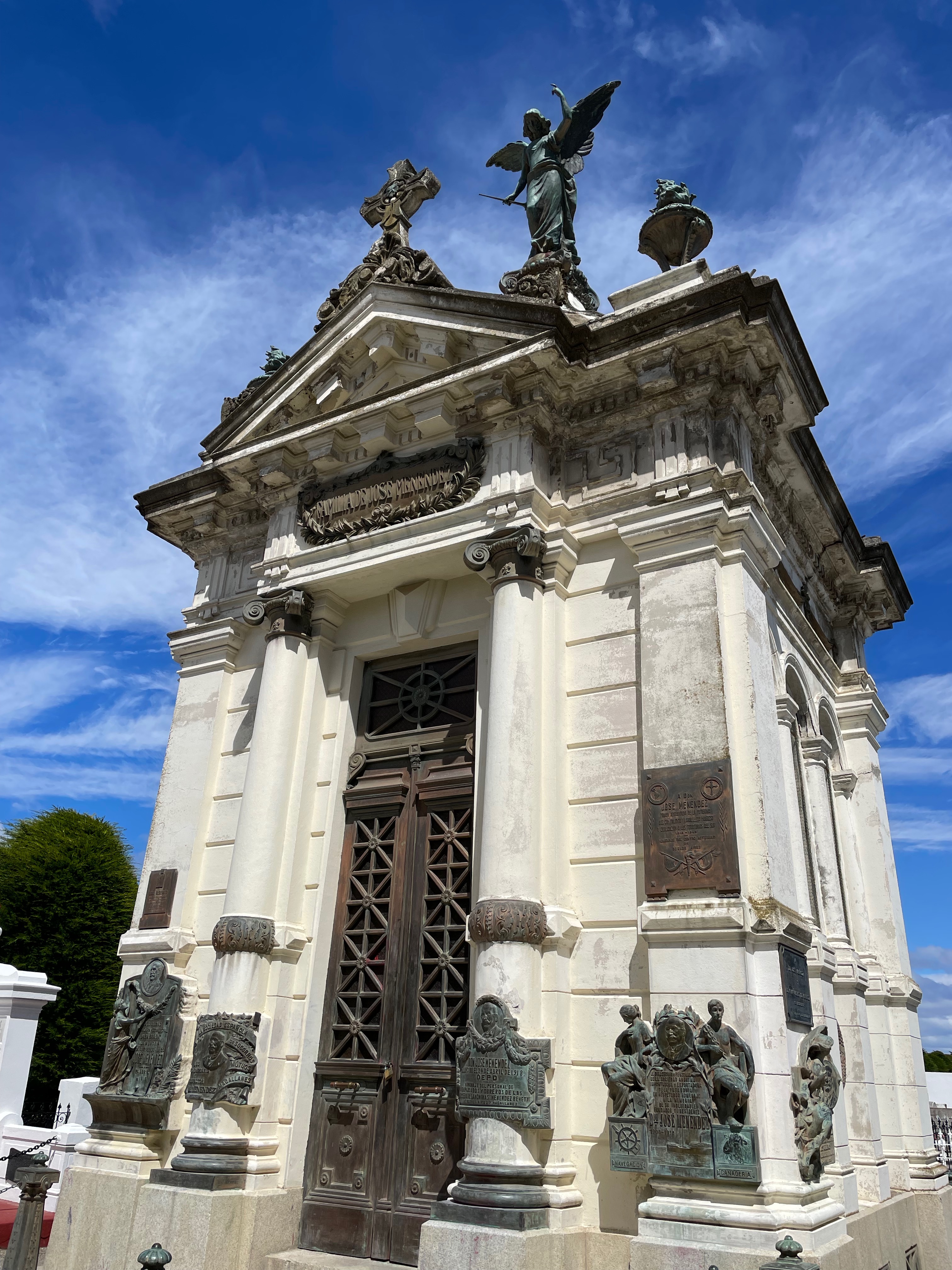
Antarctic cruises leave from Punta Arenas, Chile, or Ushuaia in Argentina. We ended up spending almost a week in Punta Arenas – which was a little longer than we needed – but there’s plenty of history to uncover, if you have time to explore. The city lies on the Magellan Strait, which connects the Atlantic and Pacific Oceans. Until the opening of the Panama Canal in 1914, Punta Arenas was a thriving and prosperous city. You can see evidence of the grand old days as you wander around the central Plaza de Armas and the beautiful municipal cemetery, which has some very imposing marble crypts, originally built for the wool barons of Patagonia. For maritime history, head out of town to the Nao Victoria Museum. Here you’ll find a replica of Ferdinand Magellan’s ship Victoria. Magellan sailed this way in 1520 looking for a route to the Spice Islands. He was killed in what is now the Philippines, but his ship and some of his crew completed a circumnavigation of the world.

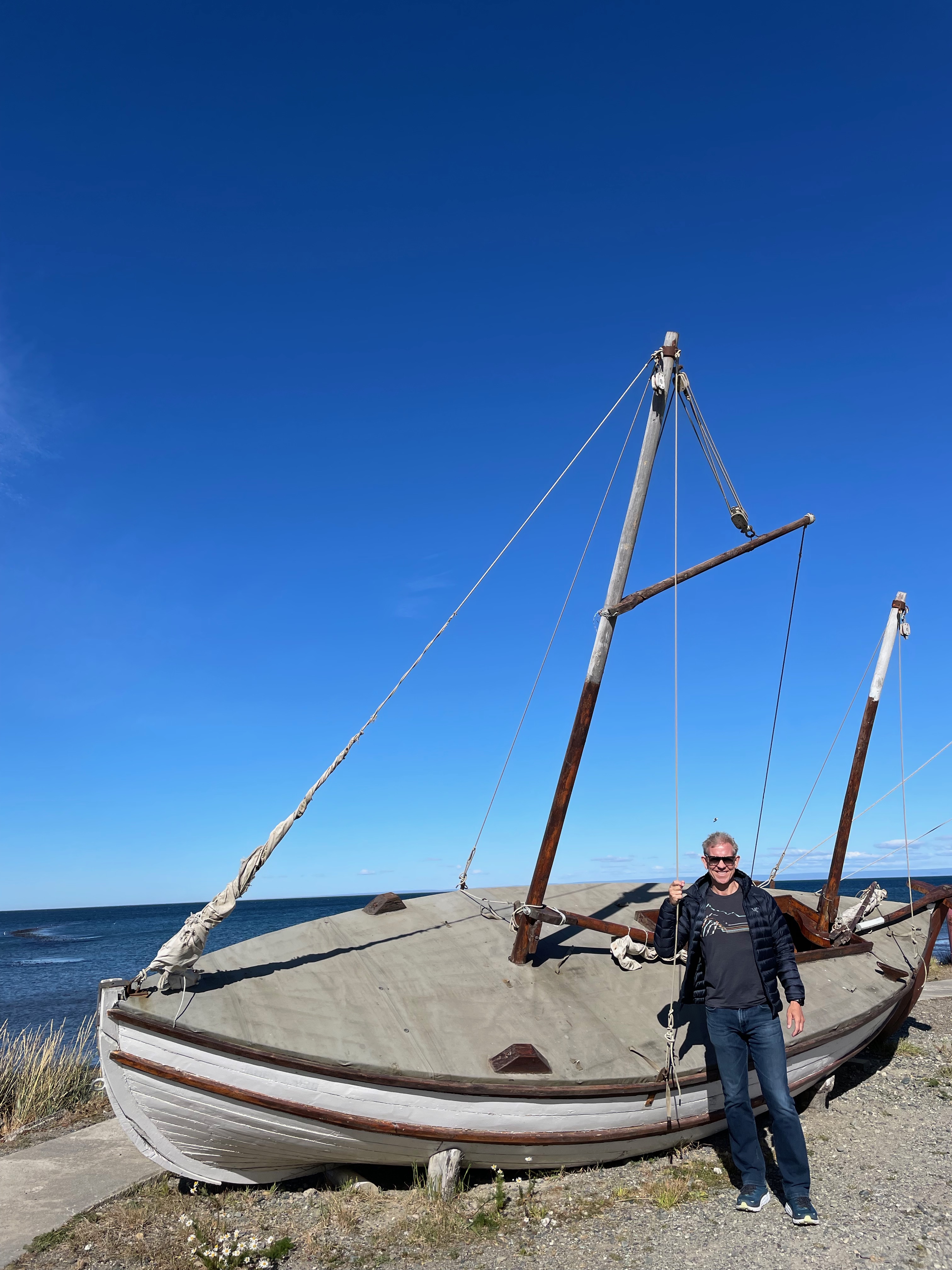
Other replicas include the Beagle – the ship made famous by naturalist Charles Darwin, and the James Caird – an open lifeboat that Ernest Shackelton famously sailed 1300 km to get help to rescue his stranded crew after their ship the Endurance was crushed by polar ice. The Shackleton Bar at the Hotel Jose Nogueira is worth a visit for a Pisco Sour. Beware: they make ’em strong down here!

Ushuaia – on the Beagle Channel – is the world’s southernmost city. It is a resort town as well as an Argentinian naval base, framed by snow-capped mountains and crammed with quirky shops and restaurants. You can explore the whole town in a few hours, or take a train from here to the Tierra del Fuego national park.

Further afield

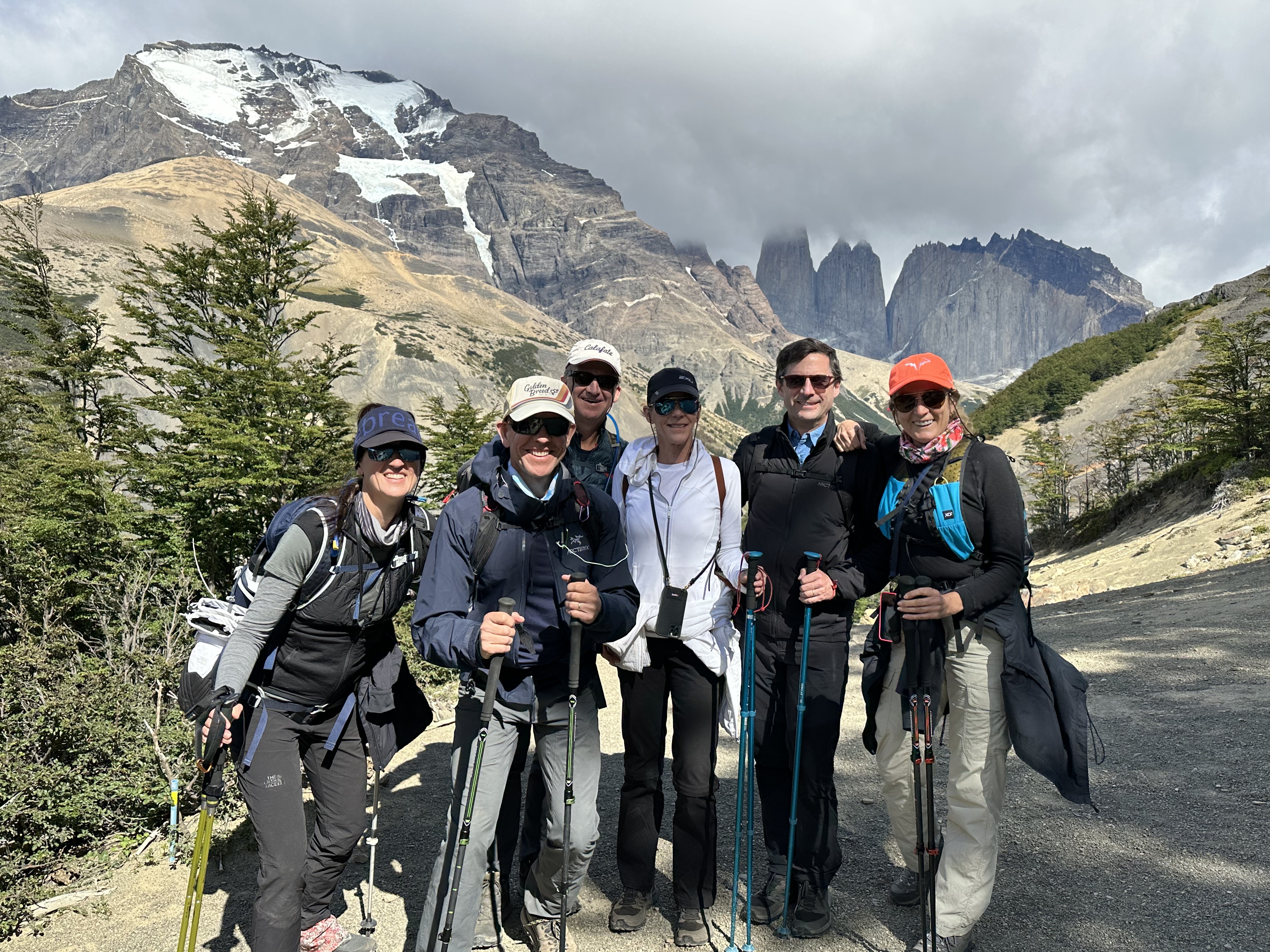
Patagonia: If you like hiking, you will love Torres del Paine National Park, on the Chilean side of the Patagonia. Towering mountains, golden steppes, guanacos, pumas and flamingos – what’s not to love! Hard-core hikers come here for the multi-day O and W treks. But if you’re like me and enjoy hiking, horse riding, hearty meals and a comfortable bed, Hotel Las Torres is very hard to beat. The lodge sits inside the National Park, so you’re within striking distance of amazing hikes, without ever having to carry more than a day pack. We spent a week exploring this truly spectacular region. You can read more about it here.

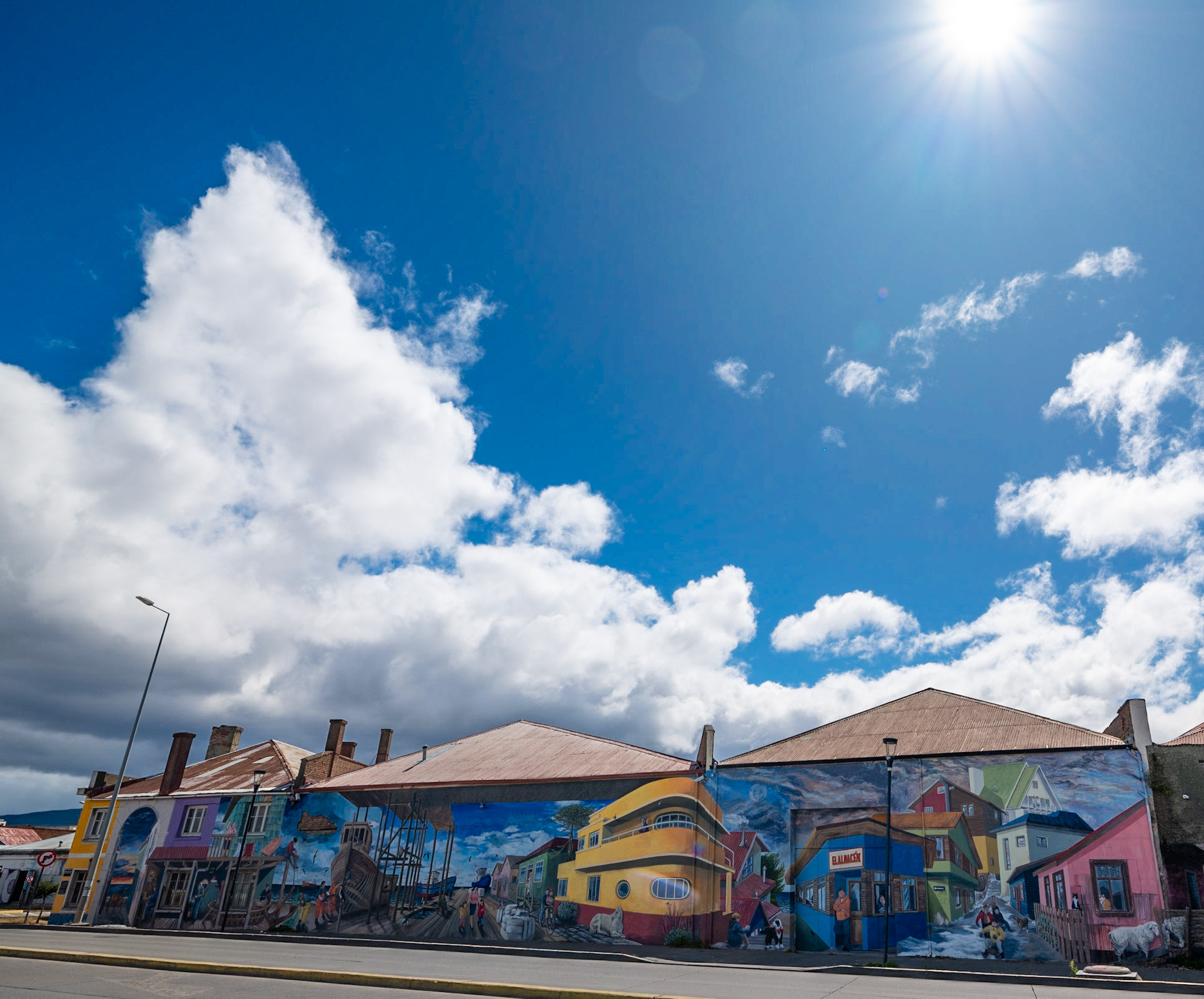
Santiago and Valparaiso: The Chilean capital Santiago has some great restaurants and bars but street crime has tarnished its reputation – making it less appealing for tourists (and locals). Head out of the city – visit the nearby wineries and spend some time exploring the colourful street art of the port city of Valparaiso. The historic old town is World Heritage listed and definitely worth a visit.

Buenos Aires: The Argentinian capital is a vibrant, cosmopolitan city – the perfect place to thaw out after a fortnight in the Antarctic. Head to the Palermo district for great restaurants and bars, and check out Sherpa Food Tours for a guided tour of the best spots to eat and drink. Make sure to book a table at Don Julio for beef, beef and more beef. My other top pick for eating out is El Preferido de Palermo. Bookings essential at both restaurants.

A few other things about Chile and Argentina:

  • Travelling between the two countries generally means a transit in Buenos Aires or Santiago. Do yourself a favour – get out a map and dedicate some time to logistics before you do anything. Criss-crossing between the two countries is time-consuming!
  • If you need a visa for Chile, make sure it is multiple entry, so you don’t get stranded at some remote border post. It happens!
  • In Argentina, high inflation means US dollars are king. Ask about the blue rate for US$ currency exchange at Western Union branches. 
  • Beware of street crime – especially in Santiago. Secure your valuables, and don’t wave your iPhone around. They regularly get snatched. 
  • Get advice on local taxis. Uber is the way to go in Buenos Aires and Santiago.
  • Basic Spanish is necessary outside hotels, but local accents and slang can be a challenge!

Happy travels!

Julie

5 Reasons to Visit Patagonia’s Torres del Paine National Park

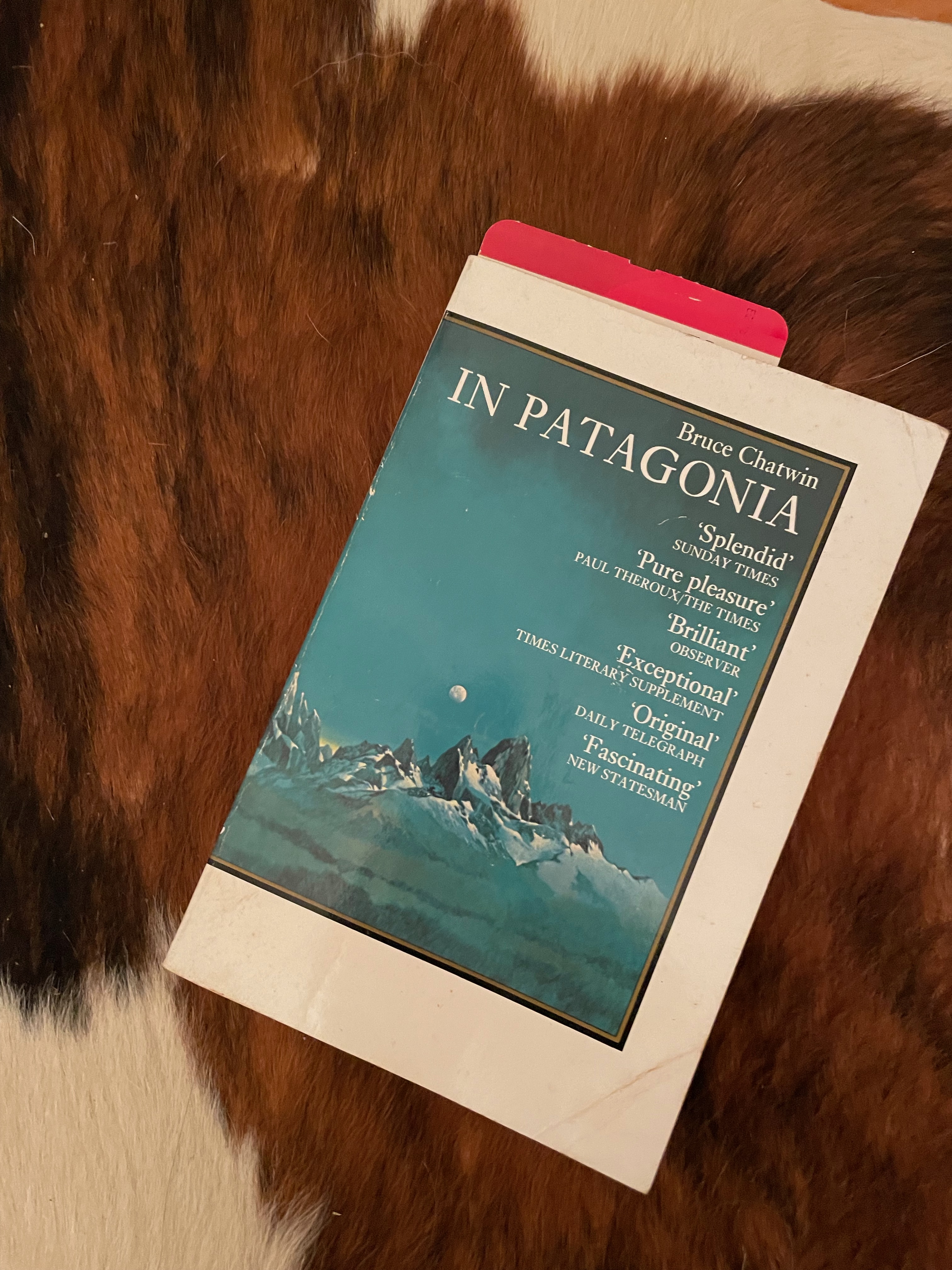
Patagonia – the vast region that straddles Chile and Argentina at the southern end of South America – has been on my bucket list since I read Bruce Chatwin’s iconic travel book, In Patagonia, in the 90s. It took me 30 years to finally get there, so a lot was riding on this trip, but Patagonia well and truly exceeded my expectations. Towering mountains, golden steppes, guanacos, pumas and flamingos – what’s not to love! Hard-core hikers come to Chilean Patagonia’s most famous national park – Torres del Paine – for the multi-day O and W treks, carrying big packs, camping, or sleeping in refugios. But if you’re like me and enjoy hiking, horse riding, hearty meals and a comfortable bed, Hotel Las Torres is very hard to beat. The lodge sits inside the National Park, so you’re within striking distance of amazing hikes, without ever having to carry more than a day pack. We spent a week exploring this truly spectacular region. Here are five reasons to pack your hiking boots and book a flight to Chile so you can see it  for yourself.

Landcape

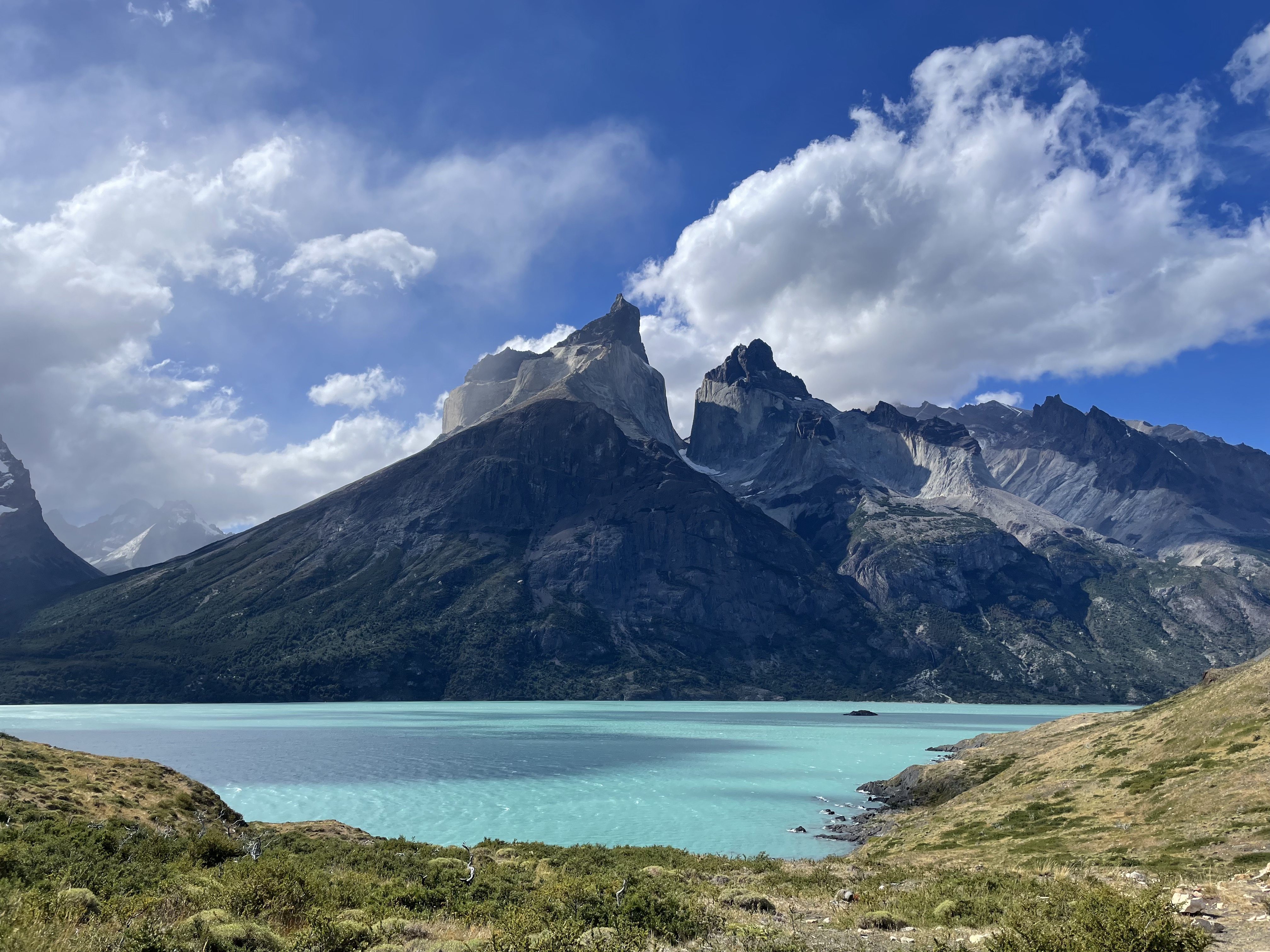
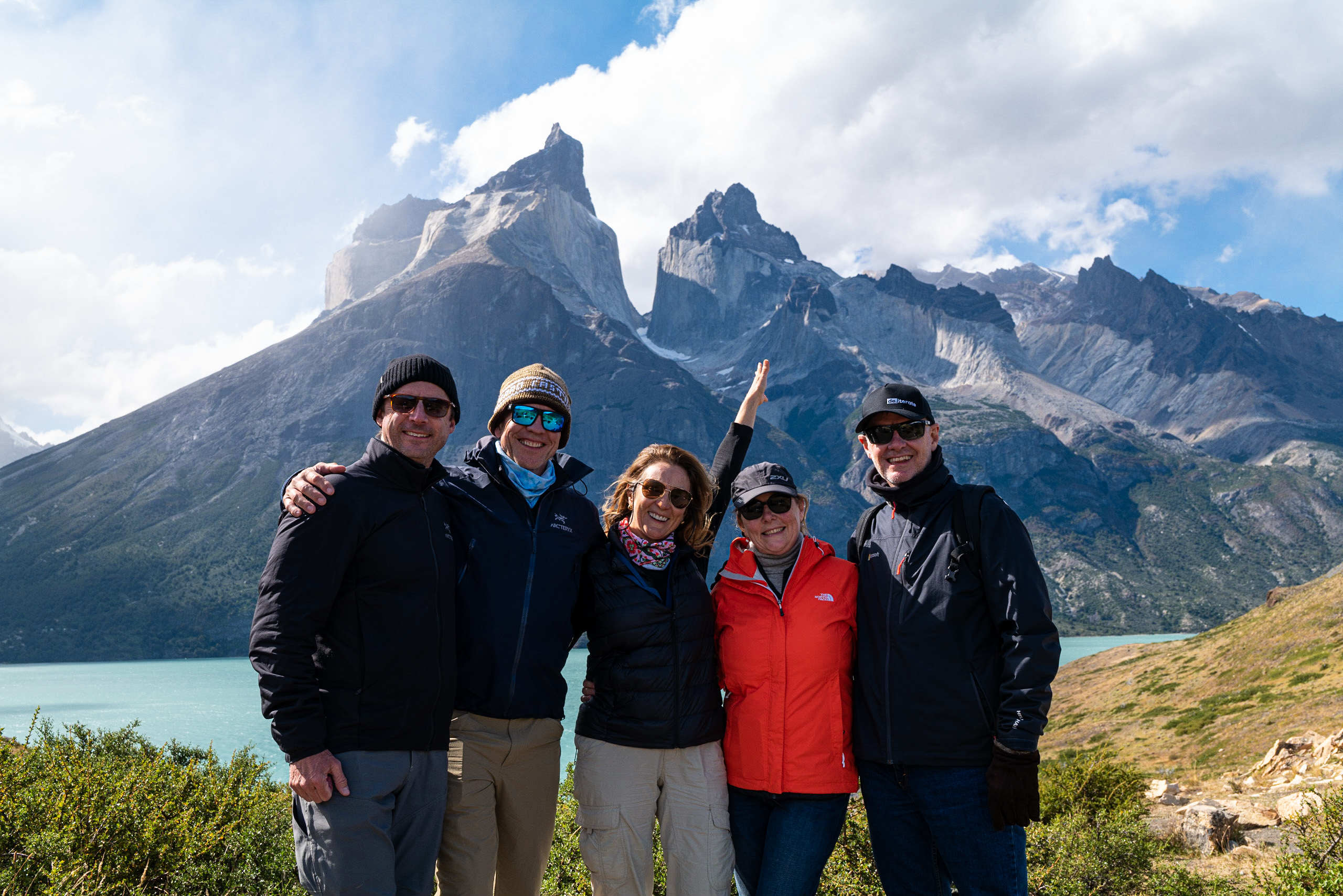
Los Cuernos, Torres del Paine National Park. Image: John Fison

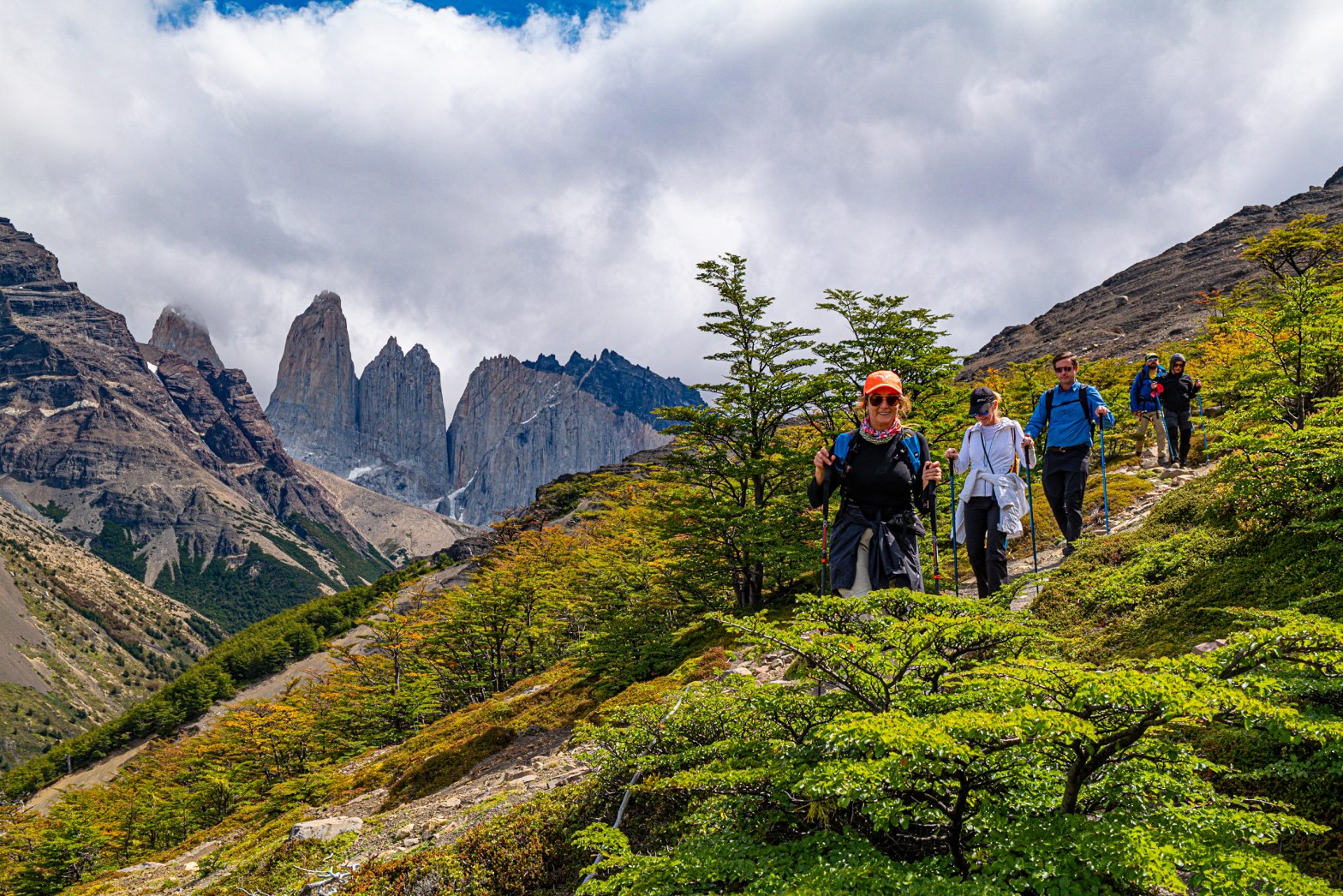
Torres del Paine National Park is 200,000 hectares of jaw-dropping natural beauty. The park takes its name from the three jagged granite peaks at the heart of the mountain range – literally the Towers of Blue in the local Tehuelche language. Technically this is part of the Andes range, but the formations are quite distinct. Formed 12 million years ago when sedimentary layers lifted up through the earth, they’ve since been worn away by glacial movement – leaving mostly granite spires and remnants of dark metamorphic rock. Add to that: vibrant turquoise lakes, waterfalls, huge glaciers, verdant forests and the vast Patagonian steppe, and you’ve got staggering scenery every way you turn! 

Wildlife

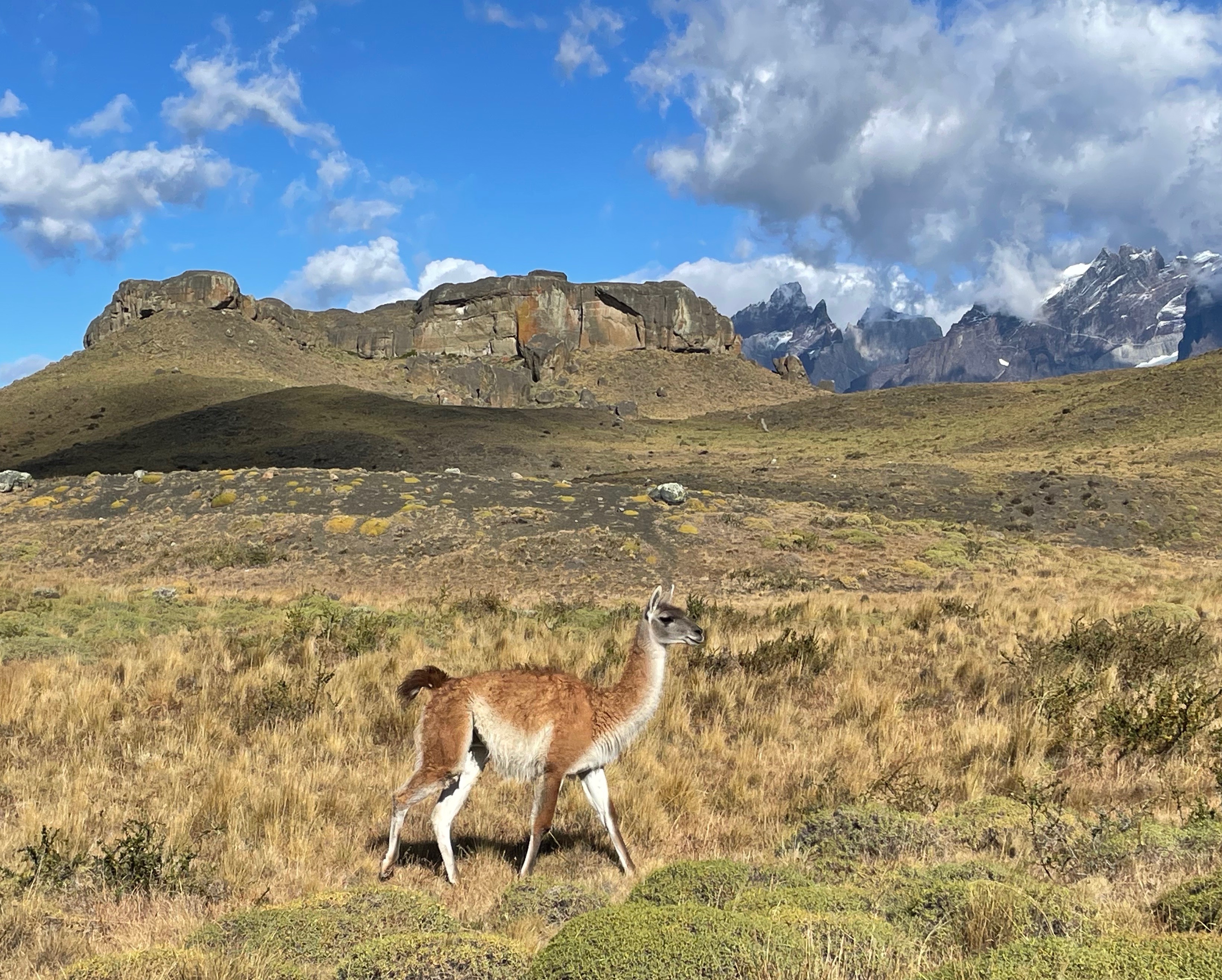
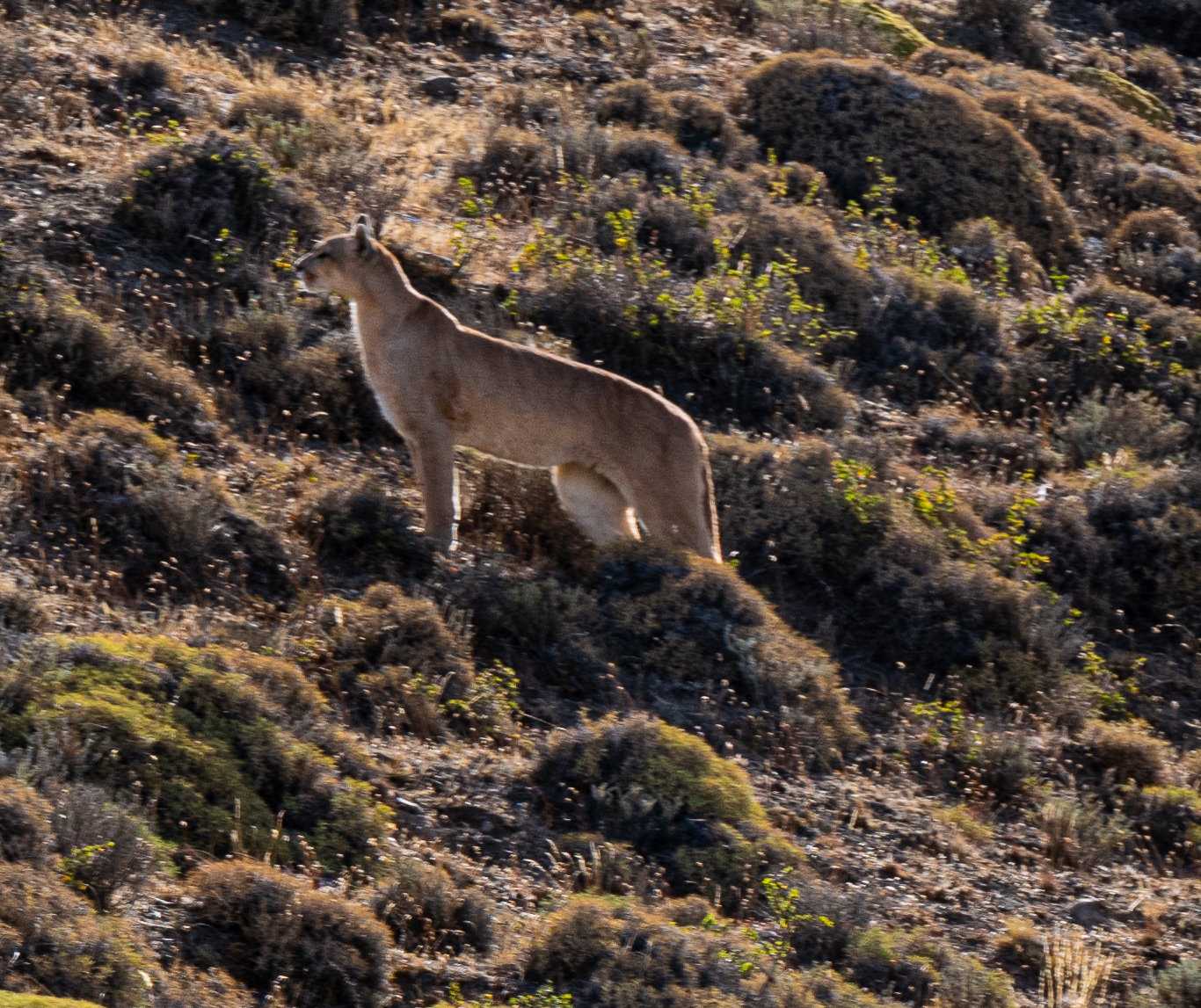
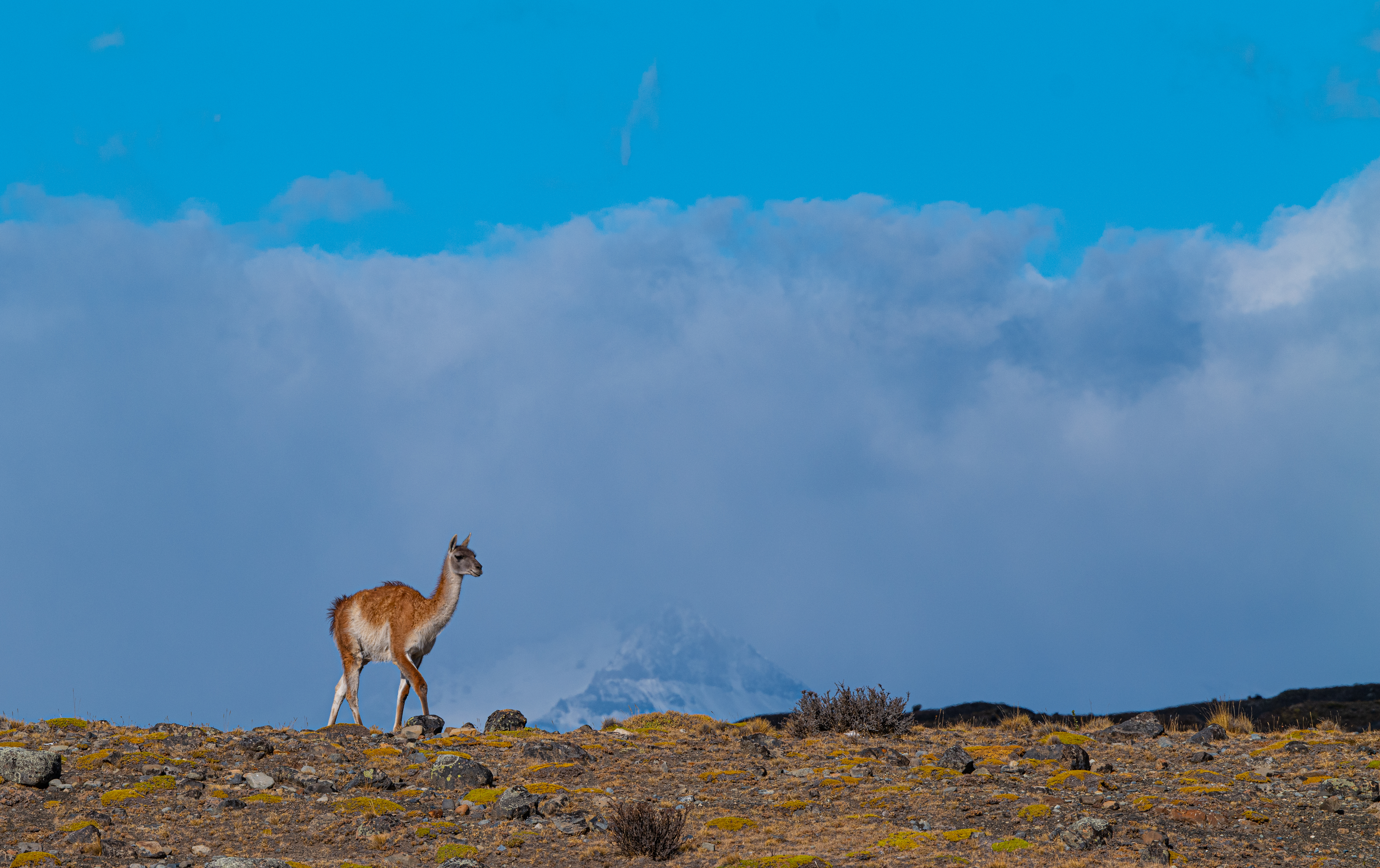
The Patagonian steppe’s most famous resident is the guanaco. These elegant herbivores are related to llamas and camels – well adapted to extreme conditions. You’ll see them in herds, grazing in the pampas, or standing alone at the top of a hill – a sentry on the lookout for predators. Pumas are the big threat here. It’s estimated that between 50 and 100 lions of the Andes roam the Torres del Paine National Park, which means this is probably the worst place to be a guanaco, but it’s the best place in the world to see pumas.

Julie Fison catapults readers into the murky and contested waters of love, morality and justice from the first page of One Punch and holds them, transfixed, right till the end. It’s a story that exposes the consequences of unconditional love; the cost and burden this delivers parents, their children and anyone caught in its more nefarious orbit. One Punch is a raw, urgent and chilling portrait of family loyalty and the frightening repercussions of being blind to the faults in those we love. Read this book and your conviction about what is right and wrong will be changed forever. 

Sally Piper, Bone Memories

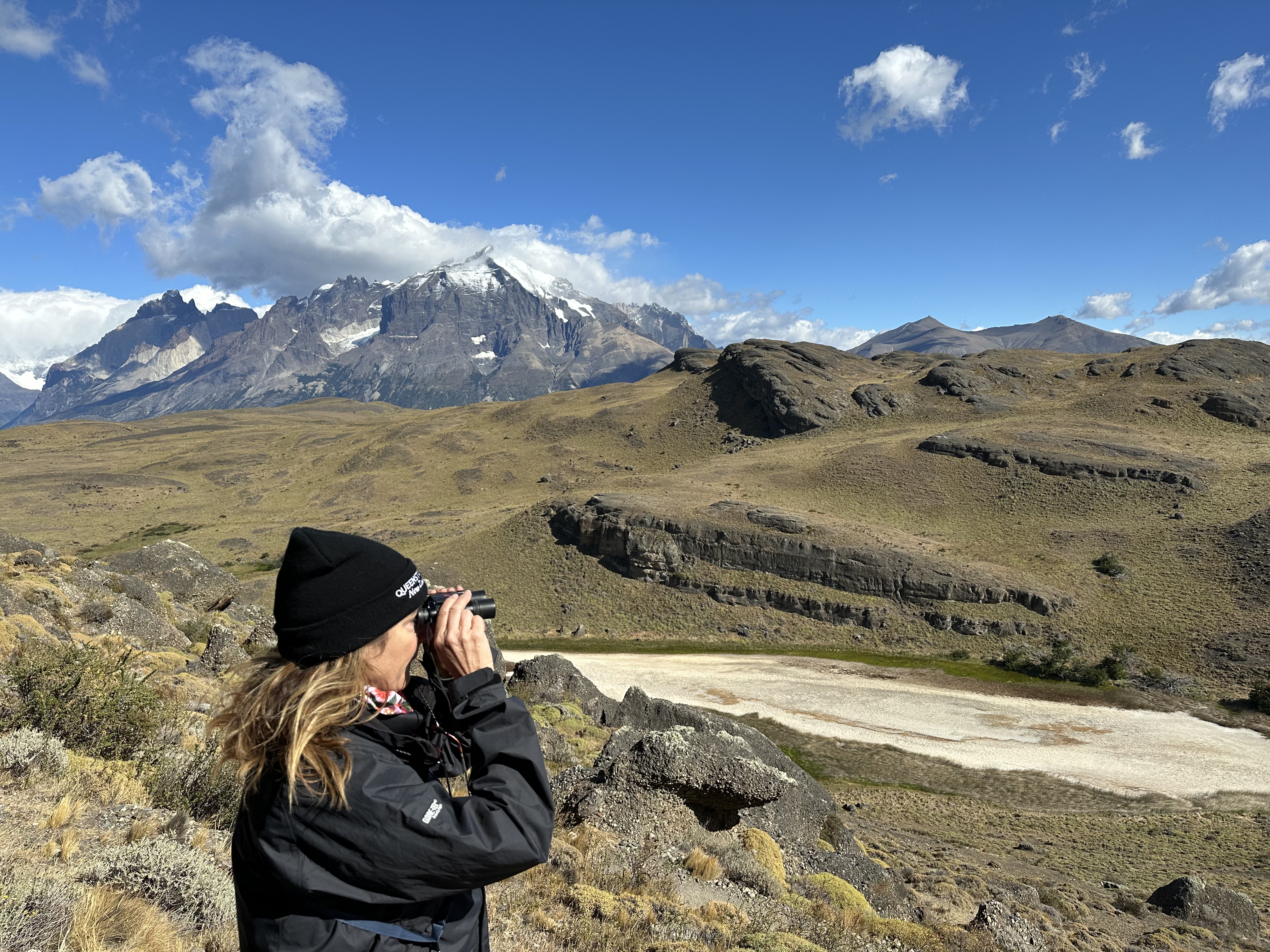
Unfortunately, that doesn’t mean they are easy to find! We spent three hours hiking one morning, peering at distant rocky outcrops and crevices through our binoculars, without any luck. But that afternoon, on our way back from another hike, we spotted two pumas just metres from the side of the road. OK, when I say we, I use the term loosely. I had nothing to do with the spotting. In fact, it took me some time to see the pumas even after the guide had pointed them out. The dead guanaco, and the small crowd of spectators gathered on the other side of the road gave them away, but they were so well camouflaged, I would have driven right past them. But these were big, well-fed animals, totally indifferent to their audience. Pumas are definitely top of the food chain here.

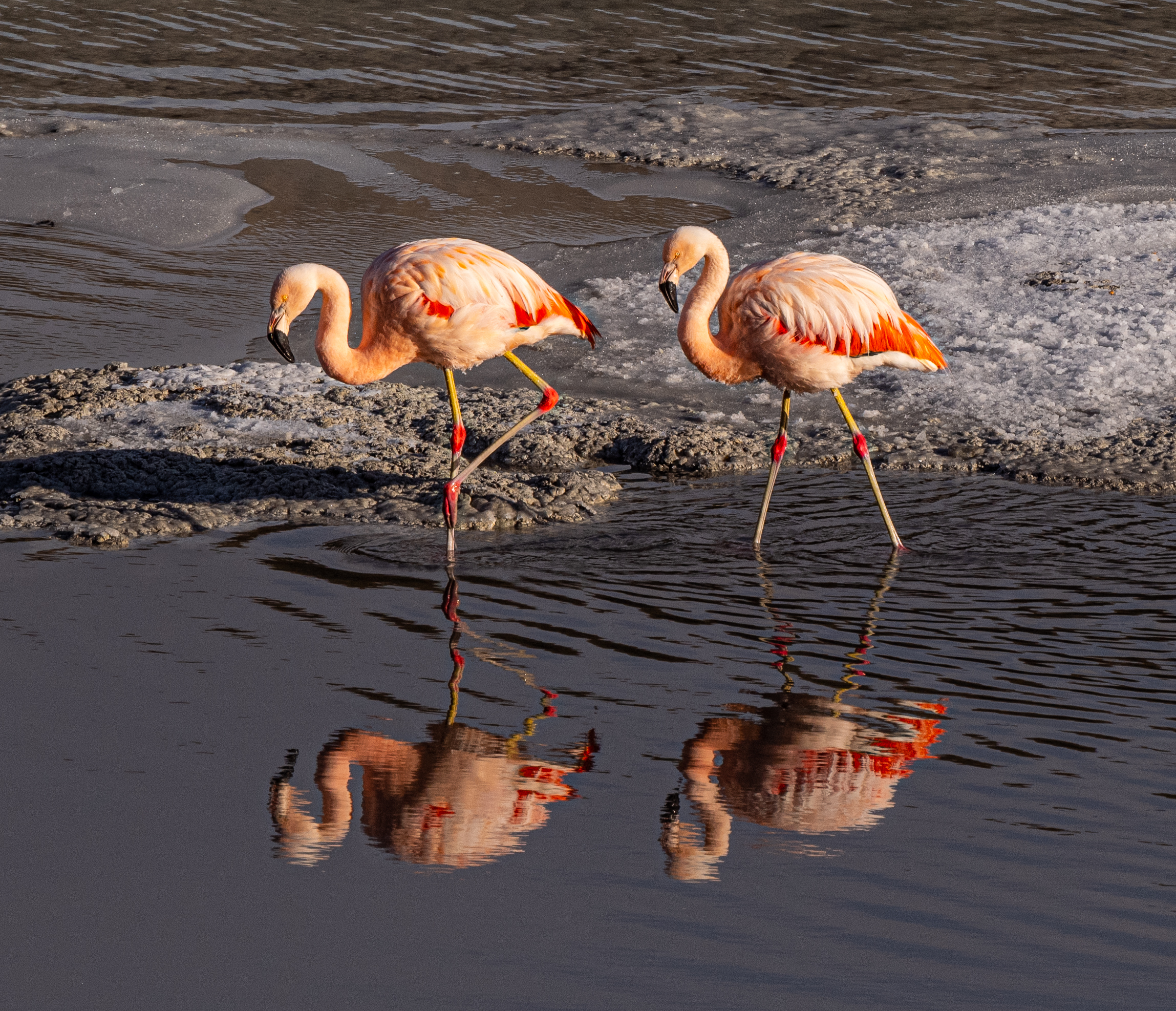
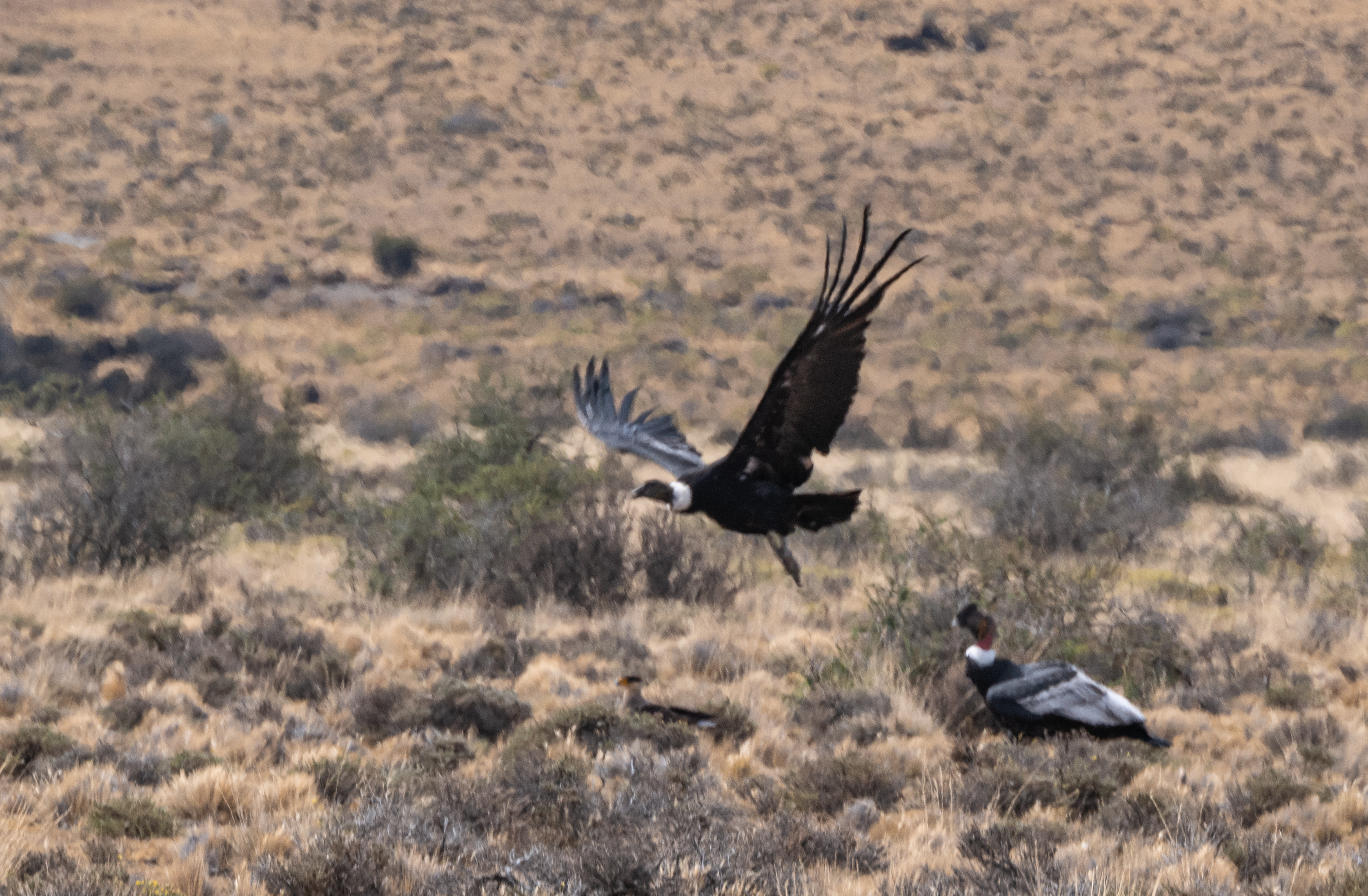
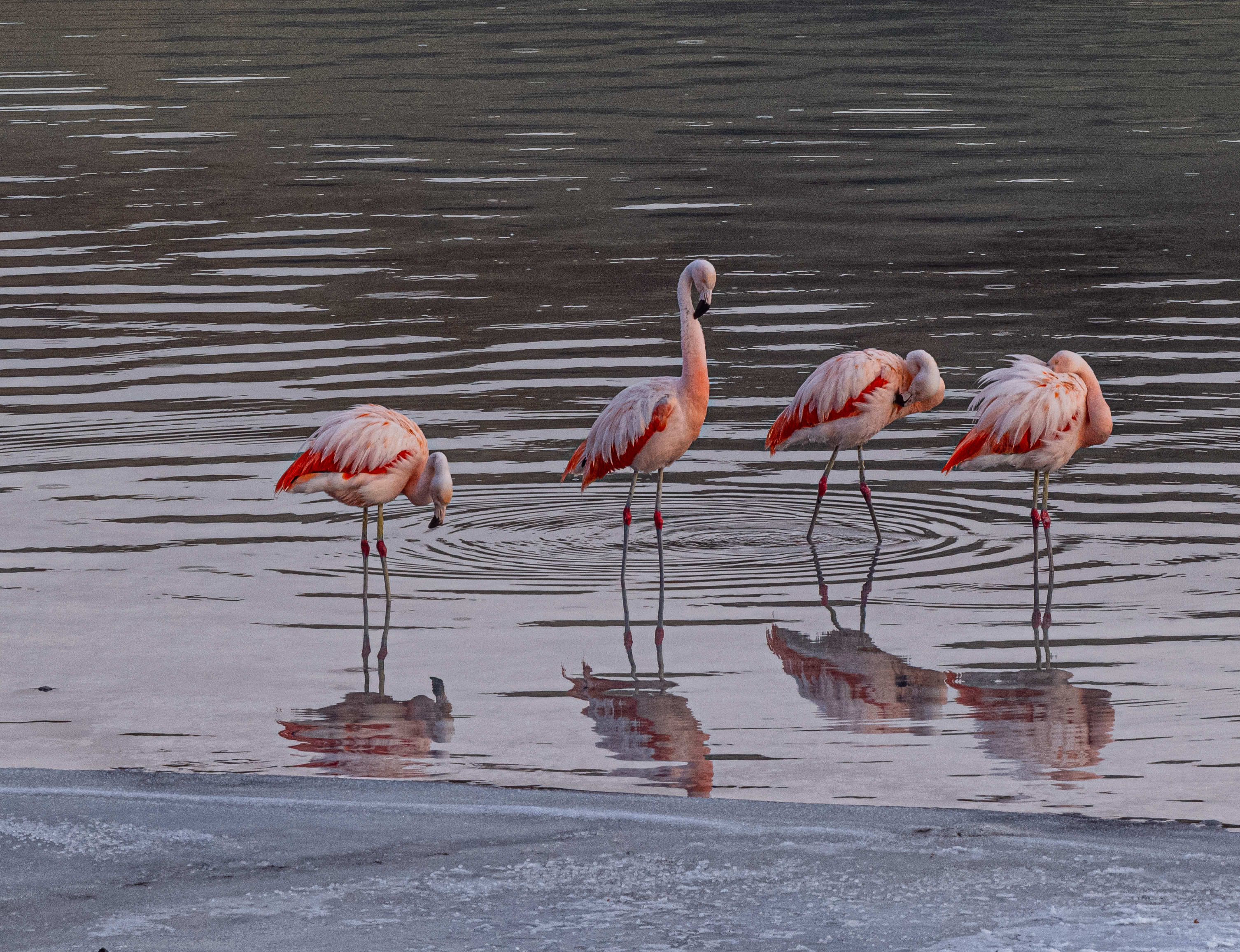
Patagonia is also home to some amazing birdlife. Condors with wingspans reaching up to 3.2 metres patrol the skies, flightless rhea, which look a lot like emus, fossick in the grasslands, and in summer, Chilean flamingos arrive to feed in the shallows of the salty lakes. I definitely wasn’t expecting to see them! 

Guanaco. Image: John Fison

Hiking

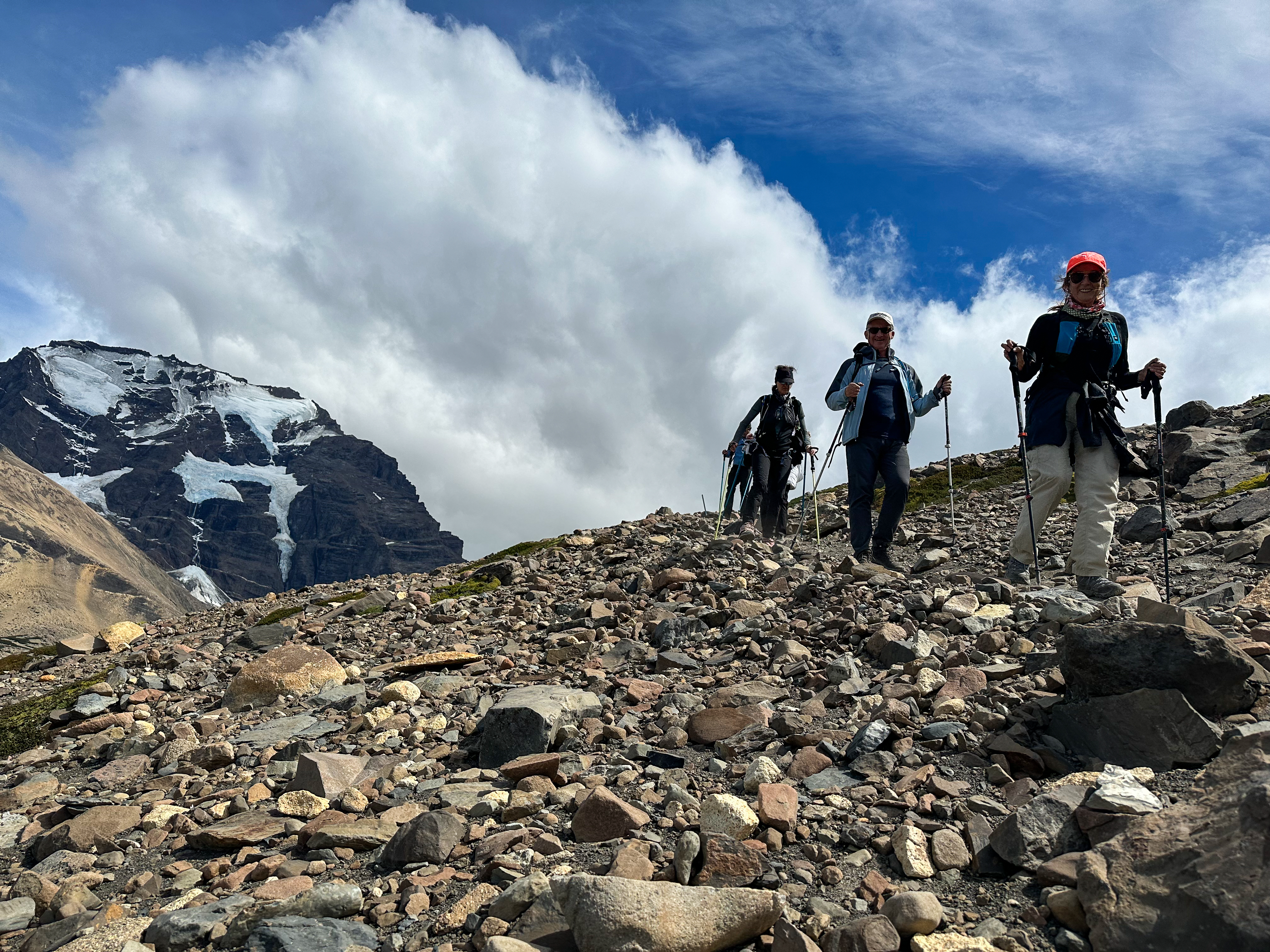
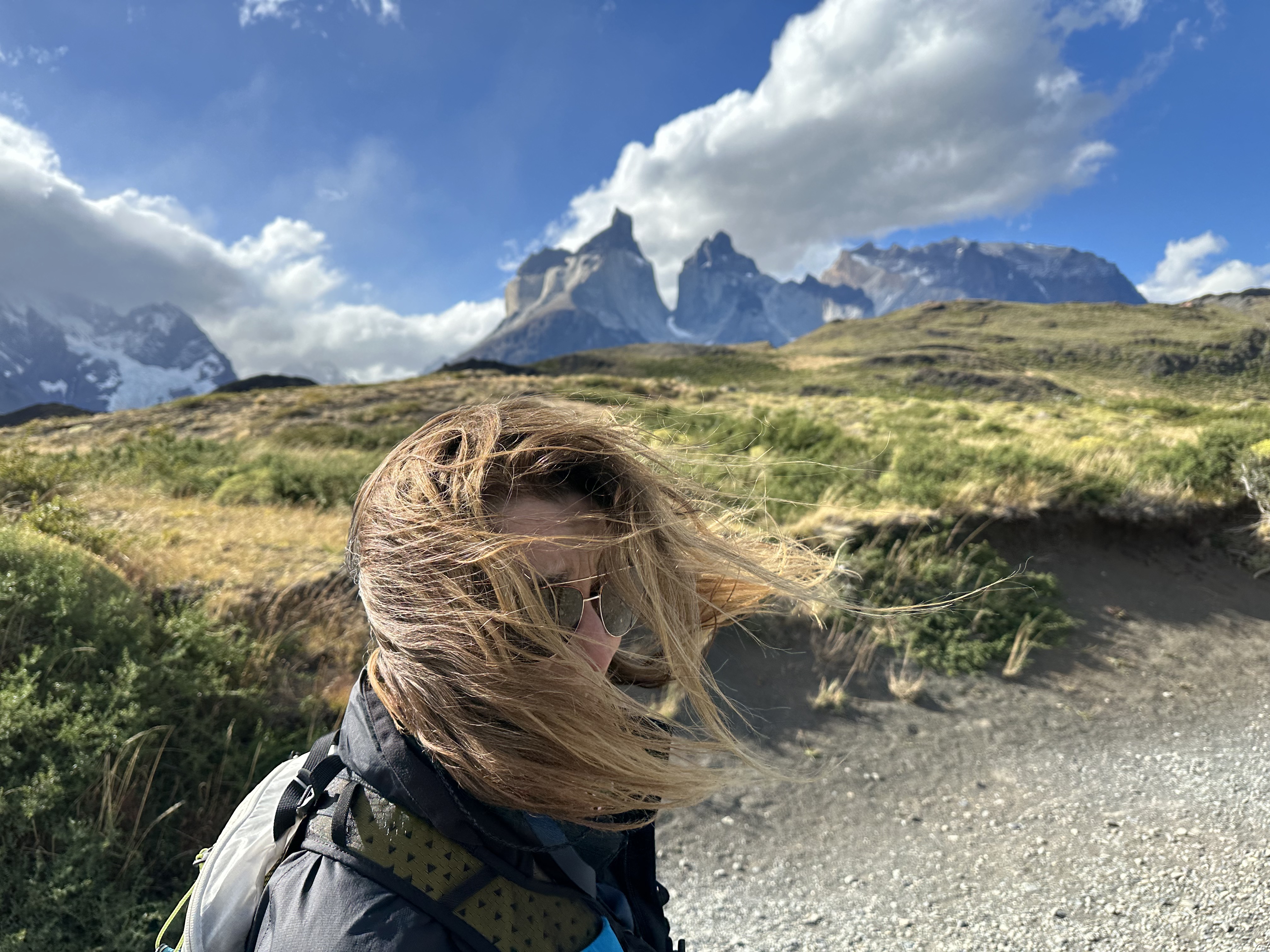
If you like hiking, you are going to love the extensive network of trails at Torres del Paine. From the 136 km O trail to the shorter day hikes, the park has something for hikers of every ability. The most famous trek is the 18km Mirador Las Torres – a long, steep, rocky trail with spectacular views of the three peaks. It’s one of the most challenging hikes in the park and the most crowded. If you are looking for the perfect short day-hike, don’t miss Mirador Cuernos. It’s a 6km return trail that takes you past Salto Grande waterfall, Lago Nordenskjold and finally to one of the most spectacular sites in the whole park – Los Cuernos – the horns. The only downside – this is the windiest place in the park. And it definitely lived up to its reputation when we visited! 

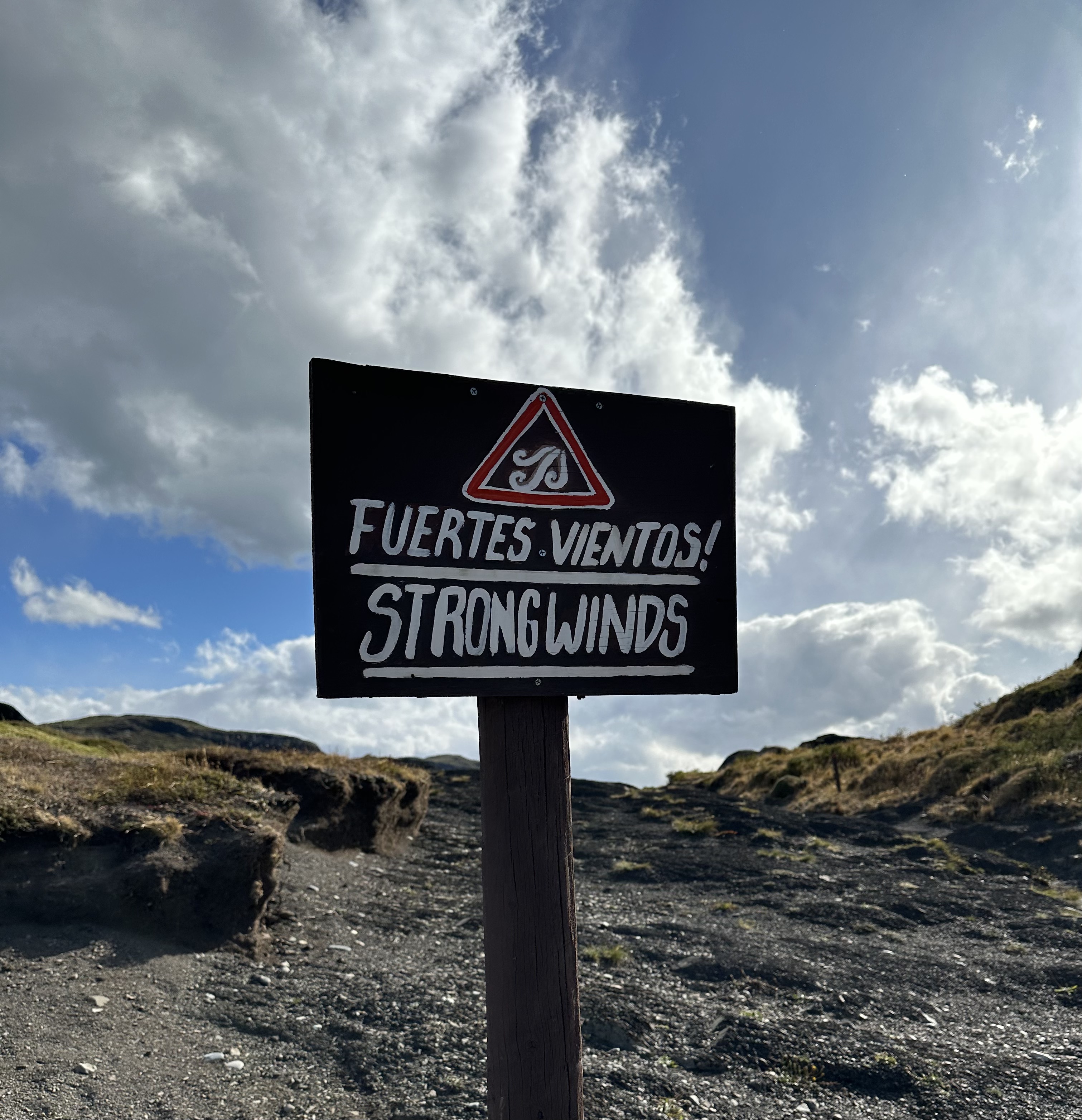
Make sure you pack sturdy boots, poles, a wind/water proof jacket, beanie, gloves and a cap. The weather here is highly changeable. It gets cold, then it gets really, really windy, then it gets hot and sunny, then it rains! A few cords and carabiners are handy for securing caps etc in windy conditions. 

Horse riding

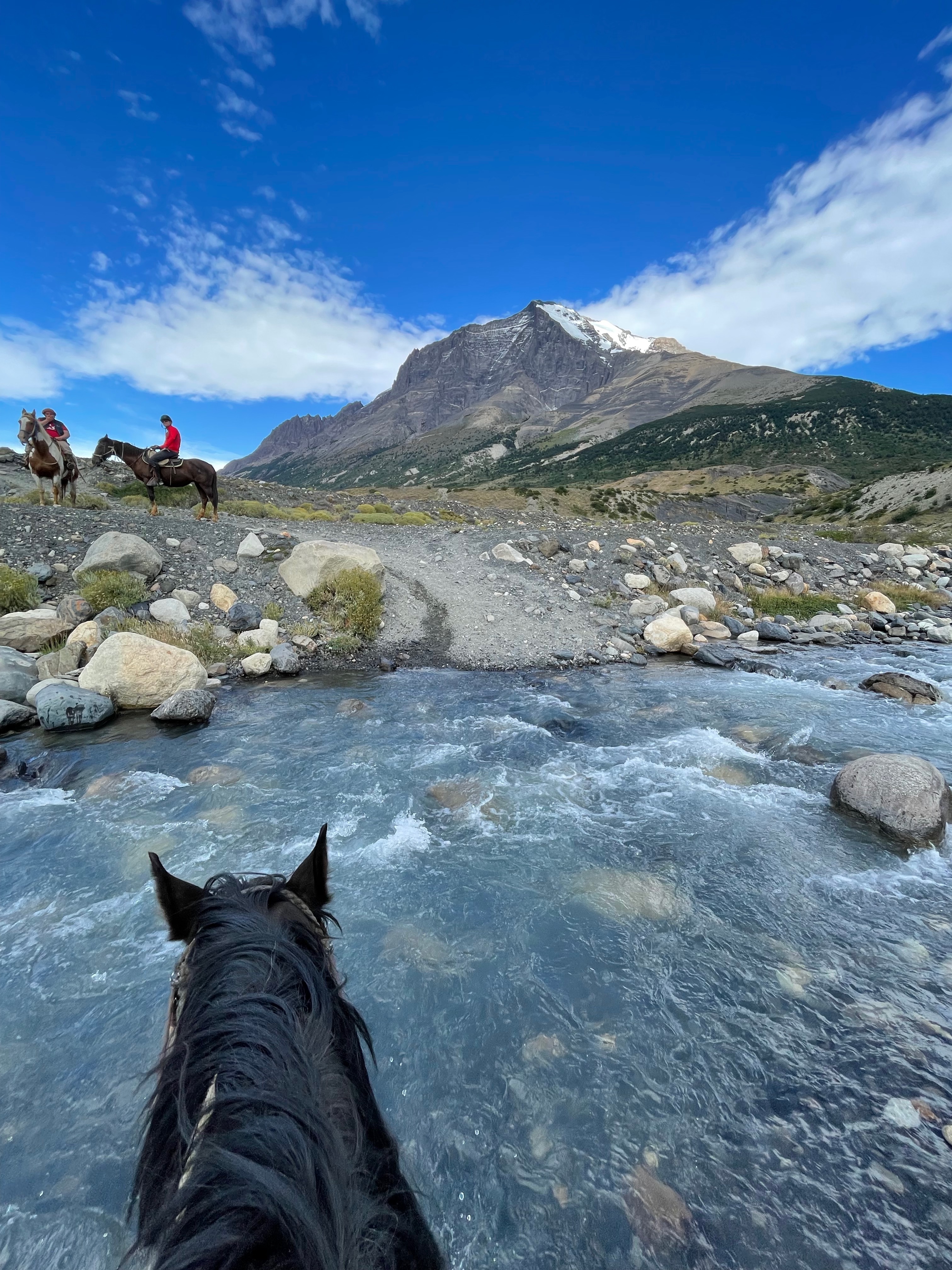
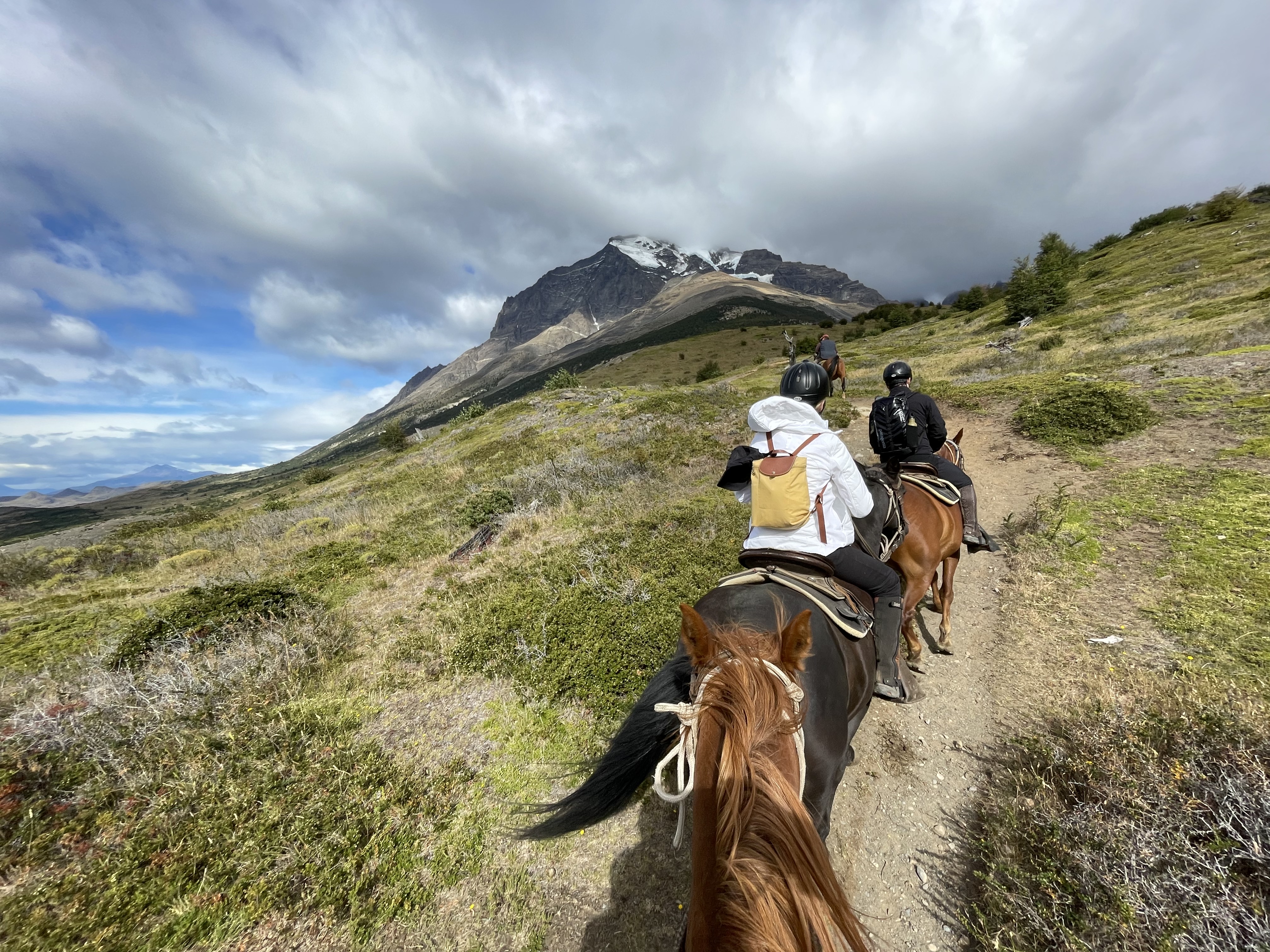
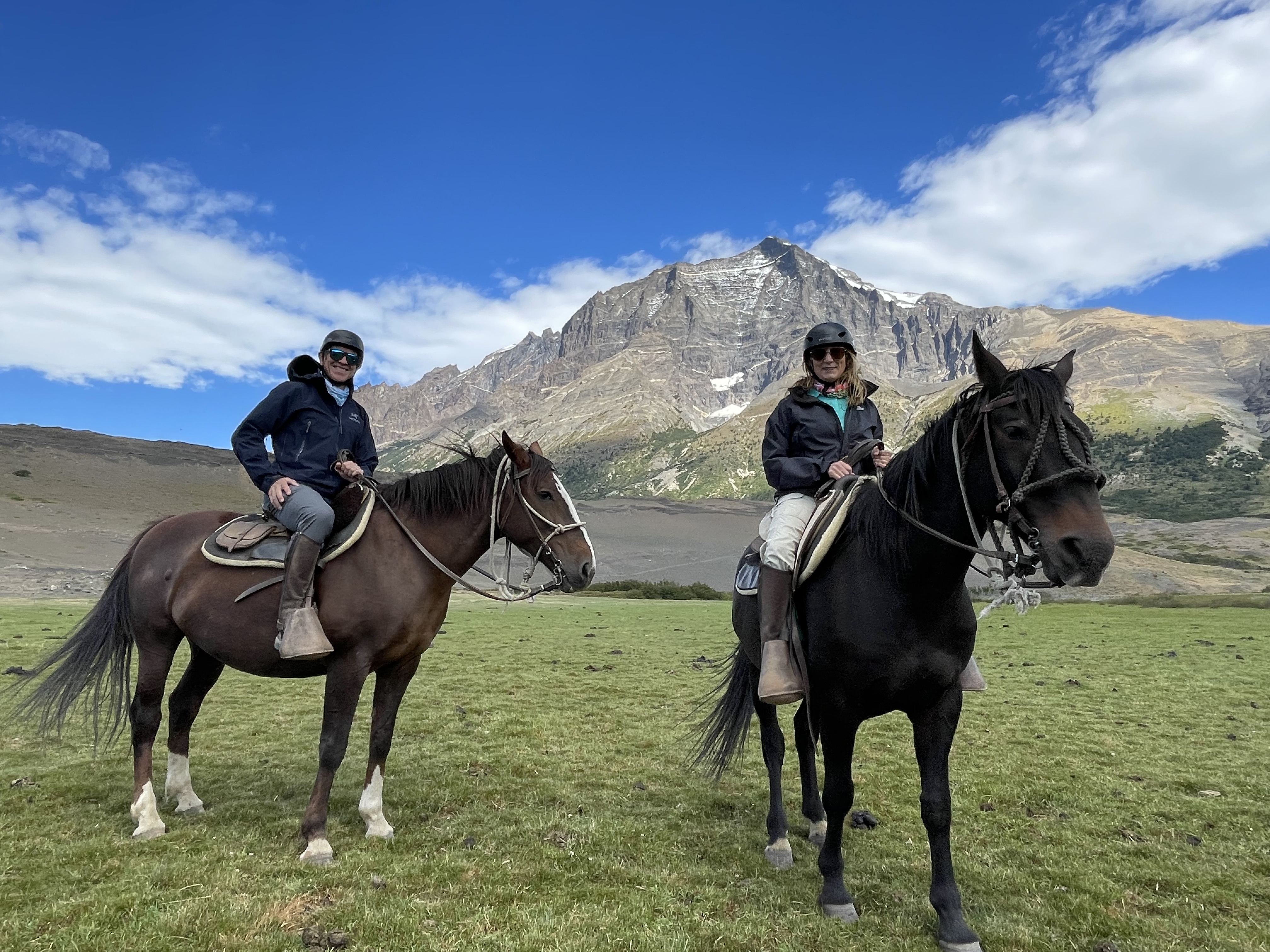
Horses are very much a part of the culture of Patagonia, and you’ll see baqueanos – as cowboys are known in Chile – tending to the horses in their traditional boyner hats. If you are keen to get into the baqueano spirit, Hotel Las Torres is a good place to be. The lodge has a big herd of horses which roam the property. You can often hear them at night munching grass outside your room. By day you can join a trail ride. There is something very surreal about horse riding in Patagonia, and I wouldn’t have missed this chance for the world, but the steep tracks are not for the faint hearted. 

Dogs

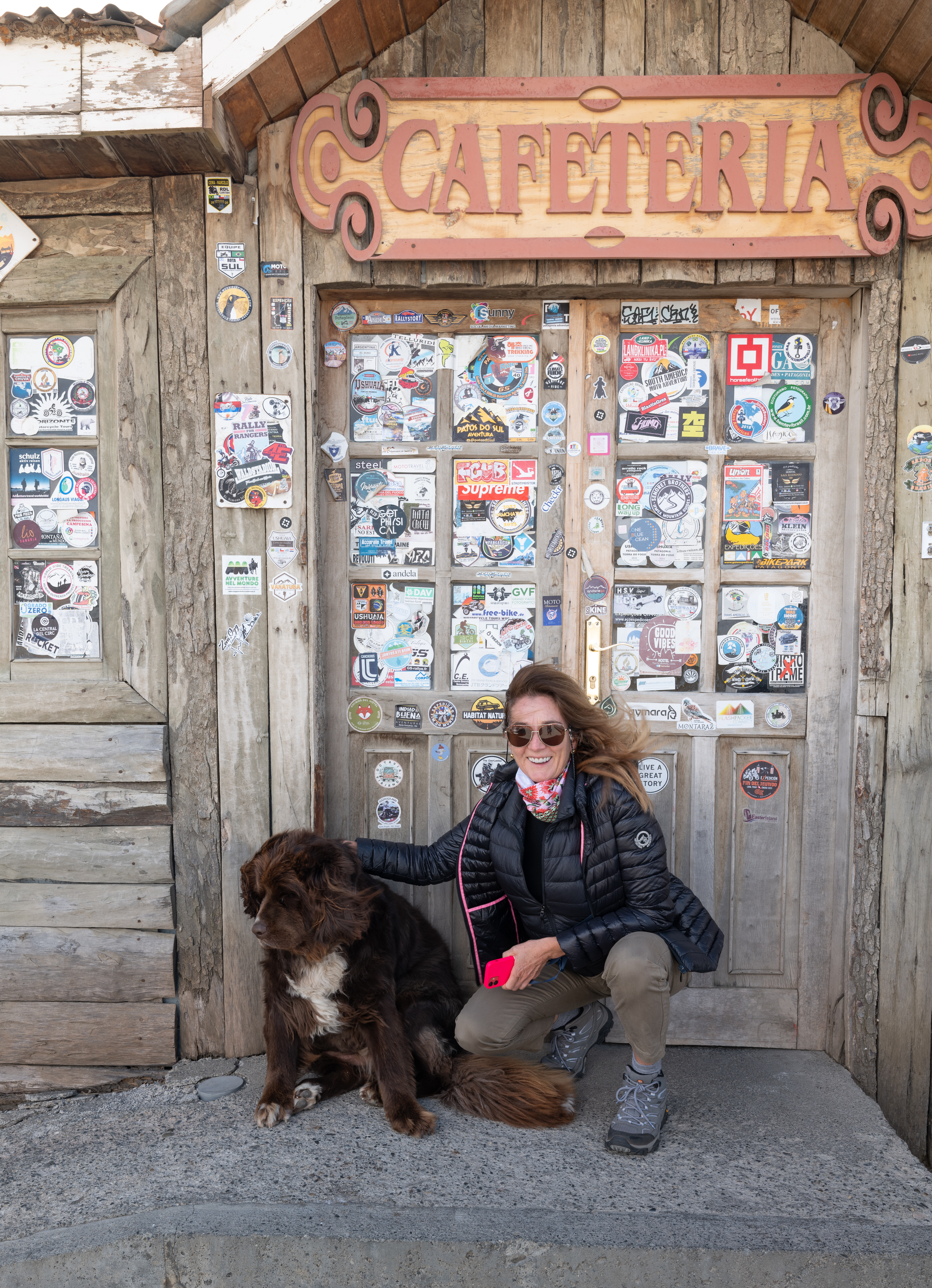
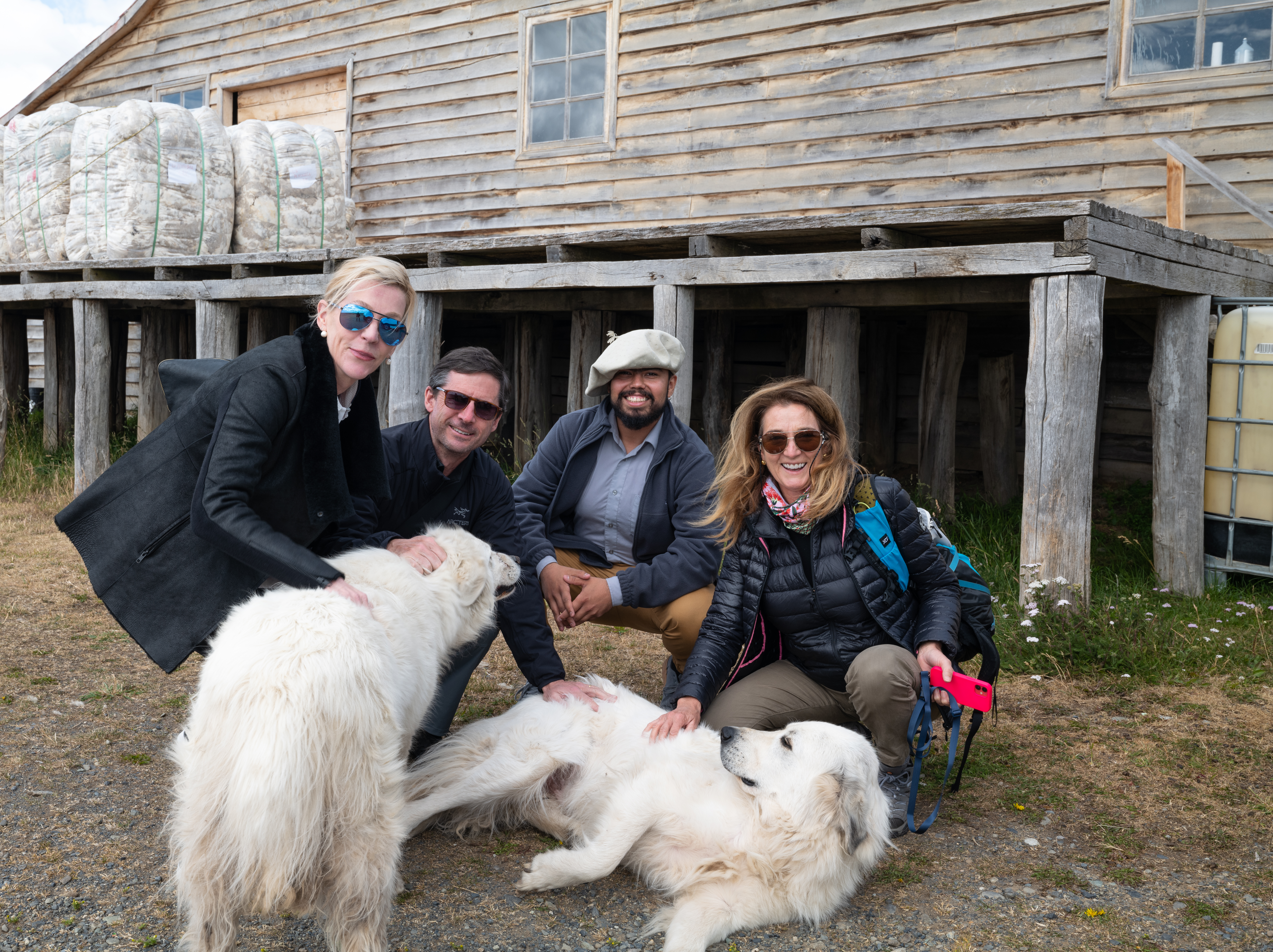
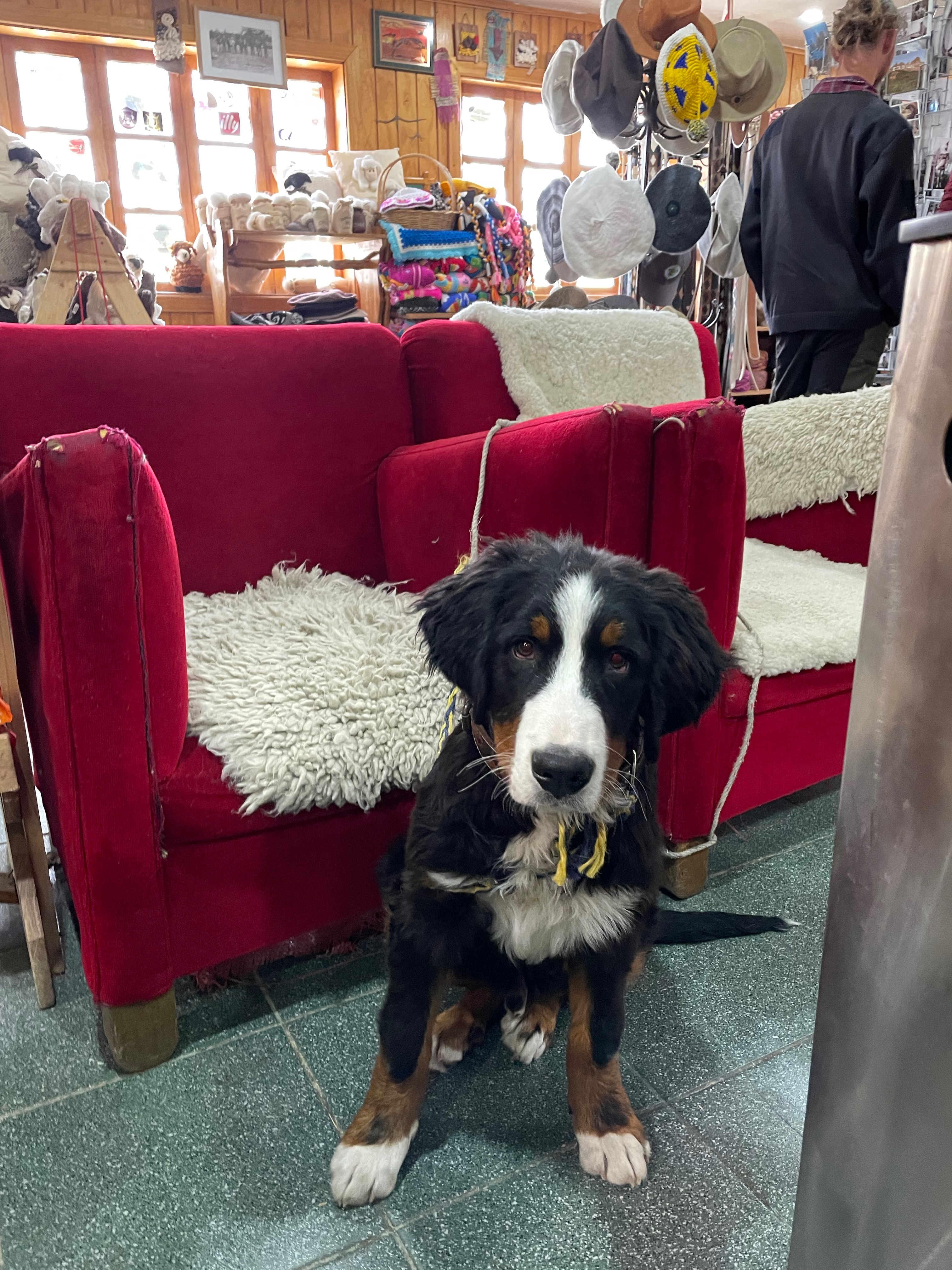
You’ll see dogs everywhere in Chile – many of them well-fed street dogs that are cared for by the whole community. In Patagonia, they have big, dangerous jobs. These white maremmas (below) look soft, but they are bred to protect lambs from pumas! I’m not sure if the ones in the pictures below have a proper job, but they sure are beautiful. And who wouldn’t want to enter a cafeteria/ souvenir shop with that pooch sitting on the front step?

Getting there

The closest town to Torres del Paine is Puerto Natales – about an hour drive from the national park. The town has an airport, but flights from the capital Santiago are limited, so Punta Arenas is often a better option. Punta Arenas is a five-hour drive away, the last stop on the Ruta del Mundo – the end of the world route. It lies on the Magellan Strait and is a gateway to Antarctica as well as Patagonia. While you’re here, don’t miss the grand central plaza, the cemetery, and the Museo Nao Victoria, with its replicas of Magellan’s ship Victoria and Shackleton’s James Caird. When the weather is fine, the waterfront promenade is a pleasant place to stroll. If the wind gets up, it’s really, really nasty!

Happy hiking!

Julie

Hello 2023!

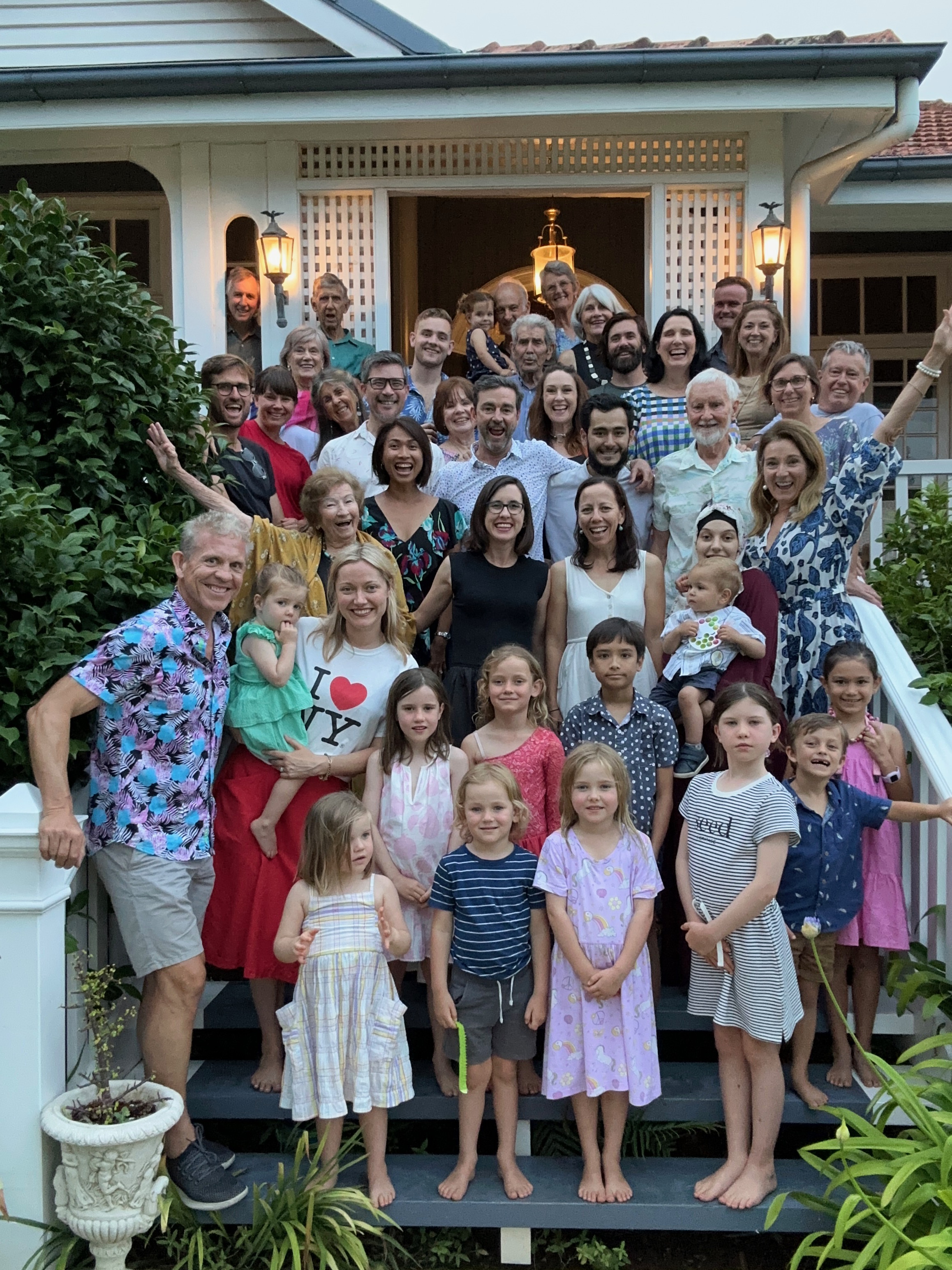
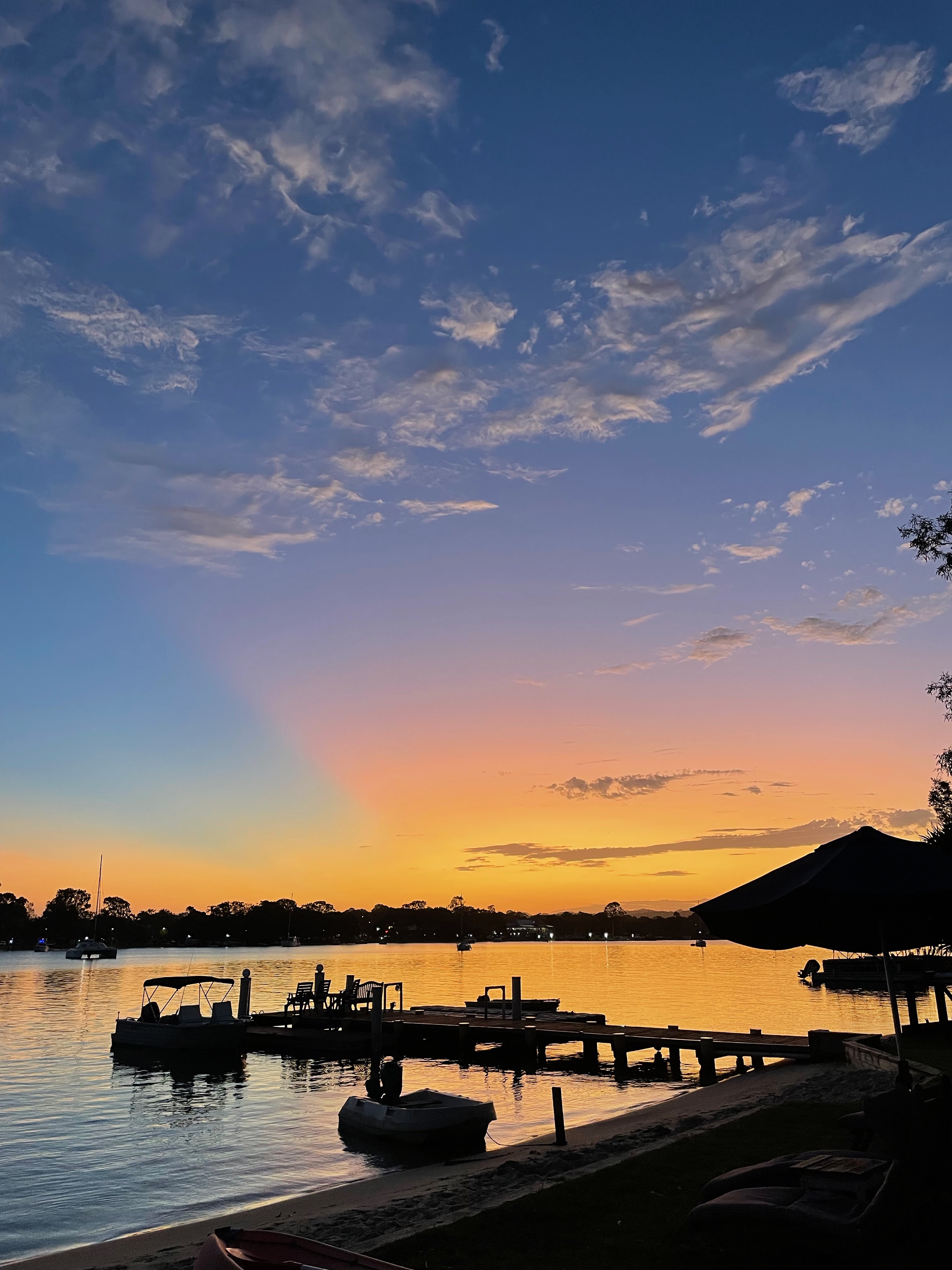
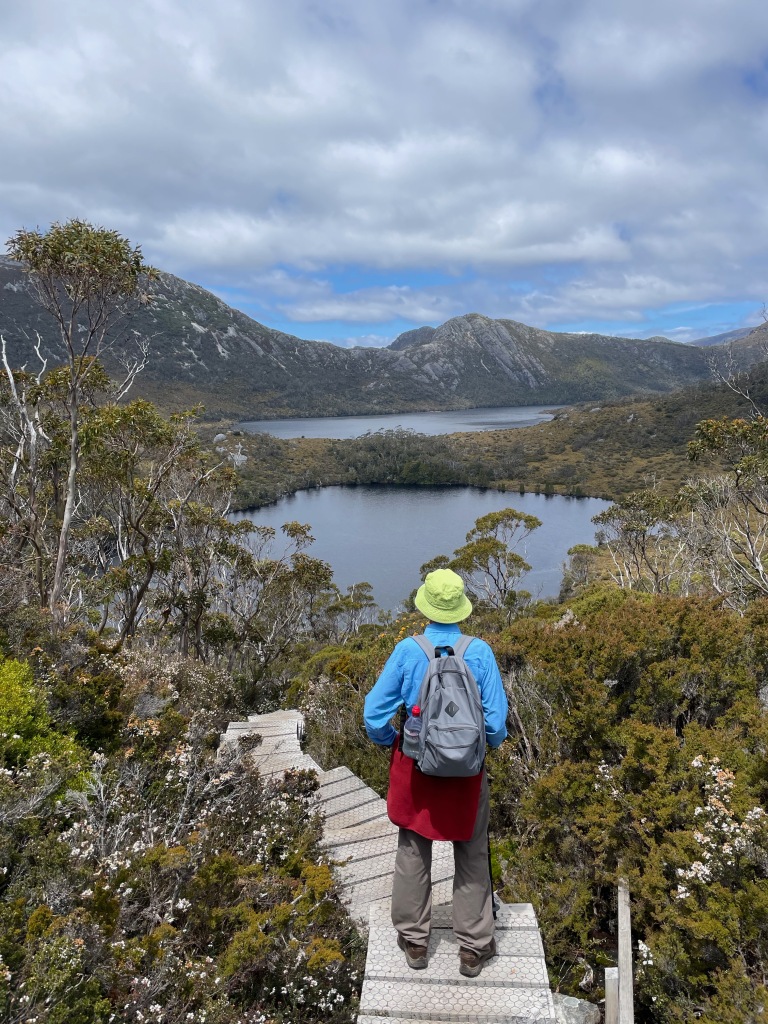
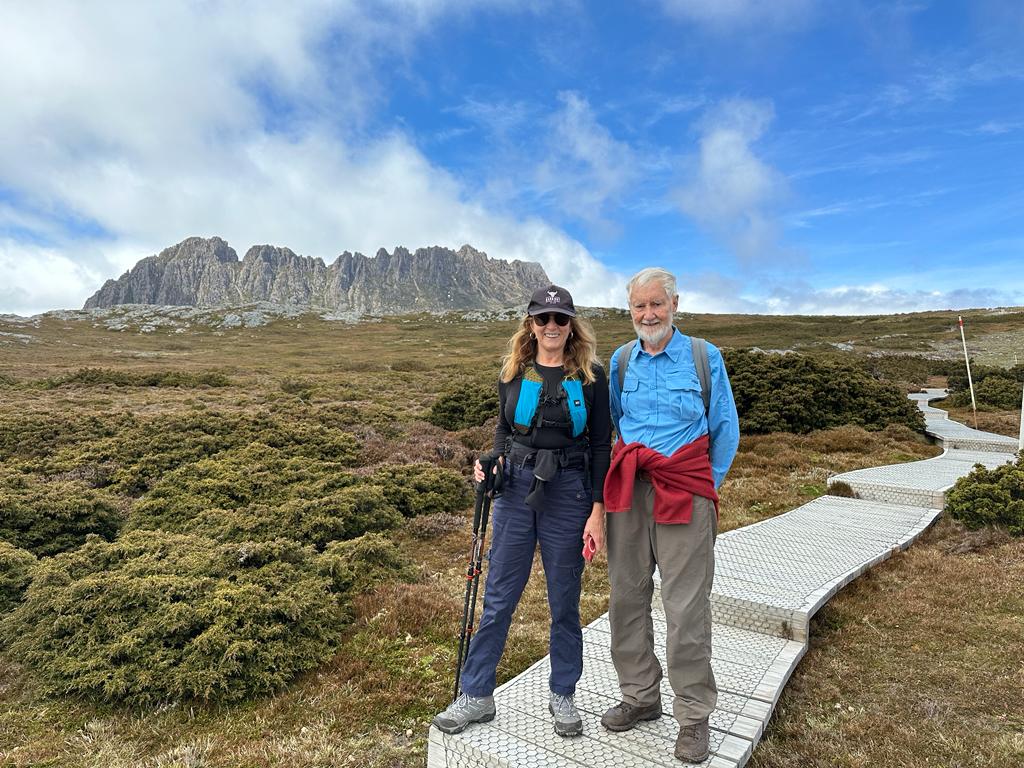
Happy New Year friends! Hoping you had a great summer break. I’m back at my desk after a glorious couple of weeks on the Noosa North Shore – paddle boarding, swimming, reading, plus way too much eating and drinking. To be fair, we had lots to celebrate. Apart from the usual Christmas and New Year’s festivities, we had a big birthday in the family. My father turned 80. And while Dad is the most low-key chap you could meet, we made the most of the occasion – starting with a few days hiking in Tasmania, and finishing with a massive family get together. Phew! I need a holiday after all of that entertaining. (Spoiler alert: I’m about to do just that, but more of that later.)

For now, it’s time to make a start on my projects for 2023. I’ve got a head full of plans – everything feeling urgent and exciting. Problem is: when I sit down to get started, I discover my ideas are like a tangle of Christmas lights. Even if I can find one end, everything is all bunched up, and I haven’t got a hope of unscrambling the mess! Maybe it’s time to remind myself of my NY’s intention. Be more patient – with everything and every one. That includes myself. So, I’ll settle for marking what I’ve achieved, and try not to get so worked up about what still has to be done. I’m sure it doesn’t have to happen literally this second!

Last year was a big one, and there’s so much I’m grateful for. So, I’ll start with a few of the highlights from 2022, then get onto what’s in store for 2023!

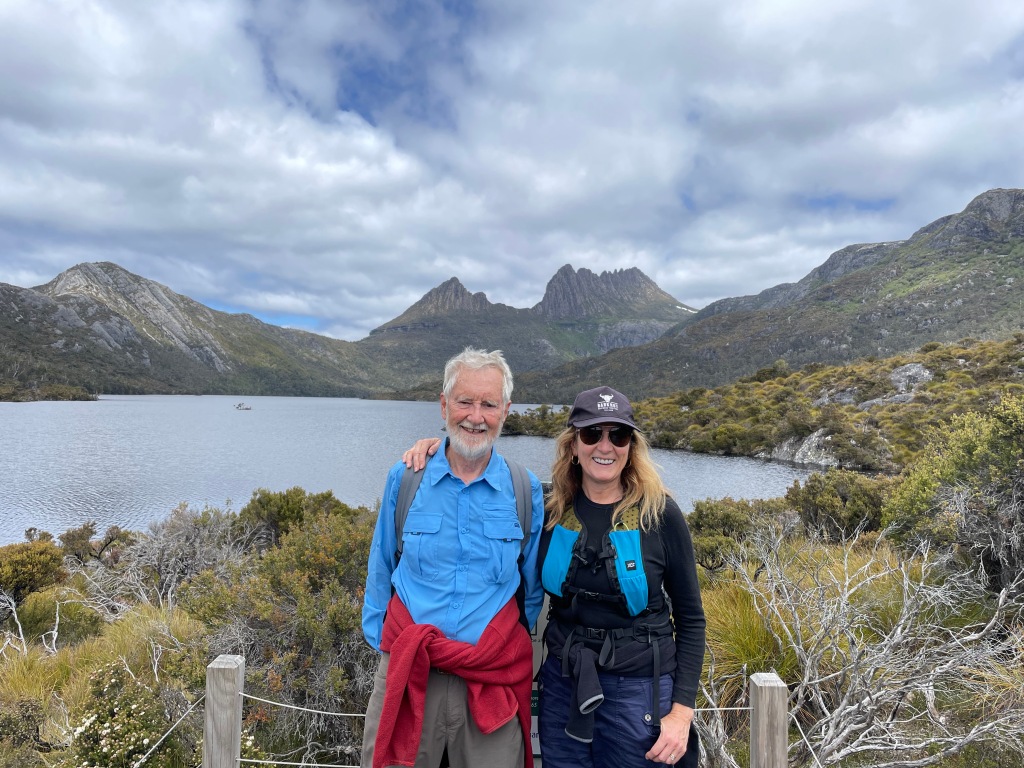
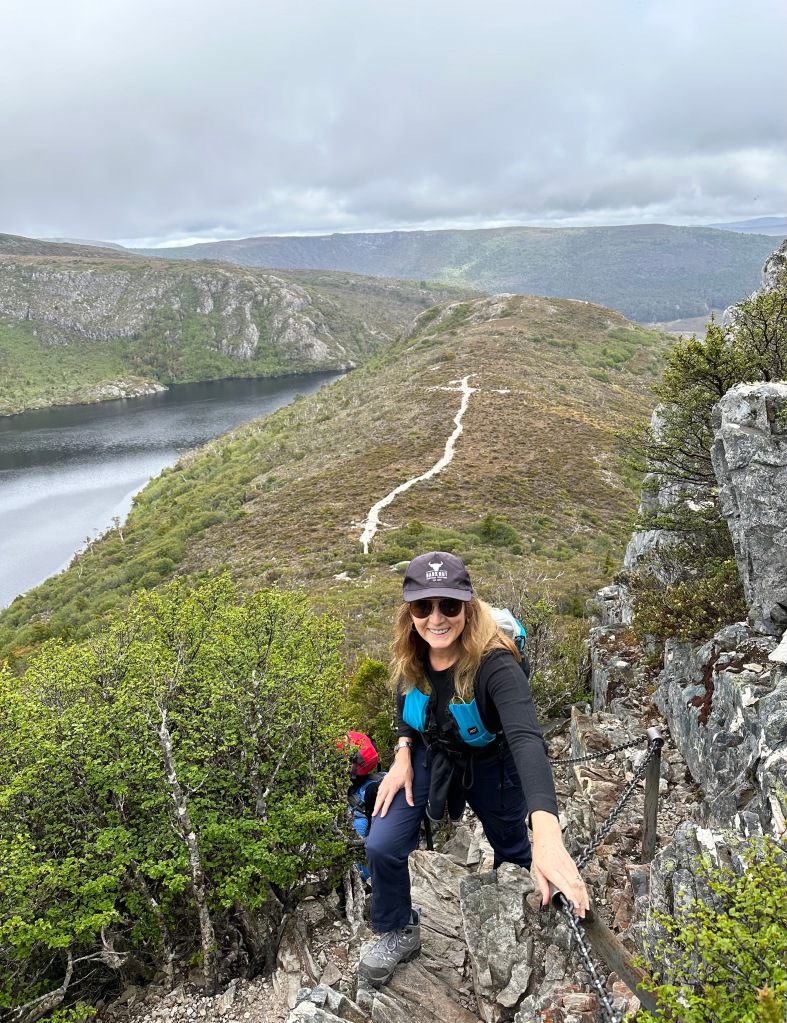
Hiking at Cradle Mountain and Wine Glass Bay

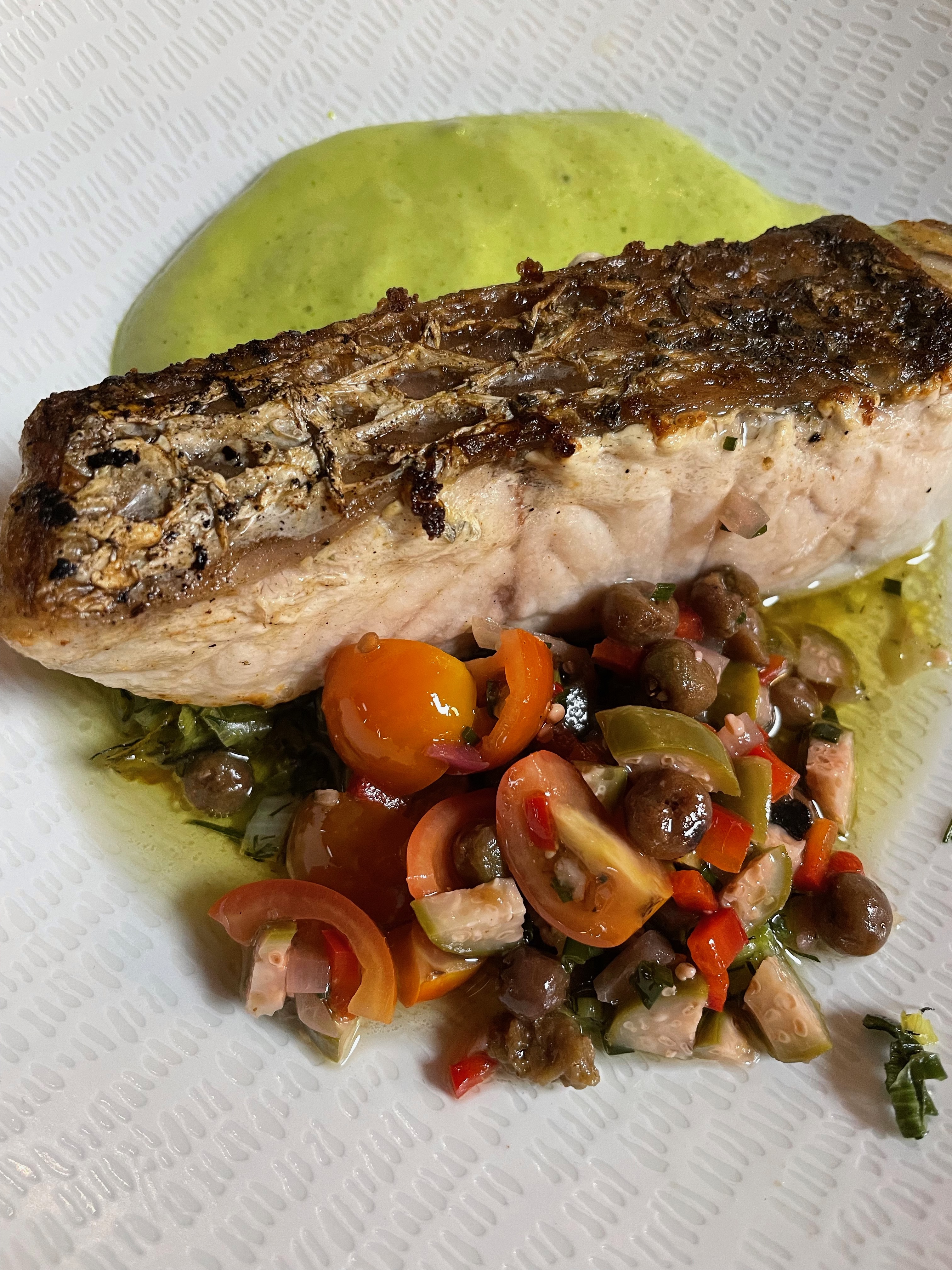
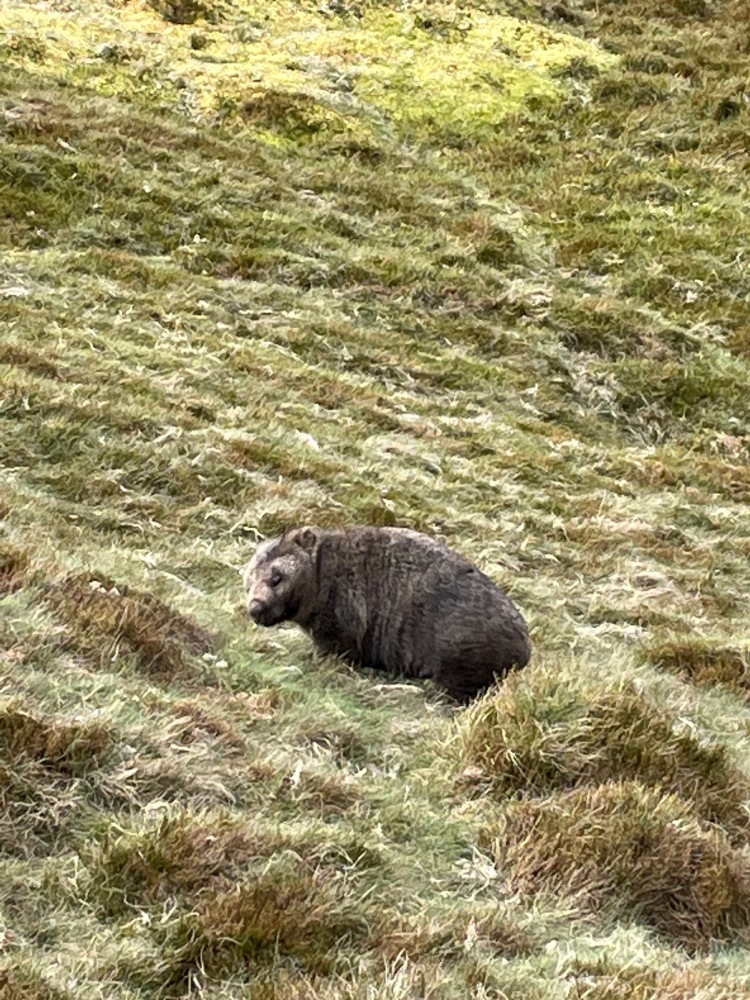
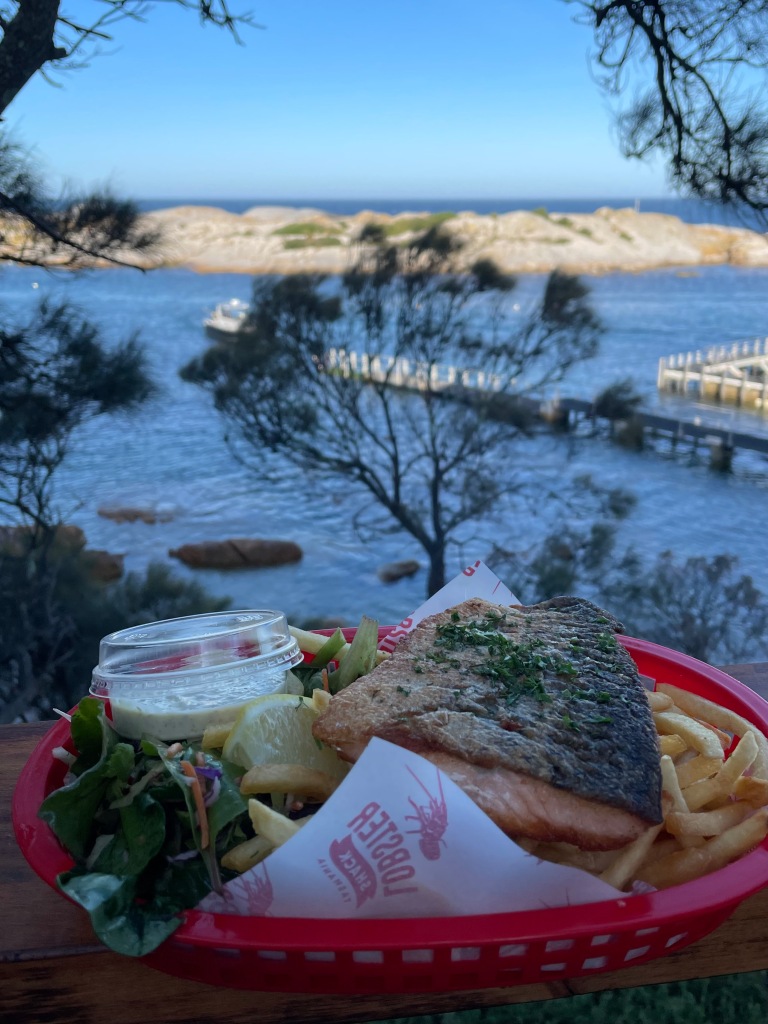
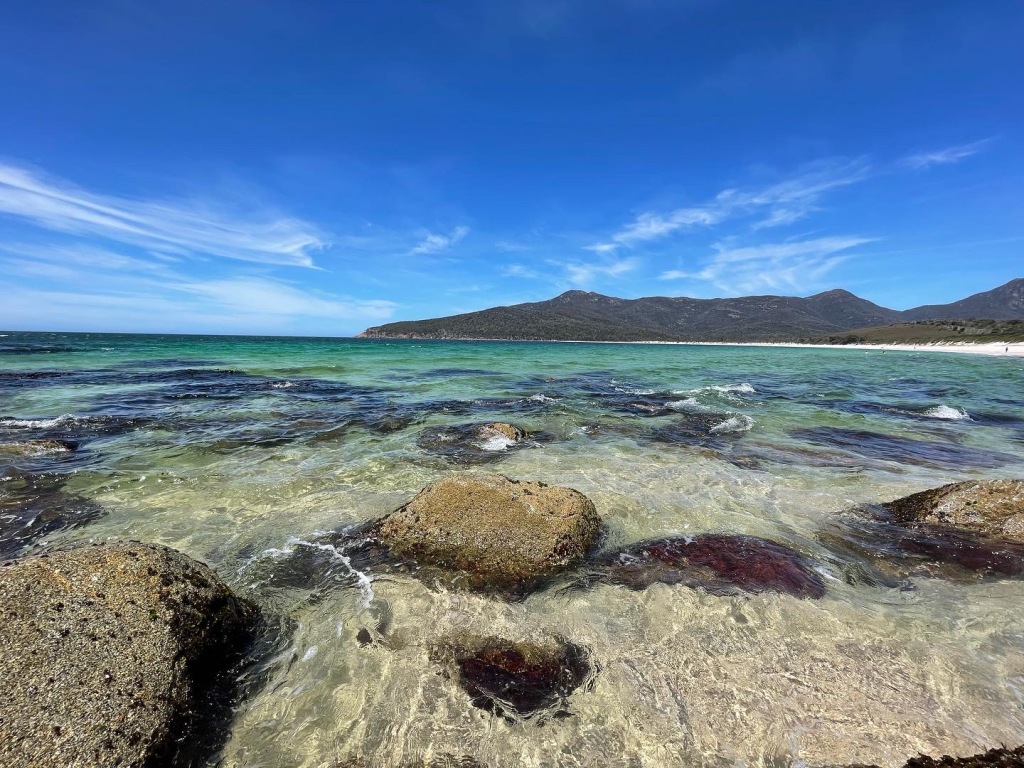
So many special memories from my trip to beautiful Tasmania with my father and hubby. Mapo might be 80, but he still hikes like he’s half that age. Loved the trail to the base of Cradle Mountain – the diverse bushland, the wombats and the snow! Loved the crispy skinned salmon at the Lobster Shack in Bicheno, and having a dip in Wineglass Bay. Not so much love for the 500 steps back up to the lookout!

Highly recommend the Cradle Mountain Wilderness Lodge – walking distance to the Cradle Mountain visitor centre. (Hoping to put together a more detailed blog soon!)

Launching One Punch

I don’t know if I’ve mentioned, but my first book for adults was published last June. OK, sure, I might have mentioned it once or twice. However, just in case you missed the hype – One Punch is the story of two mothers facing impossible choices after a life-changing night. Witty and compassionate, according to author Meredith Jaffe, and a raw, urgent, and chilling portrait of family loyalty, according to author Sally Piper.

So, 2022 was kind of a big year on the writing front, and I have so many people to thank. My publisher Affirm Press, of course, for all of the hard work they put into bringing One Punch to life. A massive thankyou also goes to my family and friends who have supported me along the way, cheered me on and who wrote glowing reviews of my book. Thank you to the fab podcasters, bookshops and bookclubs who invited me to share the story behind the story. And to all of the readers who bought or borrowed a copy of One Punch and posted a review. Keep them coming. If you enjoyed One Punch – no need to be shy – tell everyone!

Don’t be misled by its title, this is not a dark and depressing book. It is full of warmth and understanding for the complexities of mothers of boys, family life and social issues. Julie Fison has achieved that rare thing – an entertaining book that is incredibly thought-provoking.

Fiona Taylor, Baffies Oan Books

What’s happening in 2023

OK, so here’s the thing. I’m still working on my second book for adults – another tale of drama in the suburbs. Promise. And I’ll be speaking at several events in the next few months (more details to come). But I’ve also got some big plans for travel this year – starting with an epic adventure in Patagonia and Antarctica. The trip was postponed when COVID hit. Now, it is finally in sight, and I’m getting very excited. I can’t wait to explore this remote part of the world, and I’m hoping some of those ice floes and windswept mountains lead to a story!

I will be sharing pics and itineraries in future blogs, so make sure to subscribe to my monthly newsletter, so you don’t miss a thing! If you can’t wait until then, follow me on Insta. Lots of pics of mountains and ice coming your way!!!

What I’m reading

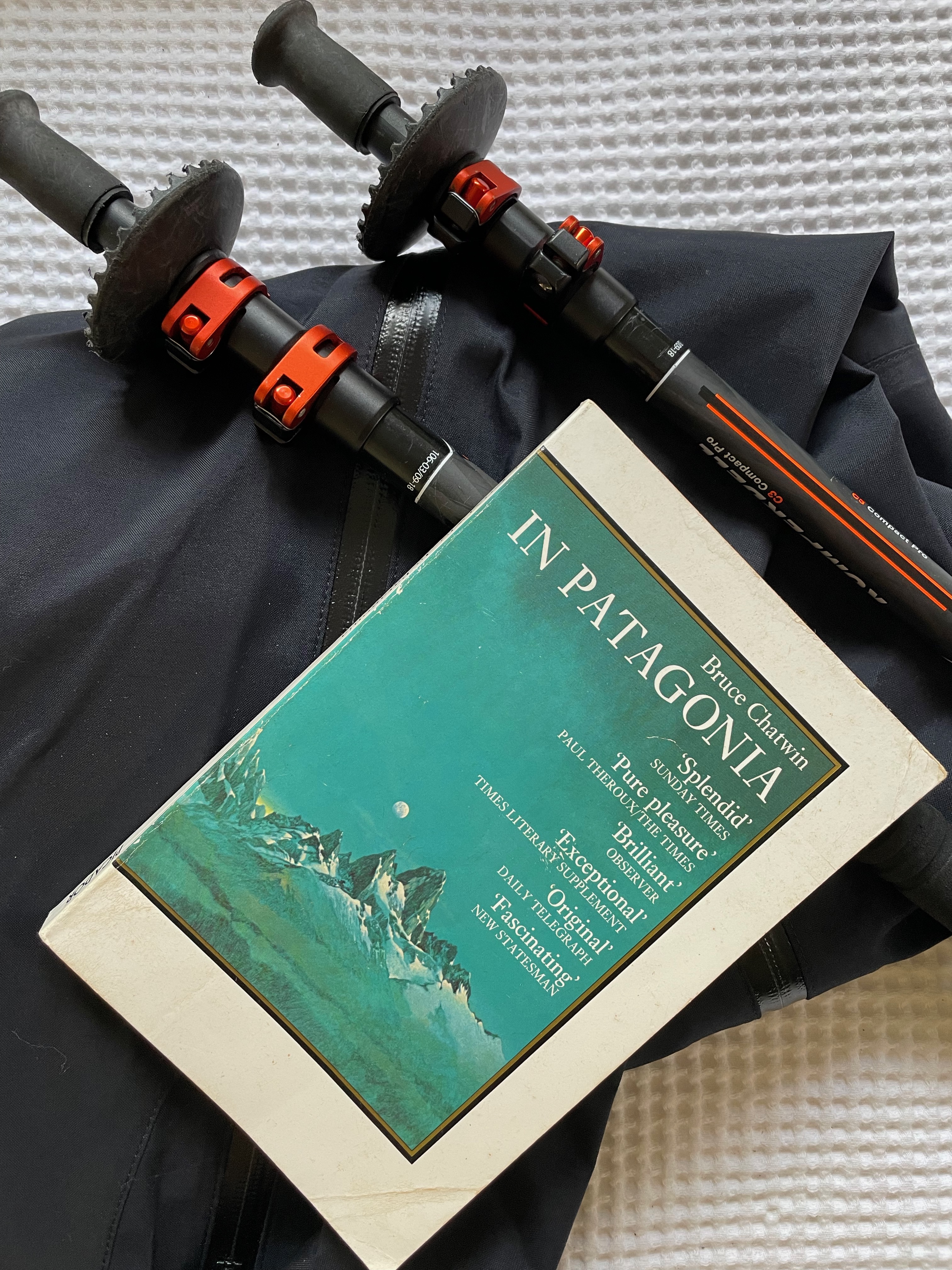
Currently immersing myself in South America’s frontier lands with this Bruce Chatwin classic.

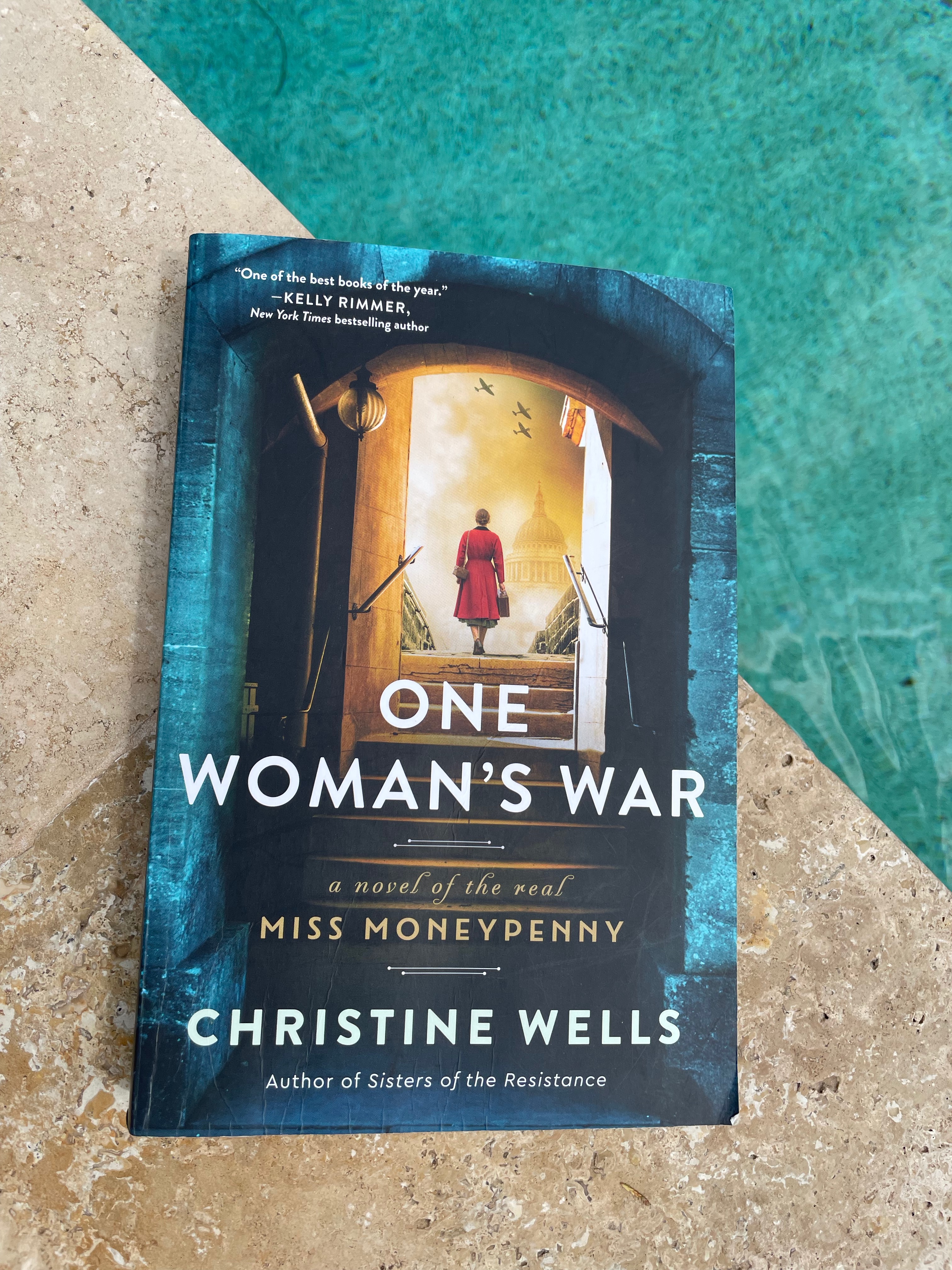
And discovering more about WW2 women and spies with Australian author Christine Wells. One Woman’s War brings together history, romance and suspense in a story based on the real Miss Moneypenny and her role in Operation Mincemeat. A great summer read!

What I’m listening to

I’m late to the Atomic Habits train, but I’m getting a lot out of the Tim Ferriss interview with author James Clear. If you need some direction on good work habits – this might be the place to start!

Happy 2023 to you!

Julie

Driving the Adriatic Coast: from Venice to Sveti Stefan

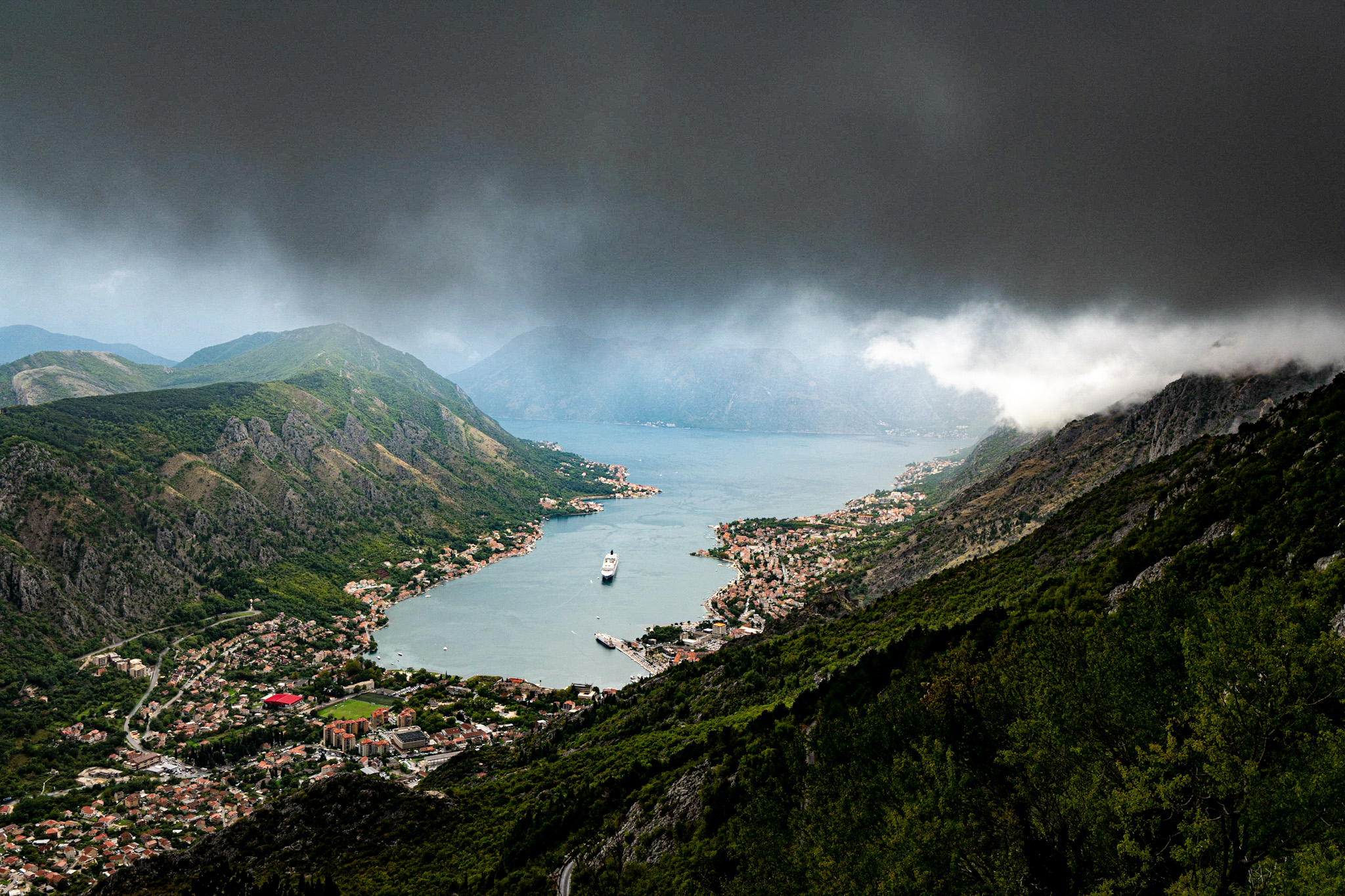
Montenegro’s Kotor Serpentine is a single-lane mountain road that snakes its way down 25 hairpin bends, a vertiginous drop on one side and a sheer cliff on the other. It offers breathtaking views of Kotor Bay, and all the way to Italy. Unfortunately, on the day we take this spectacular route, it is pouring. Thick fog is descending. All I can see is the terrifying canyon beside us and a bus lumbering towards us.  I’m suddenly regretting taking the scenic route to the coast. But what would a road trip be without challenges?

Kotor (above) and Kotor’s Serpentine (below). Images: John Fison

A cruise is the obvious choice for visiting the Adriatic, but Mr F and I are spending three weeks on the road – visiting Italy, Slovenia, Croatia and Montenegro. We sip sparkling rosé on the walls of Ljubljana Castle, row around a fairytale church on Lake Bled, pick fresh figs on the island of Korcula, explore Blue caves in the Bay of Kotor, climb medieval fortifications, and dice with death on a mountain road. 

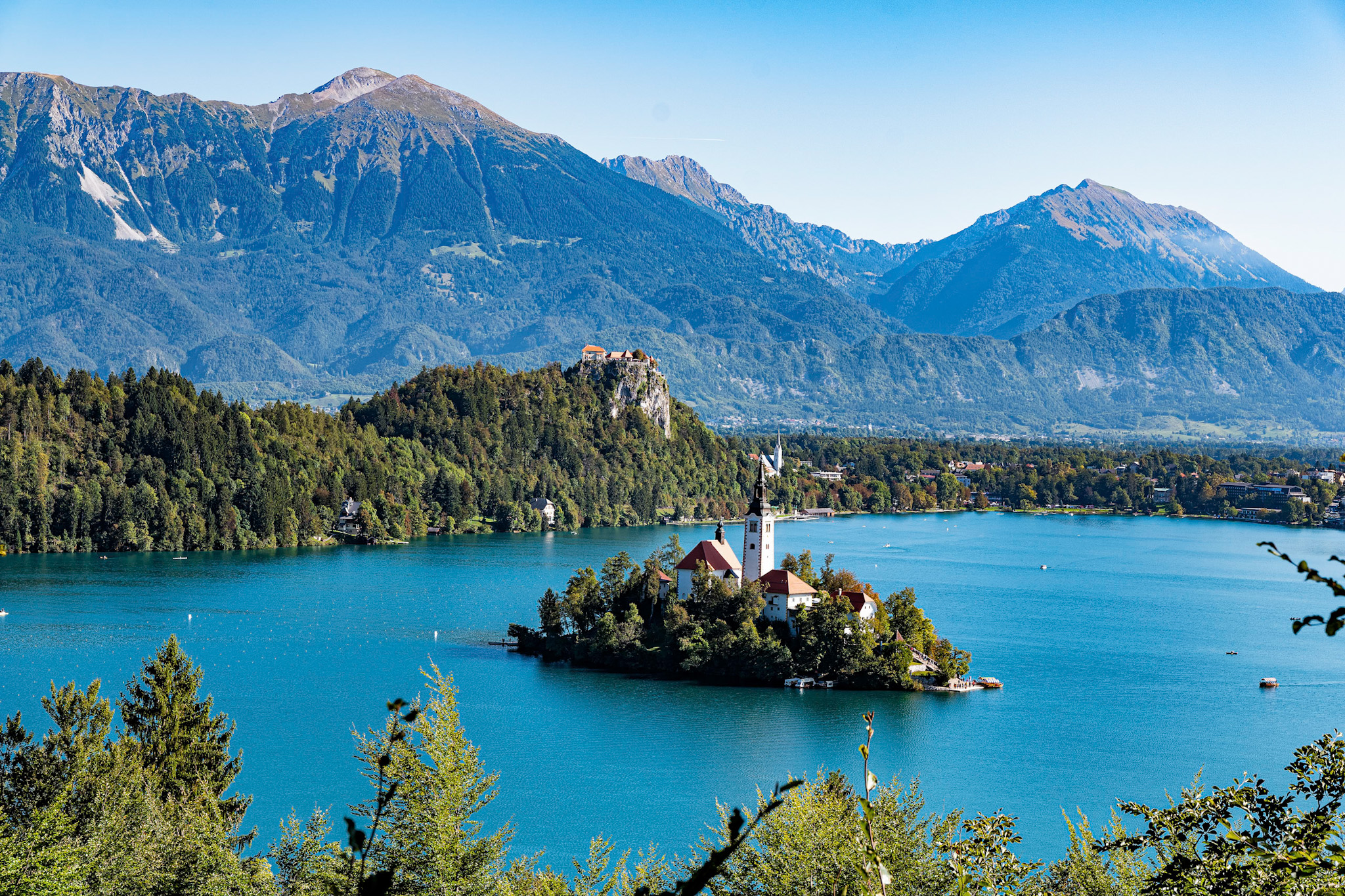
Lake Bled, Slovenia. Image: John Fison

By the time we’ve backtracked up the coast to our final destination – the breathtaking Croatian walled city of Dubrovnik – we’ve driven 1500 km. It feels like a mini Gap Year. I know that’s for school leavers, but why should kids have all the fun? 

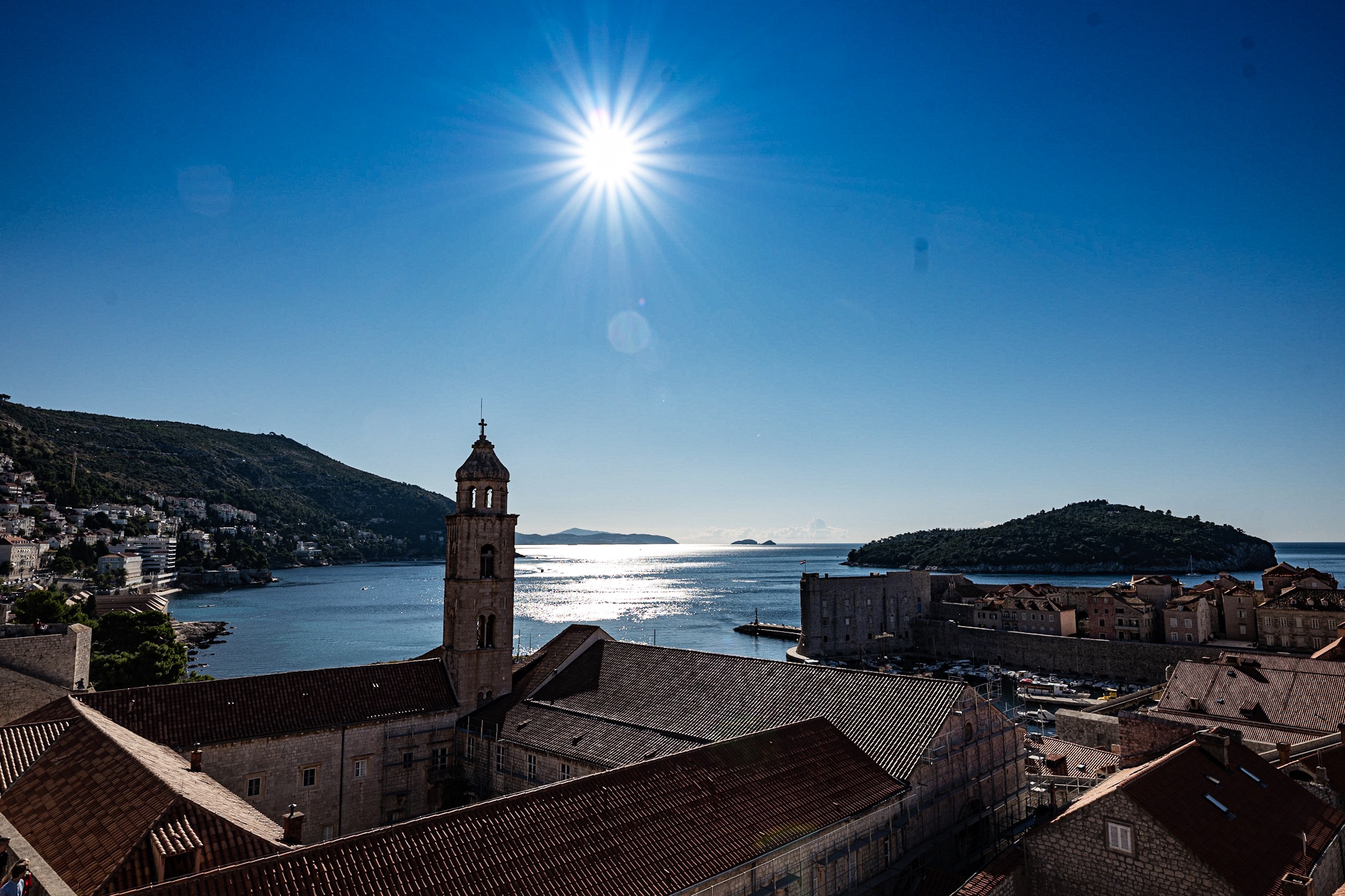
Dubrovnik, Croatia. Image: John Fison

Here’s our itinerary:

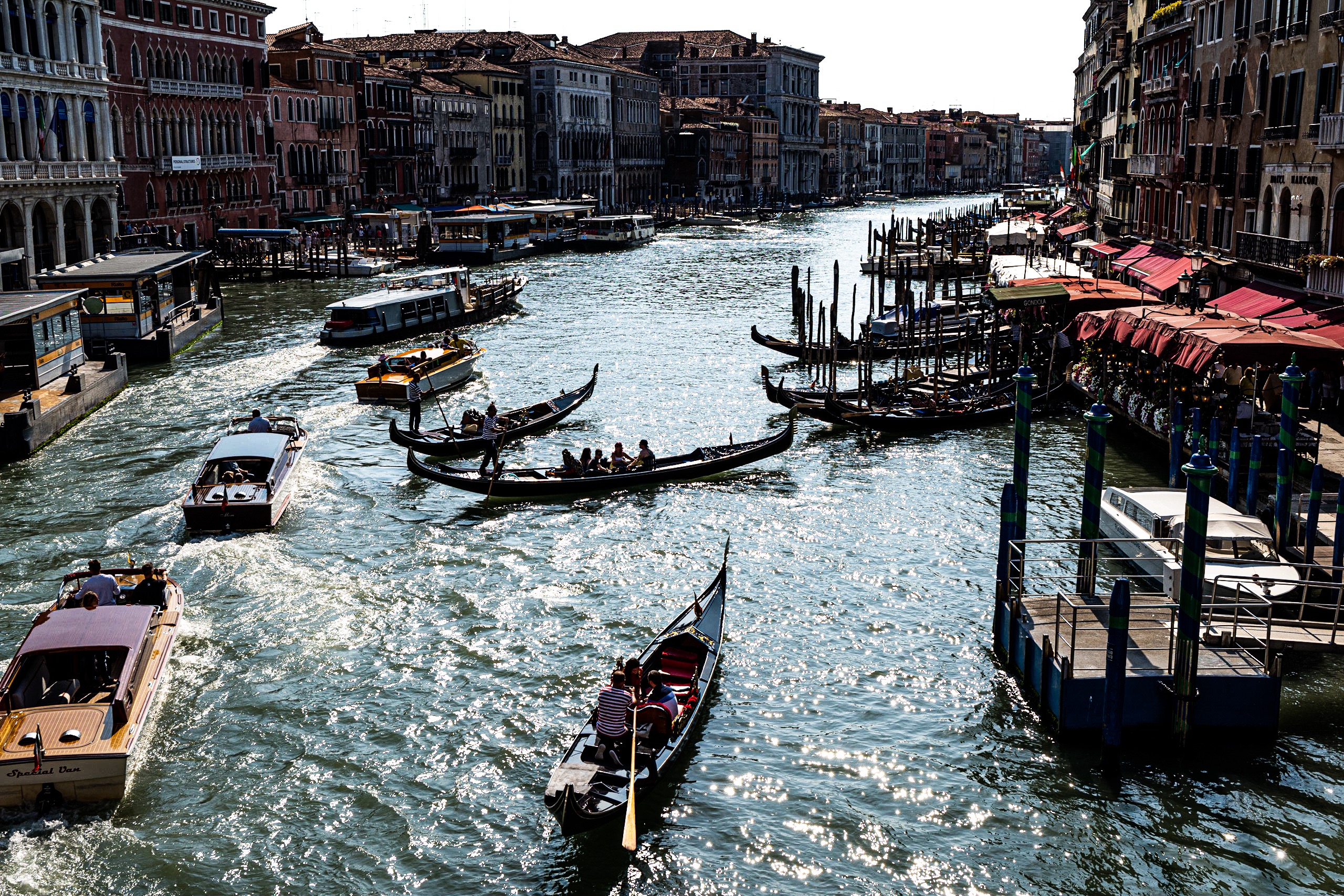
Venice. Image: John Fison

Venice, Italy – 3 nights

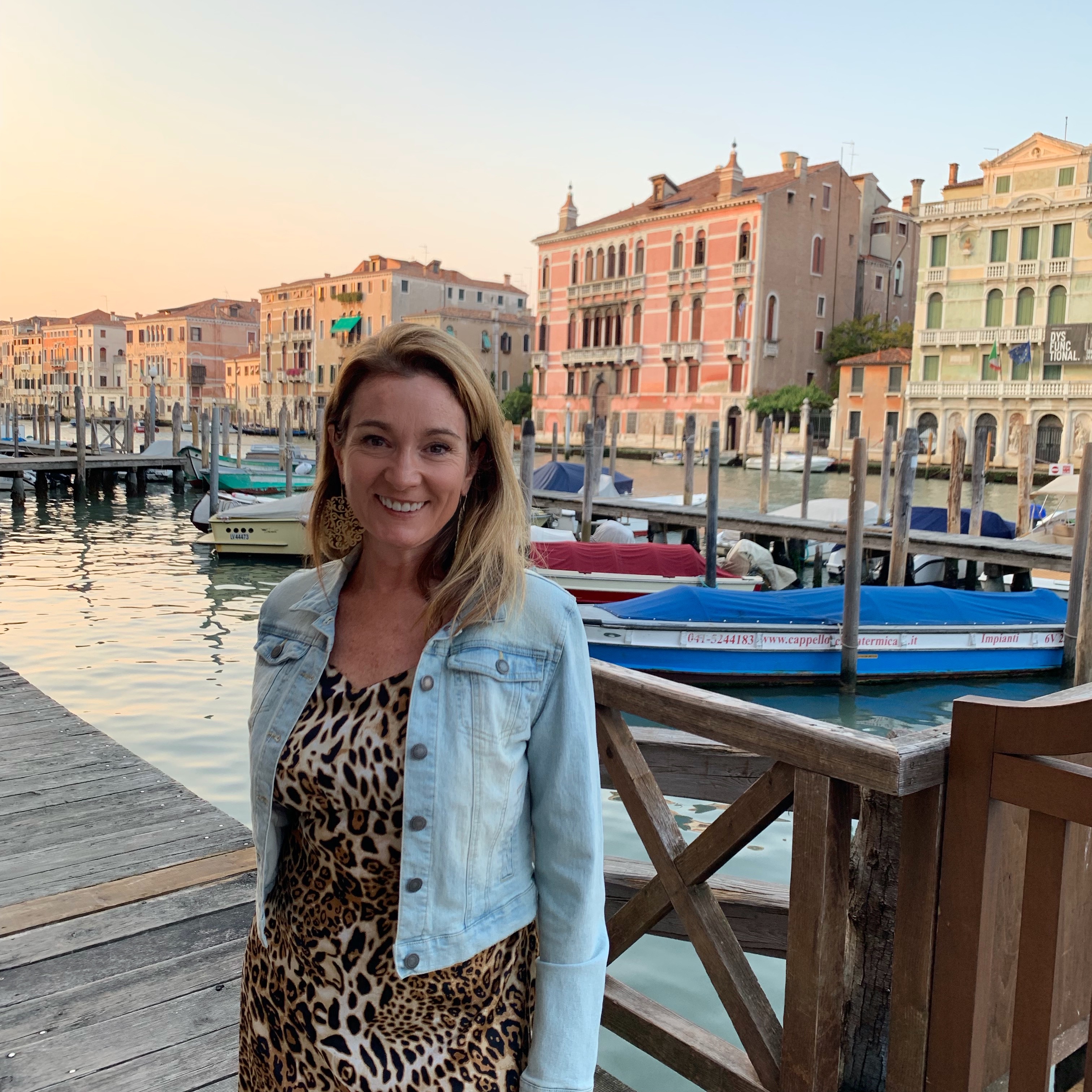
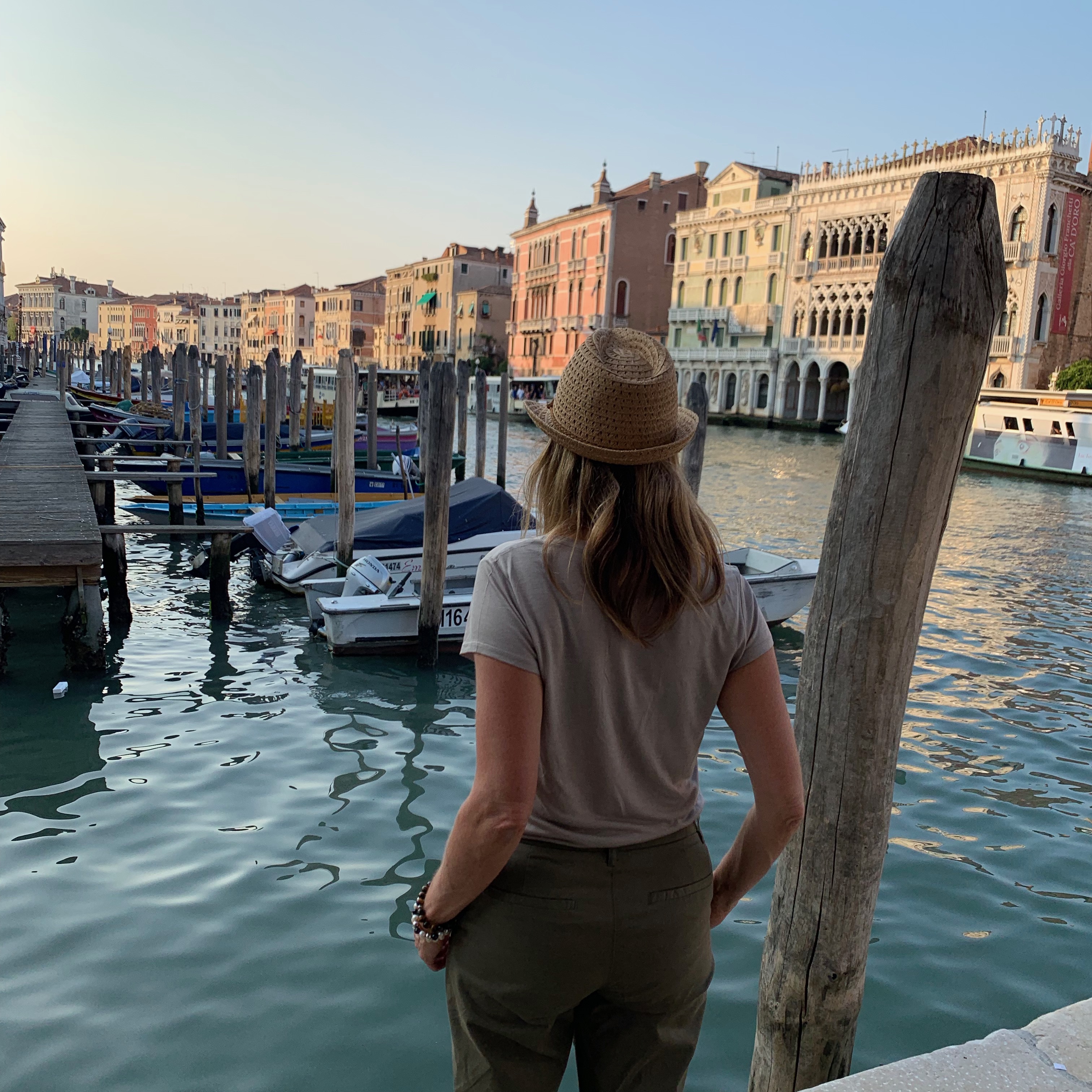
We start our Adriatic adventure in Venice, and it is every bit as charming as I imagined. Loved all of the big sites: St Mark’s Square, a boat trip to Burano and Murano, the Rialto Bridge, a water taxi ride. But more than anything I loved the soft light on the pastel buildings – just like a Caneletto painting. Bellissimo!

Pula, Croatia – 1 night

We are due to take a ferry from Venice to the Croatian port of Pula, but bad weather means we do the journey by bus. We arrive in the dark, but wake up to clear skies and the most magnificent Roman amphitheatre right on our doorstep.

Ljubljana, Slovenia – 3 nights

After collecting a car, we head inland to neighbouring Slovenia. The capital Ljubljana stands elegantly on the banks of the river, with Baroque buildings lining the cobbled streets and weeping willows competing for space with café umbrellas. A generous smattering of dragon statues, countless picturesque bridges and a 15th century castle, sitting high above the town, complete the fairytale picture. See my story on Ljubljana for restaurants and day trips. And don’t miss the castle at sunset, dinner at Julija and a day trip to beautiful Lake Bled.

One Punch takes a simple premise and turns it into a tight study of class and human nature – what we believe to be true about ourselves, and those we love, and who we really are. A crime is the pivot point for a sharp observation of human nature and blends compassion and humour in equal measure.

Meredith Jaffe, The Tricky Art of Forgiveness

Plitvice, Croatia – 1 night

We make our way from Slovenia, through bear country, to the Plitvice Lakes in Croatia. If you can drag yourself away from the Dalmatian Coast, this magical series of waterfalls and lakes is worth a visit. We’ve got a day here, but that’s not quite enough to explore all of the lakes and walkways.

Split, Croatia – 1 night

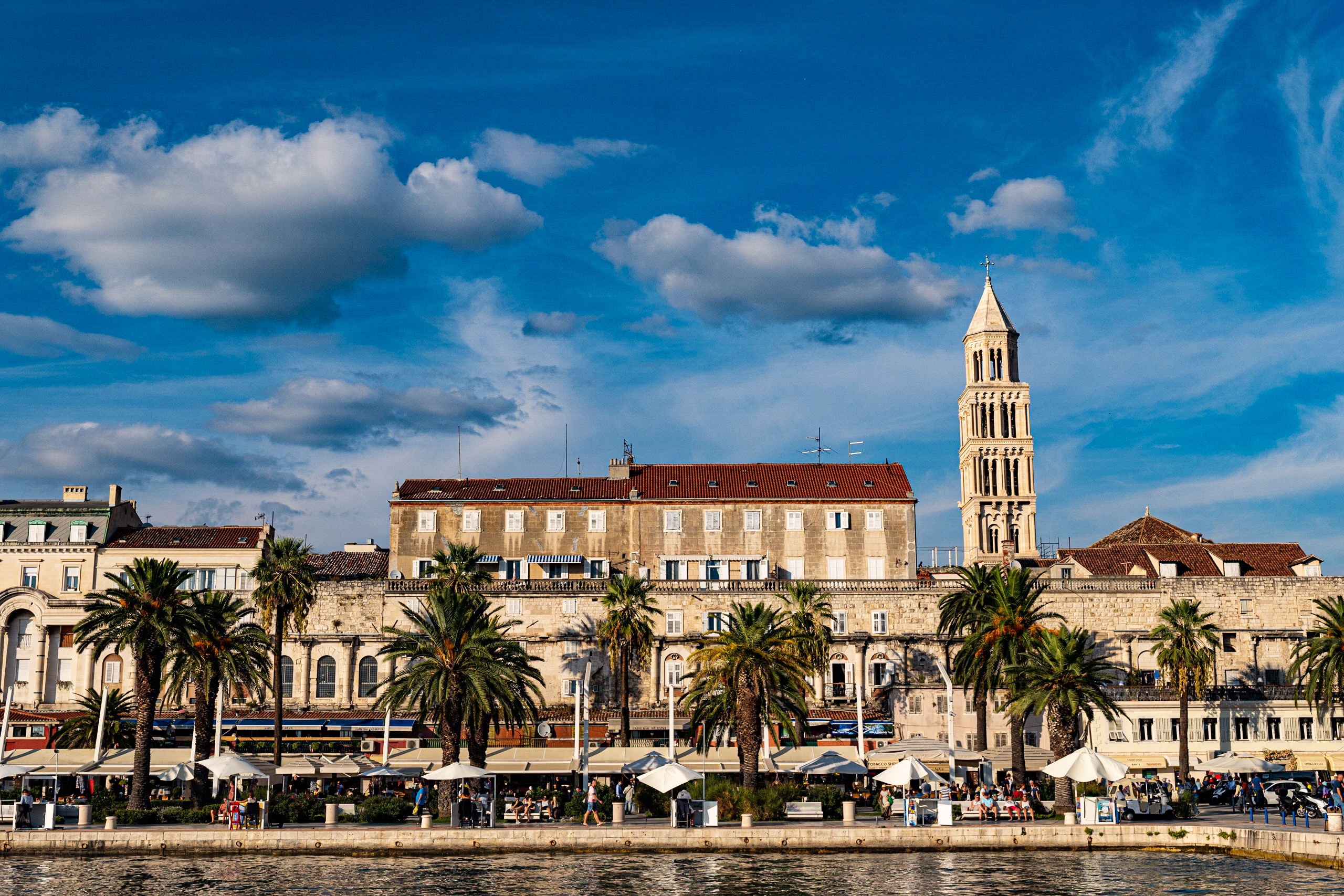
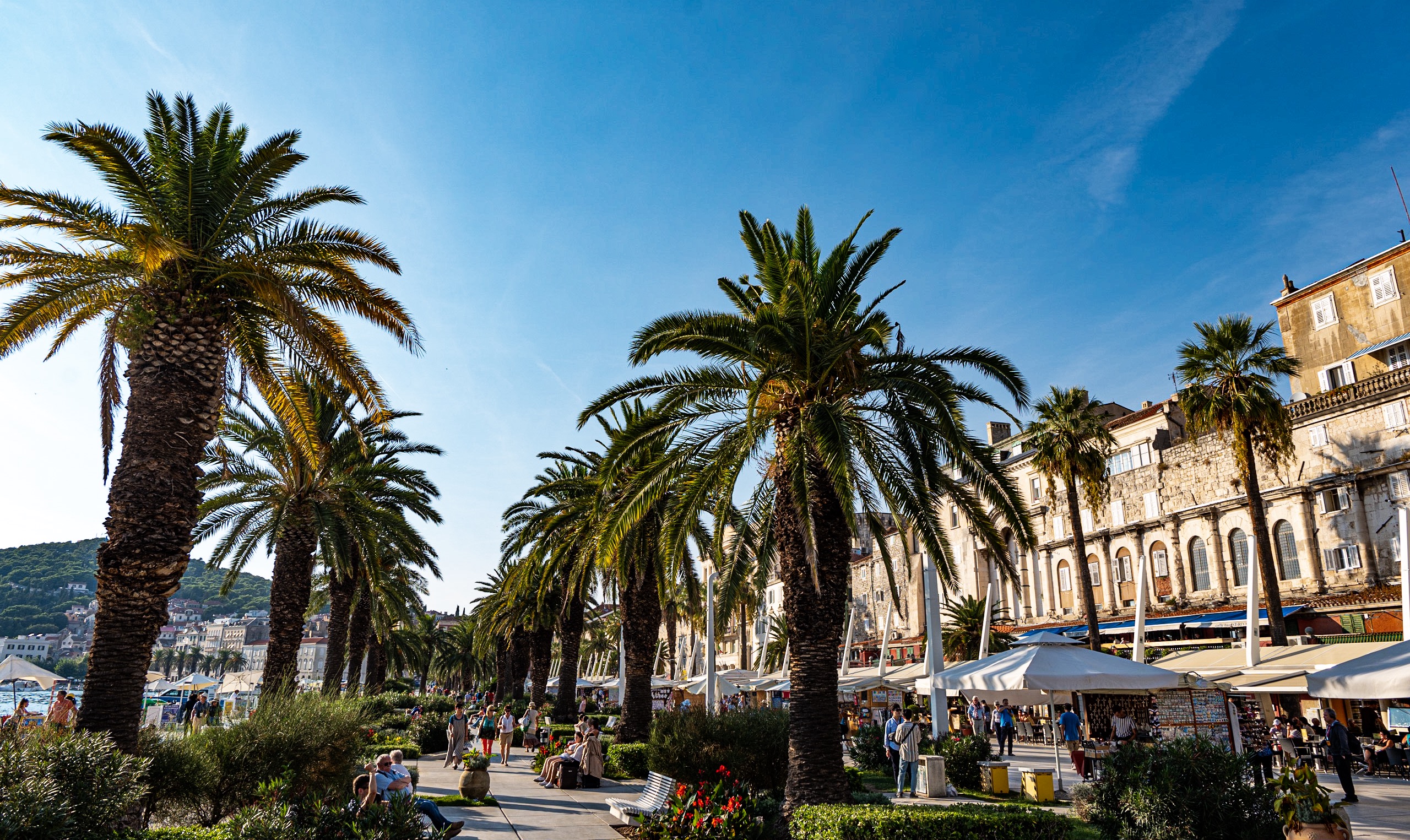
We cut through the Velebit mountains – leaving behind the cold cloudy interior and find ourselves overlooking the fortified villages and bright turquoise waters of the Dalmatian coastline. So spectacular! From here we meander down to Split. This magnificent waterfront city is the jumping off point for Croatia’s islands, but there’s lots to explore while you’re here – including the Roman Emperor Diocletian’s Palace.

Split. Image: John Fison
Primosten, Croatia. Image: John Fison

Korcula Island – 5 nights

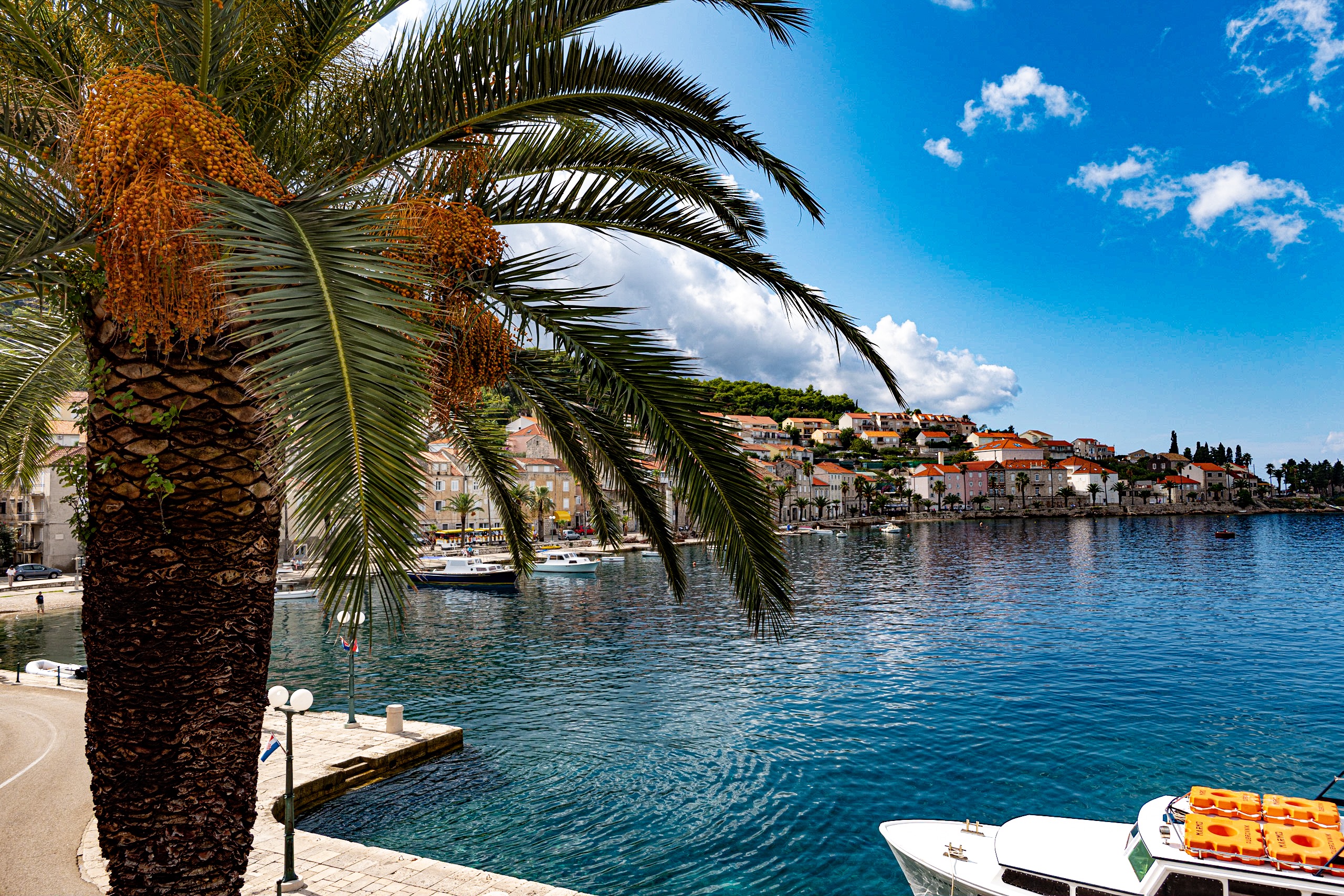
From Split, we take a car ferry to the island of Korcula – a large, mountainous island, much of it covered in pine forests. A fortified old town, also called Korcula, occupies a prime position on the eastern end of the island. With its medieval walls and round towers, it looks like a scaled-down Dubrovnik – almost as spectacular and nearly as crowded. Ferries from Split arrive at Vela Luka, a lively port, popular with the yachting crowd. But outside the two main towns, the coastline is dotted with authentic fishing villages that offer a blissful break from Croatia’s manic tourist hot spots. While many tourists choose a sailing holiday to experience Croatia’s coastline, there’s much to be said for settling into a house and feeling like a local. We spend five glorious days hanging out with friends in our own little olive grove by the sea. Think rocky coves, clear blue water, pomegranate trees laden with fruit, insects buzzing around ripe figs, and you’ve got the picture. 

Choose Your Own Ever After is a contemporary pick-a-path series about friendship and first crushes that lets the reader decide how the story goes. Perfect for young readers who like to call the shots!

Korcula, Croatia. Images: John Fison

Kotor, Montenegro – 3 nights

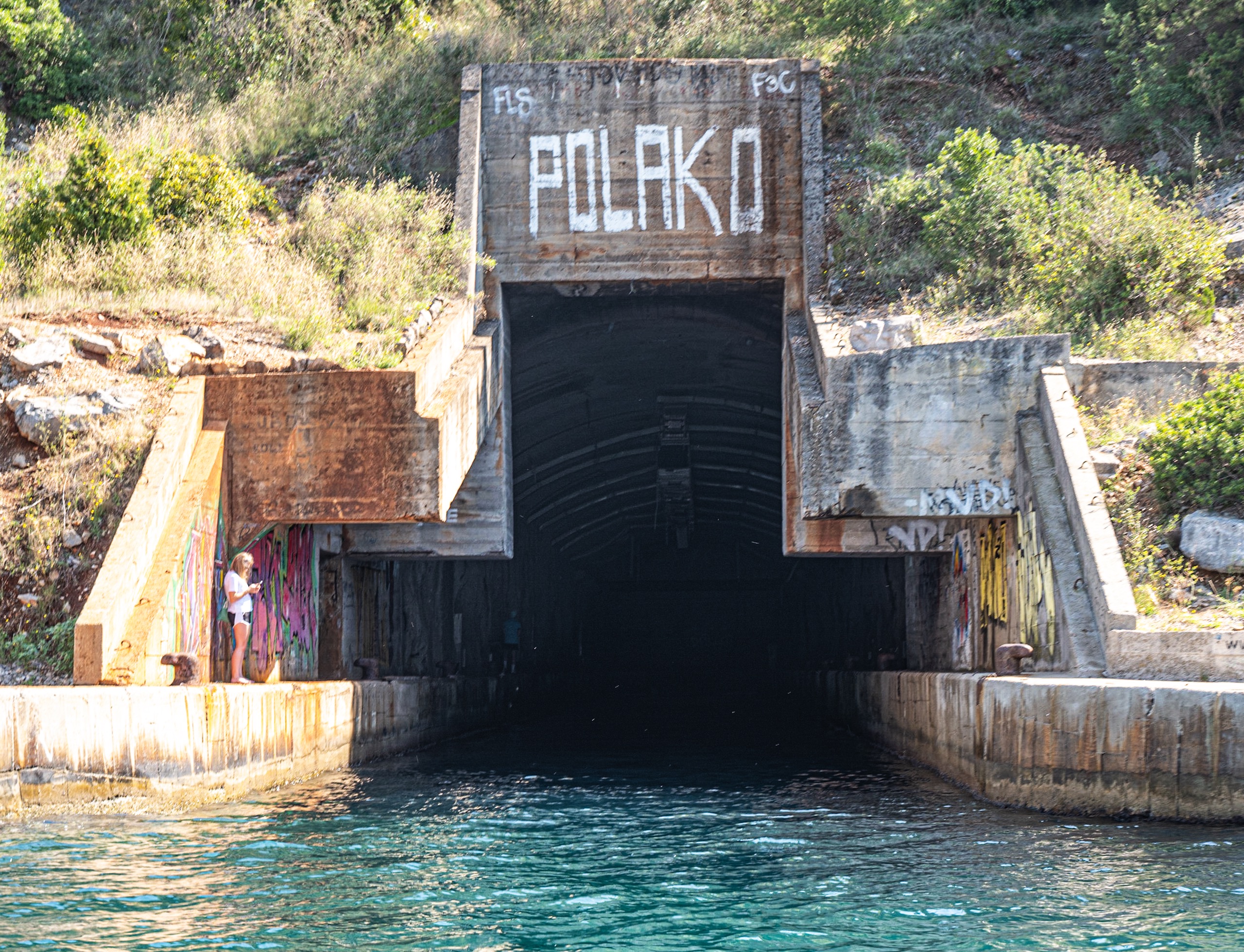
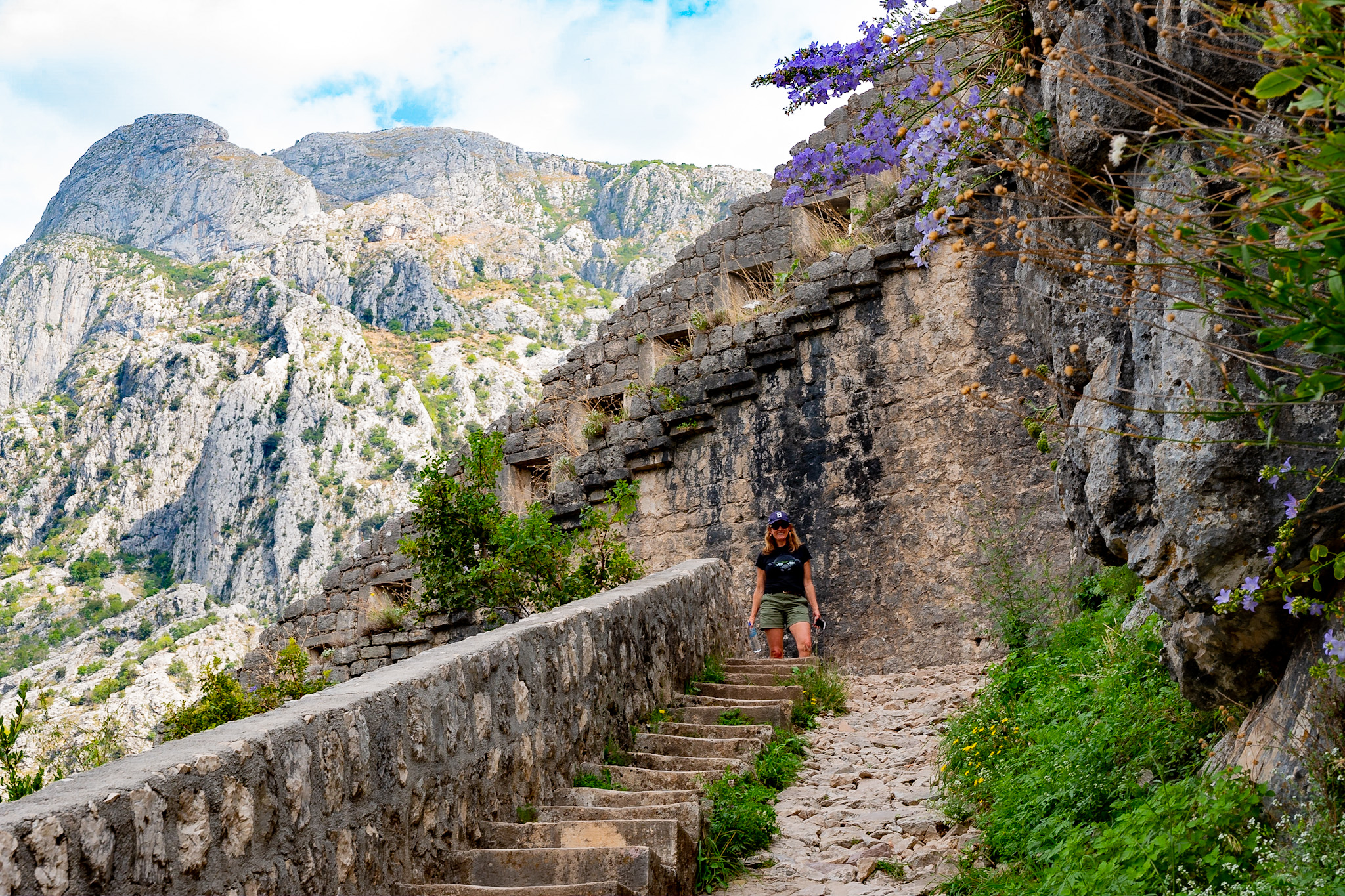
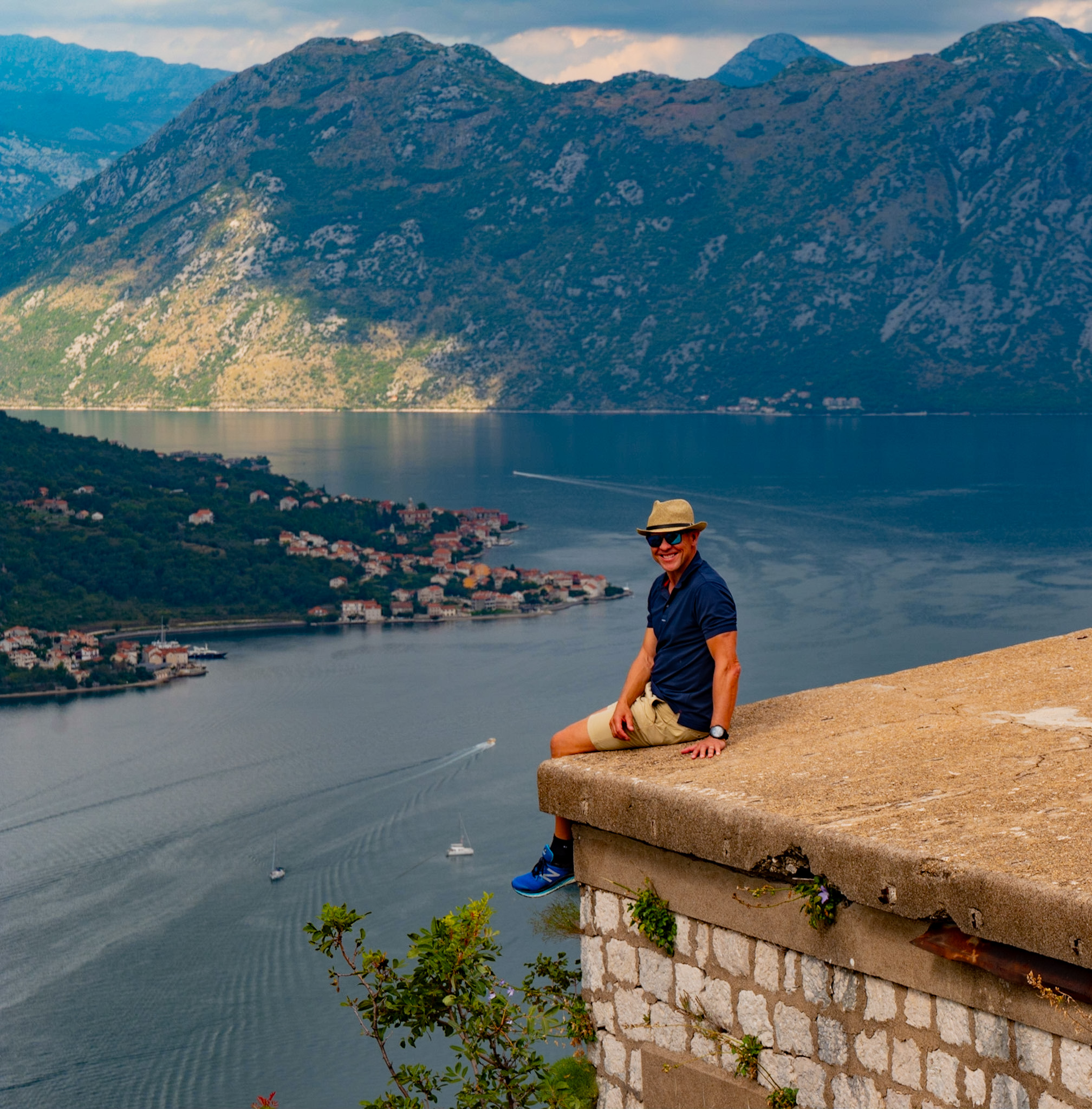
The Bay of Kotor – just over the border in Montenegro – has long been a key port in the Adriatic trading route, and has more recently become a favourite with cruise ships and super yachts. But James Bond can take some credit for Montenegro’s appeal. The tiny country will always be associated with the high stakes poker game 007 played in Casino Royale. It doesn’t matter that the scene was filmed in the Czech Republic, not Montenegro, the British spy’s cachet had rubbed off on the former Yugoslav republic. But Kotor has plenty of magic of its own – a World Heritage listed old town, a medieval fortress, Communist era naval caves and a church that appears to float on the bay.

Our Lady of the Rocks, Kotor. Image: John Fison
Blue Caves. Image: John Fison

Kotor serpentine. Image: John Fison

Sveti Stefan, Montenegro – 2 nights

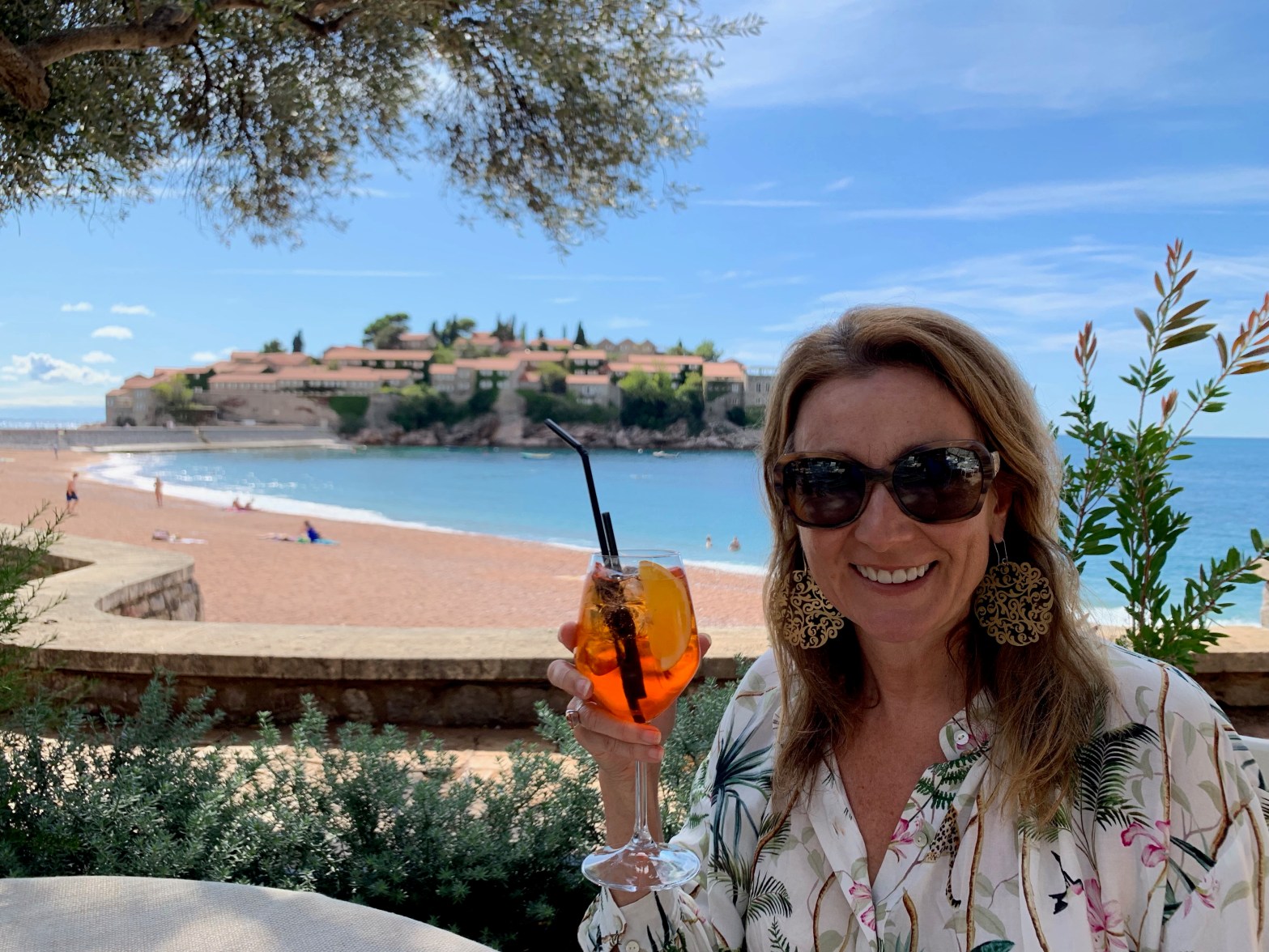
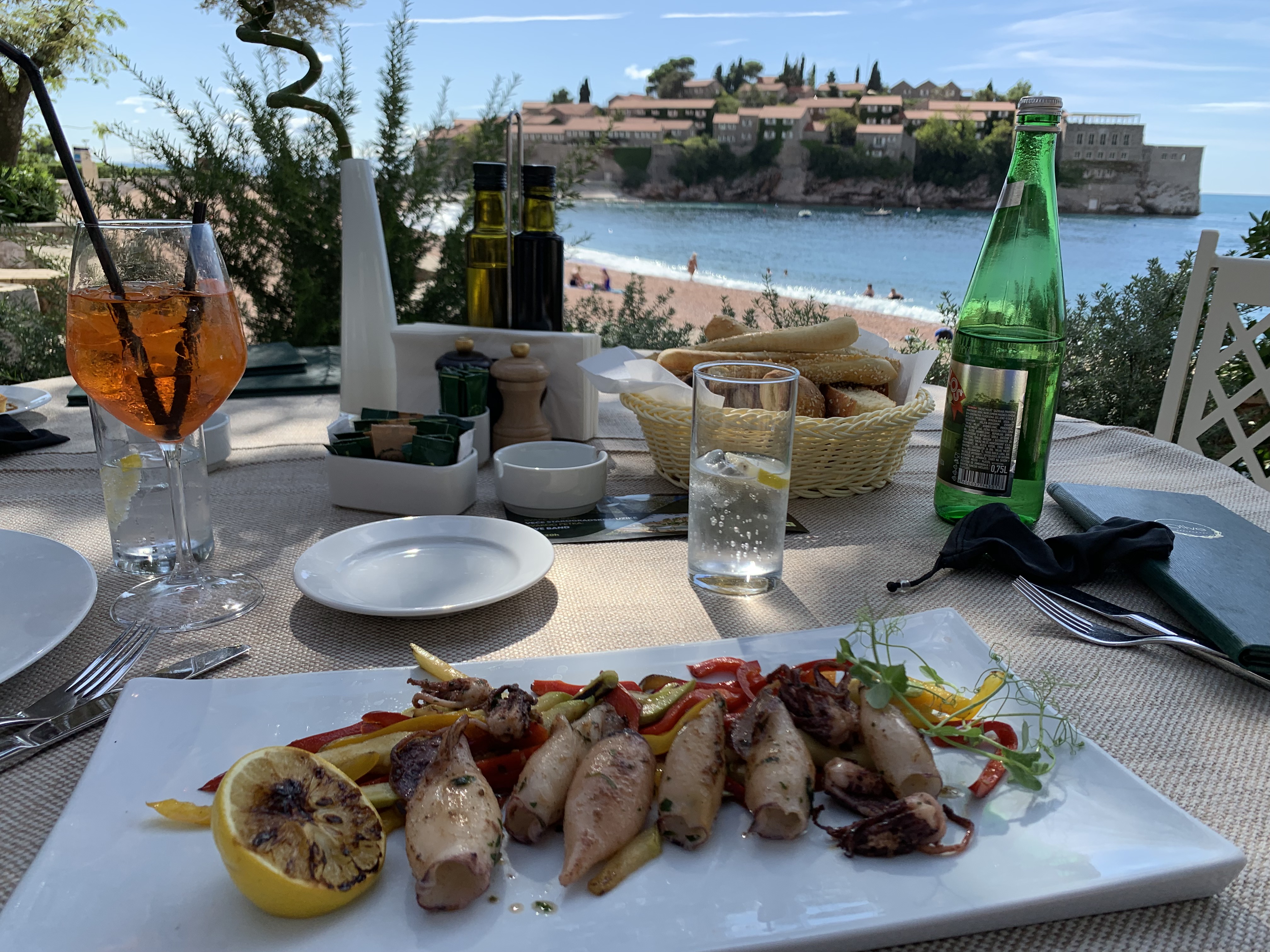
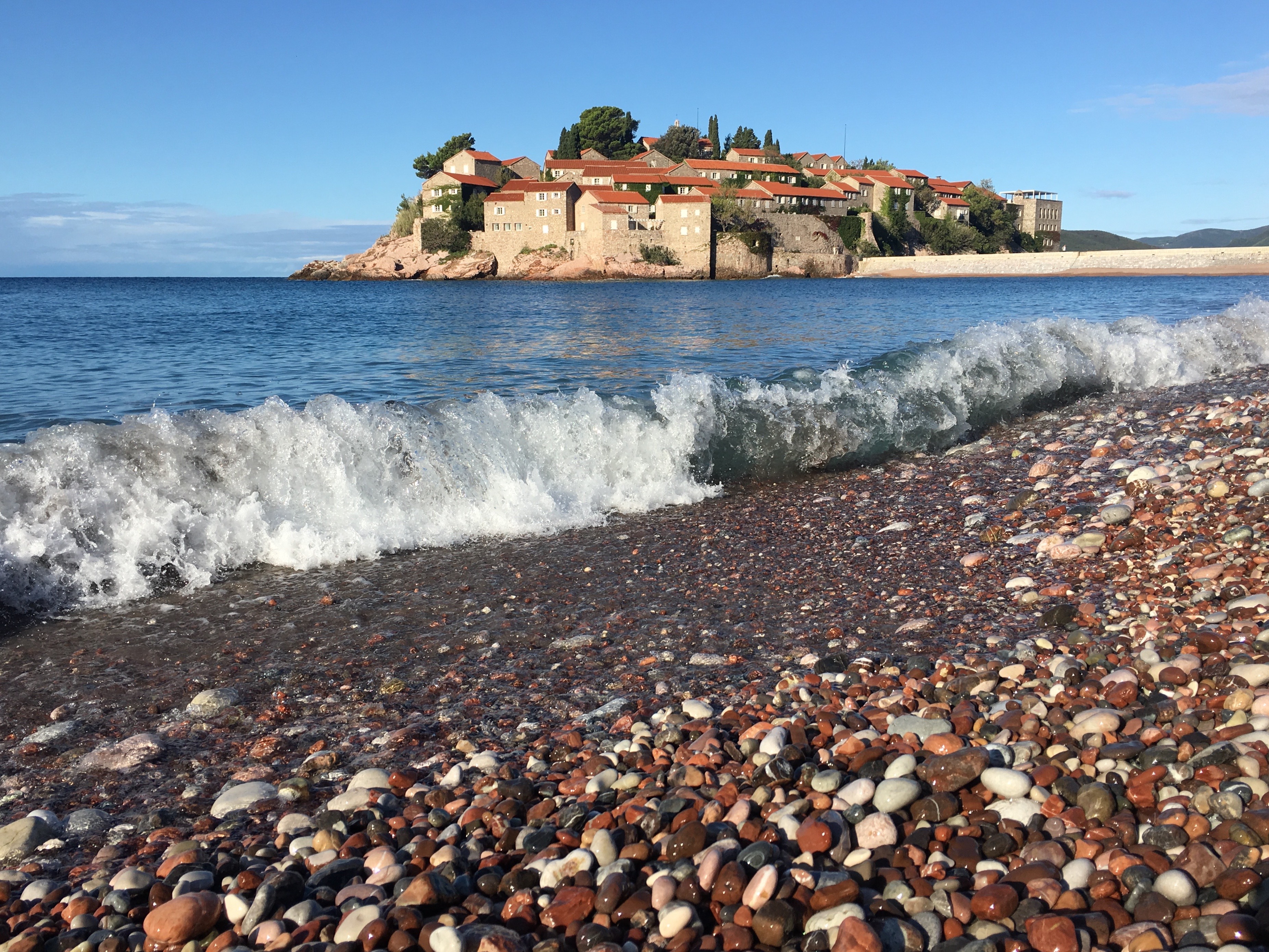
We leave Kotor via the nail-biting Serpentine. It’s wet, cold, and very scary. Full credit to Mr F. He squeezes past buses and cars, avoids landslides and rogue dogs, and finally gets us all the way to the coast. There, we find the 15th century village of Sveti Stefan – possibly the prettiest islet in the entire world. Definitely worth the white-knuckle ride. The entire islet is a resort so it’s substantially cheaper to admire it from a distance!
Sveti Stefan, Montenegro. Image: John Fison

Dubrovnik, Croatia – 3 nights

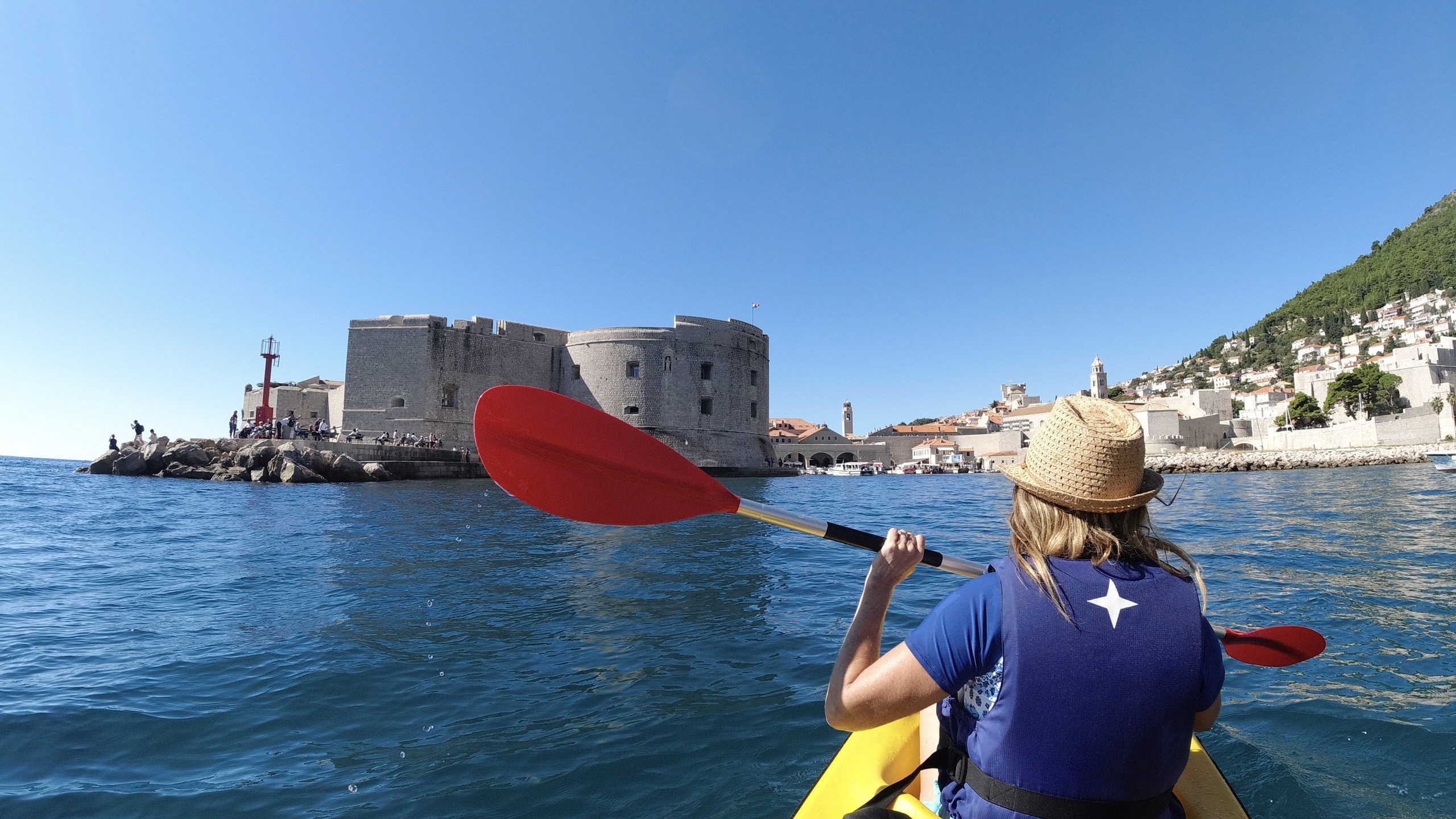
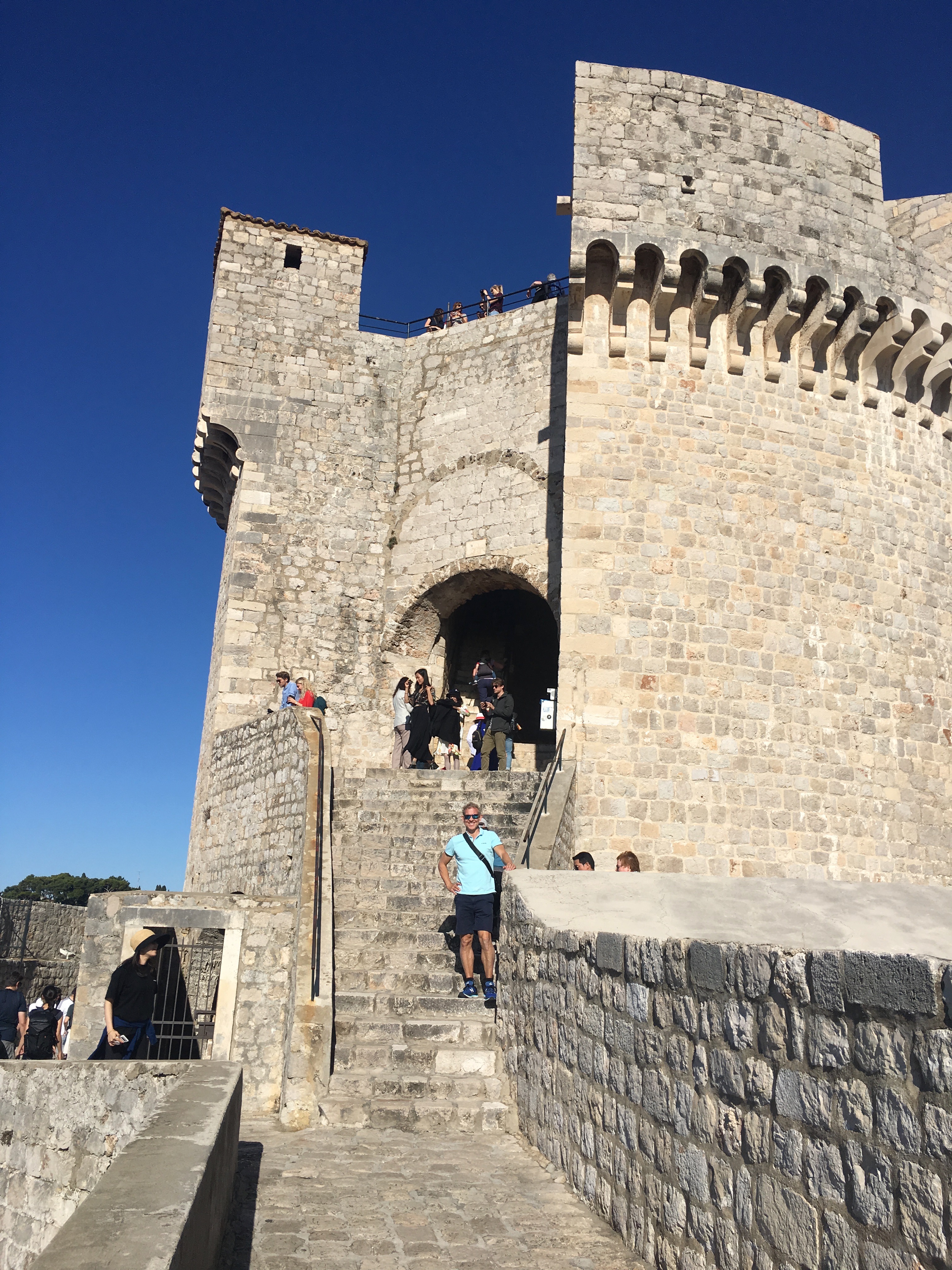
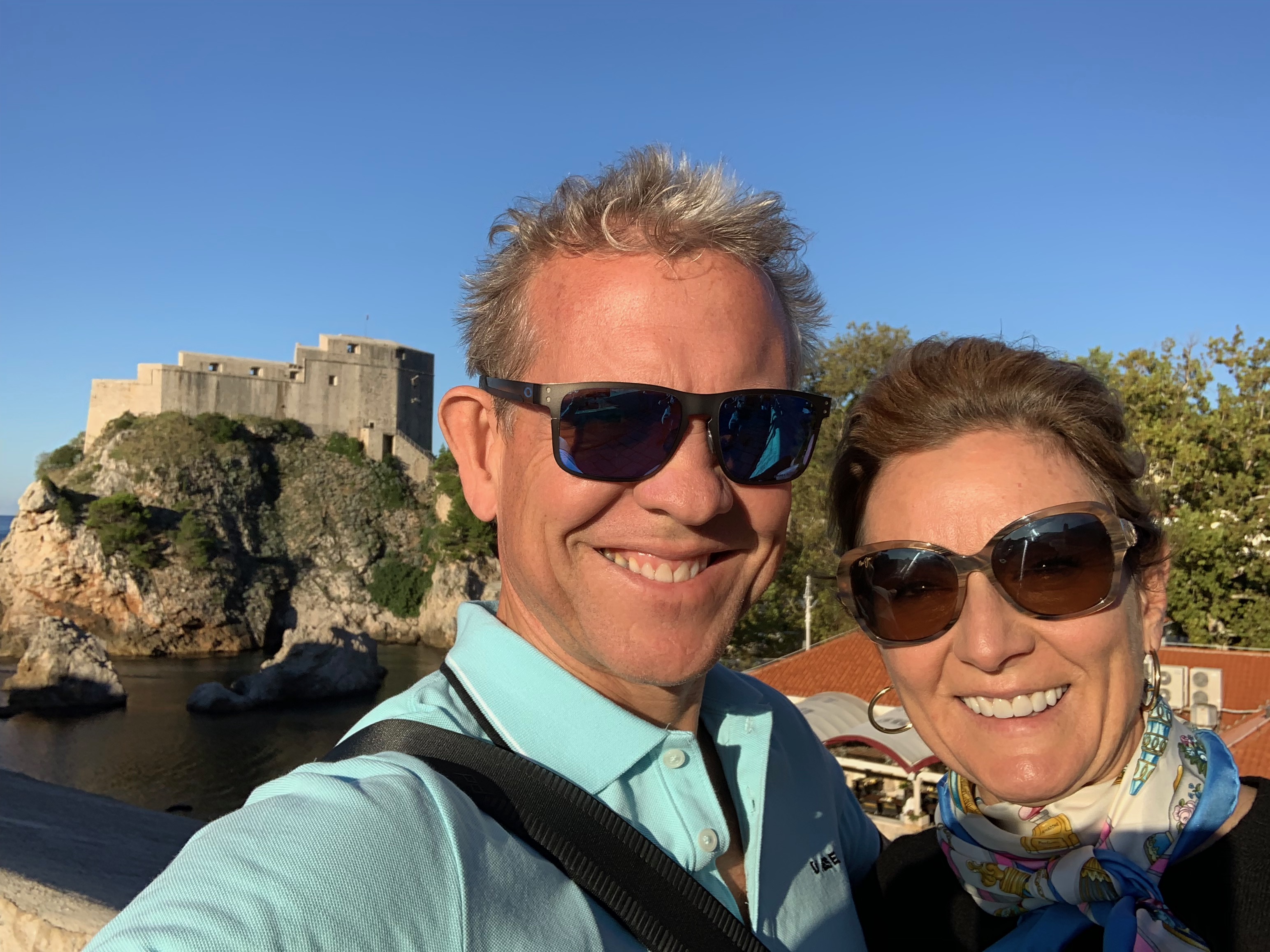
Dubrovnik might be touristy but there is good reason for its popularity – it’s staggeringly picturesque from every angle. Get into the walled city early to avoid the crowds – take a stroll around the top of the fortifications, jump off the rocks at one of the hole-in-the-wall Buza bars, and rent a kayak to see the city from the water. Just stunning!

There is so much to see along this stretch of coastline, I could have spent months here. But that just means there is plenty to see the next time I visit!

Happy travels.

Julie