The temples of Angkor

Angkor Wat
Angkor Wat at sunset.

It’s seventeen years since I last visited Cambodia’s sprawling temple complex of Angkor. So, it’s no surprise that the UNESCO World Heritage site is a bit busier than it was last time I was here.

Crowds pour into Angkor Wat.

Bus loads of tourists pour into Angkor Wat and the other famous temples of Bayon and Ta Prohm. Yet, there are still plenty of places to escape the crowds in the  400 square km site.

The colours of Angkor Wat are at their best at sunset. You’ll be sharing the temple with hundreds of others, but the scene is still magnificent, especially at the end of the rainy season when there are fewer tourists and the countryside is lush.

Ruins in the jungle
Ruins in the jungle

The pink temple of Banteay Srei is 37 km from Siem Reap, but definitely worth a visit. Watch out for green ants on the rope barriers!

A few other things to note:

Pre Rup
Fewer visitors get to Pre Rup

Dress modestly for the temples – covered shoulders and long shorts or pants.

Wear comfortable, study footwear. There is a lot of uneven stonework in the temples.

The temples of Angkor Wat, Bayon and Ta Prohm get very busy but other places are surprisingly less crowded.

We found the east entrance to Angkor Wat almost deserted. So was the beautiful Pre Rup.

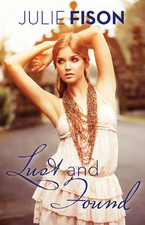
If you like the idea of Angkor, but can't get there, check out my book Lust and Found for a taste of Cambodia.
If you like the idea of Angkor, but can’t get there, check out my book Lust and Found for a taste of Cambodia.

A three day pass to the Angkor archeological park (that can be used over one week) costs $40 and is an ideal option for exploring the ruins. Pace yourself to avoid temple fatigue. There are plenty of restaurants in the park and places to take a break.

Cambodia is the setting for my YA romance Lust and Found. The story follows Sienna as she travels from one end of the country to the other, looking for her lost brother. Along the way she finds herself falling for her brother’s hot friend flatmate Guillaume and also discovers something about herself amongst the ruins of Angkor Wat.

BUY IT HERE.

‘I really loved this book. I read it one sitting. So much going on in this book. A great love story, a mysterious subplot, and you can literally feel the humidity of Cambodia. This is one of fave books I have read this year. So, so good.’ Kate Forster

How to bike the Riesling Trail

It’s a glorious sunny morning in Clare, two hours north west of Adelaide as my husband and I set off on bikes to explore Riesling country. We’re taking a path along an old railway line that cuts through the length of the Clare Valley.

Riesling trail
The Riesling Trail, South Australia

The Riesling Trail, as it’s known, runs for 36 km, but we’ve got our sights set on Auburn, 25 km away. Just as train travel offers an intimate view of life along the railway line, so does the trail. At various times it borders bush land, vineyards and farms.

We cycle past cellar doors, kangaroos, chook runs, duck ponds, through eucalypt avenues and along hedges of lavender and pine – the perfect country scene. But it is only after we stop for lunch in Auburn and begin the journey home that I realize that my bottom isn’t going to make the 25 km back to Clare. And when I dismount to push my bike I realize that virtually the entire return journey will be uphill and that my legs aren’t going to make it either.

I push and pedal as far as O’Leary Walker Wines, some eight kilometres up the track. There, I admit defeat and do the only reasonable thing.

While the weather closes in and my husband presses on to finish the ride, I head for the cellar door. I find a comfortable sofa, a magazine, a glass of wine, and I wait for my husband to return with the car.

Of course, it’s not as rewarding as cycling uphill in the rain, but sometimes sacrifices have to be made!

Skillogalee winery and restaurant

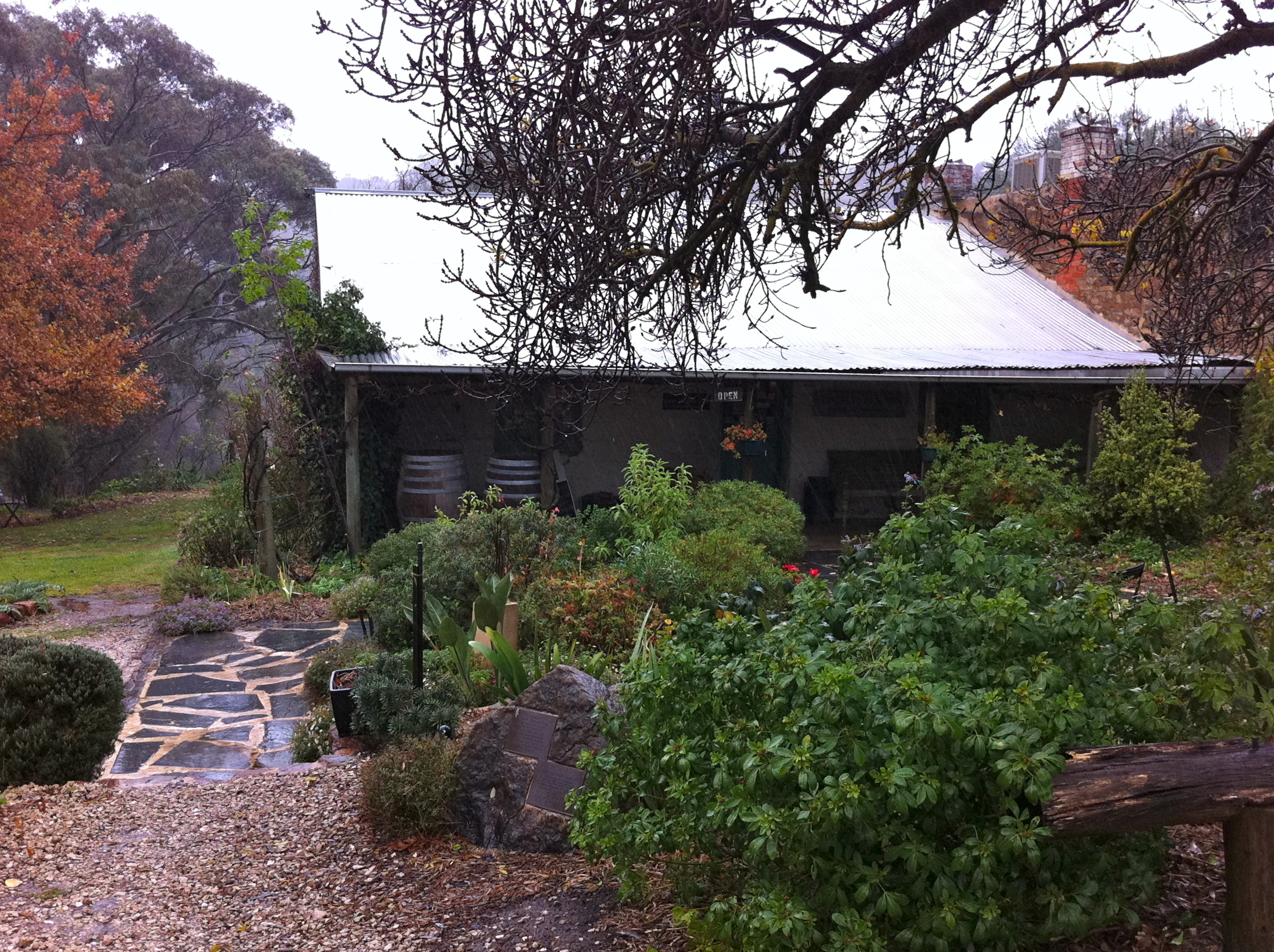
The following day the rain has set in, so we head, by car, for the Skillogalee Winery. I wonder if we are the only people crazy enough to be out in this winter weather. But when we enter the quaint old farmhouse that doubles as a restaurant and cellar door and ask for a table for lunch, we are met with a surprising response from a member of staff.

‘You have a reservation.’

It’s not even a question. The restaurant, which seats eighty – between its cosy interior and picturesque verandah, is fully booked.

Anyone who knows to visit Skillogalee for lunch knows to book in advance (apart from us, it seems).

Skillogalee is a South Australian institution and weekends at the family-owned boutique winery are busy no matter how wet it gets outside. As luck would have it, the restaurant can seat us for an early lunch, which gives us ample time to admire the view over the cottage garden and the misty vineyards, enjoy a beautiful regional meal and taste a selection of Skillogalee’s wines. A fire is roaring inside, and even on the verandah we are well protected from the weather. Heaters are warming the slate floor and just in case we get chilly – there are knee rugs on offer.

By the time we finish lunch, it’s still wet outside and our Tour de Vallé Clare has been completely washed out. My husband is disappointed. I’d also love to see the sun shining on the Clare Valley, but I’m quietly relieved. Cycling is magical, but how comfortable is it to tour the wineries by car!

Julie Fison’s travel stories are featured in the Australian Good Food & Travel Guide

AGFGLogo-external

Tips from publisher and author, Paul Collins

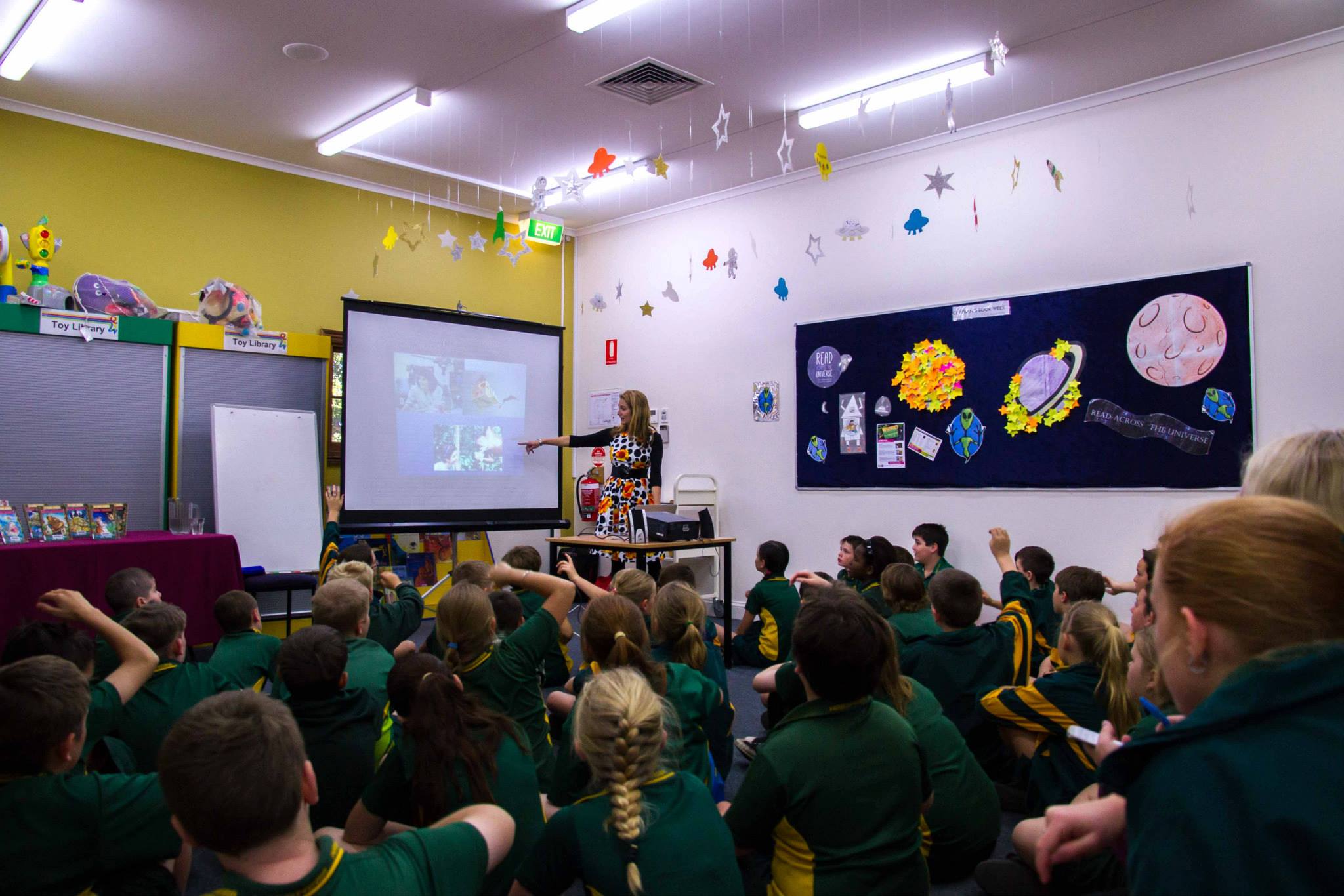
1172375_10153190402915235_810756662_oPhew! I am just recovering from an exhausting but fantastic week visiting libraries in the Moreton Bay area. My head is still spinning after doing talks at twelve libraries in four days. Luckily I had a gorgeous staff member from the Moreton Bay Region Libraries to keep me on track, remind me where I was and what my name was! Thank you Hayley. Thanks to all of the wonderful students, teachers and parents who came to the talks and the library staff who made it possible. Hope to see you again soon! Full pictures here. 
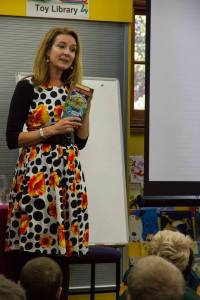
1235251_10153190402920235_1256854359_nI promised students some details on getting published, so I am revisiting some advice from my Ford Street Publisher and multi award winning author, Paul Collins.

My advice to younger writers is that it doesn’t pay to tell the publisher your age (unless the magazine specifically wants work from younger readers). If your work looks professional, then your age won’t matter. Catherine McMullen was ten years old when she sold a story to the UK science fiction magazine Interzone, and has since sold stories to anthologies such as Spinouts. If you have sold stories already, you should mention this in your covering letter.

Remember that a rejection letter does not necessarily reflect on the quality of your work. It might just be that your article/story does not fit in with the publisher’s current requirements. A golden rule is to never let an unsold piece of work sit in your home for more than twenty-four hours. Keep sending it out until you have exhausted all avenues. Never throw a manuscript out. I have had novels accepted that had been rejected by the same publisher a decade before. Editors change, as do times. Indeed, as you become a more experienced writer, you can always go back to those ‘bottom drawer’ stories and re-work them.

Most publishers prefer a covering letter. The following is a good example. Under no circumstances do you tell the magazine editor how good your story is, or discuss its many merits. The editor will have his/her own opinion and will not welcome yours!

The following is how you lay out your manuscript. Most publishers do not require you to put in indents at the beginning of paragraphs, because when they format your file, they will have to take them out. Make sure that you have no fancy fonts or illustrations. Keep it simple! This means no illustrations such as butterflies in the margins. Publishers only have to delete them.

Word count: 2300 words

Paul Collins
PO Box 1339
Collingwood
Vic 3066
Australia

The Thing that went ‘Blerckh!’
by
Paul Collins

‘Blerckh!’

‘That was truly gross,’ I said to my best friend, Daniel Barnes – Barnesy to me.

‘It wasn’t me,’ he said, ‘but I wish it was.’ Barnesy looked around. No one was there.

‘Ace!’ I laughed and pointed down at his foot. The fattest, pukiest glob of bubble gum was stuck to his foot. It was so gross it had anchor lines stretching back to the main wad stuck on the footpath.

Barnesy lifted his foot and shook it. The bubble gum wouldn’t let go.

I cacked myself laughing. ‘It’s caught you, Barnesy – now some big fat spider’s gonna come and take you away!’

Barnesy frowned. ‘Seriously, Fletchard. You’re so loserish.’ He tugged so hard his shoe came off.

That threw me right off. ‘Let me tell you, Barnesy,’ I gasped, ‘you look so funny.’ I sat down on the footpath, tears of laughter screaming from my eyes.

Barnesy gave me a filthy look. He bent down to pick up his shoe. He pulled with two hands. He steadied his feet and hauled with all his strength.

Nothing. The shoe was wedged there.

Barnesy jumped back.

Blerckh!

‘What’d it do, bite you?’ I howled.

‘Shuddup, Fletchard.’ Barnesy glared at me. ‘It just went “Blerckh!” again.’

I swallowed hard. My stomach was aching too much. I had to stop laughing. Cars were slowing down looking at the idiot on the footpath who was losing it with tears. I pushed myself up, my whole body shaking with laughter.

‘It just burped?’ I repeated slowly, hardly daring to breathe.

Barnesy checked me out. He was about to lose it.

‘Serious? It burped?’

Barnesy let go of his shoe. It snapped back to the footpath. ‘It’s stuck,’ he said. ‘The gooey stuff’s got it and won’t let it go.’

‘Weird,’ I said. I could have laughed my head off. After all, it wasn’t my shoe that was glued to the footpath. Instead, I shook my head in sympathy. What are friends for?

‘I can’t walk home with only one shoe,’ Barnesy said seriously.

‘You could take the other one off and leave it,’ I suggested.

‘That’s really dumb,’ Barnesy said. ‘I’d rather have one shoe than none.’

‘But one shoe’s no good to you,’ I pointed out.

‘The gunk’s not going to have my other shoe,’ Barnesy said firmly. ‘No way.’

(You will note the double spacing between sentences (you can use 1.5 spacing). This is so that editors have space to mark in corrections etc. Also, take notice of the border around the manuscript. Do not print both sides of the paper, and make sure you number each page and have a title on each page. This is in case the pages get loose or rearranged. Do not clip or staple your manuscript.)
What makes a good story?

Basically, most stories have a beginning, a middle and an end. If you are writing a fiction story for a magazine that publishes 2000+ word stories, your manuscript will have about nine pages.

During the course of these pages, you should have drama (perhaps mystery), conflict (obstacles to overcome, dilemma), humour (if possible), a focus, as in ‘where is this leading?’ (towards a logical conclusion, the reader hopes!), and obviously the climax.

You start out introducing your character. Here you will set the scene for what is about to follow. In the above story, The Thing that went ‘Blerckh!’, the conflict is between two best friends, Barnesy and Fletchard. Barnesy also has a problem (obstacle), which Fletchard thinks is funny. So there’s humour in the first couple of pages, too.

The middle comes around pages six and seven. Barnesy can’t dislodge the gum from his feet. They discover a man is picking up all the globs of chewing gum. Here’s the mystery – why would someone go around picking up chewing gum? The obvious way to find out is to following the man (we’re heading toward a logical conclusion).

Towards the end, Fletchard and Barnesy discover the ‘man’ is from another planet. They follow him. It turns out that his special gum has been snaring Earth objects, which are valuable on his planet. The boys also discover that he has caught lots of cats and dogs. To release them, they might jeopardise their own safety (a moral dilemma). This is where the characters need a resolution. In this case, they put the animals before their own safety, but of course it’s a wise decision because all the animals get free and so do the boys (climax).

It makes good sense to be creative when considering how your character resolves their problem. In the case of Barnesy and Fletchard, they discover a giant plug. Do they pull it, or will it put them in more danger? Only when the old man screams at them not to touch it, do the boys decides it’s a good idea to ‘pull the plug’. The ending is where all the loose ends are tied. In the case of The Thing that went ‘Blerckh!’, the boys vow to look for the old man again, because they want to get back to his planet.
Know Your Characters

There are basically two types of fiction writers – those who concentrate on characterisation and those who lean toward writing good plots and action. Writers rarely succeed in being excellent in both. Authors who write plot-driven stories filled with twists and turns and brilliant foreshadowing often receive letters of rejection claiming that the characters are two-dimensional or lack depth.

It’s easy enough to draw up a checklist of necessities for your characters: what they look like, colour of hair, shape of nose and nationality etc, but these mundane items should be a given. Your characters need filling out – especially the main protagonists. Giving your character a quirky nature is one way to add a bit of depth: their eye might twitch when agitated or they might stutter. James Bond liked his martinis shaken not stirred, and when introducing himself, he would say, ‘Bond. James Bond.’ Your characters might have a ‘rising inflexion’, which means almost every second sentence seemingly has a question mark, even when they’re not asking a question. The more you fill in along the way, the easier it will be for the reader to identify with them.

Never make statements to the reader. Commonly known as ‘show don’t tell’, the following is an example: ‘Keiren didn’t play sport because he was no good at it’. Far better to give a reason: ‘Dom’s older sister was the captain of both the seniors’ cricket and rugby teams. No way could he compete with that; instead he spent most of his time in the library’. In the first version we know that he doesn’t play sport because he’s no good at it. In the second version, we learn why Keiren is no good at sport (he’s daunted by his sister’s superiority), and we learn that he’s a reader because of it.
The rule of thumb is that if you know your character inside out, and convey your knowledge in your story by showing and not telling, your finished work will be much richer for it.

When editing your work – commonly known as ‘polishing’, watch out for the obvious mistakes of over-writing. These include repetition, using the same words too many times, labouring a point, using more words than necessary to say something simple.

My greatest tip to anyone is to persist! Remember that many publishers have rejected most of the best-selling books of all time before the books saw print. And this applies to short stories, too.

Good luck with your writing. I hope these minor tips prove helpful.

Paul Collins’s latest books are The Glasshouse, illustrated by Jo Thompson and The Maximus Black Files. His website is: www.paulcollins.com.au.

Welcome to the mothers of boys tribe

I recently came across a friend at my son’s school sports fields. It was around midday and she was in a rush to begin preparations for her daughter’s semi-formal – some six hours away.

‘The beautification is about to begin,’ she smiled as she hurried past.

IMG_1519I was rushing in the other direction, with my own beautification crisis. My son’s mouth had just been torn open in a rugby tackle, and he was being treated in the medical room. Pretty was not a word to describe him as he sat, in shock, spitting blood, looking like The Joker.

Thankfully a wonderful plastic surgeon was able to repair him, but the ordeal pretty much summed things up for me.

I know that girls get injured, too. I see them on my regular round of physiotherapy and specialist appointments. Girls have their share of freakish accidents – one girl I know dislocated her knee rehearsing for a play, while another impaled her leg on a cello.

And there are boys who put some effort into their appearance, too. It doesn’t happen a lot in our house, but I’m sure it happens.

But things can get pretty lop-sided.

I spend my life neck-deep in stinky, noisy, dangerous boys’ stuff. I can only look on longingly at the parade of beautiful girls all dressed up and ready for their big events – their pictures plastered all over Facebook.

Recent research suggests this has an impact on a mother’s attitudes and behaviour. According to the survey, mothers of girls are more likely to be security conscious, enjoy grocery shopping and want to lose weight. Mothers of boys are more likely to use force, be a leader and be complimented for their cooking

I can’t say those findings ring true for me. I am rarely complimented on my cooking, not sure that I possess any special leadership qualities, and don’t have much of an opportunity for force these days.

My older son is substantially taller than me and likes to test his strength (and my patience) by putting me over his shoulder – WWE wrestling style. But the demands of children of only one gender certainly have an impact.

photoIn my house, sport dominates everything, and at this time of year all spare moments are consumed by rugby. I’ve learned to adapt.

I’ve spent so much time on sidelines over the past ten years that I know the rules of rugby. I even understand what boys get out of the game, and mostly I like watching it. Obviously, not so much when I see blood pouring from my son’s face

When you’re surrounded by males, it’s inevitable that some things are going to rub off. I think I have a better sense of humour from hanging out with boys. I am more tolerant of noise and wrestling, and much more competitive than I ever was.

I no longer try to console my sons after a sporting loss with the words – ‘it’s only a game,’ or ‘as long as you had fun.’

Losing, I have discovered, is not fun at all. A losing streak is even worse – really grim for boys who take their sport seriously, and just as painful for their mothers!

A friend has just joined the mothers of boys’ tribe. Her daughters have left on a gap year, leaving her with just a son at home. She admits that her personal grooming has declined since the departure of her daughters – no one to frown when her legs need a wax.

But she’s embracing the change. She and her husband fearlessly took 20 boys to a restaurant, which featured a buffet desert bar. It had a predictable ending – a spectacular, public food fight!

Welcome to the tribe, girlfriend.

There are two things that I’ve learned from being a mother of only boys. To avoid being a very lonely mother, it is essential to take an interest in the things that your sons love.

It doesn’t mean that you give up on your own passions. I periodically drag my children to art exhibitions and am always surprised – firstly at how much they complain, and then how much they actually retain from the experience.

But I rarely miss one of their games. I love to share their highs and lows, and sport is the one thing they are happy to talk about!

The other way to avoid being a lonely mother of boys is to cultivate like-minded girlfriends. They are an essential antidote to the male world and have saved me many times when I have been lost in a fog of testosterone.

As one friend puts it – choose friends who you would want beside you in the trenches – strong, loyal and dependable. I add to that, foster friendships with women who can make you laugh.

You’ll need a good laugh as much as anything!

Also see The Definition of fun: NZ

Learn how to start a story

When I started out writing, my stories were just a series of quite interesting events. A lack of experience and planning meant that I didn’t have enough structure in my story, so the characters meandered through the pages without a clear purpose.

problem, at the beginning of the story, changes all of that. It is a very effective way of grabbing the reader’s attention. It also gives the characters a goal, drives the story and keeps the reader interested.

Lust and FoundIn Lust and Found, a story I wrote for the Smitten series, Sienna goes to Cambodia to check on her brother. There, she discovers he’s gone missing. Sienna now has a problem and a mission – her brother is lost and she has to find him. From there Sienna goes on to face more obstacles – she doesn’t think much of the third world, her boyfriend gets sick and her brother’s flatmate, who promises to help, makes things more difficult.

Losing something or someone is a common problem for a main character to face. Another effective way to start a story is to give the main character something. They might find something interesting – like a map, a note or an alien space ship, or they might gain super human strength or the ability to read minds.

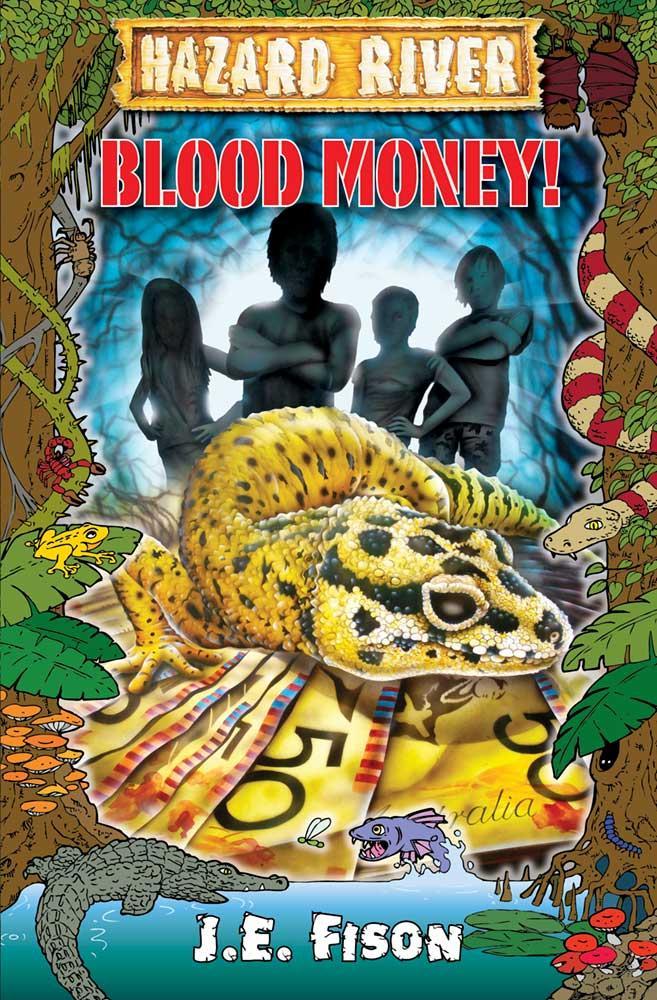
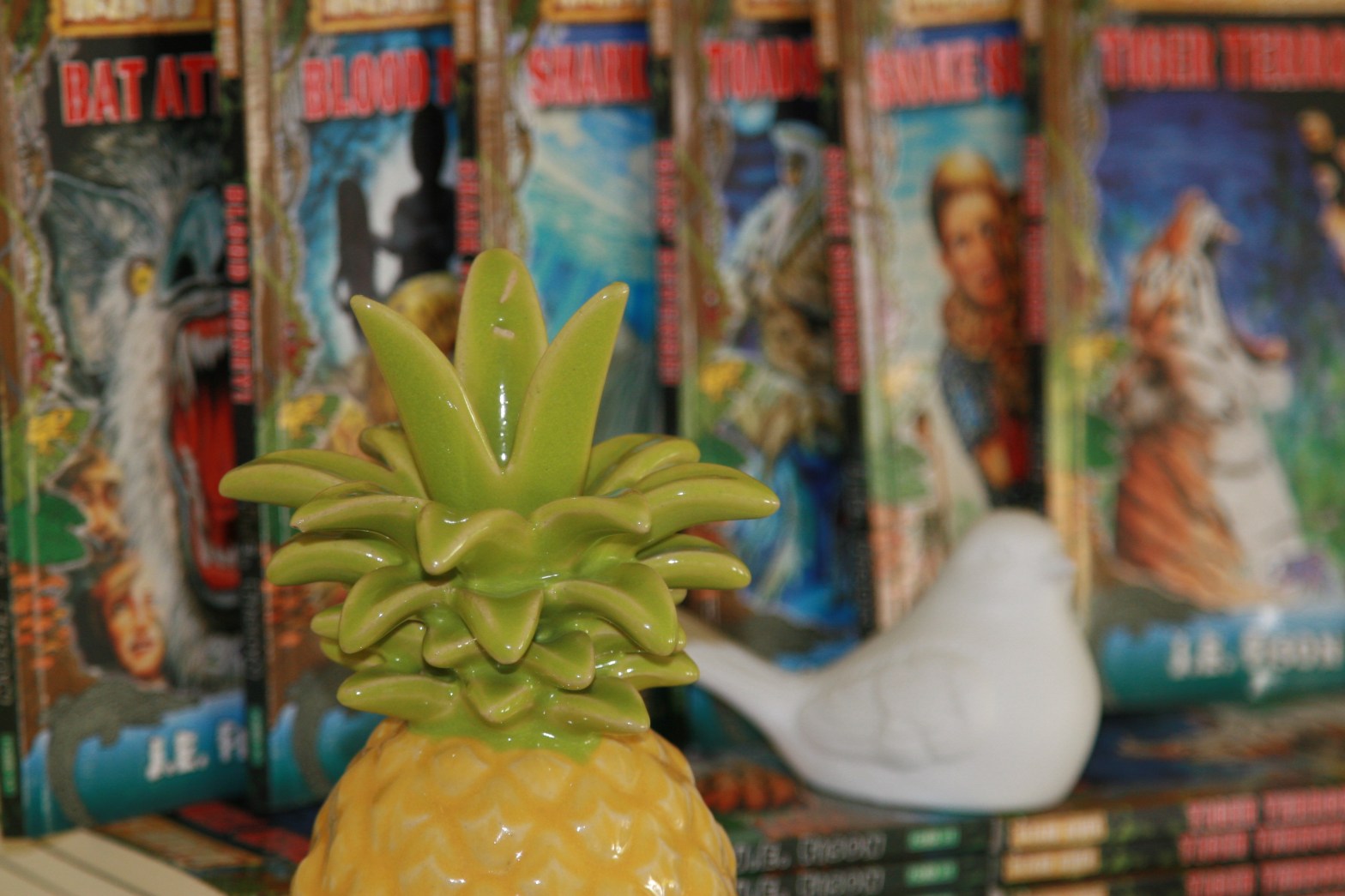
blood-money-cover.jpgIn Blood Money, one of the stories in the Hazard River series, the gang finds a bag of money on the riverbank. It’s a problem because they can’t agree on what to do with it. More obstacles come their way as they try to uncover where the money has come from.

Often a character wants something or someone that is out of his or her reach. This is an obvious tool in romance stories. In Tall, Dark and Distant, another title from the Smitten series, Georgia falls for a guy she encounters when she’s out for a run. There are many impediments to the two of them getting together, but it is Georgia’s desire to make things work with Nik that drives the story along.

There’s a quick test you can use to determine if a story has a definite problem and the characters have a clear goal that will drive the story along. See if you can sum up your story in one sentence. If you can’t, you might find that you’ve got a series of interesting events. Perhaps the problem is lost in the middle somewhere and needs to be moved to the beginning of the story to give the main characters a goal.

Good luck with your problems!


How to motivate reluctant readers

Tiger Terror by JE FisonHas there ever been a better time to be a young book lover?

The diversity and volume of children’s books is staggering. There is something in print for every reading level and every possible interest, cleverly illustrated and packaged  inside an inviting cover. Yet, a lot of children approach reading with the same enthusiasm as a trip to the dentist.

We all know how important it is for our children to read, but fostering a love of books can be a constant struggle.

My older son was a reluctant reader – unwilling to move on from the Captain Underpants series. I’m all for any book that gets a book-shy boy to read, and there’s nothing wrong with a bit of toilet humour. But I was keen for my son to broaden his literary horizons, so I wrote a story for him – about a gang of friends and their holiday adventures. The story ended up being a whole series, called Hazard River, which was published by Ford Street Publishing. In the Hazard River series – the kids come up against smugglers, dodgy developers and rogue fishermen while on summer holidays. It’s an adventure series with an environmental twist.

Thankfully both of my sons enjoyedReading at Uluru the stories I wrote. And it probably sounds like a labour-intensive method of achieving my goals, but it worked. I managed to get them both reading and enjoying it. (As an added bonus, I discovered I loved writing fiction.)

I’m not suggesting that the only way to get kids to read is to write a book for them, but I have noticed that just like every other aspect of parenting – the more I put in, the more everyone gets out.

Here are some ideas that might be worth considering if you’ve got a reluctant reader in the family.

  • Turn off the background noise – Most children prefer to watch TV or use an electronic device than read, but if reading is the only option for staying up for an extra half an hour, it looks a whole lot more appealing.
  • Start good habits – Make reading part of the everyday routine and a visit to the school or local library part of every week.
  • Read together – Even kids well past the official reading to age enjoy sharing a story. I took a 36-hour train journey  recently with my eleven-year-old son. We spent much of the time reading Morris Gleiztman’s Holocaust story, Once –taking turns to read each chapter. We got through the book in record time and then my son asked to read the sequel. Kids love to hear a story read aloud.
  • Discuss their books – Children, just like adults, get more out of a book when they have the chance to discuss it. Books with strong themes provide plenty of opportunity for discussion and follow-up research. But any story can be given air time, even if it’s just by asking: what was the funniest part of the book?
  • Hazard River series by JE FisonThe series factor – Children of all ages seem to love a series, so getting them hooked on a book in a great series often means they want to read the whole lot.
  • Rewards – In the US, schools have tried paying children to read. The danger is that kids will only read if they get paid. However, if children are given a small reward for reading and then go on to discover that they actually enjoy books, perhaps a small incentive is a good investment. If you use rewards – best to use them sparingly. A new book might work as an incentive. On the other hand, reading should never be used or seen as a punishment. It’s meant to be fun.
  • Choice – Children like to make their own choices with books (or magazines or comics). Enlist the support of your school librarian or the internet to help guide their choice. Don’t push books that are going to be too difficult and zap a child’s confidence.
  • Don’t forget non-fiction – My favourite book as a girl was Born Free – the true story of Elsa the lion cub, raised by hand and then returned to the wild. I couldn’t get enough of real wildlife stories. My sons devour books on strange but true facts. The more disgusting the better! Don’t forget about books on hobbies, pets and other interests – they’re great for dipping into.
  • Mentors – I have met a lot of passionate librarians and teachers since becoming a children’s author. They come up with brilliant ways to engage young and not so young readers. At one school, where older students read to the younger ones, the school cleverly offers books that will appeal to the younger readers, andengage the older students. The hope is that they’ll both get hooked on reading along the way. This can also work with siblings. Get the older children showing off their reading skills to their younger brothers or sisters.

Good luck!

 BUY the Hazard River series.

Walking Maria Island

Forget the spa treatment. A long walk with a bunch of great friends has to be the ultimate way to rejuvinate the mind and body. And it doesn’t get much more perfect than a guided walk on Maria Island.

Shoal Bay
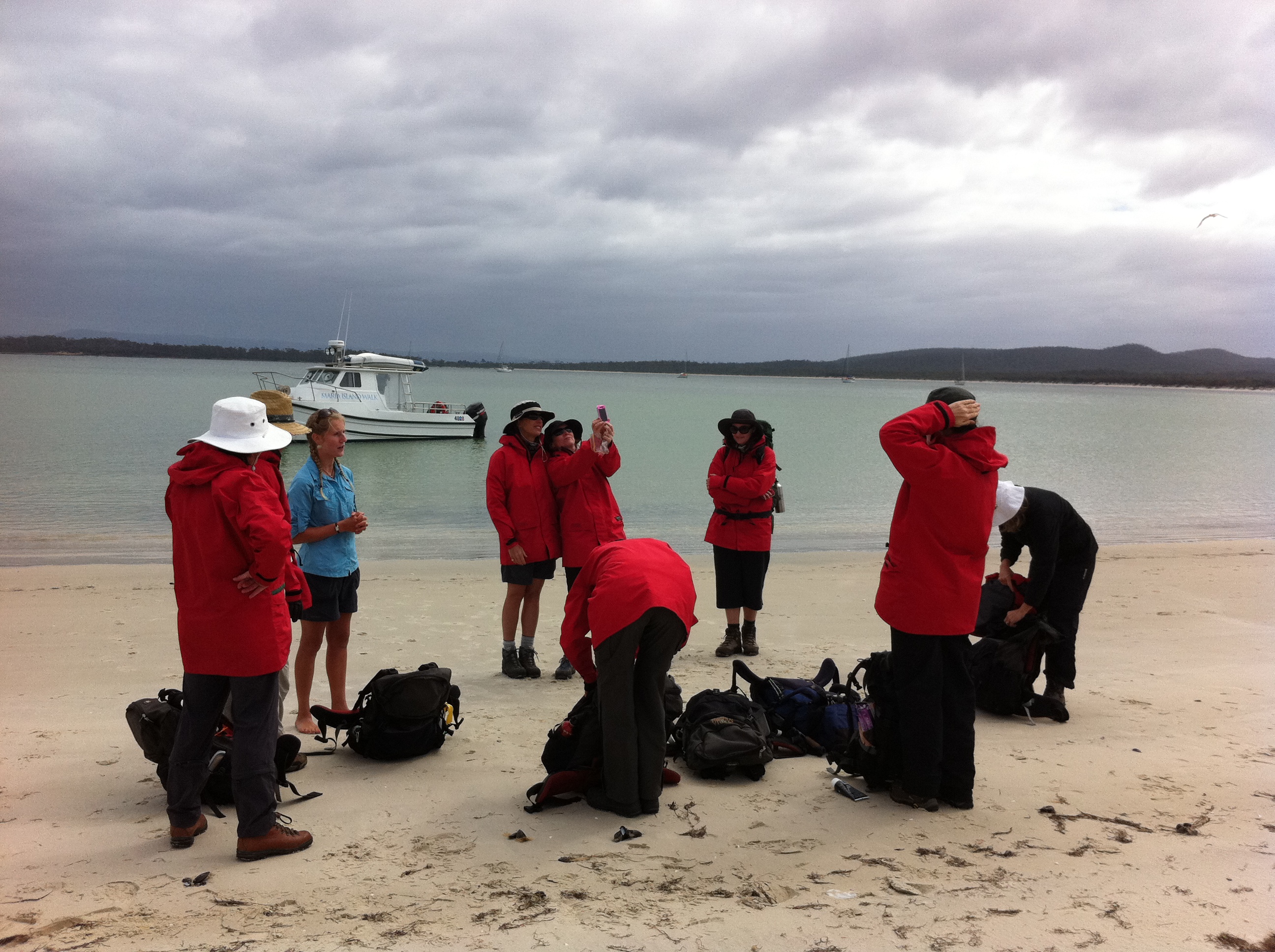
All set to get walking at Shoal Bay

Maria Island, off Tasmania’s east coast is just 20 km from end to end – a jewel of pristine white beaches and rugged dolerite columns. Yet, the tiny island has been home to Aboriginal people, whalers, convicts, entrepreneurs and farmers. Each population has left its mark and taking a guided walk on Maria is like ambling along a timeline of Australia’s history, with gourmet meals and homemade biscuits for sustenance along the way.

Darlington
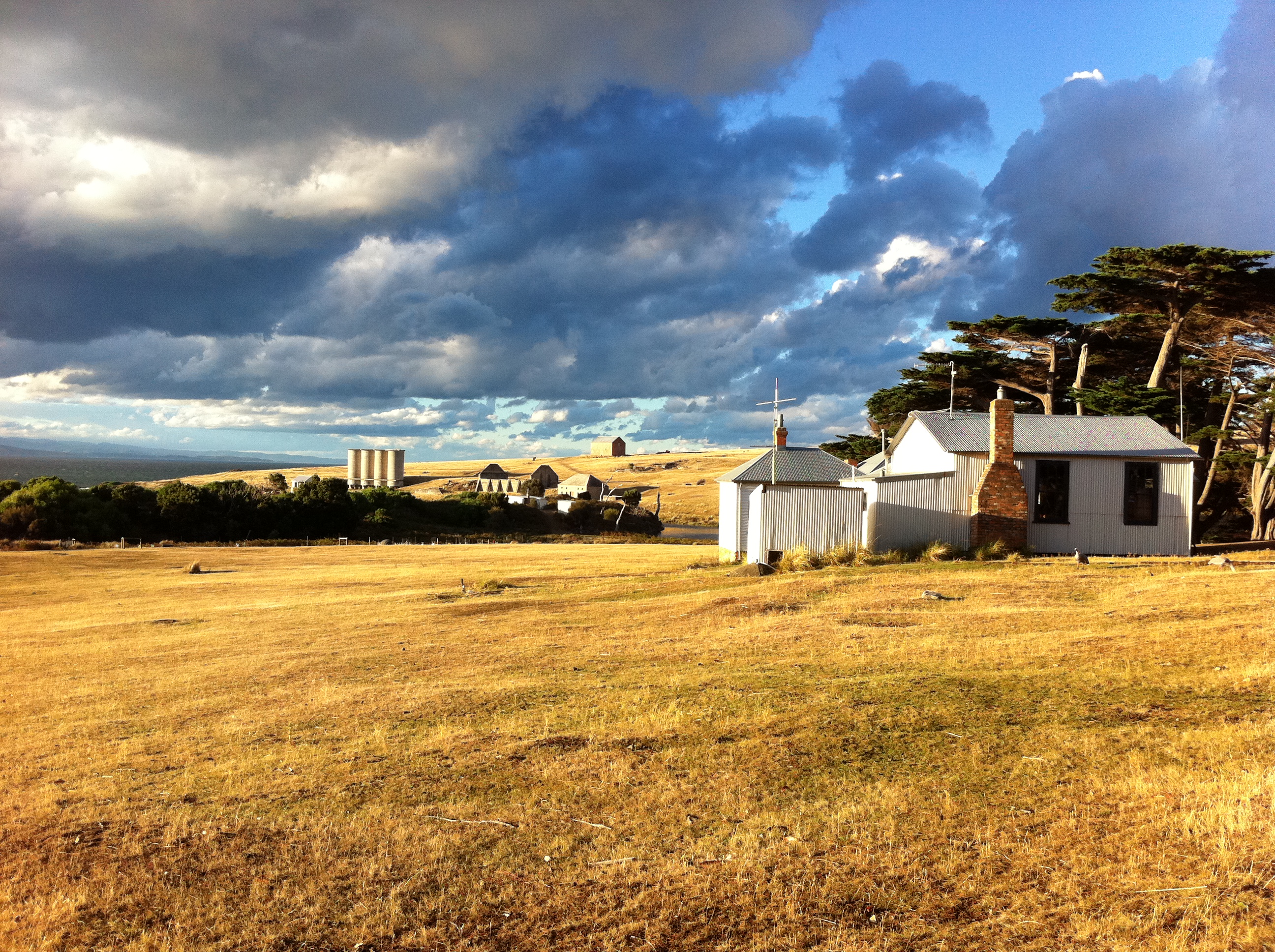
The historic settlement of Darlington

Our  walk begins in the sheltered cove of Shoal Bay where European explorers first came ashore. Dutchman, Abel Tasman sighted the island in 1642, naming it after the wife of Anthony Van Diemen, the Governor General of the Dutch East India Company. But it was more than 150 years later that French and English explorers landed on Maria Island and noticed the large populations of seals and whales.

By 1825 Maria Island had marked another milestone. An English convict station was established at the northern end of the island. The convict settlement was closed down permanently in 1850, and Maria Island was opened up to farmers. Several intrepid families took up the challenge. Flamboyant entrepreneur, Diego Bernacchi also spotted an opportunity to turn the windswept island into an Australian Riviera, with vineyards, orchards and tourist facilities. However the Depression proved too much for business, and Bernacchi’s company went under. Maria was abandoned and eventually turned into a National Park in 1971.

Since then the island’s isolation has worked in favour of the wildlife, giving it a reputation as a modern-day Noah’s Ark. Several threatened species, including Cape Barren geese, Tasmanian native hens, Forester kangaroos and Flinders Island wombats have been successfully imported. The Tasmanian Devil could be next. Devil numbers on mainland Tasmania have been decimated by the spread of facial tumours and researchers are assessing the possibility that Maria might be the place to save them.

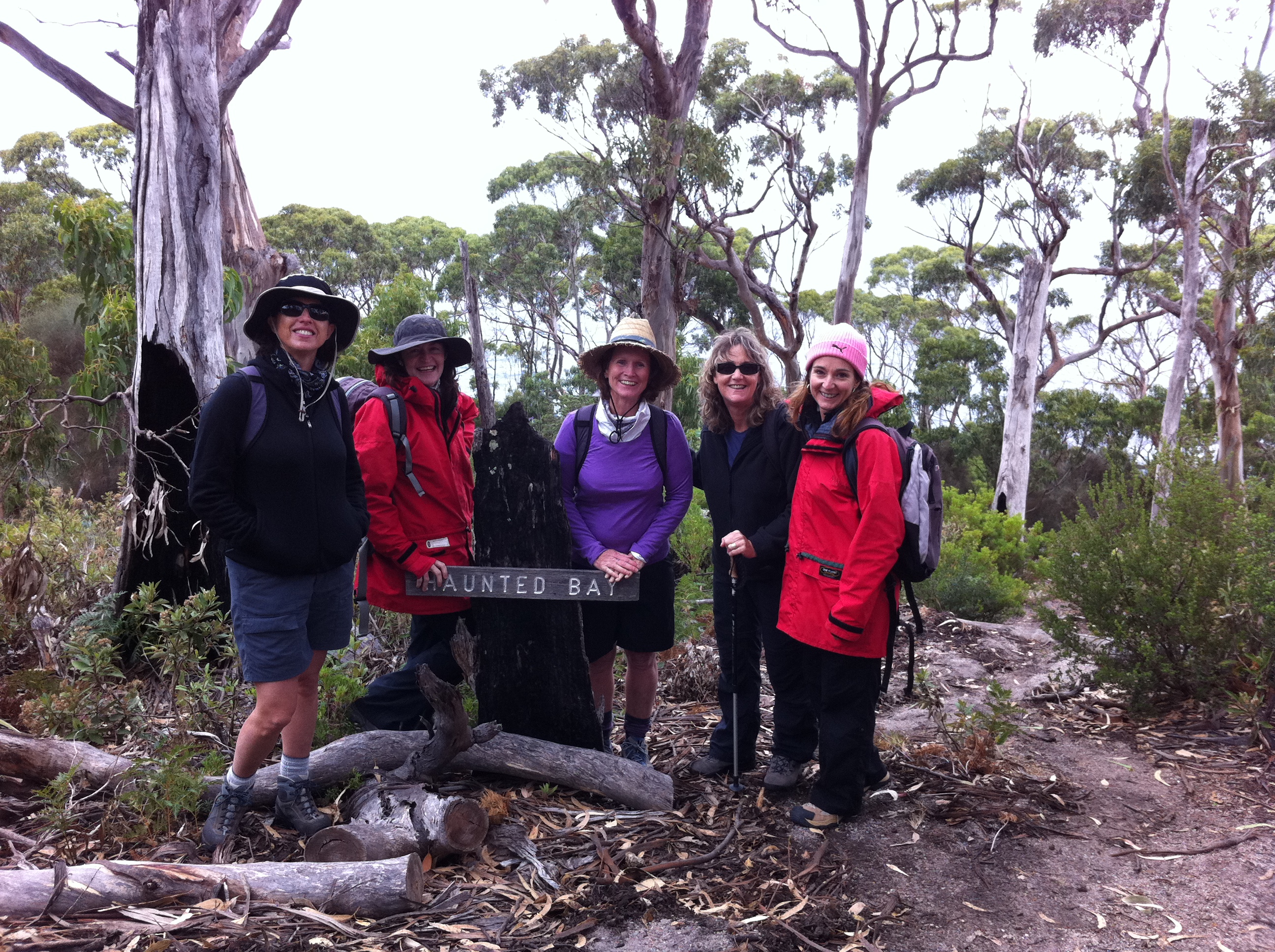
Haunted Bay
Heading for Haunted Bay

It is fairy penguins that we’re out to find on the first day of our four-day walk. We leave the sandy isthmus, where we came ashore, and head through the unspoiled Eucalypt forest to the southern end of the island. High above the lichen-covered cliffs of Haunted Bay we find what we are looking for. A handful of fluffy chicks are tucked away in their respective nests. By nightfall the bay will echo with their plaintive calls as their parents return from the ocean with food. But for now they are doing their best to hide from the outside world.

Our camp for the night, a cluster of permanent tents, is even more discreet – secreted away behind the dunes of beautiful Riedle Bay. It is here that we realize that our two young guides are not only extremely knowledgeable, and a lot stronger than they look, they are also fantastic cooks. From out of their backpacks they assemble an array of local cheeses and fruit to accompany our afternoon drinks. Then comes a three course meal that begins with a goat’s cheese and herb bruschetta, progresses to a scallop risotto and finishes with a summer pudding, all washed down with delicious Tasmanian wines.

Darlington, Maria Island

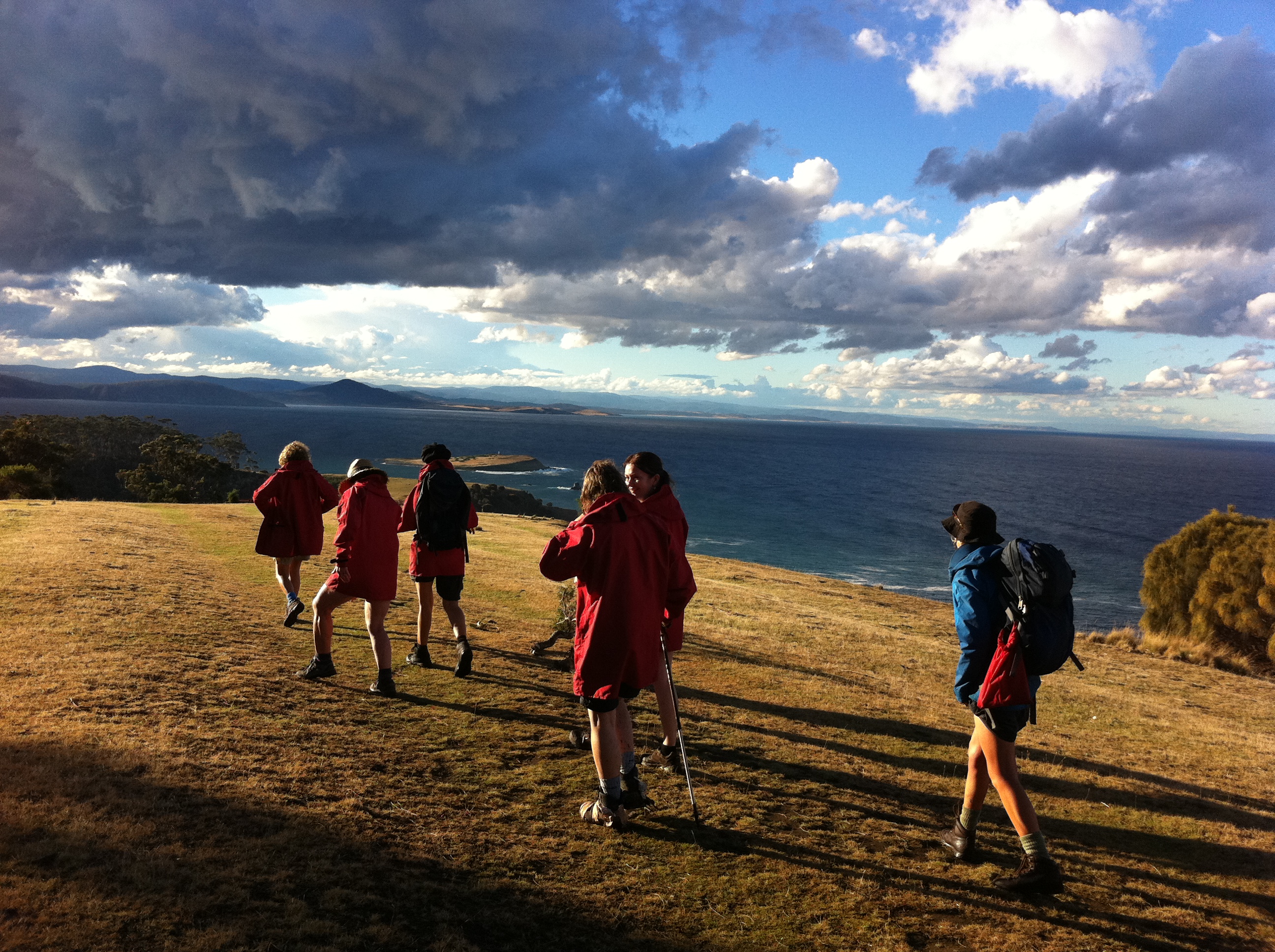
The following morning we are served tea in our sleeping bags – further eroding the chances of making a smooth reentry into normal life, when the walk is over.  Then it’s a leisurely breakfast (three courses, naturally) before we have to swing on our backpacks for the 13 km walk to our next bush camp. It’s mostly a gentle coastal walk. The challenge is to swim at each of the five beaches that we pass. Despite our guides’ assurances that the water is a “comfortable 17 degrees”, I find it a very cold 17 degrees and only manage a quick dip at the first two.

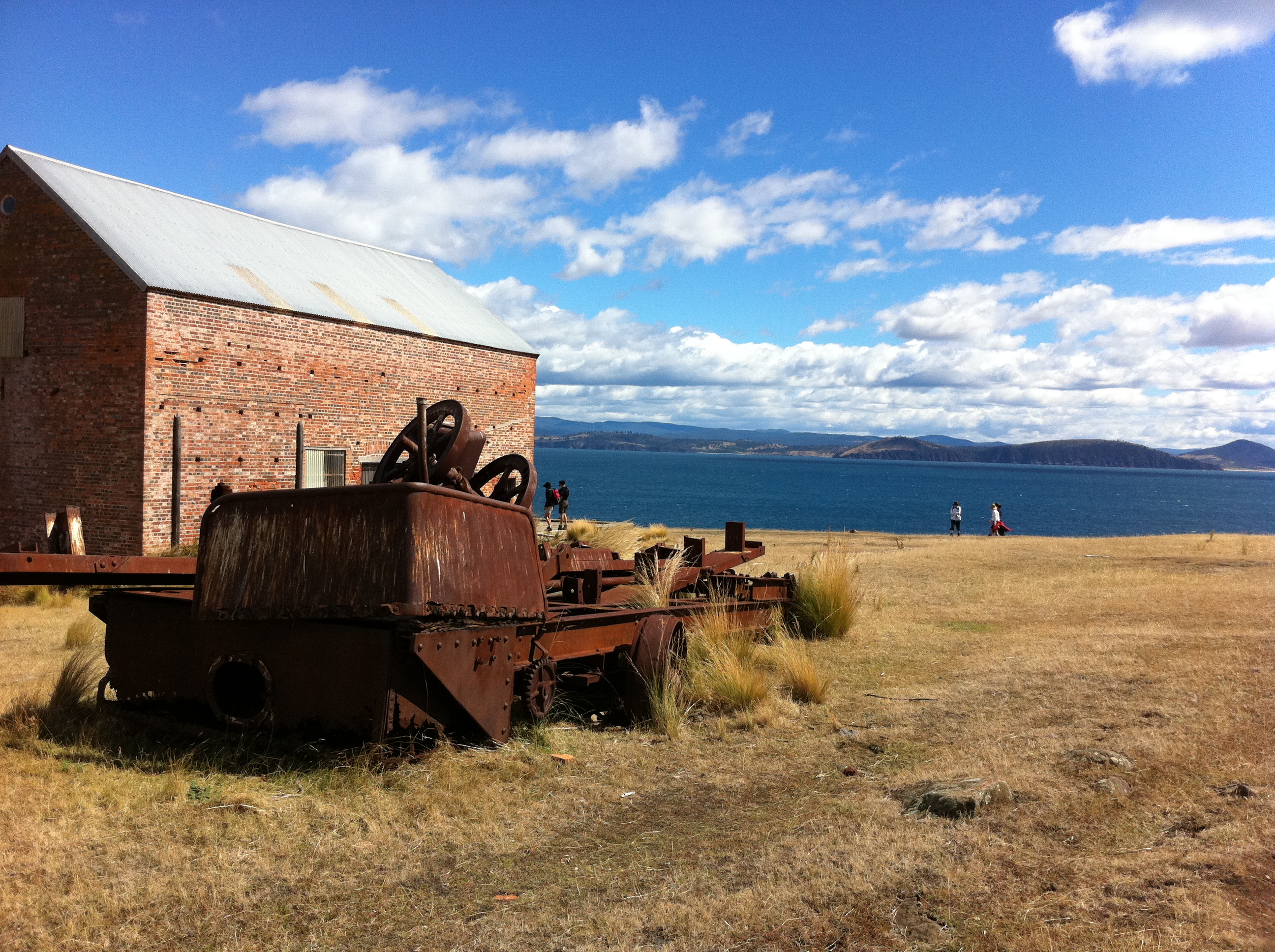
During the day we pass the brick remains of a convict probation station on a particularly windy hilltop at Point Lesueur. Up to 600 prisoners were held on the island in drafty, cramped cells. Nowadays the wombats have the place to themselves. A handsome Flinders Island variety eyes us suspiciously as we traipse across a grassy clearing. It looks so cute, I’m tempted to pop it in my backpack and take it home. But we are warned that wombats charge when provoked and their teeth can inflict a nasty wound. We leave the wombats to their grazing and head off to our next secluded camp among the White gums, to pursue some grazing of our own – featuring barbequed quail with couscous salad.

The next day we face a rainy start to the day, but the weather clears just as we arrive in the historic heart of the island, Darlington. In the bright sunshine, the former penal settlement has completely lost any menace that it once had. The approach to the Heritage-listed site is lined with magnificent Macrocarpa Pines, pairs of Cape Barren geese promenade across the fields where convicts once toiled and even the prison cells look inviting. The remains of Diego Bernacchi’s enterprises dot the hills in an artistic kind of way. His cottage, where we will be spending the night, has been immaculately restored and the garden planted with lavender. The scene is positively bucolic.

Maria Island
Mt Bishop and Clerk

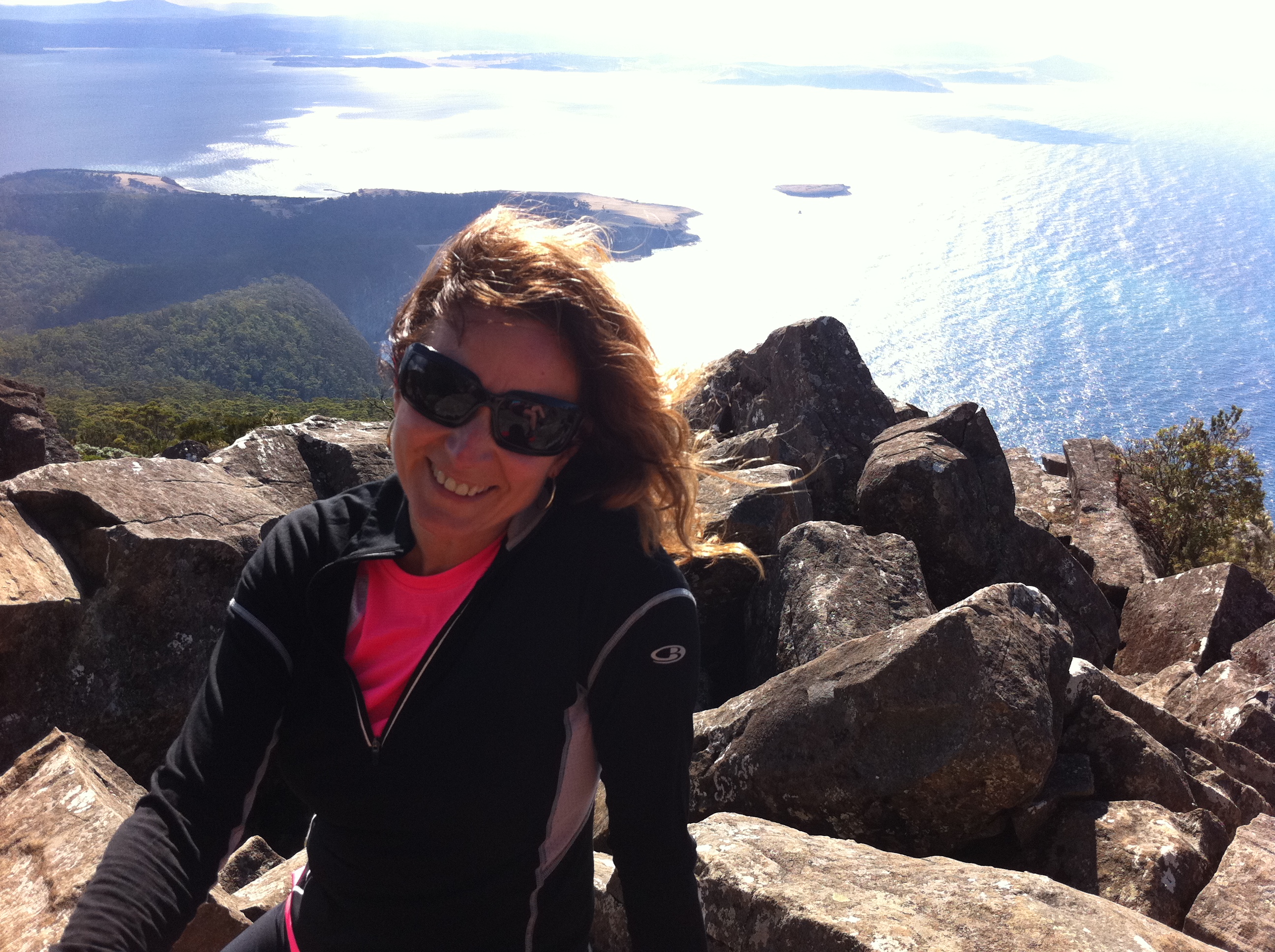
The clear weather also reveals our destination for the afternoon – the dolerite columns of Bishop and Clerk, a majestic peak that rises 630 metres above the town. The trek to the summit is the only really testing part of our whole walk. It begins pleasantly enough with a grassy incline, the views across the fossil-strewn cliffs making up for any hardship. Dark shapes in the sea below us, that may, or may not be seals, provide another diversion as the track gets steeper. But when we are faced with a daunting scree slope, there are murmurs of protest from our group. The groans get louder as we plod up the relentless rocky terrain. When we finally scramble over the last of the boulders, we are met with a spectacular view – the old penal settlement lies below us and the Freycinet Peninsular, Wineglass Bay and the Hazards stretch out on the far side of the bay.

Mt Bishop and Clerk
Enjoying the breeze on the summit of Mt Bishop and Clerk

From the summit of Bishop and Clerk, it’s easy to see why Diego Bernacchi once dreamed of turning Maria Island into a Mediterranean paradise, but the island is uniquely Australian and that’s what makes it so unforgettable.

Julie’s travel stories are featured in the  Australian Good Food &  Travel Guide.

AGFGLogo-external

Snorkelling on Great Keppel – just part of the Capricorn Literary Festival

Between workshops on Great Keppel Island

I have just rediscovered Great Keppel Island, nearly thirty years after my last visit – and it hasn’t changed a bit. (Shame I can’t say the same for myself.)

Last time I was here with uni friends – a freshly minted journalism graduate – camping, swimming, snorkelling and on one occasion coming face to face with a sea snake. Luckily I had been advised that they are inquisitive but not agressive. I just had to wait while it inspected me and then swam away!

I can also remember being desperate to get started with life in the real world. This time I’m with a group of illustrious children’s authors and illustrators. (I didn’t see that one coming as I pondered my future over my first, and probably last ever, Brandy Alexander.)

But as it turns out I’m here for the Capricorn Literary Festival. We’ve been visiting schools in Rockhampton and Emerald, conducting writing workshops, talking about our books, doing a lot of stand up comedy (who knew that was in the job description) and the occasional dance routine to keep the preppies entertained (that certainly wasn’t advertised, but zombie dances, it turns out, are a favourite).

Monkey Bay
A perfect day on Great Keppel Island
Julie Fison, Kevin Bergemeestre, Susanne Gervay
About to leave for Great Keppel Island with Kevin Bergemeestre, Susanne Gervay

I’ve loved the chance to get back to central Queensland again. Today we’ve left behind the bus, books and props and we’re visiting Great Keppel for the day, equipped only with a packed lunch, togs and towels. We rent our snorkelling gear from a beach-front kiosk and then trek across to Monkey Bay to explore the coral.

The terrain is much steeper than I remember, but the view is as stunning as ever. Actually more beautiful than I remember. All those beautiful pristine beaches are probably wasted on the eyes of 19 year olds, but I’m noticing all that loveliness now, reflecting on the ridiculously windy path that’s brought me back here and hoping it’s not another 30 years before I return.

Thanks to Ford Street Publishing and Morris Publishing for inviting me here and to my gorgeous new friends who have made the tour so special.

On the road for the Capricorn Literary Festival with Ron Day, Paul Collins, Kevin Burgemeestre, Meredith Costain, Krista Bell, Judith Rossell, Royce Bond, Michael Gerard Bauer, Elaine Ouston and Susanne Gervay (who took the photo).

The Voice

I am loving the blind auditions of The Voice – not just because the talent is so outstanding, but because the whole message is so positive and inspiring. Even the singers who don’t turn any chairs are sent away with great professional advice and an explanation for why they didn’t move the coaches.

Tall, Dark and Distant Standing out from the crowd is all about having a voice that is original, authentic and conveying a personal story along with the song. The same message could easily be used for writers.

A writer’s voice is a key element in story telling. A lot of people can tell a story but great writers have a unique and moving way of conveying their stories, using characters that are multi-dimensional and convincing.

I learnt a great deal about this when I started writing for Smitten – a new teen romance series. Most of the story is told from the girl’s point of view, but several chapters come from the guy’s side. This required me to work a lot harder to get inside the guy’s head and understand his background and motivations.

Some writers do extensive character development before they make a start on their story. If you’re tempted to do a comprehensive background interview with your main characters, here are 100 questionsLust and Found to ask. (Not mine – I don’t have the attention span for 100 questions)

The questions might be worth considering, even if you don’t answer them all, but the real skill is knowing which details to use in the story and which to use as backstory, so as not to overburden the reader with irrelevant detail.

It’s also worth noting that the whole point of the story is for the main characters to develop as they face challenges and conflict, so I find it easier to start with a character’s flaw and then work on building up their strengths and adding detail as needed.

Good luck getting to know your characters.

How to get published

It’s very exciting to finally see my two new young adult novels – Tall, Dark and Distant and Lust and Found in bookshopsThe novels are part of a hot new romance series called Smitten, published by Hardie Grant Egmont. It has been a rewarding experience working with the very talented staff at HGE who have helped transform my stories into novels. I have learned a lot through the process, including a crucial addition to the long list of criteria for new writers to become published – timing!Tall Dark and Distant

I was lucky enough to approach HGE with a story of real-world teen love right when they were looking for writers for their new young adult romance series. My timing couldn’t have been better!

Everyone knows how hard it is to crack a first publishing contract, and there are plenty of experts on publishing with much more experience than me, but I think it’s worth pointing out a few things if you’re looking for a break in the writing world.

  • All publishers are not the same. it is useful to go to conferences or read interviews with publishers to find out what editors and publishing houses are looking for in a manuscript. Publishers can take months (and months and months) to get back to you on a submission, so you need to aim your precious manuscript at the best possible publishing house for your story.
  • There are no rules governing what makes a great story, but editors do seem to value a unique and authentic voice.  The voice that comes through your characters distinguishes your writing. This aspect of writing is important through all genres and even age levels. I have been told that even primary school students are assessed on the voice of their work in persuasive writing.
  • Lust and Found by Julie FisonJust because an editor likes your work, it doesn’t mean that it’s perfect. Be prepared for several rewrites and try not to take them personally!

See the Hardie Grant Egmont Ampersand Project

See also Jackie French’s advice

These tips from Allen and Unwin

And this interview with Zoe Walton

Good luck!