What a great story on the ABC this week. My Crazy Gap Year followed a couple and their two young boys as they set sail from England in a catamaran to find paradise in the Pacific.
Their adventure got off to a very shaky start, with the two and four year old boys behaving like typical pre-schoolers (not ideal on a yacht), the Bay of Biscay throwing up a storm and everyone generally getting on each others’ nerves. But by the end of the year they had made it to Sydney and looked like classic laid-back grottie yachties – all smiles and no intention of rejoining the real world any time soon. Despite the challenges they faced they didn’t regret a moment of their gap year.
Enough to inspire a mini boom in ocean-going yachts, you’d think – who wouldn’t want to give up the day job and set sail for the Pacific.
A Queensland sailing adventure (1977)
My parents did something similar when they were in their mid forties. They spent five years circumnavigating the world in a 40 ft yacht – pottering around Asia, drifting through the Mediterranean, travelling the French canals and island-hopping across the Pacific.
I was already working by the time they left Brisbane, but I spent holidays with them – sailing the English Channel to France, exploring Turkey, sightseeing in Tunisia and cruising the islands of Fiji. It sounds idyllic and mostly it was. But sailing can be hard work and things go wrong.
Things get broken – including masts, stuff falls overboard – a lot. Even people fall overboard – more than you’d think. Then there are pirates, storms, unfriendly locals, overfriendly locals and injuries to worry about. (It doesn’t matter how long you live on a boat, you’re still going to bang your head and trip over cleats every single day.) The idea of facing all of those challenges and dealing with pre-schoolers is quite an unpleasant prospect.
But when is the right time for a life-changing adventure? Before the kids go to school, they’re too young to benefit from travel. Once they get to high school they just want to be with their friends. Wait until they finish school and leave them behind? It’s an attractive option, but what if your health fails before the kids leave the nest?
There’s probably never a perfect time for a life-changing adventure, but I guess the challenge is an integral part of it. Wait too long and you might miss the opportunity completely.
You know you’re a fully fledged Mother of Boys when you find yourself alone at home on a Friday night – your kids are in bed, your husband’s out – you ignore the mind-improving book on the arm of the chair, you flick on the TV, scroll past the worthy documentaries, the hospital dramas and reality soaps, then completely voluntarily choose to watch the rugby … the whole game, including the captains’ interviews. The following day you’re able to offer useful commentary on the match along with predictions for your team’s overall chances for the season, as well as an informed opinion on who’s on fire and who has to go.
It happens – a lot more than you’d think. And it’s happened to me.
Like most mothers of boys I started with very little idea of what was ahead. I was just a mother of two beautiful children, determined to help my sons achieve their potential with as few trips to Accident and Emergency as possible, and preferably without stockpiling an arsenal of plastic weapons. But somewhere along the way things changed. Not them. Me.
The ‘no guns’ policy lasted a couple of years – until I realized that the boys were improvising with sharp sticks and feeding their addiction at other people’s houses. I gave in to the inevitable and added a couple of water pistols to the toy box. And before you accuse me of being too quick to relinquish the moral high ground – a note of caution: A friend of mine held out longer on the ‘no guns’ rule. But one day, son number four came into the kitchen asking for a glass of water for his older brother. She went to investigate what was making the boys so thirsty and found them making weapons with scrap wood and a bench saw. Two things come out this. Bench saws should be kept well away from children and most boys really, really like guns. As a mother of boys that’s something you have to manage.
Mothers of boys have a whole host of things to endure that mothers of girls might avoid completely – the constant noise, endless fighting, comedy flatulence and an aversion to basic hygiene. The difference between girls and boys is a well-worn topic. But what does this mean for mothers?
Once a year mothers of boys gather in Brisbane for a lunch to celebrate their ‘special’ status. It’s a fund raiser and an awareness raiser. Over the years, speakers have highlighted some of the key issues that young men face – bullying and road accidents are a couple that come to mind. But if you do a pink wash, you’re not welcome. This is just a gathering of mothers of boys. A founding member was famously booted off the committee when (after three sons) she had a girl. At first I thought this rather excessive. But the older my sons get, the more I realise how different it is – just having sons. No one in my house is likely to need a dress for the school formal, heels and some bling to match. And I’m not sure if that’s a good or a bad thing, but it makes things different. It also means that to avoid feeling like a stranger in my own home, I’ve had to embrace some of my boys’ interests.
Apart from an unnatural interest in rugby, I have developed an inappropriate sense of humour. I laugh at toilet stories. I even made up my own orifice-related jokes for my kids’ adventure series, Hazard River. It was hard not to. I inhabited the mind of a ten-year-old boy to write the series – a few vomit and bottom anecdotes were inevitable. I’ve considered following this up with a series for older boys, but the idea of invading the mind of a teenage boy has me worried. It’s dark, scary and mysterious in there.
I’ve just opened Steve Biddulph’s book Manhood for some direction on what lies ahead. Now I’m really scared. While we’ve been busy empowering girls, young men have been drifting along in an underfathered parallel state – getting drunk, getting violent, getting arrested and taking their own lives at an alarming rate – because they don’t know how to be good men.
Gulp.
Sadly, the one thing mothers can’t do, according to Biddulph, is teach boys how to be men. We can nurture them, support them, remind them to take a shower, and laugh at their silly jokes. What we also have to do is make sure we’ve got good men around to help teach our boys the right way to live.
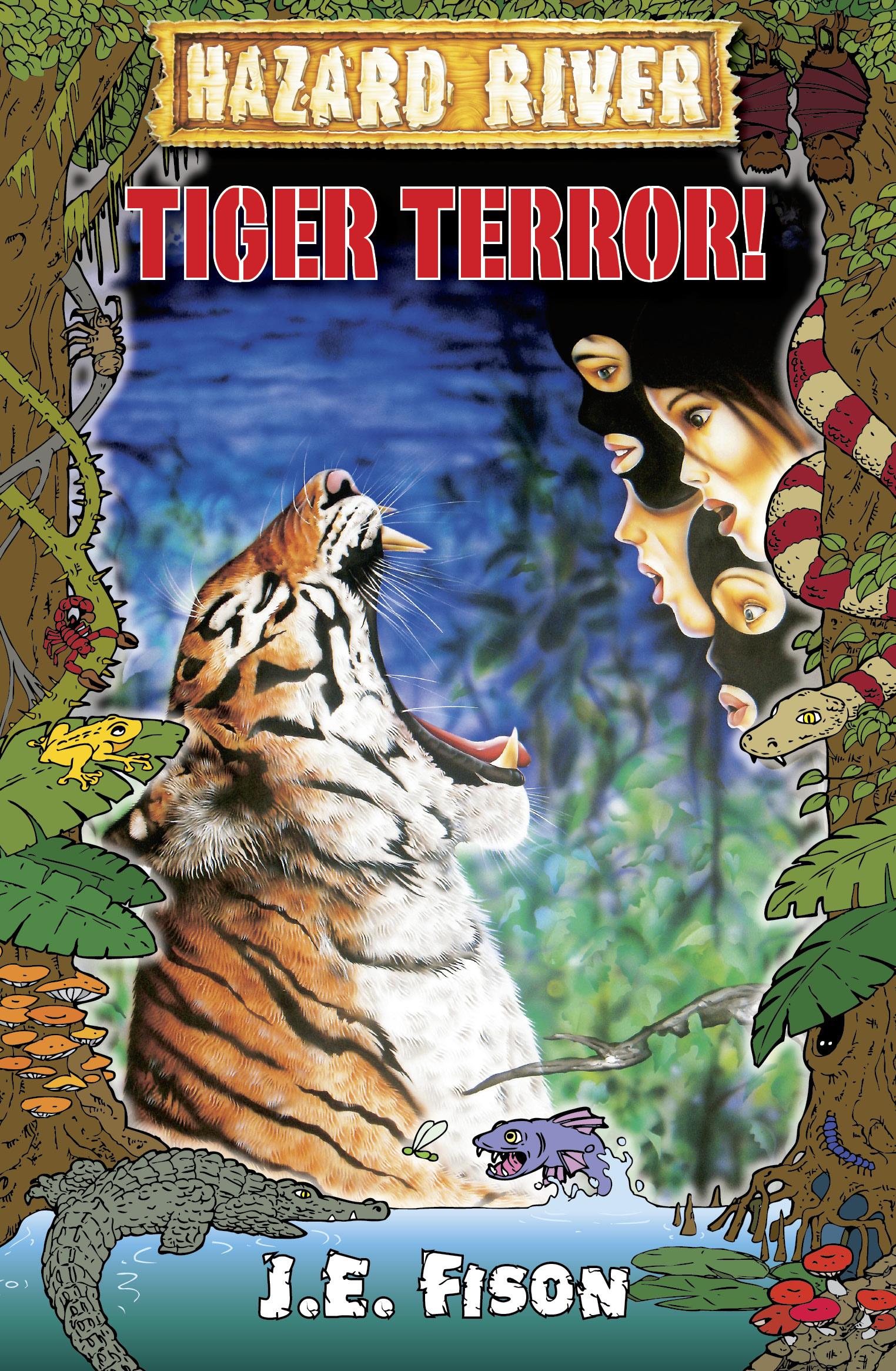
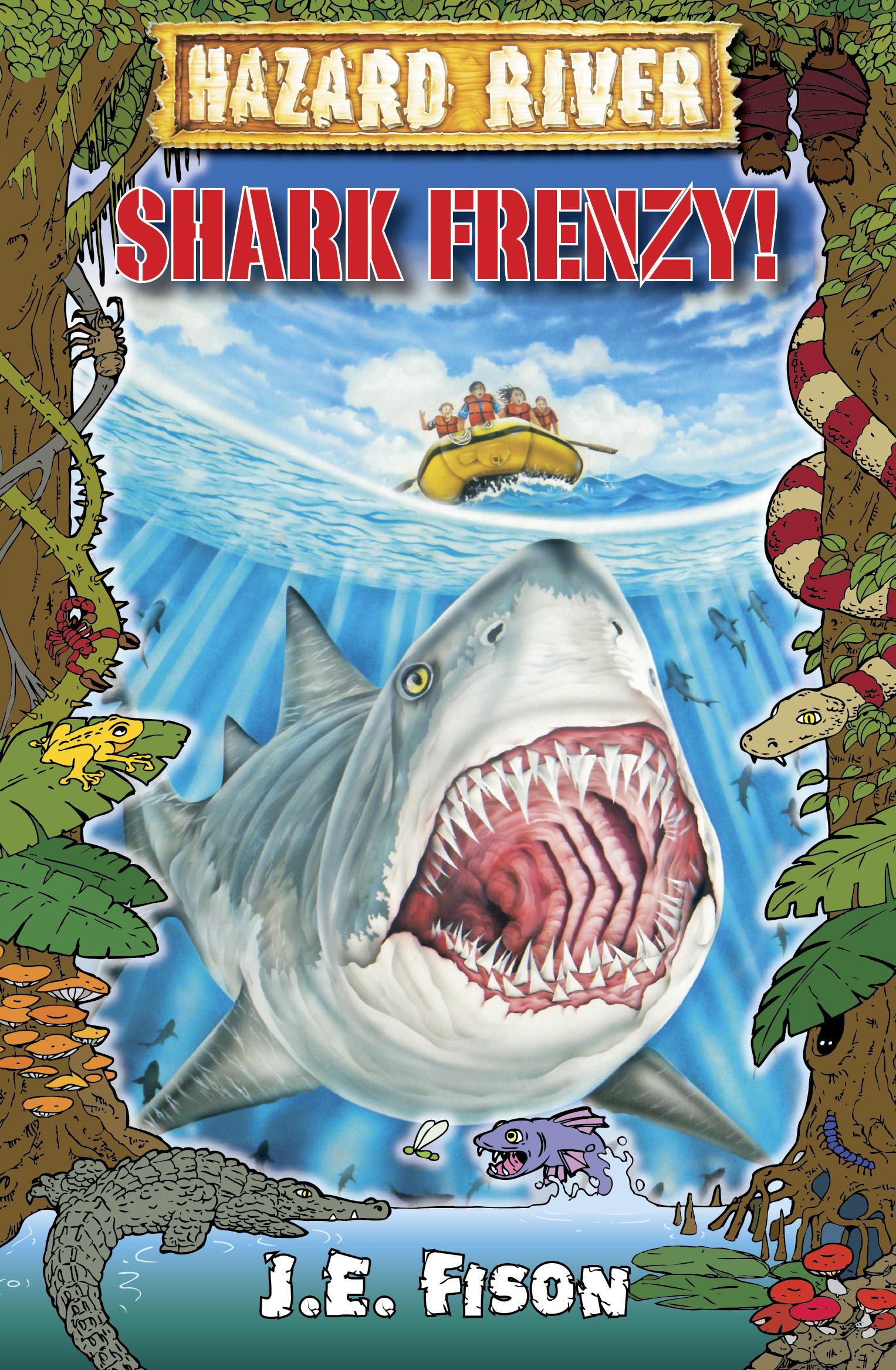
There’s a theory that book sales are proportional to the number of teeth on the front cover. With this theory in mind my publisher, Paul Collins, of Ford Street Publishing, enlisted the talented Marc McBride to do the artwork for the Hazard River series. Marc, who is famous for the Deltora Quest illustrations, is not known for his subtly. Rather, he’s notorious for adding the fear factor to everything he touches. The result for the Hazard River series is a collection of eye-catching front covers that ought to send my sales figures into space if the theory is correct.
The front cover of Shark Frenzy alone should set new records, with the gaping jaws of a monster shark poised ready to snap up a boat full of children. Then there’s the sinister snake on the cover of Snake Surprise, a tiger on the front of Tiger Terror and the gruesome gob of a bat on Bat Attack. I can’t wait to see what he comes up with for the next books in the series Blood Money and Toads’ Revenge.
Kids love all of the Hazard River front covers, but they really go for the toothy ones. A random sampling of my son’s Year 4 class found the Bat Attack front cover scored particularly well on the ‘awesome’ scale, which tends to support the theory.
But what do parents think? One friend can’t even look at the front cover of Snake Surprise because she’s so scared of snakes. Another is terrorized by the Bat Attack cover and I have to admit that even I am frightened by the front cover of Shark Frenzy and I know what happens. (No children actually got eaten in the writing of that book.) The truth is – the books are all action-packed fun with an environmental twist. The scary animals are all good guys in these books. The baddies are smugglers, dodgy developers, and unscrupulous fishermen. Shark Frenzy starts with a dead shark washed up on the bank of Hazard River. It has no fins. When Jack Wilde and his friends decide to investigate, they find fishermen are killing sharks for their fins.
Shark finning makes for an interesting theme, but a dead, finless shark doesn’t make a great front cover. A monster shark with its mouth open does. Sorry to any squeamish parents, the kids’ votes win on this one. Please avert your eyes the next time your son or daughter picks up a Hazard River book. Or maybe just grin and bear it, if you’ll pardon the pun.
It’s no secret that marketing plays a large part in the success of a book. So I shouldn’t have been surprised when my publisher asked me to write an article for a children’s literature magazine to promote the Hazard Riverseries. But I was. I was also surprised when he asked me present at a book distributers’ conference and appear at a Scotch College literary festival in Melbourne. I was a brand new author – I’d been a journalist, marketing manager and mother for the previous two decades. What could I possibly tell an audience about writing? The same applies to a blog tour. What to blog about?
After much soul searching and several interviews I’ve come up with a better idea of what readers want to know. Writing blogs, articles and doing talks is like anything else, you have to know your audience. But generally you can assume that they’ll want to know something about your background and the inspiration for your book.
I know that if I’ve enjoyed a book I want to find out more about the real story behind the story – not just because I’m a sticky beak, but also to uncover the author’s credentials for writing a book. No one tells a story like someone with first-hand experience of the issue, the characters or the setting.
Writing and literature blogs are an obvious choice for hosting a blog tour, but they’re not the only choice. Take the themes in your book or your life and look for relevant blogs outside the writing world. As long as you put together a sensible and well-written piece, anything you blog on will give your book a bit more exposure that will hopefully translate into more sales.
I’m kicking off my virtual book tour on Dee Scribe writing because the book tour was Dee’s idea (and a great one at that). And I’ll get things started at the start, with the inspiration for the first paragraph of my new book Tiger Terror.
It was probably my mother’s screaming that frightened the cat. It’s just a guess. No one knows for sure why a cat fell from a ten-storey building onto my head. It was about the last thing I was expecting on my visit to Summercity. I wasn’t expecting to get mixed up with tigers either. I live in Australia. A tiger is one dangerous animal I shouldn’t have to worry about. But the cat changed all that.
The curious incident of the falling cat might sound like the product of an author’s imagination, but it was actually inspired by a true story. Some years back a cat fell from a high rise apartment block in China, hitting and injuring a woman. The event triggered calls for pets to be banned from apartment blocks. I have no idea how things panned out for the cat, the woman or pets in China, in general, but the story stuck in my mind. Eventually I found a home for it in Tiger Terror.
In the story, the falling cat puts Hazard River’s narrator, Jack Wilde, in hospital. But just before it does so, Jack spots two men in a traditional medicine shop handling a tiger’s paw. The Hazard River gang must track down the men before they kill another tiger. The action is fictitious, but it was inspired by a worrying fact. Tigers are on the verge of extinction. One hundred years ago more than 100,000 tigers roamed Asia, now the numbers have dropped to around 3,000. Three subspecies of tigers have already become extinct. The rest live in isolated populations, threatened by poachers and habitat destruction.
The whole Hazard River series is firmly rooted in the real world. It came out of a family holiday on the Noosa River. My sons teamed up with friends and spent the summer exploring sand banks, dodging sting rays, building camps, getting stuck in quicksand, discovering abandoned boats, finding a whole lot of thongs (where do they come from) and having a Boys Versus Wild adventure. I had to write about it.
My children are a constant source of inspiration, but I don’t just rely on my kids’ adventures. I look back to my own misadventures as a journalist in Asia, Europe and Australia. I also keep an open mind, whatever I’m doing – reading the newspaper, listening to the radio, checking a news website. I’m always looking out for a bizarre story or a quirky tale that I can incorporate into one of my adventures. As we all know – the truth is often stranger than fiction.
For more details on J.E. Fison’s Hazard River series visit www.hazardriver.com
Get set for more action at Hazard River with Bat Attack and Tiger Terror. The stories are action-packed fun for readers aged 8+, published by Ford Street Publishing. The freaky front covers are done by super-talented illustrator, Marc McBride.
The HAZARD RIVER series: Holidays are normally fun – right? But when Jack Wilde and his friends visit Hazard River things are anything but normal. The gang comes up against pirates, smugglers and unscrupulous developers while trying to dodge stings rays, snakes, bats and sharks. How will they survive the summer?
Bat Attack: It’s New Year’s Eve and Jack Wilde and his friends are getting ready for a night of fun at the local disco. But when a mad driver almost runs them over, things start to go very badly wrong. Will New Year’s Eve be the best night of their lives or the very worst? As the clock ticks towards midnight, only time will tell.
Tiger Terror: Tigers are on the verge of extinction. Everyone knows that. So why does Jack Wilde think he’s seen a tiger’s paw in a medicine shop in Chinatown? To find out the truth Jack and his friends must become junior spies. But they soon realise that their mission is anything but child’s play.
Check out the whole HAZARD RIVER series for details about Shark Frenzy, Bat Attack, Blood Money and Toads’ Revenge.
There’s more to Switzerland than bankers, cuckoo clocks and pocket knives.
Paddle boats lined up on Lake Geneva
Over the centuries Switzerland’s Lake Geneva has attracted English aristocrats on their Grand Tour of Europe, inspiration-hungry writers, international jet setters and the occasional cashed-up despot. The perfect aesthetic alliance of mountains and water has provided visitors with a spectacular summer retreat. And the Grande Dame of the tourist industry is still bringing in the visitors. With castles, stunning alpine scenery, elegant hotels, fine food and chocolate, the Swiss Riviera is Europe in miniature. Here the most appealing aspects of the old world come together in a genteel yet compelling destination.
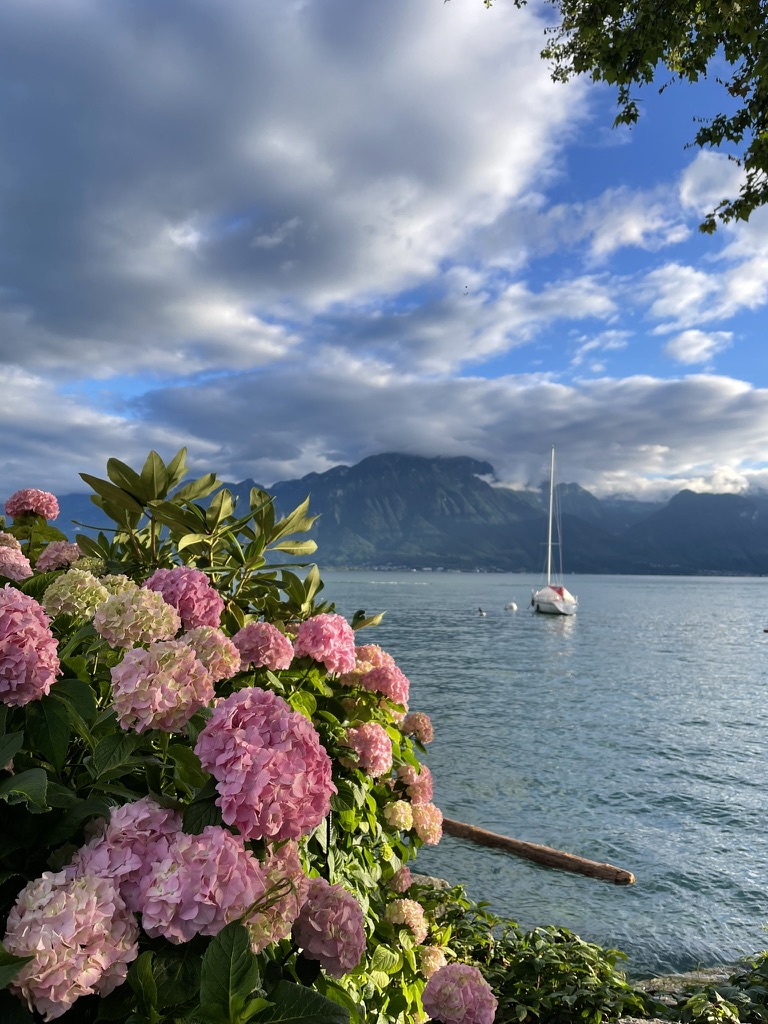
Flower baskets on the Montreux promenade
The holiday towns of Montreux and neighbouring Vevey, on the north-west shores of the lake, epitomize the charm of the region. At the Grand Hotel du Lac and Hotel des Trois Couronnes guests can enjoy a slice of Belle Epoque along with their view of the French Alps. France lies on the other side of Lake Geneva but its influence stretches well beyond the border. It can be tasted in the food (especially the dreamy chocolate éclairs at Babette’s boulangerie) and heard everywhere. This is the heart of the French-speaking part of Switzerland.
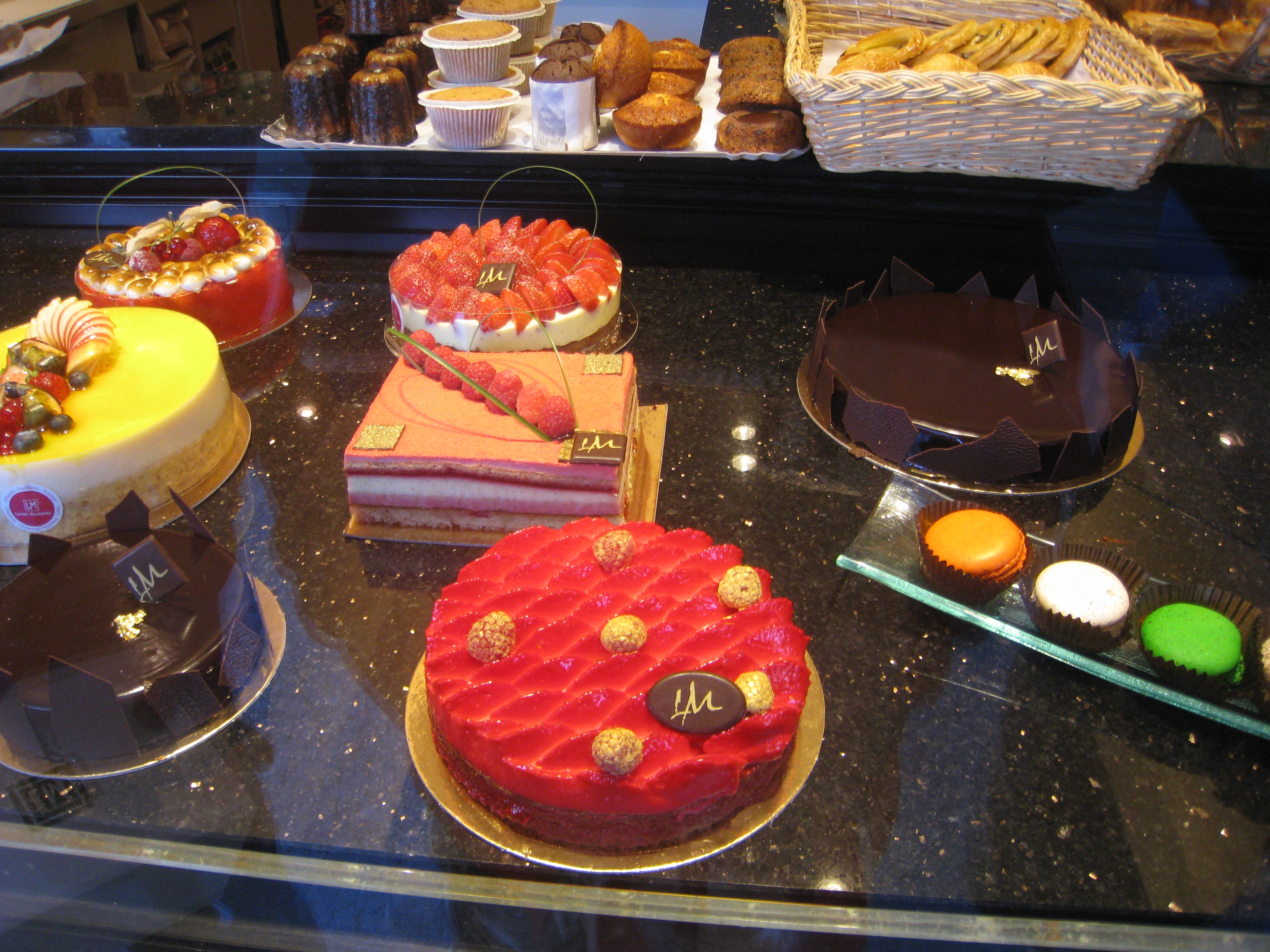
Treats at Babette’s Boulangerie
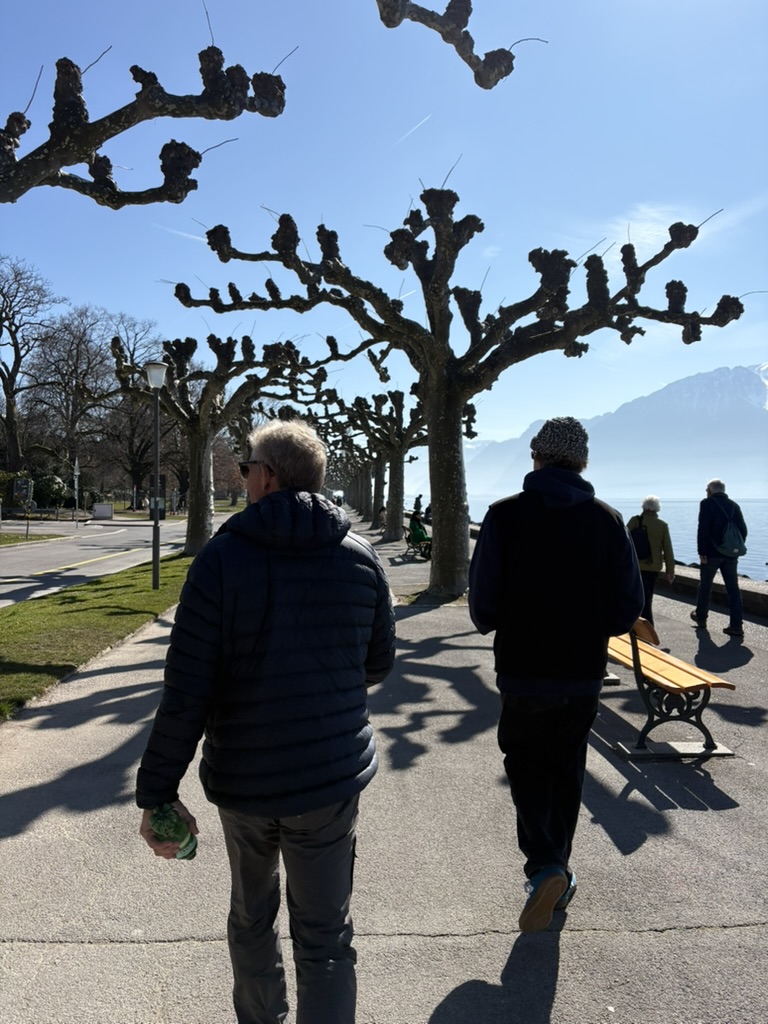
Every summer Montreux and Vevey kick up their heels during the international jazz festival. Thousands of visitors descend on the Swiss Riviera for a fortnight of all-night music sessions. For the rest of the year, visitors engage in the more sedate pursuits of exploring the old towns, riding a steam ship across the lake or just strolling along the palm-fringed promenade and admiring the view. On a sunny day, with the 2221 metre Dent D’Oche towering over Lake Geneva, there could be nothing more perfect.
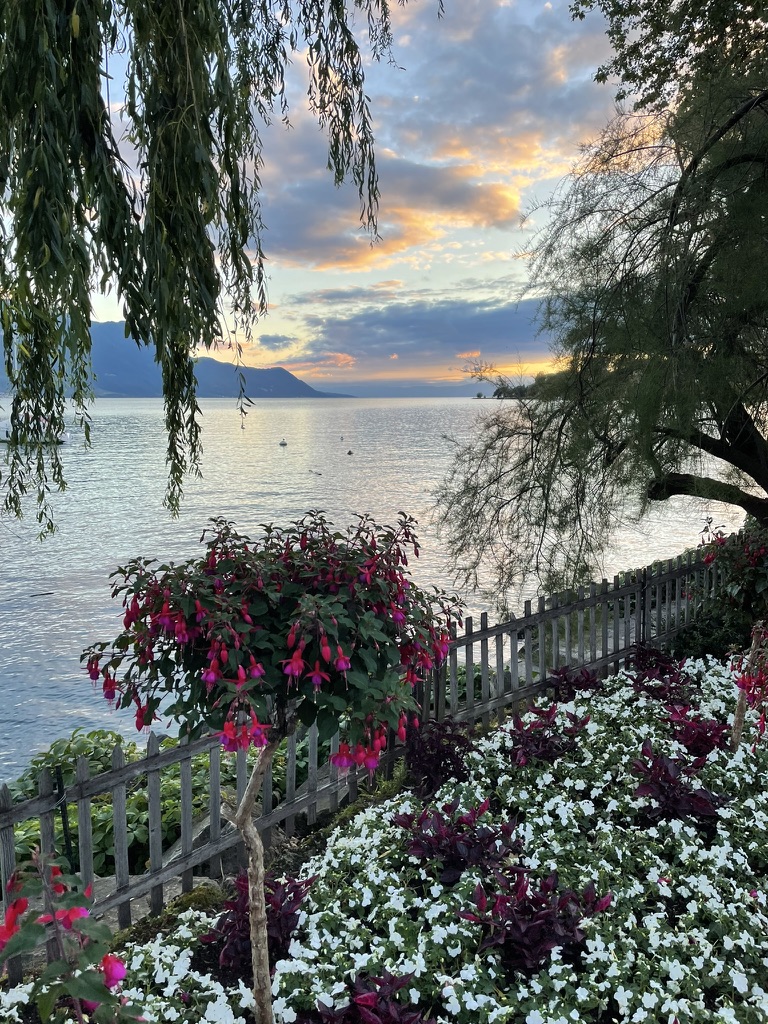
Montreux promenade
Playground with a view at Vevey
The backdrop to the Swiss Riviera is no less impressive. The massif of Moléson rises among the Swiss Pre-Alps, snow-covered in winter, but in summer – ablaze with wild flowers. A cable car services the 2002 metre summit, providing dramatic views across the mountains and access to walking tracks.
Closer to the lake, the world-heritage listed Lavaux vineyard terraces hug the hills for 30 kilometres behind Montreux and Vevey and on to Lausanne. A thousand years ago Benedictine and Cistercian monks cleared the area and built terraces to cultivate grape vines. The wine growing was later delegated to lay people and it is their descendants that still tend the vineyards, 17 generation on.
Another piece of the region’s history lies a short distance from Montreux – behind the walls of Chateau de Chillon. The fortress, built on an island in the lake, is considered one of the best preserved medieval castles in Europe and is Switzerland’s most popular tourist attraction. The site of the castle is believed to have been occupied since the Bronze Age. The castle itself was built in the twelfth century, when the House of Savoy controlled the shores of Lake Geneva.
Montreux and Vevey
Chateau Chillon
English Romantic poet, Lord Byron (one of the castle’s many visitors) tells the story of an unfortunate monk who spent years in the castle’s dungeon in The Prisoner of Chillon. Other reminders of the castle’s unwilling occupants are inscribed into the stone pillars. But it is the castle’s toilets that capture the imagination of my children. From the highest turret, the old-fashioned dunnies plummet to the lake below – the ultimate loos with a view.
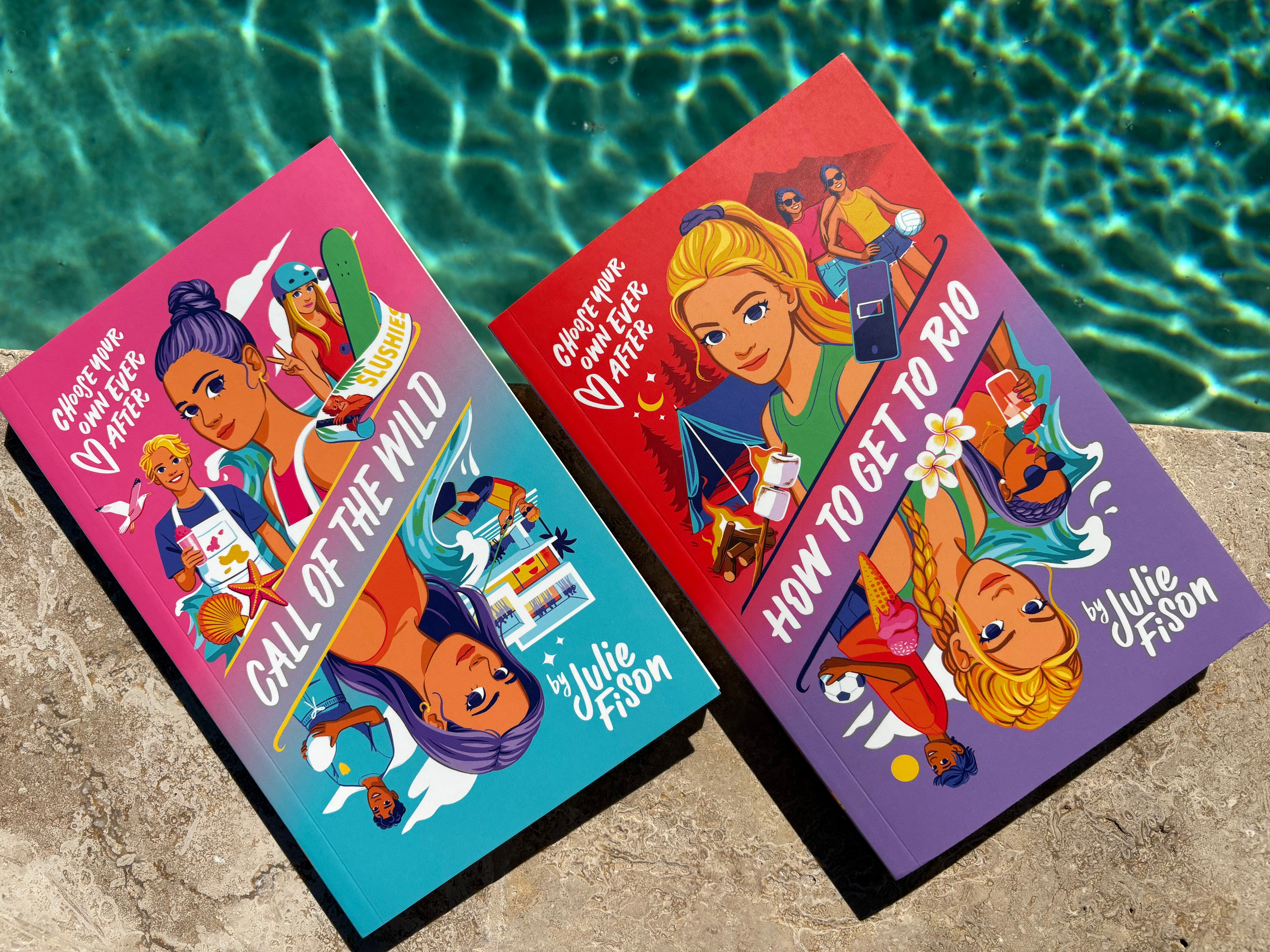
Choose Your Own Ever After is a contemporary pick-a-path series about first crushes and friendship that lets the reader decide how the goes. Perfect for young readers who like to call the shots!
Another nearby medieval must-see is the hilltop town of Gruyères. The village is so beautifully positioned, with its fairytale castle sitting among the Pre-Alps, that it might have been airbrushed into the scene by Tourism Switzerland. But the village itself is real enough – a wide cobbled street of perfectly restored houses, souvenir shops and cafes. What is surreal is the futurist artwork of H.R Giger that greets visitors on a stroll to Gruyères Castle.
A museum dedicated to the creator of Aliens has prompted a very mixed reception from visitors. His bizarre humanoids certainly look incongruous amid the centuries-old stone-work of the Chateau St Germain, but the museum is worth a peek. So too is H.R. Giger’s bar across the street. The bar is designed to resemble the inside of a whale, with chairs that look like spines. Switzerland’s favourite surrealist knows how to shock.
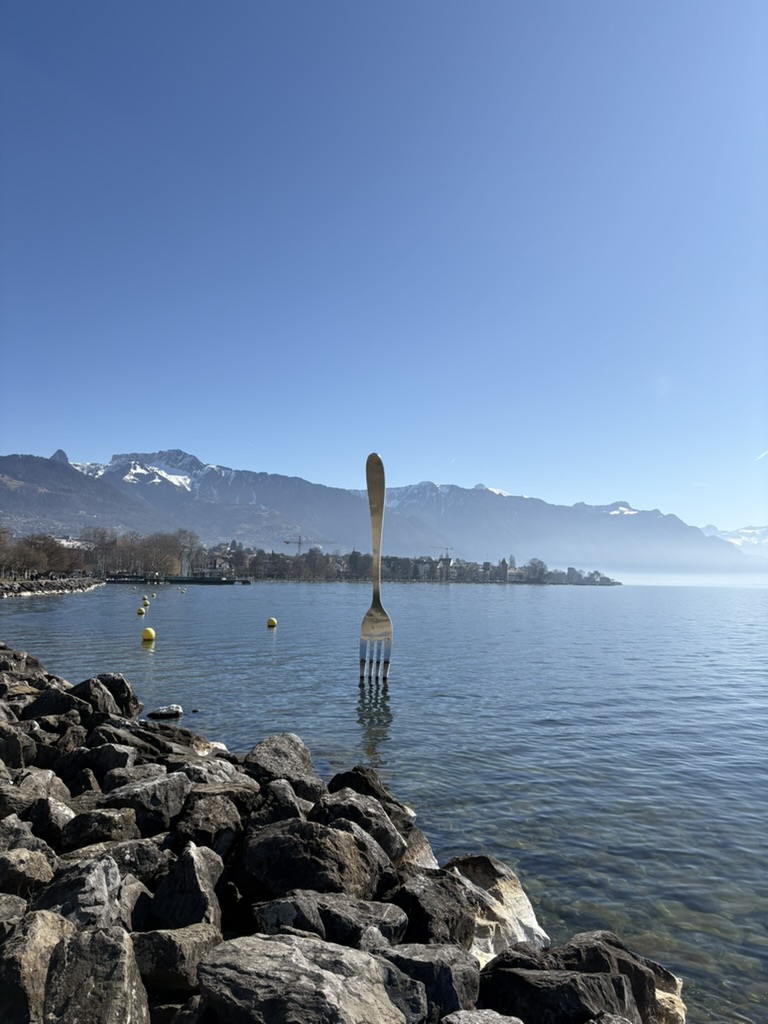
Vevey’s famous fork
Vevey has also had its fair share of artistic controversy. An eight metre high fork, planted in Lake Geneva 14 years ago, has prompted debate ever since. The giant piece of cutlery was intended as a temporary installation to mark the Nestle food museum’s 10th anniversary. It became such an integral part of the city, local authorities recently agreed to leave it there. A statue of Charlie Chaplain, one of Vevey’s most famous former residents, will be keeping an eye on the fork from his well-tended flower bed indefinitely. The fork will leave Grand Tour nostalgics scratching their heads, but it certainly makes for an amusing photograph.
The kids want to see Tasmania from the back of a motorhome. We prefer some comfort. The answer: a holiday of two halves.
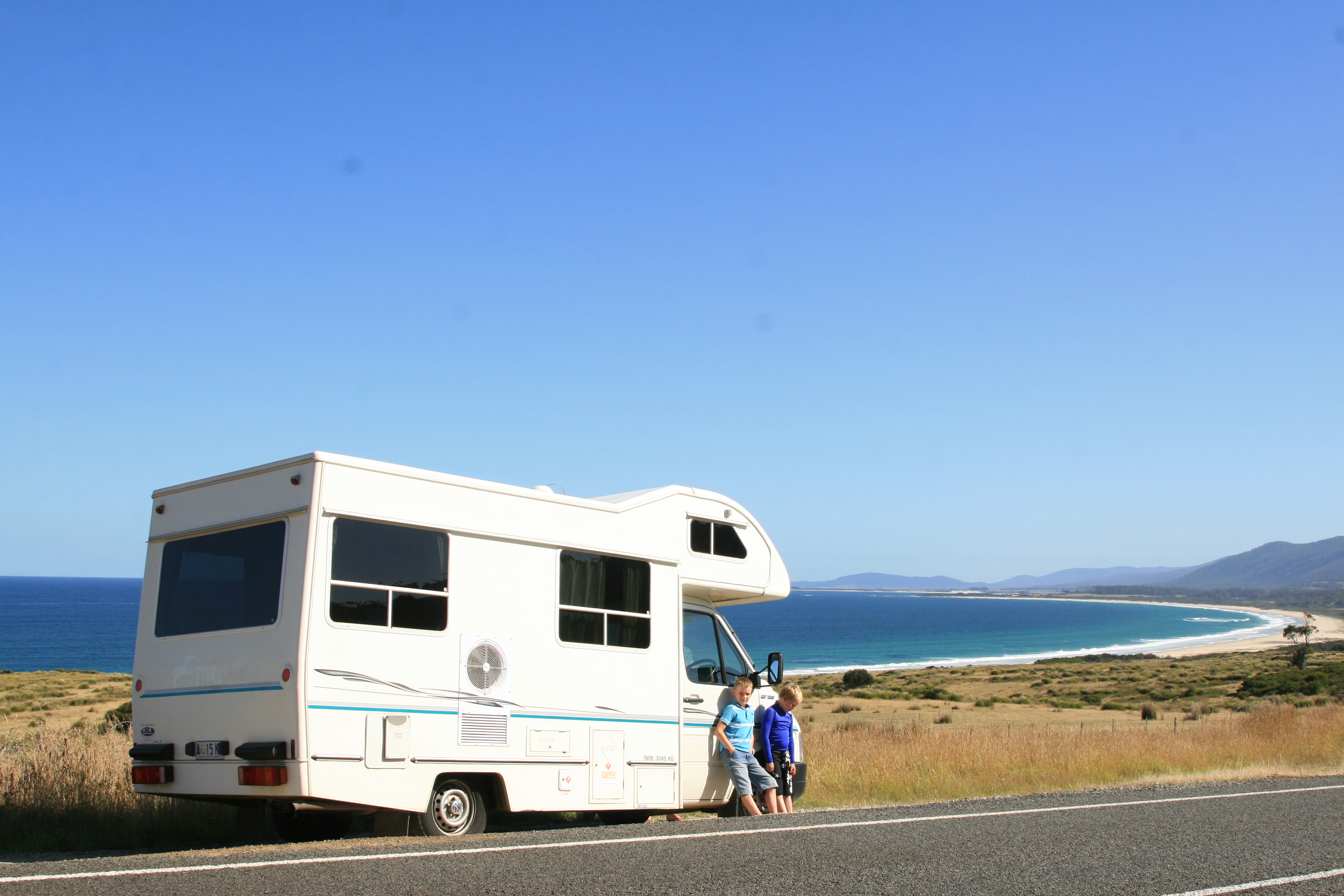
The excitement hits fever pitch as our aged motorhome rumbles into the pick up zone at Launceston airport, in Tasmania’s north. Our seven and ten year old sons have been counting down the days until this moment like an impending birthday. Ahead of us – five days of touring Tasmania’s spectacular east coast – the open road, the chance to camp wherever we feel inspired and some time for a bit of family bonding over a deck of cards. But just in case I need a comfortable bed after all that inspiration, I have booked a few nights at Cradle Mountain Lodge to finish the holiday.
Touring the Freycinet Peninsular by motorhome
Our first destination is Binalong Bay, at the southern end of the Bay of Fires. It’s a long drive over the mountain range from Launceston. Our motorhome labours on the ascents and lurches on the way down. My husband struggles to control our cubby house on wheels and there are complaints from the children that their diner-style seating at the back is more like a fairground ride. It’s making them sick. The tension begins to rise.
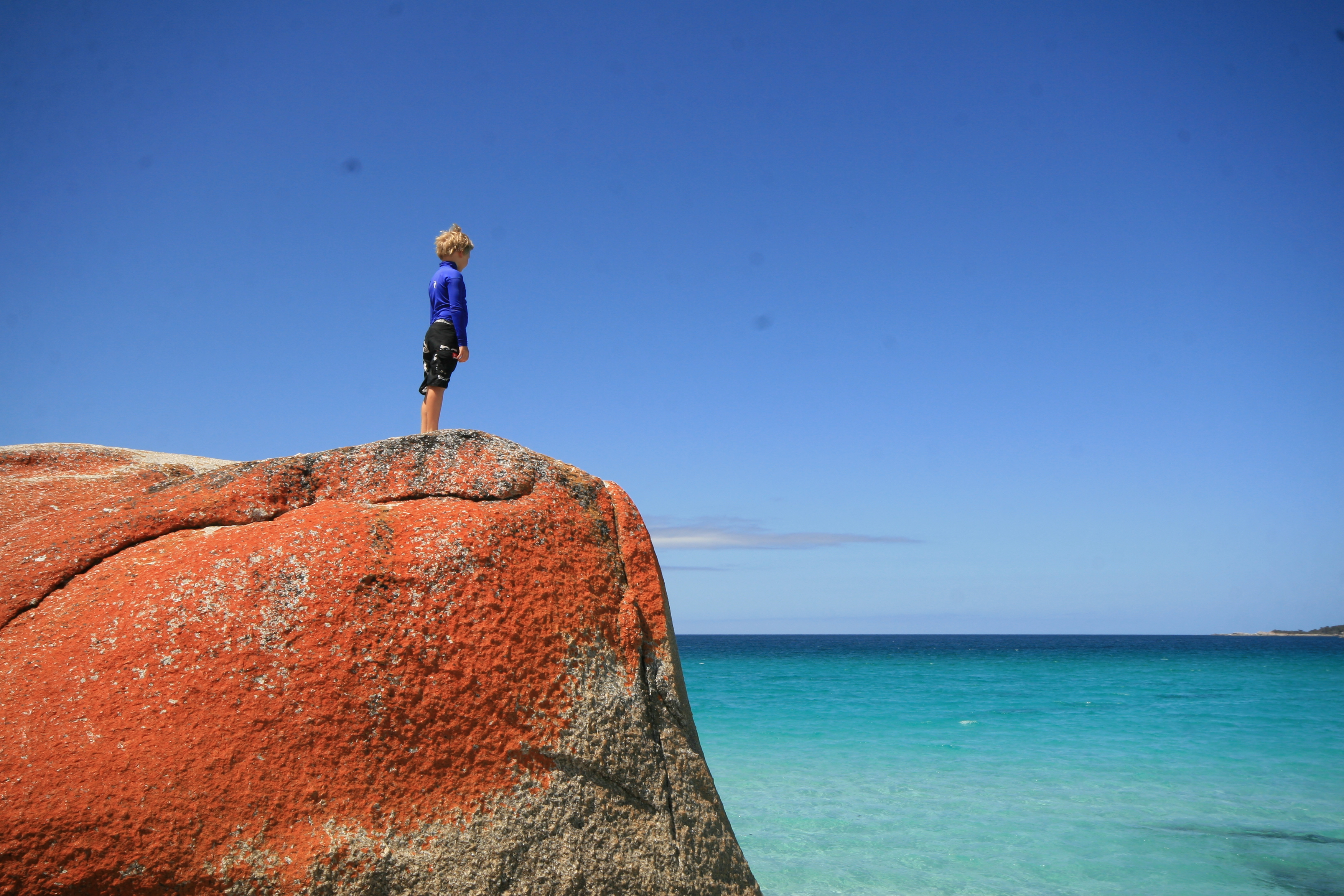
The sight of Binalong Bay restores everyone’s sense of humour. The beach is regularly rated one of the most beautiful in the world and it’s easy to see why. The sun is glistening on the water and massive burnt orange boulders spill into the sea, providing a dramatic contrast to the vibrant blue of the bay. A recent shark attack and the unfeasibly cold water keep my children and me on the perfect white sand, but my husband enjoys a refreshing dip.
Red boulders at Binalong Bay
We are delighted to find that Binalong Bay also boasts one of Australia’s best cafes, but are soon disappointed to learn it is fully booked. We resort to jam sandwiches from our mobile eatery, taken al fresco on the rocks. The food’s nothing special, but the view can’t be beaten.
It’s early evening by the time we reach our camp for the night, half-way down the east coast on the Freycinet Peninsular. I have won a ballot for a campsite in the National Park. The site on Richardsons Beach is pretty basic, but the setting is fantastic. The massive pink granite Hazard Mountains tower over the beach. Our fellow campers are making the most of the summer evening, enjoying a drink in their fold up chairs.
Canoeing at Coles Bay, Tasmania
We eschew the motorhome staple of sausages on the gas stove (campfires are banned), in favour of local Coles Bay oysters and fresh crayfish at the Freycinet Lodge bistro. The Lodge is a short stroll down Richardsons Beach. It’s not really an authentic camping experience but it’s definitely more tasty than another jam sandwich and the view is stunning.
We spend the next few days kayaking across Coles Bay, traversing the Freycinet National Park by foot and admiring the view from the Wine Glass Bay lookout. We spot possums in the trees around the campsite and watch fairy penguins feeding their chicks at a rookery in Bicheno. We even manage a night of free-range camping after the rookery visit where the inspiration (and fatigue) takes us, in a car park, overlooking the bay at Bicheno.
We return to Launceston via the Heritage Highway. The road connects Launceston with Hobart in the south and can be driven end to end in two hours. It’s dotted with quaint historic villages, all with a story to tell about Tasmania’s pioneering past. In Campbell Town a path of bricks records the fate of hapless convicts who have passed this way. A 12 year old boy sentenced to 14 years in the penal colony of Van Diemen’s Land for stealing sheep and a 19 year old girl given the same sentence for stealing a tablecloth are among the tragic cases.
Our last night in the motorhome is spent at a lovingly tended campsite on the banks of the Macquarie River. The historic town centre of Longford is just a short stroll away as are some appealing eateries. But we’re staying in tonight. It’s a river-view picnic table, BBQ bacon burgers and a game of cards for us. Just when it’s time to hand back the motorhome keys, we’re finally getting the hang of it.
At Cradle Mountain Lodge I am almost overwhelmed by agoraphobia when I enter our accommodation. For little more than the nightly cost of our motorhome we stay in a two bedroom cabin with bush-view spa bath and log fire. There’s a pademelon (a little like a wallaby) outside the front door to keep the grass down, a full buffet breakfast to look forward to, a choice of restaurants for dinner and some spectacular walking and wildlife on our doorstep. This is a holiday.
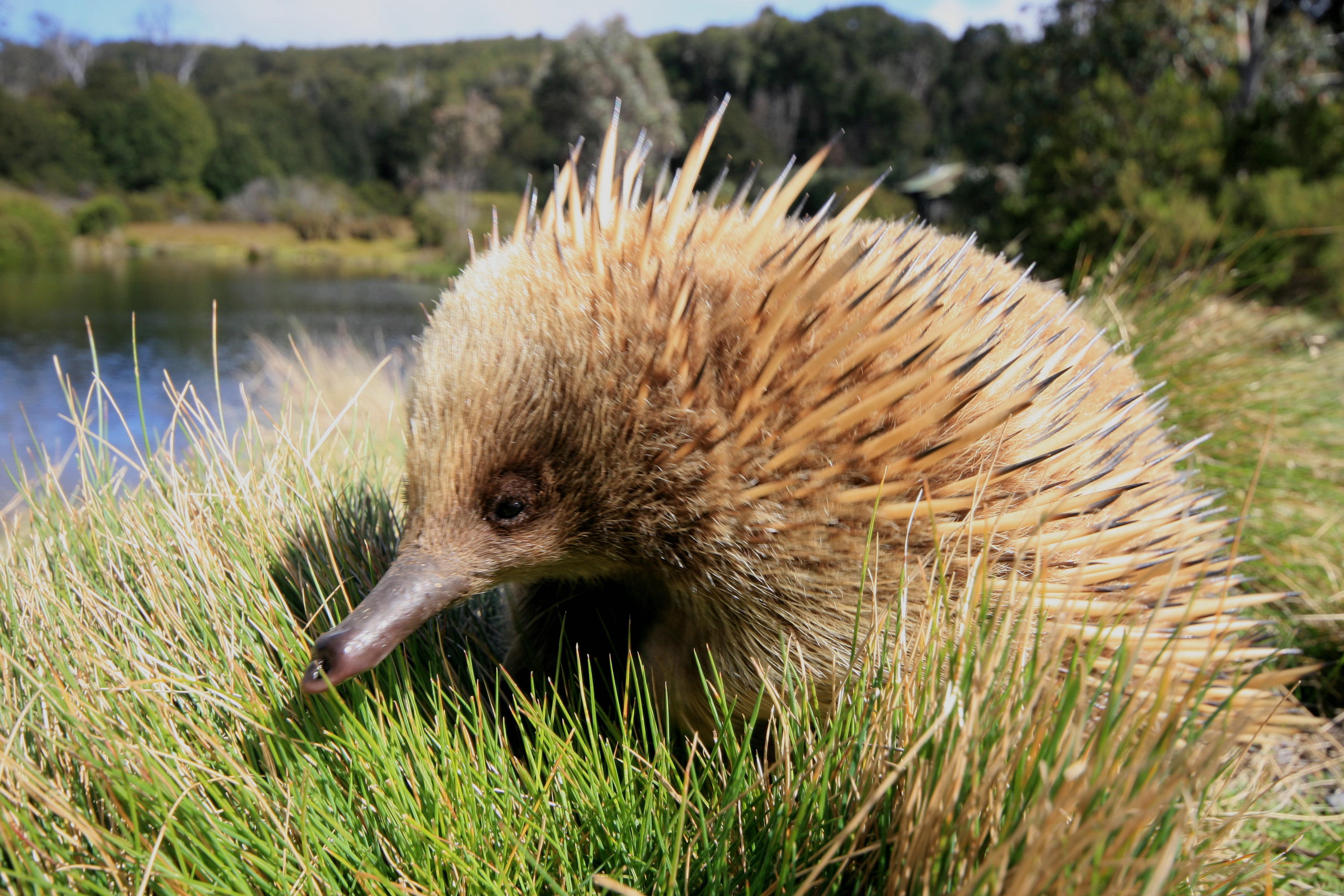
In three days we trek through alpine heathlands, around glacial lakes and between lichen- laden trees in the Cradle Mountain – Lake St Claire National Park. We spot a Tasmanian devil, watch wombats grazing and see an echidna foraging outside the Lodge. We relax in front of a fire (even though it’s mid-summer), sample some great local produce at the Lodge’s Highland Restaurant and admire the scenery from the comfort of our balcony – all without ever bumping our heads, having to renovate to get into bed or cross bushland to use the toilet. It certainly feels like luxury. Probably because it is.
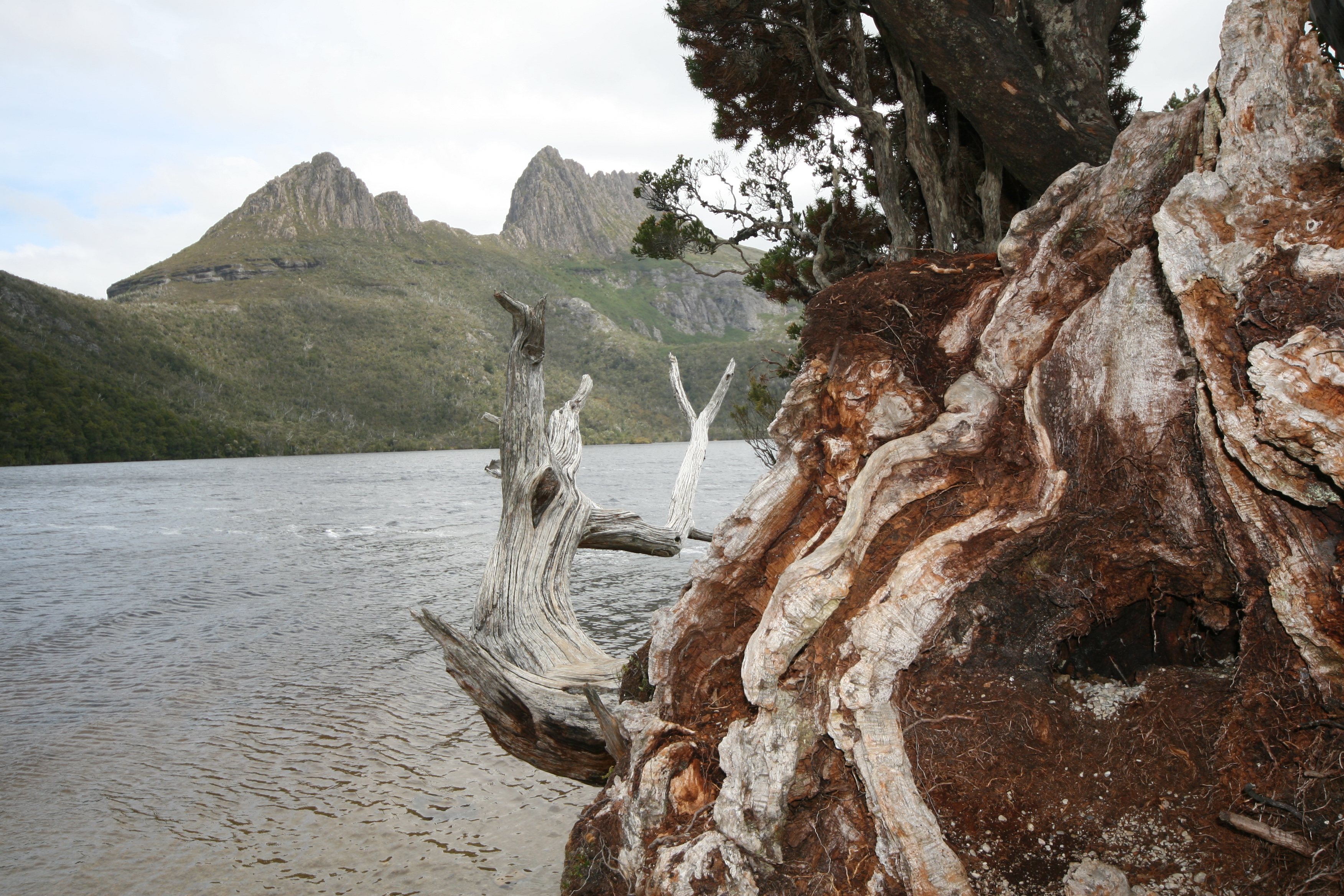
Dove Lake framed by Cradle Mountain
In the end it’s the Tasmanian devil encounter that wins out as our children’s top event of the holiday. The motorhome is a close second. My husband is just happy to have escaped mobile phone network coverage for a week. The whole Cradle Mountain experience is my top pick. But then a strange thing happens. On the way to the airport, we pass an immaculate campsite. At O’Neils Creek is the most spectacularly positioned public toilet I’ve seen. A wave of nostalgia washes over me. Could I be pining for the motorhome? I’m not certain. But one thing’s for sure, a bit of discomfort makes the comforts much more luxurious.
Uluru may have iconic status but it still has the power to surprise. And even softies can enjoy the experience of camping here.
The Southern Cross is rising in the night sky and a cold westerly wind is blowing the canvas over our heads. Through the darkness I can just make out the outline of Australia’s most famous natural icon – Uluru. I am feeling content after a gourmet meal by the light of the campfire. I sink into bed knowing that no matter how strong the wind gets I won’t need to wake my husband to check the tent pegs. This is camping at its most glamorous.
Sunset over Kata Tjuta
This is glamping at Voyages Longitude 131°. At the boutique Red Centre resort, fifteen tents are strung out across the top of a sand dune with an uninterrupted view of the world’s biggest rock. Below the white canvas roofs are travertine floors, marble vanities and most importantly toilets that flush. (Out here drop dunnies are the norm.) The walls are decorated with memorabilia from the 19th century explorers who mapped this remote area. There is no television, there are no kids and the mobile reception is patchy. In-room entertainment is restricted to admiring the light reflected off Uluru, which as it happens, is quite a show.
Visitors to Uluru are encouraged to respect the sacred Aboriginal site and refrain from climbing the rock. However thousands of tourists each year follow in the footsteps of the explorer William Gosse and complete the 1.6km trek to the summit. But even on a good day, the climb is not for the faint hearted. The red rock face falls away perilously on either side of the path. We’re told of a tourist who ran down the last stretch of the rock, fearing his tour bus was leaving. He tripped over a ledge and died a week later of internal injuries.
Visitors are well advised to stick close to the safety chain that runs up the ferociously steep start of the rock climb. The culturally correct path to tread is at the base of Uluru.
Aboriginal creation stories weave their way through the caves, indentations, outcrops and other features of the rock formations. We follow the path of mythical snakes and ancient battles as the setting sun turns Uluru a fiery red. The towering rock rises above us like the rusting hull of a great cargo ship. The last of the tourists scramble off the rock. The wind drops and peace descends on Uluru. We have the rock to ourselves.
Several kilometres away tourist buses are disgorging hundreds of amateur photographers, desperate for the perfect position to capture Uluru’s evening routine. Thanks to a special permit arranged by Longitude 131°, hotel guests enjoy the show just metres away from the rock.
Valley of the Winds, Kata Tjuta
The intimate front row experience is complemented by champagne and canapés. In the distance the 36 domes that make up Kata Tjuta stand solemnly just off stage, like Uluru’s understudy. The great pink domes may not have the iconic status of Uluru but they are spectacular nonetheless. We visit the outcrops in the early morning sun – their red form contrasts with the brilliant blue sky.
It is late autumn. The cold night has given way to warm sunshine, but a chilly breeze nips the air until we find protection between the great domes of rock. As we walk on, a deep valley of red opens up into a green oasis and we follow a path of yellow confetti dropped by wattle trees. River gums also cling to life along the narrow flood plain that runs through the middle of Kata Tjuta. Longitude 131 ° offers a 48 hour program of excursions, giving visitors the chance to enjoy Uluru and Kata Tjuta from all possible angles.
Uluru at its most spectacular best
Every second night, dinner is added to the excursion itinerary. The hotel chefs pack up their produce and utensils, stoke up the camp fire and cook a meal under the stars. Our desert dining experience is shared with a band of international honeymooners – visitors from Spain, England, Italy and the United States. There are a handful of grey nomads taking a break from the dusty road as well as a few Australians celebrating age milestones. We sit side by side sampling fine food and sipping matching wine. There are murmurs of appreciation. There is not a can of baked beans in sight. After dinner and a guided tour of the night sky we head back to our tent. Our luxury campsite is just a short stroll away through the inky black landscape. A few honeymooners return to the bar for a night cap. But my fluffy Dooner is calling my name. After a day of roughing it in the harsh Australian outback, I’m beat. Camping is never going to be the same again.
Hong Kong isn’t what it used to be. Maybe that’s a good thing.
Courtesy HK Tourism
No-one taxi surfs in Hong Kong these days. The old practice of riding home from night clubs on the roof of a taxi has disappeared along with British governors in feathered hats and the old white-knuckle airport landing.
Well over a decade has passed since this city of a thousand shopping malls was returned to China and Hong Kong has morphed into a stylish international metropolis – urbane, confident and clean.
Hong Kong’s world class hotels are a barometer of the city’s new passion for all things stylish. The InterContinental Hotel, which commands probably the best harbour views, features Nobu and Alain Ducasse’s Spoon along with a Sunday champagne brunch that is virtually de rigeur. On Hong Kong Island, at the Four Seasons Hotel, the food at Caprice is as good as you’ll find in Paris. And the city’s first boutique hotel, the Philippe Starck designed JIA, has developed a dedicated following as has the new Landmark Mandarin Oriental. With all the focus on international food and design it’s easy to forget you’re in China. And that would be a shame. Hong Kong is the best place to sample the country’s diverse cuisines.
It’s difficult to think of a more chic place to indulge in Chinese food than the China Club. Wangle a table at this members’ only restaurant through your concierge or American Express and enter the glamorous world of old Shanghai. The restaurant is located in the Old Bank of China Building, which was a towering 17 storey skyscraper in its day. Now it is a quaint little relic of history, dwarfed by the neighbouring towers of steel and glass. The restaurant serves the best of China’s regional specialties, including a tasty selection of dim sum, set amongst a fantastic collection of Chinese contemporary art. Before you leave, visit the library and the outdoor balcony with its lovely view of the harbour.
For a taste of Hong Kong, check out Counterfeit Love – a heady mix of ambition, romance and deadlines.
If you can’t make it to Beijing, the Peking Garden is the next best option for a taste of the Chinese capital’s cuisine. This long time favourite with locals and visitors-in-the-know is tucked discreetly in the basement of Alexandra House and reputedly has the best Peking duck in Hong Kong. The nearby Yung Kee restaurant in Wellington Street has also stood the test of time and serves the best of Cantonese cuisine.
To escape the crowds and highrise, head to one of the fishing villages on Lamma Island. The string of seafood restaurants is just a short ferry trip from Hong Kong Island but offers a dramatic change of pace. The restaurants are perched on the edge of the harbour and serve authentic Cantonese cuisine in a casual setting. The view has been impaired by the thick smog from the factories of the Pearl River delta, China’s most noxious influence on Hong Kong. But the restaurants remain a popular destination for day trippers.
Once the sun goes down, Hong Kong really gets going. A laser show lights up the skyline, beams of light dance off the impossibly tall 2IFC building and the other monstrous pillars of finance. The big hotels on the Kowloon peninsular are all good places to enjoy the view. My shopping companions and I are keen to check out the Philippe Starck designed bar at the Peninsular Hotel. We ascend the building in what looks like the inside of a Darrell Lea chocolate to Felix. The bar is suspended like a space ship among the lights, an impressive sight but an awkward space to actually use. I find myself perched precariously on a narrow bench with my back to the view. And I’m sorry I didn’t just enjoy a drink in the Peninsular lobby lounge with its gilded ceilings and walls soaked with the stories of old Hong Kong hands.
Lan Kwai Fong, the collection of lanes behind Central remains the number one night spot for locals and tourists. It’s Halloween when I visit and the whole area has been transformed into a street party. Crowds are spilling out of bars, a pipe band marches up a steep laneway, incongruously followed by costumed trick or treaters. At Schnubart schnapps are being served by the tray and a great cover band is playing at Insomnia.
We find our way into the oh so cool Kee Club, where the music is laid back and the crowd is beautiful. The members’ club is an oasis of style and calm after the throngs of Lan Kwai Fong and part of a growing list of chic late night sanctuaries. Dragon-I, with its mix of local and international celebrities, is another hot spot for late night drinks. On busy nights your chances of getting in are improved if you look like a movie star.
Nostalgia takes me out of these swanky design havens to Joe Bananas in Wan Chai. Many years ago, one of my colleagues married the manager and held her reception here. But some things are best consigned to history. It’s very late and the place is seedier than I remember. The music is the worst of the 80’s and the crowd is down there with it.
When we finally decide that it’s time that women of a certain age were in bed, I discover another new side to Hong Kong – a taxi driver with a sense of humour. Banter with a taxi driver was unheard of when I lived here. But maybe drivers have developed a happier disposition since gweilos (foreigner devils) stopped climbing onto their rooves.
LATEST: Wollumbin (Mount Warning) summit track remains closed until the end of October 2022 due to the impacts of COVID, widespread flooding in the region, and to allow further consultation with the Aboriginal community and other key stakeholders about the future management of the site. (NSW National Parks)
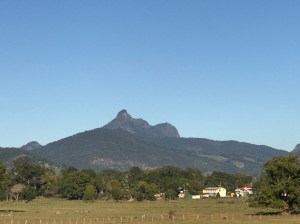
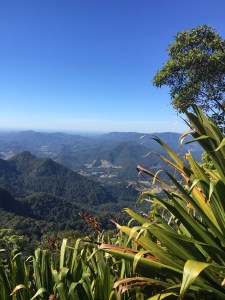
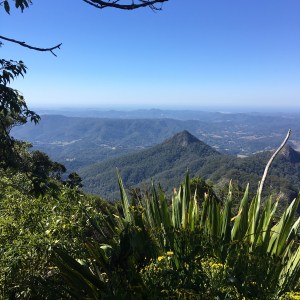
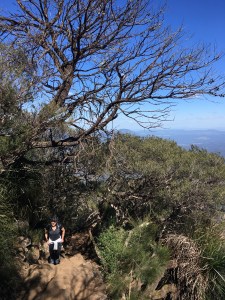
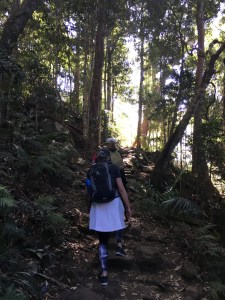
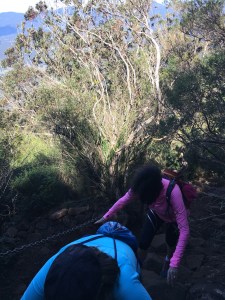
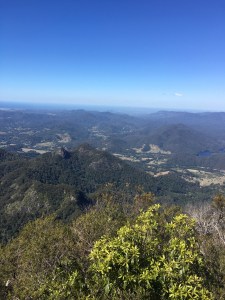
Mt Warning (Wollumbin) in the NSW Tweed Valley, stands at 1157 metres, the plug of a once massive volcano that erupted some 20 million years. The 4.4 km track to the summit is an unrelenting and steep walk that finishes with a 100 metre stretch of bare rock with chains. The path is rough in places with rocks and tree roots, and is not to be underestimated. But the scenery is spectacular – starting with magnificent rainforest and ending with amazing 360 degree views to Cape Byron in the east, the Border Ranges in the west and the Gold Coast high-rise in the north.
Allow at least five hours as the 4.4 km walk down from the summit is almost as tough as the ascent. Take plenty of water and make use of the toilet facilities before you go.
UPDATE: Wollumbin (Mount Warning) summit track is a sacred place to the Bundjalung People, and was declared an Aboriginal Place in 2015. Visitors are asked to respect the wishes of the Bundjalung Elders and avoid climbing this very difficult track.



























 Julie Fison
